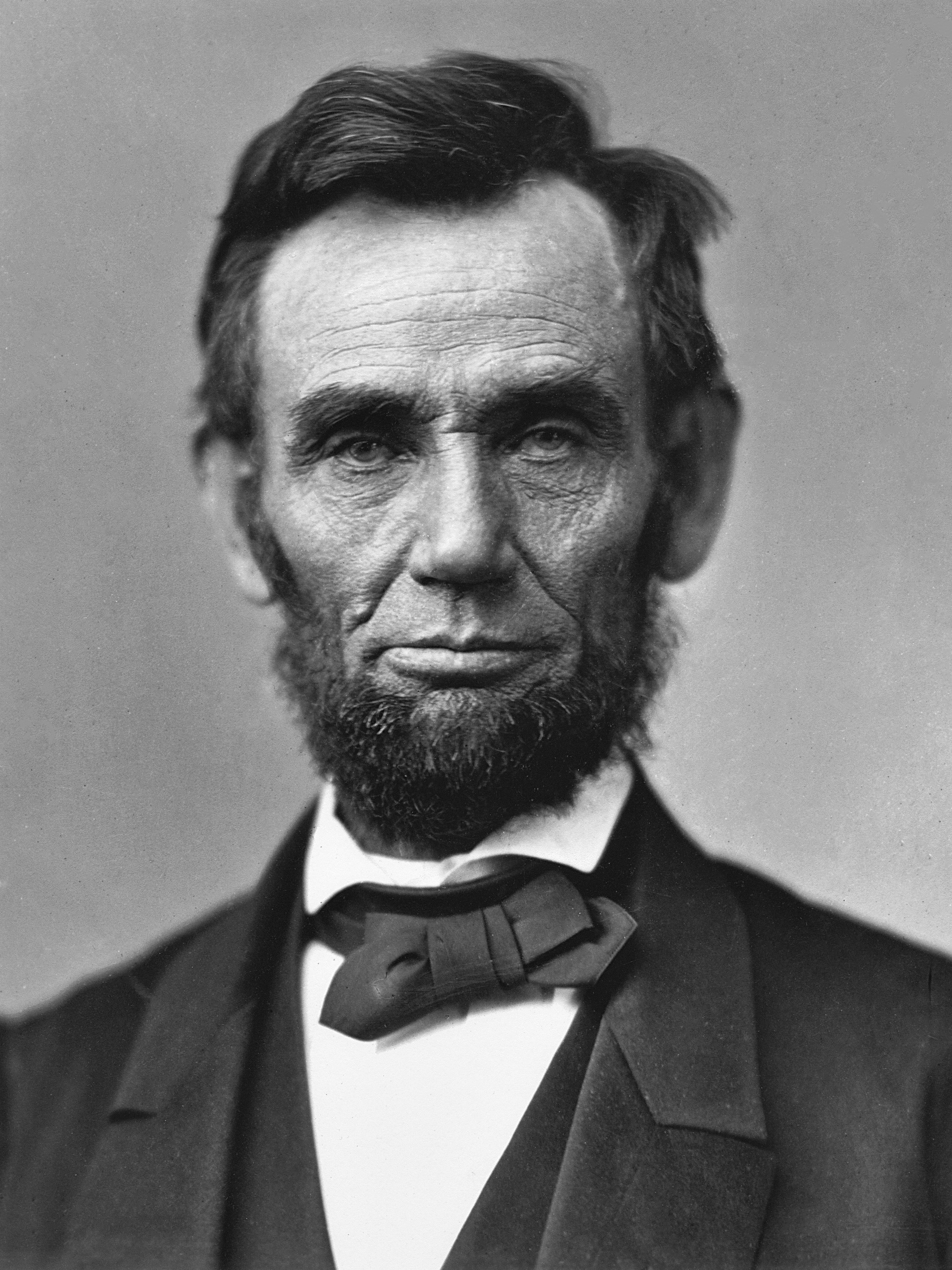
On the evening of April 14, 1865, Abraham Lincoln sat in the presidential box at Ford’s Theatre in Washington, D.C., watching a performance of the comedy “Our American Cousin.” The Civil War was effectively over. The Confederate Army of Northern Virginia had surrendered to Ulysses S. Grant at Appomattox Court House five days earlier. The Union was preserved, four million enslaved people had been legally freed by the Thirteenth Amendment moving through Congress, and the most devastating conflict in American history was winding toward its close. Lincoln was fifty-six years old, visibly exhausted and, by most accounts of those who saw him that spring, carrying the weight of four years of catastrophic violence in the lines of his face. He had been re-elected just months before, had delivered a Second Inaugural Address that stands as one of the greatest political speeches in the English language, and had arrived at the edge of a victory that had seemed, at many points in the preceding four years, anything but certain. What followed in that theatre changed everything. But the story of Abraham Lincoln does not begin at Ford’s Theatre. It begins in a Kentucky log cabin in the depths of winter, in circumstances as far from the national stage as it is possible to imagine.
Quick Facts
- Full name
- Abraham Lincoln
- Born
- February 12, 1809, Hardin County (now LaRue County), Kentucky
- Died
- April 15, 1865, Washington, D.C. (age 56)
- Presidency
- 16th President of the United States, 1861 to 1865
- Party
- Republican
- Key achievement
- Preservation of the Union; Emancipation Proclamation (1863); Thirteenth Amendment
- Spouse
- Mary Todd Lincoln (married November 4, 1842)
- Children
- Robert, Edward, William (Willie), Thomas (Tad)
Birth and the Frontier Childhood
Abraham Lincoln was born on February 12, 1809, in a one-room log cabin on Sinking Spring Farm in Hardin County, Kentucky, in a territory that was then barely a generation removed from the wilderness. The cabin measured approximately eighteen feet by sixteen feet. There was a dirt floor. The gaps between the logs let in wind, cold and light in equal measure. His father, Thomas Lincoln, was a farmer and carpenter of modest means and restless temperament, moving from farm to farm in search of better land and better prospects. His mother, Nancy Hanks Lincoln, was by all surviving accounts a gentle, thoughtful and literate woman who told stories and encouraged her children to think.
The Lincolns moved to a second Kentucky farm, Knob Creek, when Abraham was two years old. He has his earliest memories of that place: the creek that ran past the cabin, the fields his father planted, the road that carried travellers south toward Nashville. Kentucky in those years was a slave state, and the young Lincoln would have seen enslaved people and the institution that kept them bound from his earliest conscious awareness. There is evidence that his parents, members of a Baptist congregation that opposed slavery on religious grounds, transmitted something of their disapproval to their children. Whether that early exposure planted the first seeds of his later convictions is a matter of historical debate, but it is difficult to dismiss entirely.
When Lincoln was seven, the family moved again, this time north across the Ohio River into Indiana, a state where slavery was prohibited under the Northwest Ordinance of 1787. The move was partly motivated by land-title disputes in Kentucky, which operated an informal, imprecise system of land registration that left owners vulnerable to legal challenge. The Indiana farm in Spencer County was cut from thick forest, and young Abraham spent long days working alongside his father, felling trees and grubbing out stumps. The axe became the tool most associated with his physical legend: he was tall, enormously strong and capable of driving an axe with a force that contemporaries later described with something approaching awe.
Loss and the Stepmother Who Changed His Life
In the autumn of 1818, when Abraham was nine years old, his mother Nancy Hanks Lincoln died. The cause was what frontier people called “milk sickness,” a condition caused by consuming milk from cows that had eaten white snakeroot, a plant containing the toxin tremetol. The disease had devastated the small Indiana community: an aunt and uncle died in the same outbreak. Nancy Lincoln was thirty-four years old. She was buried on a rise above the Lincoln farm, in a coffin that Thomas Lincoln and young Abraham reportedly helped to build.
The death of his mother left a mark that Lincoln carried for the rest of his life. He spoke of her infrequently but with deep feeling. He once told his law partner William Herndon that “all that I am, or hope to be, I owe to my angel mother.” Some historians believe he was referring in that remark to his stepmother rather than Nancy, but the sentiment reflects the depth of the loss regardless.
Thomas Lincoln left his children in the care of neighbours for several months before travelling back to Kentucky to find a new wife. He returned in late 1819 with Sarah Bush Johnston, a widow with three children of her own. Sarah Bush Lincoln transformed the household. She brought furniture, bedding and domestic order to what had become a rather desolate establishment, and she took to Abraham and his sister Sarah with immediate warmth. She recognised something in the boy: a quickness of mind, a love of words and a self-discipline in learning that was unusual in a child of the frontier. She encouraged him to pursue his reading and argued with Thomas, who preferred Abraham in the fields, on behalf of the boy’s education.
Lincoln’s formal schooling amounted to less than a year in total, scattered across several brief periods at itinerant schools run by teachers known as “blab schools” because students were expected to read aloud simultaneously. What formal education could not provide, Lincoln supplemented with ferocious self-directed reading. He walked miles to borrow books. He read by firelight when candles were unavailable. He absorbed the King James Bible, Aesop’s Fables, John Bunyan’s “The Pilgrim’s Progress,” Mason Weems’s biography of George Washington and, crucially, a copy of “The Statutes of Indiana,” from which he learned the basics of American law. He copied out passages he wanted to remember, working by firelight with a piece of charcoal when he had no pen.
Young Man in Illinois: Clerk, Postmaster, Surveyor
In 1830, when Abraham was twenty-one, Thomas Lincoln moved the family once more, this time to Illinois, drawn by reports of fertile land along the Sangamon River. Abraham helped his father build a new cabin and split the rails for the fencing of a new farm, work that gave him the nickname “the Rail-Splitter” that would become a political symbol decades later. But he had no intention of remaining a farmer. The following year, having reached legal adulthood and after a difficult flatboat trip to New Orleans with a neighbour’s goods, he settled in the small village of New Salem, Illinois, and began the work of making himself into someone.
In New Salem, Lincoln worked as a store clerk, a postmaster and a surveyor over the course of the six years he lived there. The postmaster position was particularly useful: it gave him access to newspapers that he otherwise could not afford, and he devoured them. He joined a debating society and discovered that he could speak in public with unusual effectiveness, combining a flat midwestern directness with a gift for the well-constructed argument and a dry, self-deprecating humour that audiences found disarming. He was six feet four inches tall, gaunt, long-limbed and physically ungainly, and he learned to use his appearance as a comedic asset, undercutting any charge of pomposity before it could be made.
He served in the Black Hawk War of 1832, elected captain of his small company of volunteers (an election he later described as the political honour that had given him more pleasure than almost any other), though he saw no combat. The war over, he returned to New Salem and began studying law on his own, borrowing law books and working through them with the same self-directed intensity he had brought to everything else. By 1836 he had passed the bar examination and was admitted to practice law in Illinois.
His reputation in New Salem was built as much on his character as his intellect. He was known as “Honest Abe” in part because of an incident in which he walked several miles to return a small amount of money he had accidentally overcharged a customer while working at the store. Whether this particular story is precisely true in every detail is less important than the fact that it circulated and was believed: people in New Salem genuinely regarded him as a man whose word was reliable and whose integrity was not a performance.
Illinois Legislature and the Law Career
Lincoln won election to the Illinois state legislature in 1834, running as a member of the Whig Party. He would serve four consecutive two-year terms in the legislature, from 1834 to 1842, becoming one of its more effective members and developing the political skills that would eventually carry him to the presidency. He supported internal improvements, the development of railroads and canals, and the kind of economic modernisation that Henry Clay, his great political hero, advocated under the banner of the “American System.”
In Springfield, where he relocated in 1837 after it became the state capital, he built a successful law practice, eventually forming a partnership with William Herndon that lasted until Lincoln’s death. He was a skilled and versatile courtroom lawyer: he could handle contract disputes, criminal defences, debt cases and appellate arguments with equal confidence, and he travelled the Eighth Judicial Circuit twice a year, riding on horseback through central Illinois to argue cases in county courthouses. The circuit-riding life suited him. He told stories around campfires, made friends across a wide swath of Illinois and developed a reading of ordinary people’s concerns that no amount of formal study could have provided.
On November 4, 1842, he married Mary Todd of Lexington, Kentucky, a well-educated, spirited and politically engaged woman from a prosperous slaveholding family. Their courtship had been stormy, interrupted by a broken engagement and a period of separation during which Lincoln suffered what may have been a serious depressive episode. Mary Todd was intelligent, ambitious on Lincoln’s behalf, and she recognised his potential clearly. The marriage was complex: she was volatile and he was emotionally private, but their attachment to each other and to their children was genuine.
They had four sons. Robert Todd Lincoln was born in 1843 and was the only one to survive to adulthood, living until 1926. Edward Baker Lincoln, born in 1846, died of tuberculosis in February 1850 at the age of three. William Wallace Lincoln, known as Willie, was born in 1850 and died in February 1862 at the age of eleven while his father was president, a death that devastated both parents. Thomas Lincoln, known as Tad, was born in 1853 and died in 1871 at the age of eighteen.
The Lincoln-Douglas Debates and the Path to the Presidency
Lincoln served a single term in the United States Congress from 1847 to 1849, representing Illinois’s Seventh Congressional District. He distinguished himself primarily by opposing the Mexican-American War, a position that was politically costly in a district with strong military sentiment, and he did not seek re-election. He returned to his law practice and spent much of the early 1850s building one of the most successful legal careers in Illinois, arguing cases before the state Supreme Court and the federal courts.
The Kansas-Nebraska Act of 1854 changed everything. The act, championed by the Illinois senator Stephen A. Douglas, effectively repealed the Missouri Compromise of 1820 by allowing the territories of Kansas and Nebraska to decide the question of slavery by popular vote, a doctrine Douglas called “popular sovereignty.” Lincoln was roused to political action by what he regarded as a moral and constitutional catastrophe. He had never been an abolitionist in the strict sense, but he had always regarded slavery as a wrong, and he believed that its expansion into new territories would ultimately destroy the American republic.
He re-entered politics, sought but failed to obtain a Senate seat in 1855 and joined the newly formed Republican Party, which had been organised in opposition to the expansion of slavery. In 1858 he was the Republican nominee for the Senate seat held by Stephen Douglas. The campaign produced the Lincoln-Douglas debates, seven joint appearances held across Illinois between August 21 and October 15, 1858, in which the two men argued the fundamental question facing the republic: could the United States survive as a nation half slave and half free?
Lincoln argued that it could not. “A house divided against itself cannot stand,” he said in his acceptance speech for the Republican nomination on June 16, 1858, borrowing the biblical phrase to describe the American predicament. “I believe this government cannot endure, permanently, half slave and half free. I do not expect the Union to be dissolved: I do not expect the house to fall: but I do expect it will cease to be divided. It will become all one thing, or all the other.” Douglas won the Senate race, but the debates had made Lincoln a national figure. The transcripts were widely published and read, and what readers found in them was a lawyer’s precision married to a moralist’s clarity: a man who understood the constitutional landscape and refused to hide from the human question at its centre.
Lincoln received the Republican presidential nomination on May 18, 1860, at the party’s convention in Chicago. He ran on a platform that opposed the expansion of slavery into new territories without advocating its immediate abolition in states where it already existed. He won the four-candidate general election on November 6, 1860, carrying every Northern state and enough electoral votes to prevail decisively, though he received not a single electoral vote from the South.
South Carolina seceded from the Union on December 20, 1860, before Lincoln had even taken office. By the time he was inaugurated on March 4, 1861, six more Southern states had followed. The Confederate States of America had been formed, Jefferson Davis had been inaugurated as its president, and the question of whether the United States would survive as a unified nation had moved from political debate to military confrontation.
Fort Sumter and the Civil War
Confederate forces opened fire on Fort Sumter, a federal installation in Charleston Harbour, South Carolina, on April 12, 1861. The garrison surrendered the following day. Lincoln called for 75,000 volunteer troops to suppress the rebellion, a call that prompted four more slave states including Virginia to secede. The Civil War had begun.
What followed was four years of violence on a scale that America had never experienced and would never experience again. The war killed approximately 620,000 soldiers on both sides by most estimates, with more recent scholarship suggesting the total may have been closer to 750,000. Lincoln managed it from the White House under conditions of extraordinary pressure: military commanders who failed or refused to fight (George McClellan’s caution drove Lincoln to distraction), a divided cabinet, a hostile opposition press, a Congress with its own war agenda, and the constant personal grief of losing young men by the tens of thousands in battles whose names, Shiloh, Antietam, Chancellorsville, Cold Harbor, Chickamauga, became synonymous with mass death.
He was not a military man. His one experience of armed service had been the bloodless Black Hawk War. But he educated himself in military strategy with the same self-directed intensity he had applied to everything else, borrowing books on tactics and strategy from the Library of Congress and reading them late at night. He developed a strategic vision that many of his generals initially lacked: the understanding that the way to win was not to seize Confederate territory but to destroy Confederate armies, and that the Union’s superior industrial and manpower resources could only be converted into victory if they were applied relentlessly and simultaneously on multiple fronts.
He searched for generals who understood this. After dismissing McClellan twice, going through a succession of commanders in the Eastern theatre (John Pope, Ambrose Burnside, Joseph Hooker, George Meade), and watching enormous promise squandered by excessive caution, he found what he was looking for in Ulysses S. Grant, who had demonstrated at Fort Donelson, Shiloh and Vicksburg that he would fight without flinching from the costs of fighting. Lincoln promoted Grant to general-in-chief of the Union armies in March 1864 and gave him the support and the latitude to prosecute the war to its conclusion.
The Emancipation Proclamation
Lincoln had always regarded slavery as a moral wrong. He had said so consistently throughout his political career. But as president he had also maintained, as a matter of constitutional principle, that the federal government lacked the authority to abolish slavery in states where it already existed. His stated war aim in the first eighteen months of the conflict was the preservation of the Union, not the abolition of slavery.
By mid-1862, however, he had concluded that emancipation was both a military necessity and a moral imperative. Freeing the enslaved people of the Confederacy would deprive the Confederate war effort of an enormous labour force, encourage enslaved people to resist, potentially trigger a wave of defection to Union lines and undercut Confederate attempts to win recognition from Britain and France, whose publics were strongly anti-slavery.
On September 22, 1862, five days after the Union army stopped the Confederate advance at the Battle of Antietam in Maryland (one of the bloodiest single days of the entire war), Lincoln issued a preliminary Emancipation Proclamation, warning Confederate states that if they did not return to the Union by January 1, 1863, their enslaved populations would be declared free.
No Confederate state returned. On January 1, 1863, Lincoln signed the Emancipation Proclamation, declaring that “all persons held as slaves within any State or designated part of a State, the people whereof shall then be in rebellion against the United States, shall be then, thenceforward, and forever free.”
The proclamation was a war measure issued under Lincoln’s authority as commander-in-chief, and its legal status was therefore limited: it applied only to enslaved people in Confederate-controlled territory, not to those in Union-aligned slave states such as Kentucky and Maryland. But its moral and symbolic force was immense. It transformed the character of the war, making the abolition of slavery an explicit war aim of the Union and making clear that a Confederate victory would preserve slavery while a Union victory would end it. It encouraged enslaved people to flee toward Union lines in larger numbers than before. It made foreign recognition of the Confederacy politically impossible in Britain and France, whose governments could not openly support the slave-holding side in what had become explicitly an anti-slavery war.
Lincoln himself understood that the proclamation, as a war measure, might not survive the end of the war. He pushed for a constitutional amendment that would abolish slavery permanently, everywhere in the United States, regardless of any future legal challenge. That effort produced the Thirteenth Amendment, which Congress passed in January 1865 and which was ratified by the required number of states in December 1865, eight months after Lincoln’s death.
The Gettysburg Address
On November 19, 1863, four and a half months after the Union victory at the Battle of Gettysburg had turned the tide of the war in the East, Lincoln travelled to Gettysburg, Pennsylvania, to participate in the dedication of a new national cemetery for the soldiers who had died in the three-day battle in July of that year. Approximately 50,000 men were killed, wounded or went missing in those three days. The main address was delivered by Edward Everett, a former senator and one of the foremost orators in America, whose speech lasted two hours.
Lincoln followed with 272 words. The Gettysburg Address took less than three minutes to deliver. In it, Lincoln reframed the entire purpose of the war, linking it to the founding promise of the Declaration of Independence that “all men are created equal,” a principle he argued was being tested on the battlefields of Pennsylvania and across the entire continent. He argued that the living could not truly consecrate the ground: “The brave men, living and dead, who struggled here, have consecrated it, far above our poor power to add or detract.” What the nation owed those men, he said, was a resolution that “this nation, under God, shall have a new birth of freedom, and that government of the people, by the people, for the people, shall not perish from the earth.”
The speech was dismissed by some newspapers at the time as disappointingly brief and insufficiently grand for the occasion. Everett himself wrote to Lincoln the following day to say that he wished he had come as close to the central idea of the occasion in two hours as Lincoln had in two minutes. It has since been recognised as one of the most consequential pieces of political prose in American history, a redefinition of the American project that embedded the principle of human equality into the national narrative in a way that could not easily be extracted.
Re-election, Sherman’s March and the Road to Appomattox
By the summer of 1864, Lincoln believed he would lose the presidential election in November. The war was grinding on at enormous cost, Grant’s Overland Campaign had produced staggering casualties without the decisive breakthrough that the public wanted, and the Democratic Party had nominated George McClellan on a platform that suggested a negotiated peace with the Confederacy. Lincoln prepared a memorandum, sealed in an envelope, recording his expectation of defeat and his plan for cooperating with his successor to save the Union before the new president took office.
Then the military situation shifted dramatically. General William Tecumseh Sherman captured Atlanta, Georgia, on September 2, 1864. The fall of Atlanta electrified Northern opinion, demonstrating that the war was progressing toward Union victory after all. Lincoln won re-election on November 8, 1864, defeating McClellan with 55 percent of the popular vote and 212 electoral votes to McClellan’s 21.
Sherman’s subsequent “March to the Sea,” completed when his army entered Savannah, Georgia, on December 21, 1864, was a deliberate strategy of attacking the Confederate economy and civilian infrastructure, breaking the South’s will to continue fighting by demonstrating that the Confederate government could not protect its own territory. Grant simultaneously kept relentless pressure on Lee’s Army of Northern Virginia around Richmond and Petersburg, Virginia, preventing Lee from detaching troops to oppose Sherman.
On March 4, 1865, Lincoln delivered his Second Inaugural Address. The war was nearly over. Rather than claiming victory or assigning blame, he offered something rarer: a reflection on shared suffering and a vision of reconciliation. “With malice toward none, with charity for all, with firmness in the right as God gives us to see the right, let us strive on to finish the work we are in, to bind up the nation’s wounds, to care for him who shall have borne the battle and for his widow and his orphan, to do all which may achieve and cherish a just and lasting peace among ourselves and with all nations.” Frederick Douglass, who attended the ceremony, later called it “a sacred effort.”
Lee’s lines at Petersburg collapsed on April 2, 1865. Richmond fell the following day. Lincoln visited the captured Confederate capital on April 4, walking its streets while formerly enslaved people gathered around him, touching his hands and clothing. Lee surrendered to Grant at Appomattox Court House on April 9, 1865. The war was effectively over.
Assassination at Ford’s Theatre
On April 14, 1865, John Wilkes Booth, an actor and Confederate sympathiser who had been plotting since the previous year to capture or kill Lincoln, entered the presidential box at Ford’s Theatre during a performance of “Our American Cousin” and shot Lincoln once in the back of the head with a .44 calibre derringer pistol at close range. Booth then leapt from the box to the stage, catching his spur on a bunting that decorated the box and breaking his left leg as he landed, before escaping on horseback.
Lincoln was carried across the street to the Peterson House, where he was laid diagonally on a bed in the back room because his six-foot-four-inch frame was too long for the bed proper. Seven doctors attended him through the night. He never regained consciousness. At 7:22 in the morning of April 15, 1865, Abraham Lincoln died. Secretary of War Edwin Stanton, who had once dismissed Lincoln as an uncouth frontier nobody and come to revere him as the greatest man he had ever known, is said to have spoken, in the quiet of that room, the words: “Now he belongs to the ages.”
Booth was tracked down and shot dead by Union soldiers at a Virginia farm on April 26, 1865. His co-conspirators were arrested and tried before a military tribunal. Four were hanged on July 7, 1865, including Mary Surratt, the first woman executed by the federal government of the United States.
Lincoln’s body was carried by train from Washington back to Springfield, Illinois, stopping in multiple cities along the way so that the public could pay their respects. Hundreds of thousands of people lined the routes. He was buried at Oak Ridge Cemetery in Springfield, Illinois, where his remains rest today beneath the Lincoln Tomb.
The Thirteenth Amendment and the Meaning of Lincoln’s Legacy
The Thirteenth Amendment to the United States Constitution, which abolished slavery throughout the country without exception or qualification, was ratified on December 6, 1865. Lincoln did not live to see it, but the political work he had invested in its passage was decisive. He had lobbied individual members of Congress, offered patronage and appointments, and made clear that the amendment was his first legislative priority in his second term.
The legacy of Abraham Lincoln is simultaneously clear and contested. He is consistently ranked by historians as the greatest president in American history, with George Washington and Franklin D. Roosevelt as his usual competition for the first position. The ranking reflects the magnitude of what he accomplished: he held the Union together during a war that threatened to dissolve it permanently, he oversaw the legal abolition of the institution of slavery that had defined and corrupted American life since the nation’s founding, and he articulated a vision of the republic’s purpose in language of enduring clarity.
The contestation arises from the complexity of the record. Lincoln was not an abolitionist in the tradition of William Lloyd Garrison or Frederick Douglass. He believed in white racial superiority by the standards of his time, though he moved significantly away from that position over the course of his life and presidency. His primary stated war aim was the preservation of the Union, not the liberation of enslaved people, and he moved toward emancipation for strategic as well as moral reasons. He suspended habeas corpus during the war in ways that alarmed civil libertarians. He authorised the largest mass execution in American history, the hanging of 38 Dakota men in Mankato, Minnesota, in December 1862, after a Dakota uprising, though he commuted the death sentences of 264 others.
These complexities do not diminish Lincoln’s achievement so much as they reveal him as a man of his time who nevertheless managed, through the force of his intelligence and the growth of his moral understanding, to accomplish things that men entirely of his time could not have accomplished. Frederick Douglass, who met him, debated with him and disagreed with him, said at the dedication of the Freedmen’s Memorial in Washington in 1876: “Measured by the sentiment of his country, a sentiment he was bound as a statesman to consult, he was swift, zealous, radical, and determined.”
The country Lincoln left behind was a different country from the one he had inherited. It was not yet the country the Thirteenth, Fourteenth and Fifteenth Amendments promised it would become, and the promise of Reconstruction was broken within a decade of his death, as the Southern states reimposed racial subordination through law and terror. But the amendments existed. The legal foundation had been laid. The words of the Gettysburg Address and the Second Inaugural were in the record, available to every subsequent generation that needed to reach back to the founding purpose and find it worth defending.
Key Facts
- Born February 12, 1809, in a log cabin in Hardin County (now LaRue County), Kentucky.
- Largely self-educated; formal schooling totalled less than one year.
- His mother, Nancy Hanks Lincoln, died when he was nine years old.
- His stepmother, Sarah Bush Johnston Lincoln, recognised and encouraged his intellectual gifts.
- Moved to New Salem, Illinois, in 1831; worked as store clerk, postmaster and surveyor.
- Admitted to the Illinois bar in 1836 after self-directed legal study.
- Served four terms in the Illinois state legislature from 1834 to 1842.
- Married Mary Todd on November 4, 1842; they had four sons, only one of whom (Robert) survived to adulthood.
- Served one term in the United States Congress from 1847 to 1849.
- The Lincoln-Douglas debates of 1858 made him a national political figure.
- Won the Republican presidential nomination in May 1860 and the general election on November 6, 1860.
- Seven Southern states had seceded before his inauguration on March 4, 1861.
- The Civil War began with the Confederate bombardment of Fort Sumter on April 12, 1861.
- Issued the Emancipation Proclamation on January 1, 1863, freeing enslaved people in Confederate-controlled territory.
- Delivered the Gettysburg Address on November 19, 1863, a speech of 272 words that redefined the purpose of the war.
- Re-elected on November 8, 1864, with 55 percent of the popular vote.
- Delivered the Second Inaugural Address on March 4, 1865.
- Lee surrendered to Grant at Appomattox Court House on April 9, 1865.
- Shot by John Wilkes Booth at Ford’s Theatre on April 14, 1865; died April 15, 1865.
- The Thirteenth Amendment abolishing slavery was ratified on December 6, 1865, eight months after his death.
- Consistently ranked the greatest president in American history by historians.
“With malice toward none, with charity for all, with firmness in the right as God gives us to see the right, let us strive on to finish the work we are in, to bind up the nation’s wounds.”
Abraham Lincoln, Second Inaugural Address, March 4, 1865