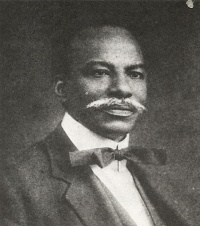
In the crowded streets of colonial Lagos, where the horns of the British administration blared louder than the voices of the people, one man refused to be silenced. He wore an immaculate suit, carried himself with the poise of a European gentleman, and spoke with the precision of a trained engineer, yet everything he did was aimed at loosening the grip of the empire that had schooled him. When Herbert Macaulay rose to speak at a public meeting, thousands gathered to listen. When his newspaper hit the streets, the colonial governors read it with clenched jaws. For nearly four decades he stood at the front of the Nigerian struggle for dignity and self-rule, earning a title that history has never taken from him: the father of Nigerian nationalism.
His life spanned the deepest years of British colonial rule, from the age of the missionaries to the first stirrings of a mass independence movement. He did not live to see Nigeria become free, but he built the road that others would walk to freedom. To understand how Nigeria became a nation, you must first understand the man who taught its people to imagine one.
Quick Facts
- Full name
- Olayinka Herbert Samuel Heelas Badmus Macaulay
- Born
- 14 November 1864, Lagos, Nigeria
- Died
- 7 May 1946, Lagos, Nigeria (aged 81)
- Known for
- Father of Nigerian nationalism; founder of the NNDP
- Profession
- Civil engineer, surveyor, journalist, politician
Early Life and Background
Herbert Macaulay was born on 14 November 1864 in Lagos, into one of the most distinguished families in nineteenth century West Africa. His full name, Olayinka Herbert Samuel Heelas Badmus Macaulay, carried the weight of both Yoruba tradition and the mission-educated Christian elite into which he was born. From his earliest years he belonged to a world where African achievement and European learning met and mingled, a world that would shape his identity and his politics for the rest of his life.
His grandfather was Bishop Samuel Ajayi Crowther, a figure whose own story reads like an epic. Crowther had been captured as a boy and sold into the transatlantic slave trade in the 1820s, then freed by a British naval squadron and resettled in Sierra Leone. He rose through mission education to become a translator, linguist and clergyman, and in 1864, the very year Herbert was born, he was consecrated as the first African Anglican bishop. That a formerly enslaved man could rise to such an office sent a powerful message across the continent about what Africans could accomplish. Herbert Macaulay grew up in the shadow of this towering example, absorbing both its pride and its lessons about the humiliations Africans suffered even within the church and the empire.
Herbert’s father was Thomas Babington Macaulay, a clergyman and educator who founded the CMS Grammar School in Lagos in 1859, the first secondary school in Nigeria. His mother, Abigail Crowther, was the bishop’s daughter. In such a household, learning was not a luxury but a duty. The young Herbert received his early education in Lagos at St. Paul’s Breadfruit School and later at the CMS Grammar School that his own father had established. He was a bright and versatile pupil, drawn as much to music and drawing as to the sciences, and he displayed early the sharp, restless mind that would later make him such a formidable opponent of colonial authority.
Yet growing up in Lagos in the second half of the nineteenth century meant witnessing at close quarters the daily realities of colonial rule. Lagos had been annexed by Britain as a colony in 1861, three years before Herbert’s birth, and the boy came of age watching a foreign administration entrench itself over the land of his people. The contradictions of that world, where educated Africans were praised for their attainments yet denied real power, planted seeds that would flower into a lifetime of resistance.
The Macaulay household stood at the very centre of Lagos’s Christian and educated elite, a small but influential community of returned freed slaves, mission-trained clergymen and rising professionals often described as the Saro or Creole class. These were people who had embraced European education and religion while retaining a fierce pride in their African identity. Herbert grew up surrounded by conversation about religion, learning, and the affairs of the colony, and he saw how even the most accomplished Africans of his father’s generation were quietly pushed aside as more and more Europeans arrived to fill the senior posts of church and state. That gradual displacement, felt keenly within his own family circle, gave him an early and personal understanding of the injustices he would later spend his life fighting.
Education in England
In 1890, at the age of twenty-five, Herbert Macaulay travelled to England to pursue professional training. He had secured a scholarship from the colonial government to study civil engineering, and he spent roughly three years in Plymouth working and studying under a practising engineer. There he mastered surveying, architecture, and the technical disciplines of civil engineering, qualifying as a licensed surveyor and engineer. His time in England also broadened his interests: he studied music seriously, developed a lifelong love of the violin, and immersed himself in the intellectual currents of late Victorian Britain.
The years abroad were formative in more ways than one. Living in England, Macaulay saw for himself both the strengths of British institutions and the deep hypocrisies of an empire that preached liberty at home while denying it to millions in its colonies. He returned to Lagos in 1893 as one of the best-trained African professionals of his generation, fully qualified to take up a senior technical post in the colonial civil service.
That is exactly what he did. Macaulay joined the Lagos colonial administration as a surveyor of Crown lands, a respectable position that placed him among the small class of educated Africans employed by the government. On paper it was a promising career. In practice it exposed him to the raw machinery of colonial land policy, and to the ways in which the administration used its authority to dispossess and disadvantage the very people it claimed to govern for their benefit. What he witnessed inside the civil service would soon turn him from a colonial employee into the empire’s most persistent critic.
Turning to Activism
Macaulay did not last long as a contented civil servant. He grew increasingly frustrated by the racial ceiling that kept African officers subordinate to less qualified Europeans, and by the injustices he saw in the government’s handling of land and public affairs. In 1898 he resigned from the colonial service and set up in private practice as a surveyor and civil engineer. Free of the constraints of government employment, he was now able to speak and act as he pleased, and he threw himself into public life with extraordinary energy.
He emerged in the opening years of the twentieth century as the sharpest and most fearless critic of colonial injustice in Lagos. He championed the cause of ordinary Nigerians against the weight of the administration, taking up the grievances of market women, chiefs, labourers and the traditional institutions of the Lagos community. He was a master of the public meeting, the petition and the pointed letter, and he used every legal and rhetorical weapon at his disposal to embarrass the colonial government and expose its abuses.
His most celebrated early victory came through the courts. When the colonial government moved to acquire land at Apapa and offered what Macaulay and the traditional owners regarded as scandalously inadequate compensation, he took up the cause of the Oluwa chieftaincy family. The dispute became known as the Apapa lands case. Macaulay carried the fight all the way to the Judicial Committee of the Privy Council in London, the highest court of appeal in the empire, appearing on behalf of Chief Amodu Tijani, the Oluwa of Lagos. In 1921 the Privy Council ruled in the chief’s favour, affirming that the traditional owners held genuine title to their land and were entitled to proper compensation. It was a landmark decision that recognised African land rights against the colonial state, and it made Macaulay a hero to the people of Lagos and a marked man to the administration.
Journalism and the Nationalist Movement
Macaulay understood that political struggle needed a voice, and he found it in journalism. Over the years he was associated with several publications, and in 1927 he founded the Lagos Daily News, one of the first daily newspapers in Nigeria and a powerful instrument of nationalist opinion. Through its columns he attacked colonial policies, defended African interests, and educated a growing reading public in the language of rights and representation. His pen was as feared as his voice, and the colonial authorities came to regard his newspaper as a persistent thorn in their side.
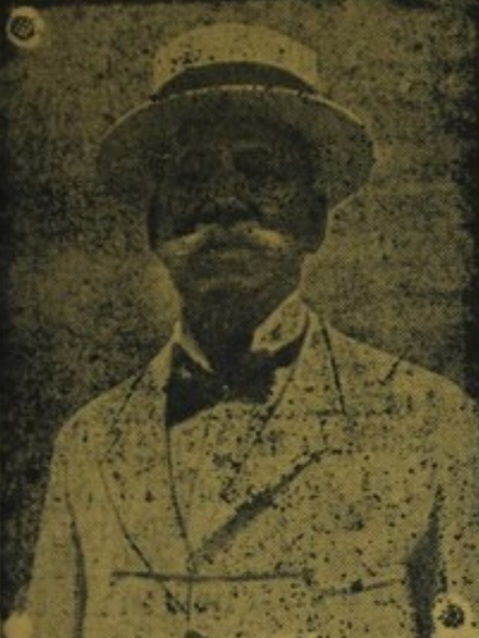
The great political breakthrough came in 1923. Following constitutional reforms that introduced a limited elective principle in Lagos, allowing a handful of African seats on the Legislative Council, Macaulay founded the Nigerian National Democratic Party. The NNDP was the first genuine political party in Nigeria’s history. It contested and won the elective seats for Lagos in the elections that followed, and for the next decade it dominated the politics of the colony. The party gave organised, electoral form to the nationalist sentiment that Macaulay had been stirring for years, and it demonstrated that Africans could build modern political institutions of their own.
The NNDP campaigned for greater African participation in government, for improvements in education and health, for the interests of Lagos market women and workers, and for the dignity of the traditional institutions the colonial government sought to sideline. Under Macaulay’s leadership it became a training ground for a generation of politically conscious Nigerians. Journalism and party politics now worked hand in hand, the newspaper broadcasting the message and the party carrying it into the halls of power.
One of Macaulay’s shrewdest political insights was his understanding of the ordinary people of Lagos, and particularly of the market women who formed the backbone of the city’s economy. He recognised that nationalism could not be the preserve of a small circle of educated gentlemen. It had to reach the trader, the artisan and the labourer if it was to have any real force. He cultivated a deep base of popular support, and figures such as the great market leader Alimotu Pelewura became powerful allies in his campaigns against unfair taxation and colonial high-handedness. This ability to link the concerns of the elite with the grievances of the common people set Macaulay apart from many of his contemporaries and made his movement genuinely popular rather than merely respectable.
Political Struggle
Macaulay’s decades of agitation did not come without cost. The colonial authorities regarded him as a dangerous agitator, and they used the machinery of the state against him more than once. He faced prosecution and imprisonment on charges that his supporters and later historians widely viewed as politically motivated, designed to silence and discredit him. He served a term of imprisonment early in the twentieth century arising from a dispute over the estate of a deceased person, and he was jailed again in the 1920s. Each time, rather than breaking his spirit, the persecution burnished his reputation as a man willing to suffer for his convictions.
He also became a controversial figure among conservative Nigerians and colonial officials because of his defence of the deposed and exiled traditional rulers of Lagos, and his insistence on airing grievances that the administration would have preferred to keep quiet. He was accused of stirring the population and undermining the government. To the ordinary people of Lagos, however, he was a champion, the one prominent African who would consistently stand up to the colonial power on their behalf.
Through the 1920s and 1930s Macaulay was the central figure in Lagos politics, an elder statesman of a movement that was still finding its shape. He mentored younger activists, shaped public debate through his newspaper, and kept alive the idea that Nigerians were entitled to govern themselves. By the time a new and more radical generation of nationalists emerged in the late 1930s and 1940s, they looked to Macaulay as the pioneer who had shown the way. His long career had made him a bridge between the cautious, petition-writing politics of the early colonial era and the mass nationalism that was about to be born.
The NCNC and Final Years
The final chapter of Macaulay’s life brought him together with a rising star of Nigerian nationalism, the journalist and future president Nnamdi Azikiwe. In 1944 the two men joined forces to found the National Council of Nigeria and the Cameroons, known as the NCNC. It was a bold new kind of organisation, an umbrella body that sought to unite political parties, trade unions, ethnic associations, professional bodies and youth movements from across the country into a single nationalist front. Where the NNDP had been rooted in Lagos, the NCNC aspired to speak for all of Nigeria.
Herbert Macaulay, now an old man of nearly eighty, became the first president of the NCNC, with Azikiwe as its general secretary. The pairing was symbolic and powerful: the venerable pioneer of Nigerian nationalism joining hands with its most dynamic young leader. The NCNC would go on to become one of the dominant political forces of the independence era, and its founding marked the arrival of a truly national struggle against colonial rule.
“The dimensions of my loyalty to my race have never been small.”
In 1946 Macaulay set out on a nationwide tour with Azikiwe and other NCNC leaders to promote the movement, rally support and raise funds for a delegation to protest a controversial new constitution to the British authorities. The tour took the ageing statesman across the country, but the strain of the journey proved too much. He fell ill during the tour and was brought back to Lagos, where he died on 7 May 1946 at the age of eighty-one. His death, in the midst of a campaign to unite Nigerians in a common cause, seemed to crown a life dedicated entirely to the nation he had helped to imagine. He was mourned across the country as the grand old man of Nigerian politics, and vast crowds attended his funeral in Lagos.
Career Timeline
- 1864: Born on 14 November in Lagos into the family of Bishop Samuel Ajayi Crowther and educator Thomas Babington Macaulay.
- 1890 to 1893: Studies civil engineering and surveying in England, qualifying as a licensed engineer and surveyor.
- 1893: Returns to Lagos and joins the colonial civil service as a surveyor of Crown lands.
- 1898: Resigns from the colonial service and sets up in private practice, beginning his life as a public activist.
- 1921: Wins the Apapa lands case at the Privy Council in London on behalf of Chief Amodu Tijani, affirming African land rights.
- 1923: Founds the Nigerian National Democratic Party, the first political party in Nigerian history, which sweeps the Lagos elective seats.
- 1927: Founds the Lagos Daily News, a leading nationalist newspaper.
- 1944: Co-founds the National Council of Nigeria and the Cameroons with Nnamdi Azikiwe and becomes its first president.
- 1946: Dies on 7 May in Lagos, aged 81, while campaigning for the nationalist cause on a nationwide tour.
Lesser-Known Facts
- He was the grandson of a former slave who became a bishop. His maternal grandfather, Bishop Samuel Ajayi Crowther, was captured and sold into slavery as a boy, freed by the British navy, and rose to become the first African Anglican bishop in 1864.
- He was a genuinely trained engineer and surveyor. Long before he entered politics, Macaulay earned professional qualifications in civil engineering in England and worked as a Crown lands surveyor, a rarity for an African in his day.
- He was a gifted musician. Macaulay was an accomplished violinist and had a serious love of music, an artistic side that sat alongside his technical training and his political fire.
- He founded Nigeria’s very first political party. The Nigerian National Democratic Party, established in 1923, was the first organised political party in the country’s history and dominated Lagos politics for a decade.
- His face has appeared on Nigerian currency. In honour of his role as a founding father of the nation, Herbert Macaulay’s portrait has featured on the Nigerian ten naira note, keeping his likeness in the pockets of everyday Nigerians.
- He bridged two eras of nationalism. His career connected the cautious constitutional politics of the early colonial period with the mass, nationwide movement of the 1940s, mentoring the generation that would ultimately win independence.
Frequently Asked Questions
Who was Herbert Macaulay? Herbert Macaulay was a Nigerian civil engineer, surveyor, journalist and politician, born in Lagos in 1864 and died there in 1946. He is widely regarded as the father of Nigerian nationalism for his pioneering role in organising political opposition to British colonial rule and founding the country’s first political party.
Why is he called the father of Nigerian nationalism? He earned the title through nearly four decades of leadership in the struggle against colonial injustice. He championed African rights in the courts and the press, founded the first Nigerian political party in 1923, and later helped create the NCNC, a national movement that shaped the drive toward independence. No single figure did more to lay the foundations of organised Nigerian nationalism.
What party did he found? In 1923 Macaulay founded the Nigerian National Democratic Party, the NNDP, the first political party in Nigeria’s history. It won the elective seats for Lagos and dominated the colony’s politics through the 1920s and 1930s. In 1944 he also co-founded the National Council of Nigeria and the Cameroons, the NCNC.
Who was his grandfather? His maternal grandfather was Bishop Samuel Ajayi Crowther, a man who had been enslaved as a child, freed by a British naval squadron, and rose through mission education to become the first African Anglican bishop in 1864, the same year Macaulay was born.
When did he die? Herbert Macaulay died on 7 May 1946 in Lagos at the age of eighty-one, while he was engaged in a nationwide tour to promote the NCNC and the nationalist cause.
Legacy
Herbert Macaulay did not live to see Nigeria become an independent nation. That milestone would come in 1960, fourteen years after his death. Yet the independence that Nigerians celebrated in 1960 was built on foundations he had laid across a lifetime of struggle. He taught his people that they had rights worth defending, that a foreign government could be challenged in its own courts and its own press, and that Africans could build modern political institutions of their own. The NNDP proved that Nigerians could win elections and organise politically. The NCNC turned that lesson into a national movement. And the generation of leaders who carried Nigeria to freedom, from Nnamdi Azikiwe onward, came of age in the political world that Macaulay had done so much to create.
His memory is woven into the fabric of the nation. Streets, buildings and institutions across Nigeria bear his name, and his portrait has looked out from the country’s banknotes into the hands of ordinary citizens. More than any monument, though, his true legacy is the idea he championed: that Nigeria belonged to Nigerians, and that they had every right to govern themselves. In an age when few dared to say such things aloud, Herbert Macaulay said them again and again, in the courtroom, in the newspaper, and in the crowded public square. For that courage, and for the movement it inspired, he is remembered still as the father of Nigerian nationalism.