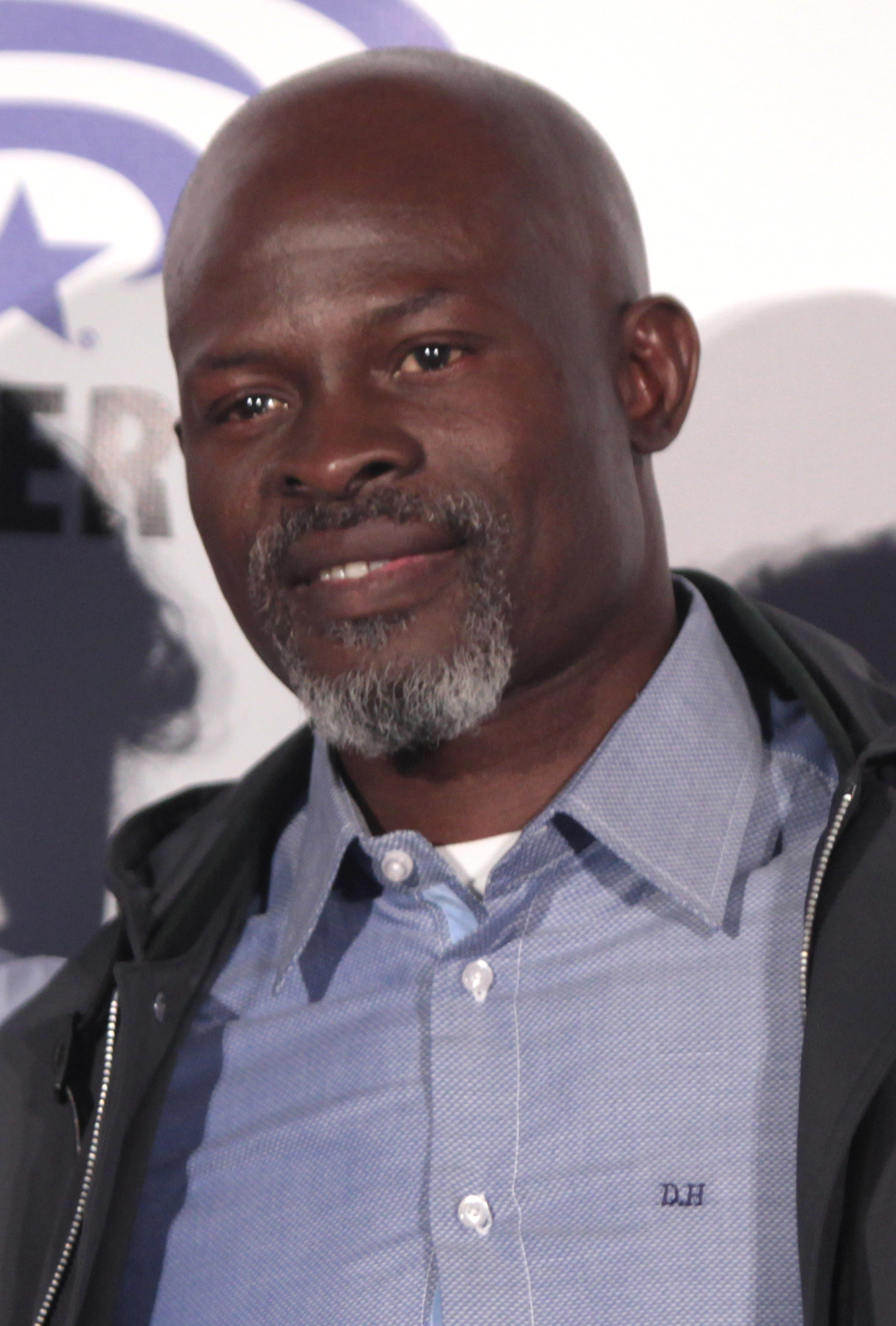
Before the world knew his face, before Steven Spielberg cast him as the defiant heart of a landmark film, and long before two Academy Award nominations placed his name among Hollywood’s respected character actors, Djimon Hounsou was a young man sleeping rough on the streets of Paris. He had arrived in France chasing a better life and found, for a time, only hunger and uncertainty. That gap between where he started and where he ended up is the reason his story resonates so deeply across Africa and beyond. It is a story of endurance, of a proud son of Benin who refused to disappear, and of a career built on presence, dignity, and a determination to represent his continent with truth.
Quick Facts
- Full name
- Djimon Gaston Hounsou
- Born
- 24 April 1964, Cotonou, Benin
- Heritage
- Beninese (later also American)
- Known for
- Amistad, In America, Blood Diamond, Gladiator
- Awards
- Two Academy Award nominations for Best Supporting Actor
Early Life
Djimon Gaston Hounsou was born on 24 April 1964 in Cotonou, the largest city and economic capital of the West African nation of Benin. He grew up as the youngest child in his family, in a country then still finding its footing in the years after independence from France. His father worked as a cook, and the household was one where resources were limited and expectations were practical. Benin, formerly known as Dahomey, was a place of rich culture and deep history, home to the legacy of the ancient Kingdom of Dahomey, yet for a boy of modest means the horizons could feel narrow.
As a teenager, around the age of thirteen, Hounsou left Benin and moved to France, following an older brother in search of education and opportunity. What awaited him was far harder than he had imagined. The dream of studying and building a stable life in Europe collided with the reality of being a young African immigrant with little money and few connections. He has spoken openly, in later years, about the severity of the hardship that followed. For a period he was homeless in Paris, sleeping on the streets, uncertain where his next meal would come from, and living the kind of instability that most of his future audiences would never guess lay behind his composed screen presence.
That chapter of poverty and displacement left a permanent mark on Hounsou. It is the foundation of the resilience that observers so often note in his performances, and it is the reason he speaks about opportunity and dignity with such weight. He did not inherit his path. He clawed his way out of a situation that could easily have swallowed him. The turning point, when it came, arrived from an unlikely direction: the world of high fashion.
It is worth pausing on how improbable that survival was. Countless young men in his position, cut off from family support, unfamiliar with the language of the streets they slept on, and carrying the quiet shame of failure, simply vanish into the margins of a big city. Hounsou did not. He has described the period as one of the hardest of his life, a stretch of time in which he learned exactly how little separates a person from despair and exactly how much strength it takes to keep going. Those lessons, harsh as they were, gave him an inner steadiness that would later read on screen as gravity. Audiences who knew nothing of his past could still sense that here was a man who had been tested by something real.
Modelling and Early Acting
While living in Paris and struggling to survive, Hounsou was discovered by the celebrated French fashion designer Thierry Mugler, whose theatrical, sculptural sense of style found a striking canvas in the young man’s face and physique. Mugler helped launch Hounsou into modelling, and suddenly the streets that had nearly broken him gave way to the runways and photo studios of the fashion capital. It was an astonishing reversal of fortune, and it gave Hounsou both an income and a foothold in a creative industry.
Modelling took him to the United States, and through that world he began to appear in music videos during the late 1980s and early 1990s, a period when the format was at the height of its cultural power. He featured in high-profile videos for artists including Madonna and Janet Jackson, and his commanding look made him memorable even in brief appearances. These were not acting roles in any traditional sense, but they placed him in front of cameras and directors, and they sharpened his instinct for how to hold the screen.
The move into acting followed naturally. Hounsou relocated to Los Angeles and began picking up small parts in television and film. He appeared in episodes of popular American series and took supporting roles in features, gradually accumulating the experience that working actors need. Among his early screen credits was a role in the 1994 science fiction film Stargate, where he played a warrior figure, as well as guest appearances on television dramas. These years were a long apprenticeship. He was learning his craft in a second language, in a foreign industry, competing for the limited roles then available to African and Black actors. The breakthrough that would change everything was still ahead, but he was building toward it with quiet persistence.
The transition from modelling to serious acting is one that many attempt and few complete. A striking face can open a casting door, but it cannot carry a scene, hold an audience through silence, or make a written character breathe. Hounsou understood the difference, and he approached acting as a discipline to be earned rather than a favour owed to him for his looks. He studied, watched, and worked, taking the roles that came and treating each one as a chance to prove he was more than a photograph. That patience mattered, because when the defining opportunity of his career finally arrived, he was ready to meet it with the full weight of a prepared craftsman rather than the nervous luck of a newcomer.
Breakthrough
Everything changed in 1997 when Steven Spielberg cast Djimon Hounsou in the lead role of Cinque in the historical drama Amistad. The film told the true story of the 1839 revolt aboard the slave ship La Amistad, in which a group of captured Africans rose up against their captors and were later put on trial in the United States, their fate becoming a landmark legal and moral struggle. Hounsou played Sengbe Pieh, known as Cinque, the man who led the uprising and became the symbolic heart of the resistance.
The role demanded enormous emotional range and physical intensity, and much of Hounsou’s most powerful work in the film was delivered in the Mende language rather than English. He carried scenes of anguish, defiance, and raw humanity, holding his own alongside a cast that included Anthony Hopkins, Morgan Freeman, and Matthew McConaughey. His performance was widely praised and earned him a Golden Globe nomination, announcing him as a serious dramatic actor rather than a former model trying his luck on screen.
Amistad established the qualities that would define Hounsou’s career: a towering physical presence, a gift for conveying inner strength and suffering at once, and an authenticity rooted in his own African identity. For audiences across the continent and its diaspora, seeing an African actor from Benin lead a major Hollywood film about the horrors and heroism of the slave trade was a moment of real significance. The homeless teenager from Cotonou had become a name that serious filmmakers wanted in their casts.
Oscar Nominations
If Amistad opened the door, the years that followed proved Hounsou belonged in the room. In 2000 he appeared in Ridley Scott’s epic Gladiator, playing Juba, a Numidian slave and gladiator who becomes the loyal friend and confidant of Russell Crowe’s Maximus. Gladiator was a global blockbuster that won the Academy Award for Best Picture, and while Juba was a supporting role, Hounsou made him unforgettable. The film’s final moments, in which Juba buries small figures in the sand of the Colosseum in tribute to his fallen friend, remain among its most quietly moving images.
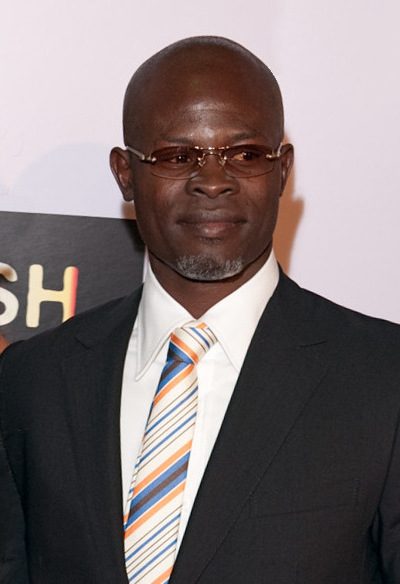
Then came the performances that earned Hounsou his greatest individual recognition. In 2003 he starred in Jim Sheridan’s tender drama In America, playing Mateo, a Nigerian painter dying of AIDS who forms a profound bond with an Irish immigrant family living in the same New York building. It was a role of extraordinary gentleness and pain, a departure from the warriors and slaves he had often portrayed, and it revealed the depth of his range. The performance earned him his first Academy Award nomination for Best Supporting Actor.
Three years later, in 2006, he received his second Oscar nomination for Edward Zwick’s Blood Diamond. In that film Hounsou played Solomon Vandy, a Sierra Leonean fisherman torn from his family during the country’s brutal civil war and forced to labour in the diamond fields, desperate to recover his kidnapped son. Acting opposite Leonardo DiCaprio, Hounsou delivered a performance of ferocious emotional force, and the film brought international attention to the issue of conflict diamonds. Two Academy Award nominations for Best Supporting Actor placed him in rare company and confirmed his standing as one of the most respected African actors working in cinema.
A Prolific Career
Beyond the awards recognition, Hounsou built one of the busiest and most varied careers of any actor of his generation, moving fluidly between prestige dramas and the biggest franchises in modern film. He appeared in fantasy and action pictures such as The Four Feathers, Constantine alongside Keanu Reeves, and Eragon, and he took on the villain role in James Wan’s Furious 7, part of the enormously popular Fast and Furious series.
As the era of interconnected superhero universes took hold, Hounsou became a recognisable presence across multiple franchises. In the Marvel Cinematic Universe he played Korath in both Guardians of the Galaxy (2014) and Captain Marvel (2019). In the DC universe he portrayed the ancient Wizard who grants power to the young hero in Shazam! and its sequel, and he appeared in James Wan’s Aquaman. He was also part of the tense survival world of A Quiet Place Part II. Across these roles he brought gravity and craft to characters that lesser actors might have played as mere spectacle.
His work was not limited to live action. Hounsou lent his deep, resonant voice to animation, most notably as the fearsome antagonist Drago Bludvist in How to Train Your Dragon 2. He continued to seek out substantial dramatic material as well, taking roles that spoke to his interest in history, morality, and the African experience. The breadth of his filmography, spanning intimate independent dramas and effects-driven blockbusters seen by hundreds of millions, is a testament both to his versatility and to his enduring appeal across very different kinds of storytelling.
What distinguishes Hounsou within these commercial projects is that he rarely allows a role to shrink to mere function. Even when cast as a lieutenant, a mystic, or an adversary in a crowded ensemble, he brings a considered physicality and a sense of history to the part. Directors have repeatedly turned to him precisely because he can lend credibility and stature to characters that might otherwise feel thin. That reliability made him a fixture of the franchise era, one of a small group of actors whose presence signals to audiences that a scene carries genuine stakes. Over the course of a working life measured in decades, he accumulated a body of work that few of his peers could match in either range or volume, moving between studio spectacle and character-driven storytelling without ever seeming out of place in either.
Heritage and Advocacy
Through every stage of his success, Hounsou has remained vocal about his African identity and about the way Africa and its people are represented on screen. He became a naturalised citizen of the United States, yet he has never distanced himself from Benin or from the continent that shaped him. He carries his heritage as a source of pride and as a responsibility, using his platform to push for more honest and dignified portrayals of Africans in global media.
He has also spoken with unusual candour about the difficulties he has faced within Hollywood, including his sense that his contributions have not always been rewarded fairly despite his critical acclaim.
“I feel cheated, tremendously cheated,” Hounsou told The Guardian in 2023, reflecting on his standing in the industry after decades of work and two Oscar nominations.
Those comments drew wide attention because they came from a figure who, by most measures, had achieved remarkable success, and they opened a broader conversation about how Black and African talent is valued in the film business. Rather than diminishing his reputation, his honesty deepened the respect many hold for him.
Hounsou has engaged in humanitarian and advocacy work beyond the screen as well, lending his voice to causes connected to Africa and to global issues such as the impact of climate change on vulnerable communities. In interviews he often returns to the theme of authentic representation, insisting that African stories deserve to be told with truth, complexity, and self-determination, rather than through outdated stereotypes. For a man who rose from homelessness to the front rank of international cinema, that insistence on dignity is not an abstract cause. It is the through line of his entire life.
His advocacy carries particular weight because it is grounded in lived experience rather than distant sympathy. When Hounsou speaks about the way Africans are seen, he is describing a journey he made himself, from a childhood in Cotonou to the studios of Los Angeles, and he understands intimately how narrow the imagination of the industry can be. He has used interviews and public appearances to remind audiences that the continent is not a single story of poverty or conflict but a vast tapestry of cultures, histories, and futures. In pressing for African talent to be given real opportunities behind the camera as well as in front of it, he has aligned himself with a generation of artists working to change who gets to tell African stories, and on whose terms those stories reach the world.
Career Timeline
- 1964: Born on 24 April in Cotonou, Benin, the youngest child in his family.
- Late 1970s to 1980s: Moves to France as a teenager, endures a period of poverty and homelessness in Paris, and is later discovered as a model by designer Thierry Mugler.
- Late 1980s to early 1990s: Builds a modelling career and appears in high-profile music videos for artists including Madonna and Janet Jackson.
- 1994: Takes an early film role in the science fiction feature Stargate.
- 1997: Breaks through as Cinque, leader of the slave-ship revolt, in Steven Spielberg’s Amistad, earning a Golden Globe nomination.
- 2000: Plays Juba opposite Russell Crowe in Ridley Scott’s Best Picture winner Gladiator.
- 2003: Receives his first Academy Award nomination for Best Supporting Actor for In America.
- 2006: Receives his second Academy Award nomination for Best Supporting Actor for Blood Diamond, opposite Leonardo DiCaprio.
- 2014 to present: Appears across major franchises including Guardians of the Galaxy, Captain Marvel, Shazam!, Aquaman, and A Quiet Place Part II, and voices Drago Bludvist in How to Train Your Dragon 2.
Lesser-Known Facts
- He was born and raised in Cotonou, Benin, a West African country formerly known as Dahomey, and remains one of the most prominent Beninese figures in global entertainment.
- Before his fame, he experienced genuine homelessness on the streets of Paris after moving to France as a teenager in search of a better life.
- His entry into the entertainment world came through fashion, after the designer Thierry Mugler discovered him and helped launch his modelling career.
- Much of his acclaimed work in Amistad was performed in the Mende language rather than in English, underscoring his commitment to authenticity.
- He is a two-time Academy Award nominee for Best Supporting Actor, for In America and Blood Diamond, a rare achievement for an African-born actor.
- He has been an outspoken advocate for authentic African representation in film and has publicly criticised the industry’s treatment and valuation of Black talent.
Frequently Asked Questions
Where is Djimon Hounsou from? Djimon Hounsou was born on 24 April 1964 in Cotonou, Benin, in West Africa. He moved to France as a teenager and later settled in the United States, but his roots and identity remain firmly Beninese and African.
What films is Djimon Hounsou known for? He is best known for Amistad, In America, Blood Diamond, and Gladiator. He has also appeared in major franchise films including Guardians of the Galaxy, Captain Marvel, Shazam!, Aquaman, Furious 7, and A Quiet Place Part II.
Has Djimon Hounsou won an Oscar? He has not won an Academy Award, but he has been nominated twice for Best Supporting Actor, for In America in 2003 and for Blood Diamond in 2006. Both nominations confirmed his standing as one of the most respected African actors in Hollywood.
What was his breakout role? His breakout role was Cinque, the leader of an enslaved people’s revolt, in Steven Spielberg’s 1997 historical drama Amistad. The performance earned him a Golden Globe nomination and established him as a serious dramatic actor.
Was he really homeless? Yes. After moving to France as a young teenager, Hounsou went through a period of severe hardship and homelessness in Paris before being discovered as a model, a chapter of his life he has spoken about openly in interviews.
Legacy
Djimon Hounsou’s legacy is measured not only in nominations and box office numbers but in what his journey represents. He is proof that talent and endurance can carry a person from the streets of a foreign city to the highest levels of a global art form, without ever surrendering the identity that made him. For young Africans watching from Cotonou, Lagos, Nairobi, or Accra, his career is a living argument that their origins are not a limitation but a source of strength.
His performances have given audiences some of the most humane and unforgettable African characters in modern cinema, men marked by suffering yet defined by their refusal to be broken. His willingness to speak plainly about the inequities he has faced has made him a conscience of the industry as much as one of its enduring stars. Djimon Hounsou remains, above all, a proud son of Benin who carried his continent onto the world stage and insisted, at every turn, that Africa be seen and heard on its own terms. That, more than any statuette, is the achievement that will outlast him.