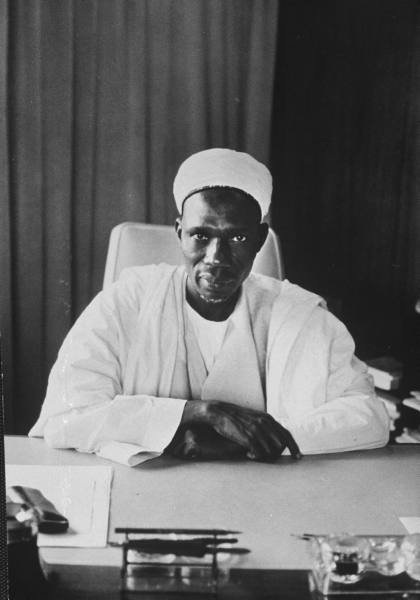
On the night of 15 January 1966, a group of young army officers moved through the streets of Lagos and Kaduna with a plan to seize control of Nigeria. Among the men they came for was the one who stood at the very top of the government, the head of the federal administration and the voice that had spoken for the country at its proudest moment five years earlier. Within hours, Nigeria’s first and only Prime Minister had been taken from his residence. His disappearance, and the discovery of his body days later on a roadside outside the capital, marked the brutal end of the nation’s first republic and the beginning of decades of instability. Yet the man at the center of that tragedy had begun his life not in a palace or a barracks, but in a small town in the hills of Northern Nigeria, where a boy from a modest family grew into one of the most respected statesmen of the independence era.
Abubakar Tafawa Balewa was a teacher before he was a politician, and he carried the patience and clarity of a classroom into the chambers of power. His calm, measured speech earned him a nickname that followed him through his entire public life, and his steady hand guided a fragile coalition through the birth of a new nation. This is the story of the man who led Nigeria to independence, served as its Prime Minister from the first day of self-rule, and became a founding figure in the movement for African unity.
Quick Facts
- Full name
- Abubakar Tafawa Balewa
- Born
- December 1912, Tafawa Balewa, Bauchi, Northern Nigeria
- Died
- 15 January 1966 (aged 53)
- Office
- First Prime Minister of Nigeria (1960 to 1966)
- Known for
- Leading Nigeria to independence, Pan-African diplomacy
Early Life and Education
Abubakar Tafawa Balewa was born in December 1912 in the town of Tafawa Balewa, in the Bauchi region of what was then the British protectorate of Northern Nigeria. The town gave him the second part of his name, a detail that would later strike many Nigerians as fitting, since the place and the man became so closely linked in the public memory. His origins were humble. His father worked in local service, and the family held no great wealth or noble rank. In a society where influence often flowed through established aristocratic houses, Balewa’s rise owed almost everything to his own discipline and to the opportunities that formal schooling opened for him.
He began his education in local Quranic study, as was common for boys of his background, before moving into the colonial school system. His talent was evident early, and it carried him to Katsina College, one of the most important teacher-training institutions in Northern Nigeria at the time. Katsina College produced a generation of northern leaders, administrators, and educators, and Balewa stood out among his peers for his seriousness and his command of language. He completed his training there and set out on the path that would define the first chapter of his working life, the path of the teacher.
Balewa returned to Bauchi and took up a post in the classroom. He taught with evident commitment and rose to become a headmaster, a role that placed him in a position of respect within his community. Teaching shaped him in ways that later served his political career. It trained him to explain difficult ideas plainly, to hold the attention of a room, and to think about the slow work of building institutions and preparing young minds for the future. In the late 1940s, his ability earned him a scholarship to study in Britain, and he traveled to London to attend the University of London Institute of Education. There he studied the theory and practice of education at a level few of his countrymen had reached, and he returned to Nigeria with broadened horizons and a deeper understanding of the wider world. The teacher who came back from London was ready to step onto a larger stage.
Entry into Politics
The years after the Second World War were a time of rising political energy across colonial Africa, and Nigeria was no exception. Educated Nigerians increasingly pressed for a greater say in the governance of their own country, and new political movements began to take shape across the three main regions of the territory. Balewa, with his reputation as a thoughtful and articulate man of the north, was drawn into this current. His entry into public life came through the structures of local and regional representation that the colonial administration had begun to expand.
He emerged as one of the leading voices of Northern Nigeria, a region that was often cautious about the pace of change and anxious about its place in a future independent state dominated by the more educated southern elites. Balewa helped found the Northern People’s Congress, known as the NPC, alongside Ahmadu Bello, the Sardauna of Sokoto, who would become the party’s political patron and the premier of the Northern Region. The two men formed a partnership that shaped northern politics for more than a decade. Bello remained the commanding figure of the region and chose to stay at its head rather than move to the federal center, while Balewa became the party’s representative on the national stage.
Balewa won election to the Northern House of Assembly, and from there he advanced into the federal legislature in Lagos. It was in these chambers that his great gift became impossible to ignore. He was a brilliant orator, a man whose speeches combined dignity, moral seriousness, and a striking clarity of expression. His delivery was unhurried and resonant, and listeners across the country came to admire the sound of his voice and the weight of his words. He earned the title that stayed with him for the rest of his life, the “Golden Voice of the North.” The nickname captured both the literal quality of his speaking and the sense that he gave voice to a region that had long felt it needed a champion who could hold his own in the national debate.
“A nation is not made of men but of institutions.”
The sentiment ran through much of Balewa’s public thinking. He believed that the durability of a country depended less on the fortunes of any single leader and more on the strength of the systems that outlasted them, a conviction rooted in his years building schools and shaping young students.
The Road to Independence
By the early 1950s, the question was no longer whether Nigeria would move toward self-government but how quickly and in what form. The territory was vast and diverse, home to hundreds of ethnic groups and divided into regions with very different histories, religions, and levels of Western education. A series of constitutional conferences, held both in Nigeria and in London, brought together representatives of the regions and the colonial authorities to negotiate the shape of the future state. Balewa took part in these conferences as a central figure, and his calm, conciliatory style made him an effective bridge-builder at a time when regional suspicions ran high.
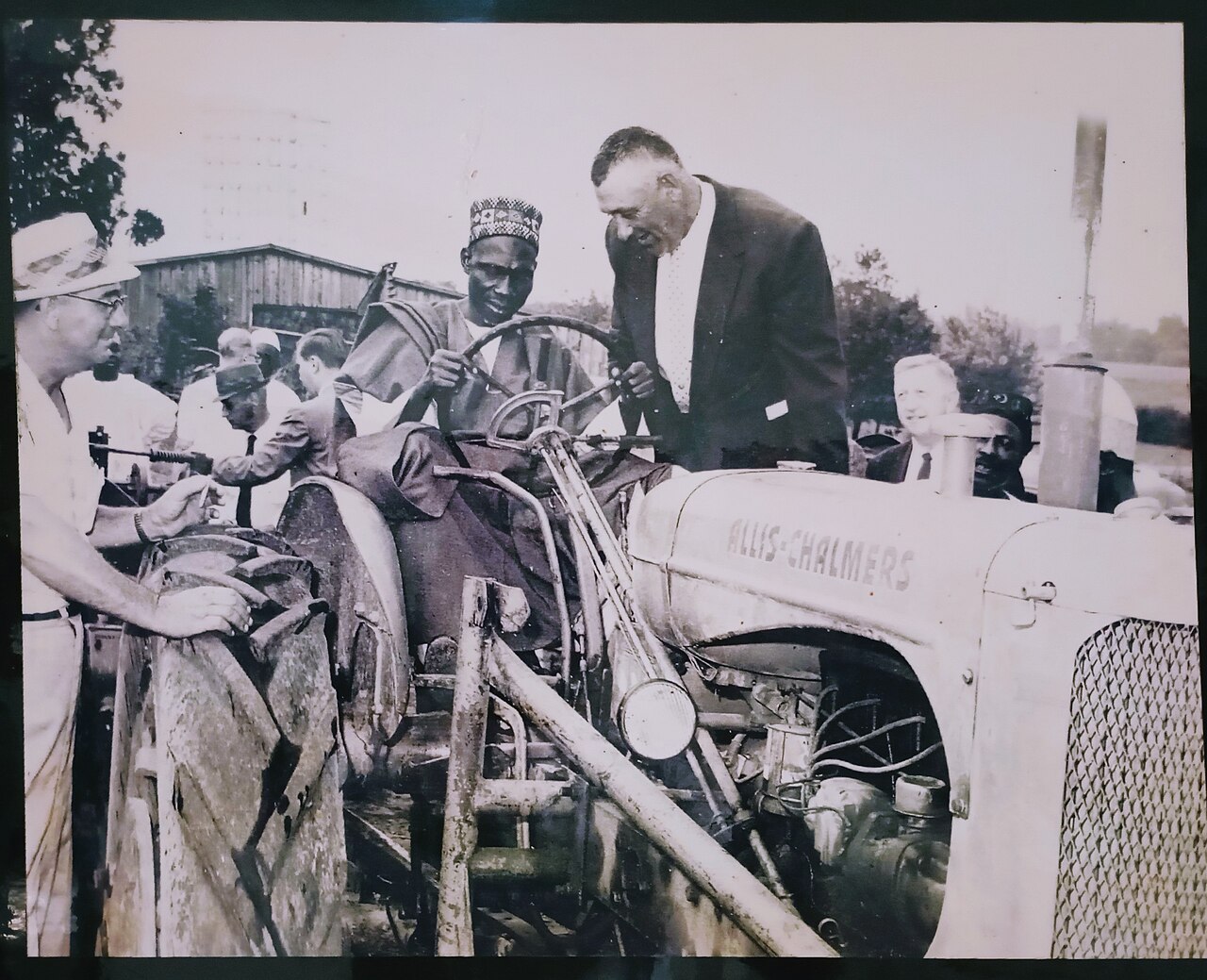
As the colonial government expanded the role of Nigerians in the executive, Balewa was given increasing responsibility. He served as a minister in the central government, gaining direct experience in the running of national affairs. In 1957, as Nigeria moved into the final phase before full independence, he was appointed Chief Minister of the Federation, the leading political figure in the central government. Shortly afterward the office took on the title of Prime Minister, and Balewa became the first person to hold that position. He led a coalition government that brought together his Northern People’s Congress with the National Council of Nigeria and the Cameroons, a party rooted largely in the east and led by Nnamdi Azikiwe. The coalition reflected the practical reality that no single region could govern Nigeria alone, and Balewa’s willingness to work across these lines made him the natural figure to hold the arrangement together.
The culmination of these years came on 1 October 1960, when Nigeria became an independent nation. At the ceremonies in Lagos, with the British flag lowered and the new green and white flag raised, Balewa stood as the head of the government of the new country. It was the defining moment of his career and one of the proudest days in the nation’s history. The teacher from Bauchi, who had started in a one-room school and risen through decades of patient service, now led a country of tens of millions of people into its future as a sovereign state. Nnamdi Azikiwe became the ceremonial head of state, first as Governor-General and later as President when Nigeria became a republic in 1963, while Balewa held the real reins of day-to-day government as Prime Minister.
Prime Minister
Leading an independent Nigeria proved to be a far harder task than leading the campaign for independence had been. The country Balewa governed was held together by a delicate balance among its regions and ethnic groups, and the tensions that the independence movement had papered over now rose to the surface. The north, the east, and the west each had their own dominant political parties and their own ambitions, and every national question, from the control of resources to the distribution of political power, carried the risk of inflaming regional rivalries. Balewa spent much of his time as Prime Minister working to manage these competing interests and to keep the coalition from fracturing.
Two crises in particular tested the stability of his government. The first was the controversy over the national census, a count whose results carried enormous weight because population figures determined the allocation of seats and resources among the regions. Rival regions accused one another of inflating their numbers, and the disputes over the census undermined trust in the fairness of the federal system. The second was the deepening crisis over elections, especially the bitter and often violent contests in the Western Region, where a split in the dominant party led to breakdowns in order. The federal election of 1964 and the regional election in the west that followed were marked by accusations of rigging, intimidation, and fraud, and they left large parts of the country feeling that the democratic process had been corrupted. These crises placed Balewa in an extremely difficult position, caught between the need to preserve order and the perception that his government favored certain interests over others.
On the international stage, Balewa found more room to shine. He pursued a foreign policy that sought to give Nigeria a respected and independent voice in world affairs while maintaining working relationships with Britain and the Western powers. He was a committed believer in African solidarity, and he played a prominent part in the creation of the Organisation of African Unity, the OAU, which was founded in 1963 to promote cooperation and unity among the newly independent states of the continent. His diplomacy and his calm authority earned him regard among other African leaders and marked Nigeria out as a serious player in continental politics. In recognition of his service and his role in the independence process, he was knighted, becoming Sir Abubakar Tafawa Balewa, a title that reflected the close ties that still bound Nigeria to Britain in the early years of independence.
Assassination and Legacy
The strains that had built up over the census disputes, the contested elections, and the growing sense of disorder in parts of the country came to a violent climax in the early hours of 15 January 1966. A group of young army officers, several of them majors, launched a coup aimed at overthrowing the civilian government. They struck in several cities at once, targeting leading political figures of the first republic. Ahmadu Bello, the premier of the north and Balewa’s longtime ally, was killed in Kaduna. Samuel Akintola, the premier of the west, was also killed. In Lagos, the plotters came for the Prime Minister.
Balewa was abducted from his official residence during the night. For several days his whereabouts were unknown, and the country waited in anxious uncertainty. Then his body was discovered on a roadside outside Lagos, on the route toward Abeokuta. He had been killed, and the manner of his death brought to a close the life of the man who had led Nigeria through its first years of independence. He was fifty-three years old. The coup did not fully succeed in its aims, but it shattered the civilian order. Power passed to the military, and the fragile balance of the first republic collapsed. The instability that followed deepened over the coming months, leading to a counter-coup later in 1966 and, within a few years, to the civil war that tore at the fabric of the nation.
Balewa’s death left a profound mark on the national consciousness. He was remembered by many as a man of honesty, humility, and genuine devotion to his country, a leader who had tried to hold a difficult coalition together through turbulent years. In the decades that followed, Nigeria honored his memory in lasting ways. His image appeared on the national currency, on the five naira note, placing his face among the symbols of the nation. Institutions and landmarks were named after him, and his home town, which already bore his name, became forever associated with his story. The Tafawa Balewa Square in Lagos, a major public space, stands as one of the most prominent memorials to his legacy.
Career Timeline
- 1912 (December): Born in the town of Tafawa Balewa, Bauchi, in Northern Nigeria.
- Late 1920s to 1930s: Trains as a teacher at Katsina College, then works as a teacher and rises to headmaster in Bauchi.
- Late 1940s: Travels to Britain to study at the University of London Institute of Education.
- Early 1950s: Helps found the Northern People’s Congress (NPC) with Ahmadu Bello and wins election to the Northern House of Assembly and the federal legislature.
- 1957: Appointed Chief Minister of the Federation, then becomes the first Prime Minister of Nigeria, leading a coalition government.
- 1 October 1960: Leads Nigeria to independence as its first Prime Minister.
- 1963: Plays a founding role in the creation of the Organisation of African Unity (OAU); Nigeria becomes a republic.
- 1964: Governs through the contentious federal election and the deepening political crisis in the Western Region.
- 15 January 1966: Abducted and killed during a military coup; his body is found days later near Lagos.
Lesser-Known Facts
- He was widely known as the “Golden Voice of the North,” a nickname earned through his remarkable skill as an orator and the dignified, resonant quality of his public speaking.
- Before entering politics, he spent years as a classroom teacher and later a headmaster, making education the foundation of his public life long before he held any political office.
- He was knighted and formally styled Sir Abubakar Tafawa Balewa, a mark of the close relationship between independent Nigeria and Britain in the early 1960s.
- His own name came from his birthplace, the town of Tafawa Balewa in Bauchi, so that the man and the place became permanently linked in the national memory.
- His portrait was featured on the Nigerian five naira note, honoring him among the figures commemorated on the country’s currency.
- He chose to represent the Northern People’s Congress on the national stage while his ally Ahmadu Bello remained premier of the Northern Region, an arrangement that shaped Nigeria’s politics for over a decade.
Frequently Asked Questions
Who was Abubakar Tafawa Balewa?
Abubakar Tafawa Balewa was a Nigerian teacher and statesman who became the first Prime Minister of Nigeria. Born in Bauchi in 1912, he rose from a modest background to lead the country to independence in 1960 and served as head of government until his death in the military coup of January 1966.
When did he become Prime Minister?
He became Chief Minister of the Federation in 1957, and that office soon took the title of Prime Minister, making him the first person to hold the position. He continued as Prime Minister when Nigeria achieved full independence on 1 October 1960 and remained in office until his death in 1966.
How did Tafawa Balewa die?
He was killed during the military coup of 15 January 1966, when a group of young army officers seized power. He was abducted from his residence in Lagos, and his body was found several days later on a roadside outside the capital. He was fifty-three years old.
What was he known for?
He is best remembered for leading Nigeria to independence as its first Prime Minister, for his role as a bridge-builder across the country’s regions, and for his contribution to African unity, including a founding role in the Organisation of African Unity in 1963. He was also admired as one of the finest public speakers of his generation.
Why is he called the Golden Voice of the North?
The title reflected his exceptional talent as an orator. His speeches were marked by clarity, dignity, and a calm, resonant delivery that drew admiration across Nigeria, and the nickname also expressed the sense that he gave powerful voice to the Northern Region on the national stage.
Legacy
Abubakar Tafawa Balewa remains one of the central figures in the story of modern Nigeria. He embodied the promise of the independence generation, a man who rose by talent and discipline rather than inherited privilege, and who carried the quiet authority of a teacher into the highest office in the land. His years in power were marked by enormous challenges, and he could not in the end hold back the forces that pulled the first republic apart, but his personal reputation for honesty and moderation has endured where the reputations of many of his contemporaries have faded.
His legacy lives on in the public memory and in the physical landscape of the country. His face on the five naira note, the square that bears his name in Lagos, and the town that gave him his name all keep his story present for new generations. He is remembered not only as the first Prime Minister of Nigeria but as a symbol of a hopeful moment, the day the flag was raised in 1960, when a diverse and ambitious nation set out on its own path. The violence of his death was a wound to that hope, yet the ideals he represented, patience, service, and the belief that a nation is built on strong institutions, continue to speak to those who look back on the founding years of their country. The Golden Voice of the North fell silent in 1966, but the memory of the teacher from Bauchi who led his nation to freedom has never been forgotten.