When the history of Nigerian cinema is written, a handful of names will stand at the very front of the story, and Omotola Jalade Ekeinde will be among them. She did not simply act in films during the explosive rise of Nollywood. She helped define what a leading lady could be, how far an African entertainer could reach, and what a famous woman might do with the influence she earned. From a teenage girl grieving the sudden loss of her father in Lagos, she grew into a performer whose face became shorthand for an entire golden era of home-video filmmaking, and later into a cultural figure recognized far beyond the borders of Nigeria.
Her career has spanned more than three decades. Over that time she has appeared in a staggering number of films, released music, built a recognizable personal brand, and taken on humanitarian causes that gave her fame a sense of purpose. To millions of fans across the African continent and in its global diaspora, she is known affectionately by a single nickname that captures both her glamour and her staying power. This is the story of how Omotola Jalade Ekeinde became the Nollywood queen, and then something even larger: an African icon.
Quick Facts
- Full name
- Omotola Jalade Ekeinde
- Born
- 7 February 1978, Lagos, Nigeria
- Nationality
- Nigerian
- Known for
- Nollywood film, music, humanitarian advocacy
- Notable work
- Mortal Inheritance, hundreds of Nollywood films
Early Life
Omotola Jalade was born on 7 February 1978 in Lagos, Nigeria, into a Yoruba family with roots in Ondo State. Lagos in the late 1970s and the 1980s was a restless, expanding city, a place where tradition and modern ambition pressed against each other on every crowded street. It was the kind of environment that shaped a child to be resourceful, observant, and quick. Those qualities would serve her well in the years to come, though as a girl she had no notion that cameras and audiences would ever enter her life.
Her childhood carried the ordinary rhythms of a Lagos upbringing, with school, family, and the close-knit expectations of a Yoruba household. Then, when she was still a teenager, her world shifted violently. Her father died, and the loss arrived at an age when a young person is still forming a sense of who they are. The grief was heavy, but it also sharpened something in her. Watching her mother carry the weight of the family forward, Omotola absorbed a lesson about resilience that she would later describe as central to her character. The early death of her father, rather than crushing her, planted a fierce drive to build a stable and meaningful life on her own terms.
That drive showed up in the way she approached her education and her ambitions. She attended school in Lagos and pursued her studies seriously, carrying the understanding that nothing would simply be handed to her. In interviews across the years she has returned again and again to this period, crediting the hardship of losing a parent young with teaching her discipline, independence, and an unwillingness to waste opportunity. It was in these teenage years, while she was still finding her footing, that fate intervened. She was discovered as a teenager, noticed for a poise and presence that suggested she might belong in front of an audience. What began almost by chance would soon become a calling.
Her Yoruba heritage remained a steady thread through everything that followed. The culture she grew up in prized storytelling, music, and performance as communal acts, woven into ceremonies, gatherings, and daily life. That inheritance gave her an instinctive comfort with drama and expression, a sense that performing was not a foreign art imported from elsewhere but a natural extension of the traditions around her. When she eventually stepped in front of a camera, she carried with her the cadence, warmth, and emotional directness of the community that raised her. In later years she would speak proudly of these roots, framing her success not as a break from where she came from but as a way of carrying her heritage onto larger and larger stages.
Breaking Into Nollywood
Omotola stepped in front of a film camera for the first time at around the age of sixteen. The timing could not have been better. The Nigerian home-video industry, later known the world over as Nollywood, was in the middle of an extraordinary boom. Through the 1990s, filmmakers in Nigeria were producing movies at remarkable speed, shooting on modest budgets and distributing their work directly to audiences on video cassettes that sold in markets and shops across the country and beyond. The industry was hungry for fresh faces, and Omotola arrived with exactly the kind of screen presence that audiences responded to immediately.
Her rise was rapid. In an industry that rewarded performers who could work quickly, connect with viewers, and carry a story on their shoulders, she stood out. She had a naturalness in front of the camera, an ability to make the heightened emotions of melodrama feel sincere, and a beauty that the lens loved. Within a short span she went from a newcomer to a sought-after young actress, and from there to a genuine leading lady. Producers wanted her in their projects, and audiences wanted to see her name attached to a film.
The role that cemented her reputation came in 1996 with the film Mortal Inheritance. In it she played a young woman living with sickle cell disease, a condition that carried deep personal and social weight for many Nigerian families. The part demanded far more than glamour. It called for vulnerability, strength, and emotional honesty, and Omotola delivered a performance that moved audiences and earned critical acclaim. Mortal Inheritance became one of the defining films of her early career and helped raise awareness about sickle cell disease at a time when open conversation about it was limited. The role proved that she was not merely a pretty face in a fast-moving industry, but an actress capable of carrying serious, socially resonant material.
As her star rose, so did a nickname that would follow her for the rest of her career. Fans and the press began calling her “Omosexy,” a playful blend of her name and her glamorous public image. The moniker stuck, becoming a kind of brand in itself, a single word that fans used with affection and that Omotola herself embraced. By the end of the 1990s she was no longer a promising young performer. She was a leading lady at the center of Nollywood’s most productive years.
Reign and Range
Once established, Omotola did not slow down. Over the course of her career she has appeared in well over 300 films, an output that reflects both the extraordinary pace of Nollywood production and her own tireless work ethic. That sheer volume could have reduced a lesser performer to a familiar set of gestures, but Omotola used it instead to demonstrate range. She moved comfortably between tender romance and heavy drama, between stories of love and longing and stories of struggle, betrayal, and survival. Audiences could expect her to anchor a lighthearted romantic tale one moment and a wrenching family drama the next.
During Nollywood’s golden era, she stood alongside Genevieve Nnaji as one of the two most recognizable faces of Nigerian cinema. Together, though in their own distinct ways, the two women came to represent the glamour, ambition, and reach of an industry that was rapidly becoming one of the largest film sectors in the world. For a generation of African moviegoers, their names on a video jacket were a promise of quality and star power. Omotola’s position at this pinnacle was not an accident of good timing alone. It was earned through consistency, through the trust of producers, and through an audience connection that endured as tastes and technologies changed around her.
What set her apart was an ability to meet audiences where they were. Nollywood in its early years spoke to ordinary people about ordinary struggles, about money and marriage, faith and family, ambition and betrayal, and Omotola understood how to make those everyday stories feel urgent. She could play a wronged wife, a determined daughter, a scheming rival, or a woman fighting illness, and in each case she gave the character a recognizable humanity. As the industry professionalized over the years, moving from video cassettes toward cinema releases, streaming platforms, and international festivals, she adapted without losing the core of what made her beloved. Her longevity, in a field where many stars flare brightly and then fade, is itself a testament to the depth of her talent and the loyalty of the audiences who grew up with her.

Away from the screen, Omotola built a family life that she has long described as her foundation. She married Captain Matthew Ekeinde, an airline pilot, and the marriage became one of the most admired unions in Nigerian public life, notable for its longevity in an industry where fame can strain relationships. The couple raised a family together, and Omotola has repeatedly spoken of her role as a wife and mother as the center of her world, a private anchor that gave meaning to her very public career. Balancing the demands of a prolific acting schedule with the responsibilities of family was never simple, but she made that balance a defining part of her story, often citing her husband and children as the reason she remained grounded through the turbulence of celebrity.
“I have been able to achieve so much because I decided early that I would not let anything or anyone define me except myself.”
That spirit of self-definition runs through every chapter of her career. She refused to be boxed in by a single type of role, a single stage of life, or a single expectation of what a famous Nigerian woman should do with her platform.
Music and Business
Acting was the foundation of Omotola’s fame, but it was never the limit of her ambition. Like a number of entertainers who reach a certain level of recognition, she sought to express herself in another medium, and for her that medium was music. She ventured into singing and released albums, including the project titled GBA and the album Me, bringing her well-known persona into the recording studio. Her musical work extended her brand and gave fans another way to connect with her, blending the glamour of her screen image with the rhythms and themes of popular African sound. While her legacy rests most firmly on her film career, her music demonstrated a restless creativity and a desire to keep growing as an artist.
Beyond performance, Omotola proved to be a shrewd builder of her own brand. She understood, perhaps earlier than many of her peers, that an entertainer in the modern age is also an enterprise. She leveraged her fame into business ventures and endorsements, turning her recognizable name and image into lasting commercial value. Her entrepreneurship reflected the same independence that had driven her since her teenage years, the conviction that she should control her own destiny rather than wait for others to shape it for her.
Her influence in this period reached milestones that underscored her trailblazing status. She became the first African to be celebrated with certain honors tied to her enormous following and cultural reach, recognition that signaled how her stardom had grown beyond the film industry alone and into the wider culture of celebrity, media, and digital influence. These were not merely vanity markers. They reflected a genuine shift in how African entertainers were being seen on a global stage, and Omotola was repeatedly at the front of that shift, breaking ground that others would later follow.
Honors and Advocacy
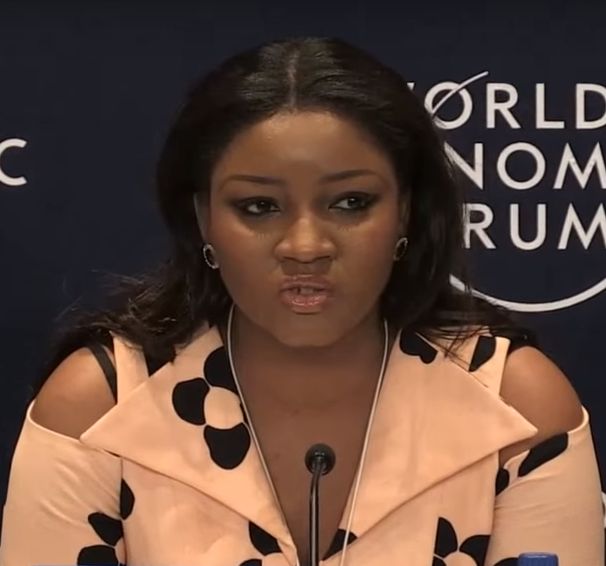
As her fame matured, Omotola increasingly turned her platform toward purposes larger than entertainment. The most striking acknowledgment of her global stature came in 2013, when Time magazine named her to its list of the 100 most influential people in the world, the celebrated TIME 100. For a Nollywood actress to appear on that list was a landmark moment, not only for her personally but for the entire Nigerian film industry, which had long sought recognition on the world stage. The honor confirmed what her fans already knew: that her influence stretched far beyond the movies, into culture, society, and the lives of the people she inspired.
Omotola channeled that influence into humanitarian work. She served as an ambassador and advocate for a range of causes, lending her name and her voice to organizations and campaigns that aligned with her values. Her advocacy touched on youth empowerment and the fight against poverty, issues close to the realities of the communities she came from. She worked in connection with international bodies and campaigns, including engagement with United Nations initiatives and with Amnesty International on human rights concerns, using her visibility to draw attention to problems that too often went unheard. In doing so she helped redefine what African celebrity could mean, shifting it from mere glamour toward responsibility and service.
Her contributions did not go unrecognized at home. She received national honors in Nigeria, formal acknowledgments of her impact on her country’s culture and her service beyond the screen. She was also celebrated with a star on a walk of fame, a lasting public tribute to her standing as one of the defining entertainers of her generation. Taken together, these honors painted a portrait of a figure who had transcended her profession, a woman whose achievements were measured not only in films and record sales but in the awareness she raised and the example she set.
Career Timeline
- 1978: Omotola Jalade is born on 7 February in Lagos, Nigeria, into a Yoruba family.
- Around 1994: She appears in her first film at roughly the age of sixteen, entering the fast-growing Nigerian home-video industry.
- 1996: She stars in Mortal Inheritance, playing a woman living with sickle cell disease, a role that earns acclaim and establishes her as a serious leading actress.
- Late 1990s: She becomes one of Nollywood’s most sought-after leading ladies and is embraced by fans under the nickname “Omosexy.”
- 2000s: She releases music, including the albums GBA and Me, expanding her creative reach beyond film.
- 2000s to 2010s: She continues a prolific film career, appearing in well over 300 movies across romance and drama.
- 2013: Time magazine names her to the TIME 100 list of the most influential people in the world.
- 2010s: She receives national honors in Nigeria and is celebrated with a star on a walk of fame, alongside her growing humanitarian work.
Lesser-Known Facts
- Her 1996 role in Mortal Inheritance, portraying a woman with sickle cell disease, helped raise public awareness of the condition at a time when open discussion of it was limited in Nigeria.
- Across her career she has appeared in well over 300 films, a volume that reflects both the rapid pace of Nollywood and her own relentless work ethic.
- In 2013 she joined a very short list of Africans featured on Time magazine’s TIME 100, a milestone for the entire Nigerian film industry.
- Beyond acting, she pursued music and released albums including GBA and Me, showing a creative range that extended past the screen.
- Her husband, Captain Matthew Ekeinde, is an airline pilot, and their long marriage is often cited as one of the most stable and admired unions in Nigerian public life.
- She became the first African to be celebrated with certain honors linked to her massive following, underscoring her status as a trailblazer for African entertainers on the global stage.
Frequently Asked Questions
Who is Omotola Jalade Ekeinde?
Omotola Jalade Ekeinde is a Nigerian actress, singer, and humanitarian, born on 7 February 1978 in Lagos. She is one of the pioneering superstars of Nollywood, the Nigerian film industry, and is widely regarded as one of the most influential entertainers in Africa.
What is Omotola best known for?
She is best known for her decades-long career in Nollywood film, including her acclaimed 1996 role in Mortal Inheritance, and for becoming, alongside Genevieve Nnaji, one of the defining faces of Nigerian cinema’s golden era. She is also widely recognized for her humanitarian advocacy.
How many films has she made?
Omotola has appeared in well over 300 films over the course of her career, a reflection of both the extraordinary output of Nollywood and her own prolific work as a leading lady.
Was Omotola on the TIME 100 list?
Yes. In 2013, Time magazine named her to its TIME 100 list of the most influential people in the world, a landmark recognition for her and for the Nigerian film industry.
What else does she do besides acting?
Beyond acting, she is a singer who has released albums including GBA and Me, an entrepreneur who built a lasting personal brand, and a humanitarian who has served as an ambassador and advocate on causes including youth empowerment and anti-poverty efforts, working in connection with bodies such as the United Nations and Amnesty International.
Legacy
The measure of Omotola Jalade Ekeinde’s legacy is not found in any single film, award, or headline, but in the breadth of what she made possible. She was among the first performers to prove that a Nigerian actress could become a household name across an entire continent, that Nollywood stardom could translate into global recognition, and that an African entertainer could use fame as a tool for advocacy rather than merely for self-promotion. In doing so she widened the horizon for every performer who came after her.
Her journey from a grieving teenage girl in Lagos to a figure named among the most influential people on earth is a story of resilience meeting opportunity. The discipline she learned from the early loss of her father, the drive that pushed her onto a film set at sixteen, the range that kept her relevant across more than three decades, and the conscience that turned her platform toward humanitarian causes all combine into a portrait of a woman who refused to be defined by anyone but herself. She built a career, a family, and a mission, and she guarded all three with the same determination.
For aspiring actors in Nigeria and across Africa, she remains a template of what is achievable. For audiences who grew up watching her, she is a cherished presence, the Omosexy whose name on a film was a guarantee of star power. And for the wider world, she stands as proof that the stories told on African screens, and the people who tell them, belong firmly on the global stage. Omotola Jalade Ekeinde did not just reign over Nollywood. She helped carry it, and the continent it represents, to places it had never been. That is the enduring achievement of an African icon.