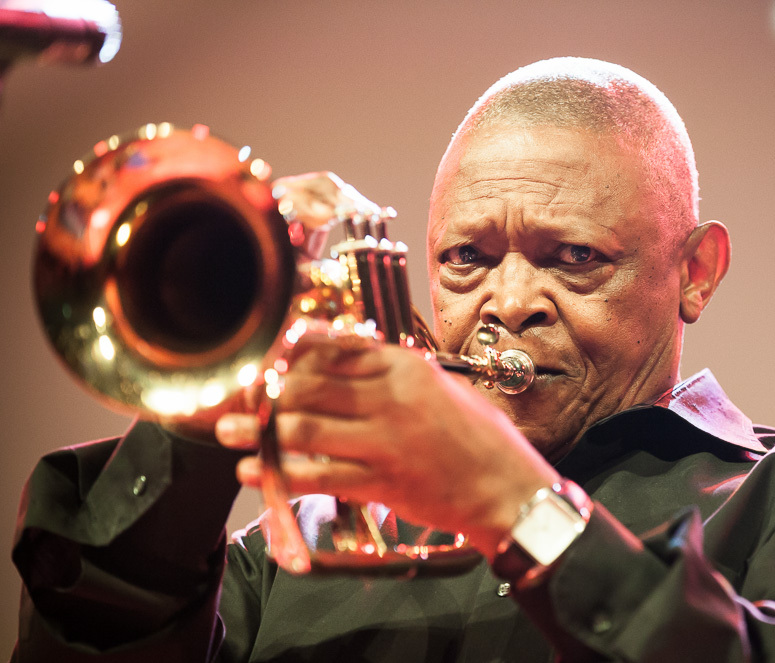
When Hugh Masekela raised his flugelhorn to his lips, the sound that came out carried more than melody. It carried the memory of a country he was not allowed to live in for three decades, the rhythm of mine workers marching to labor they never chose, and the stubborn hope of a people waiting for freedom. He was a musician first, but he was never only a musician. His horn spoke a language that borders could not stop and censors could not silence, and for most of his long life it said the same thing in a hundred different ways: do not forget South Africa.
Masekela belonged to a remarkable generation of South African artists who were pushed out of their homeland by apartheid and who, in exile, became some of the most recognizable ambassadors that country ever had. He played with the giants of American jazz, scored a number one hit in the United States, toured the world with Paul Simon, and wrote songs that became anthems of the struggle against white minority rule. Yet through it all he insisted that his music was rooted in the townships, the shebeens, and the streets of the place he was forced to leave. This is the story of how a boy from a small mining town near Witbank became one of the most important voices in the history of African music.
Quick Facts
- Full name
- Hugh Ramapolo Masekela
- Born
- 4 April 1939, KwaGuqa, Witbank, South Africa
- Died
- 23 January 2018 (aged 78)
- Known for
- Jazz trumpet, flugelhorn, songwriting, activism
- Notable work
- Grazing in the Grass, Stimela, Bring Him Back Home
Early Life
Hugh Ramapolo Masekela was born on 4 April 1939 in KwaGuqa, a township on the edge of the coal-mining town of Witbank (now Emalahleni) in what was then the Transvaal province of South Africa. He came into the world in a landscape defined by industry and hardship, a region of collieries and power stations where black workers labored under conditions set by a racist economic system. That world of mines and migrant labor would later echo through his most famous songs, but as a child it was simply home.
Much of his early upbringing was shaped by his grandmother, who ran a shebeen, an informal and often illegal drinking establishment that served as a gathering place for the community. The shebeen was a place of music, conversation, and the constant hum of township life, and young Hugh absorbed its sounds and its characters. His mother was a social worker and his father worked as a health inspector and was also a gifted sculptor, so creativity and a sense of social conscience ran in the family. From an early age Masekela showed a hunger for music, listening closely to the records and the voices that filled the spaces around him.
The turning point of his boyhood came through film. As a teenager, Masekela reportedly saw the movie “Young Man with a Horn”, a Hollywood drama loosely inspired by the life of jazz cornetist Bix Beiderbecke, with Kirk Douglas playing a troubled trumpet player. The image of a young man pouring his whole self into a brass instrument struck something deep in him, and he decided that the trumpet was what he wanted more than anything. He soon got his wish in a way that would connect his personal story to the larger history of resistance in South Africa.
That connection came through Father Trevor Huddleston, a British Anglican priest and fierce opponent of apartheid who served in the township of Sophiatown in Johannesburg. Huddleston became a mentor to the young Masekela, and when the boy asked for a trumpet, the priest helped him obtain one. According to the widely told account, Huddleston arranged for Masekela to receive his first trumpet, and when other children saw what he had and wanted instruments too, Huddleston helped form a youth band, often remembered as the Huddleston Jazz Band. It was one of the earliest organized outlets for Masekela’s talent, and it placed music and moral courage side by side in his life from the very beginning.
Early Career and the Jazz Scene
Masekela’s skills grew quickly, and by his late teens he was moving into the vibrant, dangerous, and endlessly creative world of South African jazz. Johannesburg in the 1950s was a city of brutal segregation, but it was also a place where black musicians forged a sound that mixed American jazz with local styles such as marabi and mbaqanga. Masekela threw himself into this scene, playing alongside other young players who would become legends in their own right.
The most important of these early groups was the Jazz Epistles, formed around 1959. The band brought together an extraordinary collection of talent, including the pianist Abdullah Ibrahim (then known as Dollar Brand), the alto saxophonist Kippie Moeketsi, the trombonist Jonas Gwangwa, and the bassist Johnny Gertze, with Masekela on trumpet. The Jazz Epistles hold a special place in history as the first South African jazz group to record a full album, “Jazz Epistle, Verse 1”, a landmark that proved black South African musicians could produce sophisticated, self-authored jazz of the highest order. Copies of that first pressing are now treasured rarities.
Around the same period, Masekela also performed in the groundbreaking South African musical “King Kong”, a jazz opera based on the life of the heavyweight boxer Ezekiel Dlamini. The show featured a cast of leading black performers and became a cultural sensation, touring and eventually reaching London. Productions like “King Kong” gave Masekela and his peers both a stage and a sense of collective purpose, demonstrating that their art could command attention far beyond the townships.
But even as the music flourished, the political climate was darkening. The apartheid government, in power since 1948, was steadily tightening its grip. Laws restricting the movement, residence, and gatherings of black South Africans made the life of a working musician increasingly precarious. Venues were raided, pass laws made travel a daily ordeal, and the space for free artistic expression was shrinking. For a young man whose whole identity was bound up in performing and creating, the writing on the wall was becoming impossible to ignore.
Exile
In 1960 the pressure reached a breaking point for the entire country. On 21 March of that year, police opened fire on a crowd of unarmed protesters in the township of Sharpeville, killing scores of people in what became known as the Sharpeville massacre. The event sent shockwaves through South Africa and the world, prompting a brutal crackdown, the banning of liberation organizations, and a tightening of the already suffocating apartheid system. For many artists and activists, it became clear that staying meant silence or worse.
It was in this atmosphere that Masekela left South Africa in 1960. With the help of sympathetic figures who recognized his gifts, he made his way abroad to continue his musical education and to escape the closing walls of apartheid. He went first to London, where he studied at the Guildhall School of Music, before setting his sights on the United States, the birthplace of the jazz that had first captured his imagination.
His passage into the American music world was eased by two towering figures of the era. The celebrated singer and activist Harry Belafonte, along with the South African singer Miriam Makeba, who had herself left South Africa and risen to international fame, helped Masekela gain entry and support. He enrolled at the Manhattan School of Music in New York, immersing himself in formal study while absorbing the energy of the American jazz capital. In New York he was surrounded by extraordinary musicians, and he began to build a reputation as a trumpeter of real distinction.
His relationship with Miriam Makeba deepened into marriage. The two shared not only a homeland and a love of music but also the painful condition of exile, and their union linked two of the most famous South African artists of their generation. The marriage did not last, but the bond between Masekela and Makeba as collaborators and fellow exiles would endure in various forms for decades, and their names remain forever intertwined in the story of South African music in exile.
International Success
Living and working in the United States gave Masekela access to audiences and opportunities that would have been unimaginable back home. Through the 1960s he recorded steadily, developed his own sound, and gradually moved from being a respected jazz player to a genuine star of popular music. He absorbed influences from American pop, soul, and Latin music, and he learned how to craft recordings that could reach beyond the jazz connoisseur to the broad record-buying public.
The breakthrough came in 1968 with an instrumental called “Grazing in the Grass”. Built on an irresistibly catchy melody and a bright, danceable groove, the track became a sensation. It climbed to number one on the United States pop singles chart and sold in enormous quantities, reportedly millions of copies, turning Masekela into a household name far from the townships where he had learned to play. For a South African exile to top the American charts with an instrumental was a remarkable achievement, and it gave him a platform that few of his peers ever reached.
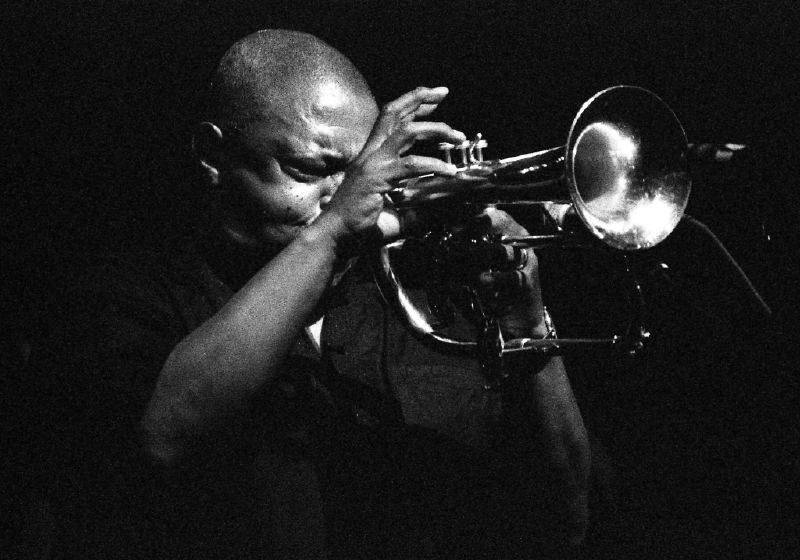
The success of “Grazing in the Grass” placed Masekela on the biggest stages of the era. He became part of the festival culture that defined the late 1960s, mixing with rock and soul artists and bringing his African-rooted sound to audiences who might never have encountered it otherwise. He appeared at major music festivals and gatherings of the period, and his presence helped broaden the idea of what jazz and popular music could sound like. The man who had once watched a film about a trumpet player was now, himself, the figure young musicians looked to.
Yet Masekela never allowed commercial success to sever his ties to home. Even as he enjoyed his American fame, he continued to draw on South African melodies, rhythms, and themes, refusing to be absorbed entirely into the machinery of the Western pop industry. His greatest hit had made him famous, but he understood that his deepest material lay in the story of the country he could not return to.
Music as Protest and Homecoming
As the anti-apartheid movement grew in strength and international visibility through the 1970s and 1980s, Masekela increasingly used his music as a tool of protest. His songs became more openly political, giving voice to the suffering and the defiance of black South Africans and bringing their cause to concert halls around the world. He understood that a melody could travel where a political speech could not, and he used that power deliberately.
One of his most powerful protest works was “Soweto Blues”, a searing song written by Masekela and performed by Miriam Makeba. It responded to the Soweto uprising of 1976, when schoolchildren protesting against the apartheid education system were met with deadly police violence. The song became a haunting lament for the children who died and an indictment of the regime that killed them, and in Makeba’s voice it reached listeners across the globe.
His song “Stimela”, often called “Coal Train”, drew directly on the world of his childhood in the mining regions. It evoked the trains that carried migrant laborers from across southern Africa to the mines of South Africa, where they toiled in harsh and dehumanizing conditions far from their families. In live performance Masekela would often extend the piece with spoken narration and sound effects, turning it into an epic portrait of exploitation that could leave audiences shaken.
Perhaps his most direct contribution to the political struggle came with “Bring Him Back Home”, released in the late 1980s. The song was a call for the release of Nelson Mandela, the imprisoned leader of the anti-apartheid movement, and it became an anthem of the international campaign to free him. Its chorus, demanding that Mandela be brought home to walk free, gave the global movement a rallying cry set to music, and it cemented Masekela’s status as a cultural voice of the liberation struggle.
During this period Masekela also took part in one of the most celebrated and debated musical projects of the decade. He joined Paul Simon’s “Graceland” tour, which brought South African musicians and styles to huge international audiences in the mid to late 1980s. Alongside Miriam Makeba, Ladysmith Black Mambazo, and others, Masekela helped make the tour a showcase of South African talent, and the exposure introduced millions of new listeners to the sounds of his homeland.
The homecoming that his music had long demanded finally arrived in the 1990s. After Nelson Mandela was released from prison in 1990 and the apartheid system began to be dismantled, the conditions that had driven Masekela into exile at last fell away. He was able to return to South Africa after roughly thirty years abroad, closing a circle that had defined his entire adult life. The trumpeter who had sung of bringing Mandela home could finally come home himself.
Later Years and Legacy
Returning to a changing South Africa did not slow Masekela down. He continued to record and perform prolifically, releasing albums and touring internationally well into his seventies. He remained a commanding presence on stage, blending jazz, funk, township grooves, and storytelling into performances that could move seamlessly from joy to grief and back again. Younger generations of South African and global musicians looked to him as an elder statesman of the music, and he embraced the role with generosity.
In 2004 he published his autobiography, “Still Grazing: The Musical Journey of Hugh Masekela”, co-written with D. Michael Cheers. The book offered a candid account of his life, from the townships of his childhood through the heights of international fame and the shadows of exile. It did not shy away from his personal struggles, including his long battle with alcohol and drug addiction, which he discussed openly as part of his effort to help others.
That openness became a central part of his later public life. Drawing on his own hard-won recovery, Masekela became an advocate against substance abuse, speaking frankly about the toll addiction had taken on him and urging others to seek help. He also devoted energy to the cause of African heritage, championing the preservation of indigenous cultures, languages, and traditions, and encouraging younger Africans to take pride in their own history rather than imitating the West. For Masekela, cultural confidence was a form of liberation in its own right.
Hugh Masekela died on 23 January 2018 at the age of 78, after a battle with prostate cancer. His death was mourned across South Africa and around the world, with tributes pouring in from fellow musicians, political leaders, and ordinary fans whose lives his music had touched. He was remembered not only as a brilliant instrumentalist but as a conscience of his nation, a man who had used his art to fight injustice and to keep the spirit of South Africa alive during its darkest years.
“I want to be remembered as somebody who was very proud to be an African, and somebody who loved to have a good time, and somebody who loved music,” Masekela once said of how he hoped to be recalled.
Career Timeline
- 1939: Hugh Ramapolo Masekela is born on 4 April in KwaGuqa, near Witbank, South Africa.
- 1950s: As a teenager he receives his first trumpet with the help of Father Trevor Huddleston and plays in a township youth band.
- 1959 to 1960: He co-founds the Jazz Epistles, which records the first full jazz album by South African musicians, and performs in the musical “King Kong”.
- 1960: In the aftermath of the Sharpeville massacre he leaves South Africa for exile, studying first in London.
- Early 1960s: With support from Harry Belafonte and Miriam Makeba, he studies at the Manhattan School of Music in New York and marries Makeba.
- 1968: His instrumental “Grazing in the Grass” reaches number one on the United States pop chart and sells millions of copies.
- 1976 to 1987: He writes and performs politically charged songs including “Soweto Blues” and “Bring Him Back Home”, and joins Paul Simon’s “Graceland” tour.
- 1990s: Following Nelson Mandela’s release and the end of apartheid, Masekela returns to South Africa after about thirty years in exile.
- 2004: He publishes his autobiography, “Still Grazing”.
- 2018: He dies on 23 January at the age of 78 after a battle with prostate cancer.
Lesser-Known Facts
- The anti-apartheid priest Father Trevor Huddleston helped Masekela obtain his very first trumpet, and the interest it sparked among other children led to the formation of a township youth band.
- The Jazz Epistles, the group Masekela co-founded with Abdullah Ibrahim and others, made history as the first South African jazz band to record a full-length album.
- Masekela’s 1968 instrumental “Grazing in the Grass” became a number one hit in the United States, an extraordinary feat for a wordless track by a South African exile.
- He was married to the singer Miriam Makeba, another famous South African artist living in exile, linking two of the most celebrated names in the country’s music.
- His song “Bring Him Back Home” became a widely recognized anthem of the international campaign to free Nelson Mandela from prison.
- His song “Stimela”, about the trains carrying migrant laborers to the mines, drew directly on the mining world of his childhood near Witbank.
Frequently Asked Questions
Who was Hugh Masekela? Hugh Masekela was a South African trumpeter, flugelhorn player, singer, composer, and anti-apartheid activist, widely regarded as a father figure of South African jazz. Over a career of more than fifty years he gave the music of his homeland a global voice and used his songs to protest against the apartheid system.
What was Hugh Masekela’s biggest hit? His biggest commercial hit was the 1968 instrumental “Grazing in the Grass”, which reached number one on the United States pop singles chart and sold in the millions. It remains the song most associated with his international fame.
Why did Hugh Masekela go into exile? Masekela left South Africa in 1960, around the time of the Sharpeville massacre, as the apartheid government intensified its crackdown on black South Africans and made life as a working musician nearly impossible. He spent roughly three decades abroad before returning home in the 1990s.
Was he married to Miriam Makeba? Yes. Masekela was married to the famous South African singer Miriam Makeba. The two were both living in exile, and their marriage connected two of the most celebrated South African musicians of their era, though the union did not last.
What is Bring Him Back Home? “Bring Him Back Home” is a song Masekela released in the late 1980s calling for the release of Nelson Mandela from prison. It became an anthem of the global campaign to free Mandela and end apartheid, and it is one of his most politically significant works.
Legacy
Hugh Masekela’s legacy rests on a rare combination of artistry and conscience. As a musician he was a virtuoso who helped define the sound of South African jazz and who proved, on the biggest international stages, that African music could stand shoulder to shoulder with any tradition in the world. As an activist he turned his talent into a weapon against injustice, writing songs that comforted the grieving, named the guilty, and demanded freedom when freedom seemed impossibly far away.
More than that, he embodied the idea that an artist can carry a nation within him even when he is forbidden to stand on its soil. For thirty years of exile, Masekela was a living reminder of what apartheid had stolen and of what a free South Africa might one day sound like. When he finally came home, he did not rest on his history but kept creating, mentoring, and speaking out, passing the torch to younger musicians while guarding the heritage he loved.
Today his recordings continue to inspire listeners across generations and continents, and his name is spoken with reverence in jazz clubs, concert halls, and classrooms alike. Hugh Masekela gave the world a sound that was unmistakably his own and unmistakably South African, and in doing so he ensured that the voice of his people would never again be easy to ignore.