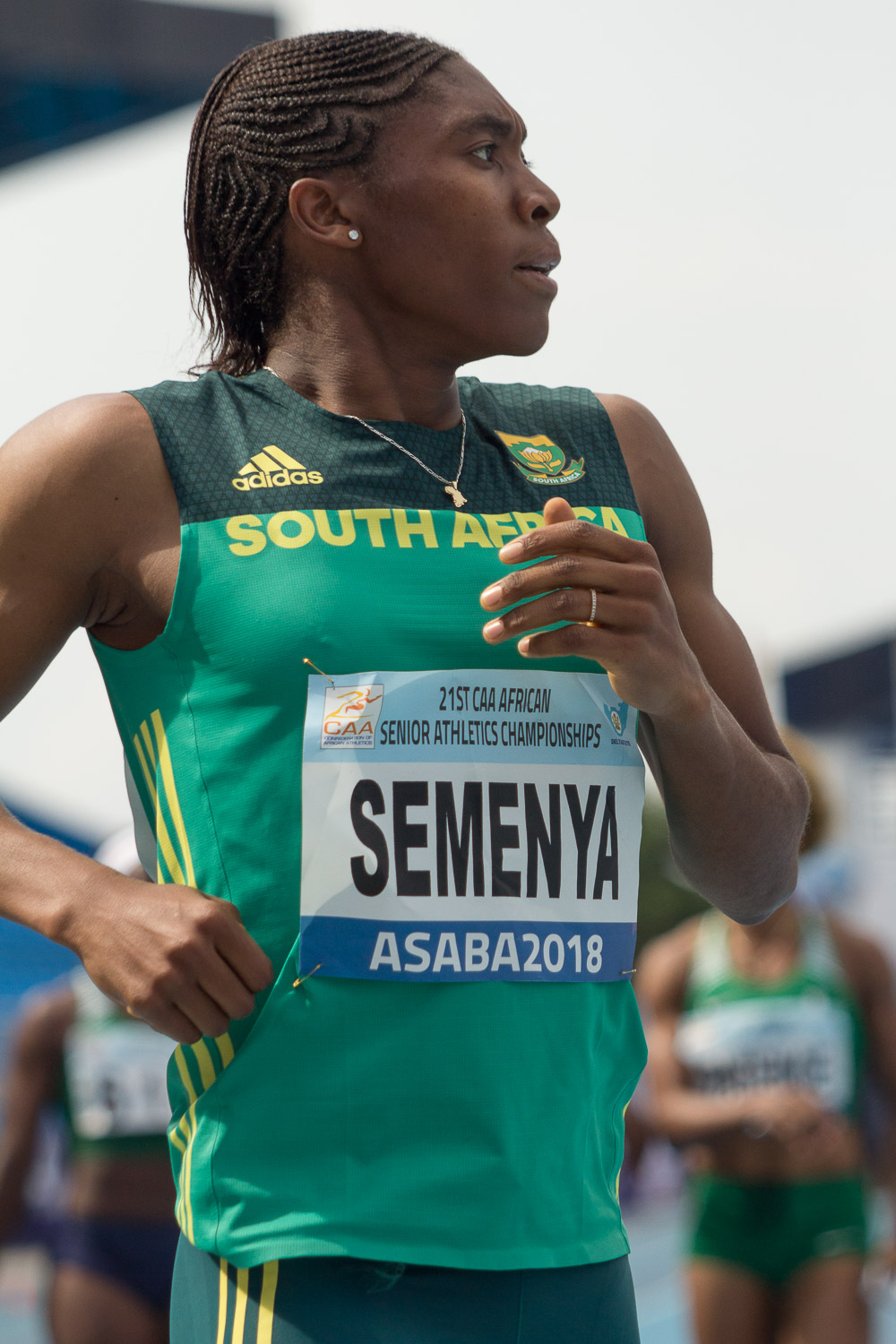
On a warm August evening in Berlin in 2009, an 18 year old from a village most of the world had never heard of ran away from the finest middle-distance field on the planet. She crossed the line in the 800 metres more than two seconds ahead of her nearest rival, raised her arms, and smiled the broad, unguarded smile of someone who had just done exactly what she had trained to do. Within hours, that victory had become something else entirely. Caster Semenya, barely out of school, found herself at the centre of a storm about sex, fairness and the human body that would follow her for the rest of her career and reshape the rules of her sport.
Her story is, at heart, a sporting one: a runner of extraordinary natural ability who dominated her event for the better part of a decade. But it is also a story about how institutions treat the people who do not fit neatly into their categories, about privacy and dignity, and about the long distance between a finish line and a courtroom. Semenya won two Olympic gold medals, three world titles and the loyalty of millions. She also became, against her own wishes, the most visible figure in a debate that sport has still not resolved.
Quick Facts
- Full name
- Mokgadi Caster Semenya
- Born
- 7 January 1991, Ga-Masehlong, Limpopo, South Africa
- Nationality
- South African
- Event
- 800 metres middle-distance running
- Olympic golds
- Two (2012 London and 2016 Rio, 800m)
Early Life
Mokgadi Caster Semenya was born on 7 January 1991 in Ga-Masehlong, a small village in the Limpopo province of northern South Africa. It is rural country, far from the big cities, a place of dirt roads, close family networks and modest means. Her father, Jacob, worked away from home for long stretches, and much of her early upbringing fell to her mother, Dorcus, and to the extended family that filled the village. Water was carried, chores were shared, and childhood played out largely outdoors.
As a girl, Semenya gravitated to sport with a single-mindedness that set her apart. Her first love was football. She played with the boys in her village, holding her own in physical, competitive matches, and she has spoken warmly over the years about those early games on uneven ground. Football taught her stamina, toughness and a refusal to be pushed around, qualities that would define her later career. For a time she dreamed of playing the game seriously rather than running at all.
Running, when it came, revealed talent that could not be ignored. At school in Limpopo she began entering local races and found that she could simply outlast and outpace her peers over middle distances. There was no sophisticated training system around her, no altitude camps or sports science. There was a young athlete with an unusual engine, a willingness to work, and coaches who recognised that something rare had arrived. She progressed quickly from school competitions to provincial and then national junior events, her times improving at a pace that marked her as a genuine prospect. By her late teens she had moved toward the University of Pretoria and the more structured coaching that would carry her onto the world stage.
Those early years shaped her more than any title. She has often spoken about the humility of her upbringing, about a childhood measured in chores and long walks rather than comfort, and about the pride her village took in a daughter who could run. The values she absorbed in Ga-Masehlong, hard work, loyalty to family, and a quiet refusal to complain, became the armour she would need when the wider world turned its attention on her. Before she ever stood on a world podium, she had already learned to carry herself with a steadiness that would be tested far beyond anything sport usually demands.
Breakthrough and the 2009 Storm
The 2009 World Championships in Berlin were meant to be Semenya’s introduction to the senior international scene. Instead they became the defining moment of her early life. On 19 August 2009, still only 18, she won the women’s 800 metres final in a time of 1 minute 55.45 seconds, a championship record and a vast improvement on her earlier bests. The margin of victory was enormous for a two-lap race, and her finishing time placed her among the fastest women in the world.
The reaction was swift and, for a teenager, brutal. In the days surrounding the race, it emerged that the sport’s governing body, then known as the International Association of Athletics Federations (IAAF), had asked Semenya to undergo sex verification testing. The news became public in a way that stripped away any privacy she might have expected. Intimate questions about her body, questions that no 18 year old should have to answer in front of the world, were discussed openly in newspapers and broadcasts. She had done nothing wrong. She had simply run faster than expected and looked different from what some spectators assumed a female champion should look like.
The episode caused outrage in South Africa, where many saw the treatment of a young Black woman from a poor village as humiliating and unjust. Government figures, athletics officials and ordinary citizens rallied around her. The handling of her case was later widely criticised, including by the IAAF’s own future leadership, as insensitive and damaging. For a long period the results of any testing were never published, and Semenya was withdrawn from competition while her status was reviewed.
In July 2010, after almost a year away from international racing, Semenya was cleared to return to competition. She had kept her world title from Berlin, and she came back determined to let her running speak. Yet the experience left a mark. A gifted teenager had been introduced to global sport not through celebration but through scrutiny of the most personal kind, and the questions raised in 2009 would never fully go away.
Olympic Champion
Semenya’s first Olympic Games came in London in 2012. She was chosen to carry the South African flag at the opening ceremony, a sign of how deeply the country had taken her to heart. In the 800 metres final she ran a controlled, powerful race and finished second, taking what was recorded at the time as the silver medal behind Russia’s Mariya Savinova. It was a fine result, but it felt to many like less than Semenya’s due.
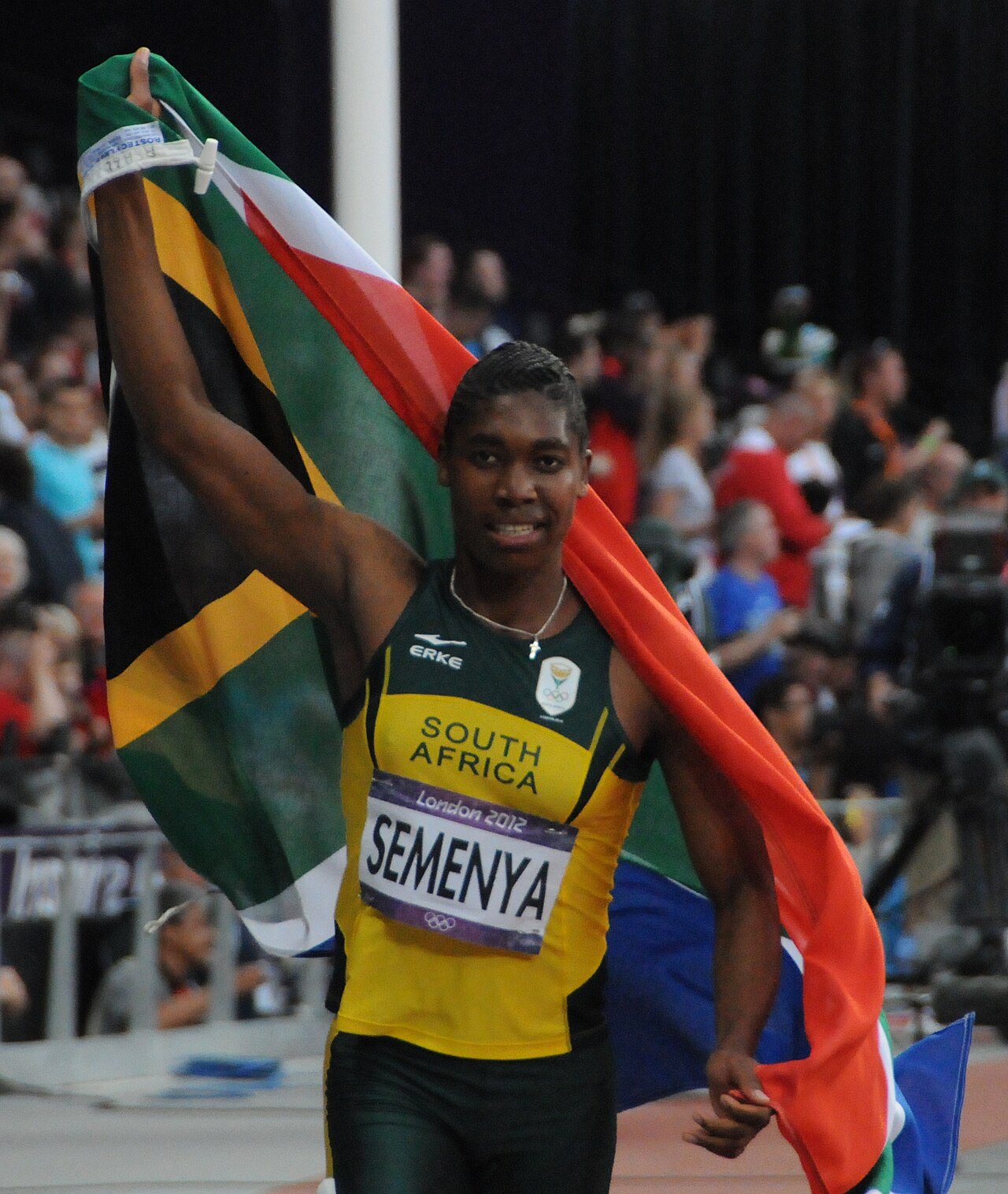
Years later, that result changed. Following investigations into state-sponsored doping in Russian athletics, Savinova was disqualified and stripped of her London title. In 2017 the medals were reallocated, and Caster Semenya was officially upgraded to the gold medal from the 2012 Olympic Games. She had become an Olympic champion not on the track that night but through the slow correction of the record books, a reminder that the sport around her was far from clean even as her own eligibility was being questioned.
At the 2016 Rio de Janeiro Olympics there was no ambiguity. Semenya arrived in the form of her life and dominated the 800 metres, winning gold in 1 minute 55.28 seconds, a national record and one of her finest performances. She looked serene and untouchable, timing her effort with the composure of a runner who had learned to carry the weight of expectation. The Rio victory confirmed her as the outstanding two-lap runner of her generation and gave her a second Olympic gold to stand beside the upgraded London title.
Around these Olympic triumphs, Semenya built one of the great winning streaks in middle-distance history. Over several seasons she went unbeaten in the 800 metres across dozens of finals, a run of dominance that stretched for roughly three years and included a long sequence of victories against the best in the world. She added world championship gold in London in 2017, complementing her Berlin title from 2009, and collected Commonwealth and continental honours. On the track, in purely competitive terms, there was very little left for her to prove.
The Testosterone Regulations and Court Battles
As Semenya’s dominance grew, so did the pressure from within athletics to change the rules under which she competed. The core of the dispute concerns what are known as differences of sex development, or DSD. Semenya is one of a number of elite athletes who have a DSD, a set of congenital conditions in which a person’s hormones, chromosomes or anatomy do not fit the typical pattern. She was raised as a girl, has always identified as a woman, and competes as a woman. The debate was never about her identity. It was about her naturally occurring testosterone levels and whether they conferred an advantage that the sport should regulate.
In 2018 World Athletics (the renamed governing body) introduced new DSD regulations. The rules required athletes with certain differences of sex development, competing in a defined group of women’s events including the 800 metres, to lower their natural testosterone below a set threshold in order to be eligible. In practice this meant taking medication to suppress hormones their bodies produced on their own. Semenya refused. She argued that she was being asked to alter a healthy body to satisfy a rule, that the science was contested, and that the regulations singled out a small group of women, many of them from the global South, for treatment no one else had to accept.
What followed was a long march through the courts. In 2019 Semenya challenged the regulations at the Court of Arbitration for Sport (CAS) in Lausanne, Switzerland. The CAS panel acknowledged that the rules were discriminatory, but ruled by majority that the discrimination was, in its view, a necessary and proportionate means of preserving fairness in the female category. Semenya lost, and the regulations stood. She then appealed to the Swiss Federal Tribunal, the country’s highest court, which declined to overturn the CAS decision.
Having exhausted the sporting and Swiss legal routes, Semenya took her case to the European Court of Human Rights (ECHR) in Strasbourg, arguing that she had been denied her rights. In July 2023 a chamber of the court ruled in her favour on the question of whether she had received a fair hearing, finding that Switzerland had failed to provide sufficient legal protection against discrimination in her case. The matter was later considered by the court’s Grand Chamber, which in 2025 again found a violation of her right to a fair trial. The rulings were significant, but they were narrow. They addressed the fairness of the legal process rather than striking down the testosterone rules themselves, and they did not on their own restore Semenya to competition in her favoured event. The dispute, in other words, remains unresolved, a legal and ethical question that sport has yet to settle.
Throughout these years Semenya tried to keep running. She experimented with events outside the regulated range, including longer distances and shorter sprints, searching for a way to compete that did not require her to medicate. She did not, however, recapture at other distances the supremacy she had held over 800 metres, and the regulations effectively kept her out of the event she had made her own.
Life, Advocacy and Legacy
Away from the track and the courtrooms, Semenya built a life rooted in family. She married her long-time partner, Violet Raseboya, whom she had known for years within South African athletics. The couple have built a family together and have spoken publicly about their children, and Semenya has often described her home life as the steadying centre that allowed her to endure years of public scrutiny. Her Christian faith and her tight bonds with her mother and her community in Limpopo have been constant themes in how she describes herself.
Over time Semenya moved from being a reluctant symbol to an active advocate. She has spoken out for the rights of athletes with differences of sex development, for the dignity of women who do not conform to narrow expectations, and against the idea that anyone should be forced to change a healthy body to be allowed to compete. She has framed her long legal fight not only as a personal struggle but as an effort to protect others who might otherwise face what she faced as an 18 year old in Berlin.
“I am a woman and I am fast.”
That plain statement, which Semenya has used to sum up her position, captures the directness with which she has met years of controversy. In 2023 she published a memoir, The Race To Be Myself, in which she set out her own account of her life, her identity and the battles she has fought. The book was widely reviewed and gave readers her perspective, in her own words, on events that had so often been narrated by others.
Her legacy is already secure in sporting terms and still being written in legal and ethical ones. On the track she is one of the greatest two-lap runners in history. Off it she has become a reference point in one of the most sensitive debates in modern sport, a debate about how to balance inclusion, fairness and the rights of the individual. However that debate is eventually resolved, Semenya’s insistence on her own dignity has already changed the conversation.
Career Timeline
- 2008 to 2009: Emerges through South African junior and national competition, winning age-group titles and announcing herself as a major middle-distance prospect.
- 19 August 2009: Wins the 800m world title in Berlin as an 18 year old, triggering the sex-verification controversy that dominates the following year.
- July 2010: Cleared by the IAAF to return to international competition after almost a year away.
- 2012: Carries the South African flag at the London Olympics and finishes second in the 800m final, a result later upgraded to gold.
- August 2016: Wins Olympic 800m gold in Rio de Janeiro in 1:55.28, confirming her as the dominant force in the event.
- 2017: Wins the 800m world title in London and is officially awarded the 2012 Olympic gold after Mariya Savinova’s doping disqualification.
- 2018 to 2019: World Athletics introduces the DSD testosterone regulations; Semenya challenges them at the Court of Arbitration for Sport in 2019 and loses by majority.
- 2020 to 2021: Loses her appeal at the Swiss Federal Tribunal and is kept out of the 800m at the Tokyo Olympics by the regulations.
- 2023 to 2025: Wins rulings at the European Court of Human Rights on the fairness of her legal process and publishes her memoir, The Race To Be Myself.
Lesser-Known Facts
- Before she ever took up running seriously, Semenya played football as a child in her village, often competing alongside boys, and she credits the game with building her early toughness and stamina.
- Her 2012 Olympic gold medal was not won on the night. She originally took silver and was upgraded to the title years later, in 2017, after the original winner was disqualified for doping.
- Her legal victories at the European Court of Human Rights concerned the fairness of her hearing rather than the testosterone rules themselves, which is why the broader dispute remains open.
- She married Violet Raseboya, a fellow figure in South African athletics, and the couple have built a family together, with Semenya frequently describing her home life as her anchor.
- In 2023 she published a memoir, The Race To Be Myself, offering her own detailed account of her life, her identity and her long fight over eligibility.
- At the height of her form she went unbeaten in the 800m for roughly three years, one of the longest winning runs the event has seen.
Frequently Asked Questions
Who is Caster Semenya? Caster Semenya is a South African middle-distance runner, born in 1991 in the village of Ga-Masehlong in Limpopo province. She is a two-time Olympic champion and multiple world champion over 800 metres, and she became widely known both for her dominance on the track and for her long challenge to the sport’s eligibility rules.
What has Caster Semenya won? She has won two Olympic 800m gold medals (the 2012 London title, awarded after the original winner’s disqualification, and the 2016 Rio title) and world championship gold in the 800m in Berlin in 2009 and London in 2017, along with Commonwealth and continental honours and a long unbeaten streak in her event.
Why is Caster Semenya controversial? The controversy concerns sport’s rules on sex and eligibility, not her identity. Semenya has a difference of sex development, and athletics authorities argued that her naturally high testosterone gave an unfair advantage, introducing rules that would require her to lower it. She refused and challenged the rules in court, making her the central figure in a global debate about fairness and inclusion.
What are the DSD regulations? The DSD regulations, introduced by World Athletics in 2018, require athletes with certain differences of sex development to reduce their natural testosterone below a set level, through medication, to be eligible for a defined group of women’s events including the 800 metres. Critics argue they force healthy athletes to alter their bodies and unfairly target a small group of women.
What did the European Court of Human Rights rule? The European Court of Human Rights ruled in Semenya’s favour on the question of a fair hearing, finding that she had not been given adequate legal protection against discrimination when her case was handled in Switzerland. The ruling, upheld by the court’s Grand Chamber in 2025, addressed the fairness of the legal process rather than overturning the testosterone rules, so the wider dispute continues.
Legacy
Caster Semenya’s place in the history of athletics rests on two foundations. The first is purely sporting: she is among the finest 800 metre runners the world has seen, an Olympic and world champion whose command of her event for years was nearly total. The second is harder to measure but no less important. By refusing to quietly accept rules she believed were unjust, and by carrying her case from the track to the highest courts in Europe, she forced sport to confront questions it would rather have avoided about biology, fairness and the treatment of the people who sit at the edges of its categories.
She did not ask for that role. It was handed to her at 18, in the glare of a world championship final, and she has borne it with a steadiness that has won her admiration far beyond South Africa. Whatever athletics eventually decides about eligibility, Semenya has already ensured that the human being at the centre of such debates cannot be reduced to a test result or a rulebook. Her legacy is a champion’s record, and a reminder that dignity is not something a sport can take away.