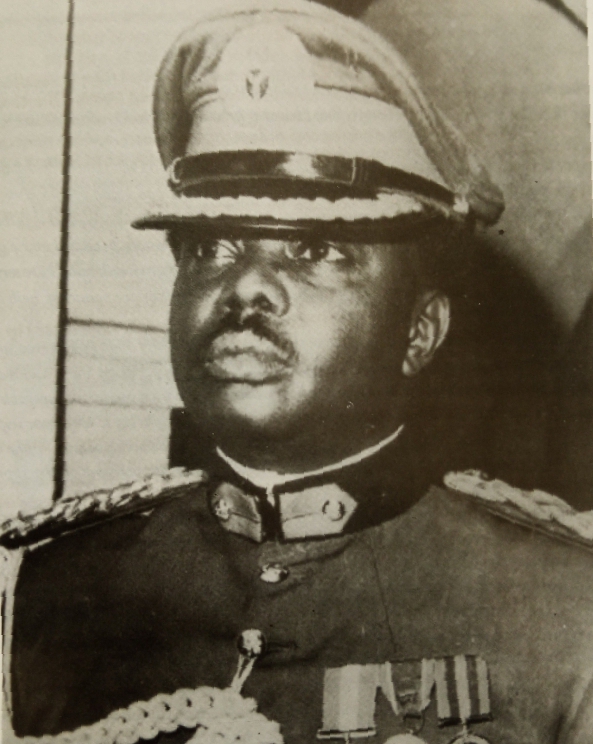
On the morning of 13 February 1976, a black Mercedes-Benz crawled through the dense traffic of Lagos, carrying the most popular man in Nigeria. Inside sat General Murtala Ramat Mohammed, head of state for barely six months, a soldier who had already shaken the foundations of a nation accustomed to slow government. He traveled that day with only a light escort, refusing the armored convoys and heavy security that some of his aides had urged on him. Within minutes, gunfire tore through the car at a junction in the Ikoyi district, and the general who had promised to hand power back to civilians lay dead at the age of 37. The country he had governed for roughly 200 days erupted first in disbelief and then in grief so deep that it reshaped how Nigerians would remember him forever.
That brief rule remains one of the most studied chapters in Nigerian political history. Admirers saw in Murtala Mohammed a rare figure who combined decisiveness with a genuine impatience for corruption and drift. Critics, especially those who remembered his conduct during the civil war, pointed to a record that was far more complicated than the martyr’s halo that later surrounded him. Both views contain truth, and both belong in any honest account of his life. What follows is the story of a northern soldier who rose through a turbulent army, played a prominent and contested role in a brutal war, seized power in a bloodless coup, governed with astonishing speed, and died in a hail of bullets that turned him into a national symbol.
Quick Facts
- Full name
- Murtala Ramat Mohammed
- Born
- 8 November 1938, Kano, Northern Nigeria
- Died
- 13 February 1976 (aged 37)
- Office
- Head of State of Nigeria (1975 to 1976)
- Known for
- Sweeping reforms, Pan-African foreign policy
Early Life and Military Career
Murtala Ramat Mohammed was born on 8 November 1938 in the ancient commercial city of Kano, in the far north of what was then colonial Nigeria. Kano had been a center of trade, learning, and Islamic scholarship for centuries, a crossroads of caravan routes that linked the Sahara to the forests of the south. He came from a respected family, and his upbringing carried the discipline and religious grounding that marked many households in the old city. The Nigeria of his childhood was still governed by the British, administered in the north through a system of indirect rule that worked through traditional emirs and councils.
His education took him to some of the best institutions available to a northern boy of his generation. He attended Barewa College in Zaria, the celebrated secondary school that produced an extraordinary share of Nigeria’s early leaders, including several who would become heads of state and senior politicians. Barewa, originally founded as a training ground for the sons of the northern elite, gave Murtala Mohammed both a solid academic foundation and a network of contemporaries who would populate the country’s corridors of power in the decades to come.
After his schooling, he chose a career in the armed forces, enlisting in the Nigerian Army at a moment when the institution was expanding and gradually moving toward African leadership. Like many promising young officers of his era, he was sent abroad for formal military training. He traveled to England and attended the Royal Military Academy Sandhurst, the renowned British officer training college that shaped a generation of Commonwealth military leaders. There he absorbed the traditions, discipline, and technical instruction of a professional army, returning home as part of the first waves of Nigerian officers taking over roles once held by the British.
Murtala Mohammed trained and served as a signals officer, a specialty concerned with military communications. The signals branch demanded precision and technical competence, and it placed officers at the nerve center of command and coordination. He received additional professional instruction in communications, further sharpening his expertise in a field that would later prove valuable as the army grew and modernized. His rise through the ranks was steady, and by the mid-1960s he had established himself as one of the ambitious, capable officers of a young Nigerian military that was about to be thrown into the deepest crisis of the nation’s short independent life.
Independence had come in 1960, and the First Republic that followed was fragile. Regional rivalries, electoral disputes, and accusations of corruption strained the young democracy. In January 1966, a group of mostly junior officers staged a coup that killed the prime minister and several prominent political leaders, many of them from the north. A counter-coup followed in July of that year, and Murtala Mohammed was among the northern officers deeply involved in the events that brought General Yakubu Gowon to power. The killings and reprisals of 1966, and the violence that engulfed many Igbo people living in the north, set the country on the road to catastrophe. By 1967, Nigeria was at war with itself.
The Civil War Years
The Nigerian Civil War, fought from 1967 to 1970, remains the defining tragedy of the nation’s modern history. When the Eastern Region declared itself the independent Republic of Biafra under Lieutenant Colonel Odumegwu Ojukwu, the federal government under General Gowon moved to keep the country united by force. Murtala Mohammed emerged as one of the most prominent federal field commanders of that conflict, leading troops in some of its heaviest and most consequential fighting.
He commanded the 2nd Division of the Nigerian Army, a formation given the task of driving into the heart of Biafran territory across the Niger River. His forces were involved in the crucial campaigns around the Mid-West and the attempts to cross the Niger at Onitsha, battles that were among the bloodiest and most difficult of the entire war. The repeated efforts to force a crossing of the river cost enormous numbers of lives on both sides, and the fighting under his command became notorious for its intensity. The 2nd Division suffered heavy casualties, and the campaigns tested the young commander’s judgment and the endurance of his men.
Murtala Mohammed’s wartime record is genuinely contested, and an honest biography must treat it even-handedly. To his supporters, he was a fearless and aggressive commander who threw himself into the fight to hold the country together, a soldier of nerve and determination who refused to be deterred by losses. To his critics, his command was marked by costly frontal assaults and by episodes that drew lasting controversy, including allegations surrounding the conduct of his troops during the Mid-West campaign and the heavy toll of the river crossings. These debates have never been fully settled, and they sit alongside the broader controversies of a war in which great suffering, including widespread famine in the blockaded Biafran enclave, touched millions of people.
What is beyond dispute is that the war made Murtala Mohammed a national figure. He came out of the conflict with a reputation as a bold and energetic officer, respected by many of the troops and known throughout the officer corps. The war ended in January 1970 with the surrender of Biafra and General Gowon’s famous declaration of “no victor, no vanquished,” a formula meant to bind the wounds of a divided country. In the years that followed, Murtala Mohammed held senior positions, including a role overseeing army communications, and watched as the Gowon government that had won the war gradually lost the confidence of the officer corps and the public.
Seizing Power
By the mid-1970s, the mood in Nigeria had soured. The civil war had been won, and the oil boom that followed flooded the treasury with revenue, yet the Gowon administration came to be seen as drifting and indecisive. Complaints mounted about corruption among officials and state governors, about a bloated and inefficient government, and above all about General Gowon’s apparent reluctance to honor his earlier promise to return the country to civilian rule. In 1974, Gowon announced that an earlier target date for the transition was no longer realistic, a decision that disappointed many Nigerians who had hoped for a quick restoration of democracy. The sense that the government had lost its sense of purpose spread through the barracks.
On 29 July 1975, while General Gowon was out of the country attending an Organisation of African Unity summit in Kampala, Uganda, a group of officers moved against him. The coup was bloodless, carried out without the killings that had scarred earlier seizures of power in Nigeria. Gowon, informed of events while abroad, chose to step aside rather than plunge the country into further violence, and he went into exile, later pursuing studies in England. The plotters turned to Murtala Mohammed, by then one of the senior and most respected officers, to lead the new government. He became head of state at a moment of heightened public expectation.
The reaction within Nigeria was striking. Many citizens greeted the change with open enthusiasm, hopeful that the new leader’s reputation for decisiveness would translate into action against the corruption and inertia they associated with the previous years. Murtala Mohammed quickly signaled that his would be a government of movement rather than talk. He projected an image of austerity and seriousness, cultivating a public persona of a leader determined to clean house. That early goodwill gave him a reservoir of popular support that few Nigerian leaders have ever enjoyed, and he spent it rapidly on a program of reform that would unfold at breathtaking speed.
The 200 Days of Reform
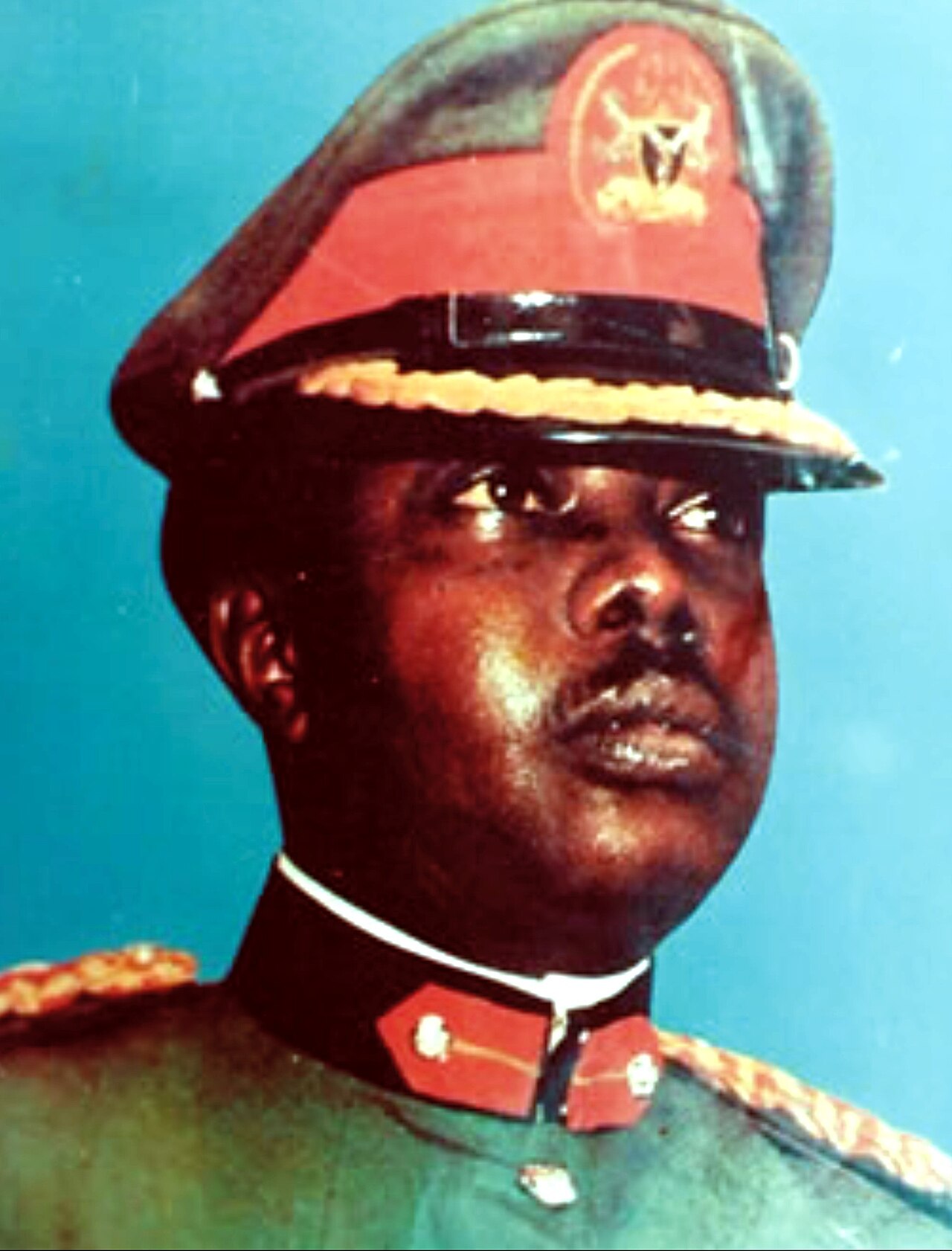
The government of Murtala Mohammed lasted only about six months, roughly 200 days, yet it compressed into that short span a volume of change that would have taken ordinary administrations years to attempt. From the start, he governed as a man in a hurry, convinced that the country needed shock treatment rather than gradual adjustment. Together with his deputy, Brigadier Olusegun Obasanjo, and the Supreme Military Council, he set about reshaping the state.
The most dramatic of his early moves was a sweeping purge of the public sector. Thousands of civil servants, military officers, police, judges, diplomats, university staff, and employees of state corporations were dismissed or retired, many of them abruptly and without the usual procedures. The stated aim was to root out corruption, inefficiency, and deadwood from a bureaucracy seen as bloated and complacent. The exercise was popular with a public tired of official sloth, and it sent a thunderclap through the entire government machinery. It also drew criticism, since the speed and manner of the dismissals meant that some honest and competent people were swept out alongside the genuinely corrupt, and the process offered little recourse to those wrongly removed. The purge remains one of the most debated features of his rule, admired for its intent and questioned for its methods.
Murtala Mohammed also moved quickly to address the central political grievance of the previous era. He announced a clear timetable to return the country to civilian democratic rule, setting a target of 1979 for the handover. This commitment restored public faith that the soldiers intended to go back to the barracks, and it set in motion the constitutional preparations, including the work that would eventually produce a new constitution and a transition program. The plan gave the military government a sense of direction and a defined endpoint, a sharp contrast with the open-ended drift of the years before.
He tackled the thorny question of Nigeria’s internal structure as well. Responding to long-standing demands from minority groups and regions that felt marginalized within the existing arrangement, his government took the decision to create additional states, expanding the federation and redrawing the administrative map to bring government closer to more communities. The creation of new states was intended to ease ethnic and regional tensions by giving more groups a stake in the federal system, and it continued a process of state creation that would recur throughout Nigeria’s later history.
Among the most far-reaching of his initiatives was the decision to build a new federal capital. Lagos, the crowded coastal city that had served as capital since colonial times, was congested, vulnerable, and located in the territory of one ethnic group, factors that made it unsatisfactory as a symbol of national unity. Murtala Mohammed’s government launched the plan to move the federal capital from Lagos to a new, centrally located site that would become Abuja. Positioned near the geographic center of the country, the new capital was meant to be neutral ground, belonging to no single region, a city built to embody the idea of one Nigeria. Although Abuja would not formally become the capital until many years later, the decision taken during his short rule set in motion one of the largest national projects in the country’s history.
Abroad, Murtala Mohammed pursued an assertive and proudly Pan-African foreign policy that raised Nigeria’s profile on the continent and beyond. The most famous episode came over Angola, where a civil war was raging as the former Portuguese colony moved toward independence in 1975 and 1976. Against the preferences of some Western powers, his government threw Nigeria’s weight behind the Popular Movement for the Liberation of Angola, known by its Portuguese initials as the MPLA, and worked to rally African support for recognizing the MPLA government. The stance marked a bold, independent line in the midst of Cold War rivalries and positioned Nigeria as a champion of African self-determination. It was in this context that he delivered his most quoted declaration, telling an Organisation of African Unity gathering that the era of outside dictation to the continent was over.
Africa has come of age. It is no longer under the orbit of any extra continental power. It should no longer take orders from any country, however powerful.
That speech captured the spirit of his foreign policy and became one of the defining phrases of Nigerian diplomacy, invoked for decades afterward as an expression of the country’s aspiration to lead on the continent and to speak for Africa on the world stage.
Assassination and Legacy
The energy and popularity of Murtala Mohammed’s rule did not shield him from danger. The very reforms that won him public acclaim created enemies among those dismissed, demoted, or alarmed by the pace of change, and the volatile politics of the army meant that the threat of a coup was never far away. On the morning of 13 February 1976, that threat became reality.
A group of officers led by Lieutenant Colonel Buka Suka Dimka launched a violent attempt to seize power. The plotters ambushed Murtala Mohammed’s car as it made its way through the heavy morning traffic of Lagos, near the Ikoyi area, and assassinated the head of state along with his aide-de-camp and driver. The attack was part of a wider plan that included the seizure of the national radio station, where Dimka broadcast an announcement of the coup. The conspiracy, however, failed to take control of the government. Loyal forces moved to crush the uprising, and the attempted takeover collapsed within hours. Dimka went on the run and was later captured, tried, and executed along with a number of others implicated in the plot. The investigation into the coup widened into one of the most serious political controversies of the period, touching figures well beyond the immediate band of gunmen.
The news of the assassination sent a shock of grief through Nigeria unlike anything the country had experienced for a public figure. Enormous crowds mourned him, and the outpouring of national sorrow reflected how deeply his brief, forceful leadership had touched ordinary citizens hungry for honest and decisive government. His death elevated him almost instantly to the status of martyr, a leader cut down just as he seemed to be transforming the nation.
Power passed smoothly to his deputy, Lieutenant General Olusegun Obasanjo, who became head of state and chose to continue the program his predecessor had begun. Obasanjo pressed ahead with the transition timetable, the state-creation process, and the plan for the new capital at Abuja, and in 1979 he oversaw the handover to an elected civilian government, fulfilling the promise Murtala Mohammed had made. In this way, the dead general’s agenda outlived him and shaped the course of the Second Republic.
In the years since, Murtala Mohammed has occupied a special place in Nigerian memory. His image as a symbol of integrity, discipline, and resolute action became a standard against which later leaders were measured, often invoked in moments of national frustration with corruption and indecision. The country honored him in enduring ways. His portrait was placed on the twenty naira note, making him part of daily life for generations of Nigerians, and the main international airport serving Lagos, the busiest in the country, was named Murtala Muhammed International Airport in his memory. His name adorns streets, institutions, and monuments across Nigeria, keeping alive the story of the general who ruled for only 200 days.
Career Timeline
- 8 November 1938: Born Murtala Ramat Mohammed in Kano, Northern Nigeria.
- 1950s: Educated at Barewa College in Zaria, then enlists in the Nigerian Army and trains at the Royal Military Academy Sandhurst in England, serving as a signals officer.
- July 1966: Plays a significant role in the counter-coup that brings General Yakubu Gowon to power.
- 1967 to 1970: Commands the 2nd Division of the Nigerian Army during the Nigerian Civil War, leading heavy fighting around the Niger River.
- 29 July 1975: Becomes head of state after the bloodless coup that removes General Gowon while he is abroad.
- 1975: Begins sweeping civil-service purges, announces a 1979 timetable for return to civilian rule, and backs the creation of new states.
- 1975 to 1976: Launches the plan to move the federal capital from Lagos to Abuja and pursues a Pan-African foreign policy, including support for the MPLA in Angola.
- 13 February 1976: Assassinated in Lagos traffic during the failed coup led by Lieutenant Colonel Buka Suka Dimka, aged 37.
Lesser-Known Facts
- He received his formal officer training at the Royal Military Academy Sandhurst in England and specialized as a signals officer, a technical branch concerned with military communications.
- During the civil war he commanded the 2nd Division, and his aggressive, costly campaigns to cross the Niger River remain among the most debated episodes of his military career.
- The decision to relocate the federal capital from Lagos to the centrally located site that became Abuja was set in motion during his short tenure, though the move was completed many years after his death.
- His declaration that “Africa has come of age” at an Organisation of African Unity gathering became one of the most quoted statements in Nigerian diplomatic history.
- His portrait appears on the twenty naira note, and Murtala Muhammed International Airport in Lagos, the busiest airport in Nigeria, is named in his honor.
- Despite governing for only about 200 days, he remains one of the most admired figures in Nigerian public memory, frequently invoked as a symbol of integrity and decisive leadership.
Frequently Asked Questions
Who was Murtala Mohammed? Murtala Ramat Mohammed was a Nigerian Army general who served as head of state of Nigeria from July 1975 until his assassination in February 1976. In a rule of roughly 200 days he became known for sweeping anti-corruption reforms, a commitment to return the country to civilian rule, and an assertive Pan-African foreign policy, and his death made him a lasting national symbol.
How did Murtala Mohammed come to power? He became head of state through a bloodless military coup on 29 July 1975 that removed General Yakubu Gowon while Gowon was attending an Organisation of African Unity summit abroad. A group of officers, frustrated by what they saw as drift and indecision, turned to Murtala Mohammed as a senior and respected figure to lead the new government.
What did he achieve in office? In his brief tenure he carried out a large purge of the public sector to fight corruption and inefficiency, announced a 1979 timetable for a return to civilian democratic rule, backed the creation of additional states, launched the plan to move the federal capital from Lagos to Abuja, and pursued a bold foreign policy that included support for the MPLA in Angola.
How did Murtala Mohammed die? He was assassinated on 13 February 1976 during a failed coup attempt led by Lieutenant Colonel Buka Suka Dimka. Gunmen ambushed his car in heavy Lagos traffic near Ikoyi and killed him along with his aide and driver. The coup collapsed within hours, and Dimka and others were later captured and executed.
What is named after him? His portrait is featured on the Nigerian twenty naira note, and Murtala Muhammed International Airport in Lagos, the country’s busiest airport, bears his name. Numerous streets, institutions, and monuments across Nigeria are also named in his memory.
Legacy
The legacy of Murtala Mohammed rests on a paradox. He governed for a span so short that it can be counted in days, yet he left a mark deeper than many leaders who ruled for years. The reforms he set in motion, the transition he promised, the capital he decided to build, and the foreign policy he projected all outlived him and shaped the Nigeria that followed. His deputy Olusegun Obasanjo carried the program through to a civilian handover in 1979, giving the dead general a kind of posthumous completion of his unfinished work.
His memory also carries the weight of unresolved debate. The purge that thrilled the public also removed honest officials without recourse, and his civil-war command remains genuinely contested, admired by some as fearless and criticized by others as costly and controversial. An honest reckoning holds both the reformer and the warrior in the same frame, resisting the temptation to flatten a complicated man into a simple saint. Yet it is the image of integrity and decisive action that has endured most powerfully in the national imagination, a benchmark against which Nigerians have measured their leaders for half a century.
In the end, Murtala Mohammed became larger in death than he had been in life. The twenty naira note, the airport that carries millions of travelers, the streets and statues, all keep his name before a public that still invokes him in moments of frustration and hope. He stands in Nigerian history as the reforming general who ruled for just 200 days, a leader whose brief, forceful passage through power turned him into one of the most enduring symbols of what the country has aspired to be.