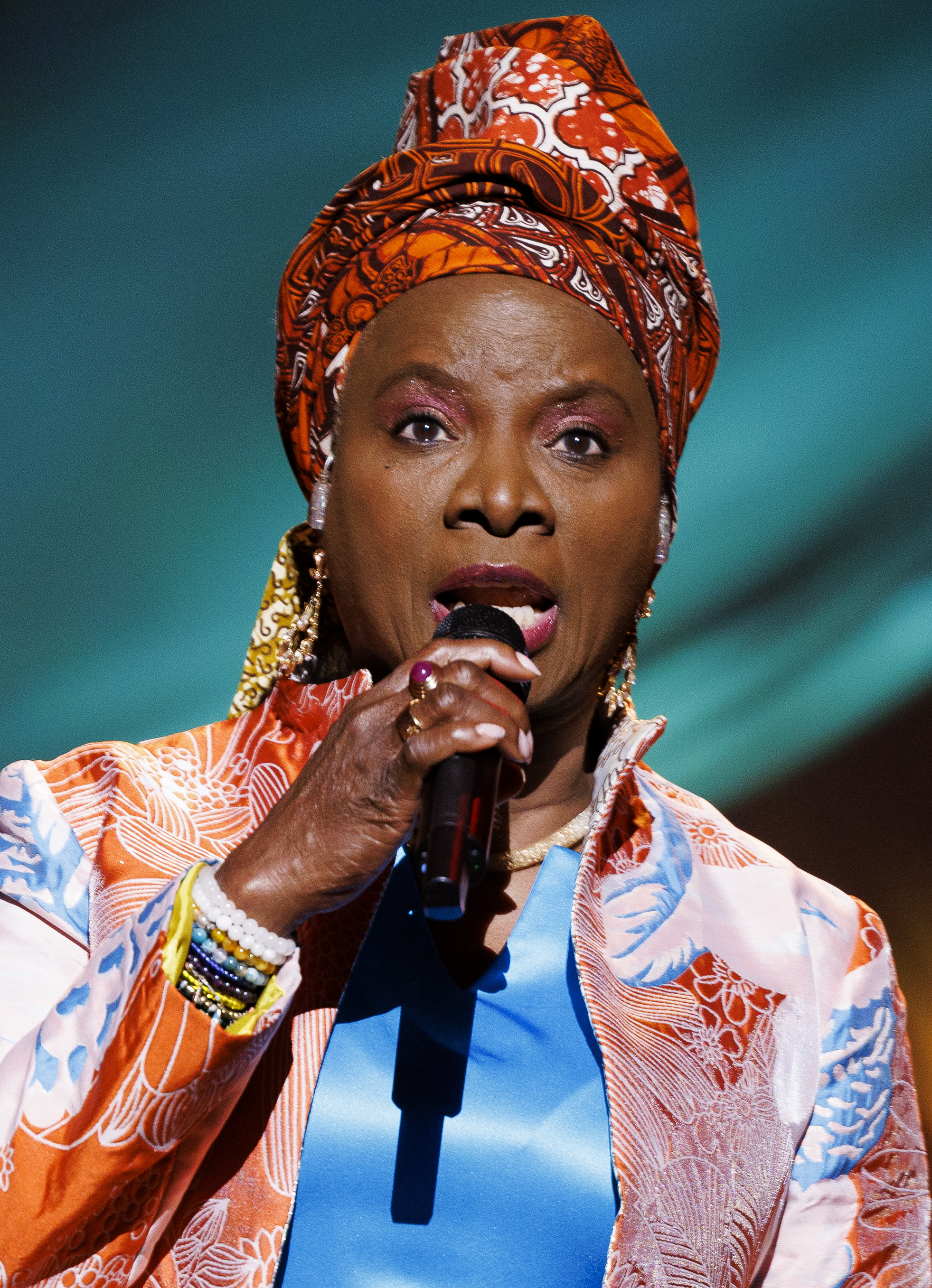
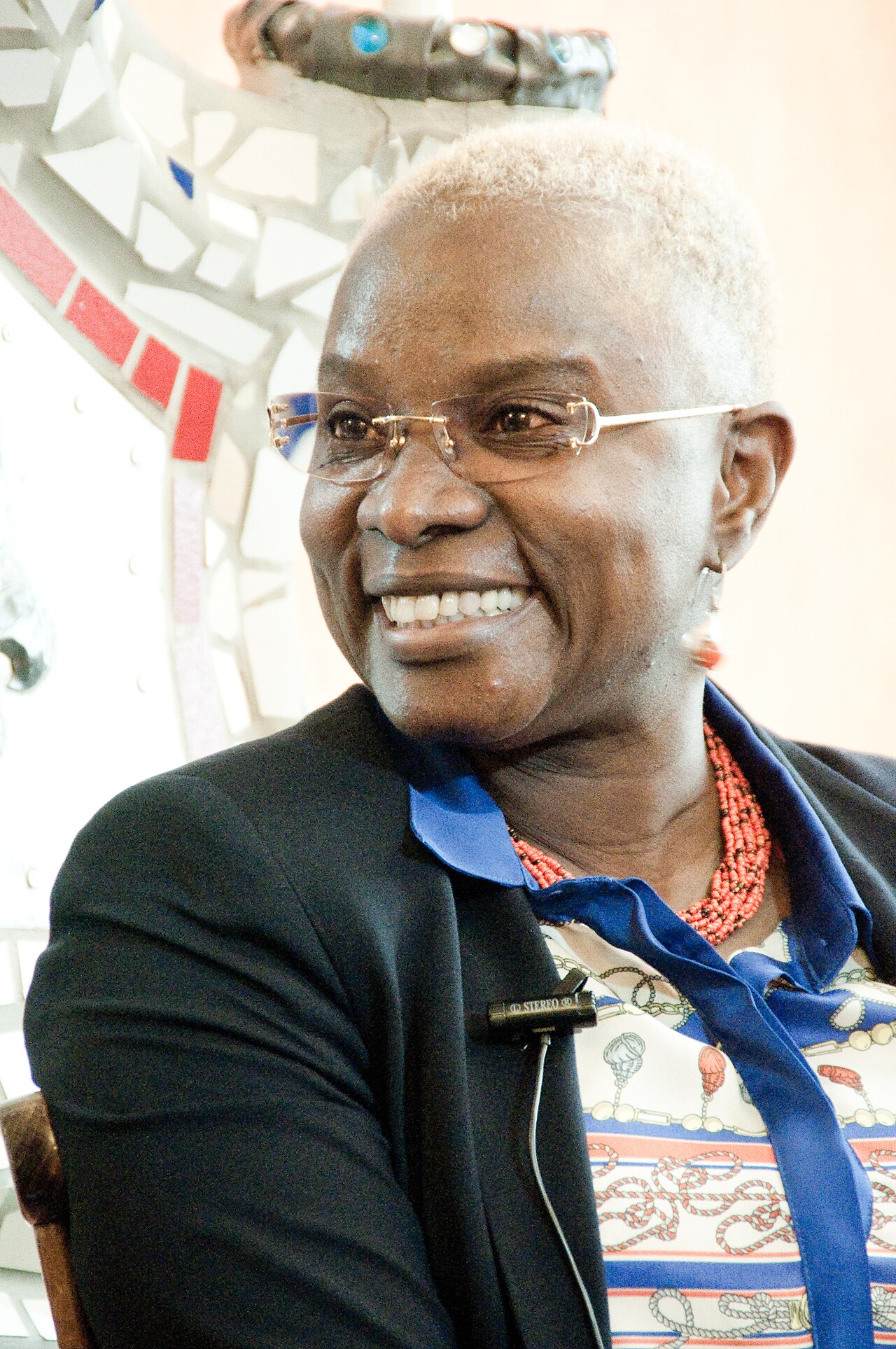
When Angelique Kidjo walks onto a stage, the room changes. Her voice, powerful and unmistakable, can fill a stadium without amplification and still carry the intimacy of a lullaby. For more than four decades she has stood at the crossroads of continents, weaving the rhythms of her native Benin into jazz, funk, rumba, gospel, and pop, and refusing every attempt to box her into a single label. She sings in Fon, Yoruba, French, English, and languages she invents herself. She has shared stages and studios with artists as varied as Carlos Santana, Alicia Keys, Philip Glass, and Burna Boy. And she has done all of this while insisting, over and over, that African music is not a niche or a curiosity but a foundational current running through nearly everything the world calls popular music.
To understand Kidjo is to understand a woman who left her country under a repressive government, rebuilt her life in Paris with almost nothing, and then climbed to the very top of the global music industry on her own terms. She is a five-time Grammy winner, a UNICEF Goodwill Ambassador, and a tireless advocate for the education of African girls. Time magazine and the BBC have both counted her among the most influential and inspiring figures of her generation. This is the story of how a girl from Ouidah became one of the defining voices of contemporary world music.
Quick Facts
- Full name
- Angélique Kpasseloko Hinto Hounsinou Kandjo Manta Zogbin Kidjo
- Born
- 14 July 1960, Ouidah, Benin
- Genre
- Afropop, world music, jazz fusion
- Known for
- Five-time Grammy winner; UNICEF ambassador
- Nickname
- "Africa's premier diva"
Early Life
Angelique Kidjo was born on 14 July 1960 in Ouidah, a historic coastal town in what is now the Republic of Benin, then still known as Dahomey. She grew up in Cotonou, the country’s largest city, as one of many children in a household that treated art and expression as a normal part of daily life. Her father worked for the postal service and played the banjo. Her mother was a choreographer and theatre director who ran her own troupe. In a family of nine children, music, dance, and storytelling were not special occasions but the ordinary texture of the home.
Her mother’s theatre company gave the young Angelique her first taste of the stage. She began performing with the troupe when she was around six years old, absorbing not only the discipline of live performance but also the traditional songs, rhythms, and dances of Benin. The household was also open to the wider world. Records by artists such as Miriam Makeba, James Brown, and Aretha Franklin sat alongside Beninese and West African music, and her older brothers played in a band. That combination, the deeply local and the boldly international, would become the signature of her entire career.
By her teenage years Kidjo was already singing professionally, performing on local radio and becoming a recognizable young talent in Cotonou. She released early recordings and built a following at home. She has often recalled how the sounds of her childhood came from every direction at once: the traditional music of Benin’s ceremonies and its markets, the West African stars whose records circulated through the region, and the American soul and funk her brothers loved. She refused, even then, to see any contradiction between these worlds, and that refusal became the philosophy of her life. To her, a Beninese folk melody and a James Brown groove were not opposites but cousins, part of one enormous family of rhythm rooted in Africa. But the country around her was changing in ways that would make an artistic life increasingly difficult and even dangerous.
In the 1970s Benin came under a Marxist-Leninist military government led by Mathieu Kérékou, and the country was renamed the People’s Republic of Benin. The state tightened its grip on culture and expression, and musicians were expected to produce work that praised the government and its ideology. For an artist like Kidjo, who valued creative freedom above almost everything, this was intolerable. She has spoken many times about how the pressure to make propaganda music, and the surveillance and restrictions of that era, convinced her that she could not build the life she wanted inside the country she loved. The government wanted artists to serve the state, and Kidjo wanted only to serve the music. That conflict, between an individual voice and a system that demanded conformity, would shape the decision that changed the entire course of her life.
Exile and Paris
In 1983 Kidjo left Benin for Paris. It was not a triumphant departure but an escape, a decision made under the weight of a political system that she felt was strangling her ability to create honestly. She arrived in France with limited money and no guarantee of success, one of countless African migrants trying to make a life in a European capital.
To support herself, she took ordinary jobs while pursuing her real ambition. She enrolled at the CIM jazz school in Paris, one of Europe’s respected institutions for jazz education, and studied music seriously for the first time in an academic setting. That training sharpened her understanding of harmony and arrangement and connected her to a community of working musicians. She began performing around the city, first as a backing singer and then increasingly as a frontwoman.
Paris in the 1980s was a fertile place for an artist with her background. The city had a large and vibrant African and Caribbean community, and a growing appetite among European audiences for music from across the continent. Kidjo formed a band, played the club circuit, and slowly built a reputation as a performer of extraordinary energy and range. It was during this period that she met Jean Hébrail, a French musician who became her husband, her songwriting partner, and a constant collaborator on the music that would soon reach the world. Their partnership, both personal and professional, has endured for decades.
The years of struggle in Paris also gave Kidjo something that would define her artistic identity: a sense of herself as both fully Beninese and fully a citizen of the world. Living as an African woman in Europe, she confronted stereotypes and low expectations, and she responded by becoming more ambitious rather than less. She was determined to prove that an artist from Benin did not have to shrink herself to fit anyone’s idea of what African music should sound like. If anything, exile sharpened her sense of purpose. The homeland she had left behind became a wellspring she would draw from for the rest of her career, and the distance let her see, more clearly than ever, how African rhythms had spread across the entire planet.
By the end of the 1980s, Kidjo was no longer an unknown newcomer. She had released records in France, earned attention in the European world music scene, and developed the fearless stage presence that would define her. The next step would take her from the clubs of Paris to a global audience.
International Breakthrough
The turning point came when Kidjo signed with Island Records, the label founded by Chris Blackwell that had introduced Bob Marley to the world and had a long history of championing music from outside the Anglo-American mainstream. The relationship gave her the reach and the resources to make her ambitions real.
Her 1991 album Logozo announced her arrival on the international stage. Recorded with an all-star cast of musicians and produced by Joe Galdo, it fused Beninese traditions with funk, jazz, and contemporary pop, and its energy was impossible to ignore. The record won critical praise and established her as a fresh and commanding new voice. She followed it in 1994 with Aye, and in 1996 with Fifa, a set of albums that deepened her fusion of West African rhythm with Western production. For Fifa, she traveled through villages in Benin recording local musicians and singers, then built her songs around those authentic field recordings, a method that reflected her lifelong commitment to keeping the roots of her music visible.
These records did more than sell. They carried her to major festivals and stages around the world and turned her into one of the most recognizable African artists of the decade. Songs such as “Agolo” earned her early Grammy nominations and heavy rotation, and her striking image, her shaved head, bold style, and boundless physical energy on stage, made her instantly memorable. She was becoming, as the press often called her, one of Africa’s premier divas, a status she earned through relentless touring and an ever-expanding musical vocabulary.
A Genre-Crossing Career
What separates Kidjo from many of her contemporaries is the sheer ambition of her projects. She has never been content to repeat a successful formula. Instead she has used her career to explore big ideas about history, migration, and the connections between peoples.
Central to this was a trilogy of albums tracing the African diaspora and the way African music traveled across the Atlantic through slavery and migration, only to return home transformed. Oremi (1998) looked toward African American music and included a collaboration with Carlos Santana. Black Ivory Soul (2002) explored the links between Benin and Bahia in Brazil. Oyaya! (2004) turned to the Caribbean, tracing rhythms through the islands. Together the three records formed a musical map of how African sound had shaped, and been reshaped by, the wider world.
Her willingness to take on audacious projects reached a peak with Remain in Light (2018), a track-by-track reinterpretation of the landmark 1980 Talking Heads album of the same name. Kidjo had long argued that the original record, with its polyrhythmic textures and Afrobeat influences, was in a sense already African music, and she reclaimed it by re-recording the entire album with West African arrangements. The project was widely acclaimed and demonstrated her boldness as an interpreter, not just a songwriter. Members of Talking Heads themselves praised her vision.
Throughout her career she has collaborated across an astonishing range of genres and stars. She has worked with Alicia Keys, Bono, Peter Gabriel, Branford Marsalis, the composer Philip Glass, the cellist Yo-Yo Ma, and the Kronos Quartet, among many others. Her 2019 album Celia, a tribute to the Cuban salsa legend Celia Cruz, connected her once more to the Afro-Cuban tradition. And on Mother Nature (2021) she deliberately turned toward a new generation of African stars, recording with Burna Boy, Yemi Alade, Sampa the Great, and others to celebrate the explosion of contemporary African pop she had helped make possible.
Kidjo has also carried her music into unexpected arenas that few pop artists ever reach. She has performed with major symphony orchestras and worked in the world of contemporary classical composition, developing large-scale orchestral works that place her voice alongside strings and full ensembles. She created a symphonic project inspired by her admiration for the Malian singer Salif Keita and the wider tradition of West African song, and she has appeared on some of the world’s most prestigious concert stages, from Carnegie Hall to leading European festivals. This ability to move between a village recording session in Benin, a stadium in Lagos, and a formal orchestral hall in New York without ever losing her identity is one of the rarest things about her. She treats every stage as the same stage, and every audience as capable of hearing the same truth in her music.
Her live performances remain legendary. Reviewers describe them as acts of collective release, with Kidjo pulling audiences to their feet, inviting people onto the stage, and turning a concert into something closer to a communal celebration. That physical, unstoppable energy, sustained across decades and hundreds of shows, is a central part of why she is so beloved by the people who have seen her in person.
“I am a Beninese woman, and I am a citizen of the world. Music is the only thing that can bring people together without asking for their passport.”
Her achievements have been recognized at the highest level. Kidjo has won five Grammy Awards, most of them in the category for the best world music or global music album, a run of victories that includes Djin Djin (2007), Eve (2014), Sings (2015), Celia (2019), and Mother Nature (2021). Few African artists have matched that record of sustained recognition from the American recording academy, and each win reinforced her role as an ambassador carrying the continent’s music onto the biggest possible platform.
Activism and Advocacy
Kidjo’s influence extends far beyond the concert hall. In 2002 she was named a UNICEF Goodwill Ambassador, a role that has taken her across Africa and the world to draw attention to the rights and needs of children. She has used her fame consistently to speak about issues that governments and industries often ignore, and she has traveled to some of the poorest and most difficult places to see conditions firsthand.
The cause closest to her heart is the education of girls. In 2007 she founded the Batonga Foundation, an organization dedicated to giving girls in Africa access to secondary and higher education. Its work has grown over the years to include mentoring, community programs, and support for adolescent girls in several countries. Kidjo has argued repeatedly that educating girls is one of the most powerful ways to transform a society, and she has put her own money, time, and name behind that belief.
She is also a fierce and eloquent advocate for African culture on the world stage. In interviews, speeches, and performances she pushes back against the idea that African music is exotic or peripheral, insisting instead that it lies at the heart of blues, jazz, rock, samba, and countless other forms. She has spoken at global forums, received honorary degrees, and used every platform available to argue for the dignity and centrality of the continent’s artistic heritage. Her advocacy earned her recognition as an Amnesty International Ambassador of Conscience in 2016, an honor she shared that year with the activist and musician Peter Gabriel.
Kidjo frequently connects her music directly to her activism, arguing that the two cannot be separated. She has said that every song she records is a way of insisting on the humanity and creativity of the continent she comes from, and that visibility itself is a form of advocacy. When she stands on a global stage as a proud African woman, singing in Fon or Yoruba to audiences who may know nothing of Benin, she is making a quiet but powerful argument about who deserves to be heard. That conviction has made her a mentor and inspiration to countless younger artists, particularly women, who have watched her build a career without ever compromising her origins or her principles.
Career Timeline
- 1960: Born on 14 July in Ouidah, Benin, then known as Dahomey.
- 1983: Leaves Benin for Paris to escape the country’s Marxist government and pursue music freely.
- 1991: Releases Logozo on Island Records, her international breakthrough album.
- 1994 to 1996: Releases Aye (1994) and Fifa (1996), cementing her global reputation.
- 1998 to 2004: Completes her diaspora trilogy with Oremi, Black Ivory Soul, and Oyaya!.
- 2002: Named a UNICEF Goodwill Ambassador.
- 2007: Wins her first Grammy for Djin Djin and founds the Batonga Foundation for girls’ education.
- 2018: Releases her acclaimed reinterpretation of Talking Heads’ Remain in Light.
- 2021: Wins a Grammy for Mother Nature, an album featuring a new generation of African stars.
Lesser-Known Facts
- Her full name is Angélique Kpasseloko Hinto Hounsinou Kandjo Manta Zogbin Kidjo, a long string of names reflecting family and cultural tradition in Benin.
- She fled Benin in 1983 in part because the country’s government pressured musicians to make propaganda music, something she refused to do.
- She sings in multiple languages, including Fon and Yoruba (both spoken in Benin), French, and English, and she sometimes invents her own vocal languages for particular songs.
- Both Time magazine and the BBC have named her among the most influential and inspiring figures of her time, and Time once called her Africa’s premier diva.
- Her long-running creative partnership is a family affair: her husband, the French musician and bassist Jean Hébrail, has co-written much of her catalogue.
- Beyond recording, she has taken her music into the classical and theatrical world, performing with symphony orchestras and working with composers such as Philip Glass.
Frequently Asked Questions
Where is Angelique Kidjo from? Angelique Kidjo is from Benin, a country in West Africa. She was born in the coastal town of Ouidah in 1960 and grew up in Cotonou, the country’s largest city, before moving to Paris in the 1980s.
How many Grammys has Angelique Kidjo won? She has won five Grammy Awards, mostly in the category for the best world music or global music album, for the records Djin Djin, Eve, Sings, Celia, and Mother Nature.
Why did she leave Benin? She left Benin in 1983 to escape a repressive Marxist-Leninist government that pressured artists to produce propaganda and restricted creative freedom. She moved to Paris to study music and build her career on her own terms.
What languages does she sing in? She sings in several languages, including Fon and Yoruba, which are spoken in Benin, as well as French and English. She has also created her own invented languages for certain songs.
What is she known for? She is known as one of Africa’s greatest and most boundary-crossing musicians, a five-time Grammy winner who fuses African traditions with jazz, funk, and pop, and a dedicated UNICEF Goodwill Ambassador and advocate for the education of African girls.
Legacy
Angelique Kidjo’s legacy is measured in more than trophies, though the trophies are considerable. She helped open the door for African artists on the world stage at a time when the industry still treated the continent’s music as a footnote, and she did so without ever diluting or apologizing for her roots. When a younger generation of African stars now tops global charts and fills arenas across Europe and America, they walk a path she helped clear over decades of relentless, uncompromising work.
Her influence flows in two directions. She carried the sounds of Benin and West Africa to audiences who had never heard them, and she carried the argument, in interview after interview, that those sounds were the source rather than the imitation. At the same time she reached back to lift others, recording with new stars, funding the education of girls who might never have finished school, and using her voice for children and communities far from any stage.
She remains active, touring, recording, and speaking, still driven by the same conviction that music can cross any border. From a small town in Benin to the world’s grandest stages, Angelique Kidjo turned a story of exile into one of the most triumphant careers in the history of African music, and she continues to prove that a single voice, rooted in one place, can belong to the whole world.