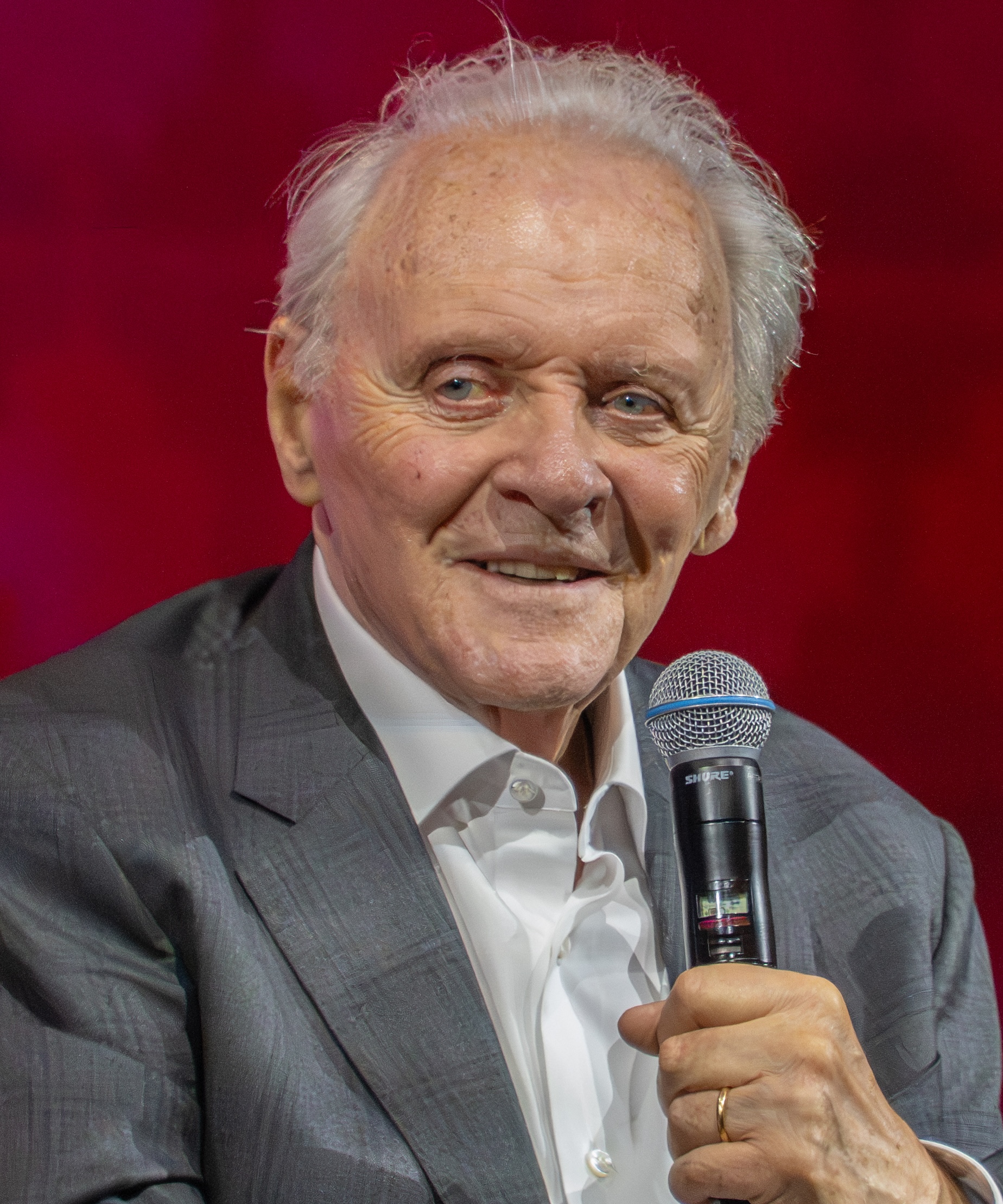
In 1991, Anthony Hopkins received his second on-screen Academy Award nomination and his first win for a performance that totalled fewer than 25 minutes of screen time across an entire feature film. The fact that he won with such limited exposure was not a quirk of the Oscar process or a gap in the competition. It was a demonstration of what he had spent four decades learning to do: to make every second count so completely that the audience carries the weight of a character long after he has left the frame. Hannibal Lecter, the imprisoned psychiatrist and cannibal in Jonathan Demme’s “The Silence of the Lambs,” became one of the most memorable characters in cinema history not because Hopkins was on screen more than anyone else but because he was, in each of those 25 minutes, more fully and terrifyingly present than most actors manage in three hours. Understanding how a boy from a Port Talbot council estate arrived at that kind of mastery requires understanding a life that contained, in roughly equal parts, extraordinary natural talent, severe personal difficulties, stubborn determination, and the particular gift of beginning again at 50 rather than settling for what had already been achieved.
Quick Facts
- Full name
- Philip Anthony Hopkins
- Born
- 31 December 1937, Margam, Port Talbot, Wales
- Nationality
- British and American (dual citizen)
- Known for
- "The Silence of the Lambs" (1991), "The Remains of the Day" (1993), "Nixon" (1995), "The Two Popes" (2019)
- Awards
- Two Academy Awards for Best Actor (1992, 2021), BAFTA Fellowship, knighthood (2000)
Port Talbot and a Difficult Boyhood
Philip Anthony Hopkins was born on 31 December 1937 in Margam, a district of Port Talbot in South Wales. His father, Richard Arthur Hopkins, was a baker, and the family lived in the kind of working-class Welsh community where education was valued in principle but where the path from that community to anything that might be called an artistic career was long and uncertain and not much discussed. Hopkins grew up as an only child in a household that was affectionate enough but not culturally rich in the way that might have pointed obviously toward performance or art.
He was, by his own repeated admission in dozens of interviews given over six decades, a thoroughly mediocre student. He struggled with reading in a way that suggests, in retrospect, the kind of learning difference that was not diagnosed or accommodated in the Wales of the 1940s. He was not part of any particular social group at school. He was restless and inward-looking and more interested in teaching himself the piano, which he did to a high standard entirely through his own efforts, than in the academic curriculum being offered to him. He found the piano by himself, as it were, and the experience of teaching himself something through sheer repetition and persistence established a pattern he would apply later to everything he learned about acting.
The event that set his direction came when he was 15 and encountered the Welsh actor Richard Burton, who had grown up not far from Port Talbot and who by the early 1950s was already established as one of Britain’s most exciting young theatre talents. A chance meeting during which Burton was visiting the area made a decisive impression on the adolescent Hopkins. Burton was Welsh, Burton was from a background not entirely unlike his own, and Burton was clearly going somewhere extraordinary. If Burton could do it, something in Hopkins registered, then the path existed. He decided he would act.
This decision did not immediately produce results that satisfied him or anyone around him. He left school without academic qualifications and worked for two years in various jobs while taking local drama classes. He then gained a place at the Cardiff College of Music and Drama, which offered him the formal training his desire required. He spent two years there before being accepted, in 1963, to the Royal Academy of Dramatic Art in London, where his talent became properly visible in a context that could measure it.
RADA, the Royal National Theatre, and the Stage Years
The Royal Academy of Dramatic Art in London is one of the most rigorous drama schools in the world, and Hopkins arrived there with a working-class Welsh accent, a limited formal education, and a determination to make up for both of those things through the volume and intensity of his application. He was not, by accounts of his contemporaries at RADA, immediately the most polished student in his cohort. He was, however, one of the most driven. He worked on his voice, worked on his physical presence, worked on the technical aspects of classical text with a methodical thoroughness that suggested someone making up for lost time.
After RADA, he was invited to join the Royal National Theatre under Laurence Olivier, which was one of the most significant things that could happen to a young British actor in the mid-1960s. Olivier was assembling the finest ensemble in British theatre and Hopkins became part of it, understudying Olivier himself and appearing in productions alongside some of the best actors of that generation. The experience was formative in ways that are difficult to overstate. He was absorbing, at close quarters, what it looked like when classical acting technique was applied by a master with decades of experience. He was learning what economy meant on stage, what size meant, when to pull back and when to press forward.
He made his film debut in 1967 with “The White Bus,” a short film directed by Lindsay Anderson. His first significant film role came in Anthony Harvey’s “The Lion in Winter” (1968), a period drama in which he played Richard, the future Richard I, alongside Peter O’Toole as Henry II and Katharine Hepburn as Eleanor of Aquitaine. To appear, in one of your first major screen roles, alongside O’Toole and Hepburn and to hold your own required a particular kind of nerve. Hopkins had it. The film was a critical success and introduced him to film audiences worldwide.
Throughout the late 1960s and 1970s, he continued to work in both theatre and film, appearing in major productions for the BBC and in films including “Young Winston” (1972), Richard Attenborough’s biography of Churchill, and “A Bridge Too Far” (1977), Attenborough’s epic Second World War film. He was, by the mid-1970s, a recognisably important British actor. He was also drinking heavily in a way that was becoming a serious professional and personal problem.
Alcoholism, Sobriety, and the Decision to Begin Again
Hopkins has been entirely open about his alcoholism in countless interviews over the years, and the narrative arc of his early career cannot be understood without it. By the mid-1970s, his drinking had become a serious impediment to his professional reliability, his personal relationships, and his own sense of what he was capable of achieving. He had periods of brilliant work interrupted by periods in which alcohol made him unpredictable and difficult to work with. The private Hopkins of those years was, by his own description, a person he does not much want to revisit.
He stopped drinking in 1975, in his late thirties, after reaching what he has described as a bottom that he recognised clearly as a bottom. He sought help, attended Alcoholics Anonymous meetings, and stopped. He has not had a drink since that date. The sobriety was not simply a personal recovery. It was the enabling condition for everything that followed, for the second half of a career that turned out to be dramatically more significant than the first half.
In 1977, he worked with John Schlesinger in “Equus,” the film adaptation of Peter Shaffer’s celebrated play, playing a psychiatrist investigating a boy who has blinded horses in a religious frenzy. Richard Burton played the same role on stage; Hopkins played it on film in a performance that demonstrated he could carry the psychological density and the moral ambiguity that Shaffer’s text required. In 1980, he appeared in David Lynch’s “The Elephant Man,” playing Frederick Treves, the surgeon who befriends and champions John Merrick. The Lynch film was a cultural event and Hopkins was part of its emotional architecture.
His American television work during this period brought him to American audiences. He won Emmy Awards for “The Bunker” (1981), playing Adolf Hitler, and for “The Lindbergh Kidnapping Case” (1976). He appeared in an acclaimed BBC production of “Othello” in 1981. The body of work was serious and substantial, and yet there was a sense, through the 1980s, that Hopkins had not quite found the peak that his talent suggested was available to him.
The Silence of the Lambs and the Great Transformation
In 1991, Jonathan Demme cast Hopkins as Dr. Hannibal Lecter in “The Silence of the Lambs,” an adaptation of Thomas Harris’s thriller in which FBI trainee Clarice Starling (Jodie Foster) must negotiate with the imprisoned Lecter to catch a different serial killer. The Lecter role had been played before, by Brian Cox in Michael Mann’s “Manhunter” (1986), in a performance that was well-regarded but that left the character available for reimagination. Hopkins approached Lecter not as a monster to be played from the outside but as an intelligence to be inhabited from the inside.
What he constructed was a performance of extraordinary control. The decision to barely blink, which has been widely discussed since, was not a trick but a logical outcome of the character’s psychology: Lecter misses nothing, processes everything, never loses conscious focus. The famous scene in which he speaks to Clarice through the glass of his cell and describes, in precise anatomical detail, what he did to a guard who offended him became one of the most quoted sequences in 1990s cinema. It worked not because Hopkins raised his voice or intensified his physical presence but because he stayed perfectly, almost supernaturally still.
The film grossed over $272 million worldwide against a budget of approximately $19 million. It won the Academy Award for Best Picture, Best Director (Demme), Best Actress (Foster), Best Adapted Screenplay, and Best Actor for Hopkins. This was only the third time in Oscar history that a film swept all five major categories, the previous films being “It Happened One Night” (1934) and “One Flew Over the Cuckoo’s Nest” (1975). The film is classified as a horror-thriller and remains one of a very small number of horror films ever to win Best Picture, a fact that speaks to the unusual quality of everything in it.
The 1990s: A Decade of Major Roles
The Oscar for Lecter opened the final and greatest phase of Hopkins’s career. The 1990s brought a succession of major roles in major films with major directors, and he accepted them with an eagerness that suggested a man fully aware that he was operating at the peak of his ability and determined to use it.
In 1991, the same year as “The Silence of the Lambs,” he appeared in Bille August’s “The Silence” and began his creative partnership with James Ivory and Ismail Merchant, a partnership that produced one of his finest performances. “The Remains of the Day” (1993), directed by James Ivory and based on Kazuo Ishiguro’s Booker Prize-winning novel, cast Hopkins as Stevens, a repressed English butler who has sacrificed his own emotional life for the service of a master whose political sympathies turn out to have been catastrophic. The performance required Hopkins to convey enormous feeling through almost total suppression of feeling, to make the audience understand what Stevens will never permit himself to say. He was nominated again for the Academy Award. Emma Thompson played his co-lead; the chemistry between them, built almost entirely of missed connections and small gestures, was devastating.
In 1993, he appeared as C.S. Lewis in Richard Attenborough’s “Shadowlands,” a biography of the later life of the Christian apologist and novelist. In 1994, he appeared with Alec Baldwin and Anna Paquin in Richard Attenborough’s “Leap of Faith.” In 1995, he played Richard Nixon in Oliver Stone’s biographical epic “Nixon,” a role that required him to embody one of American history’s most complex and contested political figures and to do so without either exculpating or simply vilifying the man. Stone gave him the latitude to find the loneliness and the paranoia and the genuine political intelligence of Nixon simultaneously, and Hopkins used it fully.
Also in 1995, he returned to Hannibal Lecter in “Silence of the Lambs” sequel territory with a role in “The Silence” and appeared in Ridley Scott’s thriller “Crimson Tide” and Merchant Ivory’s “The Remains.” He appeared in Steven Spielberg’s “Amistad” (1997) as former president John Quincy Adams, delivering a courtroom speech of approximately seven minutes that became one of the most discussed sequences in Spielberg’s career. The role required him to age convincingly and to carry the moral weight of the entire film in a single extended scene. He did so with a command that silenced critical discussion almost immediately.
In 1998, he returned to the role of Hannibal Lecter in a prequel, “Hannibal” (2001), and in “Red Dragon” (2002), directed by Brett Ratner, both of which were commercially successful while falling short of the original film’s extraordinary standard. He appeared in “Meet Joe Black” (1998) alongside Brad Pitt, playing a billionaire facing his own mortality with wit and grief. He appeared in Steven Spielberg’s “The Mask of Zorro” (1998) as the original Zorro who trains Antonio Banderas’s successor.
Later Career and the Second Oscar
Hopkins continued working at an extraordinary pace through the 2000s and 2010s, taking on roles in franchise films alongside serious independent productions in a way that suggested complete indifference to the distinction. He appeared as Odin in the Thor films in the Marvel Cinematic Universe, a role he played across multiple films from 2011 to 2017 with a majestic authority that the material did not always deserve but that he provided unconditionally. He appeared in “The World’s Fastest Indian” (2005) as Burt Munro, a New Zealand speed record holder, in a warm and physically adventurous performance that showed a gentler range than Lecter had required.
In 2019, Fernando Meirelles cast him as Pope Benedict XVI in “The Two Popes,” a Netflix film in which he appeared alongside Jonathan Pryce as Pope Francis. The film dramatised an imagined series of conversations between the two popes during the transition of 2013, and Hopkins played Benedict with a complexity that made the character simultaneously sympathetic and difficult, a man of genuine intellect and genuine limitation. The performance earned him another Academy Award nomination.
The performance that earned him his second Academy Award for Best Actor came in 2020 with Florian Zeller’s “The Father,” an adaptation of Zeller’s own stage play. Hopkins played Anthony, an elderly man with advancing dementia whose subjective experience of reality the film shares with the audience, placing the viewer inside the confusion and terror and lucid moments of a mind losing its grip on the present. The role was one of the most technically and emotionally demanding Hopkins had ever undertaken, requiring him to convey cognitive fragmentation without the aid of the kind of external dramatics that actors usually use to signal distress. He was 83 years old when he won the Oscar, making him the oldest Academy Award winner in a competitive acting category. The win was itself a statement, that a man in his eighties could produce the finest performance of any actor in a given year.
“I have no respect for people who deliberately try to be weird to attract attention. But if you’re naturally weird, that’s wonderful.”
Knighthood, American Citizenship, and Continued Work
Hopkins was appointed Knight Commander of the Order of the British Empire in 1993 and became Sir Anthony Hopkins. He also received the BAFTA Fellowship in 2008, the British film industry’s highest honour for lifetime achievement. In 2000 he became an American citizen, a decision motivated partly by his long residence in Los Angeles and partly by a genuine attachment to the United States that he has described as the country where his career was reborn and where he found the sobriety that made the second half of his life possible.
He continued acting into his late eighties with undiminished energy, appearing in multiple productions per year in a way that suggests an actor who has found the work itself to be the sustaining force. He took piano lessons again in his later years, returning to the instrument he had taught himself as a boy in Port Talbot, and began painting, developing a body of artwork that has been exhibited internationally and that he creates with the same focused attention he brings to his acting.
Legacy
Anthony Hopkins represents a kind of career trajectory that is genuinely unusual: a serious talent that had a decent first act, then found sobriety and technical mastery and went on to a second act that eclipsed the first entirely. The Lecter performance will be remembered for as long as film is remembered. The Stevens in “The Remains of the Day” is one of the great demonstrations of what restraint can do in the service of psychological complexity. “The Father” showed that the capacity to produce extraordinary work does not diminish with age if the instrument is cared for and the commitment is maintained.
He has consistently refused the temptation to become a monument. He works in franchise films and in art cinema and in television without apparent hierarchy. He has been available, across eight decades of professional life, to take risks rather than to protect a reputation, and the accumulation of those risks has produced a body of work that will be studied and valued long after the circumstances that produced it have been forgotten.
Key Facts
- Anthony Hopkins holds the record as the oldest winner of a competitive Academy Award acting prize, winning Best Actor for “The Father” at the age of 83 in 2021.
- His performance as Hannibal Lecter in “The Silence of the Lambs” lasted fewer than 25 minutes of screen time, making it one of the most impactful brief performances in Oscar history.
- He has been sober since 1975, a fact he connects directly to everything significant he has achieved professionally since his late thirties.
- He taught himself to play piano as a child in Port Talbot and has returned to the instrument throughout his life, performing his own compositions publicly in his later years.
- He was knighted in 1993 and holds both British and American citizenship, having become an American citizen in 2000.