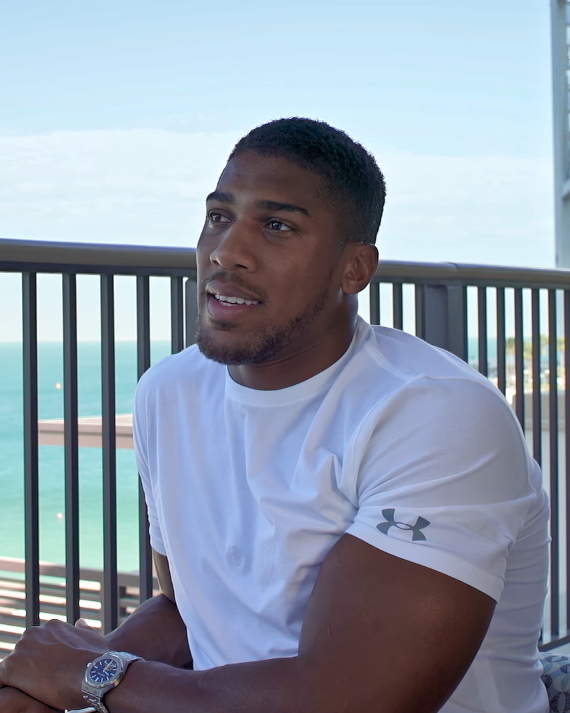
On the night of 29 April 2017, some 90,000 people packed into Wembley Stadium in London, the largest crowd assembled for a boxing match in post-war British history. In the ring stood two men separated by a generation and united by an enormous ambition. One was Wladimir Klitschko, the veteran Ukrainian who had ruled the heavyweight division for the better part of a decade. The other was Anthony Joshua, a 27-year-old with a chiselled frame, a fearsome punch, and a surname that carried the weight of a Nigerian family history stretching from Watford to Ogun State. When Joshua rose from a sixth-round knockdown to stop Klitschko in the eleventh, he did not merely win a fight. He announced himself as the face of a sport and as a source of pride for millions of people of Nigerian heritage across the world.
This is the story of how a young man who came dangerously close to throwing his future away instead became an Olympic gold medallist, a unified world heavyweight champion, and one of the most marketable athletes on the planet.
Quick Facts
- Full name
- Anthony Oluwafemi Olaseni Joshua
- Born
- 15 October 1989, Watford, England
- Heritage
- British-Nigerian (Yoruba father, family roots in Ogun and beyond)
- Sport
- Boxing (heavyweight)
- Known for
- 2012 Olympic gold; unified world heavyweight champion
Early Life
Anthony Oluwafemi Olaseni Joshua was born on 15 October 1989 in Watford, a town just north of London, to a father of Nigerian descent and a mother, Yeta Odusanya, who also carried Nigerian roots. His given names, Oluwafemi (“God loves me”) and Olaseni, are Yoruba, a marker of the heritage that would remain central to his identity throughout his career. The Joshua family traced its lineage to Nigeria, and Anthony grew up moving between two worlds, the multicultural streets of an English commuter town and the customs of a proud Yoruba household.
That connection to Nigeria was not merely nominal. As a boy, Joshua spent part of his childhood in Nigeria, where he attended a boarding school. He has spoken over the years about the discipline of that environment, the fetching of water, the early mornings, and the strictness that shaped him. The experience gave him a firsthand understanding of the country his family came from, a grounding that later made his embrace of the Nigerian public feel authentic rather than performative. Where many second-generation and third-generation members of the diaspora know their ancestral homeland only through stories and occasional visits, Joshua lived inside its rhythms as a child, and that lived memory would echo through the way he carried himself in adulthood.
The Watford of Joshua’s youth was a busy, working commuter town, close enough to London to feel its pull yet distinct in its own right. Joshua’s parents separated when he was young, and much of his upbringing was overseen by his mother, whose insistence on hard work and responsibility left a lasting impression. Money was not plentiful, and Joshua has recalled the ordinary struggles of a household without luxury. Yet within that environment there was ambition, a sense that the boy with the remarkable physique and quick feet might one day make something of himself if he could stay on the right side of the many temptations that surrounded him.
Back in England, Joshua attended Kings Langley Secondary School in Hertfordshire. He was a gifted athlete from an early age, tall and fast, and he set a school record in the 100 metres sprint that spoke to raw physical talent. Teachers and coaches noticed the natural power in his frame, but sport was not yet the organising principle of his life, and the discipline it demanded had not yet taken hold of him.
For a time, adolescence in Watford brought temptations, and Joshua drifted. In interviews he has been candid about a troubled stretch in his teens, a period marked by run-ins with the law. He was placed on remand at one point, and years later, after he had already turned professional, he was still fulfilling community service obligations tied to earlier offences. He has described how close he came to a very different life, one in which the fame and fortune he eventually earned would have been unimaginable. That honesty about his past has become part of his appeal, a reminder that his rise was not preordained and that the discipline of the boxing gym arrived at a moment when his future genuinely hung in the balance. Rather than bury this chapter, Joshua has spoken of it repeatedly, using it to connect with young people who see in his early mistakes a version of their own.
Finding Boxing
Joshua came to boxing late by the standards of the sport. It was his cousin, Ben Ileyemi, who first dragged him along to the Finchley Amateur Boxing Club in north London. Joshua was around 18 years old, an age at which many elite boxers already have dozens of amateur bouts behind them. What he lacked in experience he made up for in physical gifts and, increasingly, in dedication. The gym gave him a structure his teenage years had lacked, and he threw himself into it.
His progress was extraordinarily rapid. Within a few short years, a young man who had barely laced up gloves was competing at the highest levels of the amateur game. He won the ABA (Amateur Boxing Association) super-heavyweight title in 2010, and the following year he claimed a silver medal at the 2011 World Amateur Boxing Championships in Baku, Azerbaijan. That silver medal, and the momentum behind it, positioned him as a genuine contender for the biggest amateur prize of all as London prepared to host the Olympic Games.
Boxing had arrived at exactly the right moment in Joshua’s life. It offered him purpose, community, and a route out of the trouble that had shadowed his youth. He has often said that the sport saved him, and given how narrowly he avoided a criminal path, the statement carries real force. The gym demanded early mornings, careful diet, and relentless repetition of fundamentals, and Joshua found that he thrived on that structure. The same physical gifts that had made him a sprinter, the explosive speed and the long reach, translated with startling efficiency into the ring, and coaches quickly recognised that they had stumbled upon a rare talent.
His amateur record over that short span was impressive by any measure. He amassed a strong tally of wins against a relatively small number of losses, remarkable for a fighter who had begun so late. Each competition became a crash course in a sport that most of his rivals had been studying since childhood, and Joshua absorbed the lessons at speed. By the time the London Olympics loomed on the horizon, the once-troubled teenager from Watford had become one of the most talked-about amateur heavyweights in Britain.
Olympic Gold
The 2012 London Olympics were a home Games, and the pressure on British athletes was immense. In the super-heavyweight division (the over-91-kilogram category), Anthony Joshua carried the hopes of a nation still riding the wave of national enthusiasm that the Games had generated.
His route to the final was gruelling. In the gold-medal bout on 12 August 2012, Joshua faced the vastly more experienced Italian Roberto Cammarelle, the defending Olympic champion who had won gold in Beijing four years earlier. The fight was tense and close, and after the final bell the scores were level at 18 apiece, sending the decision to a countback. When the verdict was announced in Joshua’s favour, he became an Olympic champion in only his third year of serious boxing, a scarcely believable achievement for a man who had been an amateur novice a handful of years before.
The gold medal transformed him overnight from a promising prospect into a national figure. It gave him a platform, a global stage, and the leverage he would need when he made the leap that every gifted amateur eventually faces. The image of Joshua on the podium, the medal around his neck and the anthem playing, became one of the enduring pictures of a triumphant home Games for Great Britain. For a young man who had been fetching water at a Nigerian boarding school and, later, contemplating a very different and darker path, the height of the achievement was almost dizzying.
Crucially, Joshua did not rush his decision about turning professional. He weighed the offers and the risks with a patience that surprised some observers, understanding that the Olympic title had bought him time and options that few fighters ever enjoy. When he finally chose to enter the paid ranks, he did so from a position of strength, with promoters competing for his signature and a public already invested in his story.
Turning Professional and the World Title
Joshua turned professional in 2013, signing with promoter Eddie Hearn’s Matchroom Boxing. His professional debut came on 5 October 2013 against Emanuele Leo at London’s O2 Arena, and it lasted less than a round. It set the tone for what followed. Joshua was a knockout artist of rare finishing power, and one opponent after another fell inside the distance. He stopped every single one of his first eighteen professional opponents, a run of destruction that built enormous anticipation around him.
The breakthrough to a world title came on 9 April 2016, when Joshua faced Charles Martin for the IBF (International Boxing Federation) heavyweight title at the O2 Arena. Joshua dropped Martin twice and stopped him in the second round to claim his first world championship. He defended the belt against Dominic Breazeale and then, in a thrilling contest, against the former champion Éric Molina.
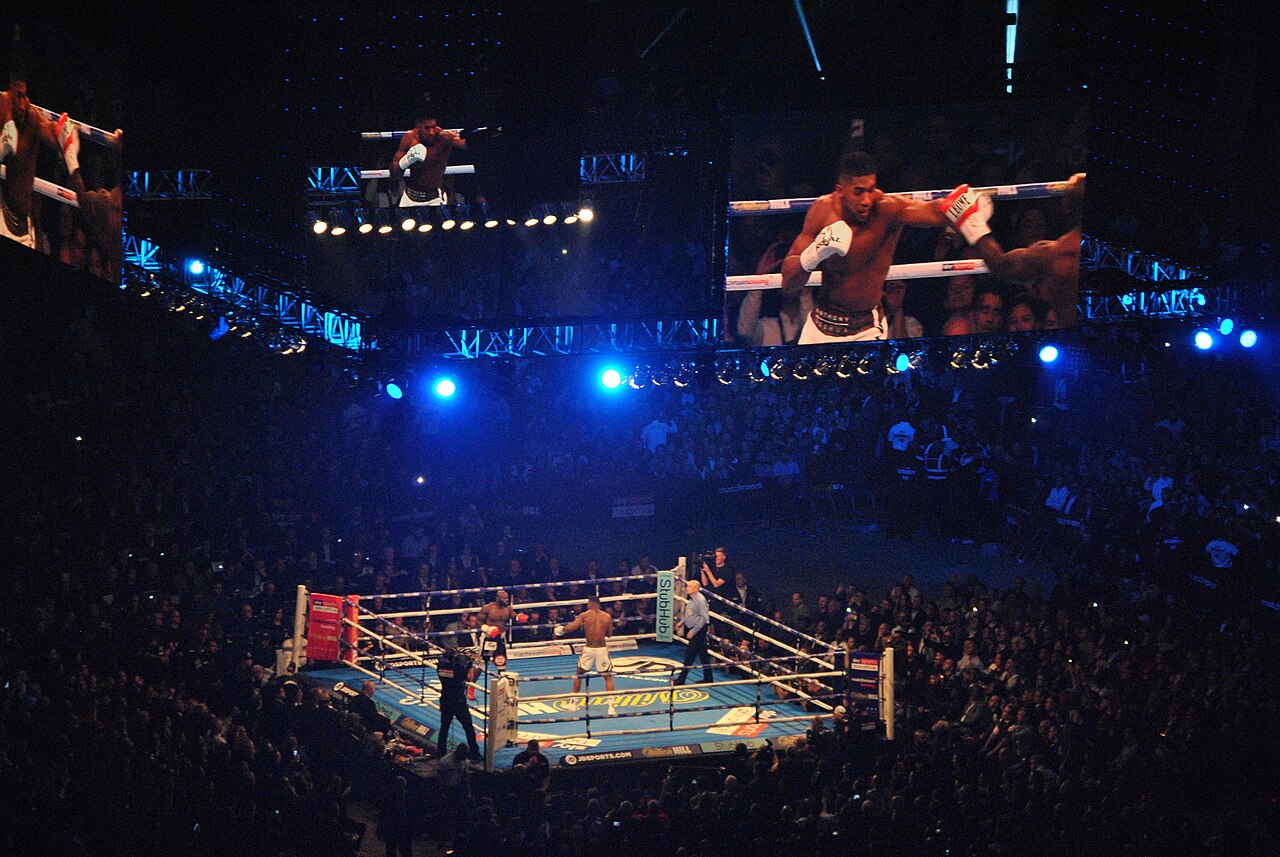
Then came the fight that defined him. On 29 April 2017, Joshua met Wladimir Klitschko at Wembley Stadium before a crowd of roughly 90,000, with the IBF title and the vacant WBA (World Boxing Association) “super” title on the line. It was a genuine classic. Joshua knocked Klitschko down in the fifth round, only to be dropped himself in the sixth, his face marked and his stamina tested as never before. Many fighters would have folded. Joshua steadied himself, regathered, and in the eleventh round unleashed a savage assault that forced the stoppage. The victory was named by many observers as one of the great heavyweight fights of the modern era, and it confirmed Joshua as the sport’s premier attraction.
“I’m not perfect, but I’m trying to be the best I can be, and that’s what keeps me going.”
Unification and Setbacks
With two belts in hand, Joshua set about collecting more. On 31 March 2018, he outpointed New Zealand’s Joseph Parker over twelve rounds in Cardiff to add the WBO (World Boxing Organization) title to his collection, becoming a unified champion holding the IBF, WBA, and WBO belts simultaneously. He followed this with a dramatic knockout of Alexander Povetkin at Wembley later that year.
But boxing is a sport that punishes complacency, and Joshua’s career took a stunning turn on 1 June 2019. Making his United States debut at Madison Square Garden in New York, he faced the late replacement Andy Ruiz Jr, a stocky Mexican-American underdog whom few gave a chance. In one of the greatest upsets in heavyweight history, Ruiz dropped Joshua four times and stopped him in the seventh round, seizing all of his titles. The defeat was a shock that reverberated across the sport and forced Joshua to confront questions about his temperament and approach.
His response was measured and disciplined. In the immediate rematch on 7 December 2019 in Diriyah, Saudi Arabia, Joshua boxed a smart, controlled fight, using his jab and movement rather than seeking the knockout, and won a wide unanimous decision to reclaim his belts. It was a display of maturity that answered many of his critics.
The next great challenge proved a step too far. On 25 September 2021 at the Tottenham Hotspur Stadium in London, Joshua faced the brilliant Ukrainian technician Oleksandr Usyk. Usyk, a former undisputed cruiserweight champion, out-boxed Joshua over twelve rounds to take the unanimous-decision verdict and Joshua’s titles. The rematch, held on 20 August 2022 in Jeddah, Saudi Arabia, was closer and more competitive, but Usyk again prevailed on the scorecards. Joshua’s raw emotion afterward, when he briefly left the ring and returned to deliver an unusual speech, revealed how deeply the defeats had affected him.
Joshua rebuilt once more, winning a series of fights against opponents including Jermaine Franklin, Robert Helenius, and Otto Wallin, before suffering a knockout loss to Britain’s Daniel Dubois in September 2024 in a bid for the IBF title at Wembley. Through the peaks and the valleys, his box-office appeal endured.
Business and Persona
Beyond the ropes, Anthony Joshua built something rare in modern sport: a brand that transcended his results. He became one of the most bankable athletes in the world, commanding lucrative sponsorships with major global companies and headlining stadium events that few other fighters could fill. His management company, AJ Boxing, expanded his interests into promotion, and he invested in a range of business ventures reflecting an entrepreneurial streak that his early hardship had sharpened.
Central to his public identity was his pride in his Nigerian heritage. Joshua never hid or downplayed his roots. He spoke openly of his Yoruba names, his boyhood time at school in Nigeria, and his affection for the country. He has been photographed draped in the Nigerian flag, has visited Nigeria to considerable public affection, and has been embraced by Nigerians at home and in the diaspora as one of their own. For a global sporting superstar to so consistently and warmly claim a Nigerian identity meant a great deal to a country hungry for icons on the world stage. He became, in effect, a bridge between British and Nigerian audiences, a dual belonging he wore with evident comfort.
That combination of humility, honesty about his flawed past, physical charisma, and cultural pride made him more than a boxer. It made him a figure people wanted to root for.
Joshua also carved out a role as a mentor and a symbol of possibility for young people from backgrounds like his own. Aware that his own life could have gone badly wrong, he spoke often about discipline, second chances, and the value of finding a positive outlet. His story became a kind of parable, repeated in schools and community centres, of how a boy who once stood before the courts could remake himself through dedication. In an age when athletes are frequently expected to be flawless, Joshua’s willingness to own his imperfections gave his message a rare credibility.
His commercial appeal reflected all of this. Sponsors valued not only his physique and his knockout highlight reels but also the warmth and articulacy he brought to interviews, and the way audiences on multiple continents claimed him as theirs. He headlined events that filled the largest stadiums in Britain, and his name alone could drive ticket sales and broadcast interest on a scale few boxers of his era could match.
Career Timeline
- 2010: Wins the ABA super-heavyweight amateur title, marking his arrival at the top of British amateur boxing.
- 2011: Takes silver at the World Amateur Boxing Championships in Baku, Azerbaijan.
- 12 August 2012: Wins Olympic super-heavyweight gold at the London Games, beating Roberto Cammarelle on countback.
- 5 October 2013: Makes his professional debut, stopping Emanuele Leo in the first round at the O2 Arena.
- 9 April 2016: Stops Charles Martin to win the IBF world heavyweight title, his first world championship.
- 29 April 2017: Beats Wladimir Klitschko by eleventh-round stoppage at Wembley before roughly 90,000 fans.
- 1 June 2019: Loses his titles in a stunning upset to Andy Ruiz Jr in New York, then wins them back on 7 December 2019 in Saudi Arabia.
- 25 September 2021 and 20 August 2022: Loses twice to Oleksandr Usyk, surrendering his unified belts.
- September 2024: Falls to Daniel Dubois by knockout in an IBF title bid at Wembley.
Lesser-Known Facts
- His full name, Anthony Oluwafemi Olaseni Joshua, is Yoruba. Oluwafemi translates roughly as “God loves me.”
- As a boy he spent part of his childhood in Nigeria, attending a boarding school where discipline and hard chores were part of daily life.
- He took up boxing remarkably late, at around 18, after his cousin Ben Ileyemi introduced him to the Finchley Amateur Boxing Club.
- Before his athletic fame, he was a talented sprinter and set a 100 metres record at his secondary school in Hertfordshire.
- His teenage years included serious brushes with the law, and he has spoken openly about how close he came to a criminal path before boxing changed his direction.
- He stopped every one of his first eighteen professional opponents inside the distance, underlining his reputation as a knockout artist.
Frequently Asked Questions
Is Anthony Joshua Nigerian? Anthony Joshua was born in Watford, England, and holds British nationality, but he is of Nigerian heritage through his family, with Yoruba roots. He spent part of his childhood in Nigeria attending a boarding school and has consistently and proudly embraced his Nigerian identity throughout his career.
When did Anthony Joshua win Olympic gold? He won the Olympic super-heavyweight gold medal at the 2012 London Olympics, defeating Italy’s Roberto Cammarelle in the final on 12 August 2012 by a countback after the scores finished level.
Who has beaten Anthony Joshua? As a professional, Joshua has been beaten by Andy Ruiz Jr (June 2019, later avenged), Oleksandr Usyk (twice, in September 2021 and August 2022), and Daniel Dubois (September 2024).
What are Anthony Joshua’s world titles? Joshua has held the IBF, WBA (super), and WBO world heavyweight titles. He first won the IBF belt against Charles Martin in 2016 and later unified the IBF, WBA, and WBO titles, becoming a unified champion.
How did Anthony Joshua start boxing? His cousin Ben Ileyemi introduced him to boxing at the Finchley Amateur Boxing Club in north London when Joshua was around 18. Despite starting late, he rose rapidly through the amateur ranks to Olympic gold within a few years.
Legacy
Anthony Joshua’s story is one of redemption and reinvention. A young man who once stood on the edge of a wasted life instead built one of the most decorated and lucrative careers in modern boxing. The losses to Ruiz, Usyk, and Dubois will always be part of the record, but so too will the Olympic gold, the world titles, and the unforgettable night against Klitschko when 90,000 voices roared him to victory.
For Nigerians in particular, his legacy runs deeper than belts and box-office receipts. In an era when global sporting fame is a rare and precious commodity, Joshua carried his Yoruba names and his family’s Nigerian roots onto the biggest stages in the world and never once flinched from them. He showed a generation of British-Nigerian children that heritage is a source of strength, not something to be hidden. Whatever the final line of his boxing record reads, Anthony Joshua stands as a symbol of what discipline, second chances, and pride in one’s roots can achieve.