She began singing in her father’s church in Detroit before she was ten years old, and she sang until her voice and her body gave out within months of each other, near the end of a career that spanned more than six decades and produced eighteen Grammy Awards, more than any other female artist in the award’s history. Aretha Franklin was not simply a singer. She was a pianistically gifted musician who had absorbed the entire tradition of Black American music, from the deep Baptist church through jazz and blues to soul and R and B, and who deployed that tradition with an authority that made her recordings feel like events rather than products. When she recorded “Respect” in April 1967, transforming an Otis Redding song about a man asking his woman to treat him decently into a demand for full human recognition, she produced something that exceeded its musical context entirely. The song became an anthem of the civil rights and feminist movements simultaneously, which told you everything about how completely she had inhabited and transformed the material.
Quick Facts
- Full name
- Aretha Louise Franklin
- Born
- 25 March 1942, Memphis, Tennessee, USA
- Died
- 16 August 2018, Detroit, Michigan, USA (aged 76)
- Genre
- Soul, gospel, R and B, jazz, blues
- Known for
- "Respect," "Natural Woman," "Chain of Fools," eighteen Grammy Awards, the title Queen of Soul
Early Life
Aretha Louise Franklin was born on 25 March 1942 in Memphis, Tennessee, the fourth of five children of Clarence LaVaughn Franklin, known as C.L. Franklin, and Barbara Siggers Franklin. Her father was a Baptist minister, and the family moved to Detroit, Michigan, when Aretha was two years old, following C.L. Franklin to his new position as pastor of the New Bethel Baptist Church on Linwood Avenue. The church would become the centre of Aretha’s musical education and one of the most important institutions in Detroit’s Black community.
C.L. Franklin was not a modest figure. He was one of the most celebrated preachers in the country, known for a style of oratory that combined intellectual rigour with explosive emotional power, and he had a national radio audience and a growing catalogue of recorded sermons. The house on LaSalle Boulevard where Aretha grew up was a gathering place for musicians, civil rights leaders and intellectuals: Mahalia Jackson, Clara Ward, Art Tatum, Dinah Washington, Sam Cooke and others passed through, and the child Aretha absorbed the full range of Black American musical culture in her own home before she went to school.
Her mother left the family when Aretha was six years old and died of a heart attack four years later. The loss was profound, and Aretha always spoke of it as a defining trauma. She was raised by her father and by a network of women who took over maternal responsibility, including the gospel singer Clara Ward, whose influence on Aretha’s vocal style was immense and acknowledged throughout her career. Ward sang with an abandon and a command that went beyond anything in the conventional gospel tradition, and the young Aretha watched her and understood that the voice was a vehicle for something that went deeper than any particular song.
She began playing piano by ear before she was nine and was singing solos in her father’s church by the time she was twelve. The church congregation’s response to her voice was immediate and overwhelming, and she was given more and more exposure in the services as it became clear that she was doing something that affected people in the way that only the greatest gospel singers did. At fourteen she recorded four gospel songs, released on a small label associated with the church, and at sixteen she went on tour with her father as part of his travelling revival shows.
Musical Beginnings
In 1960, at the age of eighteen, Aretha made the decision that she would pursue a secular career rather than remain in gospel, a choice that was common enough among Black American singers of her generation but that still involved a kind of spiritual reckoning that she would revisit throughout her career. She moved to New York City and signed with Columbia Records, where she was assigned to the producer John Hammond, the legendary talent scout and producer who had signed Billie Holiday, Count Basie and Bob Dylan.
Hammond recognised her talent immediately but struggled to position it correctly. The albums she made at Columbia from 1960 to 1966 are beautiful recordings that document her extraordinary voice and her pianistic gifts, but they were presented in a variety of musical contexts, jazz, blues, pop show tunes, that did not always serve the gospel-rooted directness that was her essential quality. Songs like “Won’t Be Long,” “Today I Sing the Blues” and “Maybe I’m a Fool” showed the power she could access, but the productions often pulled against the grain of what she was.
The Columbia years were not failures. Several of the recordings were commercially successful by the standards of the time, and the critical recognition she received from jazz critics in particular confirmed that she was a musician of serious standing, not simply a pop singer. But the sense that she had not yet been given the right framework for her gifts was growing, and when her Columbia contract expired in 1966, she and her then-manager and husband Ted White moved to sign with Atlantic Records, where producer Jerry Wexler was waiting with an approach that would change everything.
Atlantic Records and the Arrival of a Legend
Jerry Wexler understood, as John Hammond had not quite understood, that Aretha’s gospel roots were not an element to be softened or repositioned but the source of everything that made her singular. His approach was to record her in the Southern soul tradition, using the musicians and studios of Fame Studios in Muscle Shoals, Alabama, where a group of extraordinary session players known as the Muscle Shoals Rhythm Section had developed a hybrid of gospel, blues and soul that was unlike anything being made in New York or Los Angeles.
The first Muscle Shoals session, in January 1967, produced the foundational recording of her career. “I Never Loved a Man (The Way I Love You)” was recorded in a single session and released in February 1967, reaching number nine on the Billboard Hot 100 and number one on the R and B chart. The recording announced a complete reinvention: Aretha’s voice, freed from the overly arranged Columbia productions and placed in front of musicians who were playing the same music she had been singing in church since childhood, sounded like something that had been waiting a long time to come out.
Then came “Respect.” Otis Redding had recorded the song in 1965, and it was his own composition, an R and B hit about a man requesting basic consideration from his woman in exchange for his financial support of the household. Aretha’s recording, made in New York in April 1967, took the song’s framework and turned its meaning inside out. The backup singers’ spelling out of the word, R-E-S-P-E-C-T, her addition of the phrase “sock it to me” and its surrounding calls and responses, and the ferocity and joy with which she delivered every line, transformed a modest R and B number into a declaration that resonated far beyond its original context.
“Respect” was released in April 1967 and reached number one on both the Billboard Hot 100 and the R and B chart, spending two weeks at the pop summit. It won the Grammy Award for Best Rhythm and Blues Recording and the Grammy Award for Best Rhythm and Blues Solo Vocal Performance, Female, in 1968, the beginning of a Grammy relationship that would span forty years. Otis Redding himself, upon hearing what she had done with his song, reportedly told friends that she had taken it from him.
The Years of Dominance
The period from 1967 to 1972 was one of the most creatively concentrated in the history of popular music. Aretha released a sequence of albums for Atlantic that together constitute one of the great bodies of work in American music. “I Never Loved a Man the Way I Love You” (May 1967), “Lady Soul” (January 1968), “Aretha Now” (August 1968), “This Girl’s in Love with You” (January 1970), “Spirit in the Dark” (August 1970) and “Young, Gifted and Black” (January 1972) followed in rapid succession, each one containing material that became part of the permanent vocabulary of American music.
“(You Make Me Feel Like) A Natural Woman,” written by Gerry Goffin and Carole King and recorded in 1967, reached number eight on the Billboard Hot 100 and became one of the songs most associated with her name. The recording demonstrated the full range of her interpretive intelligence: she took a song about romantic fulfilment and found in it something that encompassed far more than romance, a quality of complete human recognition and dignity. Carole King, watching her perform the song at the Kennedy Center Honors in 2015, wiped away tears that she made no attempt to hide.
“Chain of Fools” (1967) went to number one on the R and B chart and number two on the Hot 100. “Think” (1968), which she co-wrote, was a more explicit political statement, with the word “freedom” repeated in the refrain in a way that was unmistakable in the context of 1968, the year of the assassinations of Martin Luther King Jr. and Robert F. Kennedy. “Don’t Play That Song (You Lied)” (1970) and “Bridge Over Troubled Water” (1971) were further demonstrations of her interpretive range.
The gospel tradition to which she always returned was documented most completely in the 1972 live album “Amazing Grace,” recorded over two nights in January of that year at the New Temple Missionary Baptist Church in Los Angeles, with the Southern California Community Choir and the Reverend James Cleveland. The album was produced by Jerry Wexler and recorded by the young engineer and future director Sydney Pollack (filming for a documentary that would not be publicly released until 2018). “Amazing Grace” became the best-selling live gospel album in history and remains, in the opinion of many who heard it, the most complete documentation of what her voice could do in the context it understood best.
Later Career and Cultural Standing
Through the 1970s and 1980s Aretha maintained a recording and touring schedule that produced albums of varying quality, reflecting the commercial pressures and genre fashions of each era. The move from Atlantic to Arista Records in 1980 brought her to the attention of Clive Davis, whose skill in positioning artists for commercial success resulted in the album “Jump to It” (1982), produced by Luther Vandross, and “Who’s Zoomin’ Who” (1985), which contained the title track and “Freeway of Love,” both significant commercial successes. “Freeway of Love” reached number three on the Billboard Hot 100 and won the Grammy for Best Female R and B Vocal Performance in 1986.
The 1987 duet with George Michael, “I Knew You Were Waiting (for Me),” reached number one in both the United Kingdom and the United States and won the Grammy for Best Rhythm and Blues Performance by a Duo or Group with Vocals. The collaboration was an interesting cultural moment: Michael, then at the height of his post-Wham! solo success, had publicly cited Aretha as his primary influence, and the duet was both a commercial pairing and an act of homage.
Her performance at the Metropolitan Opera House in New York on 7 November 2017, at a tribute concert for Elton John, became one of the most widely shared videos of that year. Standing in for the ailing Luciano Pavarotti, who was originally scheduled to perform Puccini’s “Nessun Dorma,” she delivered the aria with a power and command that produced what many witnesses described as the most astonishing vocal performance they had ever seen. The performance confirmed that, even in her mid-seventies and in declining health, the voice retained qualities that placed it outside ordinary comparison.
She received the Presidential Medal of Freedom from President George W. Bush in 2005, and she performed at the inauguration of President Barack Obama in January 2009, singing “My Country, ‘Tis of Thee” in front of an audience of millions. She was made the first living woman to be inducted into the Rock and Roll Hall of Fame in 1987, when the hall inducted its first class of living musicians.
The Gospel Foundation
The most important single fact about Aretha Franklin’s music is that it was always, at its deepest level, gospel music, regardless of the secular contexts in which she performed. The gospel tradition from which she came was the most demanding school of singing that American culture has produced, requiring complete physical commitment, absolute emotional authenticity, and a capacity to move an audience to involuntary response. Every technique she developed in her father’s church, the ornamental runs, the sudden dynamic shifts, the practice of treating a syllable as a rhythmic unit capable of carrying multiple notes, found its way into her commercial recordings and remained audible in them regardless of the material she was singing.
The direct return to gospel documented on “Amazing Grace” (1972) was not an interruption of her commercial career or a retreat into the tradition she had left behind when she moved to New York. It was a homecoming, and the recording documented what happened when all of the elements of her musical personality were aligned in their original context. Reverend James Cleveland, who led the Southern California Community Choir on the recording and who was one of the greatest figures in twentieth-century gospel, described working with Aretha on those two nights as an experience of genuine spiritual power rather than merely musical excellence. The congregation, drawn from the local church community and not a concert audience, responded accordingly, and the recordings capture that response in a way that gives the album a documentary quality alongside its musical achievement.
The influence of the gospel tradition on her secular recordings was the thing that separated her from other technically gifted singers who had learned similar techniques. Gospel singing is not simply a matter of ornamental decoration added to a tune; it is a complete approach to the relationship between voice, rhythm and meaning in which the melody is not a fixed object but a living argument, and each performance of a song is its own fresh attempt to tell the truth. Aretha brought that theology to every recording session, and the recordings that resulted carried the mark of it in every phrase.
Detroit and the Culture That Shaped Her
The Detroit in which Aretha grew up was one of the most culturally vital Black American cities in the mid-twentieth century, and its particular character left its mark on her music in ways that she always acknowledged. The city’s automobile industry had drawn a large Black working-class population from the South, creating a community with deep roots in Southern culture, including the Southern church tradition, while also producing the economic conditions for a vibrant urban entertainment scene. The clubs and churches of Detroit’s Black neighbourhoods were adjacent institutions in that world, drawing from the same pool of musicians and the same community of listeners, and the traffic between them shaped the soul music that Detroit produced in ways that no other American city quite replicated.
New Bethel Baptist Church, where her father presided over a congregation of thousands and where Aretha sang and played from childhood, was not simply a religious institution but a cultural one. C.L. Franklin’s national profile meant that the church drew visitors and performers of the highest standing, and the young Aretha encountered, in that single building, virtually the entire tradition of Black American music in its living form. The musicians she met and heard in her father’s church, the gospel singers, the jazz players, the soul vocalists who moved between the sacred and secular worlds, gave her an education that no conservatoire could have matched.
When she left Detroit for New York in 1960, she carried that education with her, and it gave her a grounding in the physical and spiritual dimensions of the music that distinguished her from the pop and jazz singers she encountered in the New York recording world. She was not simply a voice looking for the right vehicle; she was a complete musician with a fully formed understanding of what music was for, and the years at Columbia, while they did not always serve her best, could not displace that understanding. It was waiting for Jerry Wexler and the Muscle Shoals musicians to find the context in which it could be fully expressed.
Legacy
Aretha Franklin died on 16 August 2018 at her home in Detroit from pancreatic cancer. She was seventy-six years old. The public tributes that followed were among the most extensive in the history of popular music, reflecting the recognition that something truly irreplaceable had departed. Presidents, musicians, politicians and ordinary citizens described what her music had meant to them, and the consistency of those testimonies, the words “dignity,” “freedom,” “respect” appearing again and again, confirmed that she had done what only the greatest artists manage: she had made music that was also a moral proposition.
The seventeen Grammy Awards she received during her lifetime (an eighteenth was awarded posthumously) were a formal acknowledgement of a dominance in her field that extended across multiple decades and multiple genres. Her induction into the Rock and Roll Hall of Fame, the Grammy Lifetime Achievement Award, the Presidential Medal of Freedom, and the National Medal of Arts all reflected the same recognition: that she was not simply the best at what she did but a defining figure in the culture that produced her.
Her influence on the history of American singing is as total and as widely acknowledged as any artist of the twentieth century. Every major female soul and R and B singer of the last fifty years has cited her as the primary standard against which their own ambitions were measured. Whitney Houston, Mariah Carey, Mary J. Blige, Alicia Keys, Beyonce and Jennifer Hudson have all described specific Aretha recordings that shaped their understanding of what was possible. The techniques she developed, the gospel ornaments, the rhythmic phrasing, the use of the voice as an instrument of theological force, became the shared vocabulary of modern Black American popular singing.
Key Facts
- “Respect” (1967), Aretha’s reworking of an Otis Redding song, spent two weeks at number one on the US Billboard Hot 100 and became simultaneously an anthem of the civil rights and feminist movements, demonstrating the capacity of her recordings to exceed their musical context.
- “Amazing Grace” (1972), recorded live at the New Temple Missionary Baptist Church in Los Angeles, became the best-selling live gospel album in history and is widely regarded as the most complete documentation of her vocal abilities.
- Aretha won eighteen Grammy Awards over the course of her career, more than any other female artist in the award’s history, including a Grammy Lifetime Achievement Award and multiple genre-specific wins across soul, R and B, gospel and pop categories.
- She was the first living woman inducted into the Rock and Roll Hall of Fame, inducted with the inaugural class of living performers in 1987.
- Her performance of “Nessun Dorma” at the Metropolitan Opera House in 2017, stepping in at short notice for an ailing Luciano Pavarotti, was described by witnesses as one of the most astonishing vocal performances in the history of that stage.
Being a singer is a natural gift. It means I’m using to the highest degree possible the gift that God gave me to use. I’m happy with that.
Aretha Franklin
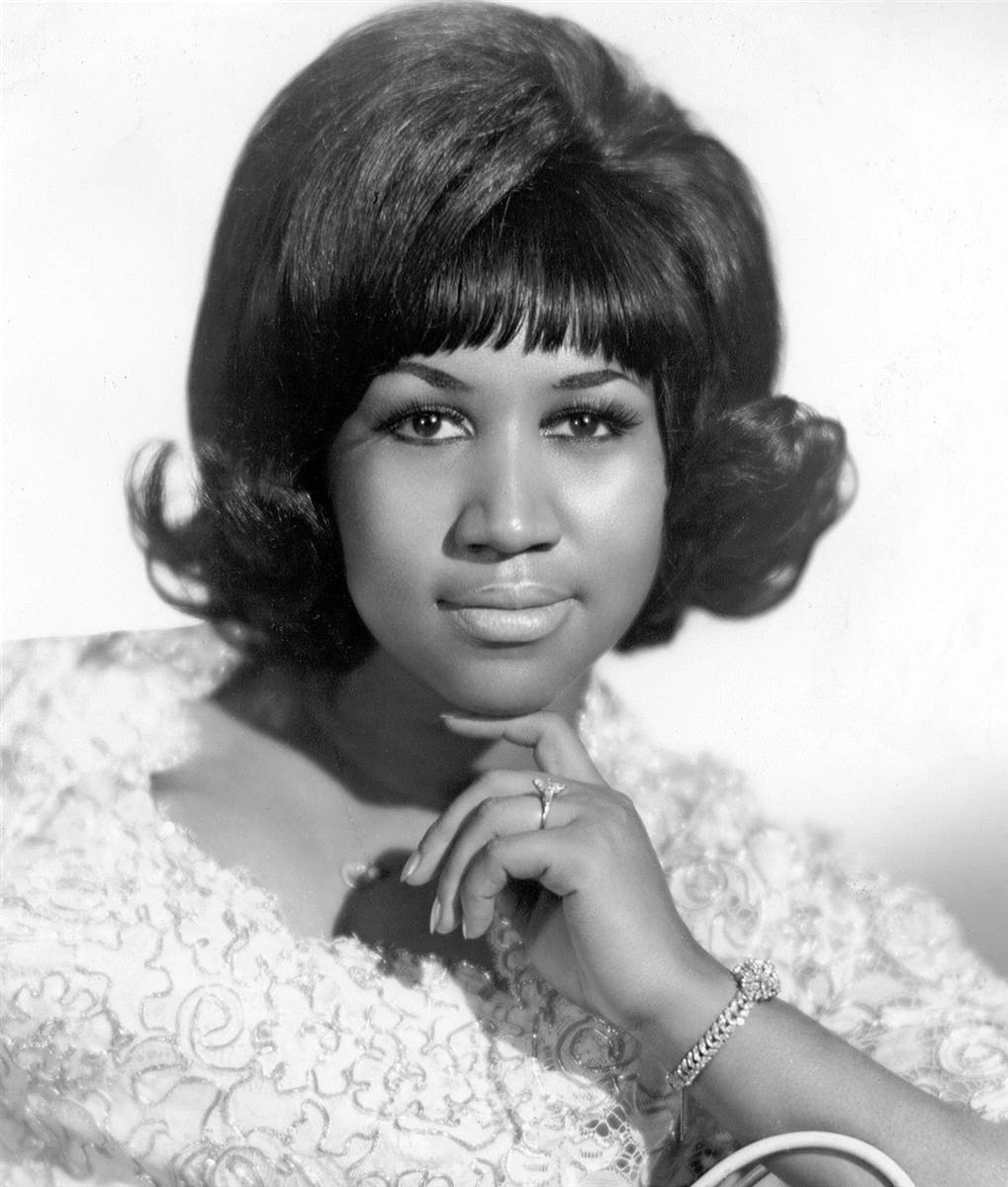
The Detroit where Aretha Franklin grew up shaped her in ways that she carried all her life: the church music, the community solidarity, the directness of a city that did not have much patience for pretence. She took all of that and put it in service of a voice that arrived in the world already knowing what it was for. The recordings she left behind are not documents of a career but documents of a character, a woman who understood that music was not entertainment but testimony, and who gave that testimony with a completeness and a fire that will not be exhausted in any number of listeners.