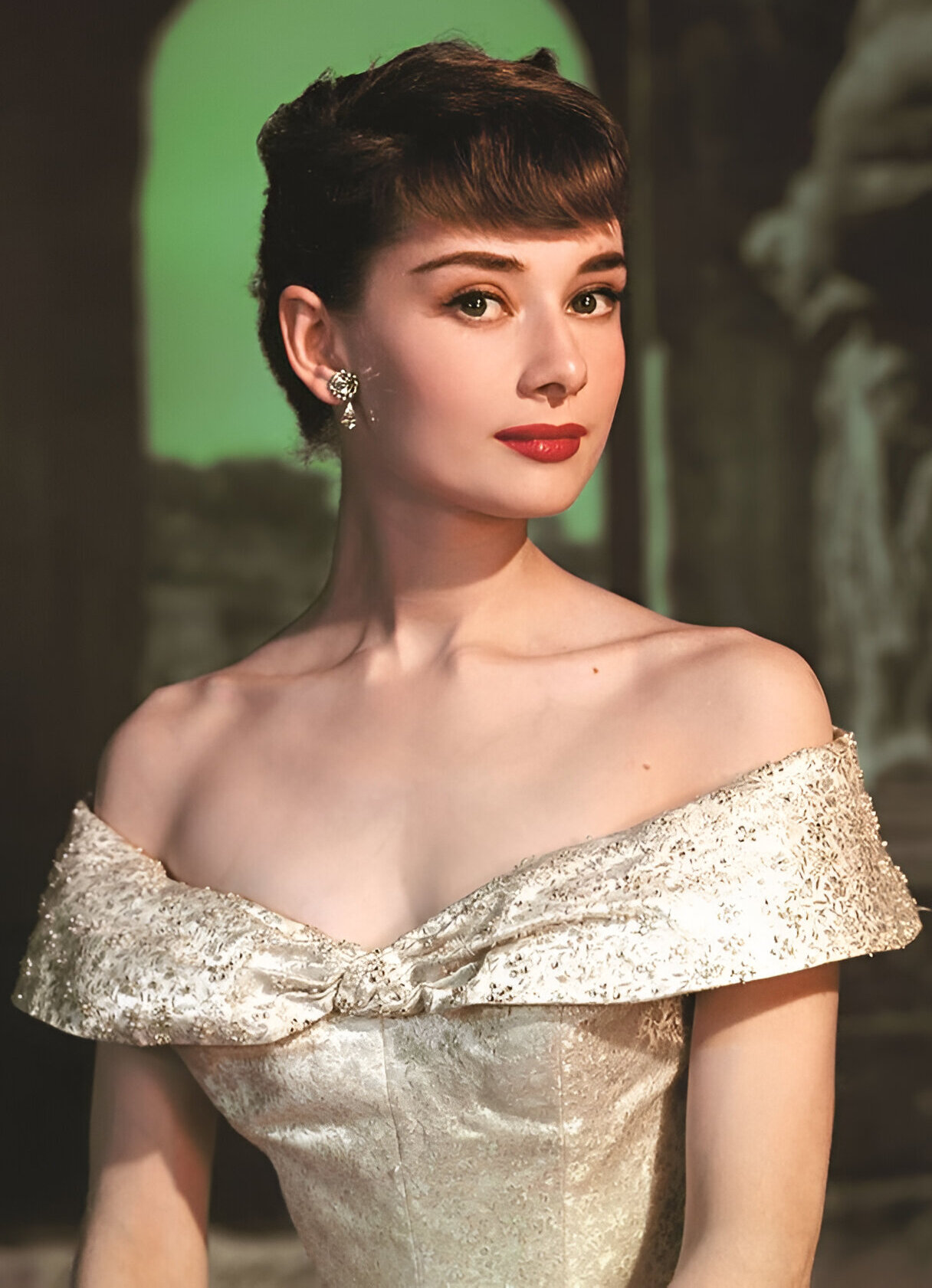
There is a kind of fame that fades the moment the cameras stop rolling, and there is another kind that settles into the culture so deeply that it outlives the person entirely. Audrey Hepburn belongs to the second kind. Decades after her death, her face still appears on posters in student dormitories, her silhouette in a black dress remains shorthand for elegance itself, and her name is still invoked whenever anyone tries to describe grace under pressure. Yet the woman behind the image was far more complicated, and far braver, than the delicate figure the world chose to remember. She had survived war and hunger before she ever stood under a studio light. She walked away from Hollywood at the height of her powers because she wanted to raise her children. And when she returned to public life, it was not to act but to carry food and medicine to children who were starving the way she once nearly had. This is the story of how a hungry Dutch girl became the most beloved star of her generation, and then quietly became something even rarer: a person who used her fame to do good.
Quick Facts
- Full name
- Audrey Kathleen Ruston (Hepburn)
- Born
- 4 May 1929, Ixelles, Belgium
- Died
- 20 January 1993, Tolochenaz, Switzerland (aged 63)
- Known for
- Roman Holiday, Breakfast at Tiffany's, My Fair Lady; UNICEF humanitarian work
- Awards
- Academy Award for Best Actress (1954); a Tony; later honours
Early Life
Audrey Kathleen Ruston was born on 4 May 1929 in Ixelles, a municipality of Brussels, Belgium. Her background was unusually international and unusually aristocratic. Her mother, Ella van Heemstra, was a Dutch baroness from an old noble family, and her father, Joseph Victor Anthony Ruston, was an Englishman of partly Austrian and Bohemian descent who later added the name Hepburn to his surname. Audrey would carry both heritages with her for the rest of her life: the cut-glass European poise of her mother’s world and the soft, accented English she spoke for the cameras.
Her childhood was disrupted early. Her father, a remote and unstable figure, abandoned the family when Audrey was around six years old, walking out of their home and largely out of her life. She later said that this departure was one of the most painful wounds she ever carried, a sudden absence that left her with a lifelong fear of being left behind. The breakup of her parents’ marriage also scattered her education across three countries. She spent time at a boarding school in England, where she began to speak English fluently, before the gathering storm in Europe changed everything.
In 1939, as war loomed, her mother moved the family to the Netherlands, to the city of Arnhem, in the belief that the neutral Dutch would be spared the coming conflict. That hope proved tragically wrong. When German forces invaded the Netherlands in May 1940, Audrey, then ten years old, found herself trapped in an occupied country. The years that followed marked her permanently. She watched the occupiers tighten their grip on daily life. Members of her own extended family suffered terribly: an uncle was executed in reprisal for resistance activity, and a half-brother was deported to a German labour camp. Audrey herself, who had been using the more English-sounding name Audrey Hepburn, was given the Dutch-sounding name Edda van Heemstra during the war to avoid drawing the attention of the occupiers to her British roots.
The worst came near the end. During the winter of 1944 to 1945, the western Netherlands endured a catastrophic famine remembered as the Hongerwinter, the Hunger Winter. With food supplies cut off and the population reduced to desperation, people ate tulip bulbs and ground them into flour, and tens of thousands died of starvation. Audrey, a growing teenager, was among those who nearly did not survive. She suffered from acute malnutrition, anaemia, respiratory illness, and oedema, the swelling caused by extreme hunger. She would remember the gnawing emptiness, the cold, and the fear for the rest of her days. When relief finally arrived after liberation, much of it came in the form of food and supplies distributed by the newly formed United Nations relief agencies. That memory, of being a starving child saved by international aid, would echo across the decades and shape the most important work of her later life.
Through all of this, one thing sustained her: dance. Even during the occupation, Audrey studied ballet, training seriously and dreaming of becoming a prima ballerina. She is said to have performed in secret recitals to raise money for the Dutch resistance, dancing for small hidden audiences who dared not even applaud aloud. Ballet gave her discipline, posture, and the long lines that would later make her so striking on screen. After the war, she pursued that dream with everything she had, even as her body, weakened by years of deprivation, began to set limits on how far it could take her.
From Ballet to Acting
When the war ended, Audrey and her mother eventually made their way to London, arriving in the late 1940s with little money but enormous determination. Audrey won a scholarship to study with the famed ballet teacher Marie Rambert, one of the most respected figures in British dance. It was here that the hard truth arrived. Rambert told her, with the honesty of a mentor who cared, that Audrey had real talent but that the years of malnutrition had taken a toll, and that at her height she would never reach the very top rank of classical ballet. The dream she had nursed through the darkest years of her life was not going to come true.
Rather than collapse under the disappointment, Audrey pivoted. She needed to earn a living and support her mother, who was working modest jobs to keep them afloat. Audrey took work as a chorus girl in West End musical revues, dancing in productions such as “High Button Shoes” and the revues “Sauce Tartare” and “Sauce Piquante.” She modelled. She picked up tiny, often uncredited roles in British films, appearing briefly in pictures including “One Wild Oat,” “Laughter in Paradise,” “The Lavender Hill Mob,” and “Young Wives’ Tale” in the early 1950s. These were small parts, sometimes only a line or a passing moment, but they put her in front of cameras and taught her how to hold the screen.
Her luck turned on a film set in the south of France. In 1951 she was filming a small role in the comedy “Monte Carlo Baby” when the celebrated French novelist Colette happened to see her. Colette was at that moment searching for an actress to play the title role in the Broadway stage adaptation of her novel “Gigi,” the story of a young Parisian girl being groomed for a life as a courtesan who instead wins true love. When Colette saw Audrey, she reportedly declared on the spot that she had found her Gigi. It was an extraordinary stroke of fortune, the kind that careers are built on.
“Gigi” opened on Broadway at the Fulton Theatre in November 1951. Audrey, almost entirely unknown to American audiences and with no formal acting training, carried the title role and won immediate acclaim. Critics were charmed by her freshness, her unusual beauty, and a quality that was hard to name but impossible to miss. The play ran successfully, and the marquee was changed during the run to give her solo star billing. Hollywood, always watching Broadway for new faces, took notice. Audrey Hepburn had arrived, and the next stop would make her famous around the world.
Hollywood Stardom
The film that transformed Audrey Hepburn from a promising newcomer into an international star was “Roman Holiday,” released in 1953 and directed by the veteran William Wyler. She played Princess Ann, a young royal on a state visit to Rome who slips away from her gilded cage to taste ordinary life for a single day, falling in love with an American newspaperman played by Gregory Peck. The role demanded charm, vulnerability, comic timing, and an underlying sadness, and Audrey delivered all of it with a naturalness that seemed to belong to no one else. Peck, already a major star, was so impressed during filming that he insisted her name be given equal billing with his above the title, a generous and almost unheard-of gesture for a relative unknown.
The world fell in love. “Roman Holiday” was a critical and commercial triumph, and at the 26th Academy Awards ceremony in 1954, Audrey Hepburn won the Oscar for Best Actress for her very first major film role. She also won a BAFTA Award and a Golden Globe for the same performance. To complete an astonishing run, she won a Tony Award that same season for her stage performance in the Broadway play “Ondine,” in which she starred opposite Mel Ferrer, an actor she would soon marry. Few performers in history have ever enjoyed such a complete and rapid coronation.
Hollywood moved quickly to capitalise on its new sensation. In 1954 she starred in “Sabrina,” directed by Billy Wilder, playing a chauffeur’s daughter caught between two wealthy brothers played by Humphrey Bogart and William Holden. The film earned her a second consecutive Academy Award nomination. More significantly for her image, “Sabrina” began one of the most important collaborations of her life. For the film’s Paris wardrobe, Audrey worked with a then little-known French couturier named Hubert de Givenchy. The two formed an instant and lasting bond, both professional and deeply personal. Givenchy understood her slender frame, her long neck, and her preference for clean, simple lines, and over the years he created many of the looks that would define her as a style icon. He became one of her dearest friends and remained so for the rest of her life.
The films continued to showcase a remarkable range. In 1957 she starred in “Funny Face,” a Technicolor musical directed by Stanley Donen, dancing and singing opposite the legendary Fred Astaire and playing a bookish shop assistant transformed into a fashion model. That same year she appeared in “Love in the Afternoon,” again for Billy Wilder, opposite Gary Cooper. In 1959 she took on a far more serious and demanding role in “The Nun’s Story,” directed by Fred Zinnemann, playing a Belgian nun who struggles between her vocation and her conscience while serving in the Congo. The performance earned her another Academy Award nomination and is regarded by many as among her finest and most disciplined work. Audrey was proving that she was not merely a charming gamine but a serious dramatic actress capable of carrying weighty material.
Iconic Roles
If “Roman Holiday” made Audrey Hepburn a star, it was a film released in 1961 that made her immortal. “Breakfast at Tiffany’s,” directed by Blake Edwards and adapted from a Truman Capote novella, cast her as Holly Golightly, a glamorous, fragile, and elusive young woman drifting through New York society. The opening sequence, in which she steps out of a taxi at dawn in a black Givenchy gown, pearls, and oversized sunglasses, coffee and pastry in hand, gazing into the windows of Tiffany and Company, became one of the most recognisable images in the history of cinema. The little black dress she wore is among the most famous garments ever made.
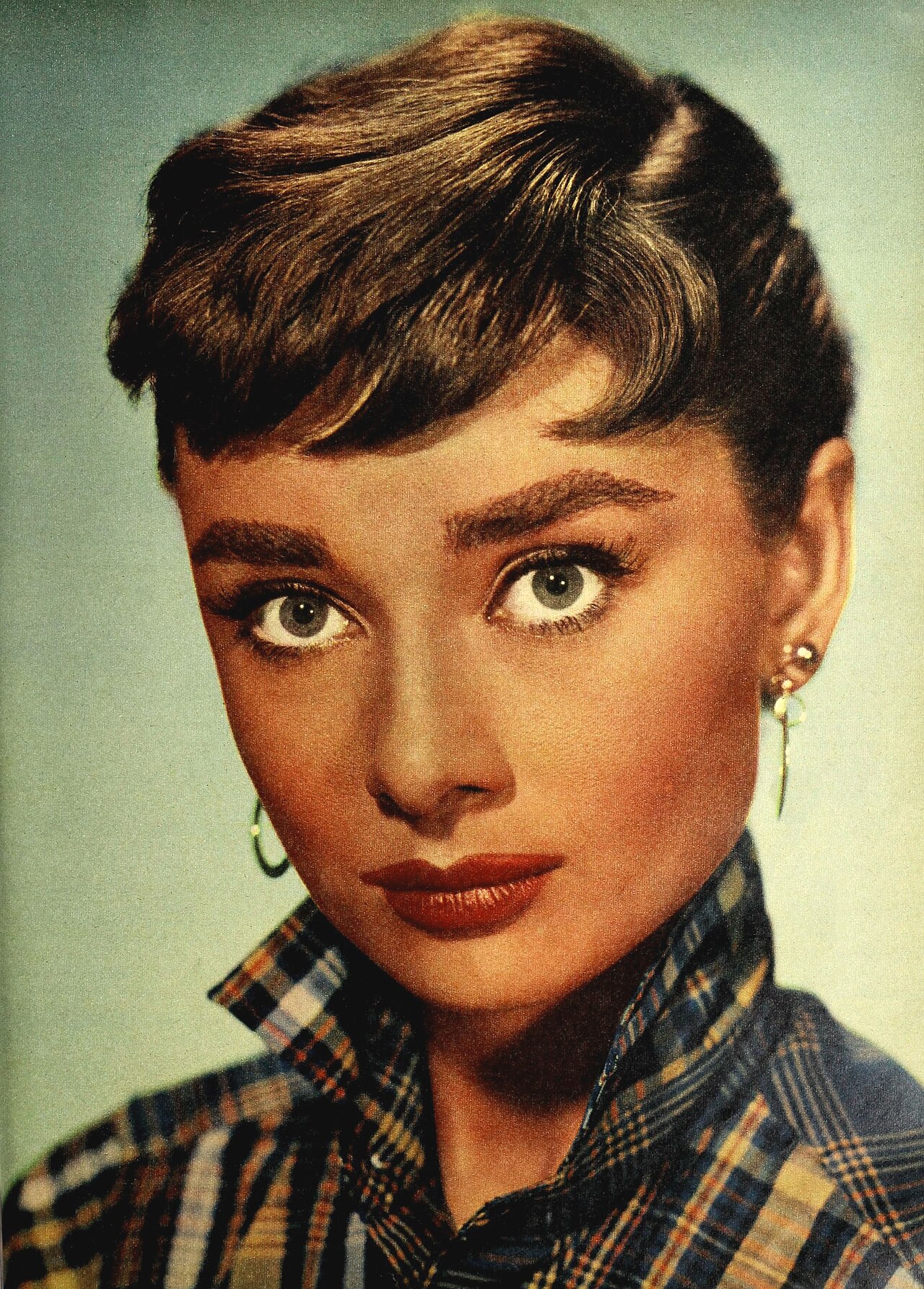
The film also gave her the song “Moon River,” written by Henry Mancini and Johnny Mercer, which she sang herself, simply and tenderly, perched on a windowsill with a guitar. The song won the Academy Award for Best Original Song, and Mancini later said that he had written it specifically for her limited but heartfelt singing voice. “Breakfast at Tiffany’s” earned Audrey yet another Academy Award nomination for Best Actress and cemented her status as the definitive screen embodiment of stylish modern womanhood. Holly Golightly, lonely and luminous beneath her sophistication, remains the role with which she is most identified.
Three years later came another landmark. In 1964 she starred as Eliza Doolittle in “My Fair Lady,” George Cukor’s lavish film adaptation of the Lerner and Loewe stage musical, playing the Cockney flower girl transformed into a refined lady by an arrogant professor played by Rex Harrison. The film was an enormous box-office success and won eight Academy Awards, including Best Picture. Audrey’s casting was not without controversy, since Julie Andrews had originated the role on stage, and Audrey’s singing was largely dubbed by the soprano Marni Nixon. Yet her acting carried the picture, and the visual splendour of her Cecil Beaton costumes, especially the black-and-white Ascot ensemble, became instantly iconic.
Around these towering musicals she continued to make memorable films across genres. In 1963 she starred in “Charade,” a witty romantic thriller directed by Stanley Donen, paired with Cary Grant in a sparkling tale of murder and stolen money set in Paris. The chemistry between Hepburn and Grant was so delightful that the film is often called the best Hitchcock movie that Hitchcock never made. In 1967 she gave one of her most harrowing performances in “Wait Until Dark,” directed by Terence Young, playing Susy Hendrix, a blind woman terrorised in her own apartment by criminals searching for hidden drugs. Her portrayal of a vulnerable woman fighting for survival in total darkness earned her a fifth and final Academy Award nomination for Best Actress and demonstrated, once again, the steel beneath her gentle exterior.
Stepping Back
At the height of her fame, when most stars would have pushed harder, Audrey Hepburn began to step away. Her reasons were rooted in the very experiences that had shaped her. Having grown up without a present, loving father, and having known the terror of war and abandonment, she wanted above all else to be there for her own children and to build the stable family life she had been denied.
Her first marriage, to the American actor and director Mel Ferrer, took place in 1954, not long after her Oscar win. The couple worked together on several projects, including the epic “War and Peace” in 1956, in which Audrey played Natasha. In 1960 she gave birth to their son, Sean Hepburn Ferrer. She had longed for children for years and had suffered several miscarriages, which made the arrival of her son all the more precious to her. The marriage to Ferrer eventually came under strain, however, and they divorced in 1968.
In 1969 Audrey married an Italian psychiatrist named Andrea Dotti. The couple settled largely in Rome, and in 1970 she gave birth to her second son, Luca Dotti. Throughout the 1970s she chose family over career almost entirely, appearing in films only rarely. She came back to the screen in 1976 to star opposite Sean Connery in “Robin and Marian,” directed by Richard Lester, a tender and melancholy take on the legend of Robin Hood in late middle age, with Audrey as a mature Maid Marian. The role suited the new chapter of her life, graceful and reflective rather than youthful and dazzling. Her second marriage also eventually ended, and she divorced Dotti in 1982.
In her later years she found lasting companionship with the Dutch actor Robert Wolders, who had been married to the actress Merle Oberon. The two never married but remained devoted partners until the end of Audrey’s life, living quietly together in Switzerland, where she had long kept a home in the village of Tolochenaz. By the 1980s, Audrey Hepburn had largely retired from film. She had nothing left to prove as an actress, and the work that would define the final act of her life was about to begin.
Humanitarian Years
In 1988, Audrey Hepburn accepted a role that meant more to her than any she had played on screen. She became a Goodwill Ambassador for UNICEF, the United Nations Children’s Fund, the very kind of organisation whose relief had helped save her own life as a starving girl in the Netherlands four decades earlier. She did not treat the position as a ceremonial honour. She threw herself into it with the same total commitment she had once given to ballet and to film, travelling to some of the poorest and most dangerous regions on earth to draw the world’s attention to suffering children.
Her first major field mission took her to Ethiopia in 1988, where a brutal combination of drought, famine, and civil conflict had left vast numbers of children malnourished and dying. She visited orphanages and feeding centres, holding emaciated children in her arms, and then carried what she had seen back to the press, to governments, and to the cameras she had spent decades avoiding. She understood instinctively that her fame was a tool, and she used it without vanity. People who would never read a relief agency’s report would listen to Audrey Hepburn describe what she had witnessed.
Over the following years she undertook a punishing schedule of missions. She travelled to Sudan, to Bangladesh, to Vietnam, to Turkey, to South America, and to many other places where children were at risk from hunger, disease, and war. She spoke before the United States Congress and at countless press conferences, never seeking credit for herself, always turning the focus back to the children. She insisted that there was no such thing as someone else’s children, that every child was the world’s responsibility. Her experiences during the Hunger Winter gave her words a authenticity that no public-relations campaign could manufacture. She had been the starving child she was now trying to save.
“As you grow older, you will discover that you have two hands, one for helping yourself, the other for helping others.”
One of her final and most difficult journeys came in September 1992, when she travelled to Somalia, a country torn apart by famine and civil war. What she saw there shook her profoundly. She described the scenes she witnessed as apocalyptic, fields of children dying of hunger and disease on a scale that overwhelmed the relief workers struggling to help. She came home from that mission exhausted and shaken, having pushed her body far beyond what was wise. She had given the cause everything she had, and the toll on her own health was about to become tragically clear.
Final Years and Legacy
Shortly after returning from Somalia in the autumn of 1992, Audrey Hepburn began to feel persistent abdominal pain. Doctors in the United States, where she had travelled, diagnosed a rare and aggressive form of abdominal cancer. She underwent surgery, but the disease had advanced too far to be stopped. Knowing that her time was short, she chose to return to her beloved home in Tolochenaz, Switzerland, to spend her final weeks surrounded by the peace of the countryside and the people she loved most. Her partner Robert Wolders, her two sons, and her close friend Hubert de Givenchy were near her. Givenchy is said to have helped arrange for her to be brought home in comfort and dignity.
Audrey Hepburn died on 20 January 1993, at the age of 63, in Tolochenaz. The world mourned a star, but those who knew her best mourned something more: a woman of rare kindness who had spent her last energy on the welfare of strangers’ children. She was buried in the village cemetery near her home, and tributes poured in from across the globe, from Hollywood, from the fashion world, and from the humanitarian community she had served.
Recognition for that service followed swiftly. In December 1992, only weeks before her death, she had received the Presidential Medal of Freedom, the highest civilian honour of the United States, in acknowledgement of her humanitarian work. The medal was presented in the period surrounding her final illness. Shortly after her death, the Academy of Motion Picture Arts and Sciences honoured her memory with the Jean Hersholt Humanitarian Award, given to those in the film industry whose charitable efforts bring credit to the profession. These honours recognised not the actress but the humanitarian, which was exactly how she would have wanted to be remembered.
Her legacy endures on two fronts at once. As a screen presence, she remains the gold standard of elegance, her films still watched and loved by audiences who were not yet born when she made them. Her style, the simple black dress, the ballet flats, the clean lines of her Givenchy wardrobe, continues to influence fashion designers and to define what timeless taste looks like. The image of Holly Golightly gazing into a Tiffany window is reproduced endlessly, decades after the film’s release. At the same time, her humanitarian work lives on through the foundation her family established in her name, the Audrey Hepburn Children’s Fund, which continues to support children in need around the world.
What makes Audrey Hepburn’s story so enduring is the unity of the two halves of her life. The grace she showed on screen was not an act; it was an expression of who she truly was, a person of deep compassion who had known suffering and chosen to answer it with tenderness. The hungry girl from occupied Arnhem became the most beautiful star in the world, and then chose to use that beauty and that fame to feed children who were as hungry as she had once been. She proved that elegance and kindness are not opposites but companions, and that a life of glamour can also be a life of meaning. That is why she is remembered not only as a legend of the cinema but as one of the most beloved human beings of the twentieth century.
Key Facts
- Audrey Hepburn won the Academy Award for Best Actress for her very first major film role, as Princess Ann in “Roman Holiday” (1953), and received five Best Actress nominations across her career.
- As a teenager she survived the Dutch Hunger Winter of 1944 to 1945, an experience of near-starvation that directly inspired her later humanitarian work with UNICEF.
- Her lifelong partnership with designer Hubert de Givenchy, begun on the 1954 film “Sabrina,” produced some of the most iconic looks in film history, including the black dress from “Breakfast at Tiffany’s” (1961).
- She became a UNICEF Goodwill Ambassador in 1988 and undertook missions to Ethiopia, Somalia, Sudan, Bangladesh, Vietnam, and many other countries facing famine and crisis.
- She received the Presidential Medal of Freedom in December 1992 and, after her death on 20 January 1993, was honoured with the Academy’s Jean Hersholt Humanitarian Award.