In the crowded and competitive landscape of early twenty-first century popular music, a small number of artists manage to rise above the category of success and enter something closer to institution. Beyoncé Giselle Knowles-Carter is, without question, one of them. Over a career spanning more than three decades, she has accumulated a body of work that is remarkable not just for its commercial scale but for its artistic ambition, its political directness and its emotional range. She has done this while maintaining a degree of personal privacy that borders on the paradoxical in an age when celebrity culture demands total transparency, and she has built one of the most carefully constructed images in the history of the entertainment business, an image that simultaneously presents vulnerability and invincibility. Understanding her requires attention to the full arc of her story, from the beauty pageants and talent contests of Houston, Texas to the stadiums of the Renaissance World Tour.
Quick Facts
- Full name
- Beyoncé Giselle Knowles-Carter
- Born
- 4 September 1981, Houston, Texas, USA
- Genre
- R&B, pop, soul, hip-hop, dance
- Known for
- Destiny's Child, record-breaking solo career, visual albums, activist artistry
Roots in Houston
Beyoncé was born on 4 September 1981 in Houston, Texas, the first child of Mathew Knowles, a medical equipment salesman, and Tina Beyoncé Knowles, a hairdresser and fashion designer who would later become one of the central figures in her daughter’s creative visual identity. The family was middle-class and church-going, and the congregation of St. John’s United Methodist Church provided Beyoncé with her first experience of performing before an audience. She was immediately at home in front of people in a way that was striking enough for her teachers and relatives to notice and remark upon.
Her parents enrolled her in performing arts programmes and dance classes, and she proved herself talented across multiple disciplines: singing, dancing and a natural instinct for commanding a room. At St. Mary’s Elementary School, a teacher encouraged her to enter a talent contest, and the young girl performed with a poise and an assurance that startled the audience. Her voice was already something more than conventionally pleasant: it had a quality of physical presence, a sense that it was occupying space in the room, that put it in a different category from the voices of other talented children.
Houston’s music scene in the 1980s and 1990s was vibrant and deeply rooted in the gospel and R&B traditions that had produced some of American music’s most enduring voices. The city also had a thriving hip-hop community, and the confluence of these influences, the emotional power of gospel, the rhythmic complexity of hip-hop and the melodic sophistication of R&B, would all eventually find their way into Beyoncé’s music. But first, she needed a group.
Destiny’s Child: Building the Foundation
In the early 1990s Mathew Knowles, who had taken on the role of his daughter’s manager, helped form and then manage a girl group that went through several configurations before settling on the lineup that would become famous. The group that eventually emerged as Destiny’s Child consisted of Beyoncé, Kelly Rowland, LeToya Luckett and LeToya Roberson. They signed with Columbia Records in 1997, and their self-titled debut album the following year produced a top-twenty hit and introduced them to a mainstream R&B audience.
The line-up changed significantly and controversially in the late 1990s, and the departures of Luckett and Roberson, and their subsequent public comments about being pushed out by Mathew Knowles, generated headlines that could easily have derailed the group. Instead, reconstituted with Michelle Williams alongside Beyoncé and Rowland, Destiny’s Child produced the work that made them genuine stars. The album “The Writing’s on the Wall”, released in 1999, was a polished, confident collection of R&B tracks that demonstrated Beyoncé’s growing command as both a vocalist and a performer. It sold more than eight million copies and established the group as one of the dominant acts in American popular music.
The early 2000s brought further success. The group’s third studio album, “Survivor”, released in 2001, addressed the turbulence of the line-up changes directly in its title track, transforming what could have been a vulnerability into a statement of resilience. It was one of the defining pop statements of the era: a declaration of independence wrapped in an irresistible hook. The album sold eleven million copies worldwide. Destiny’s Child was, by any measure, one of the biggest acts on the planet. And yet for Beyoncé, it was preparation, not destination.
Going Solo: The Dangerously in Love Era
Destiny’s Child went on hiatus in 2002, and when Beyoncé released her first solo album, “Dangerously in Love”, in June 2003, it was the most anticipated debut in years. The album did not disappoint. It was a lavish, ambitious record that drew on the full range of her influences, from gospel-inflected ballads through pop radio hits to hip-hop collaborations, the last of which were considerably strengthened by the presence of her partner, the rapper Jay-Z. The album debuted at number one, sold eleven million copies, and won five Grammy Awards at the 2004 ceremony.
The singles from the album demonstrated a newly expansive creative range. The lead single was a piece of classic R&B built around an elaborate orchestral production and a vocal performance of extraordinary control and expression. The hip-hop collaboration with Jay-Z, produced by Pharrell Williams, showcased a different side: relaxed, sensual, confident in a way that had little to do with the striving ambition of the group years. Together, the tracks sketched the outline of a solo career that could operate across multiple genres and emotional registers simultaneously.
What was also evident in the “Dangerously in Love” era was the emergence of a clear artistic strategy, one based on the principle that image, staging, choreography and music were all parts of a single unified statement. The visual conception of the album, its videos, its live presentations, were designed with the same care as the music itself, and this holistic approach to artistic identity would become one of the most distinctive features of Beyoncé’s career.
“I don’t like to gamble, but if there’s one thing I’m willing to bet on, it’s myself.”
The B’Day Album and the Destiny Fulfilled Chapter
In 2004 and 2005, Destiny’s Child reconvened for a final album, “Destiny Fulfilled”, and a farewell world tour that confirmed the group’s standing as one of the great girl groups in music history. The reunion was affectionate and professional, a recognition that what the three women had built together was worth honouring properly before moving on. When it concluded, all three announced they were pursuing solo careers, and the public’s attention turned immediately to what Beyoncé would do next.
“B’Day”, released in September 2006, was sharper and more musically aggressive than its predecessor. Recorded in a compressed period of about a month, the album had an energy that felt almost urgent, driven by funk rhythms, Brazilian percussion and a confident assertiveness that her debut had only occasionally ventured. It debuted at number one in the United States and the United Kingdom, sold eight million copies, and demonstrated that her first solo success had not been accidental. But the critical reception was more divided than before, with some reviewers finding the record less emotionally generous than “Dangerously in Love”. The debate signalled something important: the level of expectation she now carried meant that good was not enough.
I Am… Sasha Fierce and the Split Persona
The most commercially successful album of Beyoncé’s solo career to that point, “I Am… Sasha Fierce”, arrived in November 2008. The record was conceived as a double album presenting two distinct sides of her personality: the first, more introspective disc presenting her personal voice, and the second channelling the boldly theatrical stage persona she called Sasha Fierce. The concept was ambitious and somewhat contrived, but it produced some of her most enduring songs, including the minimalist, emotionally devastating ballad that became one of the defining wedding songs of its decade.
The album won six Grammy Awards at the 2010 ceremony, setting a new record for a female artist in a single night, a distinction that drew widespread attention and underscored the scale of her cultural standing. The accompanying “I Am… World Tour” was a two-year global undertaking that raised the bar for production values and sheer spectacle in pop concerts.
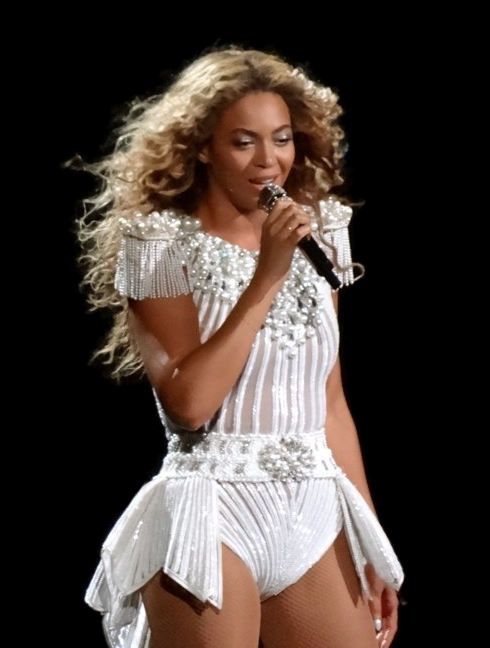
Her performance at the 2008 Super Bowl halftime show confirmed what the touring had been suggesting: she was a live performer of uncommon ability, someone for whom dancing, singing and commanding a vast stage were not separate skills to be managed simultaneously but a single unified physical expression. The combination of vocal precision and dance athleticism, maintaining perfect pitch while executing choreography of genuine technical difficulty, was something very few performers could match.
Lemonade: A Statement of Artistic and Political Maturity
If any single project can be identified as the artistic centrepiece of Beyoncé’s career, it is probably “Lemonade”, released in April 2016. The visual album, a sixty-five-minute film accompanied by twelve new songs, was released simultaneously on HBO and as an album on streaming platforms, with no advance promotion, in the manner that had already become her signature approach. It was a seismic cultural event.
“Lemonade” addressed infidelity, rage, grief, forgiveness and Black womanhood with a directness and a literary ambition that went far beyond what was expected of a pop album. Drawing on the poetry of Warsan Shire and the imagery of the Jim Crow South, Beyoncé created a work that located personal pain within a larger historical context, connecting the specific experience of a woman confronting her partner’s betrayal to the centuries-long experience of Black women in America being asked to endure, to forgive and to sustain. The film’s imagery was dense and allusive, its music moving fluidly between R&B, country, hip-hop and rock, and the combination produced something that was simultaneously a commercial release and a genuine work of art.
The album debuted at number one in eighteen countries, won both the Grammy for Album of the Year (for which it was nominated but did not win, a result that generated considerable controversy) and the Grammy for Best Urban Contemporary Album. More significantly, it was widely reviewed not just as an album but as a statement, a milestone in the integration of political consciousness and pop ambition.
Renaissance: Dance Music as Liberation
In July 2022, Beyoncé released “Renaissance”, the first in what she described as a three-act project. The album was a tribute to the traditions of dance music that had shaped popular culture from the 1970s onward: the Black and queer creative communities who had built disco, house and ballroom culture, communities whose contributions had often been absorbed by the mainstream without adequate acknowledgement. “Renaissance” was exuberant, technically sophisticated and deeply knowledgeable, its samples and references spanning decades of underground dance culture in a way that demonstrated the depth of her engagement with music history.
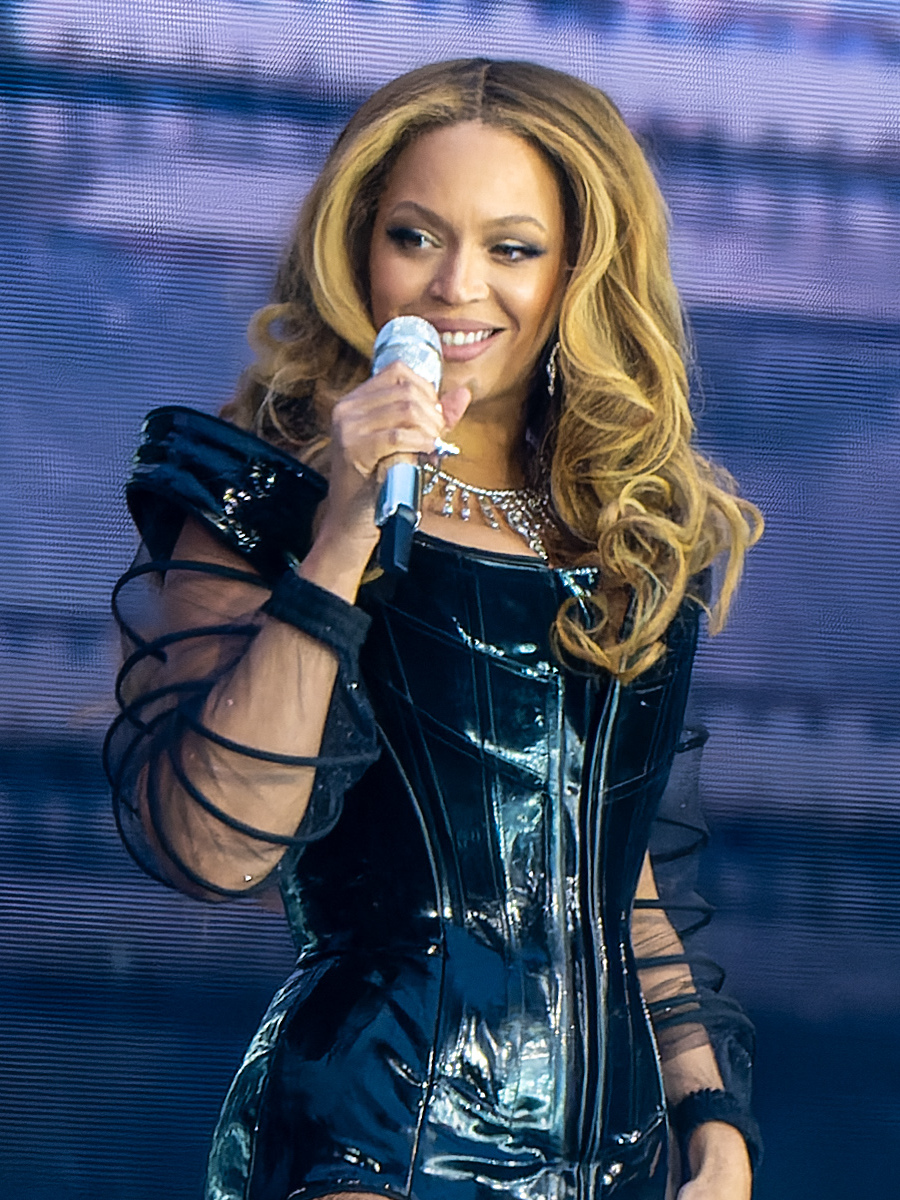
The album was again released without prior singles or promotional material, and again it debuted at number one in the United States and in most major markets. The subsequent “Renaissance World Tour”, which ran through 2023, became the highest-grossing tour in history by a solo female artist, shattering previous records with stadium performances of sustained intensity and visual extravagance. Every aspect of the show, from the costumes to the lighting design to the set list’s sequencing, was executed with the same obsessive attention to detail that has characterised her work since “Dangerously in Love”.
Personal Life and the Architecture of Privacy
Beyoncé married Shawn Corey Carter, known professionally as Jay-Z, on 4 April 2008, in a private ceremony that was not publicly announced for several days. They are among the most commercially powerful couples in entertainment history, and their collaboration extends beyond the personal to the professional: the two have made music together, launched joint ventures and navigated public challenges, most notably the revelation of Jay-Z’s infidelity that became the central subject of “Lemonade”.
They have three children: their daughter Blue Ivy Carter, born in January 2012, and twins Rumi and Sir Carter, born in June 2017. Blue Ivy has already appeared on recording credits, winning a Grammy for her contribution to a track on “The Lion King: The Gift” compilation, making her one of the youngest Grammy winners in history. The family’s profile is carefully managed: Beyoncé has almost no personal social media presence beyond a professional Instagram account, and information about their private lives emerges on her schedule, in interviews, albums or films, rather than through the constant stream of access that defines the relationship between celebrity and media for most of her peers.
The Business of Beyoncé
Beyond the music, Beyoncé has built a business operation of significant scale. Her management company, Parkwood Entertainment, handles not just her own career but those of other artists. Her fashion and lifestyle lines have achieved genuine commercial success, and her commitment to Black designers and creatives in her fashion and visual work has had a measurable impact on representation in those industries. The Ivy Park athleisure brand, launched in 2016 and subsequently restructured in partnership with Adidas, has been an important extension of her commercial identity.
Her philanthropic work is equally notable. The BeyGOOD initiative has provided relief funding following natural disasters, supported Black-owned businesses and invested in education programmes in Houston and elsewhere. Following the death of George Floyd and the social justice protests of 2020, she made public statements and financial commitments that were among the most substantive from any major entertainment figure. The consistency of her engagement with questions of racial justice and Black representation sets her apart from the more cautious political positioning of most artists of comparable commercial standing.
Impact and Influence
The influence of Beyoncé on popular music and popular culture is genuinely difficult to overstate. She demonstrated that an artist who began as a member of a successful group could become something larger than that group, and larger than the sum of the hits she produced, through a combination of creative ambition, ruthless professionalism and the willingness to use her platform as a space for something more than entertainment. She created a model of the pop album as political statement and the tour as cultural event that has influenced virtually every significant female artist working in popular music today.
Her impact on the Nigerian and broader African music scene has been particularly notable. Afrobeats and Afropop artists frequently cite her as a reference point, both for the quality of her work and for what she represents about the global reach of Black music rooted in African traditions. Her sampling of Afrobeats production styles on “Renaissance” and her work with African artists on “Black Is King” and “The Gift” created connections between her audience and African music that had real commercial and cultural effects, introducing Nigerian and Ghanaian artists to global audiences at a scale that promotional infrastructure alone could never have achieved.
Legacy
The story of Beyoncé is, among other things, a story about what becomes possible when exceptional talent is matched with exceptional discipline, and when an artist refuses to accept the limits that the industry, the public, or the logic of commercial success would impose on her. She has been, at various points, a child performer, a group member, a solo superstar, a film star, an activist and a business executive, and she has approached each of these roles with the same quality of total commitment.
She is also, and this may be the most important thing, an artist who has consistently used her work to argue for the dignity, the complexity and the centrality of Black women’s experience, and to do so in music that is simultaneously rigorous and joyful, politically serious and genuinely pleasurable to listen to. That combination is rare in any era. In the specific context of the early twenty-first century, it has been transformative.
Her willingness to use the album format as a vehicle for extended artistic statements, rather than simply a collection of singles, has influenced the way the music industry thinks about releases and the way audiences engage with them. The surprise drop strategy she pioneered, releasing complete albums without prior promotion and letting the work speak for itself rather than draining anticipation through months of singles, has been adopted and adapted by artists across every genre. In this respect, as in so many others, she has not simply operated within the existing structure of the music business but actively reshaped it around her own creative and commercial logic. That capacity for structural change, as much as any individual song or performance, is what makes her career genuinely historic.
Key Facts
- Beyoncé has won 32 Grammy Awards, making her the most decorated artist in the history of the Grammy programme.
- Her “Renaissance World Tour” (2023) became the highest-grossing concert tour in history by a solo female artist, earning more than 580 million dollars.
- “Lemonade” (2016) is widely regarded by music critics as one of the defining albums of the decade, combining personal narrative with historical and political commentary.
- She is the first solo artist and only the second artist overall to have her first six studio albums debut at number one in the United States.
- Her daughter Blue Ivy Carter became one of the youngest Grammy winners in history when she won Best Music Video credit in 2021.
The Larger Meaning
There is a version of Beyoncé’s story that focuses exclusively on the numbers: the Grammy count, the ticket sales, the streaming figures, the valuation of her business interests. Those numbers are extraordinary, and they deserve to be cited. But they do not fully explain why she matters, or why the critical and popular response to her best work has been so sustained and so intense.
What her career demonstrates, above all, is that popular music can be simultaneously enormously successful and artistically serious, that the pursuit of commercial achievement and the pursuit of artistic truth are not necessarily in conflict. She has proved this not by making compromises in one direction or the other but by insisting that her work meet the highest standard on both measures at once, and by doing so consistently over a period of more than twenty years.
For her audience, and particularly for the young Black women who have always formed its core, she has offered something beyond entertainment. She has offered recognition: the experience of seeing their lives, their bodies, their history and their culture treated as a worthy and central subject for art rather than a marginal one. That recognition, at the scale she operates, is a form of cultural power, and it is part of what has made her career not simply impressive but genuinely meaningful.