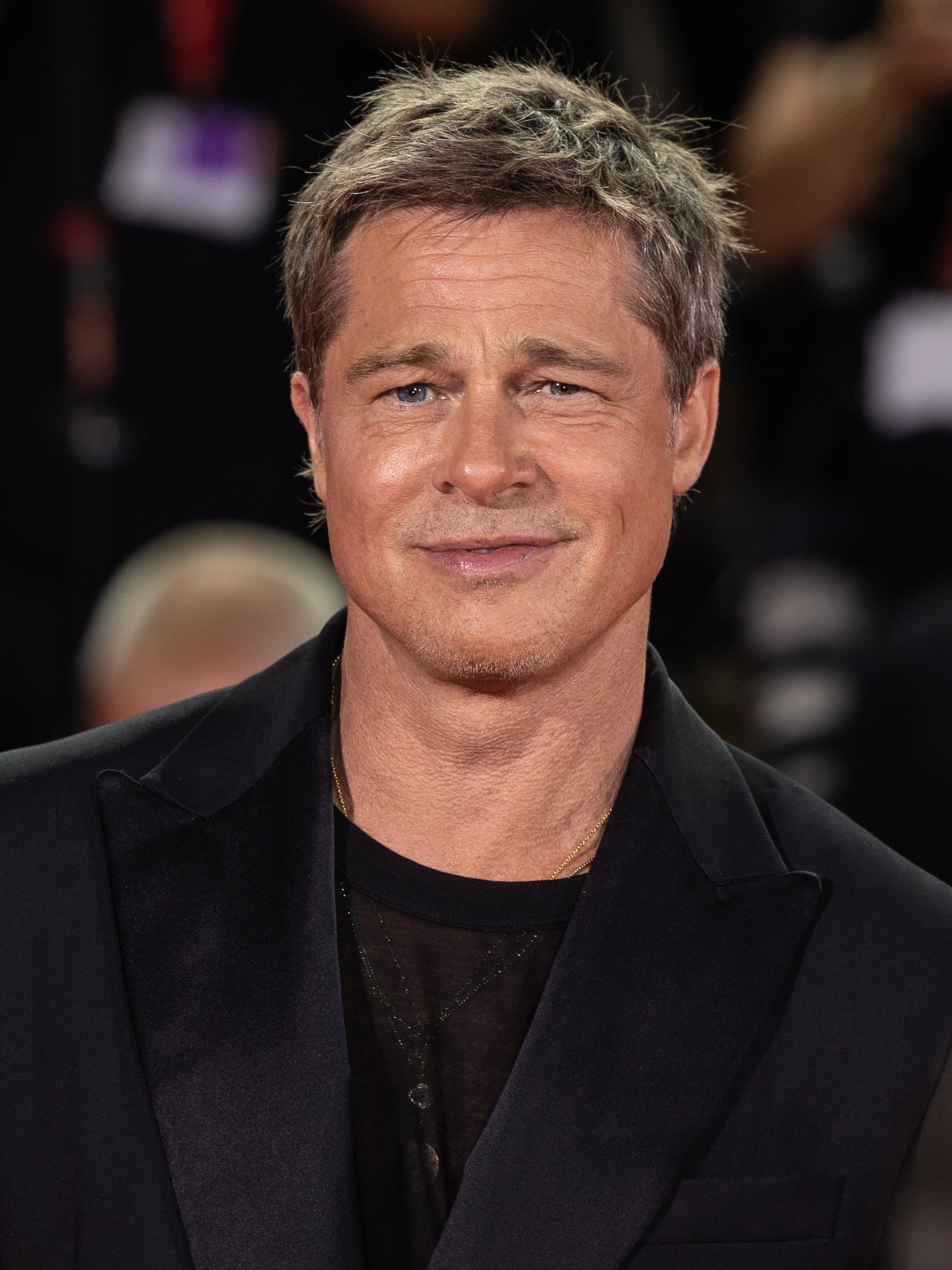
When a young, sun-bleached drifter named J.D. peeled off his shirt in a Texas motel room in the 1991 road movie Thelma and Louise, cinema audiences gasped, and an entire generation of moviegoers learned a name they would not forget. The scene lasted only minutes, but it announced the arrival of a performer who would dominate Hollywood for the next three decades. That performer was Brad Pitt, a journalism school dropout from Springfield, Missouri, who had driven west to Los Angeles in a battered car with a few hundred dollars and a stubborn refusal to settle for an ordinary life.
What followed was a career that defied the easy story everyone wanted to tell about him. The world saw the golden hair, the blue eyes, and the magazine covers, and assumed it understood the man. Pitt spent the rest of his life complicating that assumption. He chased difficult roles, worked with the most demanding directors in the business, built a production company that reshaped American independent film, and eventually walked onto the Academy Awards stage to collect not one but two Oscars. This is the story of how a boy raised in a conservative Baptist household in the American Midwest became one of the most recognizable, and one of the most quietly serious, figures in modern entertainment.
Quick Facts
- Full name
- William Bradley Pitt
- Born
- 18 December 1963, Shawnee, Oklahoma, USA
- Nationality
- American
- Known for
- Fight Club, Se7en, Once Upon a Time in Hollywood, 12 Years a Slave (producer)
- Awards
- 2 Academy Awards (Best Supporting Actor 2020; Best Picture as producer, 2014)
Early Life
William Bradley Pitt was born on 18 December 1963 in Shawnee, Oklahoma. He was the first child of William Alvin Pitt, who managed a trucking company, and Jane Etta Pitt, a school counselor. Soon after his birth, the family relocated to Springfield, Missouri, the city in the Ozarks that Pitt would always call his hometown. He grew up there alongside a younger brother, Doug, and a younger sister, Julie.
The household was rooted in conservative Southern Baptist faith and traditional Midwestern values. Church attendance, hard work, and modesty shaped the rhythm of daily life. Pitt has spoken many times about the tension between that upbringing and the questions that gnawed at him as he got older, a tension that would later feed into the restless, searching quality of much of his best work. As a teenager he was a popular and capable student at Kickapoo High School in Springfield, involved in sports, debate, musicals, and student government. He was, by most accounts, a young man who fit in easily while privately wondering whether the life mapped out for him was really the one he wanted.
After high school he enrolled at the University of Missouri in Columbia, where he studied journalism with a focus on advertising. He was close to finishing his degree when the pull of something larger became impossible to ignore. He had grown up watching films in a town far from any movie industry, and the idea of stories told on screen had taken hold of him. Two weeks before he was due to graduate in 1986, Pitt packed his belongings into his car, told his parents he was heading to an art school in California, and drove west toward Los Angeles. The art school was a useful fiction. What he really wanted was to become an actor, a goal so improbable for a Missouri boy with no connections that he could barely say it aloud.
Los Angeles did not roll out a welcome mat. To survive, the young Pitt took the kinds of jobs that fill the resumes of countless aspiring actors. He drove strippers around in a limousine, dressed up as a giant chicken to promote a restaurant chain, and moved refrigerators. In between, he studied acting with the coach Roy London and chased auditions with a persistence that eventually paid off. He was learning a craft, and he was discovering that beneath the easy charm there was a real hunger to be good at it.
Breaking Through
Pitt’s earliest professional work came on television in the late 1980s. He picked up small roles on popular series of the era, including a recurring part on the prime-time soap opera Dallas and guest appearances on shows such as Growing Pains, 21 Jump Street, and the sitcom Head of the Class. These were the unglamorous building blocks of a working actor’s life, brief credits that paid the rent and sharpened his instincts in front of a camera. He also appeared in the 1989 horror film Cutting Class, an early lead that few people noticed at the time.
Everything changed in 1991. The director Ridley Scott cast him in a small but pivotal role in Thelma and Louise, the landmark feminist road movie starring Geena Davis and Susan Sarandon. Pitt played J.D., a charming young drifter and thief who has a fateful encounter with Davis’s character. The part was not large, but Pitt filled it with such easy magnetism that he stole every scene he was in. Audiences and critics took immediate notice, and almost overnight he was transformed from an anonymous television face into a name to watch. The role established a template that would shadow him for years: Brad Pitt as the impossibly attractive newcomer whose looks threatened to obscure his talent.
He pushed back against that template right away. In 1992 he took the lead in A River Runs Through It, the elegiac drama directed by Robert Redford and based on the novella by Norman Maclean. Playing Paul Maclean, a free-spirited fly fisherman in early twentieth century Montana, Pitt delivered a wounded, luminous performance under the guidance of a director who had once been Hollywood’s own golden boy. The film deepened his reputation and signaled that he intended to be taken seriously.
His ambition grew bolder. In 1994 he appeared in Interview with the Vampire, Neil Jordan’s lavish adaptation of the Anne Rice novel, sharing the screen with Tom Cruise as the tormented vampire Louis de Pointe du Lac. That same year he starred in Legends of the Fall, Edward Zwick’s sweeping family epic set against the backdrop of the early twentieth century American West and the First World War. As the wild, charismatic brother Tristan Ludlow, Pitt anchored a sprawling melodrama and confirmed his status as a leading man capable of carrying a major studio production. The role brought him a Golden Globe nomination and cemented his standing as one of the most bankable young stars in the world.
Stardom and Range
If the early 1990s made Brad Pitt a star, the second half of the decade proved he was an artist willing to risk his own image. In 1995 he starred in Se7en, David Fincher’s relentlessly bleak crime thriller, playing Detective David Mills opposite Morgan Freeman’s weary veteran investigator. The film, with its rain-soaked dread and its devastating climax, became a defining work of 1990s American cinema and the beginning of a long, fruitful partnership between Pitt and Fincher.
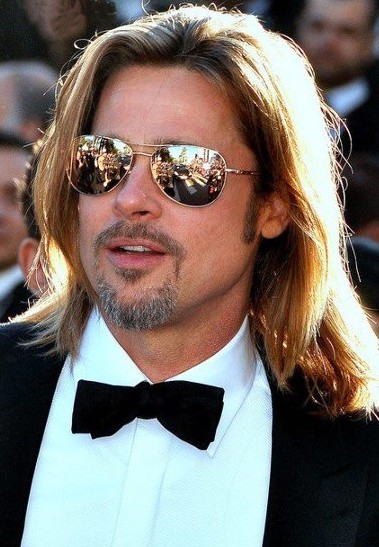
The same year brought 12 Monkeys, Terry Gilliam’s dizzying time-travel drama, in which Pitt played Jeffrey Goines, a manic, twitchy mental patient. The performance was a revelation, a complete departure from the smooth leading-man roles audiences expected of him, and it earned him his first Academy Award nomination for Best Supporting Actor as well as a Golden Globe win. He had proven that the handsome face could vanish entirely into a character.
In 1999 came the role that would become a touchstone for a generation. In David Fincher’s Fight Club, adapted from the Chuck Palahniuk novel, Pitt played Tyler Durden, the charismatic, anarchic embodiment of male discontent opposite Edward Norton’s nameless narrator. The film was divisive on release and underperformed at the box office, but it grew into a genuine cultural phenomenon, its imagery and ideas seeping into the wider culture. Pitt’s Durden remains one of the most quoted and imitated characters of modern movies.
The new century brought a different kind of stardom. In 2001 Pitt joined an all-star ensemble for Steven Soderbergh’s Ocean’s Eleven, a slick, sun-soaked heist comedy that paired him with George Clooney, Julia Roberts, Matt Damon, and others. The film was a major commercial success and spawned the sequels Ocean’s Twelve in 2004 and Ocean’s Thirteen in 2007, giving Pitt one of the most reliable franchises of his career. In 2004 he played the Greek warrior Achilles in Wolfgang Petersen’s epic Troy, a physically demanding role in a massive international hit.
Then came 2005 and Mr & Mrs Smith, Doug Liman’s action comedy about a married couple who discover they are both assassins hired to kill each other. Pitt starred opposite Angelina Jolie, and the crackling chemistry between them was impossible to miss. The film was a global box office triumph, and it marked the beginning of one of the most scrutinized relationships in the history of celebrity. The professional and the personal collided, and for the next decade Brad Pitt would be one half of the most photographed couple on earth.
The Mature Actor
As he moved into his forties, Pitt grew more selective and more adventurous, gravitating toward filmmakers with strong, singular visions. In 2008 he reunited with David Fincher for The Curious Case of Benjamin Button, the F. Scott Fitzgerald-inspired fantasy about a man who ages in reverse. The role required Pitt to play a single character across an entire lifetime, and the film earned him his second Academy Award nomination, this time for Best Actor.
The following year he delivered one of his most purely entertaining performances in Quentin Tarantino’s Inglourious Basterds, released in 2009. As Lieutenant Aldo Raine, the drawling Tennessee leader of a band of Nazi-hunting soldiers in occupied France, Pitt brought sly comic timing to Tarantino’s audacious wartime fantasy. The film was a critical and commercial hit and won an Academy Award for his co-star Christoph Waltz.
In 2011 Pitt stretched in two very different directions. He starred in Terrence Malick’s The Tree of Life, a hushed, impressionistic meditation on family, memory, and the cosmos, playing a stern 1950s father in a film that won the Palme d’Or at the Cannes Film Festival. That same year he starred in and produced Moneyball, Bennett Miller’s adaptation of the Michael Lewis book about the Oakland Athletics baseball executive Billy Beane. His grounded, intelligent portrayal of Beane earned him another Academy Award nomination for Best Actor and showcased a more restrained, deeply human side of his screen presence.
He continued to take on demanding work through the 2010s, including the war drama Fury in 2014 and the apocalyptic thriller World War Z in 2013, one of the biggest commercial successes of his career as a leading man. But the crowning achievement of his work as an actor arrived in 2019. In Quentin Tarantino’s Once Upon a Time in Hollywood, Pitt played Cliff Booth, the laconic, fearless stunt double and best friend to Leonardo DiCaprio’s fading television star Rick Dalton. The performance was a masterclass in understated cool, and it swept the awards season. At the ceremony held in early 2020, Brad Pitt won the Academy Award for Best Supporting Actor, his first competitive acting Oscar after decades of nominations. He also won the Golden Globe, the BAFTA, and the Screen Actors Guild Award for the same role.
“I’m one of those creatures that speaks through my work.”
Plan B and Producing
Some of Brad Pitt’s most lasting contributions to cinema came not in front of the camera but behind it. In 2001 he co-founded the production company Plan B Entertainment. After an early restructuring, he continued to run the company alongside partners, building it into one of the most respected and adventurous outfits in Hollywood, a company known for backing serious, often risky films that the major studios were reluctant to make.
Plan B’s track record reads like a roll call of modern prestige cinema. The company produced Martin Scorsese’s crime drama The Departed, which won the Academy Award for Best Picture for the year 2006. It produced Steve McQueen’s harrowing historical drama 12 Years a Slave, the true story of Solomon Northup, a free Black man kidnapped and sold into slavery in the pre-Civil War American South. When 12 Years a Slave won the Academy Award for Best Picture at the ceremony in 2014, Pitt, as one of its producers, walked onstage to accept the award, claiming the highest honor in film.
Plan B did it again in 2017 when Barry Jenkins’s tender coming-of-age drama Moonlight won the Academy Award for Best Picture, after one of the most dramatic mix-ups in the history of the ceremony. The company also produced acclaimed work such as the financial crisis drama The Big Short, the journalism thriller The Departed’s spiritual cousin in seriousness, and many others, building a reputation for elevating bold storytelling and supporting filmmakers from a wide range of backgrounds. Through Plan B, Pitt turned his star power into a kind of patronage, using his name and clout to get difficult, important films made.
Personal Life
For all his control over his professional choices, Brad Pitt’s private life played out in the harsh light of unrelenting public attention. In 2000 he married the actress Jennifer Aniston, then at the height of her fame as Rachel Green on the television series Friends. For several years they were celebrated as one of Hollywood’s golden couples. The marriage ended in 2005, and the divorce was finalized in that period of intense tabloid coverage, made all the more frenzied by the timing of his next relationship.
Pitt’s bond with Angelina Jolie, his co-star from Mr & Mrs Smith, became one of the defining celebrity stories of the era. The pair were so constantly covered that the press fused their names into a single word, “Brangelina,” a shorthand that captured the scale of the fascination surrounding them. Together they built a large family. They have six children, three of whom were adopted from Cambodia, Ethiopia, and Vietnam, and three of whom are their biological children, including twins. For years the couple traveled the world, took on humanitarian causes, and appeared together in occasional films.
They married in 2014 after nearly a decade together. The marriage did not last. In 2016 Jolie filed for divorce, beginning a long and painful legal process that played out publicly and at times bitterly over the following years, including disputes over custody and shared business interests. The breakup marked a turning point in Pitt’s life. He has spoken candidly in interviews about confronting his own struggles in its aftermath, including giving up alcohol and entering a recovery program. He has described that period of sobriety and self-examination as one of the most difficult and clarifying of his life, a reckoning that informed the wounded humanity audiences saw in his later performances. In the years since, he has spoken about therapy, accountability, and the slow work of rebuilding, presenting a more reflective public figure than the carefree heartthrob of his youth.
Legacy
Brad Pitt’s place in film history is secure, and it is more complicated and more impressive than the easy label of “movie star” suggests. He is one of the few actors of his generation to have remained at the very top of the industry for more than thirty years, transitioning from teen idol to respected character actor to elder statesman without ever losing his audience. His collaborations with directors such as David Fincher, Quentin Tarantino, Terrence Malick, and Steven Soderbergh produced some of the most memorable American films of the past three decades.
His influence extends well beyond his own performances. Through Plan B Entertainment he helped bring stories to the screen that mainstream Hollywood had long ignored, and his backing of films like 12 Years a Slave and Moonlight changed the conversation about what kinds of stories could win the industry’s highest honors. He proved that a leading man could use fame as a tool to support artists with something difficult and necessary to say.
He has also lent his name and resources to causes outside the movies, including a high-profile effort to rebuild housing in New Orleans after the devastation of Hurricane Katrina in 2005. That project later faced serious problems and criticism, a reminder that even the best-intentioned celebrity ventures can falter, but it reflected a genuine impulse to use his platform for more than self-promotion.
What endures, in the end, is the work. The drifter in Thelma and Louise, the manic patient in 12 Monkeys, the anarchist in Fight Club, the baseball executive in Moneyball, the stuntman in Once Upon a Time in Hollywood: each is a distinct creation, proof that beneath the famous face there was always a serious, curious, and fearless actor. Brad Pitt arrived as the handsome face of a generation. He leaves a legacy as one of its finest performers and one of its most consequential producers.
Key Facts
- Brad Pitt left the University of Missouri two weeks before graduating in 1986 and drove to Los Angeles to pursue acting, working odd jobs including dressing as a giant chicken for a restaurant chain.
- His breakthrough came as the drifter J.D. in Thelma and Louise (1991), followed by acclaimed roles in A River Runs Through It (1992) and Legends of the Fall (1994).
- He received Academy Award acting nominations for 12 Monkeys (1995), The Curious Case of Benjamin Button (2008), and Moneyball (2011) before winning Best Supporting Actor for Once Upon a Time in Hollywood at the 2020 ceremony.
- As co-founder of Plan B Entertainment, he produced the Best Picture winners The Departed (2006), 12 Years a Slave (2014), and Moonlight (2017), earning his first Oscar as a producer for 12 Years a Slave.
- He was married to Jennifer Aniston from 2000 to 2005 and to Angelina Jolie from 2014, with whom he shares six children, and has spoken publicly about his sobriety following their high-profile separation.