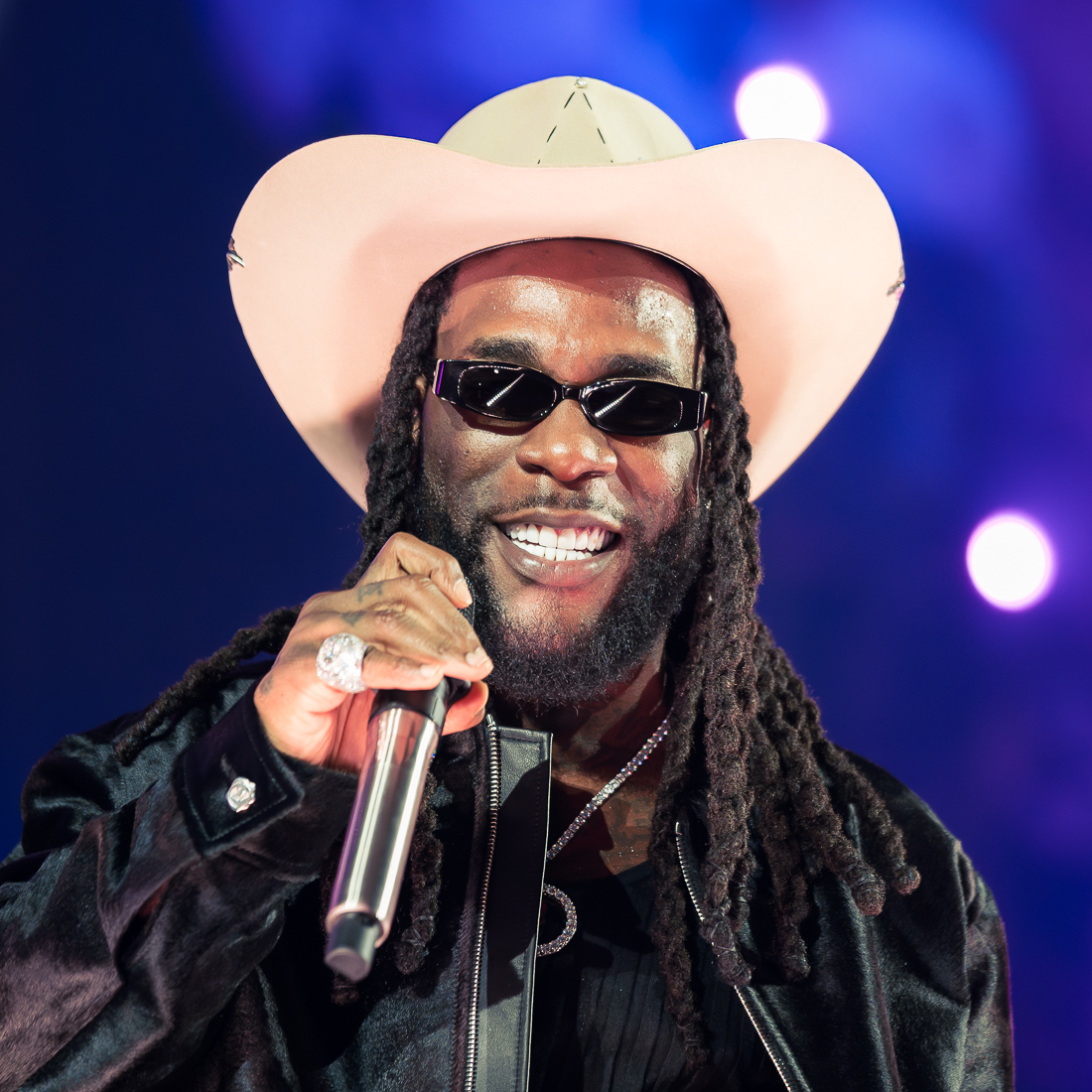
There is a particular kind of swagger that announces itself before a single note is heard, and Burna Boy has spent his entire career refining it. When he steps onto a stage, whether a muddy festival field in England or the glittering bowl of a packed American arena, he carries himself like a man who already knows how the night will end. That confidence was not handed to him. It was built across a decade of mixtapes, missteps, comeback singles, viral controversies, and a relentless insistence that African music belonged at the very centre of the global conversation, not at its margins. By the time the rest of the world caught up, Damini Ebunoluwa Ogulu had already crowned himself the African Giant, and he had the catalogue, the stadiums, and eventually the Grammy to back the claim.
His story is the story of Afrobeats itself becoming a worldwide language. It is also a deeply personal tale rooted in Port Harcourt, in a musical family, and in a grandfather whose connection to Fela Kuti placed Burna Boy in a direct line of inheritance from the founder of Afrobeat. This is how a restless, rebellious kid from Rivers State became one of the most consequential African artists of his generation.
Quick Facts
- Full name
- Damini Ebunoluwa Ogulu
- Born
- 2 July 1991, Port Harcourt, Rivers State, Nigeria
- Genre
- Afrobeats, Afro-fusion, reggae, dancehall
- Known for
- Global Afrobeats superstar; Grammy winner
- Grandfather
- Benson Idonije, the first manager of Fela Kuti
Early Life
Damini Ebunoluwa Ogulu was born on 2 July 1991 in Port Harcourt, the oil-rich capital of Rivers State in southern Nigeria. He grew up in a household where music was not a hobby but a kind of family inheritance. His mother, Bose Ogulu, worked in language and translation and would later step in as his manager, becoming one of the most recognisable artist managers in African music. His father, Samuel Ogulu, ran a welding company. The family had roots that stretched across Nigeria’s south, and the young Damini absorbed a wide musical diet that included American hip hop, Jamaican reggae and dancehall, highlife, and the deep groove of Fela Kuti’s Afrobeat.
That last influence was not abstract. Burna Boy’s maternal grandfather is Benson Idonije, a pioneering Nigerian broadcaster, music critic, and the first manager of Fela Kuti. Idonije guided Fela in the early years before the Afrobeat legend became a global force, and he remained a towering figure in Nigerian music journalism for decades. Growing up around a grandfather who had shaped the career of Fela gave Burna Boy a sense of lineage that he would lean on heavily throughout his life. He often speaks of Fela not as a distant icon but as a living standard he measures himself against, a man whose blend of music and message he tries to carry forward.
As a child, Burna Boy began experimenting with music production software, building beats on the family computer long before he ever thought of himself as a performer. He was producing before he was rapping or singing, and that early grounding in the mechanics of a song shaped the layered, genre-blurring sound he would later be known for. He has often credited his mother for nurturing this curiosity rather than steering him toward a more conventional path, and the closeness of that relationship would become one of the defining features of his public life once Bose Ogulu stepped fully into the role of manager.
Port Harcourt itself left its imprint on him. The city sits at the heart of the Niger Delta, a region whose oil wealth has long sat uneasily beside poverty, pollution, and unrest. Growing up surrounded by those contradictions gave Burna Boy an early sensitivity to questions of inequality and exploitation, themes that would surface again and again in his lyrics. He absorbed the local highlife and the imported sounds that arrived through radio and cassette, and he developed an ear for rhythm that drew as much from the Caribbean as from anywhere in Nigeria.
His education took him beyond Nigeria. He attended secondary school in Nigeria and later travelled to the United Kingdom for further studies, spending time in London. He briefly studied media technology and then enrolled in a media communications and culture programme, but the pull of music proved stronger than any degree. He left his studies behind and returned home to chase a career that, at the time, offered no guarantees. London, however, left a permanent mark. The city’s Caribbean and African diaspora communities, its grime and dancehall scenes, and its restless multicultural energy all fed into the sound he was developing.
Finding His Sound
Back in Nigeria, Burna Boy began the slow, unglamorous work of building a name. He released early mixtapes, most notably “Burn Notice,” which circulated among fans and tastemakers and signalled that here was an artist who did not sound quite like anyone else on the Nigerian scene. While many of his contemporaries leaned into clean, radio-friendly pop, Burna Boy fused dancehall toasting, reggae cadences, pidgin, and a husky, melodic delivery into something he would come to call Afro-fusion. It was Afrobeats at its core, but stretched and bent toward Kingston, toward London, toward the broader Black Atlantic.
His commercial breakthrough arrived around 2012 to 2013 with the single “Like to Party,” a sticky, mid-tempo anthem that announced his arrival to a national audience. The song’s success set up his debut studio album, “L.I.F.E,” released in 2013 under Aristokrat Records. The title was an acronym for “Leaving an Impact for Eternity,” an early hint at the outsized ambition that would define him. The album was a critical and commercial success in Nigeria, spawning hits and establishing Burna Boy as a distinctive new voice rather than a one-single wonder.
The years that followed were not a smooth, uninterrupted climb. Burna Boy navigated label disputes, periods of reduced visibility, and a reputation for being difficult and headstrong. Yet through it all his sound kept maturing. He released the project “On a Spaceship” in 2015 and continued to refine the Afro-fusion blueprint, marrying introspective songwriting with the kind of bass-heavy production that translated as easily to a London club as to a Lagos street party. He was learning, in real time, how to make Nigerian music that did not need to apologise or translate itself for the rest of the world.
During this stretch he also moved between record labels and management arrangements, experiences that taught him hard lessons about ownership and control in the music business. Those frustrations hardened into a conviction that he should keep his creative decisions close to home, which is part of why his mother’s eventual role as manager mattered so much. Rather than chase trends, Burna Boy used the quieter middle years of the 2010s to deepen his identity, releasing music that prized mood, groove, and message over disposable hits. The patience would prove decisive. When the global spotlight finally swung toward Afrobeats, he was ready with a fully formed artistic personality rather than a hastily assembled one.
The Rise to Global Stardom
The turning point came with a run of music that fused commercial appeal with genuine artistic weight. In 2018 Burna Boy released “Outside,” his first album under a major international label deal, and it functioned as a kind of reintroduction. The album carried the single “Ye,” a song that became a phenomenon partly through a strange twist of fate: the American rapper Kanye West released an album titled “Ye” the same year, and curious listeners searching for West’s project stumbled instead onto Burna Boy’s track. The accident turned into a windfall. “Ye” became an enormous hit across Africa and beyond, and it remains one of the songs most associated with him.
If “Outside” opened the door, 2019’s “African Giant” kicked it down. The album was a statement of intent, a sprawling, confident project that announced Burna Boy as a continental heavyweight with global designs. The title itself became a rallying cry and a self-applied crown. The album earned critical acclaim worldwide and went on to receive a nomination for Best World Music Album at the Grammy Awards, his first major recognition from the American recording academy.
The “African Giant” era was also marked by a now-famous moment of defiance. When the lineup for the Coachella festival was announced in early 2019, Burna Boy’s name appeared in small print far down the poster. He responded publicly and pointedly, declaring that he was an African Giant and would not be made to look small on any stage. The episode crystallised his entire persona. Rather than quietly accept a junior billing, he reframed the slight as proof that the world had not yet recognised African music’s true scale. The confidence resonated, and it helped transform the phrase African Giant into shorthand for a larger argument about respect and representation.
The substance of “African Giant” backed up the bravado. Across its tracks Burna Boy moved fluidly between celebration and protest, between songs built for the dancefloor and songs that interrogated power, history, and the condition of ordinary Africans. He brought in collaborators from across the diaspora, including artists from the United States, the United Kingdom, and the Caribbean, weaving their voices into a record that felt expansive rather than scattered. Critics in major Western outlets, many of whom had paid little attention to Afrobeats before, began writing about him in the language usually reserved for established global stars. The album did not merely raise his profile. It reframed the entire conversation about what a Nigerian artist could attempt and achieve on a world stage.
Twice as Tall and the Grammy
The Grammy nomination for “African Giant” did not result in a win, and Burna Boy made his disappointment known. But the loss seemed to sharpen rather than discourage him. In 2020 he returned with “Twice as Tall,” an album whose very title signalled his refusal to shrink. Released in August of that year, the project was executive produced in part by the American mogul Sean Combs, known as Diddy, alongside Burna Boy’s mother Bose Ogulu. The collaboration with Diddy underscored just how seriously the global music establishment had begun to take him.
“Twice as Tall” was a richer, more reflective record than its predecessor, threading together themes of African pride, personal struggle, and historical memory. It featured collaborations that reached across continents, including work with the British band Coldplay’s frontman and other international names, and it carried the weight of an artist consciously building a legacy rather than chasing a momentary hit.
The vindication came in March 2021, when “Twice as Tall” won the Grammy Award for Best Global Music Album. The victory was historic. It marked one of the most significant Grammy moments ever for a Nigerian artist and for Afrobeats as a movement. For a generation of African musicians who had long felt overlooked by the Western industry, the win was both a celebration and a statement that the centre of musical gravity was shifting. Burna Boy dedicated the achievement to his fellow Africans and to the broader rise of the continent’s music, framing it not as a personal trophy alone but as a collective milestone.
Stadiums and the Global Era
With a Grammy secured, Burna Boy entered a new phase, one defined less by proving himself and more by expanding the scale of what an African artist could achieve. In 2022 he released “Love, Damini,” an album that arrived around his birthday and used his real first name as its title, a deliberately intimate gesture from an artist often armoured in bravado. The record balanced the personal and the grand, exploring love, mortality, and self-reflection while still delivering the festival-ready anthems his audiences expected.
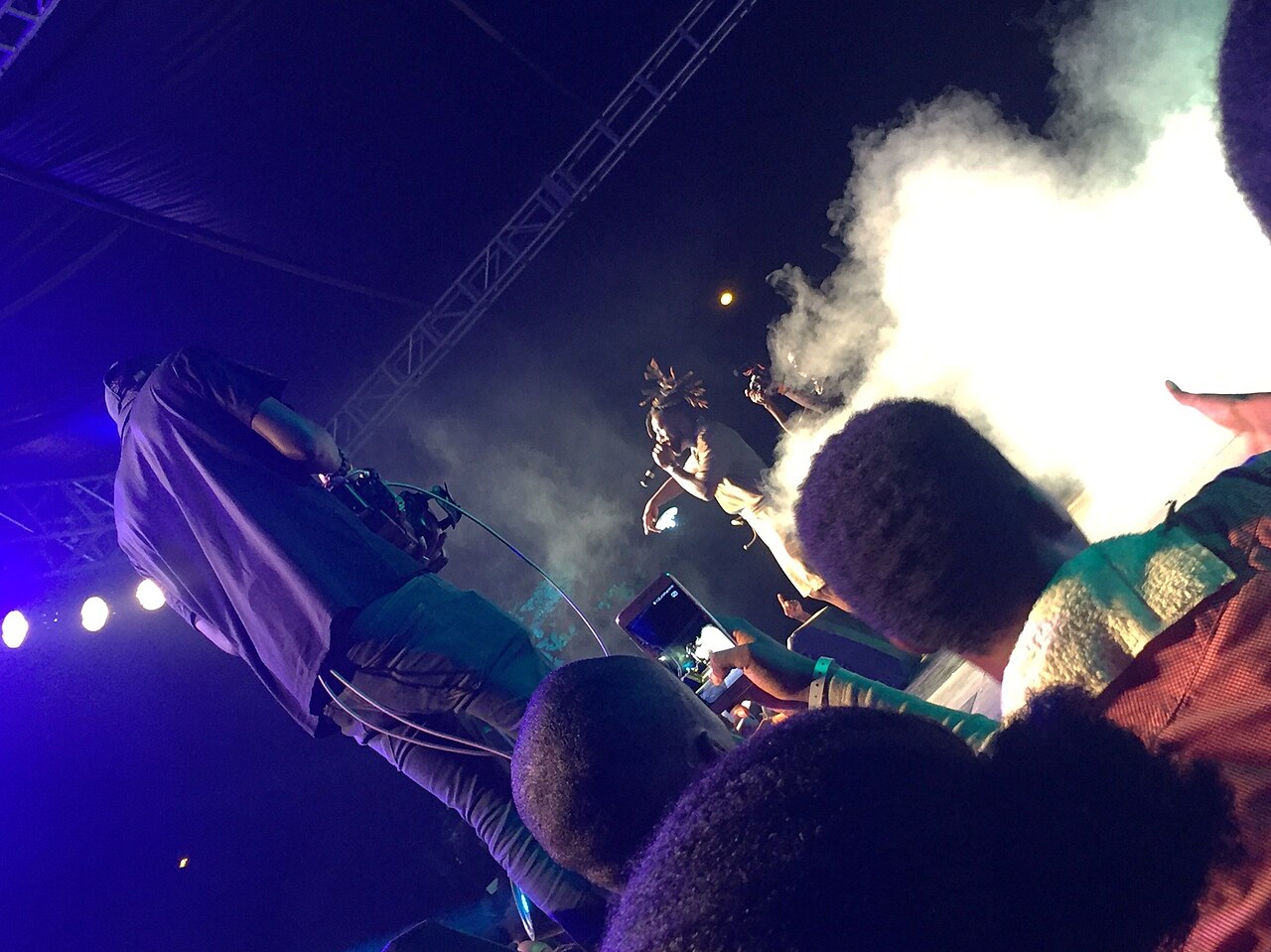
What followed was a string of historic live achievements that few African artists had ever approached. Burna Boy became the first Nigerian artist to sell out the London Stadium, packing the vast venue in east London for a landmark concert in 2022. He went on to headline and sell out Madison Square Garden in New York, one of the most storied arenas in the world, and to perform at major stadiums and festivals across Europe, North America, and Africa. He played to enormous crowds at festivals and headlined nights that, only a few years earlier, would have seemed unthinkable for a singer performing largely in pidgin and English over African rhythms.
These were not symbolic gestures or token bookings. They were full commercial sellouts at venues that hold tens of thousands of people, achieved by an artist whose core sound remained unapologetically African. Each milestone carried a weight beyond ticket sales, because each one rewrote assumptions about the size of the audience that African music could command outside the continent. For young Nigerian artists watching from home, the images of Burna Boy commanding a packed London Stadium or a roaring Madison Square Garden offered concrete proof that the ceiling they had been told existed was, in fact, an illusion.
His collaborations expanded in step with his audience. He worked with global stars including Ed Sheeran, Sam Smith, Stormzy, Jon Batiste, and others, and he appeared on soundtracks and high-profile projects that placed his voice in front of audiences who might never have encountered Afrobeats otherwise. Through it all, he resisted the temptation to dilute his sound into generic international pop. His features tended to bend collaborators toward his world rather than the reverse, and that insistence became part of his appeal.
Burna Boy’s success did not happen in isolation. It coincided with, and helped accelerate, a broader global surge for Afrobeats, a wave that also lifted artists such as Wizkid, Davido, Tems, and Rema. But Burna Boy occupied a particular niche within that movement. Where others leaned toward crossover pop, he positioned himself as the keeper of a more politically charged, Fela-descended tradition, the artist most likely to use a sold-out stadium as a pulpit.
Activism and Persona
To understand Burna Boy, you have to understand his relationship to Fela Kuti. Fela was not only a musical genius but a fearless critic of corruption, military rule, and injustice in Nigeria, a man who paid for his outspokenness with beatings and imprisonment. Burna Boy, whose grandfather managed Fela in those early years, has consciously taken up a portion of that mantle. His music regularly addresses inequality, the legacy of colonialism, police brutality, and the dignity of African people.
He has been outspoken on social and political issues, sometimes courting controversy with his blunt remarks, and he has never been shy about asserting his own greatness. His self-styled image as the African Giant is more than a marketing slogan. It is a posture of refusal, a rejection of the historical habit of treating African art as small, exotic, or secondary. When he insists on his own scale, he is making an argument about an entire continent’s place in global culture.
That persona has not been without friction. Burna Boy has feuded publicly with peers, made provocative statements about the state of contemporary music, and at times drawn criticism for his combative tone. But the same uncompromising temperament that generates headlines is inseparable from the artistic confidence that produced his best work. He is, by design, impossible to ignore.
His pride in African identity runs through everything he does, from the imagery of his album covers to the way he frames his achievements in interviews. He has consistently positioned his success as a victory for the continent rather than for himself alone, and he has used his platform to push back against the long history of African culture being treated as a curiosity. In doing so he has accepted the burdens that come with such a posture, including the scrutiny and the inevitable accusation of arrogance. Yet the self-belief is the point. For Burna Boy, modesty would be a betrayal of the very argument he is trying to win.
“I want to be the best in the world. I want to be the biggest in the world. And there’s nothing wrong with that.”
Career Timeline
- 2 July 1991: Damini Ebunoluwa Ogulu is born in Port Harcourt, Rivers State, Nigeria.
- 2012 to 2013: Breaks through in Nigeria with the single “Like to Party.”
- 2013: Releases his debut studio album “L.I.F.E,” a critical and commercial success at home.
- 2018: Releases “Outside,” featuring the breakout hit “Ye,” and signs to a major international label.
- 2019: Releases “African Giant,” earns his first Grammy nomination, and turns a Coachella billing dispute into a defining moment.
- 2020: Releases “Twice as Tall,” executive produced in part by Diddy and Bose Ogulu.
- March 2021: Wins the Grammy Award for Best Global Music Album for “Twice as Tall.”
- 2022: Releases “Love, Damini” and becomes the first Nigerian artist to sell out the London Stadium.
- 2022 onward: Sells out Madison Square Garden and headlines stadiums and festivals across the world, cementing his status as a global Afrobeats figurehead.
Lesser-Known Facts
- His maternal grandfather, Benson Idonije, was the first manager of Fela Kuti and a celebrated Nigerian broadcaster and music critic, giving Burna Boy a direct family link to the founder of Afrobeat.
- His first name, Damini, is a name of Indian origin meaning lightning, while his middle name Ebunoluwa carries Yoruba roots meaning a gift from God.
- He began his musical journey as a producer, making beats on a computer as a child long before he started singing or rapping.
- The breakout success of his 2018 song “Ye” was boosted by a coincidence: listeners searching for Kanye West’s similarly titled album “Ye” discovered Burna Boy’s track instead.
- His mother, Bose Ogulu, is also his manager, and she has accepted major awards on his behalf and helped steer his international career.
- He briefly studied media communications in London before abandoning his degree to pursue music full time.
Frequently Asked Questions
What is Burna Boy’s real name? His real name is Damini Ebunoluwa Ogulu. He was born on 2 July 1991 in Port Harcourt, Nigeria, and adopted the stage name Burna Boy early in his career.
Did Burna Boy win a Grammy? Yes. In March 2021 he won the Grammy Award for Best Global Music Album for his 2020 album “Twice as Tall.” It was a historic win for Afrobeats and for Nigerian music.
Who is Burna Boy’s grandfather? His maternal grandfather is Benson Idonije, a pioneering Nigerian broadcaster and music critic who served as the first manager of Fela Kuti, the founder of Afrobeat.
What does African Giant mean? African Giant is both the title of his acclaimed 2019 album and the persona Burna Boy adopted for himself. It expresses his belief that African music and African people deserve to be recognised on the largest possible scale, a stance he dramatised after being given small billing at Coachella.
Where is Burna Boy from? He is from Port Harcourt in Rivers State, southern Nigeria, where he was born and raised before later spending time studying in London.
Legacy
Burna Boy’s legacy is still being written, but its shape is already unmistakable. He took a sound born in the streets and studios of Nigeria and carried it, without compromise, to the Grammy stage and into the world’s most prestigious arenas. He proved that an African artist singing in pidgin over African rhythms could sell out the London Stadium and Madison Square Garden, that he did not need to dilute his identity to be embraced globally, and that the African Giant was not a boast but a description.
More than chart positions or awards, his deepest contribution may be the argument he has made simply by existing at his scale. By insisting on his own greatness, by drawing a straight line from Fela Kuti through his grandfather Benson Idonije to himself, and by refusing to treat African music as anything less than world music, he helped shift how an entire industry sees the continent. For the generation of Nigerian and African artists rising in his wake, Burna Boy did not just open a door. He kicked it down, walked through it, and dared everyone else to follow.