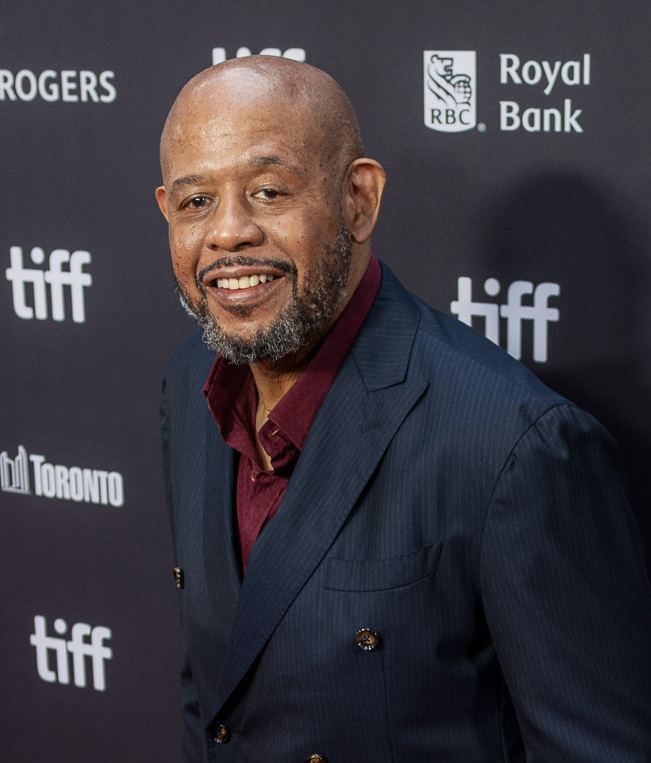
There is a stillness to Forest Whitaker that the camera has always loved. Watch him in almost any film and you notice how little he seems to perform. He listens, he waits, he lets the silence do the work, and then, when the scene demands it, he unleashes something so complete that you forget you are watching an actor at all. Whether playing a tyrant drunk on power, a lonely hitman who lives by an ancient code, or a grieving father searching for grace, Whitaker has spent more than four decades vanishing into other people. That gift, the rare ability to fully inhabit a human being rather than imitate one, carried him from the modest streets of South Central Los Angeles to the stage of the Kodak Theatre, where in 2007 he accepted the Academy Award for Best Actor.
But the story of Forest Whitaker is not only the story of a brilliant performer. It is also the story of a man who decided that fame should be put to use. Away from the screen, he has become a committed peacebuilder, working with young people in conflict zones from South Sudan to Uganda and lending his name and his hours to the slow, unglamorous labor of reconciliation. This is the life of an artist who learned early that attention is a kind of power, and who chose to spend it on more than himself.
Quick Facts
- Full name
- Forest Steven Whitaker
- Born
- 15 July 1961, Longview, Texas, USA
- Nationality
- American
- Known for
- The Last King of Scotland, Bird, Ghost Dog, Black Panther
- Top honor
- Academy Award for Best Actor (2007)
Early Life: Texas Roots and a Los Angeles Childhood
Forest Steven Whitaker was born on 15 July 1961 in Longview, Texas, a small city in the eastern part of the state. His family did not stay long. When he was still a young boy, the Whitakers joined the great internal migration that carried so many Black families westward in search of work and a wider horizon, and they settled in Los Angeles. He grew up in South Central, a neighborhood that was tough and vibrant in equal measure, and his earliest understanding of the world was shaped by its streets, its churches, and its music.
His parents gave him a foundation that mattered. His mother, Laura Francis, worked as a special education teacher, and she pushed her children to see education as the surest route to a larger life. She earned advanced degrees while raising her family, a quiet example of discipline that her son absorbed. His father, Forest Whitaker Senior, worked as an insurance salesman. Theirs was a household where ambition was expected and where the arts were not treated as a frivolous distraction.
Music, in particular, took hold of young Forest early. He fell in love with jazz and opera, two forms that could not seem more different yet both demand enormous control and emotional openness. He trained as a singer and learned to play instruments, and for a long stretch of his youth he imagined that music, not acting, would be his calling. That early immersion in sound, in phrasing, in the patient building of feeling toward a climax, would later give his screen performances their unusual musicality. He has often spoken of how the discipline of music, the long hours of practice before a single note sounds effortless, taught him that mastery is quiet and cumulative rather than sudden. It is a lesson that shaped how he approaches every role, layering detail upon detail until a performance feels inevitable.
He was also, for a time, an athlete. A large and powerfully built teenager, Whitaker played football in high school and showed enough promise that his first path into higher education came through the sport. He enrolled at the University of Southern California, initially drawn there by athletics and by his passion for music. A back injury helped close the door on a football future, but USC opened a different one. He studied voice and operatic singing at first, and then, almost by accident, he discovered drama. The pull of the stage proved stronger than anything he had felt before. He changed his focus to acting, trained seriously in the craft, and eventually continued his studies in the conservatory program associated with the university’s drama department. The young man who had come to campus as a singer and a lineman left it as an actor.
Early Career: From Teen Comedy to the Blood of War
Like most actors, Whitaker started small. His first notable screen appearance came in the 1982 teen comedy Fast Times at Ridgemont High, where he played a high school football star. The film became a cultural touchstone of its era and launched a remarkable number of careers, and although Whitaker’s role was modest, it put him on the map and proved he could hold the screen.
The mid 1980s saw him take on more serious material, and he gravitated toward stories that reckoned with American violence and American conscience. He appeared in Oliver Stone’s harrowing Vietnam drama Platoon in 1986, a film that swept the Academy Awards and seared the war into a new generation’s imagination. The following year he turned up in another Vietnam-set film, Good Morning, Vietnam in 1987, acting opposite Robin Williams in a story about a radio broadcaster trying to keep spirits high amid the chaos of combat. These were supporting parts, but they placed Whitaker inside some of the most talked-about films of the decade and let audiences begin to learn his face.
Then came the role that announced him as a major talent. In 1988, director Clint Eastwood cast him as the legendary jazz saxophonist Charlie Parker in the biographical film Bird. It was an enormous risk for a relatively unproven actor. Parker, known as Bird, was one of the towering geniuses of American music, a founder of bebop whose brilliance was matched only by the addictions that destroyed him. To play him required an understanding of jazz from the inside, a sense of its ecstasy and its torment, and Whitaker, with his lifelong love of the music, brought exactly that. His performance was soulful, wounded, and utterly convincing. The role won him the award for Best Actor at the 1988 Cannes Film Festival, one of the most prestigious honors in world cinema, and it transformed him from a promising character actor into someone to watch closely. He was still in his twenties.
Rising Range: An Actor Who Refused to Repeat Himself
What distinguished Whitaker in the years that followed was his refusal to be boxed in. He could have chased the obvious leading-man roles, but instead he chose parts that stretched him and that revealed the sheer breadth of what he could do.
In 1992 he gave a tender, deeply human performance in Neil Jordan’s The Crying Game, a film whose startling twists and emotional honesty made it one of the most discussed movies of its year. His character’s warmth and vulnerability anchored the early stretch of the story, and the film went on to earn several Academy Award nominations and a screenplay win.
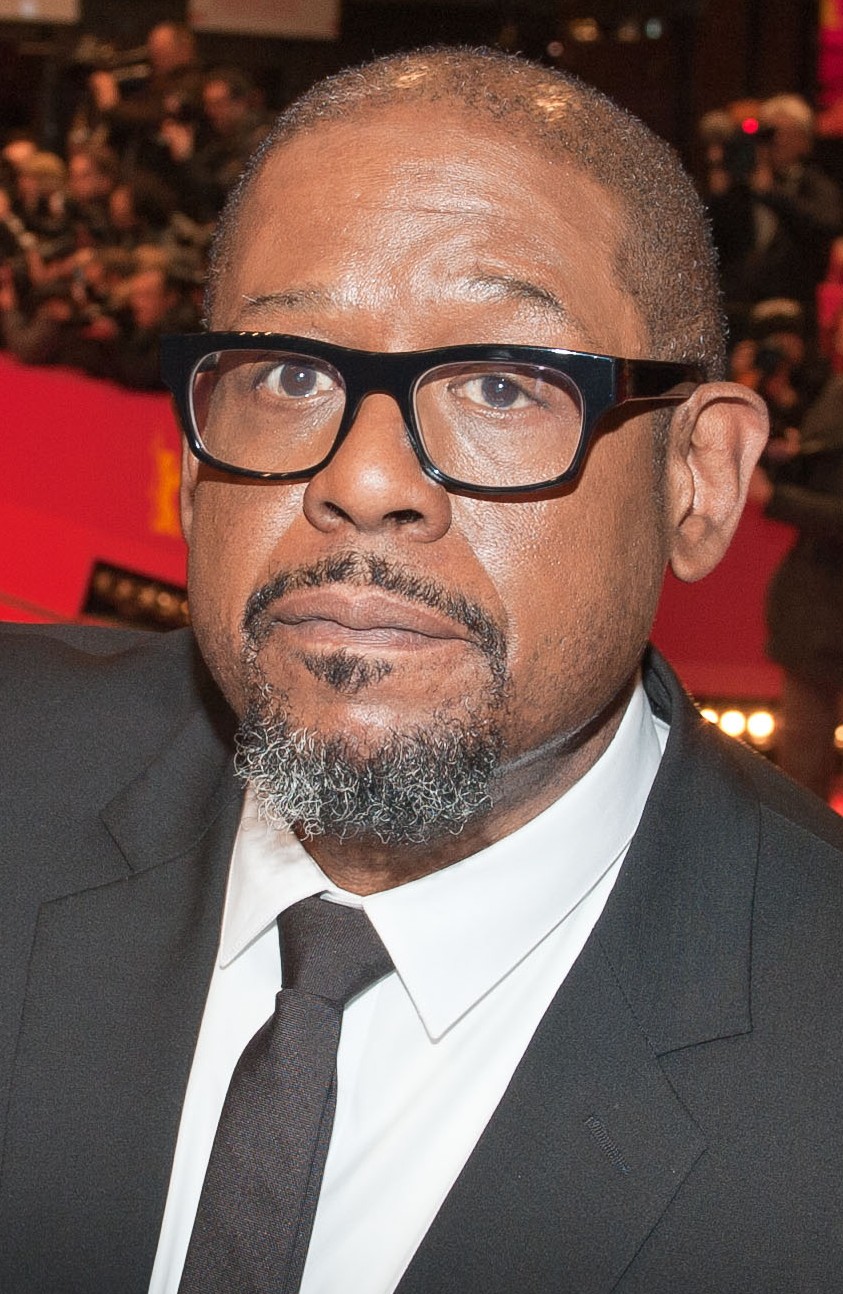
Then, in 1999, came one of the strangest and most beloved roles of his career. In Ghost Dog: The Way of the Samurai, directed by the independent filmmaker Jim Jarmusch, Whitaker played a solitary urban hitman who lives according to the ancient code of the samurai, communicating with his mob employers by carrier pigeon and reading the classic text Hagakure as a kind of scripture. It was a role that could have collapsed into absurdity in lesser hands, but Whitaker gave it such gravity and inner peace that the film became a cult classic. The character remains one of the most quietly iconic figures in American independent cinema.
Around the same period, Whitaker expanded his ambitions behind the camera. He moved into directing with real success, helming the 1995 ensemble drama Waiting to Exhale, adapted from Terry McMillan’s bestselling novel and featuring Whitney Houston and Angela Bassett. The film was a major commercial hit and a milestone for stories centered on Black women’s friendships and inner lives. He followed it in 1998 with Hope Floats, a romantic drama starring Sandra Bullock. These were not vanity projects. They proved that Whitaker understood storytelling from every angle, that he could shape a tone, guide other actors, and deliver a film that connected with a wide audience. Few performers of his generation moved so fluidly between acting and directing.
The Last King of Scotland and the Oscar
Every great career seems to contain one role that gathers everything the artist has learned and pours it into a single, unforgettable performance. For Forest Whitaker, that role was Idi Amin.
In the 2006 film The Last King of Scotland, directed by Kevin Macdonald, Whitaker played the Ugandan dictator who seized power in a 1971 coup and ruled through a reign of terror until 1979. The story is told largely through the eyes of a fictional young Scottish doctor who becomes Amin’s personal physician and is slowly drawn into the horror behind the charm. The device works only if the man at the center is magnetic enough to seduce the doctor and the audience alike, and then terrifying enough to make the betrayal land with full force. Whitaker delivered both.
His preparation was total. He spent time in Uganda, studied recordings of Amin, learned to speak Swahili, worked on the dictator’s distinctive accent and bearing, gained weight to match the man’s imposing frame, and met with people who had lived through those years, including some who had known Amin personally and others who had survived his atrocities. He wanted the performance to honor the real suffering behind the history rather than reduce it to spectacle. What emerged on screen was not an impression but a full human portrait, a man by turns playful, paranoid, charismatic, and monstrous. Audiences left the theater unsettled by how much they had almost liked him before the mask slipped, and critics praised the fearlessness of an actor willing to make a villain so disturbingly understandable.
The performance swept through the 2007 awards season like few before it. Whitaker won the Golden Globe, the Screen Actors Guild Award, the BAFTA, and a long list of critics’ prizes, and on 25 February 2007 he capped the run by winning the Academy Award for Best Actor. In doing so he became only the fourth Black man to win that category, following in a lineage that includes Sidney Poitier, Denzel Washington, and Jamie Foxx. His acceptance speech was humble and heartfelt, grounded in gratitude for his family and his roots, and it marked the moment when a respected working actor became, formally and forever, an Academy Award winner.
“I want to live life and be filled up by life, and I want to seek out the humanity in every character, because I think that’s what connects us all.”
Later Career and Humanitarian Work
An Oscar can tempt an actor to coast. Whitaker did the opposite, continuing to take varied and demanding roles while deepening a parallel life devoted to peace.
On screen, he remained a vital presence in major films. In 2013 he played Cecil Gaines, a White House butler who serves across decades of American history, in Lee Daniels’ The Butler, a sweeping drama about the civil rights era and the dignity of service. The role let him carry a film across a lifetime of change, aging from youth to old age and embodying a quiet witness to the nation’s struggles.
He also became part of two of the biggest franchises in modern cinema. In 2016 he appeared in Rogue One: A Star Wars Story as Saw Gerrera, a battle-scarred rebel extremist whose fanaticism complicates the fight against the Empire. Then in 2018 he took on the role of Zuri, the trusted elder and keeper of tradition, in Marvel’s cultural phenomenon Black Panther, directed by Ryan Coogler. The film became one of the most important releases of its decade, a celebration of African identity and imagination that broke box-office records and reshaped what a blockbuster could be. Whitaker’s warm, grounding presence helped anchor its emotional core.
Yet it is away from the camera that Whitaker may be building his most lasting legacy. He founded the Whitaker Peace and Development Initiative, an organization devoted to working with young people in communities torn by conflict, helping them become leaders and mediators rather than casualties. The initiative has run programs in places such as South Sudan, Uganda, and areas affected by gang violence in the United States and Mexico, training youth in conflict resolution, education, and reconciliation.
His commitment was recognized at the highest international level when the United Nations cultural agency, UNESCO, named him a Special Envoy for Peace and Reconciliation. In that role he has advocated for education, dialogue, and the rebuilding of trust in fractured societies. He has carried this work with the same seriousness he brings to a film, treating peace not as a photo opportunity but as a discipline that demands presence, patience, and humility. For Whitaker, the artistry of listening that made him a great actor turned out to be the same skill that makes a good peacebuilder.
He has described this second calling as a natural extension of the first. Acting, he has suggested, is fundamentally an act of empathy, the effort to understand how another person sees the world, and reconciliation requires that same imaginative leap on a larger scale. In interviews he has spoken about wanting his children and the young people he mentors to inherit a world where differences are met with curiosity rather than fear. Whether sitting with former child soldiers in South Sudan or encouraging teenagers in Los Angeles to choose dialogue over retaliation, he brings the full attention that audiences have come to recognize on screen. The work is slow and the results are rarely dramatic, but Whitaker has said repeatedly that lasting change is built one relationship at a time, and he appears content to measure his impact in patience rather than headlines.
Career Timeline
- 1982: Makes his notable film debut in the teen comedy Fast Times at Ridgemont High.
- 1986 to 1987: Appears in the acclaimed war dramas Platoon and Good Morning, Vietnam, raising his profile in major studio films.
- 1988: Stars as jazz legend Charlie Parker in Clint Eastwood’s Bird and wins Best Actor at the Cannes Film Festival.
- 1992: Earns praise for his role in Neil Jordan’s The Crying Game.
- 1995: Directs the hit ensemble drama Waiting to Exhale, followed by Hope Floats in 1998.
- 1999: Plays the title role in Jim Jarmusch’s cult film Ghost Dog: The Way of the Samurai.
- 2006 to 2007: Transforms into Idi Amin for The Last King of Scotland and wins the Academy Award for Best Actor.
- 2013: Stars as Cecil Gaines in Lee Daniels’ The Butler.
- 2016 to 2018: Joins blockbuster franchises as Saw Gerrera in Rogue One and Zuri in Black Panther.
Lesser-Known Facts
- He trained as a musician before an actor. Whitaker studied voice and operatic singing at the University of Southern California, and his deep love of jazz informed his career-defining turn as Charlie Parker.
- Cannes crowned him before Hollywood did. His performance in Bird earned him the Best Actor prize at the 1988 Cannes Film Festival, nearly two decades before his Oscar.
- He is an accomplished director and producer. Beyond acting, he directed Waiting to Exhale and Hope Floats and has produced numerous film and television projects.
- He serves as a UNESCO Special Envoy. The United Nations cultural agency named him a Special Envoy for Peace and Reconciliation in recognition of his conflict-resolution work.
- He founded a peacebuilding organization. The Whitaker Peace and Development Initiative trains young leaders in conflict-affected regions, including South Sudan and Uganda.
- His drooping eyelid is a medical condition. Whitaker’s distinctive left eye is the result of ptosis, a congenital condition that causes the eyelid to droop, and it has become one of his most recognizable features.
Frequently Asked Questions
Who is Forest Whitaker? Forest Whitaker is an American actor, director, producer, and humanitarian, born in 1961 in Longview, Texas. He is regarded as one of the most versatile performers of his generation and is also an active peace advocate who works with young people in conflict-affected communities.
What did Forest Whitaker win an Oscar for? Whitaker won the Academy Award for Best Actor in 2007 for his portrayal of Ugandan dictator Idi Amin in the 2006 film The Last King of Scotland. The role also earned him the Golden Globe, the BAFTA, and the Screen Actors Guild Award.
Is Forest Whitaker a director? Yes. In addition to acting, Whitaker has directed feature films, including the successful 1995 drama Waiting to Exhale and the 1998 film Hope Floats. He has also worked extensively as a producer.
What is his humanitarian work? Whitaker founded the Whitaker Peace and Development Initiative, which trains young people in conflict resolution and leadership in regions such as South Sudan and Uganda. He also serves as a UNESCO Special Envoy for Peace and Reconciliation.
What was his breakout role? His breakout role came in 1988 when he played jazz saxophonist Charlie Parker in Clint Eastwood’s Bird, a performance that won him the Best Actor award at the Cannes Film Festival and established him as a major talent.
Legacy
Forest Whitaker’s legacy rests on a simple but rare quality: honesty. In an industry that often rewards the big gesture and the familiar face, he has built a career on disappearing, on serving the character and the story rather than his own image. From Charlie Parker to Idi Amin, from the lonely philosopher of Ghost Dog to the gentle elder of Black Panther, he has shown an almost limitless capacity to become someone else and to make that someone fully, achingly human.
That artistry has earned him a place among the finest actors of his era, and his historic Oscar win opened doors and reshaped expectations for Black performers in leading dramatic roles. Younger actors routinely cite his range and his dedication as a model for what the craft can be.
Yet his deepest legacy may lie beyond the screen entirely. By devoting himself to peace and to the education of young people in some of the world’s hardest places, Whitaker has insisted that an artist’s responsibility does not end when the cameras stop. He has used the attention his talent earned him to amplify voices that are rarely heard and to invest in a future that most of us will never see. In doing so he has defined a fuller kind of success, one measured not only in awards but in lives steadied and communities rebuilt. Forest Whitaker set out to understand people, and he never stopped. That search, patient and generous and unceasing, is the thread that runs through everything he has made, on screen and off.