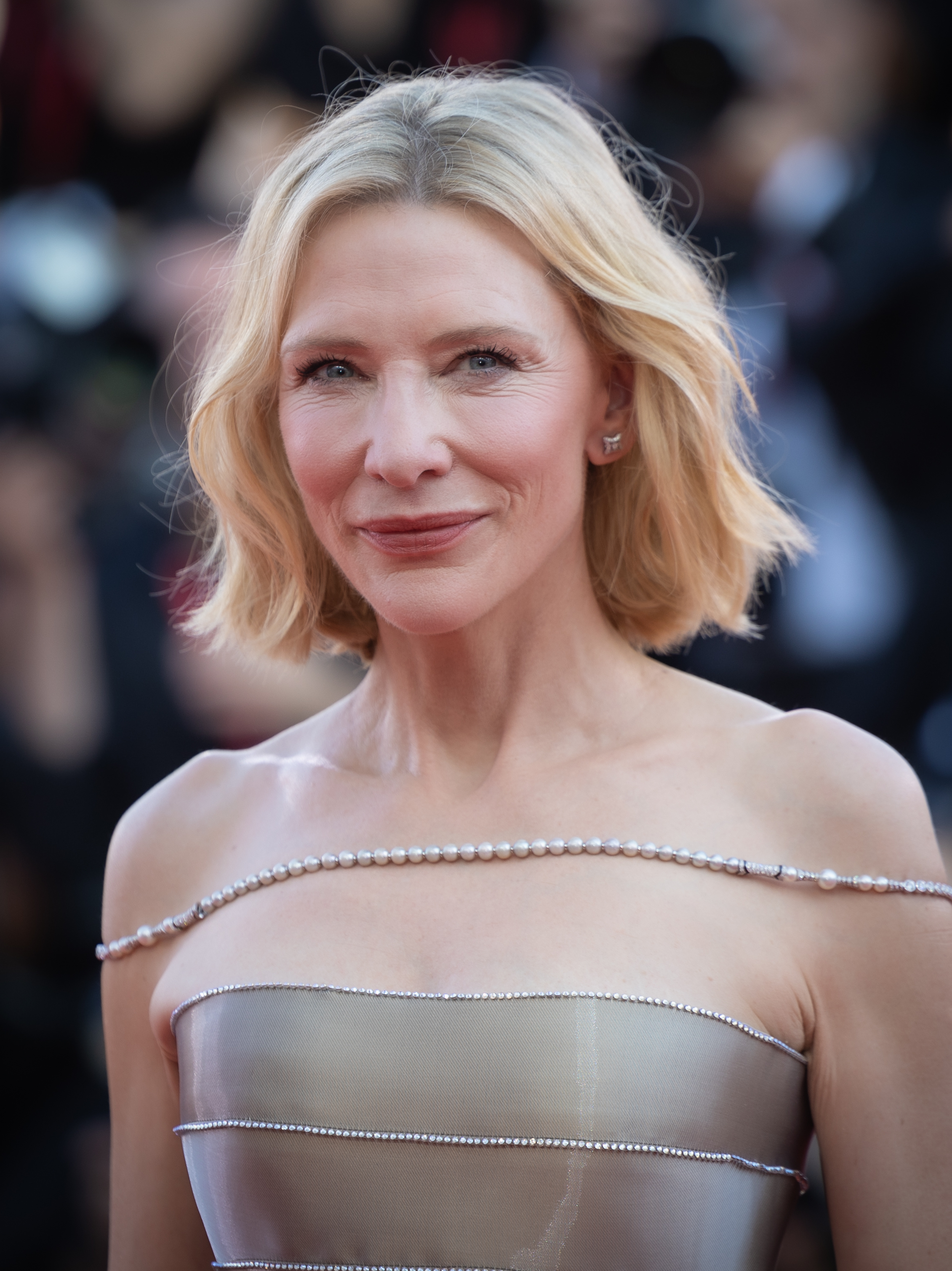
There is a particular kind of acting talent that does not announce itself loudly. Cate Blanchett belongs to a tradition of performers who achieve their effects through subtraction rather than addition, who find the character by stripping away rather than piling on, who make the audience forget that a performance is happening at all. She has won two Academy Awards across two completely different categories, played characters spanning centuries and continents, run one of the world’s great theatre companies, and returned to the stage repeatedly even when she could have settled comfortably into film stardom. What makes her singular is not ambition alone, though she has plenty of that, but a specific quality of intelligence combined with physical courage and an appetite for difficulty that few performers can match. To understand how she arrived at this position requires going back to Melbourne in the 1960s, to a childhood interrupted by loss, and to a series of choices that looked unconventional at the time and turned out to be exactly right.
Quick Facts
- Full name
- Catherine Élise Blanchett
- Born
- 14 May 1969, Melbourne, Victoria, Australia
- Nationality
- Australian
- Known for
- "Elizabeth" (1998), "The Lord of the Rings" trilogy, "The Aviator" (2004), "Blue Jasmine" (2013), "Tár" (2022)
- Awards
- Two Academy Awards (Best Supporting Actress 2005, Best Actress 2014), three BAFTA Awards, three Screen Actors Guild Awards
Early Life in Melbourne
Catherine Élise Blanchett was born on 14 May 1969 in Hawthorn, a leafy suburb of Melbourne, Victoria, Australia. Her father, Robert DeWitt Blanchett Jr., was a Texas-born advertising executive who had come to Australia for work and decided to stay. Her mother, June Gamble, was Australian, a teacher and later a property developer. Cate was the middle child of three, with an older brother named Robert and a younger sister named Genevieve. The family lived comfortably in Melbourne, and her early childhood was, by her own account, happy and largely unremarkable in the way that childhoods can be unremarkable while still building the foundations of everything that comes later.
The defining event of her childhood came when she was ten years old. Her father died suddenly of a heart attack while on a family holiday in the United States. He was 40 years old. The loss was devastating for all three children, and it fell to June Blanchett to raise them as a single mother. June was a formidable woman who held the family together with considerable determination, and Cate absorbed from her mother a quality of self-sufficiency and forward motion that would characterise her entire career. There was no wallowing. There was grief, certainly, but there was also the understanding that life required engagement and effort regardless of what had been taken away.
Her schooling took her through Ivanhoe Girls’ Grammar School and then to Methodist Ladies’ College, where she was, by accounts of teachers and classmates, an alert and curious student rather than an obvious performer. She was interested in economics. She was interested in art. She was not, at that stage, particularly associated with acting, though she had been in school productions and had shown a natural ease on stage that her teachers noticed without anyone fully predicting what it would become. She left school at seventeen and spent a year or so working and travelling before returning to Australia to begin a degree in economics at Melbourne University.
The economics degree did not last. She tried it briefly, found it did not ignite her in the way she needed to be ignited, and transferred to the National Institute of Dramatic Art (NIDA) in Sydney, one of Australia’s most rigorous and respected drama schools. The decision alarmed some people around her and made perfect sense to her. She had been carrying something for years and now she had found the place to put it.
Training at NIDA and the Theatre Years
The National Institute of Dramatic Art sits on the grounds of the University of New South Wales in Sydney, and its three-year program is demanding in the way that serious conservatory training tends to be demanding: total immersion, physical and vocal training, classical text work, modern plays, ensemble work, and the relentless pressure to find out what you can actually do rather than what you think you can do. Blanchett entered NIDA in 1988 and graduated in 1992. By the time she left, she had acquired not just technique but a genuine philosophy of acting: that the job was to serve the work, that the actor’s ego was an obstacle rather than an instrument, that transformation was possible and was in fact the point.
During and immediately after her NIDA training, she worked extensively in Australian theatre. She joined the Sydney Theatre Company and worked with directors who were pushing the form in interesting directions. She played a remarkable range of parts: classical heroines, contemporary women, comic characters, tragic ones. Her capacity to shift physically and vocally from role to role became apparent very quickly to the directors who worked with her. She was not simply a beautiful woman who could act. She was an actor who happened to be beautiful and who treated her beauty as a tool among other tools rather than as her primary asset.
Her stage work in Australia during the first half of the 1990s built her a serious reputation in theatre circles, though she was not yet widely known beyond Australia’s theatrical community. She worked with director Neil Armfield, who became an important creative ally. She appeared in productions ranging from Chekhov to David Mamet. She developed the range and the stamina that would later allow her to carry enormous films on her shoulders without apparent effort. The work was not glamorous in the conventional sense. It was the kind of foundational work that turns a talented student into a genuine artist.
Her television and film work during this period was limited but noteworthy. She appeared in Australian television productions and had a supporting role in the 1997 film “Oscar and Lucinda,” directed by Gillian Armstrong and based on Peter Carey’s Booker Prize-winning novel. Ralph Fiennes played the male lead. The film introduced her to a wider audience outside Australia and demonstrated that her stage skills translated beautifully to the camera’s intimate scrutiny.
Breakthrough: Elizabeth and the Sudden Arrival of Global Fame
The film that changed everything arrived in 1998. “Elizabeth,” directed by Shekhar Kapur and written by Michael Hirst, told the story of the early years of Elizabeth I’s reign, the violence and instability that surrounded her accession, and the transformation of a young woman uncertain of her power into the formidable monarch who would come to define an era. The role required an actor who could convey vulnerability and steel simultaneously, who could suggest the private person beneath the public mask, who could carry enormous scenes of political tension without relying on the conventional tools of melodrama. Blanchett was 28 when she took the role. She was not yet widely known outside Australia.
What she did with Elizabeth I announced to the world that someone new and extraordinary had arrived. Her performance was precise where it needed to be precise and wild where wildness was required. She played youth, fear, desire, betrayal, grief, and the slow hardening into something that sacrificed personal happiness for historical consequence, and she made each of these states feel genuinely inhabited rather than portrayed. The film was a commercial success, taking over $30 million in the United States alone against a budget of approximately $25 million, and a critical sensation. Blanchett received her first Academy Award nomination for Best Actress. She was 29 years old.
The nomination brought her to Hollywood’s attention in a way that no amount of carefully managed career strategy could have manufactured. She was offered major roles in major films almost immediately, and her choices in the years following “Elizabeth” revealed the kind of actor she intended to be: someone who would not settle into a type or a lane, who would work with the best directors available regardless of the scale of the project, who would take on work that frightened her.
“The thing I love about film is that you get to visit other people’s lives. You get to walk in their shoes for a while and see the world from an entirely different angle. Acting, for me, has always been about that kind of empathy.”
The Lord of the Rings and Hollywood Dominance
In 2001, she appeared as Galadriel in Peter Jackson’s “The Lord of the Rings: The Fellowship of the Ring,” the first film in what would become one of the most successful trilogies in cinema history. The Galadriel role was, in terms of screen time, relatively brief across the trilogy, but its impact was disproportionate to its length. Blanchett played the ancient elf queen with an otherworldly serenity that occasionally cracked open to reveal something ancient and frightening beneath, and the sequence in which Galadriel is tempted by the One Ring became one of the most discussed scenes in modern fantasy cinema. She returned to the role in Peter Jackson’s “The Hobbit” trilogy as well, appearing in a storyline that expanded considerably beyond Tolkien’s source novel.
While the Tolkien films established her with mainstream audiences who might not have sought out “Elizabeth” or her theatre work, she was simultaneously building a body of work in more demanding territory. In 2001, she appeared alongside Billy Bob Thornton in Sam Raimi’s “The Gift,” playing a clairvoyant widow in a Southern Gothic thriller that allowed her to do something quite different from Galadriel’s ethereal distance. The contrast was not accidental. She was making it clear, early, that no single kind of role would define her.
In 2004, Martin Scorsese cast her as Katharine Hepburn in “The Aviator,” his epic biography of Howard Hughes starring Leonardo DiCaprio. Playing Hepburn, one of the most instantly recognisable performers in Hollywood history, could easily have become an exercise in impersonation, a technical display disconnected from genuine character work. Instead, Blanchett found the specific Hepburn of the 1930s and 1940s, the young woman from Connecticut with the sharp intelligence and unconventional beauty and absolute refusal to be managed. The performance won her the Academy Award for Best Supporting Actress, her first Oscar. The film itself grossed over $213 million worldwide.
The Hepburn win was a critical and commercial validation, but it was the work she was doing simultaneously and in the years following that demonstrated the true range. In 2004, she appeared in “The Life Aquatic with Steve Zissou,” Wes Anderson’s idiosyncratic comedy, and in Walter Salles’s “The Motorcycle Diaries” as a supporting presence. In 2006, she appeared in Alejandro González Iñárritu’s “Babel,” an interconnected drama that won the Palme d’Or at Cannes. In 2007, she reprised her role as Elizabeth I in “Elizabeth: The Golden Age,” the sequel to Shekhar Kapur’s original film, and played the villain in “Notes on a Scandal” alongside Judi Dench, earning yet another Academy Award nomination, this time in the Best Supporting Actress category.
Running the Sydney Theatre Company
In 2008, Blanchett and her husband, playwright and screenwriter Andrew Upton, took on the co-artistic directorship of the Sydney Theatre Company, one of Australia’s most important cultural institutions. The decision surprised many people in Hollywood, where her trajectory suggested she was on the verge of full leading-lady status and could command almost any project she chose. Returning to Australia to run a theatre company seemed, to those who viewed acting primarily through the lens of Hollywood stardom, like a step sideways or even backwards.
To Blanchett it was anything but. Her years at the STC, which ran from 2008 to 2013, were among the most artistically satisfying of her career. She and Upton revitalised the company’s programming, bringing in international directors and productions, prioritising new Australian work, and building a reputation for work that was both accessible and genuinely challenging. She performed on stage regularly, including in a production of “A Streetcar Named Desire” in which she played Blanche DuBois and which transferred to the Kennedy Center in Washington D.C. and to the Brooklyn Academy of Music in New York, bringing Australian theatre to American audiences who responded with enormous enthusiasm.
The STC years did something for her that constant film work alone could not have done. They kept her connected to the live, unmediated reality of performance, to the risks and the failures and the discoveries that happen only when there is no second take and no editing room. They reinforced her belief that acting was a craft before it was a career, and they gave her a perspective on the film industry that helped her continue making interesting choices rather than simply lucrative ones.
During this period she continued to make films that mattered. In 2008 she appeared in David Fincher’s “The Curious Case of Benjamin Button” alongside Brad Pitt, playing a character who ages normally while Pitt’s Benjamin grows progressively younger. The film grossed over $333 million worldwide and was nominated for thirteen Academy Awards. In 2009, she appeared in Ridley Scott’s “Robin Hood” in a small but striking role as Lady Marian.
Blue Jasmine and the Second Oscar
The performance that earned Blanchett her second Academy Award, this time for Best Actress, came in 2013 with Woody Allen’s “Blue Jasmine.” The film was Allen’s most serious dramatic work in decades, a loose reworking of Tennessee Williams’s “A Streetcar Named Desire” relocated to contemporary New York and San Francisco. Blanchett played Jasmine French, a Manhattan socialite whose world collapses after her husband (played by Alec Baldwin) is exposed as a fraudster and sent to prison. Jasmine descends from wealth and social status to dependency and psychological breakdown, and the film follows her in this process with a mercilessness that Allen rarely brought to his material.
The performance was extraordinary and difficult to describe precisely because it worked on so many levels simultaneously. Blanchett had to play a character who was deluded, self-destructive, and frequently unsympathetic, while keeping the audience’s emotional investment alive through the sheer specificity of the psychological detail she brought to every scene. She played Jasmine’s anxiety, her snobbery, her self-deception, and her genuine grief as layered and interconnected, never reducing the character to a type. The result was one of the most complete and complex performances in American cinema of the 2010s.
“Blue Jasmine” grossed over $97 million worldwide against a budget of approximately $18 million. The critical response was dominated by discussion of Blanchett’s performance. She won the Academy Award for Best Actress, the BAFTA for Best Actress, the Screen Actors Guild Award for Outstanding Performance by a Female Actor in a Leading Role, and the Golden Globe for Best Actress in a Drama. She had now won Academy Awards in both the Supporting and Leading Actress categories, joining a very short list that includes Meryl Streep, Helen Hayes, and Jack Nicholson in the equivalent male category.
Marvel, Tár, and Later Career
In 2017, Blanchett entered the Marvel Cinematic Universe as Hela, the goddess of death and the primary villain in Taika Waititi’s “Thor: Ragnarok.” The MCU appearance brought her to an audience demographic she had not fully reached before, and she approached the role with the same seriousness she brought to Woody Allen or Shekhar Kapur. Hela became one of the more memorable Marvel villains precisely because Blanchett refused to play her as simply a power-hungry antagonist. There was something ancient and genuinely wounded in her interpretation, a god who had been erased from history and was enacting a very old and very cold vengeance.
In 2018, she appeared in Steven Soderbergh’s “Ocean’s Eight,” an all-female reboot of the Ocean’s franchise alongside Sandra Bullock, Rihanna, Anne Hathaway, and Helena Bonham Carter. The film was a commercial success, grossing over $297 million worldwide. In 2020, she appeared in Guillermo del Toro’s “Nightmare Alley” alongside Bradley Cooper, playing a psychiatrist with her own complicated agenda in a neo-noir thriller that was among the more under-seen films of that year.
The role that positioned her again at the centre of global conversation about acting came in 2022 with Todd Field’s “Tár.” Blanchett played Lydia Tár, a fictional conductor who is the first woman to lead a major German orchestra and who is undone by an accumulating series of accusations about her past behaviour. The film was a portrait of ego, institutional power, and the price of artistic ambition, and it demanded an actor who could persuade the audience that Lydia Tár was a real person of genuine genius rather than a convenient symbol. Blanchett spent months learning to conduct, studying German, and building the physical and intellectual life of a character who exists only on the page. The result was another performance that divided no serious critic. She received her seventh Academy Award nomination, her third for Best Actress, and won essentially every other major award the season had to offer.
Personal Life and Broader Commitments
Blanchett met Andrew Upton in 1996 at a party in Sydney. He was already an established playwright and screenwriter. They married in 1997 after a whirlwind courtship that both have described as immediately obvious and right. They have three biological sons: Dashiell John (born 2001), Roman Robert (born 2004), and Ignatius Martin (born 2008), and in 2015 they adopted a daughter, Edith Vivian Patricia Upton. The family divided their time for years between Sydney and Sussex in England, and their ability to maintain a genuinely private family life amid intense public scrutiny has been one of the more remarkable aspects of their story.
Beyond acting, Blanchett has been a serious advocate for climate change action and for gender equity in the film industry. She served as a Goodwill Ambassador for the United Nations High Commissioner for Refugees (UNHCR) for many years, work that took her to refugee camps in Lebanon, Jordan, and Thailand and that she has described as among the most important things she has done outside her professional life. In 2018, she was among the most prominent signatories to an open letter calling for gender equity in the European film industry, and she used her platform at the Cannes Film Festival that year, where she served on the jury, to make the point publicly and specifically.
Her relationship with Australia as a cultural identity has remained strong and somewhat defiant. She has consistently chosen to be based partly in Australia even at career stages when the conventional wisdom would have suggested that permanent relocation to Los Angeles was necessary. She has argued, in various interviews, that distance from Hollywood’s particular atmosphere is useful rather than limiting, that it preserves a certain independence of perspective that matters for the work.
Legacy
Cate Blanchett’s place in cinema history is secure and in some respects peculiar, in that she represents a kind of acting excellence that resists easy categories. She is not primarily a movie star in the classical sense, though she has starred in films that grossed hundreds of millions of dollars. She is not primarily an art-house actress, though she has done some of the most intellectually demanding work in contemporary cinema. She is, more than anything, an actor’s actor who has managed to operate at the highest levels of commercial and artistic filmmaking simultaneously without sacrificing either.
The two Academy Awards across two categories are exceptional. The sustained quality across more than two decades is more exceptional still. Most careers have a peak followed by a gradual decline in the quality of material available. Blanchett has not shown this pattern. Her later work, including “Tár,” is in many respects more interesting than her earlier work, not because her earlier work was weak but because her later work demonstrates what happens to a great talent given time and experience and the confidence to attempt very difficult things.
She has changed what is possible in film acting for women, not through a single gesture or a single role but through accumulation. Through playing queens and villains and socialites and conductors and elves, through refusing to be domesticated by success or by genre, through insisting that the work was always the point and that the work required constant risk, she made a body of work that will be studied and discussed for as long as cinema is studied and discussed.
Key Facts
- Cate Blanchett is one of only six performers ever to win Academy Awards in both the Supporting and Leading acting categories.
- She ran the Sydney Theatre Company alongside her husband Andrew Upton from 2008 to 2013, making her one of the very few major film stars to lead a national theatre company mid-career.
- Her portrayal of Katharine Hepburn in “The Aviator” (2004) is widely cited by other actors as a benchmark for biographical performance, for capturing essence rather than resorting to surface impersonation.
- She received seven Academy Award nominations across a 25-year period, placing her among the most-nominated actors in Oscar history.
- For “Tár” (2022), she spent approximately six months learning orchestral conducting to a standard sufficient for the film’s lengthy and technically detailed performance sequences.