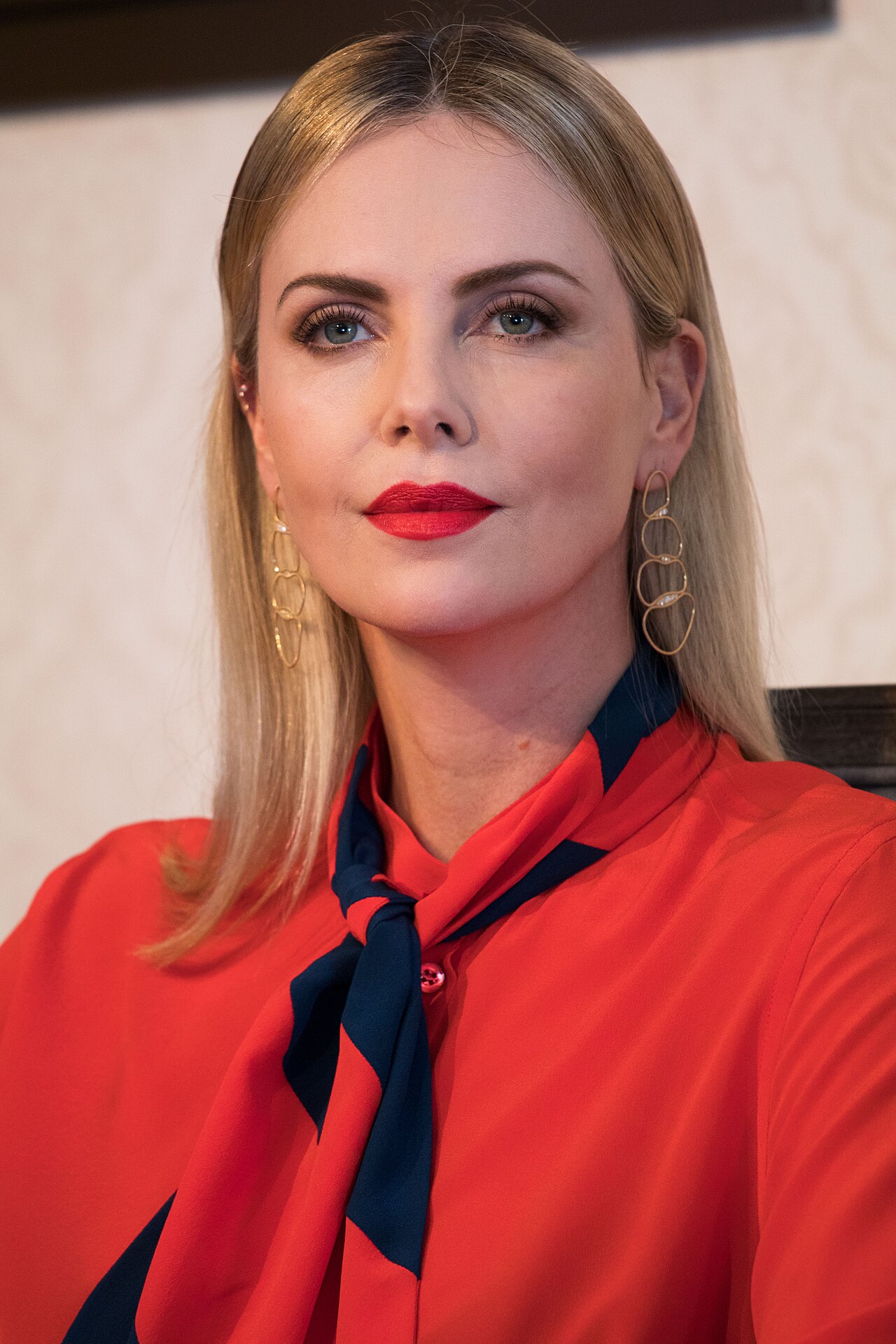
When Charlize Theron stepped onto the stage at the Kodak Theatre in February 2004 to accept the Academy Award for Best Actress, the woman holding the golden statue looked nothing like the character that had won it for her. The role was Aileen Wuornos, a haunted, brutalised drifter who became one of America’s most notorious killers. To play her, Theron had buried her own beauty under prosthetic teeth, thinned eyebrows, blotched skin and roughly fifteen extra kilograms. The contrast between the radiant figure at the podium and the broken person on screen told the whole story of who Charlize Theron is as an actress: a performer willing to vanish entirely into a part, no matter the cost to vanity or comfort.
Quick Facts
- Full name
- Charlize Theron
- Born
- 7 August 1975, Benoni, South Africa
- Nationality
- South African and American
- Known for
- Monster, Mad Max: Fury Road, Atomic Blonde, Bombshell
- Awards
- Academy Award for Best Actress (2004, Monster)
Her path to that podium was anything but ordinary. She came from a farm outside a mining town near Johannesburg, survived a night of family violence that would have crushed most people, lost her first dream to a physical injury, and was discovered almost by accident in a bank queue. The story of Charlize Theron is a story of reinvention repeated again and again, of a woman who refused to be defined by tragedy, by her looks, or by the limits Hollywood tried to set for her.
Early Life
Charlize Theron was born on 7 August 1975 in Benoni, a town on the East Rand of the old Transvaal, in what was then apartheid South Africa. She grew up on her family’s farm in the nearby area, an only child raised in an Afrikaner household where Afrikaans, not English, was her first language. Her parents, Charles and Gerda Theron, ran a road construction business, and the young Charlize spent her early years amid the wide skies and hard physical world of the South African veld.
Her name was chosen in honour of her father, a small linguistic thread that would later carry painful weight. Charles Theron struggled with alcohol, and the household around Charlize grew increasingly unstable as his drinking worsened. The violence and tension that alcohol brought into the home formed the backdrop of her childhood, and it culminated in a single catastrophic night that she would carry for the rest of her life.
On 21 June 1991, when Charlize was fifteen years old, her father came home drunk and enraged. Along with her brother, he opened fire on the house, shooting through the door of the room where Charlize and her mother were sheltering. Gerda Theron, defending herself and her daughter, fired back with a handgun and killed Charles. The shooting was ruled to have been an act of self-defence, and Gerda faced no charges. Theron has spoken about that night with remarkable candour over the years, refusing to let it become a secret that defined her in shame. She has been clear that she does not carry the trauma as a wound she hides but as part of a truth she has accepted, and she has consistently described her mother as the strongest person she knows and the one who taught her how to survive.
Long before that night, Charlize had found refuge in movement and discipline. She began training in ballet as a girl, and dance gave her structure, ambition and a sense of where her future might lie. As a teenager she attended a boarding school in Johannesburg, and she imagined a life in the great ballet houses of Europe. Dance was not a hobby for her but a serious calling, and it shaped the physical control and presence that would later serve her so well on screen.
From Modelling to Acting
Theron’s first ticket out of South Africa came not through ballet but through modelling. At the age of sixteen she entered and won a local modelling contest, a victory that opened doors she had not expected. The prize carried her into the international fashion world, and she travelled to Italy and then across Europe, working as a model in Milan and other fashion capitals while still in her teens.
Modelling was a means rather than an end. Her real ambition remained dance, and she relocated to New York to continue pursuing it, gaining a place that would let her train seriously toward a professional ballet career. That dream collapsed under the weight of her own body. A knee injury, the kind of physical breakdown that ends so many dancers’ hopes, made it impossible for her to continue at the level she needed. The discipline she had built her identity around was suddenly gone, and at eighteen she found herself in a foreign country without a clear direction.
It was her mother, again, who pushed her forward. Gerda told her bluntly that she could not simply sit and mourn the life she had lost, and she encouraged Charlize to find a new path. With that prompting, Theron flew to Los Angeles, carrying little more than ambition and the toughness her upbringing had forced on her.
The story of her discovery has become Hollywood legend, and it is true. In early 1994, Theron went to a Hollywood bank to cash a cheque her mother had sent her. The teller refused to honour the out-of-state cheque, and Theron, frustrated and short on money, began arguing loudly. A talent manager named John Crosby happened to be standing in the same queue, and he was struck by her presence and her fierce energy. He gave her his card and helped connect her to acting classes and to the people who could put her in front of casting directors. The dancer with a ruined knee was about to become an actress.
Breakthrough
Theron’s early career in the mid 1990s was built one small part at a time. Her first roles were tiny, including a brief and uncredited appearance, but she worked steadily and learned her craft on the job, shedding her Afrikaans accent and absorbing the rhythms of American film acting. Her first notable screen credit came in the 1995 film “2 Days in the Valley,” where she played a striking and dangerous femme fatale that drew attention precisely because of how unafraid she seemed on camera.
From there the parts grew larger and the films more prominent. In 1997 she appeared opposite Keanu Reeves and Al Pacino in “The Devil’s Advocate,” directed by Taylor Hackford, playing the wife of an ambitious young lawyer who is slowly drawn into a supernatural nightmare. The role demanded emotional unravelling and vulnerability, and Theron held her own against two of the biggest stars in the business, signalling that she was more than a beautiful face hired for decoration.
The following years brought a run of high-profile work. In 1998 she starred in the Disney adventure “Mighty Joe Young,” a remake of the classic giant-ape film, playing a young woman protecting a gorilla from poachers. The same period saw her take on more serious dramatic material. In 1999 she appeared in “The Cider House Rules,” directed by Lasse Hallstrom and adapted from John Irving’s novel, a film that won Academy Awards and placed Theron within a prestigious ensemble. She also worked in films such as “The Astronaut’s Wife” and “The Legend of Bagger Vance,” building a resume that showed range but had not yet found the single role that would define her. Hollywood still tended to cast her for her looks, and she would later say that her beauty was, in a strange way, an obstacle that kept directors from imagining her in the grittiest and most demanding parts.
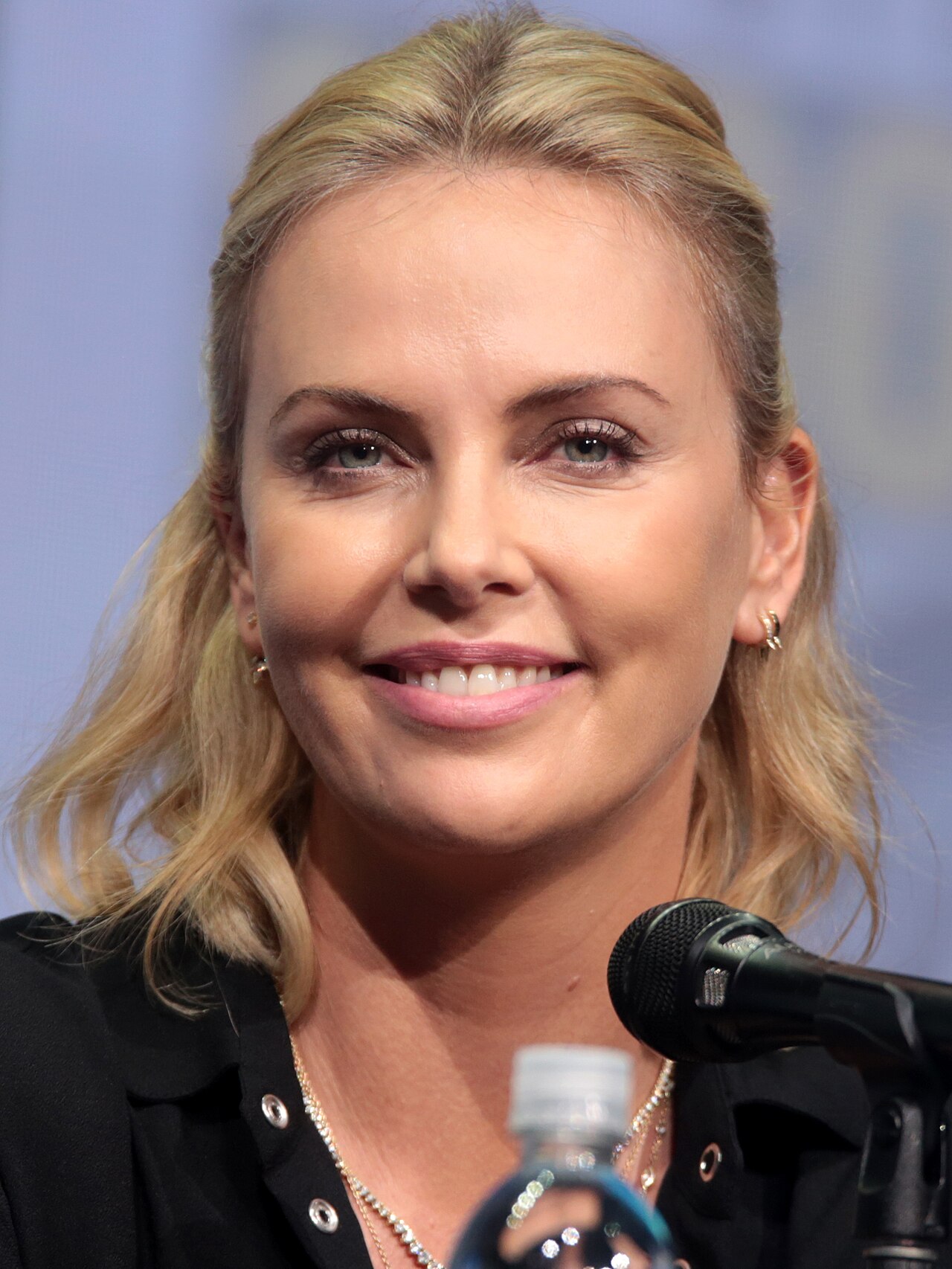
Monster and the Oscar
That obstacle shattered in 2003 with “Monster.” Written and directed by Patty Jenkins in her feature debut, the film told the story of Aileen Wuornos, a sex worker who killed several men in Florida and was eventually executed in 2002. It was a small independent production, but Theron threw herself into it with a ferocity that stunned everyone who saw the result. She gained roughly fifteen kilograms, wore prosthetic teeth, had her eyebrows thinned and her skin made blotchy, and she studied the real Wuornos until she could inhabit the woman’s wounded rage and desperate longing for love.
The transformation was not merely physical. What made the performance extraordinary was the emotional truth Theron found inside a character who was easy to dismiss as a monster. She played Wuornos’s relationship with Selby, a young woman portrayed by Christina Ricci, as a genuine and tender love story shadowed by violence, and she made an audience feel sympathy for a serial killer without ever excusing what she did. The film cost very little to make yet it became one of the most talked-about performances of the year.
Critics were overwhelmed. The veteran reviewer Roger Ebert famously called it one of the greatest performances in the history of cinema. The awards followed in a sweep. Theron won the Golden Globe for Best Actress in a Drama, the Screen Actors Guild Award, and then, on 29 February 2004, the Academy Award for Best Actress. At twenty-eight, she became the first South African to win an acting Oscar, a milestone that resonated powerfully in her home country.
“I think people make the mistake of thinking your circumstances dictate your life, and they don’t have to. There’s always a way through.”
In her acceptance speech she thanked her mother, the woman who had pushed her out of grief and toward a new life, and the moment became one of the most emotional of the night. The girl from the farm near Benoni now held the highest honour her profession could offer.
Range and Action Stardom
Rather than coast on her Oscar, Theron used it to keep stretching. In 2005 she starred in “North Country,” directed by Niki Caro, playing a mineworker who brings a landmark sexual harassment lawsuit against her employer. Once again she submerged herself in a hard, working-class world far from glamour, and the performance earned her a second Academy Award nomination for Best Actress, confirming that “Monster” had been no fluke. She also took on a strong supporting role in films around this period and continued to seek out parts with weight and difficulty.
The most surprising chapter of her career came in 2015, when she reinvented herself as one of cinema’s great action heroes. In George Miller’s “Mad Max: Fury Road,” Theron played Imperator Furiosa, a one-armed warrior who steers a war rig across a post-apocalyptic wasteland to free a group of enslaved women. Shaven-headed, grease-streaked and fiercely physical, Furiosa dominated the film so completely that many viewers and critics treated her, rather than the title character, as its true protagonist. The movie was a critical triumph, won six Academy Awards in technical categories, and became a landmark of modern action filmmaking. Theron’s performance turned her into an icon for a new generation.
She leaned into this new identity with relish. In 2017 she starred in “Atomic Blonde,” directed by David Leitch, playing an MI6 agent operating in Cold War Berlin. The film was built around brutal, extended fight sequences, including a now-celebrated stairwell brawl shot to look like a single continuous take, and Theron performed the demanding physical work herself, training intensely and absorbing real injuries in the process. She also joined the blockbuster “Fast and Furious” franchise as the cyber-terrorist Cipher, appearing in “The Fate of the Furious” in 2017 and returning in later instalments as the series’ coolly menacing villain. Few actresses of her stature had so thoroughly remade themselves as a credible, bankable action star in their forties.
Producing and Later Work
Theron’s ambitions stretched beyond performing. In 2007 she co-founded the production company Denver and Delilah Productions, taking control of the kinds of stories she wanted to tell and creating opportunities for herself and others. She produced “Monster” partly out of necessity in its early form, and over the years her company developed and backed films including “Young Adult,” directed by Jason Reitman and written by Diablo Cody, in which she gave a fearless comic and dramatic performance as a self-destructive writer.
Her producing instincts and her appetite for transformation came together again in 2019 with “Bombshell,” directed by Jay Roach. Theron played the broadcaster Megyn Kelly in a drama about the sexual harassment scandal at Fox News, and her physical and vocal transformation into Kelly was so complete that audiences struggled to recognise her. She both produced the film and starred in it, and the performance earned her a third Academy Award nomination for Best Actress, along with further recognition from the industry’s awards bodies.
Theron also built a parallel career in voice and motion-capture work. She voiced characters in animated and family films, lent her presence to large franchises, and continued to explore action and science fiction in projects such as “The Old Guard” for Netflix, in which she played an immortal warrior leading a band of undying soldiers. That film became a major streaming success and spawned a sequel, showing that her draw extended naturally into the streaming era. Across producing, voice work and on-screen roles, she had become not just a star but a power player who shaped the projects she joined.
Activism and Personal Life
For all her professional reinvention, Theron has remained deeply tied to the country and the continent where she was born. In 2007 she established the Charlize Theron Africa Outreach Project, a foundation focused on the health and safety of young people in sub-Saharan Africa, with a particular emphasis on the prevention of HIV and AIDS. Having grown up in South Africa during the years when the epidemic devastated communities across the region, she made the cause personal, funding programmes that support adolescents and work to keep young people healthy, in school and protected from the disease.
Her humanitarian commitments earned international recognition. In 2008 she was named a United Nations Messenger of Peace, a role that allowed her to advocate on global stages for women’s rights, against violence, and for the communities her foundation serves. She has spoken often and openly about the realities of growing up amid both apartheid and domestic violence, using her own story to push for honest conversations about abuse and survival.
In her personal life, Theron has chosen motherhood on her own terms. She adopted a daughter named Jackson in 2012 and a second daughter named August in 2015, raising them as a single mother while continuing to work at the top of her field. She has been candid about the joys and challenges of parenting and protective of her children’s privacy and identities. She became a naturalised United States citizen in 2007 while remaining proudly South African, holding both nationalities and moving between the world of Hollywood and the country that shaped her.
Legacy
Charlize Theron’s legacy rests on a single, remarkable quality: her refusal to stand still. She arrived in America as a teenager with a ruined ballet career and a heavy past, and she could easily have settled into the comfortable lane Hollywood first offered her, playing beautiful women in glossy films. Instead she fought to be ugly, to be violent, to be old, to be unrecognisable, choosing the roles that frightened her over the ones that flattered her.
In doing so she expanded what a leading actress could be. She proved that an Oscar-winning dramatic performer could become a genuine action icon, that a woman in her forties could anchor a blockbuster franchise, and that physical transformation could be a tool of empathy rather than a stunt. As the first South African to win an acting Academy Award, she opened a door for performers from across Africa and showed that talent from the farms outside Benoni could stand at the very summit of world cinema. Through her foundation and her activism, she turned her fame into a force for the vulnerable young people of the continent she came from.
Her story is finally one of agency. The girl who survived the violence in her childhood home, who lost her first dream to injury, and who argued her way into being noticed in a Los Angeles bank, became a woman who controls her own image, produces her own films, and bends her career to her will. Charlize Theron remains one of the most fearless and unpredictable artists of her generation, and her best work feels less like the end of a story than the ongoing record of a person determined to keep transforming.
Key Facts
- Charlize Theron was born on 7 August 1975 in Benoni, South Africa, and grew up on a farm in an Afrikaans-speaking household, with Afrikaans as her first language.
- She was discovered by a talent manager in 1994 while arguing with a teller in a Hollywood bank, after a knee injury had ended her dream of a ballet career.
- Her transformative performance as serial killer Aileen Wuornos in “Monster” (2003) won her the Academy Award for Best Actress in 2004, making her the first South African to win an acting Oscar.
- She reinvented herself as an action star with roles including Furiosa in “Mad Max: Fury Road” (2015), the lead in “Atomic Blonde” (2017), and Cipher in the “Fast and Furious” films.
- Through the Charlize Theron Africa Outreach Project, founded in 2007, she has campaigned against HIV and AIDS in sub-Saharan Africa and serves as a United Nations Messenger of Peace.