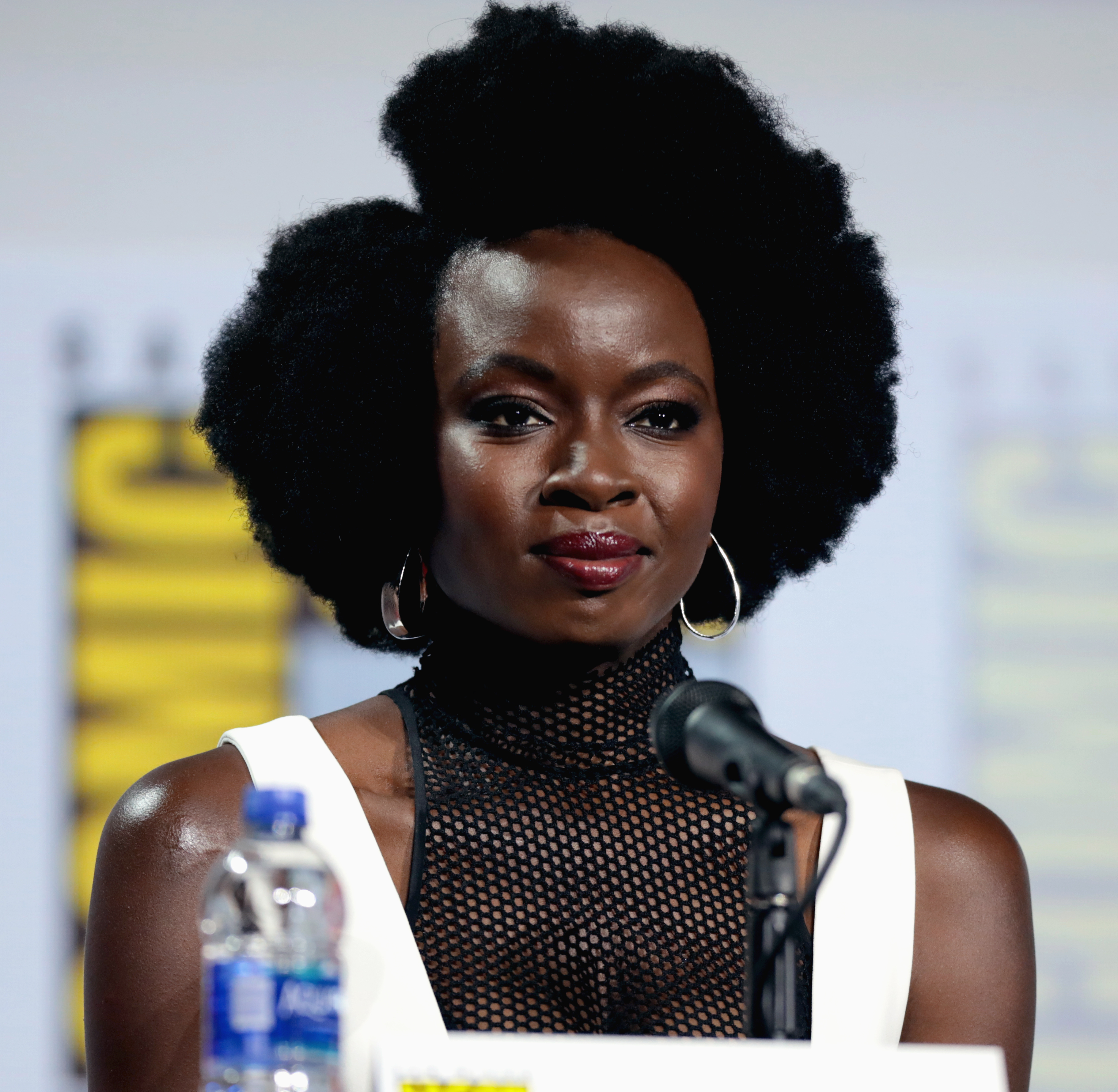
When Okoye stood before the throne of Wakanda, spear in hand and bald head held high, millions of viewers around the world understood in an instant that they were watching a new kind of hero. She was regal without being fragile, loyal without being subservient, deadly without ever losing her dignity. The woman who gave that character her spine and her fire was Danai Gurira, an artist who had spent years insisting that African women deserved to be seen as complex, powerful and fully human. What audiences did not always realize was that the actress commanding the screen was also a playwright of serious accomplishment, someone who wrote the very kinds of roles the industry had long refused to imagine. Gurira did not wait for permission to redefine the warrior woman. She built her out of research, memory, ancestry and craft, then she stepped into the light and played her.
Quick Facts
- Full name
- Danai Jekesai Gurira
- Born
- 14 February 1978, Grinnell, Iowa, USA
- Heritage
- Zimbabwean-American
- Known for
- Michonne in The Walking Dead; Okoye in Black Panther
- Also
- Award-winning playwright (Eclipsed, Familiar)
Early Life: Between Iowa and Harare
Danai Jekesai Gurira was born on 14 February 1978 in Grinnell, Iowa, the youngest of four children in a family with deep Zimbabwean roots. Her parents were living in the United States at the time. Her father, Josphat Gurira, was a chemistry professor, and her mother, Roselyn Gurira, worked as a university librarian. The family had left Rhodesia, as Zimbabwe was then known under white minority rule, during a period of political upheaval, and their years in the American Midwest were shaped by that history of displacement. Gurira spent her earliest childhood in Iowa, absorbing an American upbringing that would later sit alongside a very different set of memories.
When she was around five years old, the family moved back to Zimbabwe, which had won its independence in 1980. Gurira grew up in Harare, the capital, and it was there that she formed her most formative sense of herself. She was raised in a household that valued education, discipline and cultural pride, and she attended Dominican Convent School, a respected girls’ school in the city. Living in Zimbabwe as a girl who had been born in America gave her a doubled perspective from an early age. She was Zimbabwean, unmistakably so, yet she also carried the memory and the passport of another country, and this sense of belonging to two places at once would become one of the great themes of her creative life.
Harare in the 1980s and 1990s was a city finding its footing as the capital of a newly independent nation, and Gurira came of age surrounded by the languages, rhythms and social textures of Southern Africa. She grew up speaking English and Shona, and the everyday realities of Zimbabwean life, its warmth, its humor, its politics and its struggles, would later feed directly into her writing. She has often spoken about how growing up on the African continent shaped her refusal to accept flat or reductive portrayals of African people. She had lived among the full spectrum of African womanhood, and she knew how much richer the truth was than the stereotypes exported by Western media.
That refusal was not abstract. Having grown up in Zimbabwe among aunts, teachers, market traders, professionals and elders, Gurira carried a mental library of real African women who bore no resemblance to the poverty-stricken victims or exotic backdrops that so often stood in for the continent on Western screens. When she later encountered the narrow menu of roles available to Black and African actresses in the United States, she experienced it not as an inconvenience but as a falsehood. The gap between the women she had known and the women the industry was willing to depict became a creative engine, driving her toward writing as a way of correcting the record. Her upbringing gave her both the raw material and the moral urgency that would define her work.
As a young adult, Gurira returned to the United States for her university education. She enrolled at Macalester College in Saint Paul, Minnesota, where she studied psychology and earned her bachelor’s degree. Her interest in human behavior and inner life would prove useful for an artist whose work is so deeply concerned with character and motivation. After Macalester she pursued formal theatrical training, earning a Master of Fine Arts in acting from the Tisch School of the Arts at New York University. That graduate training gave her both technical craft and a community of collaborators, and it placed her in New York, the city where her twin careers as actress and playwright would take root.
The Playwright: Giving African Women the Words
Long before she was a household name on screen, Gurira had established herself as a formidable writer for the stage. She belonged to a generation of theatre artists who understood that if the roles they wanted did not exist, they would have to create them. Rather than waiting for the industry to catch up to her vision of African and diaspora womanhood, she picked up a pen.
Her first major success came with “In the Continuum,” a two-woman play she co-wrote and co-performed with Nikkole Salter. The piece follows two women, one in Los Angeles and one in Harare, both grappling with an HIV diagnosis and the harsh choices it forces upon them. Premiering in the mid-2000s, the play won an Obie Award and other honors, and it announced Gurira as a writer capable of holding both African and American experiences in a single frame without diluting either. It drew directly on the world she knew, the Zimbabwe of her upbringing and the diaspora she had joined, and it modeled the kind of transatlantic storytelling that would define her career.
Gurira followed this with a body of work that steadily expanded her reputation. “The Convert,” set in colonial-era Rhodesia in the late nineteenth century, examined faith, colonialism and cultural identity through the story of a young Shona woman drawn into a Catholic mission. The play was praised for its scope and its refusal of easy answers, and it confirmed that Gurira was writing history from an African vantage point rather than a colonial one.
Her most celebrated play arrived with “Eclipsed,” a searing drama about five women caught up in the Liberian civil war. The play centers on the wives and captives of a rebel officer and on a young woman newly brought into their circle, and it dramatizes the choices women make to survive when war strips away every other option. “Eclipsed” made theatrical history when it opened on Broadway in 2016 as the first play produced there with an all-Black and all-woman cast and creative team. The production starred Lupita Nyong’o, fresh from her own Academy Award win, and it brought unprecedented visibility to stories of African women told by African and diaspora artists. “Eclipsed” earned Gurira a nomination for the Tony Award for Best Play, a remarkable achievement that placed her among the most significant American playwrights of her era.
Gurira also turned her gaze on her own family’s experience with “Familiar,” a play about a Zimbabwean-American family in Minnesota preparing for a wedding, where questions of assimilation, tradition and identity erupt into comedy and conflict. Drawing on the immigrant world she knew intimately, “Familiar” balanced humor and pathos and further demonstrated her range as a writer who could move from the brutality of war to the warmth and friction of family life. Across these plays, a unifying purpose emerged: to render African and diaspora women in full, with all their contradictions, strengths and inner lives intact.
“I feel it is my mandate, my mission, to tell African stories. I want the world to see the fullness of African women.”
Breakthrough Acting: Michonne and the Katana
While her playwriting career flourished, Gurira was also building a life as a performer, appearing in independent films and on stage. Her decisive breakthrough as a screen actress came in 2012, when she was cast as Michonne in the hugely popular AMC series “The Walking Dead.” Michonne, a survivor of the zombie apocalypse who wields a katana with lethal precision and keeps two chained, jawless walkers as a grim early defense, had been a fan-favorite character in the comic books on which the show was based, and expectations were high.
Gurira met those expectations and then exceeded them. Her Michonne was fierce and physically formidable, yet Gurira invested the character with a wounded interiority that slowly unfolded across seasons. Michonne began as a near-silent, sword-carrying enigma, hardened by loss, and gradually revealed herself as a woman capable of profound tenderness, loyalty and love. The role demanded intense physical commitment, including sword training and grueling shoot conditions, but it also required the kind of emotional subtlety Gurira had honed on the stage. She became one of the show’s central figures and a genuine icon of genre television, a rare Black woman leading an ensemble in one of the most-watched dramas in the world.
Michonne mattered beyond the ratings. For years, action heroines and survivalist figures on television had rarely looked like Gurira, and rarely carried her particular blend of strength and grief. Young viewers, especially Black girls and women, saw in Michonne a heroine who was competent, complicated and central rather than peripheral. Gurira remained with “The Walking Dead” for years, and her association with the character continued into later spin-off storytelling, cementing her place in the pop-culture landscape.
What made the performance remarkable was how Gurira used silence. In her earliest episodes, Michonne barely spoke, and Gurira let the character’s watchfulness, her scars and her wariness do the work that dialogue usually carries. This was a skill drawn straight from the theatre, where an actor learns that presence is not a matter of lines but of intention. As the seasons progressed and Michonne slowly allowed herself to trust and to love again, Gurira revealed the woman beneath the armor with careful restraint, never rushing the transformation. The arc from grief-hardened loner to devoted partner and mother figure became one of the most emotionally satisfying journeys in the series, and it demonstrated that Gurira could carry sustained, long-form character development in front of an audience of millions.
Black Panther and Global Fame
If Michonne made Gurira a star of television, it was Marvel’s “Black Panther” that made her a global phenomenon. Released in 2018 and directed by Ryan Coogler, “Black Panther” was a cultural event unlike almost any film before it, a superhero blockbuster centered on a fictional African nation, Wakanda, that had never been colonized and had developed into the most technologically advanced society on Earth. Into this world Gurira brought Okoye, the fearless general of the Dora Milaje, the elite all-female special forces who serve as the personal guard of the Wakandan throne.
Okoye was a revelation. Bald, spear-wielding and bound by an unbending code of honor, she embodied a vision of African womanhood that was at once ancient and futuristic, disciplined and passionate. Gurira played her with wit, gravity and formidable physical presence, and Okoye quickly became one of the most beloved characters in a film full of them. Alongside co-stars including Chadwick Boseman as T’Challa, Lupita Nyong’o as Nakia, Letitia Wright as Shuri and Angela Bassett as Queen Ramonda, Gurira helped anchor a story that celebrated Black excellence and African dignity on the largest possible commercial stage.
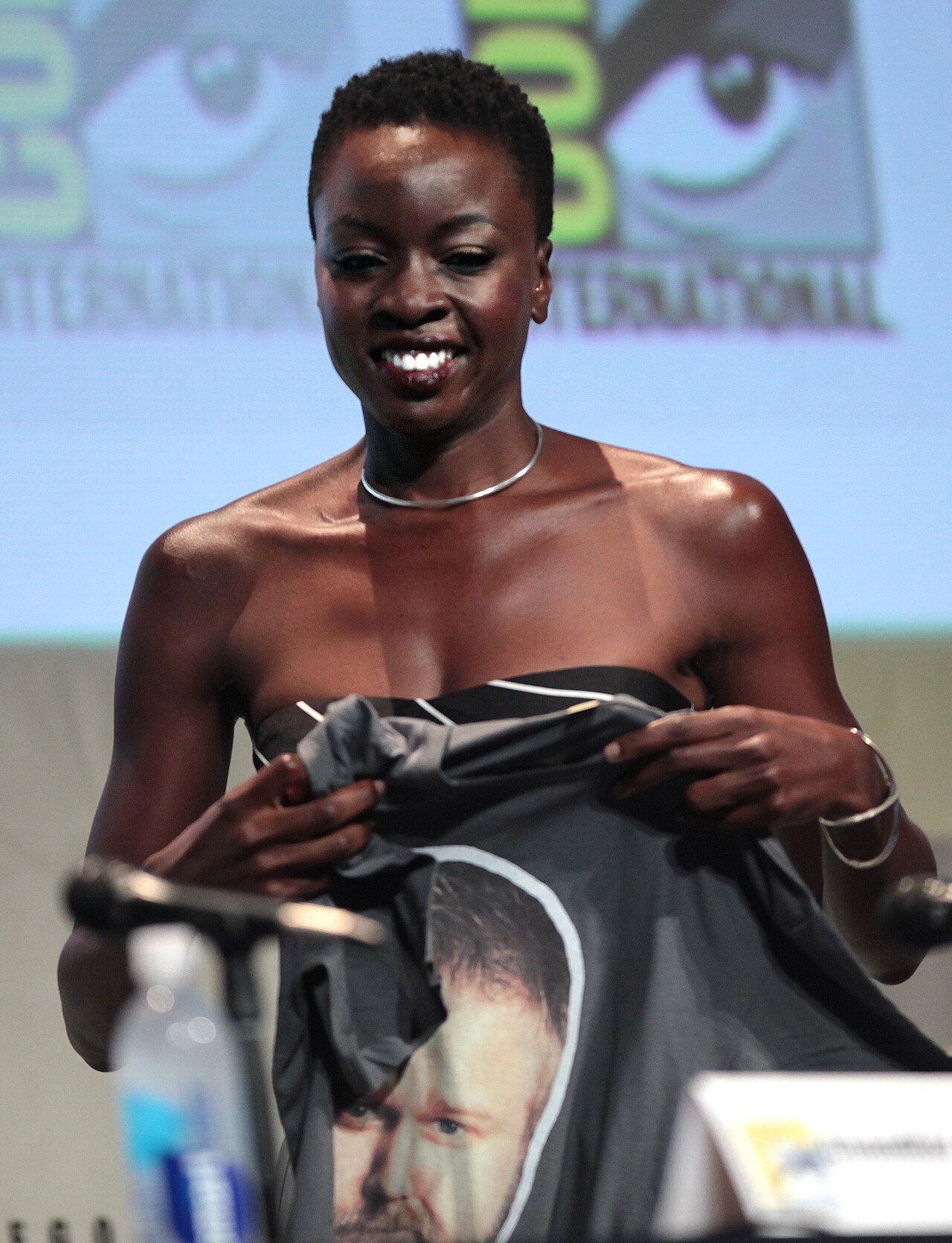
The cultural significance of the Dora Milaje cannot be overstated. Here was a legion of dark-skinned African women, shaven-headed and armored, moving with military precision and speaking with total authority. They were not decorative and they were not victims. They were warriors and stewards of a nation, and audiences across the African continent and throughout the global diaspora responded with a sense of pride and recognition. Gurira’s Okoye stood at the center of this image, and her fierce loyalty to Wakanda, tested painfully by the film’s civil conflict, gave the character a moral weight that lingered well beyond the action sequences.
“Black Panther” became one of the highest-grossing films of its time and earned multiple Academy Award nominations, including a nomination for Best Picture, a first for a superhero film. Gurira reprised the role of Okoye in the Avengers crossover films “Avengers: Infinity War” and “Avengers: Endgame,” fighting alongside the wider Marvel roster in some of the most-watched cinema of the decade. She returned again in 2022 for “Black Panther: Wakanda Forever,” directed once more by Ryan Coogler, a film shadowed by the death of Chadwick Boseman. In that sequel, Okoye’s story deepened considerably as she faced disgrace, loss and reinvention, giving Gurira some of her most emotionally demanding screen work in the franchise. Her performance helped carry a film that doubled as a collective act of mourning, and it confirmed Okoye as an enduring pillar of the Marvel universe.
Activism and Purpose: Love Our Girls
For Gurira, art has never been separable from advocacy. Throughout her rise to fame, she has used her platform to champion the rights, safety and dignity of women and girls, with a particular focus on the African continent she calls home. Her humanitarian commitments flow directly from the concerns that animate her plays: the ways women survive violence, the burdens they carry, and the strength they summon in circumstances designed to break them.
She founded the Love Our Girls initiative, a campaign dedicated to raising awareness and support for causes affecting women and girls around the world. Through the platform she has highlighted issues ranging from health and education to protection from violence and exploitation, spotlighting organizations doing frontline work and urging her audience to pay attention to struggles that too often go unseen. The initiative reflects her belief that visibility itself can be a form of power, and that telling the truth about women’s lives, whether on stage, on screen or through advocacy, is part of the same continuous project.
Gurira has also lent her voice to broader humanitarian and public-health efforts, and she has spoken frequently about the importance of African-led storytelling and African-centered solutions. Her activism is not an accessory to her fame but an extension of her lifelong purpose. Whether she is writing a play about women in wartime, portraying a warrior who defends her nation, or campaigning for girls’ welfare, she is pursuing a single conviction: that African and diaspora women must be seen, heard and valued in their full complexity. That conviction has made her not only a celebrated artist but a figure of genuine moral seriousness in an industry that does not always reward it.
Career Timeline
- 1978: Born on 14 February in Grinnell, Iowa, to Zimbabwean parents, later raised in Harare, Zimbabwe.
- 2006: Co-writes and co-stars in “In the Continuum,” which wins an Obie Award and establishes her as a playwright.
- 2012: Joins “The Walking Dead” as Michonne, becoming a genre-television icon.
- 2016: Her play “Eclipsed” opens on Broadway as the first with an all-Black, all-woman cast and creative team; earns a Tony Award nomination for Best Play.
- 2016: Her play “Familiar,” about a Zimbabwean-American family, premieres in New York.
- 2018: Stars as Okoye in “Black Panther,” a global blockbuster and cultural landmark.
- 2018 to 2019: Reprises Okoye in “Avengers: Infinity War” and “Avengers: Endgame.”
- 2022: Returns as Okoye in “Black Panther: Wakanda Forever,” directed by Ryan Coogler.
- 2020s: Continues her advocacy through the Love Our Girls initiative and remains active across stage and screen.
Lesser-Known Facts
- Though born in the American Midwest, Gurira was raised largely in Harare, Zimbabwe, and considers her Zimbabwean upbringing central to her identity and artistry.
- She is a serious, award-winning playwright, not simply an actress who dabbles in writing, and she earned a Tony Award nomination for Best Play for “Eclipsed.”
- “Eclipsed” made Broadway history in 2016 as the first play staged there with an all-Black and all-woman cast and creative team, starring Lupita Nyong’o.
- She grew up speaking both English and Shona, and her multilingual, cross-cultural background informs the authenticity of her African characters.
- She holds a Master of Fine Arts in acting from New York University’s Tisch School of the Arts and an undergraduate degree in psychology from Macalester College.
- She trained extensively in swordsmanship for Michonne, bringing a physical discipline to her screen roles that complements her stage-honed emotional range.
Frequently Asked Questions
Where is Danai Gurira from? Danai Gurira was born on 14 February 1978 in Grinnell, Iowa, in the United States, to Zimbabwean parents. She was raised largely in Harare, Zimbabwe, and identifies as Zimbabwean-American, a dual heritage that shapes much of her work.
Who did she play in Black Panther? She played Okoye, the fearless general of the Dora Milaje, the all-female elite special forces who guard the throne of Wakanda. She portrayed the character in “Black Panther” (2018), the Avengers crossover films and “Black Panther: Wakanda Forever” (2022).
Is Danai Gurira a playwright? Yes. Gurira is a highly acclaimed playwright as well as an actress. Her plays include “In the Continuum,” “The Convert,” “Familiar” and “Eclipsed,” the last of which earned her a Tony Award nomination for Best Play.
What is Eclipsed? “Eclipsed” is Gurira’s drama about five women caught up in the Liberian civil war. When it opened on Broadway in 2016, starring Lupita Nyong’o, it became the first Broadway play with an all-Black and all-woman cast and creative team.
Who did she play in The Walking Dead? She played Michonne, a katana-wielding survivor of the zombie apocalypse who becomes one of the AMC series’ central characters. Gurira joined the show in 2012 and made the role an enduring pop-culture icon.
Legacy
Danai Gurira occupies a place in modern culture that few artists ever reach: she is at once a blockbuster movie star, a beloved television heroine and a serious dramatist whose work has changed what audiences expect from the American stage. What unites these achievements is a single, steady purpose. From the two women of “In the Continuum” to the captives of “Eclipsed,” from Michonne’s guarded grief to Okoye’s unbreakable honor, Gurira has spent her career insisting that African and diaspora women are worthy of the fullest, most dignified storytelling that art can offer.
Her impact is felt most powerfully by those who once searched screens and stages in vain for reflections of themselves. For girls in Harare and Lagos, for young women across the diaspora, the sight of Okoye commanding an army and Michonne surviving on her own terms carried a message that no lecture could deliver: that strength and dignity belong to them as their birthright. Gurira did not merely perform that message. She wrote it into scripts, argued it in interviews, and lived it through her advocacy for women and girls. In redefining the warrior woman, she also redefined what an African artist could be in the twenty-first century: a creator of her own roles, a teller of her own people’s stories, and a voice that the whole world learned to hear.