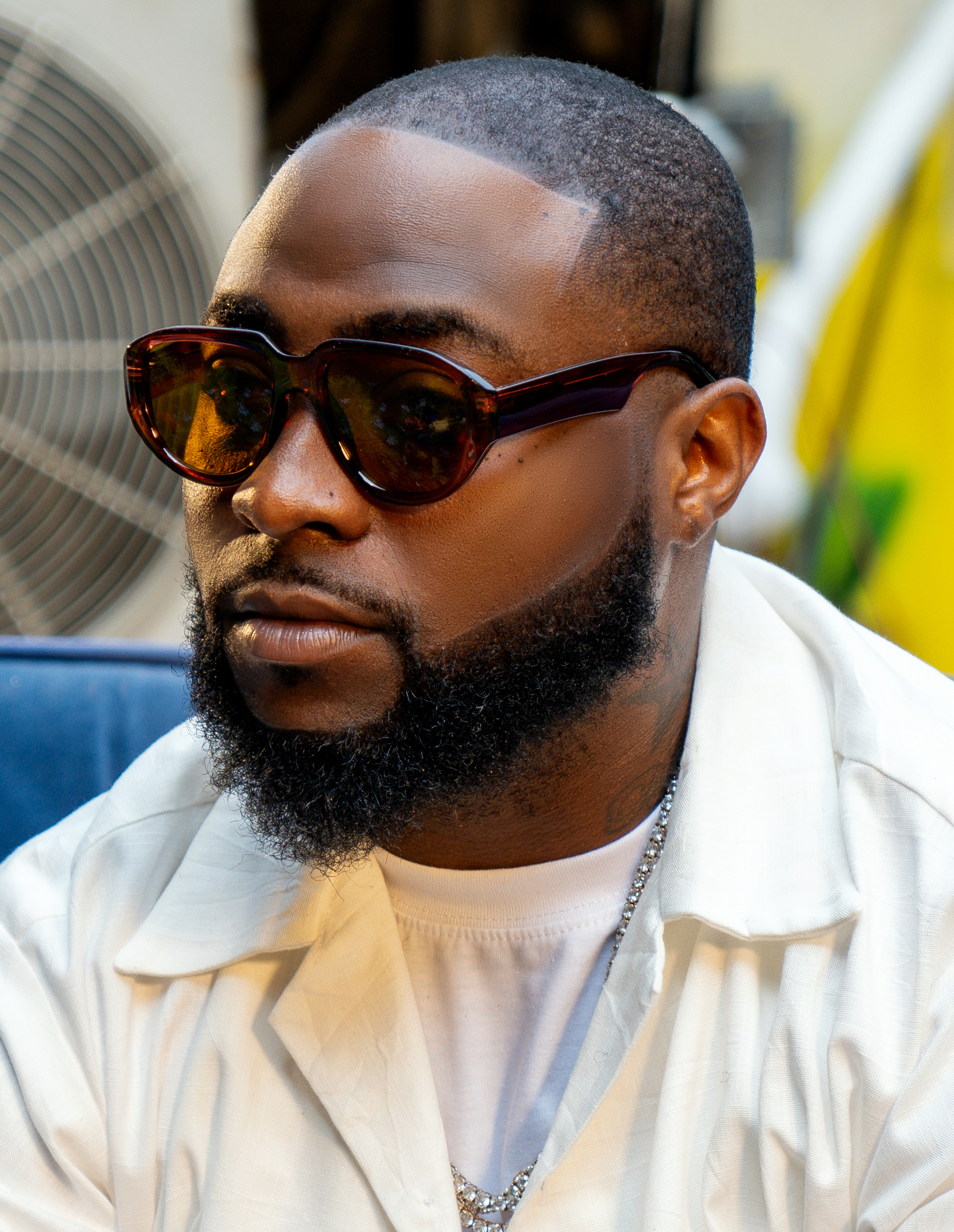
When David Adedeji Adeleke stepped onto the stage at London’s O2 Arena in 2019, a Nigerian artist headlining that legendary venue was still a rare and remarkable thing. The building holds roughly twenty thousand people, and on that night the crowd sang his songs back to him word for word. For a young man who had once been told that music was a distraction from a proper education, it was a vindication decades in the making. Davido did not just arrive at that moment. He built toward it, song by song, tour by tour, refusing to let his family name or his family wealth define the story he wanted to tell.
His story is unusual because it inverts a familiar narrative. Many musicians describe scraping their way up from nothing, using their art as an escape from hardship. Davido came from one of the wealthiest families in Nigeria, a background that could have made his music a hobby rather than a calling. Instead he treated it as a mission, and in doing so he became one of the central figures in the rise of Afrobeats as a global commercial force. He is loud, generous, sometimes controversial, and relentlessly ambitious, and he has spent more than a decade turning Nigerian pop into music that fills arenas from Lagos to London to Atlanta.
Quick Facts
- Full name
- David Adedeji Adeleke
- Born
- 21 November 1992, Atlanta, Georgia, USA
- Genre
- Afrobeats, Afropop
- Known for
- Global Afrobeats superstar; hits like "Fall" and "Fem"
- Label
- Founder of Davido Music Worldwide (DMW)
Early Life
David Adedeji Adeleke was born on 21 November 1992 in Atlanta, Georgia, in the United States. His birth in America is a detail that surprises many casual fans, but it reflects the international footprint of the family he was born into. His father, Deji Adeleke, better known as Adedeji Adeleke, is a Nigerian businessman whose fortune spans banking, energy, and education, and who is widely counted among the wealthiest men in the country. His mother, Vero Adeleke, was a university lecturer. The Adeleke name carries weight far beyond music, reaching into commerce and Nigerian politics, and David grew up as a member of one of the country’s most prominent dynasties.
Growing up, David moved between the United States and Nigeria, absorbing both cultures. He spent formative years in Lagos, the noisy, ambitious commercial capital where Nigerian pop music was beginning to bubble up into something new. Yet he also had the American exposure that would later shape his sound, blending the rhythmic swagger of Nigerian street pop with the polish and confidence of American hip hop and R&B. That dual sensibility, comfortable in both Lagos and Atlanta, became one of his greatest creative assets.
Like many children of successful Nigerian parents, David was expected to build his life around education and business. His father wanted him to pursue a serious degree and a stable professional future. David enrolled to study, at various points attending institutions in the United States, and the family assumption was that music would remain a passing interest. But the young man had other plans. He had fallen in love with production and performance, and he wanted to make records, not spreadsheets. This created real tension at home, because in the eyes of a self-made billionaire, a career in Nigerian pop music in the late 2000s looked like a gamble rather than a plan.
David eventually completed his education, later graduating in music from Babcock University, an institution with deep ties to his own family. But before that reconciliation, he made a decision that would define him: he chose to bet on himself, to prove that he could succeed in music on his own terms, and to earn a name that stood apart from his father’s fortune.
That decision carried real risk. The Nigerian music industry of the late 2000s was still finding its footing as a commercial machine. Streaming was not yet the engine it would become, piracy was rampant, and the paths to sustainable income were narrow. For a young man from a family that could have handed him a comfortable executive role, the choice to chase music looked reckless from the outside. But David understood something about himself that his relatives were slower to see. He was not interested in a life that had been arranged for him. He wanted to create, to perform, and to be judged on what he could make rather than on what he had inherited. That hunger, unusual in someone with a financial safety net, would drive him for years and would show up in the sheer volume of music he produced once his career took off.
Breaking Through
Davido’s arrival on the Nigerian scene came at a pivotal moment. Around 2011 to 2012, a new generation of Nigerian pop stars was reshaping the country’s music, moving it away from older templates and toward a slicker, more youthful, more danceable sound. Davido planted his flag firmly in that wave. His early single “Back When”, featuring the rapper Naeto C, announced him as a fresh voice with genuine star quality. It was catchy, self-assured, and unmistakably the work of someone who intended to be big.
Then came “Dami Duro”. The song exploded across Nigeria and became one of the defining anthems of its era, a track that played in clubs, at parties, and from car speakers in every corner of Lagos. “Dami Duro” was more than a hit. It was a statement of identity, brash and celebratory, and it turned Davido from a promising newcomer into a household name almost overnight. His debut album, “Omo Baba Olowo”, released in 2012, translated roughly as “the son of a rich man”, a title that acknowledged his background even as the music worked to prove he was more than that.
What set Davido apart in those early years was not only the songs but the energy behind them. He carried himself like a star before the industry had fully agreed that he was one. He understood image, spectacle, and the value of a memorable performance. As part of that new generation of Nigerian pop, he helped push the whole movement forward, and he did it while very publicly answering the question of whether a rich kid could earn respect through genuine talent. The answer, delivered in hit after hit, was yes.
It is worth pausing on how competitive that landscape was. Davido rose alongside a cohort of gifted contemporaries who were each staking their own claim to the future of Nigerian pop, and the rivalry among them, sometimes friendly and sometimes tense, pushed everyone to work harder and dream bigger. In that environment, complacency was fatal. Davido responded by being everywhere at once: releasing singles at a steady clip, showing up at events, courting radio, and cultivating a persona that fans could root for. He was not the most technically polished vocalist of his generation, and he knew it, but he had an instinct for melody, for hooks that lodged themselves in the memory, and for the communal, celebratory feeling that lies at the heart of Nigerian party music. That instinct, more than any single vocal gift, became the foundation of his success.
Building an Empire
Success on the level Davido achieved required more than songs. It required structure, and so he built his own. He founded Davido Music Worldwide, known widely as DMW, a record label and collective that became both a business and a launching pad for other artists. Through DMW he signed and elevated talents, surrounded himself with a creative team, and turned his personal brand into an enterprise. The move signaled a shift in how the new generation of Nigerian musicians thought about their careers: not just as performers, but as owners and executives.
Musically, the years that followed brought a remarkable run of hits. “Aye”, released in 2014, was a warm, melodic love song rooted in Yoruba culture and imagery, and it became one of his most beloved tracks. It showed a softer, more romantic side of an artist who had first broken through with brash party anthems, and it proved his range. He could fill a dance floor, and he could also deliver a tender ballad that families would play for years.
Then came the songs that turned him into a continental and then a global figure. “If”, released in 2017, was an enormous hit, a smooth, romantic track that dominated airwaves across Africa and reached listeners far beyond the continent. Its success was quickly followed by “Fall”, a song that became one of the most important records of his career. “Fall” had an unusually long life. It kept spreading, kept charting, and eventually became a landmark for Afrobeats internationally, one of the genre’s most successful crossover records and a track that introduced countless new listeners to the sound. In the same period he released “Fia”, another major hit that showcased his gift for melody and his instinct for what would move a crowd. Together these records established Davido not merely as a Nigerian star but as one of the leading commercial forces in African music.
Global Stardom
As his profile grew, Davido began collaborating across borders. He worked with international artists and producers, appearing alongside names in hip hop, R&B, and pop, and lending his sound to projects that reached audiences well outside Africa. These collaborations helped position Afrobeats as a genre that could sit comfortably on global playlists rather than being treated as a niche import. Davido, along with a handful of his peers, made the case that Nigerian pop belonged on the biggest stages in the world.
That case was strengthened by his albums. In 2020 he released “A Good Time”, a project that gathered many of his hits and collaborations into a single statement of where he stood. It performed strongly and confirmed his commercial power. He followed it with “A Better Time” later in 2020, an ambitious record stacked with high-profile guest features from across the worlds of Afrobeats and international pop and hip hop. The two albums, arriving close together, framed a period in which Davido was both prolific and expansive, reaching outward while staying rooted in the sound that made him.
One song from that era carried a weight beyond the charts. “Fem”, released in 2020, was a hard-edged, defiant track, and during the End SARS protests in Nigeria that year it took on a life of its own. Young Nigerians demonstrating against police brutality adopted its assertive spirit, and the song became an unofficial anthem of the movement, chanted at protests as a symbol of refusal and resolve. It was a striking example of how a pop record can slip beyond entertainment and become part of a national moment, and it deepened Davido’s connection to the young people who made up his core audience.
The moment also underlined something important about Davido’s place in Nigerian culture. He was not merely a maker of dance records. He had become a public figure whose voice carried, and during the protests he used that voice, speaking out and standing with the young demonstrators who made up so much of his audience. For an artist so often associated with celebration and excess, that willingness to align himself with a serious cause added a new dimension to his public identity. It showed that fame, in his hands, could be more than a marketing tool. It could be a form of solidarity.
“I feel like I’m carrying a whole continent on my back. When I perform outside Africa, I’m not just representing myself, I’m representing where I come from.”
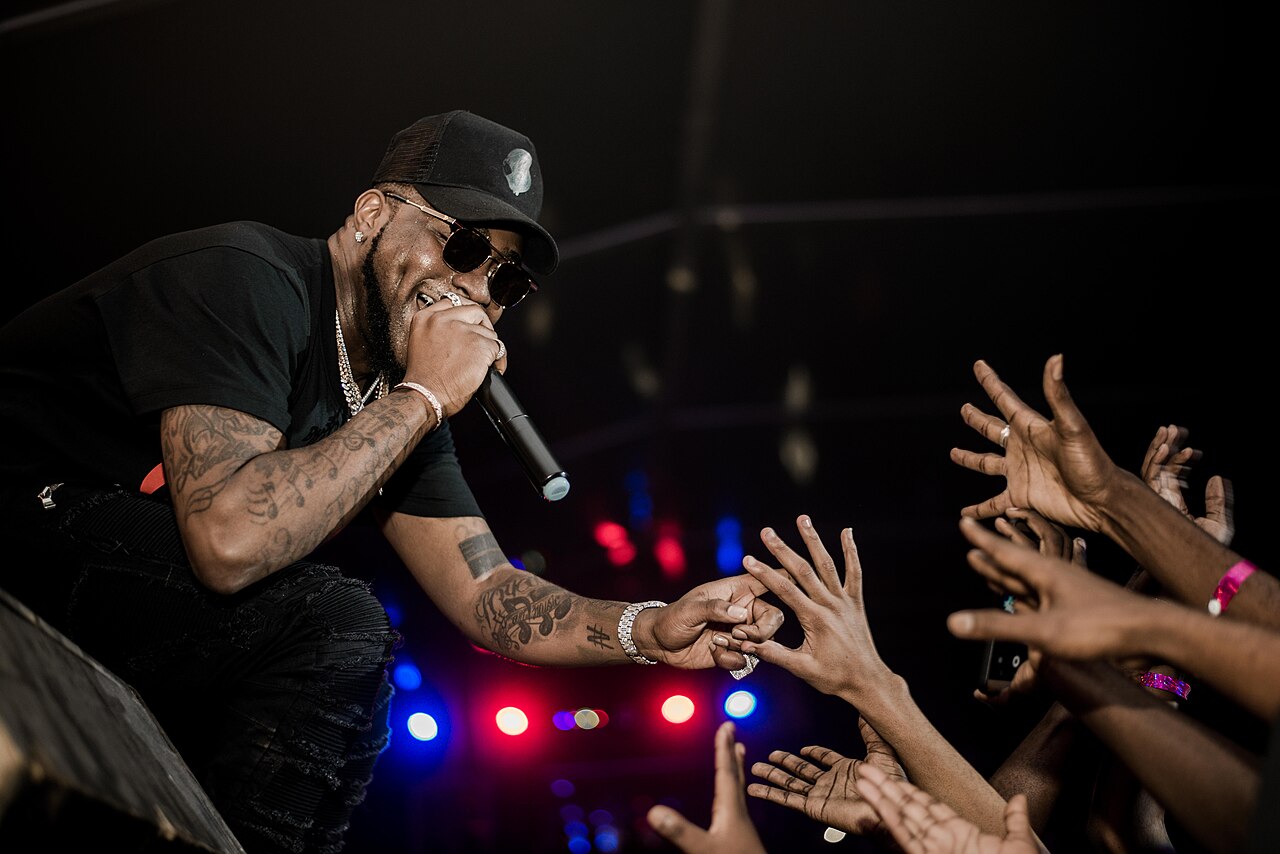
His live performances told the same story of scale. Davido sold out major international venues, headlining shows in cities across Europe, North America, and beyond, and packing arenas with diaspora fans and new converts alike. Each sold-out night was another piece of evidence that Afrobeats had become a genuine global force, and that a Nigerian artist could command the kind of audience once reserved for American and British superstars. He had set out to make his own name, and by now that name filled marquees on multiple continents.
These concerts also revealed the emotional core of his appeal. For members of the Nigerian and broader African diaspora, a Davido show was more than a night out. It was a homecoming of sorts, a gathering where people who had left their countries could hear the music of home performed at the highest level, in the biggest rooms, in the cities they now lived in. Davido understood that role and embraced it. He often spoke of representing not just himself but a whole continent and its people, carrying their stories and their pride onto stages that had once seemed impossibly far away. That sense of collective ownership, of a community seeing itself reflected in a global star, helped explain the intensity of the devotion he inspired.
Personal Life and Resilience
Davido’s public life has always been lived loudly, and his personal story has included both great joy and profound sorrow. His relationship with Chioma Rowland, widely known simply as Chioma, became one of the most followed romances in Nigerian entertainment. The two eventually married, and Chioma became a fixture in his public narrative, celebrated by fans who followed the couple’s milestones closely. Their relationship was a source of warmth and public affection over many years.
In October 2022, the family suffered a devastating loss. Their young son, Ifeanyi, died in a domestic accident. The tragedy was felt across Nigeria and among Davido’s global fanbase, and the outpouring of grief and support reflected how deeply the public had come to care for him and his family. It is a loss that should be spoken of with restraint and respect, remembered as a private family sorrow that touched countless people who admired them. In the time since, Davido and Chioma have continued to move forward as a family, and the couple has welcomed children, choosing to rebuild joy after unimaginable pain.
Alongside his personal life, Davido has become known for extraordinary generosity. He has repeatedly used his platform and his resources to give back, most famously through a charity drive in which he called on friends and associates to donate, then combined those contributions with his own money to raise a very large sum for orphanages and charitable causes across Nigeria. The gesture, which reportedly gathered a substantial amount, was widely praised and reflected a consistent pattern in his career: a willingness to share his success and to attach his name to causes larger than himself. For an artist who could easily have coasted on inherited privilege, his philanthropy has been a meaningful part of how he wants to be remembered.
Career Timeline
- 2011: Emerges on the Nigerian scene with early singles including “Back When” featuring Naeto C.
- 2011 to 2012: “Dami Duro” becomes a breakout anthem, turning him into a household name across Nigeria.
- 2012: Releases his debut album, “Omo Baba Olowo”.
- 2014: Releases “Aye”, one of his most beloved and enduring songs.
- 2017: “If” and then “Fall” become massive hits, with “Fall” growing into a landmark international crossover for Afrobeats.
- 2019: Headlines major international venues, including a celebrated show at London’s O2 Arena.
- 2020: Releases the albums “A Good Time” and “A Better Time”; “Fem” becomes an anthem during the End SARS protests.
- 2022: Suffers the tragic loss of his son, Ifeanyi.
- 2023 onward: Continues releasing music, touring globally, and expanding DMW while rebuilding family life with Chioma.
Lesser-Known Facts
- Despite being one of Nigeria’s most celebrated stars, Davido was born in Atlanta, Georgia, in the United States, not in Nigeria.
- His father, Adedeji Adeleke, is a Nigerian billionaire businessman with interests spanning banking, energy, and education, making Davido a child of one of the country’s wealthiest families.
- Davido founded his own label, Davido Music Worldwide (DMW), turning his personal brand into a full enterprise that has supported other artists.
- His family is deeply woven into music and politics; his cousin B-Red is a musician, and the Adeleke family has held prominent political positions in Nigeria.
- He organized a widely publicized charity drive, rallying friends and associates to donate and combining the funds with his own money to give a large sum to orphanages and charitable causes.
- His debut album title, “Omo Baba Olowo”, openly translated to “the son of a rich man”, a nod to the very background he worked to prove he could rise above through talent.
Frequently Asked Questions
What is Davido’s real name? His real name is David Adedeji Adeleke. “Davido” is the stage name he adopted early in his career.
Is Davido from a rich family? Yes. He was born into one of Nigeria’s wealthiest families. His father, Adedeji Adeleke, is a billionaire businessman, and the Adeleke family is prominent in both business and politics.
What are Davido’s biggest songs? Some of his most successful and best-known tracks include “Dami Duro”, “Aye”, “If”, “Fall”, “Fia”, and “Fem”. “Fall” in particular became one of Afrobeats’ most important international crossover hits.
What is DMW? DMW stands for Davido Music Worldwide, the record label and collective that Davido founded. It functions as both a business and a platform for developing other artists.
Where was Davido born? Davido was born on 21 November 1992 in Atlanta, Georgia, in the United States, before growing up between America and Nigeria.
Legacy
Davido’s legacy is inseparable from the global rise of Afrobeats itself. He belongs to the generation of Nigerian artists who transformed a regional sound into an international movement, and he did more than ride that wave. He helped generate it. Through his hits, his label, his collaborations, and his willingness to headline the world’s biggest venues, he expanded the sense of what a Nigerian musician could achieve and how far that music could travel.
Yet his legacy is not only about scale. It is also about the example he set by choosing to earn his place. He could have let his family fortune define him. Instead he insisted on building something of his own, and in doing so he offered a lesson to a generation of young Africans about ambition, self-belief, and the value of work. His generosity, his resilience in the face of terrible loss, and his loyalty to the culture that made him have all deepened the affection fans hold for him.
More than a decade after “Dami Duro” first shook the clubs of Lagos, Davido remains one of the defining voices of his era, a bridge between Nigerian music and the wider world. Whatever comes next in his career, he has already secured his place in the story of how Afrobeats went global, and his name, the one he set out to make for himself, now belongs to the world.