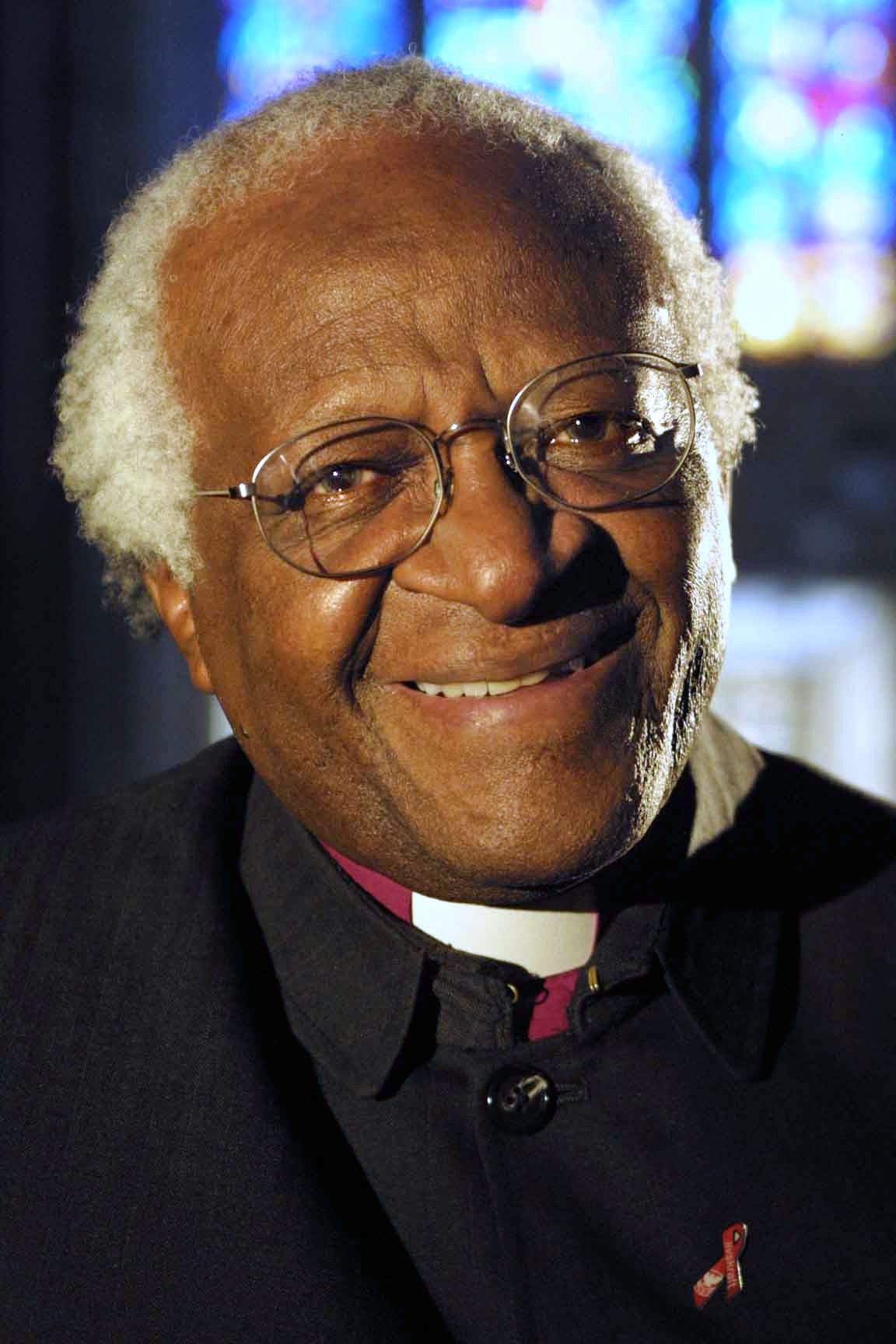
When the world needed someone to say plainly that apartheid was evil, that no clever argument or economic excuse could make it anything other than a sin against God and humanity, a small man with a booming laugh stepped forward. Desmond Tutu had no army, no political party, and for much of his life no vote in his own country. What he had was a pulpit, a purple cassock, and a conviction that every human being carried the image of God. With those tools he shook a government, rallied a movement, and helped guide a divided nation toward a peace that few believed possible.
He was, at once, one of the most serious and most joyful men of his century. He wept over the cruelty of his country, then giggled at his own jokes moments later. He confronted armed police and defiant presidents, yet danced in his vestments and teased his friends. That combination of moral steel and irrepressible warmth made him beloved far beyond South Africa. This is the story of how a sickly boy from a dusty mining town became the conscience of a nation and a voice for justice heard around the globe.
Quick Facts
- Full name
- Desmond Mpilo Tutu
- Born
- 7 October 1931, Klerksdorp, South Africa
- Died
- 26 December 2021, Cape Town, South Africa (aged 90)
- Known for
- Anti-apartheid leader; Archbishop of Cape Town; Nobel laureate
- Nobel Prize
- Peace, 1984
Early Life
Desmond Mpilo Tutu was born on 7 October 1931 in Klerksdorp, a gold-mining town in what was then the Transvaal, in South Africa. His middle name, Mpilo, means “life” in Xhosa, a name given to him by his grandmother. His father, Zachariah Tutu, was a schoolteacher and headmaster, and his mother, Aletta, worked as a domestic servant and cook. The family was poor, and young Desmond grew up moving between towns as his father took different teaching posts, absorbing early on both the dignity of education and the daily humiliations that the colour of his skin invited.
As a child he fell gravely ill with tuberculosis and spent roughly twenty months in hospital. Doctors at one point feared he would not survive. During that long confinement he was visited regularly by a white Anglican priest named Trevor Huddleston, a fierce opponent of racial injustice who would become one of the most important influences on his life. Tutu later recalled a moment that lodged in his memory forever: as a small boy he watched Huddleston, a white man, raise his hat in respect to Tutu’s mother, a Black domestic worker. In the South Africa of that era, such a gesture was almost unthinkable, and it planted in the boy a lasting sense that the faith Huddleston preached took human dignity seriously.
Tutu recovered, though the illness left him with a lifelong weakness in one hand. He excelled at school despite the obstacles placed in the path of Black students, and after finishing his schooling he trained as a teacher, following his father into the classroom. He qualified and began teaching high school, marrying Nomalizo Leah Shenxane in 1955. The couple would go on to raise four children together, and Leah would remain his partner and steadying anchor for more than six decades of public storms. For a time it seemed his life would be that of a respected educator, quietly shaping young minds in the townships.
Then came a law that changed everything. The Bantu Education Act of 1953 deliberately engineered an inferior system of schooling for Black South Africans, designed to prepare them only for lives of servitude and manual labour. Tutu found the policy morally intolerable. Rather than serve as an instrument of a system built to stunt Black children, he resigned from teaching in protest. It was a decision that closed one door and, as it turned out, opened a far larger one. Searching for a new vocation, he turned toward the priesthood, entering training for ordination in the Anglican Church.
Rise in the Church
Tutu was ordained a deacon in 1960 and a priest in 1961, serving in parishes around Johannesburg. His obvious gifts soon marked him out for further study. In 1962 he travelled to England, where he studied theology at King’s College London, earning a bachelor’s degree and then a master’s. The years in England were formative in more ways than one. For the first time he lived in a society where he was not required to carry a pass, where police did not stop him on the basis of his race, and where he could walk into a shop or a church as an equal. The experience deepened his conviction that the racial order back home was not natural or God-given but a human construction that could and must be dismantled.
Returning to southern Africa, he taught theology in South Africa and in Lesotho, then served for several years in the early 1970s with the Theological Education Fund of the World Council of Churches, a role that took him across Africa and Asia and broadened his understanding of the global church. In 1975 he was appointed Dean of Johannesburg, the first Black person to hold that office. Rather than move into the grand official residence reserved for the dean, he chose to live with his family in Soweto, the sprawling Black township, sharing the conditions of the people he served.
His rise thereafter was swift. In 1976 he became Bishop of Lesotho. In 1978 he took up the influential post of General Secretary of the South African Council of Churches, a platform that placed him at the centre of Christian opposition to apartheid and gave him a national and international voice. In 1985 he was elected Bishop of Johannesburg, again the first Black person to hold the seat. And in 1986 he reached the summit of his church when he was enthroned as Archbishop of Cape Town, becoming the head of the Anglican Church in the region and the first Black person ever to lead it. From these positions of moral authority, unelected but immense, he became a thorn in the side of the apartheid state.
Fighting Apartheid
By the late 1970s and into the 1980s, much of the formal political leadership of the liberation struggle had been silenced. Nelson Mandela and many others were imprisoned on Robben Island and elsewhere. Organisations such as the African National Congress were banned. Leaders were in exile, in jail, or under crippling restrictions. Into that vacuum of visible domestic leadership stepped Tutu, protected to a degree by his clerical office and his growing international fame, and unwilling to be silent.
He used every platform available to condemn apartheid as a heresy, an offence against God as much as against humankind. He preached it in cathedrals, declared it at funerals of murdered activists, and repeated it to foreign audiences and journalists. He was a consistent advocate of non-violent resistance, urging the movement to keep the moral high ground even under brutal provocation. At the same time he became one of the most prominent voices calling on the international community to apply economic pressure on Pretoria. He championed sanctions and disinvestment, arguing that outside economic pressure was the most effective non-violent weapon available to force change, even as this stance drew accusations that he was harming the very people he claimed to defend. He answered that the suffering caused by sanctions was preferable to the endless suffering of apartheid itself.
His courage was not merely rhetorical. He physically placed himself between security forces and crowds, and on more than one occasion he waded into mobs to save the lives of men accused of being informers, shielding them with his own body from being killed. He was detained, had his passport confiscated, and endured constant threats, yet he did not retreat.
“If you are neutral in situations of injustice, you have chosen the side of the oppressor.”
In 1984 the world formally recognised his role. The Norwegian Nobel Committee awarded him the Nobel Peace Prize, citing his courageous and unifying leadership in the non-violent campaign against apartheid. The prize was as much a rebuke to the South African government as it was an honour to Tutu, and it gave him a shield of global prestige that made him even harder to silence. He accepted it, he said, on behalf of the ordinary people of South Africa whose suffering and dignity it truly honoured.
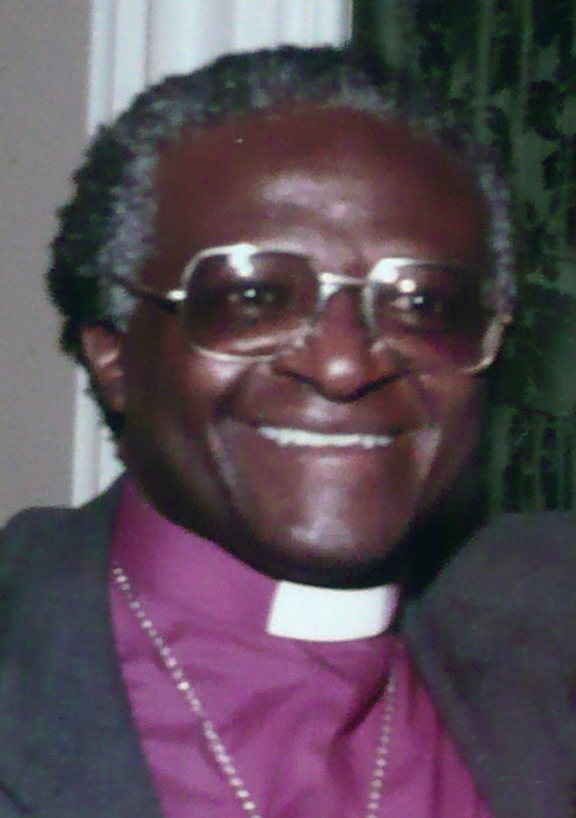
Through the violent, uncertain years that followed, as states of emergency were declared and townships burned, Tutu kept insisting on two things at once: that apartheid was doomed and that the future belonged to all South Africans together, Black and white. He refused to preach hatred of white people, even as he denounced the system they had built. That refusal would prove essential when the long night of apartheid finally began to lift.
The Rainbow Nation and Reconciliation
The turning point came at the start of the 1990s. In February 1990 the government unbanned the ANC and other organisations and released Nelson Mandela from prison. On the night of his release, Mandela and his wife stayed at Tutu’s official residence in Cape Town, a small symbol of how closely the archbishop’s moral leadership had been tied to the political struggle. Over the next four years, as negotiations, violence, and hope competed for the country’s future, Tutu remained a steadying moral presence, condemning atrocities on all sides and urging restraint.
When South Africa held its first democratic, non-racial elections in April 1994 and Mandela became president, it was Tutu who gave the new country one of its most enduring images. He described the diverse, newly free South Africa as the “Rainbow Nation,” a people of many colours united under one sky. The phrase captured a vision of unity in diversity that resonated deeply, and it became shorthand for the ideal of the post-apartheid state. Standing before crowds, Tutu would exult that the people had been set free, dancing and laughing with a joy that seemed to embody the phrase itself.
Freedom, however, left an open wound. Decades of apartheid had produced killings, torture, disappearances, and countless crimes, and the new nation had to decide what to do with that terrible past. Rather than pursue mass trials that might have torn the country apart, or a blanket amnesty that would have buried the truth, South Africa chose a different path: the Truth and Reconciliation Commission. In 1995 President Mandela asked Tutu to serve as its chairman.
The commission, which held public hearings from 1996 onward, offered perpetrators the possibility of amnesty in exchange for full and honest disclosure of politically motivated crimes, while giving victims a public platform to tell their stories and be heard. It was a bold and controversial experiment in restorative rather than purely punitive justice. Tutu presided over harrowing testimony, day after day, of murder and torture and grief. On occasion the pain overwhelmed even him, and he was seen weeping at the commission’s table. He anchored the work in his theological conviction that reconciliation, however imperfect, offered his country a better future than an unending cycle of revenge. The commission’s approach was not without critics, some of whom felt it let wrongdoers escape true accountability, but it is widely credited with helping South Africa avoid the bloodbath many had predicted.
A Global Conscience
Tutu retired as Archbishop of Cape Town in 1996, but he never retired as the conscience of his country or the world. He had opposed apartheid without fear, and he applied the same fearless standard to the new government led by his old allies. When the ANC in power fell short, he said so bluntly. He criticised corruption, cronyism, and complacency, and he warned that the party could not take the people’s loyalty for granted. He clashed with President Thabo Mbeki over the government’s damaging denialism on HIV and AIDS, and later he sharply criticised the administration of Jacob Zuma over scandal and misgovernance. He famously warned that he would pray for the defeat of the ANC if it continued to betray the ideals of the liberation struggle, a stunning statement from a man so central to that struggle.
His moral gaze reached far beyond South Africa. He spoke out on injustice wherever he saw it: he was a persistent critic of the wars in Iraq, an advocate for the rights of Palestinians, a defender of Tibet and a friend of the Dalai Lama, and later in life an outspoken champion of the dignity of LGBT people, declaring that he would refuse to worship a God who was homophobic. He campaigned on climate change and on the abolition of nuclear weapons, and he lent his voice to the cause of assisted dying near the end of his own life. Not all of these positions were popular, and some put him at odds with parts of his own church, but he took them because his conscience told him to. He also lent his stature to global efforts at peacemaking as a founding member of The Elders, a group of senior international figures convened by Nelson Mandela in 2007 to work quietly on conflict and human rights around the world.
Honours followed him wherever he went. He received the United States Presidential Medal of Freedom in 2009 and the Templeton Prize in 2013, among a long list of awards and honorary degrees from universities on every continent. Yet those who knew him insisted he wore his fame lightly. He remained a parish priest at heart, rising early to pray, delighting in small kindnesses, and treating a hotel porter with the same courtesy he showed a head of state. His faith, not his celebrity, was the engine of everything he did.
Through it all he remained irrepressibly himself: warm, mischievous, and quick to laugh. His giggle was famous, a high, delighted cackle that could disarm a room. He teased world leaders and prayed with equal ease. He danced. He wept. He forgave. That blend of ferocity and tenderness, of holy anger and infectious joy, made him one of the most loved figures of his age, a man who proved that seriousness of purpose need not crush the human capacity for delight.
Career Timeline
- 1931: Born on 7 October in Klerksdorp, in the Transvaal region of South Africa.
- 1955: Marries Nomalizo Leah Shenxane; works as a schoolteacher.
- 1957: Resigns from teaching in protest at the Bantu Education Act and turns toward the priesthood.
- 1960 to 1961: Ordained as a deacon and then as a priest in the Anglican Church.
- 1962 to 1966: Studies theology at King’s College London, earning bachelor’s and master’s degrees.
- 1975: Appointed Dean of Johannesburg, the first Black person to hold the post.
- 1984: Awarded the Nobel Peace Prize for his non-violent leadership against apartheid.
- 1986: Enthroned as Archbishop of Cape Town, the first Black person to lead the Anglican Church in the region.
- 1995 to 1998: Chairs the Truth and Reconciliation Commission after South Africa’s transition to democracy.
Lesser-Known Facts
- Before he ever wore a clerical collar, Tutu was a qualified schoolteacher, and he left the profession specifically to protest the inferior Bantu Education imposed on Black children.
- His middle name, Mpilo, means “life,” a name given by his grandmother, and it proved fitting for a boy who nearly died of tuberculosis in childhood.
- When he became Archbishop of Cape Town in 1986, he was the first Black person ever to hold the highest office in the Anglican Church of the region.
- He is credited with popularising the phrase “Rainbow Nation” to describe the diverse, newly democratic South Africa, an image that became a national symbol.
- He chaired the Truth and Reconciliation Commission, pioneering a model of restorative justice studied and copied by countries emerging from conflict around the world.
- His distinctive, high-pitched giggle became almost as famous as his sermons, and friends and journalists alike noted how quickly he moved between fierce moral outrage and pure delight.
Frequently Asked Questions
Who was Desmond Tutu?
Desmond Tutu was a South African Anglican archbishop, theologian, and human rights leader who became one of the most prominent domestic opponents of apartheid. He served as the first Black Archbishop of Cape Town, won the Nobel Peace Prize in 1984, and later chaired the Truth and Reconciliation Commission. He is remembered as the moral conscience of South Africa.
Why did he win the Nobel Peace Prize?
He was awarded the Nobel Peace Prize in 1984 for his courageous and unifying role in the non-violent struggle against apartheid. The Norwegian Nobel Committee honoured his leadership in mobilising resistance to racial injustice through moral and peaceful means, and the prize also served as an international rebuke to the South African government.
What is the Rainbow Nation?
“Rainbow Nation” is the phrase Tutu popularised to describe the diverse, multi-racial South Africa that emerged after apartheid ended in 1994. It expresses the ideal of many different peoples, cultures, and colours living together in unity under one nation, and it became a defining symbol of the country’s new democratic identity.
What was the Truth and Reconciliation Commission?
The Truth and Reconciliation Commission was a body established in 1995 to confront the crimes committed under apartheid. Chaired by Tutu, it allowed victims to testify publicly about abuses and offered perpetrators amnesty in exchange for full and honest disclosure of politically motivated crimes. It aimed at restorative justice and national healing rather than pure punishment.
When did Desmond Tutu die?
Desmond Tutu died on 26 December 2021 in Cape Town, South Africa, at the age of 90. His death was mourned across South Africa and around the world, and he was honoured with a state funeral that reflected his standing as one of the great moral figures of his era.
Legacy
Desmond Tutu left the world a rare kind of inheritance: not laws or borders or fortunes, but a standard of conscience. He showed that a person of faith could be fearless before earthly power, and that opposition to evil need not curdle into hatred. He fought apartheid without ever surrendering his belief that the oppressor, too, was a child of God capable of change, and that belief helped make possible a transition to democracy that the world had feared would end in blood.
His fingerprints are everywhere in the country he loved. The phrase Rainbow Nation still frames how South Africans imagine themselves at their best. The Truth and Reconciliation Commission he chaired became a model that nations from Latin America to Africa have studied when reckoning with their own painful pasts. And his willingness to criticise even his own allies set a lasting example that loyalty to justice must outrank loyalty to any party or leader.
Yet his deepest legacy may be the spirit he embodied. Tutu proved that moral seriousness and human joy belong together, that one can weep over the world’s cruelty and still laugh at its absurdities, still dance, still hope. He carried the weight of his nation’s suffering and never let it extinguish his warmth. For an African audience and for the world, he remains a reminder that a single voice, armed only with conviction and courage, can help bend the arc of history toward justice. When he died in 2021, South Africa did not merely lose an archbishop. It lost the man many had come to think of, simply, as its conscience.