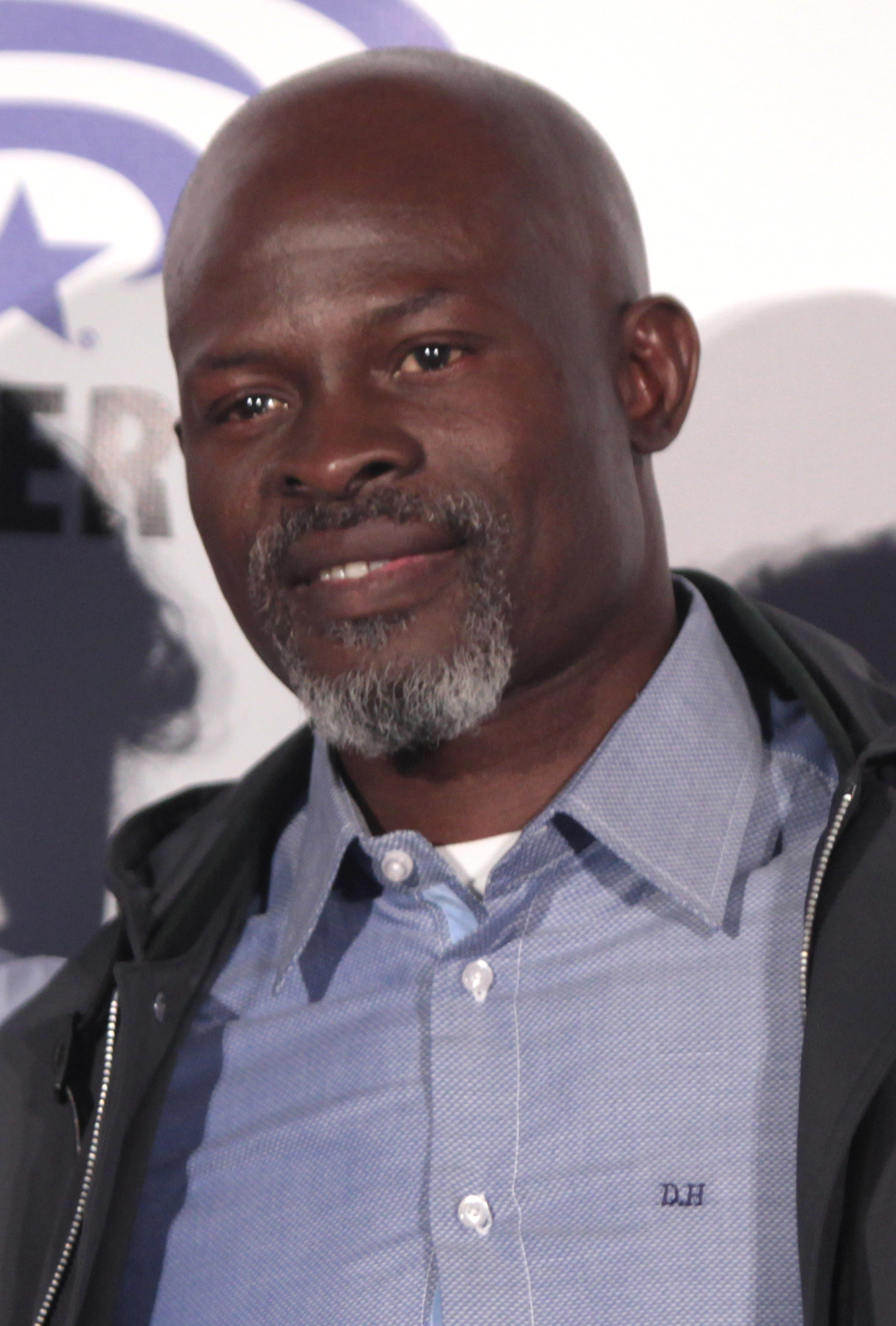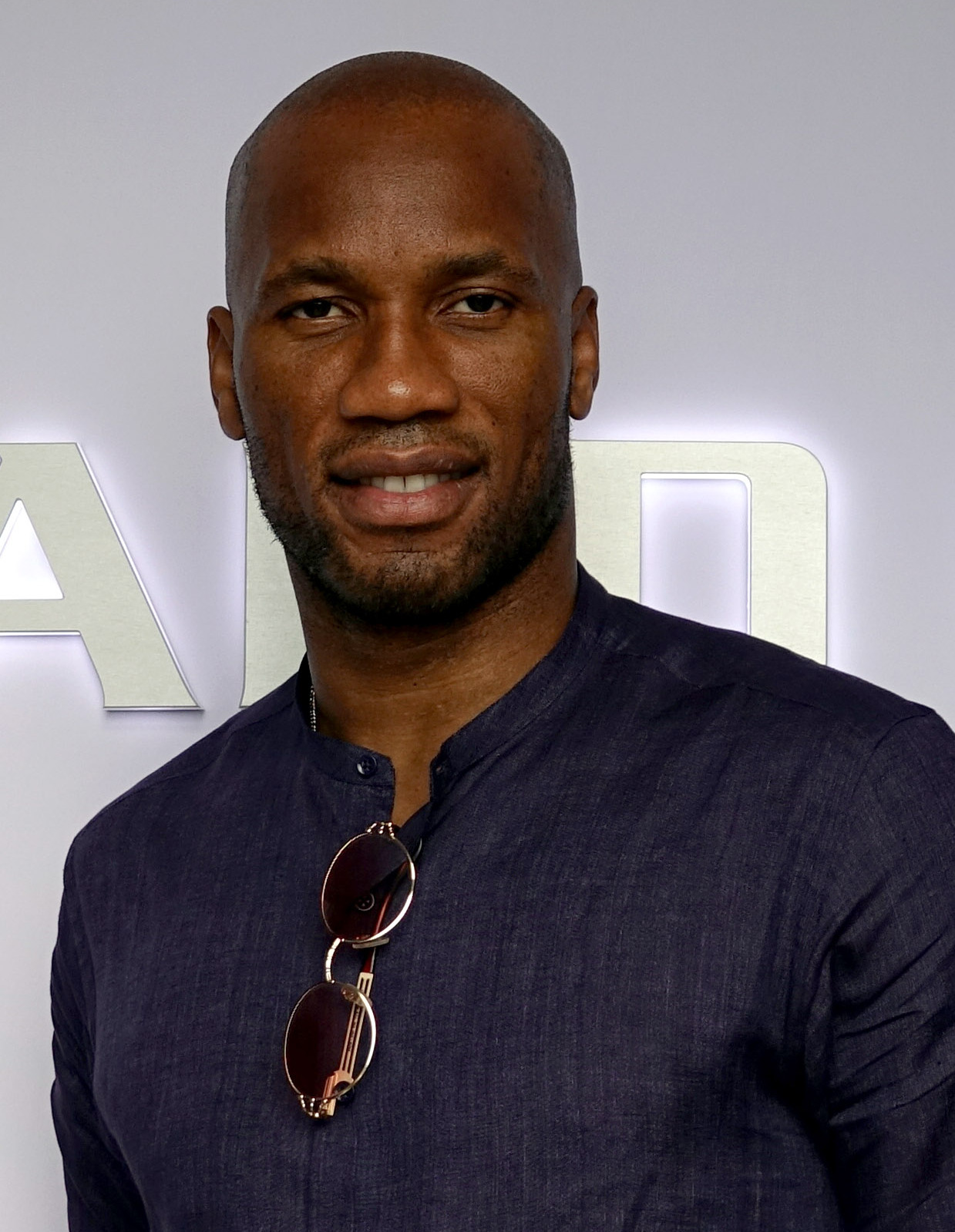
On a humid night in Munich in May 2012, with the seconds bleeding away and a German crowd already tasting victory, a tall Ivorian striker rose to meet a corner kick and changed the destiny of a football club. The header thundered past Manuel Neuer, the score was level, and Chelsea were still alive in a Champions League final they had no right to survive. Moments later, in the penalty shootout, the same man stepped up, paused, and rolled the ball into the net to win the biggest prize in club football. That man was Didier Drogba. For Chelsea supporters it was the crowning glory of a remarkable career. For millions across Africa it was simply the latest chapter in the story of a continental icon who had already done something far greater than win trophies: he had helped to halt a civil war.
Quick Facts
- Full name
- Didier Yves Drogba Tébily
- Born
- 11 March 1978, Abidjan, Ivory Coast
- Sport
- Football (striker)
- Known for
- Chelsea's record African goalscorer; 2012 Champions League winner
- Honours
- 2-time African Footballer of the Year
Didier Drogba is one of the few footballers whose influence stretched far beyond the touchline. He scored in finals when it mattered most, terrified defenders across Europe with his strength and skill, and lifted Chelsea to the very top of the game. Yet his deepest legacy lies in the words he spoke into a television camera in 2005, a plea for peace that touched a nation tearing itself apart. This is the story of how a boy from Abidjan, sent thousands of miles from his parents as a child, grew into a giant of world football and a hero to his homeland.
Early Life
Didier Yves Drogba Tébily was born on 11 March 1978 in Abidjan, the largest city of Ivory Coast on the West African coast. He grew up in a country that, at the time, was one of the more stable and prosperous in the region, its economy built on cocoa and coffee. His parents, Albert and Clotilde, were bank employees, and the family was respectable but far from wealthy. Football was in his blood from the start. His uncle, Michel Goba, was a professional footballer who played in France, and the young Didier idolised him.
When Drogba was just five years old, his life changed dramatically. In an effort to give him better opportunities, his parents sent him to live with his uncle Michel in France. For a small child, the separation from his mother and father was painful and bewildering. He moved between French towns as his uncle moved between clubs, learning a new language and a new way of life while aching for the family he had left behind in Abidjan. Drogba has spoken many times about how difficult those years were, how he cried for his parents and struggled with the loneliness of being so far from home.
He eventually returned to Ivory Coast for a period when his parents themselves faced financial hardship and lost their jobs, but before long the whole family relocated to France to rebuild their lives. They settled in the suburbs of Paris and later in Brittany. Through all of this upheaval, football remained the constant. Yet unlike many future stars, Drogba was not an obvious prodigy. He was a late developer, big and strong but raw, and for a long time nobody predicted greatness. He balanced his football with his studies, even earning a qualification in accountancy as a backup, a sign of how uncertain his footballing future once seemed. While other players his age were already signing professional contracts, Drogba was still playing at modest amateur and semi-professional levels, waiting for his moment.
Those formative years shaped the man as much as the player. The constant moving, the loneliness of being separated from his parents, and the long wait for recognition gave Drogba a resilience that would later define his career. He learned to be patient, to keep believing in himself when others doubted, and to draw strength from the African heritage he carried with him even as he grew up on French soil. He never forgot Abidjan, never lost his sense of where he came from, and that grounding would prove vital when fame eventually arrived. Many gifted youngsters crumble under the weight of early expectation, but Drogba arrived at the top later and harder, which meant he was ready for it. By the time success came, he had the maturity to handle it and the perspective to use it for something larger than himself.
The Long Road Up
Drogba’s professional career began slowly and far from the spotlight. He signed his first professional contract with Le Mans, a club in the French second division, in 1998, when he was already twenty years old, an age by which many top players are established stars. Even then, progress was halting. He struggled with injuries, found playing time hard to come by, and at times wondered whether he would ever break through. The explosive, dominant striker the world would later know was still buried inside a player learning his trade in the lower reaches of French football.
His fortunes began to turn in 2002 when he moved to En Avant de Guingamp, a club in Brittany competing in Ligue 1, the French top flight. At Guingamp, Drogba finally found regular football and the confidence to express himself. In the 2002 to 2003 season he scored seventeen league goals, announcing himself as one of the most dangerous forwards in France. Defenders found him almost impossible to handle. He combined the physical power of a centre forward with surprising touch, pace, and an eye for goal that grew sharper with every match.
That form earned him a transfer that would define this stage of his career. In 2003 he joined Olympique de Marseille, one of the giants of French football, and there he became a sensation. The 2003 to 2004 season was a breakout campaign in every sense. Drogba scored prolifically across competitions, dragging Marseille on a thrilling run to the final of the UEFA Cup. He finished that season with a tally that placed him among Europe’s most feared strikers, and his performances in continental competition put his name in front of the biggest clubs on the planet. In the space of barely two years, Drogba had gone from a struggling lower-league forward to one of the hottest properties in world football. The slow burn of his early career had given way to a sudden, dazzling rise.
Chelsea Glory
In the summer of 2004, Chelsea Football Club, newly transformed by the wealth of owner Roman Abramovich, made Drogba a British record signing for a fee in the region of twenty-four million pounds. The man who brought him to London was the charismatic new manager Jose Mourinho, who saw in Drogba the perfect spearhead for the powerful, ruthless team he was building. It was the beginning of one of the most successful partnerships in Premier League history.
Drogba quickly became one of the most feared strikers in the world. Standing tall and powerfully built, he was a nightmare for defenders, able to hold the ball up against two or three opponents, win headers, and finish with either foot. But he was far more than a battering ram. He had delicate control, vision to bring teammates into play, and a flair for the spectacular. In his first season Chelsea won the Premier League title in 2005, their first English league championship in fifty years, and they retained it the following season. Drogba was central to this dominance, his goals and his presence giving the team a cutting edge that opponents could not match.
What truly set Drogba apart was his extraordinary ability to deliver on the biggest occasions. He developed a reputation as a man for the finals, scoring in match after match where the stakes were highest. He found the net in FA Cup finals, including the winning goal in 2007 when Chelsea beat Manchester United at the new Wembley Stadium, and he scored in League Cup finals too. Season after season, when silverware was on the line, Drogba was the player who rose to the moment. He won multiple Premier League titles and a string of domestic cups during his time at Stamford Bridge, and in the 2009 to 2010 season he claimed the Premier League Golden Boot as the division’s top scorer while Chelsea completed a league and FA Cup double.
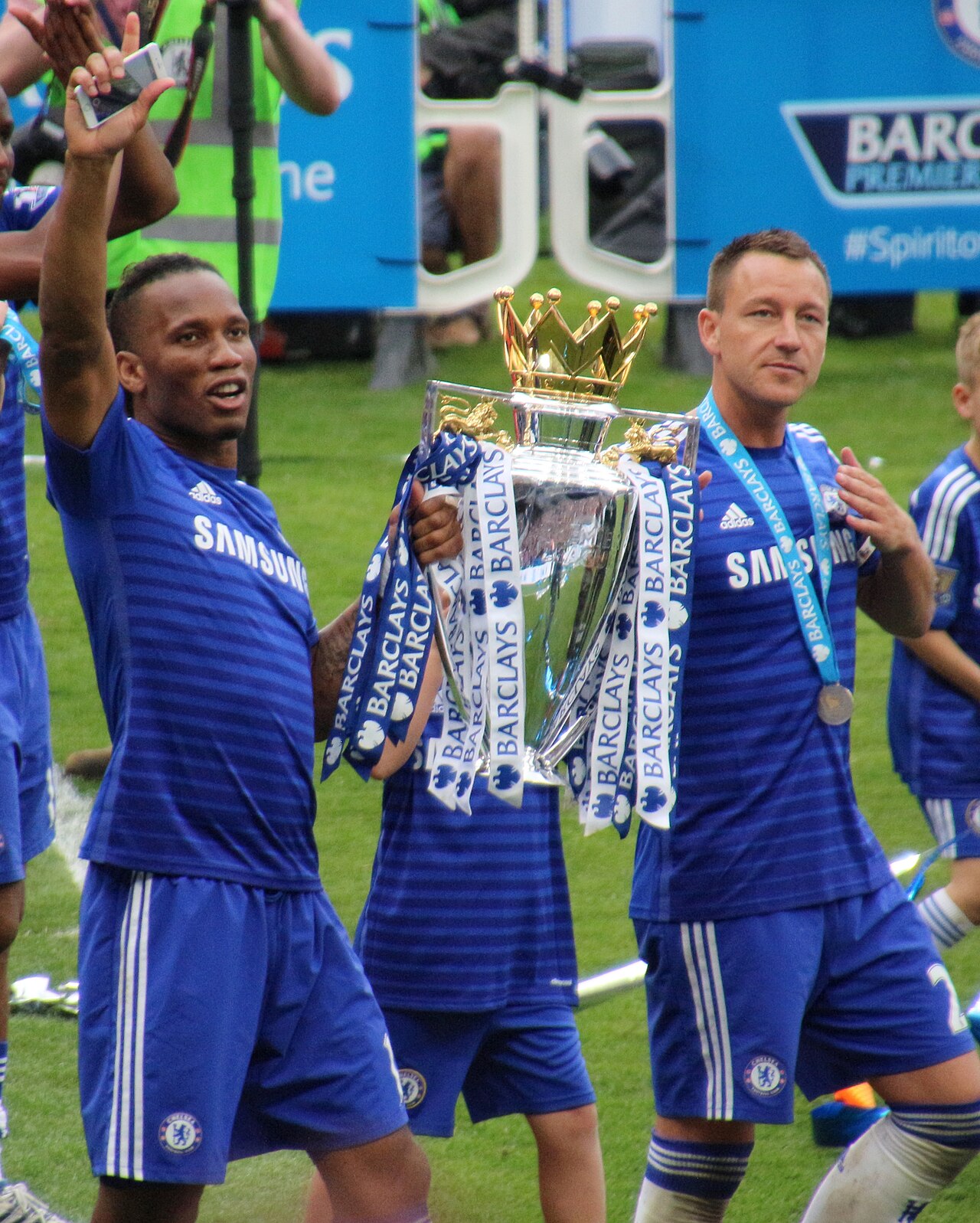
Yet for all those triumphs, one prize had long eluded both Drogba and Chelsea: the UEFA Champions League. The agony of near misses, including a heartbreaking final defeat to Manchester United in Moscow in 2008, hung over the club. The chance for redemption came in 2012. Chelsea, no longer the young force of Mourinho’s early years, reached the final against Bayern Munich, played at Bayern’s own Allianz Arena. For most of the match the home side dominated and took the lead late on. Defeat seemed certain. Then, in the eighty-eighth minute, Drogba met a corner with a powerful header to equalise and force extra time. After the additional period failed to separate the teams, the final went to a penalty shootout. Fittingly, it was Drogba who stepped forward to take the decisive kick. He scored, and Chelsea were at last champions of Europe. It was the perfect finale to his first spell at the club, a moment of destiny that sealed his status as a Chelsea legend and the greatest striker in the club’s history.
“I’m not a hero. I’m just a footballer who tries to use his profile to help people. If I can do something good with my position, I have to do it.”
The Ivory Coast Hero
While Drogba was conquering Europe with Chelsea, he was also leading his national team into a golden era. As captain of the Ivory Coast, he became the figurehead of a remarkable generation of players that included Kolo and Yaya Touré, Salomon Kalou, and Emmanuel Eboué. Together they turned the Ivory Coast into one of the strongest sides in African football, regular contenders at the Africa Cup of Nations and qualifiers for the FIFA World Cup. Drogba was the heart of that team, its top scorer and its inspirational leader, and he became the most famous Ivorian on earth.
But his homeland was in crisis. Since 2002 the Ivory Coast had been split by a brutal civil war, the country divided between a government-held south and a rebel-controlled north. Thousands had died and the nation lived under the shadow of violence and mistrust. It was against this backdrop, in October 2005, that Drogba performed perhaps the single most important act of his life, one that had nothing to do with goals or trophies.
The Ivory Coast had just qualified for their first ever World Cup, beating Sudan and relying on results elsewhere to secure their place in the 2006 finals in Germany. In the dressing room in Khartoum, amid wild celebrations, Drogba grabbed a television microphone, gathered his teammates around him, and dropped to his knees. On live national television, he made an emotional plea to his countrymen. He begged the fighters on both sides to lay down their weapons and to forgive one another, calling on Ivorians to come together as one people. The moment was raw, heartfelt, and impossible to ignore. Coming from the country’s most beloved figure, the appeal carried a moral weight that politicians could not command. In the weeks that followed, momentum towards peace grew, and a ceasefire took hold. While many factors contributed to the easing of the conflict, Drogba’s televised plea is widely remembered as a turning point that helped pull the nation back from the brink.
He did not stop there. In a further gesture of unity, Drogba used his influence to have an Africa Cup of Nations qualifier moved to Bouaké, the stronghold of the northern rebels, in 2007. Bringing the national team to play in the heart of rebel territory was a powerful symbol, a declaration that the Ivory Coast belonged to all its people regardless of which side they had fought on. Fans from across the divide came together to cheer the same team, and the match became a celebration of reconciliation. Through these acts, Drogba showed that a footballer could be far more than an entertainer. He could be a unifier, a peacemaker, and a source of hope for a wounded nation.
Later Career
After lifting the Champions League in 2012, Drogba left Chelsea, and the next phase of his career took him on a journey across the football world. He first moved to China, joining Shanghai Shenhua in a high-profile transfer that reflected the growing ambition of Chinese football. His time there was brief, and in early 2013 he moved on to Turkey, signing for the Istanbul giant Galatasaray. In Turkey he enjoyed a productive spell, helping Galatasaray win the Süper Lig title and continuing to compete in the Champions League, scoring against some of Europe’s best teams and proving that his powers had not deserted him.
In 2014 Drogba returned to where his legend had been forged, rejoining Chelsea under Jose Mourinho, who had also come back for a second stint as manager. Though he was now in the twilight of his career and used more sparingly, the reunion was a sentimental success. He contributed important goals and leadership as Chelsea won another Premier League title and the League Cup in the 2014 to 2015 season, allowing him to add still more silverware to his collection and to say a proper farewell to the club’s supporters.
His final playing years took him across the Atlantic. In 2015 he signed for the Montreal Impact in Major League Soccer in Canada, where he made an immediate impact with a flurry of goals that delighted North American fans. Later he became a player and part-owner of Phoenix Rising in the United States, an unusual dual role that hinted at his ambitions beyond the pitch. By the time he hung up his boots, Drogba had played on three continents at the highest levels, carrying his trademark blend of power, intelligence, and big-game character wherever he went.
What stood out throughout these later moves was Drogba’s professionalism and the respect he commanded wherever he played. He was never a passenger collecting a final pay cheque. At every club he joined, from Shanghai to Istanbul to Montreal, he led by example, mentored younger players, and brought a winning mentality that lifted those around him. His longevity was remarkable for a player who relied so heavily on physical strength, and it spoke to his discipline and dedication. Even in his late thirties he remained a goal threat and a figure opponents feared. When he finally retired from playing in 2018, he did so as one of the most widely admired footballers of his era, having left a positive mark on every league he had graced.
Legacy and Humanitarian Work
Drogba’s importance to football and to Africa cannot be measured in goals alone, though those numbers are formidable. He stands as Chelsea’s record African goalscorer and one of the most decorated players in the club’s history. He was twice named African Footballer of the Year, in 2006 and again in 2009, recognition of his standing as the continent’s finest. He is routinely listed among the greatest African players of all time, mentioned in the same breath as legends such as George Weah, Samuel Eto’o, and Roger Milla. For a generation of young Africans, he became living proof that a child from the streets of Abidjan could rise to rule the European game.
Off the pitch, his contribution has been just as profound. In 2007 he established the Didier Drogba Foundation, dedicated to improving health and education in his homeland. The foundation set out to build hospitals and medical facilities, raise funds for treatment, and support schools and young people in the Ivory Coast and across Africa. He famously donated his earnings from sponsorship deals to fund the construction of a hospital in Abidjan, putting his own money where his words had been. His commitment to using his fame for the good of others, first glimpsed in that televised plea for peace, became the defining thread of his life beyond football.
The wider world took notice. In 2010 Drogba was named by Time magazine as one of the one hundred most influential people in the world, a rare honour for any footballer and a testament to the unique role he played as both a sporting icon and a force for peace and progress. He carried his influence into the structures of the game as well, serving in roles connected to football governance and athlete advocacy, and continuing to speak out on issues affecting Africa.
When the story of African football is told, Didier Drogba will always occupy a special place. He was a champion who won the biggest trophies the sport can offer, a leader who carried his national team into history, and above all a man who understood that his platform came with responsibility. The boy who once cried for his parents in a foreign land grew into a giant who gave hope to a divided nation. That, more than any goal or medal, is the measure of the Ivorian lion.
Key Facts
- Didier Drogba was born on 11 March 1978 in Abidjan, Ivory Coast, and was sent to live with his footballer uncle in France as a young boy.
- He became Chelsea’s greatest and record African goalscorer, winning multiple Premier League titles and famously scoring the late equaliser and decisive penalty in the 2012 Champions League final against Bayern Munich.
- He was named African Footballer of the Year twice, in 2006 and 2009.
- In 2005 his televised plea for peace, after the Ivory Coast qualified for its first World Cup, helped bring about a ceasefire in the Ivorian civil war.
- Through the Didier Drogba Foundation he has funded hospitals and supported health and education in his homeland, and Time magazine named him among the one hundred most influential people in the world in 2010.