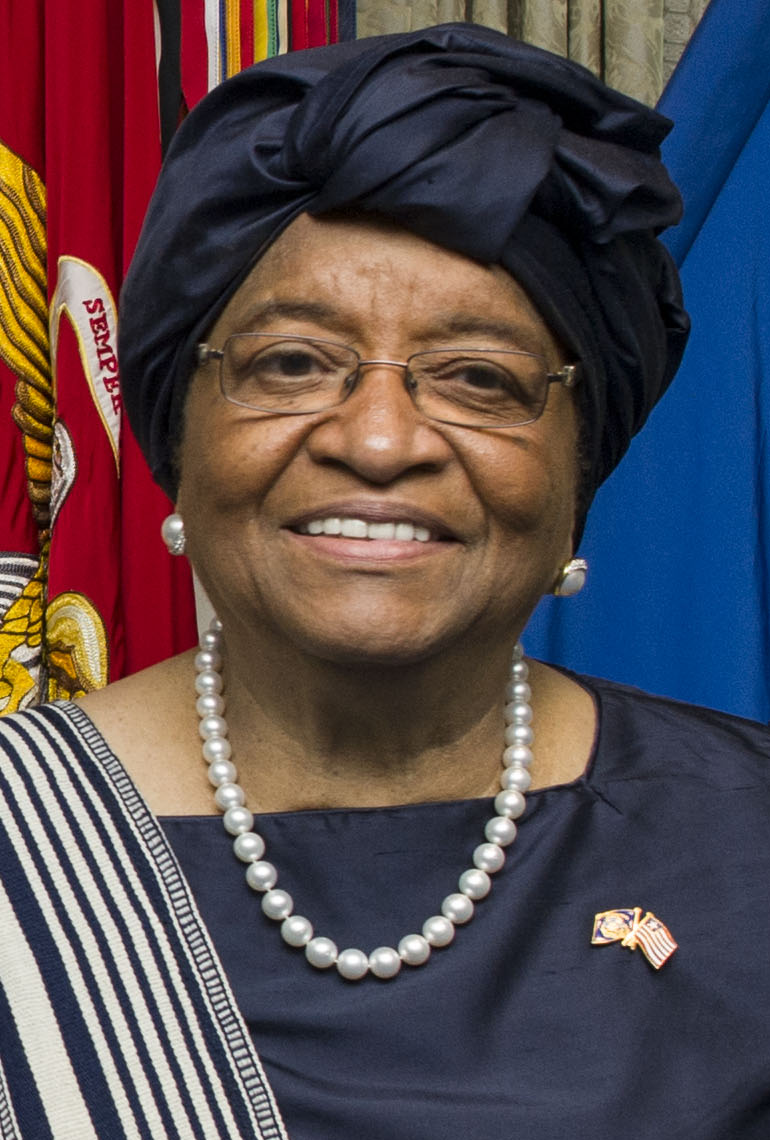
When Ellen Johnson Sirleaf took the oath of office on the steps of the Capitol Building in Monrovia on 16 January 2006, she stood before a country that had nearly destroyed itself. Two civil wars across fourteen years had killed an estimated 250,000 people, emptied the treasury, shattered the power grid, and scattered a generation of Liberians into refugee camps across West Africa. The capital had no reliable running water and almost no electricity. Child soldiers wandered the streets without schools to attend or jobs to fill. Into that wreckage walked a 67-year-old grandmother in a bright headwrap, a Harvard-trained economist who had spent decades as a banker, an exile, and a prisoner. She was, that morning, the first woman ever elected to lead a country in Africa.
The improbability of the moment was matched only by the length of the road that led to it. Ellen Johnson Sirleaf had been jailed by one government, sentenced to ten years by another, forced into exile more than once, and very nearly killed during Liberia’s descent into chaos. She had worked in the corridors of the World Bank and Citibank, advised the United Nations, and run for office knowing the man she opposed had the guns. Her nickname, “The Iron Lady,” was earned the hard way. This is the story of how a girl born in a poor Monrovia neighbourhood became a Nobel laureate and a symbol of what women’s leadership could mean for an entire continent.
Quick Facts
- Full name
- Ellen Johnson Sirleaf
- Born
- 29 October 1938, Monrovia, Liberia
- Known for
- President of Liberia 2006 to 2018; first elected female head of state in Africa
- Nobel Prize
- Peace, 2011 (shared)
- Nickname
- "The Iron Lady" of Liberia
Early Life and Background
Ellen Johnson was born on 29 October 1938 in Monrovia, the capital of Liberia, a country founded in the nineteenth century by freed African Americans and shaped ever since by the tension between those settler descendants and the indigenous majority. Her own heritage straddled that divide. Her father, Jahmale Carney Johnson, was of Gola descent from rural Liberia, the son of a chief, and one of the first indigenous Liberians to win a seat in the national legislature. Her mother was of mixed parentage: part Kru from the Liberian coast and part German, her own father a trader who had left the country during the First World War when Liberia, siding with the Allies, expelled German nationals.
This mixed background mattered enormously in a Liberia rigidly stratified by the Americo-Liberian settler elite. Ellen grew up neither fully inside that privileged class nor outside it, and the experience gave her an early, sharp understanding of how power and exclusion worked in her homeland. The family was not wealthy. After her father suffered a stroke and could no longer work, the household struggled, and the young Ellen absorbed lessons about hardship and resilience that would later define her public persona.
She attended the College of West Africa, a Methodist school in Monrovia, where she received the foundation of her education. Then, at seventeen, in keeping with the conventions of the time, she married. Her husband was James Sirleaf, a young man who would go on to study agriculture in the United States. The couple had four sons in quick succession. By the standards of mid-century Liberia, Ellen’s future seemed settled: a wife and mother before she was out of her teens, her horizons drawn close around the domestic.
It did not turn out that way. The marriage proved difficult, marked by periods of abuse, and it eventually ended in divorce. But the more decisive break came in Ellen’s mind. She refused to accept that early motherhood meant the end of her ambitions. With four small boys and a marriage under strain, she made a decision that would alter the course of her life and, eventually, her country’s history: she would pursue education as far as it could take her.
Education and Early Career
When James Sirleaf travelled to the United States to study, Ellen went with him, and she seized the opportunity to build her own academic record. She enrolled at Madison Business College in Wisconsin, where she studied accounting between 1961 and 1964. The discipline of numbers, balance sheets, and the mechanics of money would become the spine of her entire career. Unlike many politicians who arrive at economics through ideology, Sirleaf came to it through the practical training of an accountant and the technical fluency of someone who genuinely understood how budgets and debts and development financing actually functioned.
She returned to Liberia and entered the civil service, taking a position in the Treasury. Her competence was quickly evident, and it opened doors that few Liberian women of her generation could have imagined walking through. But she wanted more rigorous training, and in the late 1960s she went back to the United States to pursue it. She studied economics at the University of Colorado, and then enrolled at Harvard University, where in 1971 she earned a master’s degree in public administration from the John F. Kennedy School of Government. A degree from Harvard placed her among the most highly educated Liberians of her era, man or woman, and it equipped her with the credentials to operate at the highest levels of government and international finance.
Returning home, she rose rapidly. By the early 1970s she had become Deputy Minister of Finance under President William Tolbert. It was a position of real influence, and Sirleaf used it to make a name for herself as a clear-eyed technocrat unafraid to say uncomfortable things about the state of the nation’s finances. That willingness to speak plainly, even when it offended powerful people, became her trademark, and it would repeatedly put her in danger over the decades to come. In 1972, at a commencement address, she delivered pointed criticism of the government’s economic management, an early sign that she would not be a quiet functionary content to keep her head down.
Exile and Political Struggle
The Liberia of Ellen Johnson Sirleaf’s middle years was a country sliding toward catastrophe, and she found herself at odds with each successive holder of power. President Tolbert, who led the Americo-Liberian establishment, presided over deepening inequality and unrest. In April 1980, that order collapsed violently. A group of soldiers led by Master Sergeant Samuel Doe stormed the Executive Mansion, assassinated Tolbert, and seized control. Days later, thirteen senior officials of the old government were stripped, tied to poles on a Monrovia beach, and shot dead before crowds and cameras. The settler elite that had ruled Liberia for more than a century was finished, and a brutal new chapter had begun.
Sirleaf initially accepted a role under the Doe regime, serving briefly as Minister of Finance. But she could not stay silent about the corruption and repression she witnessed, and the relationship soured fast. She left the government and the country, beginning the first of her long stretches abroad. During the 1980s she built a formidable career in international finance and development. She worked for Citibank in Nairobi, served as a vice president at the regional office of the HSBC equity holding bank in Africa, and held senior posts at the World Bank in Washington. She also worked with the United Nations Development Programme, eventually serving as Assistant Administrator and Director of its Regional Bureau for Africa. These were not ceremonial positions. They placed her at the centre of debates about how poor countries financed their futures, and they gave her a network of contacts and a depth of expertise that few African politicians could match.
Yet she never abandoned Liberia. When she returned in the mid-1980s to contest a Senate seat, the experience nearly cost her life. After speaking out against the Doe government, she was arrested and imprisoned. She was sentenced to ten years, a punishment that would have ended most political careers and many lives. International pressure and her own resolve secured her release, and she went back into exile, but the imprisonment cemented her reputation at home as a woman of extraordinary courage who would risk everything to confront tyranny.
The 1990s brought a horror even greater than Doe. In December 1989, a warlord named Charles Taylor launched an insurgency from neighbouring Côte d’Ivoire, plunging Liberia into the first of two devastating civil wars. Doe was captured and tortured to death in 1990, an event filmed and circulated as a grim warning. The country fragmented among competing militias who conscripted children, looted everything, and committed atrocities on a staggering scale. Sirleaf, like so many of her compatriots, was forced to navigate this nightmare from a distance and from within, and her record during this period was not without controversy: she initially gave financial backing to Taylor’s rebellion against Doe, a decision she later publicly regretted and apologised for, having come to see Taylor for the murderous figure he was.
The Long Road to the Presidency
By the mid-1990s, Ellen Johnson Sirleaf had broken decisively with Charles Taylor and had become one of his most prominent opponents. When Liberia held elections in July 1997, in the exhausted aftermath of the first civil war, she returned to run for the presidency against him. The contest was profoundly unequal. Taylor controlled most of the country through force, and many Liberians voted for him out of fear, reasoning that if he lost he would simply restart the war. A grim slogan captured the mood of that election: people would say they were voting for Taylor because he had killed their relatives and would do so again if denied. Taylor won overwhelmingly. Sirleaf finished a distant second with around ten percent of the vote, and afterwards she was charged with treason and once again pushed into exile.
Taylor’s presidency delivered exactly the catastrophe his critics had feared. By 1999 a second civil war had erupted, with rebel groups advancing on Monrovia from the north and south. The fighting reached the capital itself in 2003, with mortar shells landing among terrified civilians. That same year, indicted for war crimes by a court in neighbouring Sierra Leone and facing rebels at the gates, Taylor finally relented. He resigned and went into exile in Nigeria, and a peace agreement signed in Accra, Ghana, in August 2003 brought the war to an end. A transitional government and a large United Nations peacekeeping mission took charge of a ruined nation.
When Liberia organised fresh elections in 2005, the first genuinely free vote in a generation, Sirleaf entered the race under the banner of the Unity Party. The field was crowded, and her best-known rival was George Weah, the legendary footballer and FIFA World Player of the Year, who was hugely popular, especially among young men. In the first round of voting in October 2005, Weah led, but neither candidate reached the threshold for an outright win. The race went to a run-off in November. Sirleaf campaigned hard on her experience and her promise to bring competence and stability, drawing decisive support from Liberian women, who turned out in large numbers for a candidate they saw as one of their own. She won the run-off with roughly 59 percent of the vote. After decades of exile, prison, and defeat, Ellen Johnson Sirleaf had become the president-elect of Liberia.
President of Liberia
Her inauguration on 16 January 2006 was a moment of global significance. Dignitaries including the United States Secretary of State and the First Lady attended, and the world’s media recorded the swearing-in of the first woman ever elected to lead an African nation. But the symbolism, however powerful, sat atop a mountain of practical ruin. Sirleaf inherited a country with national debt estimated at around 4.7 billion United States dollars, a sum many times larger than its annual economic output. Government revenue was minuscule. Most of Monrovia had been without public electricity and piped water for fifteen years. Institutions barely functioned, unemployment was almost total, and tens of thousands of former fighters needed to be disarmed and reintegrated into a society that feared them.
Sirleaf attacked these problems with the discipline of the economist she had always been. Her signature early achievement was financial. Drawing on her credibility with international lenders and her decades of experience inside institutions like the World Bank, she negotiated relentlessly for debt relief. The effort culminated in 2010, when Liberia qualified under the Heavily Indebted Poor Countries initiative and saw the vast majority of its external debt cancelled, freeing the country from a burden that would otherwise have crushed any hope of recovery. It was a transformational accomplishment, and it reflected exactly the kind of technical leadership her supporters had hoped for.
She also moved to restore the basics of a functioning state. Within her first years, electricity and street lighting began returning to parts of Monrovia for the first time since the war. She rebuilt roads, reopened schools, and worked to attract foreign investment back into Liberia’s iron ore, rubber, and timber sectors. She championed free and compulsory primary education and made the empowerment of women and girls a stated priority of her government, appointing women to senior positions including the police and key ministries.
Corruption proved a far tougher adversary. Sirleaf declared it “public enemy number one” and set up anti-corruption bodies, but graft was woven so deeply into Liberian governance that progress was uneven and painfully slow. Critics, including some of her own allies, charged that she did not move forcefully enough against corruption within her circle, and that members of her family held influential government posts. These criticisms would shadow her presidency to its end and complicate the otherwise heroic narrative of her tenure. She was re-elected to a second term in 2011, though the run-off that year was boycotted by the opposition amid disputes over the conduct of the first round, denting the legitimacy of the victory.
The Ebola Crisis and Nobel Peace Prize
In October 2011, while campaigning for re-election, Sirleaf received word that she had been awarded the Nobel Peace Prize. She shared it with two other women: Leymah Gbowee, the Liberian activist whose movement of women, Christian and Muslim together, had pressured the warring factions toward the 2003 peace deal, and Tawakkol Karman of Yemen, a leading voice of that country’s pro-democracy uprising. The Norwegian Nobel Committee honoured all three “for their non-violent struggle for the safety of women and for women’s rights to full participation in peace-building work.” For Sirleaf, the prize was an extraordinary international validation, though some at home noted the awkward timing, arriving just days before a contested election.
The greatest test of her presidency came in 2014, when the Ebola virus swept across West Africa, hitting Liberia, Sierra Leone, and Guinea hardest of all. The epidemic exposed how fragile Liberia’s rebuilt health system still was. Hospitals were overwhelmed, bodies lay in the streets of Monrovia, and the disease, transmitted through contact with the sick and the dead, threatened to unravel everything Sirleaf had spent eight years rebuilding. By the time the outbreak was brought under control, more than 4,800 Liberians had died, and the country’s economy had taken another severe blow.
Sirleaf’s handling of the crisis drew both praise and criticism. She declared a state of emergency, imposed quarantines, and at one point ordered a controversial cordon around the West Point slum in Monrovia that provoked violent unrest and was soon lifted. But she also wrote directly to world leaders pleading for help, mobilised international assistance, and oversaw the eventual containment campaign that, with foreign support and the courage of local health workers, finally halted the spread. By 2016 the World Health Organization declared the outbreak over. Liberia had survived, battered but intact, and Sirleaf’s persistence in rallying global aid was widely credited as a key factor.
“If your dreams do not scare you, they are not big enough,” she told graduates at Harvard, a line that captured the audacity that had carried her from a Monrovia childhood to the Nobel podium.
Legacy
Perhaps Ellen Johnson Sirleaf’s most consequential act came at the very end of her time in office, and it was an act of restraint. Constitutionally barred from a third term, she did not cling to power, manoeuvre to extend her rule, or anoint a controlled successor. Liberia held a competitive election in 2017, and in January 2018 Sirleaf handed the presidency to George Weah, the very man she had defeated in 2005. It was the first peaceful, democratic transfer of power between elected leaders in Liberia in more than seventy years. In a region and a continent where leaders frequently overstay their welcome, the orderly handover stood as one of the defining achievements of her career and a model of how democratic transitions should work.
Her record, viewed in full, is one of genuine greatness shadowed by real failings. She pulled Liberia back from the abyss, restored its standing in the world, won massive debt relief, kept the peace through twelve fragile years, and proved that an African woman could lead a nation and lead it through its darkest trials. Yet she left office with poverty still widespread, corruption still entrenched, and the public services of ordinary Liberians still painfully inadequate. The Truth and Reconciliation Commission of Liberia had even recommended, in 2009, that she be barred from public office for thirty years because of her early support for Charles Taylor, a recommendation that was never enforced but that reflected the genuine ambivalence many Liberians felt about her past.
After leaving the presidency, Sirleaf did not retreat into silence. She founded the Ellen Johnson Sirleaf Presidential Center for Women and Development, dedicated to preparing the next generation of women across Africa to take up positions of leadership. She served on international panels, including co-chairing an independent review of the World Health Organization’s response to the Covid-19 pandemic, drawing on the hard lessons of her own Ebola experience. She remained one of the most respected elder stateswomen on the continent, a living argument for the proposition she had spent her life proving: that women belonged at the very top of public life, not as exceptions but as a matter of course.
For millions of girls in Liberia and far beyond, the image of Ellen Johnson Sirleaf, the accountant’s daughter who survived prison and exile and war to govern a nation and win the Nobel Peace Prize, became a permanent expansion of what seemed possible. She had refused, at seventeen, to let early marriage close her horizons. Decades later she had refused to let a ruined country defeat her. The Iron Lady of Liberia had earned every syllable of the name.
Key Facts
- Ellen Johnson Sirleaf was born on 29 October 1938 in Monrovia and earned a master’s degree in public administration from Harvard University in 1971.
- She became the first elected female head of state in Africa when she was inaugurated as President of Liberia on 16 January 2006.
- She was imprisoned and sentenced to ten years under the Samuel Doe regime in the 1980s, and endured multiple periods of exile while working for Citibank, the World Bank, and the United Nations.
- She shared the 2011 Nobel Peace Prize with Leymah Gbowee and Tawakkol Karman for non-violent work advancing women’s rights and peacebuilding.
- She served two terms and peacefully handed power to George Weah in January 2018, the first democratic transfer between elected leaders in Liberia in more than seventy years.