Every era has its cultural turning points, and the arrival of Elvis Aaron Presley on the national consciousness of the United States in 1956 was one of the most consequential in the history of American popular culture. In the space of a few months he moved from regional obscurity to a level of national attention that the entertainment industry had never previously encountered, and in doing so he changed not just the sound of popular music but the relationship between an audience and a performer, the social meaning of youth culture, and the cultural geography of a country that had been trying to keep its racial tensions at arm’s length. He was twenty-one years old, and he had no idea what he was setting in motion.
Quick Facts
- Full name
- Elvis Aaron Presley
- Born
- 8 January 1935, Tupelo, Mississippi, USA
- Died
- 16 August 1977, Memphis, Tennessee, USA (aged 42)
- Genre
- Rock and roll, country, gospel, blues, pop
- Known for
- Pioneering rock and roll, prolific recording and film career, Las Vegas residency
Tupelo: Poverty and the Church
Elvis Aaron Presley was born on 8 January 1935 in a two-room shotgun house in Tupelo, Mississippi, a small city in the northeastern corner of a state that was, in the 1930s, one of the poorest in the country. He was one of twin sons: his brother Jesse Garon was stillborn, a loss that would weigh on Elvis throughout his life and contribute to the intense attachment he felt toward his mother. His father, Vernon Elvis Presley, was an occasional farm labourer and handyman who struggled to hold down steady work. His mother, Gladys Love Smith Presley, was the driving force of the family, a fierce and loving woman whose relationship with her surviving son was one of the most formative and, in some respects, most complicated of his life.
The family’s poverty was not unusual in Depression-era Mississippi, but it was real and it was constant. Vernon Presley served a brief prison term for cheque forgery when Elvis was three years old, an episode that deepened the family’s financial difficulties and added a layer of instability to what was already a precarious existence. But within the walls of the small house and the local church, there was music. The Assembly of God congregation that the Presleys attended sang with a full-bodied expressiveness rooted in the African American gospel tradition, and from early childhood Elvis absorbed this music with an intensity that those around him found remarkable.
He received a guitar as a birthday present at the age of eleven, a choice that has been somewhat mythologised in retrospect but that reflected the practical reality that instruments were among the more affordable gifts available. He taught himself the basics in the way that naturally gifted musicians always have: by ear, by imitation, by trial and error. He was never technically trained on any instrument in any formal sense, but he developed a feel for music and a physical relationship with performance that no conservatoire could have provided.
Memphis and the Journey to Sun Studio
When Elvis was thirteen, his family moved to Memphis, Tennessee, then as now a city of enormous musical significance. Memphis sat at the intersection of the Mississippi Delta blues tradition, the gospel music of its Black churches, the hillbilly country of the rural South, and the rhythm and blues that was beginning to emerge from the urban Black communities of the city’s segregated neighbourhoods. The young Presley absorbed all of it, haunting Beale Street, listening to the music that flooded from blues clubs and churches, and developing an eclectic taste that crossed the racial lines that the wider culture was rigidly maintaining.
He graduated from Humes High School in 1953 and took a job driving a truck for the Crown Electric Company, an unremarkable beginning that gave no outward indication of what was about to happen. In the summer of that year he walked into the Memphis Recording Service, a small studio run by Sam Phillips under the Sun Records label, and paid four dollars to record two songs as a gift for his mother. The story is perhaps too neat to be entirely credible in its standard telling, but its broad outlines are accurate: Phillips’s assistant Marion Keisker noted something in the young man’s voice and kept his contact details.
Almost a year later, in the spring of 1954, Phillips called Presley back into the studio to try some material with two local musicians: guitarist Scotty Moore and bassist Bill Black. The sessions were initially unproductive, the three of them running through country ballads without finding a sound that felt distinctive. Then, during a break, Presley began playing an old blues number in a loose, ironic way, undercutting its original emotional gravity with a kind of physical playfulness, and Moore and Black joined in. Phillips, listening through the control room glass, stopped them and asked what they were doing. What they were doing was what would become rock and roll.
The Sun Sessions and the First Explosion
The recordings made at Sun Studio between 1954 and 1955 are among the most historically significant in the history of popular music. They were not polished; they were not produced in the sense that later pop records would be produced. They were captured moments of musicians finding a new thing, a synthesis of country and blues that had never quite existed before in that form, driven by Presley’s voice, which could move from the nasal twang of country to the full-throated expressiveness of gospel in the space of a single phrase.
The records sold well in the mid-South region, reaching country charts and introducing Presley to audiences at honky-tonks, barn dances and country music parks across the region. His live performances were already generating a reaction that went beyond ordinary enthusiasm. His stage manner was uninhibited in a way that had no precedent in white popular music: he moved his hips, he rolled his shoulders, he bent his knees and swung his whole body with a freedom that came directly from the Black gospel and R&B performances he had grown up watching. Young women in the audience responded with a physical and vocal intensity that the promoters and venue owners had never seen before. The older adults in attendance were frequently appalled.
Sam Phillips understood that what he had was extraordinary but that Sun Records was too small to take it to the scale it deserved. In November 1955 he sold Presley’s contract to RCA Victor for the sum of thirty-five thousand dollars, at the time the largest sum ever paid for a recording contract. Within months, the wisdom of the investment was beyond question.
1956: The Year Everything Changed
The first RCA recordings, made in January 1956 in Nashville with a larger ensemble than the spare Sun trio, produced “Heartbreak Hotel”, a song of stark, echo-saturated drama that was unlike anything on radio at the time. It went to number one and stayed there for eight weeks. The record established Presley nationally as something the country had not encountered before, and his television appearances, particularly on “The Milton Berle Show” and “The Ed Sullivan Show”, turned him from a regional sensation into a national event.
The controversy was immediate and enormous. Parents, ministers, newspaper columnists and politicians condemned his stage manner as obscene, as a corrupting influence on the young, and in terms that were sometimes explicit, as a degrading importation of Black cultural style into white popular music. This last objection was rarely stated quite so directly, but it was present in the subtext of much of the moral panic, and it reflected a genuine anxiety: rock and roll, as Presley embodied it, was crossing the colour lines that American society had spent generations trying to maintain. The music drew its energy from Black American traditions that white radio had been systematically excluding, and now, in the body and voice of a white kid from Mississippi, it was impossible to ignore.
“I never expected to be anybody important.”
For young people across the country, the reaction was the opposite. Presley represented something they had been waiting for without knowing it: a music that was physically direct, emotionally unguarded, and implicitly rebellious in its defiance of the propriety their parents demanded. He sold millions of records in 1956, starred in his first film (the pleasantly inconsequential “Love Me Tender”), and by the end of the year was the most famous young man in America.
The Golden Years: 1956 to 1958
The two years between Presley’s emergence as a national star and his induction into the United States Army in March 1958 represent the creative peak of his early career. The recordings he made for RCA during this period included some of the most recognisable songs in the American popular repertoire. His vocal approach was distinctive in ways that are worth examining: he brought an emotional directness and a physical presence to singing that had been largely absent from white popular music, and he had an instinct for dramatic phrasing, for the precise moment of restraint and release, that made even relatively minor material compelling.
He also demonstrated, particularly in his gospel recordings, a depth and a sincerity that the more frivolous aspects of his public image sometimes obscured. He had grown up with gospel, he loved it, and when he sang it he was not performing for an audience but expressing something genuine. The gospel albums he recorded throughout his career, and the gospel music that would be central to his later Las Vegas performances, showed a side of him that his rock-and-roll reputation sometimes overshadowed.
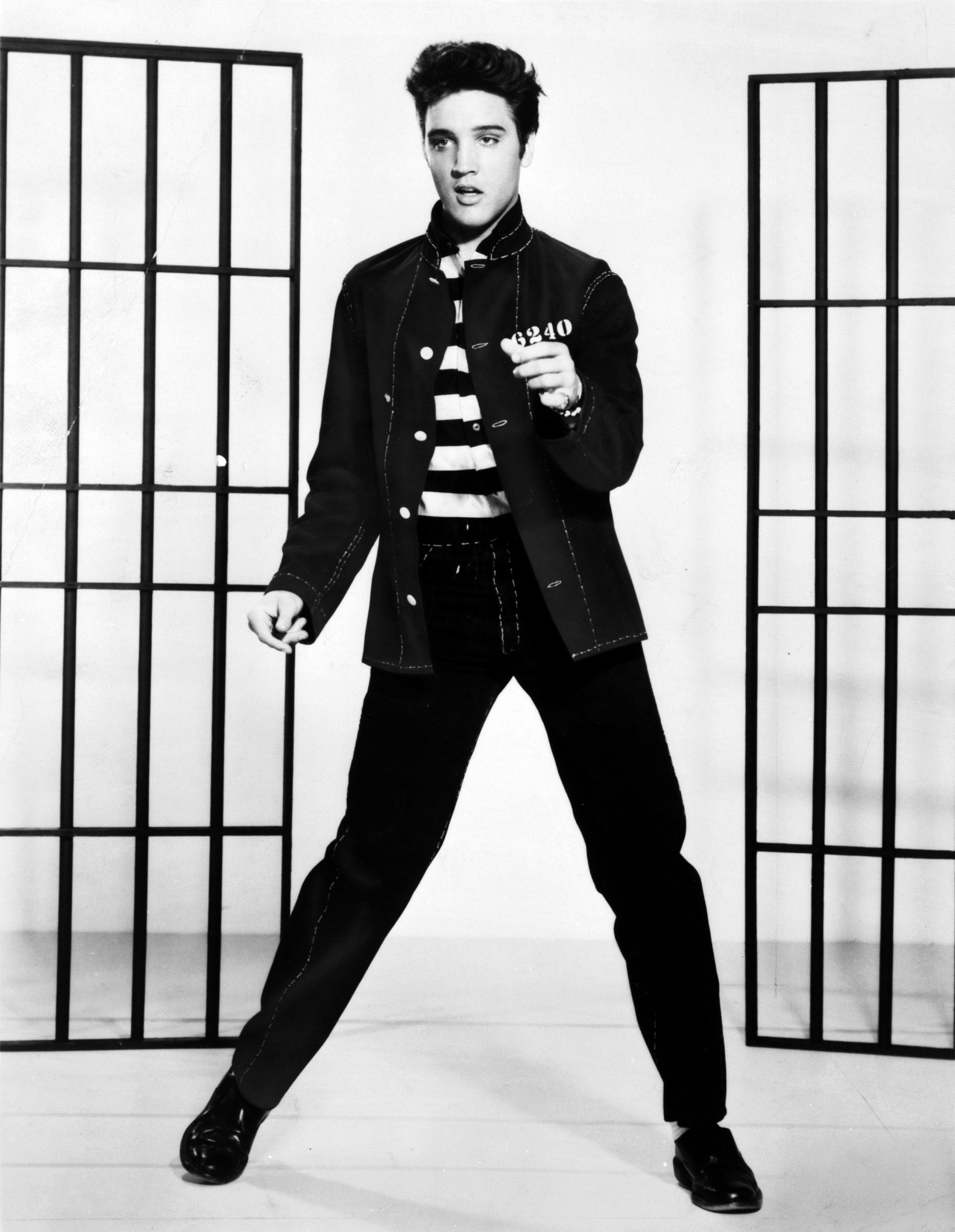
His film career began in this period and would eventually consume much of his attention and creative energy. The early films, particularly “Jailhouse Rock” (1957), were genuinely impressive vehicles: fast, stylish productions that gave him material worth performing and staging that showed his physical charisma to advantage. The title sequence of “Jailhouse Rock” is arguably the first great dance sequence in rock-and-roll cinema, and the image of Presley working through the choreography in front of a cellblock set became one of the most reproduced images of the era.
The Army Years and Their Consequences
In March 1958 Elvis Presley was drafted into the United States Army and assigned to a regular unit rather than, as many expected and his management proposed, to a special entertainment division. The decision to serve as an ordinary soldier, made at least partly by the advice of Colonel Tom Parker (his manager since 1955), was presented as evidence of patriotism and normality, and it did considerable work in making Presley acceptable to the audience segment that had found him threatening. He was shipped to Germany, where he served for two years.
The personal cost of the army years was significant. His mother Gladys, whose health had been declining, died of a heart attack in August 1958 while he was still stateside awaiting deployment. Her death was a blow from which, those close to him would later say, he never fully recovered. He was devoted to her in a way that could verge on dependency, and her loss left an emotional gap that he would spend the rest of his life trying to fill in ways that were not always healthy.
In Germany he met fourteen-year-old Priscilla Beaulieu, the daughter of an American air force officer, and began a relationship that would eventually lead to marriage after he returned to the United States. The relationship, begun when she was so young, has been examined and debated in the decades since, and it raises questions about power dynamics that are legitimate even as the formal outcome of the relationship (a marriage that lasted from 1967 to 1973) was by most accounts a complex rather than simple story.
The Hollywood Years and the Creative Plateau
When Presley returned from Germany in 1960, the terrain had shifted. The rock-and-roll revolution he had helped ignite in 1956 was now populated by dozens of other artists. The Beatles, emerging in Britain, would soon offer a different kind of challenge. And Colonel Tom Parker had a plan for Presley’s career that, in retrospect, would prove to be both commercially successful and artistically limiting.
The plan centred on Hollywood. Between 1960 and 1969 Presley made thirty-one films, most of them lightweight musical comedies with titles (“Blue Hawaii”, “Viva Las Vegas”, “Fun in Acapulco”, “Spinout”) that suggested a formula which was in fact precisely what they were. The formula required: a simple story in an exotic location, a leading lady, several songs embedded in the plot, and Presley’s charm as the glue holding it together. The films were reliably profitable, and the accompanying soundtrack albums usually sold well, but they occupied him almost completely and prevented the kind of creative development that other artists of his era were undergoing.
The soundtrack recordings, in particular, were a creative nadir. Parker and the film studios required songs that could serve as both album tracks and product placements within the films, and the result was a production-line approach to recording that produced a great deal of material notable mainly for its mediocrity. Presley was not unaware of the problem. In private, those close to him reported frustration and even embarrassment at the quality of what he was being asked to record.
The 1968 Comeback and the Reinvention
By 1967 and 1968 the creative situation was serious enough that even Parker recognised it. Presley’s recording career had drifted; the films were performing less well. What was needed was something that could remind the public why he had mattered in the first place. The solution was a television special, broadcast on NBC in December 1968, that became known as the “68 Comeback Special”.
The show was produced by Steve Binder, who had a clear vision of what needed to happen: strip away the Hollywood gloss, put Presley on a small stage with a small band, in front of a live audience, and let him be the artist he had always been at his best. The gamble worked spectacularly. Presley appeared in black leather, slim and focused in a way he had not been on screen in years, and delivered performances of searing intensity. The small-stage segments, recorded with the informality of a rehearsal, showed him reconnecting with the music at a level of emotional directness that the film years had all but obscured.
The special was watched by forty-two per cent of the American television audience, and it marked the beginning of a genuine creative resurgence. He returned to the studio in 1969 and recorded at American Sound Studio in Memphis, working with producer Chips Moman and a group of session musicians who had no interest in the Nashville formula and every interest in making great records. The result was “From Elvis in Memphis”, widely regarded as one of the finest albums of his career: a mature, emotionally honest collection of songs that showed the full range of his voice and his sensibility. The single “Suspicious Minds”, recorded in these sessions, became his first number-one hit since 1962.
Las Vegas and the Final Chapter
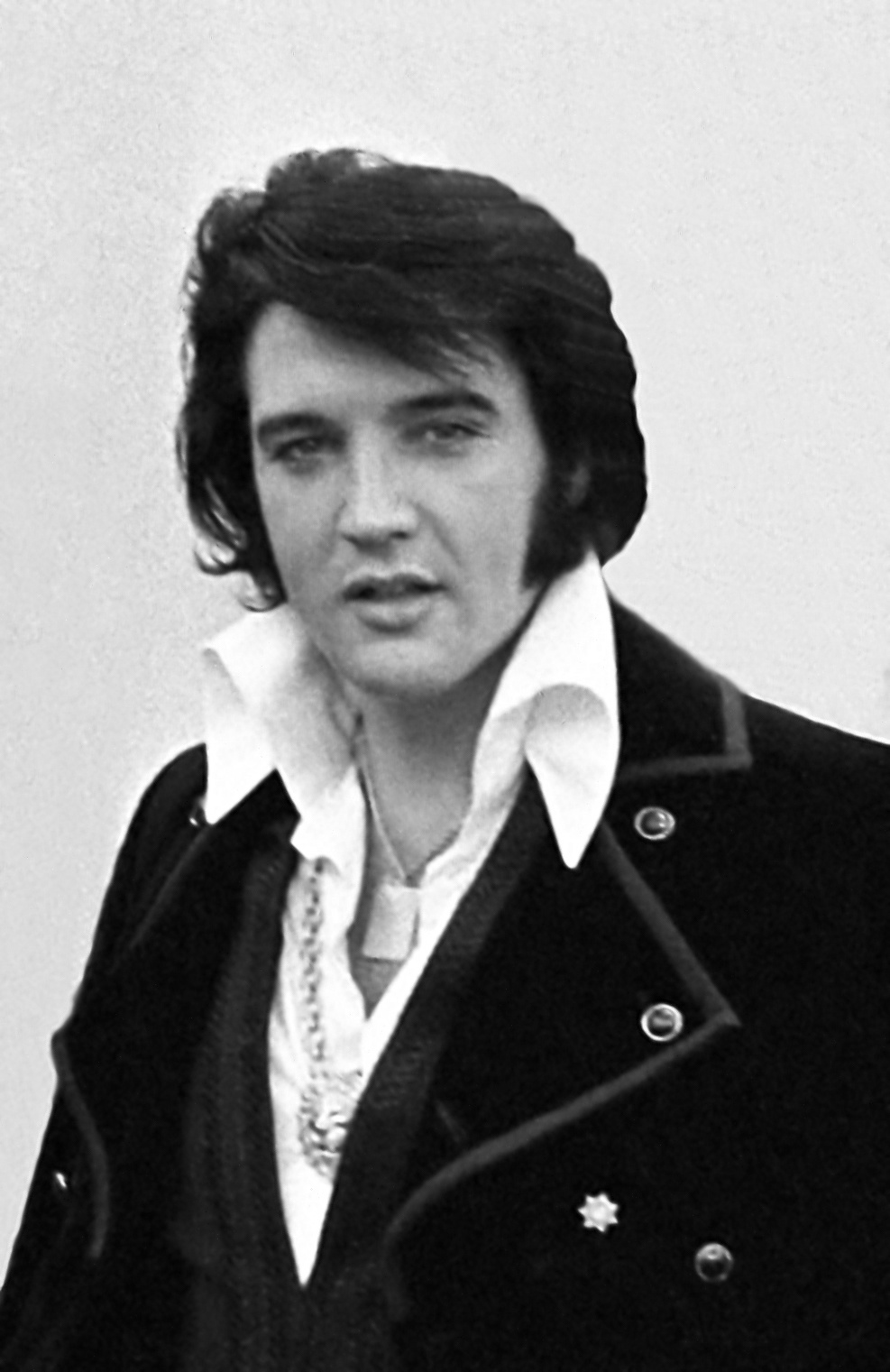
The Las Vegas residency that began in 1969 was, commercially, a triumph of the first order. Presley’s shows at the International Hotel (later the Las Vegas Hilton) set attendance records and were the hottest ticket in the city for years. He performed live more nights than perhaps any other major artist of his era, and the early Vegas shows were, by multiple accounts, genuinely impressive: he was in strong voice, physically commanding, and working with a band large enough to produce the full orchestral sound his later recordings required.
But the Vegas machine, while lucrative, was also a trap. The shows became formula, then routine, and then, as the 1970s progressed, something sadder. Presley’s health deteriorated under the combined pressure of prescription drug dependency, a diet that had become seriously unhealthy and a performance schedule that gave him almost no opportunity to rest or to live normally. His weight fluctuated dramatically. His performances became inconsistent: brilliant one night, unfocused the next. People close to him watched with helpless concern as a man of extraordinary gifts was consumed by the machinery of his own career.
His marriage to Priscilla ended in divorce in 1973, and the loss of his daughter Lisa Marie to Priscilla’s custody, combined with the isolation of his life in Memphis and Las Vegas, deepened an already serious depression. He surrounded himself with a group of friends and associates sometimes called the “Memphis Mafia”, a buffer between himself and a world he increasingly found overwhelming. The combination of social isolation, pharmaceutical dependency and physical decline was a crisis in slow motion.
On 16 August 1977, Elvis Presley was found unresponsive on the bathroom floor of his Graceland mansion in Memphis. He was forty-two years old. The official cause of death was cardiac arrhythmia, though the role of prescription drug accumulation in contributing to his heart failure has been extensively documented. The grief that followed was genuine and global: crowds gathered at Graceland, radio stations suspended their normal programming, and the President of the United States issued a statement.
Legacy
The legacy of Elvis Presley is written into the DNA of popular music as we understand it. He did not invent rock and roll, and he was the first to acknowledge the Black musical traditions from which his own style drew so directly. But he was the artist through whom those traditions reached the mainstream white audience of 1950s America, and in doing so he created a rupture in the culture that could not be repaired. After Elvis, the separation between Black and white musical styles that the industry had maintained became impossible to sustain.
His influence on the artists who followed him is beyond calculation. Every major act of the 1960s British Invasion, including the Beatles and the Rolling Stones, cited him as the essential starting point. Bob Dylan, who transformed popular music as a lyrical medium in the 1960s, described seeing Presley on television as a young man and feeling that anything was possible. The physical freedom he brought to performance, the idea that a singer could move, could express music through the body as well as the voice, has become so thoroughly absorbed into the conventions of popular performance that it is now invisible. Before Elvis, it did not exist.
Graceland, his Memphis home, has become one of the most visited private residences in the United States, attracting hundreds of thousands of pilgrims each year. His recordings continue to sell. His image circulates through the culture with the easy recognition of icons that transcend their original context. He was in many ways a deeply unhappy man whose gifts were not always well served by those around him. But the music he made, at his best, and the cultural moment he embodied, are permanent features of the landscape.
Key Facts
- Elvis Presley has sold more than 600 million records worldwide, making him one of the best-selling music artists of all time.
- He scored 18 number-one singles on the Billboard Hot 100, more than any other solo artist in the chart’s first two decades.
- He won three Grammy Awards, all for gospel recordings, reflecting the genre he was most personally invested in.
- Graceland, his Memphis home, is listed on the National Register of Historic Places and receives more than 600,000 visitors per year.
- His television appearances in 1956 and 1957 drew some of the largest audiences in the history of the medium up to that point, with the “Ed Sullivan Show” broadcasts watched by approximately 60 million viewers.