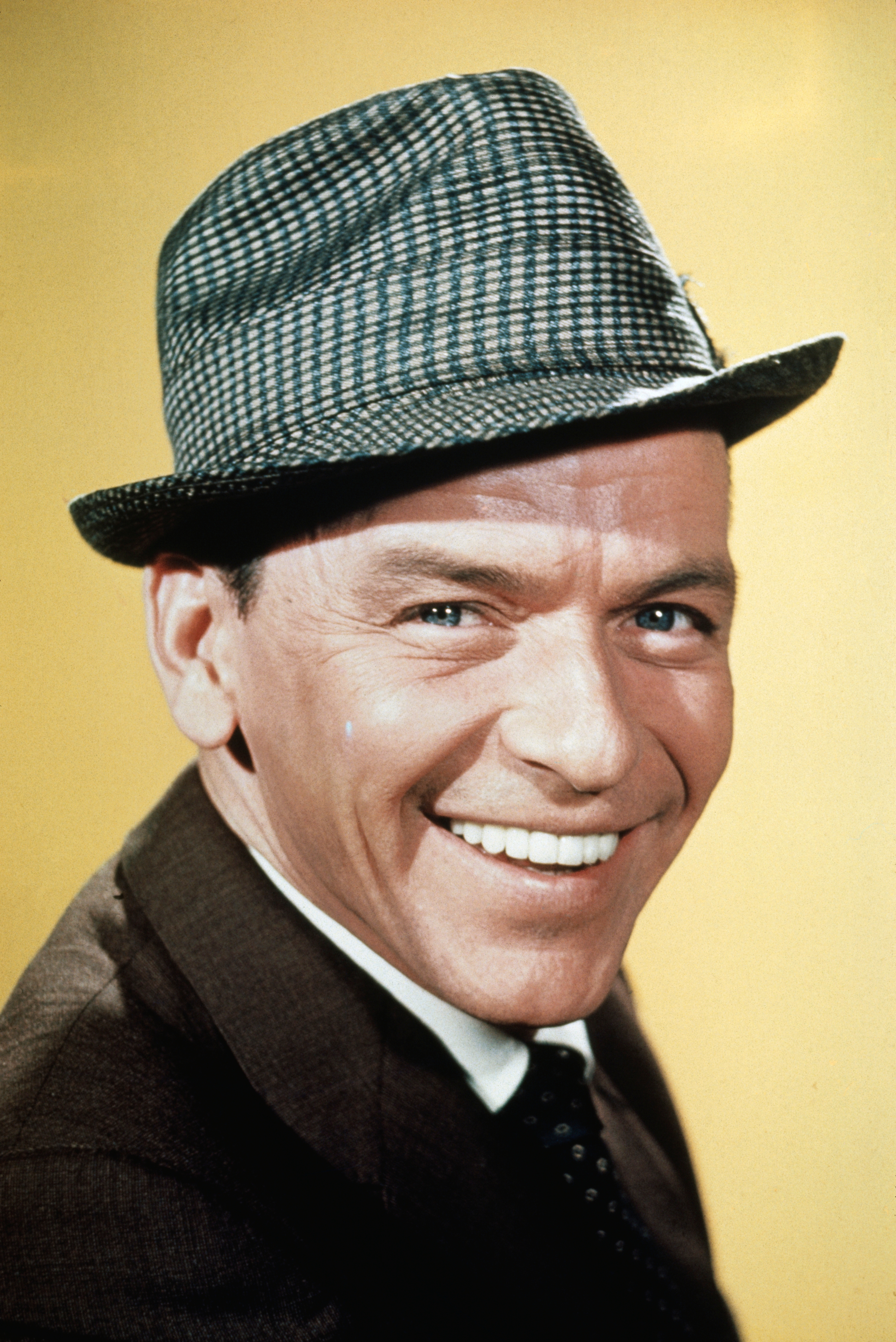
When the lights came up at the Paramount Theatre in New York and a slight, blue-eyed young man stepped to the microphone, the screaming began before he had sung a single note. The year was 1942, and the audience, packed with teenage girls in saddle shoes and rolled-down socks, had come not for a band but for a singer. That was the revolution. For the first time in the history of American popular music, the vocalist, not the orchestra leader, was the star. The young man was Francis Albert Sinatra of Hoboken, New Jersey, and over the next half century he would become the most influential popular singer who ever lived.
To call Sinatra a crooner is to miss almost everything that mattered about him. He treated a song the way an actor treats a script, weighing every word, bending a phrase to find the ache or the joy buried inside it. He could swing with reckless joy on one record and break your heart with the next. He built the modern album, lost his career and clawed it back, won an Academy Award, ran with presidents and gangsters alike, and turned the simple act of standing alone with a microphone into high art. This is the story of the man they called The Voice.
Quick Facts
- Full name
- Francis Albert Sinatra
- Born
- 12 December 1915, Hoboken, New Jersey, USA
- Died
- 14 May 1998, Los Angeles, California (aged 82)
- Genre
- Traditional pop, jazz, swing
- Known for
- One of the best-selling and most influential singers of all time
Early Life
Francis Albert Sinatra was born on 12 December 1915 in a cramped tenement on Monroe Street in Hoboken, New Jersey, a gritty industrial city across the Hudson River from Manhattan. His birth was difficult, and the doctor, using forceps, left scars on the left side of the infant’s face and neck that he would carry for life. His parents were Italian immigrants. His mother, Natalina, known to everyone as Dolly, had come from Genoa, a small, fiery, ferociously ambitious woman who worked as a midwife and as a local Democratic Party operative who could deliver votes in the immigrant wards. His father, Antonino Martino Sinatra, called Marty, was a quiet Sicilian who boxed under an Irish-sounding name and later served as a captain in the Hoboken Fire Department. Frank was their only child.
Dolly Sinatra was the dominant force in the household. She was loud, profane, generous and demanding, and she expected her son to rise above the docks and the saloons of their neighborhood. The family was not desperately poor by the standards of the day. Marty’s steady fire department wages and Dolly’s hustling gave young Frank nicer clothes than most of the other boys, earning him the nickname “Slacksey” for his abundant supply of trousers. Yet he often felt the sting of being an only child of immigrants in a tough town, and an early sense of being an outsider stayed with him.
He was not a strong student and dropped out of A. J. Demarest High School, drifting through odd jobs, including a stint working at a local newspaper. What gripped him instead was music. As a boy he was transfixed by the records and radio broadcasts of Bing Crosby, whose relaxed, intimate, conversational style of singing was transforming American popular music in the early years of the microphone. Sinatra would later describe the moment he decided, watching Crosby perform, that he too would become a singer. The ambition burned in him with an intensity that startled people. He studied phrasing obsessively, taught himself to read music well enough to follow an arrangement, and began performing wherever he could, at social clubs, roadhouses and amateur nights, often for almost nothing. In 1935 he joined a local singing group, and they appeared on the popular radio talent show Major Bowes Amateur Hour, winning first prize and a brief touring contract. From there the young man from Hoboken set out, with little but his voice and a relentless will, to conquer a country.
The Big Band Years
Sinatra’s apprenticeship took place inside the great American institution of the swing era: the big band. In 1939 the trumpeter and bandleader Harry James, who had just left Benny Goodman to form his own orchestra, heard Sinatra singing at the Rustic Cabin, a roadhouse in Englewood Cliffs, New Jersey, where the young vocalist also worked as a singing waiter and emcee. James hired him on the spot. With the Harry James Orchestra, Sinatra made his first commercial recordings, including a 1939 version of “All or Nothing at All” that sold modestly at the time but would become a major hit when it was reissued a few years later. James reportedly suggested the young singer change his name to something more marketable. Sinatra refused. He had already decided that the name on the marquee would be his own.
Within months a far bigger opportunity arrived. Tommy Dorsey, the trombonist who led one of the most popular and polished orchestras in the country, wanted Sinatra to replace his departing singer Jack Leonard. James, recognizing the chance for his ambitious vocalist, generously released Sinatra from his contract. Singing with Tommy Dorsey from 1940 to 1942 was the making of Frank Sinatra as an artist. Dorsey was famous for his seemingly endless, seamless trombone lines, holding a single breath through phrases of impossible length. Sinatra studied him night after night, trying to understand how the bandleader did it. He developed his own techniques of breath control, training himself to sustain long musical lines without an audible gasp, sometimes practicing by swimming underwater and holding his breath. The result was a vocal legato, a smooth, unbroken flow of melody, that became one of the hallmarks of his style. He also learned from Dorsey the art of phrasing a lyric so that it felt like natural speech, and from the band’s arrangers he absorbed a deep understanding of orchestral color.
With Dorsey, Sinatra scored a string of hits, including the 1940 recording “I’ll Never Smile Again,” which topped the new Billboard chart of best-selling records. He was becoming a name. By 1942 he had outgrown the role of a band singer. He wanted to be the star himself, the way Crosby was. After tense negotiations to buy out his Dorsey contract, Sinatra went solo, a daring move at a time when nearly all popular singers were employees of a bandleader. The gamble was about to pay off beyond anyone’s imagining.
Bobby-Soxer Idol
On 30 December 1942, Frank Sinatra opened as an “extra added attraction” at the Paramount Theatre in Times Square, on a bill headlined by the Benny Goodman band. Goodman, introducing the unknown young singer, is said to have been astonished by the wall of screams that greeted Sinatra’s name. The reaction in the theater that day was unlike anything American show business had seen. Teenage girls, the so-called bobby-soxers named for their ankle socks, shrieked, swooned, wept and fainted. The press coined a word for it: “Sinatramania.”
Over the following months and years the phenomenon only grew. Sinatra became a teen idol on a scale without precedent, the first modern pop star in the sense we now understand the term. His skinny frame, his vulnerable blue eyes and his caressing, intimate vocal style made millions of young women feel he was singing to each of them alone. The hysteria reached its peak in October 1944 during an engagement at the Paramount that became known as the “Columbus Day Riot,” when thousands of fans who could not get into the sold-out theater jammed Times Square, and the disturbance required a large police response. Newspaper columnists debated the meaning of it all. Psychologists were consulted. To young people living through the anxieties of the Second World War, Sinatra, classified as unfit for military service because of a punctured eardrum, was a romantic figure who stayed behind and sang of love and longing.
Through these years he recorded for Columbia Records, often working with the arranger and conductor Axel Stordahl, whose lush, string-laden settings framed Sinatra’s voice in shimmering romance. Hits such as “I’ll Be Seeing You,” “Saturday Night (Is the Loneliest Night of the Week)” and “Nancy (with the Laughing Face)” filled the airwaves. He moved to Hollywood, signing with the studio Metro-Goldwyn-Mayer, and appeared in musicals including Anchors Aweigh (1945) opposite Gene Kelly. He had risen, in just a few years, from a Hoboken roadhouse to the summit of American popular culture. But the very intensity of his early stardom, built so much on the swooning adoration of teenagers, carried within it the seeds of a fall.
The Fall and the Comeback
By the late 1940s and into the early 1950s, the world that had made Frank Sinatra seemed to be turning against him. Public taste was shifting toward a new generation of singers and, soon, toward the first stirrings of rock and roll. His record sales declined. His voice, strained by years of relentless work and, by some accounts, a hemorrhage to his vocal cords, betrayed him. His film career stalled. His personal life unraveled in full view of the public. He had married his Hoboken sweetheart Nancy Barbato in 1939, and they had three children, Nancy, Frank Junior and Tina, but his very public love affair with the glamorous Hollywood actress Ava Gardner, whom he married in 1951 after divorcing Nancy, scandalized many fans and generated relentless, often hostile press coverage. The marriage to Gardner was passionate and stormy, and its turmoil mirrored the chaos of his professional life.
By 1952 the situation was dire. His record label dropped him. His talent agency, the powerful MCA, let him go. His film studio released him from his contract. The teen idol of a few years earlier was widely written off as a has-been. Few comebacks in entertainment history have been as complete or as dramatic as the one that followed.
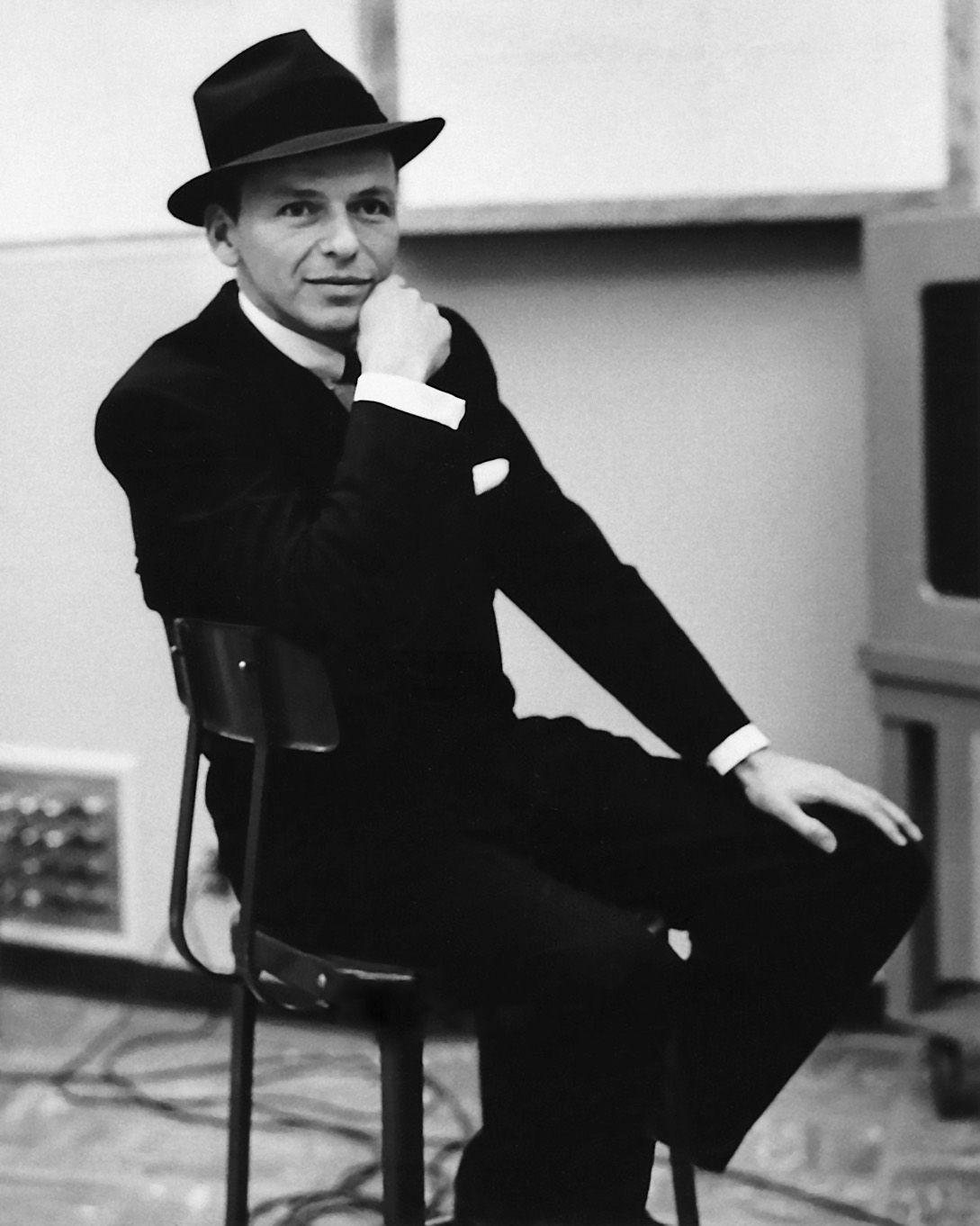
The turning point was a film. Columbia Pictures was preparing an adaptation of James Jones’s bestselling novel From Here to Eternity, a drama about American soldiers in Hawaii in the days before the attack on Pearl Harbor. Sinatra became obsessed with the role of Private Angelo Maggio, a scrappy, doomed Italian-American soldier, a part far removed from his crooning screen image. He campaigned relentlessly for it, reportedly accepting a fraction of his usual fee, and Ava Gardner is said to have used her own influence to help him win an audition. He got the part, and he was extraordinary. From Here to Eternity, released in 1953, was a critical and commercial triumph, and Sinatra’s performance as the defiant, tragic Maggio earned him the Academy Award for Best Supporting Actor in 1954. In a single stroke he had reinvented himself as a serious dramatic actor and announced, to an industry that had buried him, that Frank Sinatra was back.
The Capitol Years
The comeback as an actor coincided with the greatest artistic period of Sinatra’s career as a singer. In 1953 he signed with Capitol Records, and there, over the next seven years, he made the recordings on which much of his enduring reputation rests. His voice had changed. The light, ardent tenor of the bobby-soxer years had darkened and matured into a richer, more knowing baritone, an instrument that had lived through heartbreak and could now express the full range of adult emotion.
Crucial to the Capitol triumph was Sinatra’s partnership with the arranger and conductor Nelson Riddle. Riddle was a master of orchestral color, and the collaboration between the two men produced some of the finest popular records ever made. On the swinging numbers, Riddle gave Sinatra a buoyant, brass-driven rhythmic lift that the singer rode with effortless authority. On the ballads, he wrapped the voice in aching, intimate strings. The two understood each other instinctively. Riddle later described the way Sinatra would shape the dynamics of an entire arrangement, the way a great singer breathes life into a chart.
At Capitol, Sinatra essentially invented the modern concept album, the long-playing record built around a single mood or theme rather than a random collection of songs. In the Wee Small Hours, released in 1955, is a landmark, a suite of melancholy ballads exploring loneliness and lost love, widely regarded as one of the first true concept albums and one of the most influential records of its era. The following year came its mirror image, Songs for Swingin’ Lovers!, an exuberant, finger-snapping celebration that included his famous remaking of “I’ve Got You Under My Skin,” with a Riddle arrangement whose long instrumental build remains one of the most thrilling moments in recorded popular music. Other classic Capitol albums followed, including A Swingin’ Affair! (1957), Come Fly with Me (1958), arranged by Billy May, and the desolate, beautiful Frank Sinatra Sings for Only the Lonely (1958), with Riddle, which Sinatra often named as his own favorite among his records. In these years he reached an artistic peak that defined what a popular singer could be.
Reprise, the Rat Pack and Film
In 1960, seeking full creative and financial control over his work, Sinatra founded his own record label, Reprise Records. He wanted to own his masters and to give artists more freedom than the major labels allowed. On Reprise he continued to record prolifically, working with arrangers including Riddle, Billy May and the great Count Basie, with whom he made the album Sinatra at the Sands (1966), a live recording with the Basie band conducted by a young Quincy Jones that captured Sinatra in his element on a Las Vegas stage. Reprise gave the world some of his most famous later recordings.
This was also the era of the Rat Pack, the loose, glamorous fraternity of entertainers centered on Sinatra and including the singer and actor Dean Martin, the dazzling dancer, singer and actor Sammy Davis Jr., the comedian Joey Bishop and the actor Peter Lawford. Through the early 1960s the group’s appearances at the Sands Hotel in Las Vegas became the hottest ticket in American show business, a freewheeling mixture of music, comedy and onstage camaraderie that helped cement Las Vegas as the entertainment capital it became. The Rat Pack also made films together, most famously the original Ocean’s 11 (1960), a caper about a heist on the Las Vegas casinos. Sinatra’s friendship with Sammy Davis Jr. was notable in a still-segregated America, and Sinatra used his enormous clout to insist that Davis be treated as an equal in venues that had often excluded Black performers.
Sinatra’s film career flourished in these years beyond the Rat Pack romps. He gave a chilling performance as a would-be presidential assassin’s handler, drug-addicted card dealer in The Man with the Golden Arm (1955), earning an Academy Award nomination for Best Actor, and he was riveting as a brainwashed Korean War veteran in the political thriller The Manchurian Candidate (1962). He directed and starred in the war film None but the Brave (1965) and played a detective in a series of crime pictures in the late 1960s. Few performers have ever sustained careers of such magnitude in both music and film at the same time.
Later Years and Legacy
Even as the musical world was transformed by rock and roll, Sinatra remained a commercial force. In 1966 he topped the charts with “Strangers in the Night,” which won several Grammy Awards, and he scored a number-one duet, “Somethin’ Stupid,” with his daughter Nancy Sinatra in 1967. In 1969 he recorded “My Way,” with English lyrics written by Paul Anka, a song that became inseparable from his public image as an anthem of pride and self-determination, even though Sinatra himself was said to have grown weary of it. In 1980 he had a late hit with “Theme from New York, New York,” which became another signature.
He announced his retirement in 1971, but the rest proved temporary, and he returned to performing in 1973 with an album and television special both titled Ol’ Blue Eyes Is Back. He toured the world to enormous audiences for two more decades. In the 1990s, well into his seventies, he recorded the commercially successful Duets (1993) and Duets II (1994), pairing his classic interpretations with a roster of contemporary stars. In 1965 he had married the young actress Mia Farrow, a brief union that ended in 1968, and in 1976 he married Barbara Marx, who remained his wife for the rest of his life.
Honors accumulated. He received the Kennedy Center Honors in 1983, and in 1985 President Ronald Reagan awarded him the Presidential Medal of Freedom, the highest civilian honor in the United States. He won the Grammy Lifetime Achievement Award and numerous competitive Grammy Awards across his career. His political life shifted over the decades from active support of the Democratic Party, including a close association with President John F. Kennedy, toward the Republican Party in his later years.
“The big lesson in life, baby, is never be scared of anyone or anything.”
Frank Sinatra gave his final public concert in 1995, near his eightieth birthday. His health declined in his last years, and he died of a heart attack on 14 May 1998 in Los Angeles, at the age of 82. The lights of the Las Vegas Strip were dimmed in his honor, and tributes poured in from around the world.
His influence on popular singing is almost impossible to overstate. Generations of vocalists, from Tony Bennett and Bobby Darin to artists working in genres Sinatra never touched, learned from his phrasing, his breath control and above all his conviction that a popular song could carry the emotional weight of serious art. He took the casual intimacy that Bing Crosby pioneered and added to it a dramatic depth, a sense that each lyric was being lived rather than merely sung. He proved that a singer could be the author of an album’s meaning, not just its featured voice. More than a quarter of a century after his death, the recordings of the boy from Hoboken remain the standard against which popular singers are measured, the enduring sound of a voice that defined an art form.
Key Facts
- Frank Sinatra learned his celebrated breath control and seamless phrasing by studying the long trombone lines of bandleader Tommy Dorsey, with whom he sang from 1940 to 1942.
- His 1953 supporting role as Private Maggio in From Here to Eternity won him the Academy Award for Best Supporting Actor and completed one of the greatest comebacks in entertainment history.
- His Capitol Records albums of the 1950s, including In the Wee Small Hours (1955) and Songs for Swingin’ Lovers! (1956) with arranger Nelson Riddle, helped invent the modern concept album.
- In 1960 he founded his own label, Reprise Records, and through the early 1960s led the Rat Pack alongside Dean Martin and Sammy Davis Jr. in Las Vegas.
- President Ronald Reagan awarded Sinatra the Presidential Medal of Freedom in 1985; the singer died on 14 May 1998 at the age of 82.