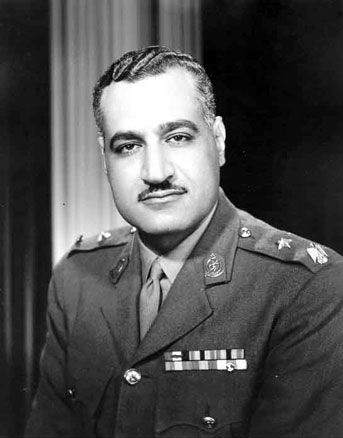
On the evening of 26 July 1956, a crowd packed Manshiya Square in Alexandria to hear their president speak. Partway through the address, Gamal Abdel Nasser spoke a single coded word, “de Lesseps”, the name of the Frenchman who had built the Suez Canal. It was the prearranged signal for Egyptian engineers and soldiers to seize the canal’s offices and installations. By the time the applause had died down, the waterway that had carried the wealth of empires for nearly a century belonged to Egypt. In that moment a provincial postman’s son, barely two years into power, had turned himself into the most consequential leader the Arab world would know in the twentieth century.
Nasser was many things at once: a conspirator who overthrew a king, a modernising president who built the Aswan High Dam, a dreamer who tried to fuse Egypt and Syria into a single nation, and a symbol whose face hung in homes from Casablanca to Baghdad. His career ran through triumph and catastrophe, and his death at 52 left millions weeping in the streets. To understand modern Egypt, Arab nationalism, the non-aligned world, and the anti-colonial surge that swept Africa, you have to begin with him.
Quick Facts
- Full name
- Gamal Abdel Nasser Hussein
- Born
- 15 January 1918, Alexandria, Egypt
- Died
- 28 September 1970, Cairo, Egypt (aged 52)
- Known for
- President of Egypt (1954 to 1970); Arab nationalist leader
- Key act
- Nationalised the Suez Canal in 1956
Early Life
Gamal Abdel Nasser Hussein was born on 15 January 1918 in the Bakos district of Alexandria, Egypt’s great Mediterranean port. His father, Abdel Nasser Hussein, worked as a postal clerk, a steady but modest government job that moved the family between towns in Upper Egypt and the Nile Delta. The Nassers came originally from Beni Mur, a village near Asyut in the south. There was nothing grand about the household. Nasser grew up ordinary, the eldest of a large family, shuttled between relatives and boarding arrangements as his father’s postings changed and after his mother, Fahima, died when he was only eight. That early loss marked him deeply, and he later recalled the grief of it as one of the sharpest wounds of his childhood.
As a schoolboy in Cairo in the 1930s, Nasser was less a bookish student than a restless young nationalist. Egypt was nominally independent after 1922, yet British troops still occupied the country, British advisers shaped its policy, and the king answered to London far more than to his people. For a generation of Egyptians this was a humiliation that burned. Nasser threw himself into the student demonstrations that rocked the capital, protesting against British influence and the subservience of Egypt’s politicians. He was arrested at least once during these marches and carried a scar on his forehead from a police clash. He read widely and unevenly, absorbing the history of the French Revolution, biographies of national heroes, and accounts of the men who had freed other nations from foreign rule.
The route out of frustration, he decided, ran through the army. In 1937 the Royal Military Academy in Cairo, long reserved for the sons of the elite, opened its doors a little wider to young men from humbler backgrounds. Nasser was admitted, and the decision shaped everything that followed. The academy gave him a profession, a network of ambitious fellow cadets, and a platform. He was commissioned as a second lieutenant in 1938 and posted to garrisons in Upper Egypt and later in Sudan, which was then under joint British and Egyptian administration. In these remote postings he met the officers who would become his co-conspirators, men like Anwar Sadat and Abdel Hakim Amer, and together they began to talk, quietly and dangerously, about what was wrong with Egypt and who was to blame.
The turning point in his thinking came with the Arab-Israeli war of 1948. Nasser served in the fighting in Palestine, where he was wounded and for a time trapped with his unit in the besieged pocket known as the Faluja Kirsha. What he saw there enraged him: Egyptian soldiers sent into battle with defective equipment, corrupt contractors who had grown rich selling faulty arms, and a political class in Cairo that seemed indifferent to the men dying at the front. He concluded that the real enemy was not only across the lines but behind them, in the palaces and ministries of Egypt itself. The defeat in Palestine convinced him that the monarchy and the old order had to go.
The Free Officers and the 1952 Revolution
Back in Cairo, Nasser gathered the threads of a conspiracy. Around him formed a clandestine network of junior and mid-ranking officers who called themselves the Free Officers. They were not a single ideology so much as a shared anger: against British occupation, against the corruption and incompetence of King Farouk’s court, and against the gross inequality of a country where a handful of landowners held much of the fertile Nile valley while millions of peasants, the fellahin, lived in poverty. Nasser, by common agreement, was the organising mind at the centre of the movement, patient, secretive, and gifted at holding together men of very different temperaments.
The Free Officers moved on the night of 22 to 23 July 1952. In a swift, almost bloodless coup, their units seized the army headquarters, the radio station, and the key points of Cairo. The announcement went out over the airwaves in the voice of Anwar Sadat, but the plan was Nasser’s. King Farouk, cornered in his palace in Alexandria, abdicated on 26 July and sailed into exile aboard his royal yacht. To lend the new order a respected public face, the officers installed the popular General Muhammad Naguib as the figurehead leader. The monarchy itself was formally abolished in June 1953, and Egypt was declared a republic with Naguib as its first president.
Yet everyone inside the movement understood where real authority lay. Nasser chaired the Revolutionary Command Council, the body that actually ran the country, and over the next two years he steadily outmanoeuvred his rivals. The most serious contest was with Naguib himself, who favoured a return to parliamentary civilian rule and clashed repeatedly with Nasser’s determination to keep power in the hands of the officers. A tense struggle through 1954 ended with Naguib pushed aside and placed under house arrest. The matter was sealed in October 1954 when a member of the Muslim Brotherhood fired shots at Nasser during a speech in Alexandria. Nasser stood his ground and kept speaking, a moment of theatrical courage that electrified the public, and he used the assassination attempt to crush the Brotherhood and consolidate his grip. By 1954 he was the undisputed leader of Egypt, and in 1956 a national referendum confirmed him as president.
Consolidating Power and the Suez Crisis
Nasser’s early presidency was a race to deliver. In 1954 he negotiated an agreement with Britain for the withdrawal of its troops from the Suez Canal Zone, ending more than seventy years of military occupation, with the last British soldiers leaving in June 1956. At home he pushed land reform, capping the size of estates and redistributing acreage to poorer farmers. Abroad he began to position Egypt as a leader of the newly independent world rather than a client of any great power. His grand ambition was the Aswan High Dam, a vast project on the Nile that would control the river’s floods, generate electricity, and expand irrigated farmland. To build it he needed money, and he first sought it from the United States, Britain, and the World Bank.
In July 1956 the Western powers abruptly withdrew their offer to finance the dam, partly in anger at Nasser’s dealings with the Soviet bloc and his recognition of communist China. Nasser’s response was the boldest stroke of his career. On 26 July 1956 he nationalised the Suez Canal Company, declaring that the tolls from the waterway would pay for the dam that the West had refused to fund. The canal had been operated by an Anglo-French company and was treated by London and Paris as an imperial lifeline, the artery through which oil and trade flowed between Europe and Asia. For Egyptians and for much of the colonised world, Nasser’s act was a thunderclap of defiance, proof that a formerly subject nation could seize control of its own destiny.
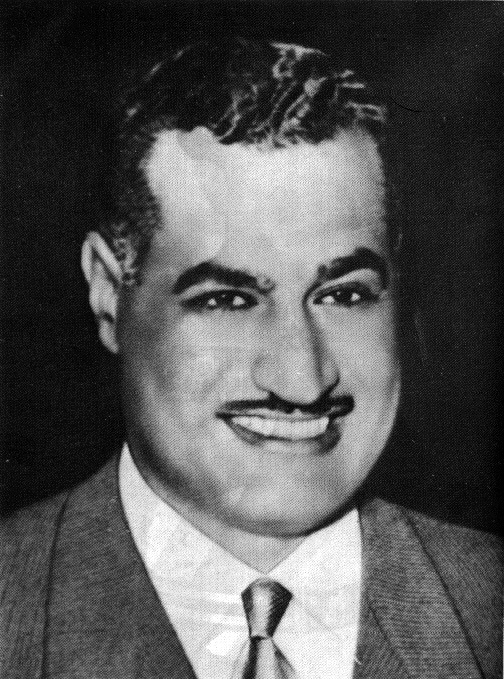
Britain and France were determined to reverse the nationalisation and, ideally, to topple Nasser himself. In secret they conspired with Israel, which had its own grievances with Egypt over border raids and the blockade of its shipping. The plan, agreed in collusion at Sevres near Paris, was that Israel would invade the Sinai Peninsula, and Britain and France would then intervene as supposed peacekeepers to seize the canal. In late October 1956 Israel struck across Sinai, and Anglo-French forces bombed Egyptian airfields and landed troops at Port Said. Militarily, Egypt’s forces were outmatched and pushed back.
Politically, however, the Suez Crisis was a disaster for the invaders and a triumph for Nasser. The United States, furious at being blindsided and worried about Soviet influence, refused to support the operation and applied heavy financial pressure on Britain. The Soviet Union issued alarming threats. Under this combined weight Britain, France, and Israel were forced into a humiliating withdrawal, and a United Nations peacekeeping force moved in. Nasser had lost on the battlefield but won everything that mattered. He had kept the canal, faced down two European empires, and emerged as the undisputed hero of the Arab world and a hero to anti-colonial movements everywhere. His voice on Cairo’s Voice of the Arabs radio station now carried authority from Morocco to Iraq.
Pan-Arabism and Pan-Africanism
Raise your head, my brother, for the age of servitude is over.
Gamal Abdel Nasser
After Suez, Nasser became the living embodiment of Arab nationalism, the idea that the Arab peoples, divided by colonial borders, shared one language, one history, and one destiny, and ought to be united. His appeal leapt across frontiers. Crowds in Damascus, Amman, and Baghdad chanted his name, and rulers who opposed him feared the power of his broadcasts to stir their own populations. The dream reached its fullest expression in February 1958, when Egypt and Syria merged to form the United Arab Republic, a single state with Nasser as president. For a moment it seemed that the unification of the Arab world had truly begun.
The union, however, proved fragile. Syrians increasingly resented the dominance of Cairo, the heavy hand of Egyptian officials, and economic policies that did not suit their merchant economy. In September 1961 a coup in Damascus pulled Syria out of the United Arab Republic, and the experiment collapsed after barely three and a half years. Egypt kept the name United Arab Republic until 1971, but the grand fusion was over. The failure wounded Nasser, yet it did not dim his standing as the symbol of Arab aspiration.
Nasser’s vision was never confined to the Arab world. He saw Egypt as an African nation and threw his weight behind the liberation of the continent from colonial rule. Cairo became a haven and a broadcasting base for African independence fighters, nationalists, and exiles from Algeria, the Congo, South Africa, and beyond. He gave moral, financial, and sometimes material support to the Algerian struggle against France and to movements across the continent. On the world stage he was one of the architects of the Non-Aligned Movement, the bloc of nations that refused to take sides in the Cold War between Washington and Moscow. Alongside Jawaharlal Nehru of India, Josip Broz Tito of Yugoslavia, Kwame Nkrumah of Ghana, and Sukarno of Indonesia, Nasser helped shape a third path for the newly independent nations of Asia and Africa. The 1955 Bandung Conference and the first non-aligned summit in Belgrade in 1961 placed him among the leading voices of the global South.
Domestic Reforms and the 1967 War
At home, Nasser set out to remake Egyptian society along what he called Arab socialist lines. His land reforms broke up the great estates and handed plots to peasant families, loosening the grip of the old landowning aristocracy. He nationalised banks, insurance companies, and major industries, expanded free education and health care, and invested heavily in building a modern industrial base. For millions of ordinary Egyptians, especially the urban poor and the rural fellahin, his rule brought real gains in dignity, schooling, and opportunity that the monarchy had never offered.
The crowning achievement was the Aswan High Dam. When the West withdrew its financing, the Soviet Union stepped in with loans and engineers, and construction began in 1960. The dam, completed in stages through the 1960s and formally opened in 1971 after Nasser’s death, tamed the Nile’s annual floods, created the vast reservoir of Lake Nasser, generated electricity for industry and homes, and brought new land under irrigation. It also carried costs: the forced relocation of Nubian communities whose villages were submerged, and long-term changes to the river’s ecology. Even so, it stood as a monument to Nasser’s determination to modernise Egypt on his own terms.
But Nasser’s rule had a darker side that balance requires naming. His was an authoritarian state. Political parties were banned, the press was controlled, and a powerful security apparatus suppressed dissent. Opponents of every stripe, communists, the Muslim Brotherhood, and liberal critics alike, were imprisoned, and some were tortured or executed. The cult of personality around him left little room for open debate. Egyptians gained schools and clinics, but they lost the freedom to organise against the man who provided them.
The catastrophe came in June 1967. Rising tensions with Israel, inflamed by Nasser’s own rhetoric, his closure of the Straits of Tiran to Israeli shipping, and his demand that United Nations peacekeepers leave Sinai, pushed the region to war. On 5 June 1967 Israel launched a devastating pre-emptive air strike that destroyed most of the Egyptian air force on the ground within hours. In six days Israel routed the combined Arab armies, seizing the entire Sinai Peninsula from Egypt, the West Bank and East Jerusalem from Jordan, and the Golan Heights from Syria. The defeat, known in Arabic as the Naksa, the setback, was total and humiliating. For Nasser, who had staked his prestige on Arab strength, it was a shattering personal blow from which neither he nor the dream of Arab nationalism ever fully recovered.
Final Years and Death
On 9 June 1967, with the scale of the disaster clear, Nasser went on television and radio to announce that he was resigning and accepting full responsibility for the defeat. What happened next astonished the world. Hundreds of thousands, by some accounts millions, of Egyptians poured into the streets of Cairo and other cities, weeping and chanting, refusing to let him go. The outpouring was so vast and so genuine that Nasser reversed his decision and stayed in office. Whatever the failures of his leadership, the moment showed how deeply he was woven into the identity of ordinary Egyptians.
His final three years were sombre. He purged the military command responsible for the 1967 collapse, rebuilt the armed forces with renewed Soviet help, and fought a grinding War of Attrition with Israel across the Suez Canal. His health, strained by diabetes and heart trouble and by the crushing weight of the defeat, declined steadily. In September 1970 he exhausted himself hosting an emergency Arab summit in Cairo to halt the bloody conflict between Jordan and Palestinian fighters known as Black September. On 28 September 1970, shortly after seeing the last leader off at the airport, Gamal Abdel Nasser suffered a fatal heart attack. He was 52.
The grief that followed was almost without parallel in the modern age. An estimated five million people flooded into Cairo for his funeral on 1 October 1970, a sea of mourners so dense and so distraught that the official procession was nearly swept away. Across the Arab world, from the cities of North Africa to the Gulf, people wept openly for a man who had made them feel, for a time, that they counted on the world stage. He was buried in the mosque that now bears his name in Cairo. His vice president, Anwar Sadat, succeeded him and would soon steer Egypt onto a very different course.
Career Timeline
- 1918: Born on 15 January in Alexandria, Egypt, the son of a postal clerk.
- 1938: Graduates from the Royal Military Academy in Cairo and is commissioned as an army officer.
- 1948: Serves and is wounded in the Arab-Israeli war in Palestine, deepening his disgust with the Egyptian monarchy.
- 1952: Leads the Free Officers in the 23 July revolution that overthrows King Farouk and ends the monarchy.
- 1954: Sidelines President Muhammad Naguib and survives an assassination attempt, becoming Egypt’s effective ruler.
- 1956: Confirmed as president; nationalises the Suez Canal on 26 July and prevails politically in the Suez Crisis.
- 1958: Unites Egypt and Syria into the United Arab Republic, with himself as president.
- 1967: Suffers catastrophic defeat in the June Six-Day War; offers to resign but is reinstated by popular demand.
- 1970: Dies of a heart attack on 28 September in Cairo, aged 52, mourned by millions.
Lesser-Known Facts
- The Free Officers who seized power in 1952 were mostly young and mid-ranking men, and they chose the older, popular General Naguib as a public figurehead precisely because Nasser and his circle were little known to the public at the time.
- When Nasser announced the Suez nationalisation, he used the name of Ferdinand de Lesseps, the canal’s nineteenth-century French builder, as a secret radio signal for Egyptian teams to take over the canal’s installations.
- The United Arab Republic kept its name even after Syria quit in 1961; Egypt alone continued to be officially called the United Arab Republic until 1971, a year after Nasser’s death.
- The Aswan High Dam was built with Soviet money and engineering after the West pulled out, and its reservoir, Lake Nasser, forced the relocation of tens of thousands of Nubians and threatened ancient temples, prompting a famous UNESCO campaign to move the monuments of Abu Simbel.
- Nasser was a founding pillar of the Non-Aligned Movement, standing beside Nehru, Tito, Nkrumah, and Sukarno, and Cairo became a base and refuge for African and Arab liberation movements across the continent.
- His funeral in October 1970 drew an estimated five million mourners into Cairo, one of the largest gatherings of grief the modern world has ever witnessed.
Frequently Asked Questions
Who was Gamal Abdel Nasser? Gamal Abdel Nasser was an Egyptian army officer who became the second president of Egypt, serving from 1954 to 1970. He led the Free Officers who overthrew the monarchy in 1952 and went on to become the most influential leader of Arab nationalism in the twentieth century, as well as a major figure in African liberation and the Non-Aligned Movement.
What did he do with the Suez Canal? In July 1956 Nasser nationalised the Suez Canal, which had been run by an Anglo-French company, declaring that its toll revenues would finance the Aswan High Dam after Western powers withdrew their funding. The move triggered the Suez Crisis, in which Britain, France, and Israel attacked Egypt but were forced to withdraw under international pressure, leaving Nasser a hero across the Arab world.
What was the United Arab Republic? The United Arab Republic was a political union of Egypt and Syria formed in 1958 under Nasser’s leadership, intended as the first step toward uniting the Arab nations. It proved short-lived, as Syria withdrew in 1961 after a coup, though Egypt kept the name until 1971.
Why is he important to Africa? Nasser saw Egypt as an African nation and made Cairo a centre of support for independence movements fighting colonial rule across the continent, from Algeria to the Congo and southern Africa. As a co-founder of the Non-Aligned Movement alongside leaders such as Kwame Nkrumah and Tito, he helped give the newly independent nations of Africa and Asia a united voice independent of the Cold War superpowers.
How did he die? Nasser died of a heart attack on 28 September 1970 in Cairo, shortly after hosting an emergency Arab summit. He was 52. His death set off an extraordinary wave of public mourning, with millions attending his funeral and grieving across the Arab world.
Legacy
Half a century after his death, Gamal Abdel Nasser remains one of the most debated figures in modern history, and the debate itself is the measure of his importance. To his admirers he was the man who restored Arab and African dignity, who stood up to empires and won, who gave land to peasants and schools to the poor, and who made a formerly colonised people believe they could shape their own future. To his critics he was an authoritarian who crushed dissent, led Egypt into the ruinous defeat of 1967, and left behind a one-party state and an economy strained by the costs of his ambitions. Both portraits hold truth, and a balanced view must carry both.
What is beyond dispute is his reach. The wave of Arab nationalism he embodied reshaped the politics of the Middle East for a generation, and the anti-colonial solidarity he championed helped carry much of Africa to independence. The ideology that bears his name, Nasserism, outlived him in parties and movements across the region. His confrontation at Suez became a template of defiance for the global South, and his seat at the head of the non-aligned nations gave smaller states a sense that they need not be pawns of the great powers.
For NVMA’s readers across Africa, Nasser’s story carries a particular resonance. He insisted that Egypt belonged to Africa as much as to the Arab world, and he poured energy into the liberation of a continent that was then still largely under foreign rule. His life is a study in both the heights that bold leadership can reach and the costs that come when that leadership refuses limits. The soldier from a postman’s household who seized a canal and shook the world left a shadow long enough that the nations he inspired, and the ones he unsettled, are still measuring themselves against it today.