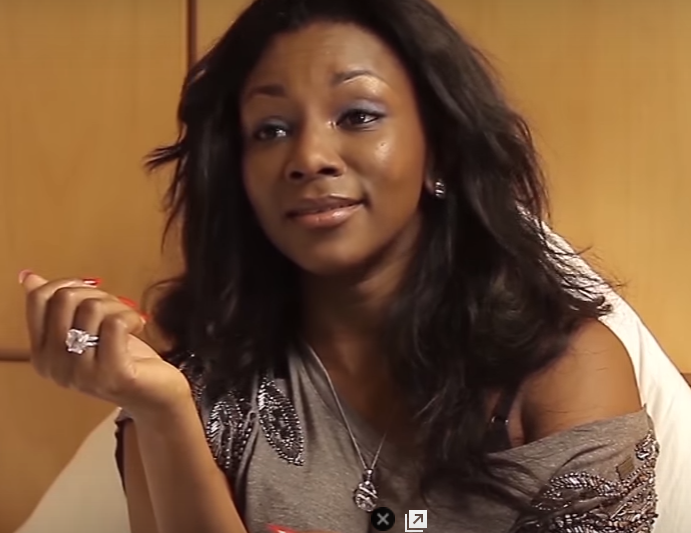
For a generation of film lovers across Africa and its diaspora, the face of Nollywood is the face of Genevieve Nnaji. She rose with Nigeria’s film industry through its explosive years on home video, became its most bankable and most admired leading lady, and then, when many assumed her best work was behind her, reinvented herself as a director whose debut feature was acquired by Netflix and submitted as Nigeria’s first ever entry for the Academy Awards. Her career traces the entire arc of modern Nigerian cinema, from cheaply produced videotapes sold in Lagos markets to streaming platforms watched in living rooms around the world. This is the story of how a quiet girl from a large family in Lagos became the queen of an industry and a symbol of what African storytelling could become.
Quick Facts
- Full name
- Genevieve Nnaji
- Born
- 3 May 1979, Mbaise, Imo State, Nigeria
- Occupation
- Actress, producer, director
- Known for
- Nollywood stardom; the film "Lionheart"
- Milestone
- Directed the first Netflix original film from Nigeria (2018)
Early Life
Genevieve Nnaji was born on 3 May 1979 in Mbaise, in Imo State in south-eastern Nigeria, though she was raised in Lagos, the bustling commercial capital where the country’s entertainment industry was beginning to stir. She grew up in a large family, one of eight children, in a middle-class household where her father worked as an engineer and her mother as a teacher. The size of the family and the discipline of the home shaped a young woman who would later be known for her composure and her privacy as much as for her talent.
She showed an interest in performing from an early age, and that interest found an outlet when she was still a child. At around the age of eight she began appearing on the popular Nigerian television soap opera Ripples, one of the earliest acting credits of a career that would eventually span decades. For a girl growing up in Lagos in the late 1980s, a role on national television was an extraordinary start, and it planted the seed of a vocation that she would return to as an adult.
Lagos itself shaped her. The city was, and remains, the beating heart of Nigerian popular culture, a sprawling metropolis of energy and ambition where the music, film and fashion industries of the country are concentrated. Growing up in that environment, surrounded by the creative ferment of Africa’s largest city, gave her both the exposure and the drive that a performing career demands. She pursued her education even as her early acting brought her attention, and the discipline of a structured, middle-class upbringing would later show itself in the professionalism she brought to her work.
Breaking Into Nollywood
By the late 1990s, Nigeria was witnessing the birth of a phenomenon. Film-makers had begun producing movies directly onto video cassettes, shot quickly and cheaply and sold in their thousands in markets across the country. This home-video boom became known as Nollywood, and it would grow into one of the largest film industries in the world by volume. Genevieve Nnaji stepped into this world as a young woman, making her adult film debut around 1998 in the movie Most Wanted.
She arrived at exactly the right moment, and her rise was meteoric. With her natural screen presence, her expressive face and an ability to carry both melodrama and tenderness, she quickly became one of the most sought-after actresses in the industry. In the frantic production culture of early Nollywood, where leading performers might appear in dozens of films in a single year, Nnaji became ubiquitous, her face on countless video covers in the stalls of Lagos, Onitsha and beyond. Within a few short years she had moved from promising newcomer to genuine star.
To understand the scale of what she achieved, it helps to understand the industry that produced her. Nollywood grew, in the space of barely a decade, into one of the largest film industries in the world by sheer volume of titles, second only to India’s Bollywood by some measures and ahead of Hollywood in the number of films produced each year. It did this almost entirely without the financing, distribution networks or cinema chains that supported film industries elsewhere. Movies were shot in days on modest budgets, copied onto video cassettes and later discs, and sold directly to a vast and hungry audience across Africa. In this raw, entrepreneurial environment, stardom was earned not through studio marketing but through the genuine affection of millions of ordinary viewers, and few earned it as completely as Genevieve Nnaji.
She became known for a particular kind of role: poised, intelligent women navigating love, family and ambition, characters who carried a quiet strength even in the most melodramatic storylines. Across hundreds of productions she demonstrated a range and a reliability that made her the performer directors most wanted and audiences most trusted. Her films sold in enormous numbers, and her name on a video cover was, for a stretch of years, as close to a guarantee of commercial success as the industry possessed.
Becoming the Queen of Nollywood
By the early 2000s, Genevieve Nnaji had become the most bankable actress in Nollywood, a performer whose mere presence in a film could guarantee sales. Her popularity extended far beyond Nigeria, across Anglophone Africa and into the diaspora communities of Europe and North America where Nollywood films were devoured with enthusiasm. She became a household name, recognised on streets from Accra to London, and she carried her fame with a poise that set her apart in an industry not always known for restraint.

The scale of her stardom drew comparisons to the biggest names in world cinema. When the American talk-show host and media titan Oprah Winfrey featured Nollywood on her programme, she famously described Nnaji as “the Julia Roberts of Africa,” a phrase that captured the actress’s blend of glamour, warmth and box-office power. Nnaji won the Africa Movie Academy Award for Best Actress in a Leading Role in 2005, one of many honours that confirmed her standing at the summit of the industry. She also briefly explored music, releasing an album in 2004, and became a fashion reference point whose style was widely imitated. Through it all she remained notably guarded about her private life, a quality that only deepened the public’s fascination with her.
“I think the key to a great career is to be willing to reinvent yourself and to take risks.”
A Changing Industry and New Ambitions
As Nollywood matured through the 2000s and into the 2010s, the industry began to change around her. A new wave of film-makers, many trained abroad and equipped with better cameras and bigger budgets, set out to raise the technical and artistic standards of Nigerian cinema. This movement, sometimes called the New Nollywood, aimed for cinema releases and international festivals rather than the home-video market, and Genevieve Nnaji was perfectly placed to bridge the old world and the new. Her experience and her star power lent credibility to the more ambitious productions of the era.
She also took an important step toward controlling her own work. Rather than remaining purely a hired performer, she moved into producing, putting her own resources and reputation behind films she believed in. This shift reflected a growing determination to shape the kind of stories Nigerian cinema told and the way it told them, and it set the stage for the most significant chapter of her career. Where once she had been the face on a thousand video covers, she was now becoming a creative force with ambitions that reached well beyond acting. The girl who had grown up inside the home-video boom was preparing to lead Nollywood into the streaming age.
Lionheart and the Netflix Milestone
For all her success as an actress, Genevieve Nnaji’s most historically significant achievement came when she stepped behind the camera. In 2018 she made her directorial debut with Lionheart, a warm, optimistic film in which she also starred, playing a woman trying to keep her father’s transport company afloat in a male-dominated business world. The film was a marked departure from the melodrama of classic Nollywood, polished in its production and gentle in its tone, and it signalled a new ambition for Nigerian cinema.
Lionheart made history almost immediately. Netflix acquired the film, making it the streaming giant’s first original film from Nigeria, a landmark moment that placed Nollywood on a global platform in a way that had never happened before. Then came an even more striking milestone: Lionheart was selected as Nigeria’s submission for the Academy Award for Best International Feature Film, the first time the country had ever entered the Oscars race. The achievement was tinged with controversy when the Academy disqualified the film on the grounds that it contained too much English dialogue, since the category requires a predominantly non-English language. The decision sparked a wide debate about language, colonial history and the rules of international film recognition, with many pointing out that English is an official language of Nigeria and the language in which a large share of its people conduct their daily lives. Nnaji responded publicly, noting that the film reflected the way Nigerians actually speak, a natural blend of English and indigenous languages. Whatever the outcome of the dispute, she had pushed Nigerian cinema into a global conversation it had never before entered, and she had done it as a director, not merely as a star.
The significance of the Lionheart moment is hard to overstate. It demonstrated that Nigerian films could meet international standards of production, that the global streaming platforms were hungry for African content, and that a Nollywood veteran could reinvent herself as a film-maker of genuine ambition. In the years that followed, Netflix and other platforms invested heavily in Nigerian and African productions, and a new generation of film-makers found doors open that had been firmly shut before. Genevieve Nnaji, by being first, helped open them.
Notable Films and Performances
Across a career of remarkable productivity, several of Genevieve Nnaji’s films stand out as markers of her range and her growing ambition. Early in her stardom she headlined hugely popular Nollywood dramas that became staples of the home-video era and made her face familiar in households across the continent. As the industry’s standards rose, so did the profile of her projects.
She appeared in Ijé: The Journey, a 2010 film that was one of the more expensively produced Nigerian movies of its time and that found audiences beyond Nigeria. In 2013 she took a role in Half of a Yellow Sun, the film adaptation of the acclaimed novel by Chimamanda Ngozi Adichie, sharing the screen with internationally known actors including Chiwetel Ejiofor and Thandiwe Newton. The film, set during the Nigerian Civil War, was a serious literary adaptation that placed her work in a more globally recognised context. In 2015 she starred in and produced Road to Yesterday, a romantic drama that demonstrated her commitment to higher production values and to controlling her own projects, and that won recognition at African film awards.
These films traced her evolution from the prolific leading lady of the home-video boom into a more selective, more ambitious artist who chose projects for their quality and their meaning. Each step prepared the ground for the moment when she would finally move into the director’s chair and make the film that would define her legacy.
Style, Influence and Business
Beyond her filmography, Genevieve Nnaji built a reputation as a businesswoman and a cultural influence. She launched her own production company and a clothing line, and she became a brand ambassador for major companies drawn to her wide appeal and her carefully maintained image. Her sense of style made her a fashion icon across the continent, and younger actresses frequently cited her as the standard to which they aspired.
She has remained intensely private about her personal life. She became a mother as a teenager, raising a daughter, Theodora, and she has generally kept her family and relationships out of the public eye, preferring to let her work speak for her. This discretion, unusual in an age of constant celebrity disclosure, has only added to her mystique and her reputation as a star who commands attention without courting it.
Her standing in Nigeria was formally recognised when she received a national honour, being named a Member of the Order of the Niger, an award that placed her among the country’s most distinguished citizens. Yet for all the official recognition and the fame that came with being one of the most photographed women in Africa, she remained something of an enigma, admired precisely because she never seemed to chase the spotlight. In an industry that often rewards noise, she built her legend on the quality of her work and the quiet dignity of her public conduct, and that restraint became part of her power.
Career Timeline
- c. 1987: Begins acting as a child on the Nigerian television soap opera Ripples, at around age eight.
- 1998: Makes her adult film debut in the Nollywood movie Most Wanted, at the height of the home-video boom.
- Early 2000s: Becomes the most bankable and recognisable actress in Nollywood, with fame across Africa and the diaspora.
- 2004: Releases a music album, briefly exploring a singing career.
- 2005: Wins the Africa Movie Academy Award for Best Actress in a Leading Role.
- 2010s: Oprah Winfrey calls her “the Julia Roberts of Africa,” cementing her global profile.
- 2011: Receives a Nigerian national honour, the Member of the Order of the Niger (MON).
- 2018: Directs and stars in Lionheart, which Netflix acquires as its first original film from Nigeria.
- 2019: Lionheart becomes Nigeria’s first ever Oscar submission, before being disqualified over its English dialogue.
Lesser-Known Facts
- She was one of eight children and began performing on television years before she became a film star, giving her an unusually long career in the public eye.
- Before her acting fame fully took hold, she worked as a model, appearing in commercials as a young woman.
- She released a music album in 2004, a venture that is often forgotten amid her screen fame.
- Lionheart was not only her directorial debut but also one of the first Nollywood films to be made specifically with an international streaming audience in mind.
- She has consistently turned down the constant public disclosure expected of celebrities, keeping her daughter and personal relationships largely private throughout her career.
Frequently Asked Questions
How old is Genevieve Nnaji? She was born on 3 May 1979 in Mbaise, Imo State, Nigeria, which places her in her mid-forties.
What is Genevieve Nnaji’s most famous movie? While she appeared in a vast number of Nollywood films during her career, her most historically significant work is Lionheart (2018), which she directed and starred in and which became Netflix’s first original film from Nigeria.
Is Genevieve Nnaji married? She has kept her personal life private and is not publicly known to be married. She became a mother as a teenager and raised a daughter, Theodora.
What was Lionheart and why was it disqualified from the Oscars? Lionheart was Genevieve Nnaji’s directorial debut and Nigeria’s first ever submission for the Academy Award for Best International Feature Film. It was disqualified because it contained too much English dialogue, which conflicted with the category’s requirement for a predominantly non-English film.
What is Genevieve Nnaji known for today? She is regarded as the queen of Nollywood and a pioneer who helped carry Nigerian cinema onto the global stage, both as its most celebrated leading actress and as a trailblazing director.
Legacy
The legacy of Genevieve Nnaji is bound up with the story of Nollywood itself. She was there for its chaotic, creative birth on home video, she became the brightest star of its golden years, and she helped lead it into a new era of streaming and international recognition. For millions of viewers across Africa and the diaspora, she put a face to the idea that African stories, told by Africans, deserved a global audience.
Her influence reaches beyond her own filmography. She showed a generation of Nigerian women that they could be stars on their own terms, dignified and private and powerful, and she proved that a Nollywood actress could become a director, a producer and a businesswoman whose ambitions extended to the Oscars and beyond. As Nigerian and African cinema continue their rise on the world stage, much of the path was cleared by the quiet determination of the woman they call the queen of Nollywood.
There is a deeper lesson in her career for anyone who follows the arc of African creativity. Nollywood was born out of scarcity, an industry that succeeded not because of resources but in spite of their absence, powered by talent, hustle and an audience that saw itself reflected on screen for the first time. Genevieve Nnaji embodied that spirit and then carried it forward, refusing to let the limitations of her industry define the ceiling of her ambition. She moved from cassette covers to the Cannes-adjacent world of international streaming without ever abandoning the audience that made her, and she insisted, through her choices, that African stories deserved to be told with the highest possible craft and seen by the widest possible world. That insistence, as much as any single film, is her enduring contribution. The queen of Nollywood did not simply rule an industry. She helped imagine what that industry could one day become.