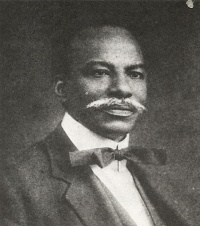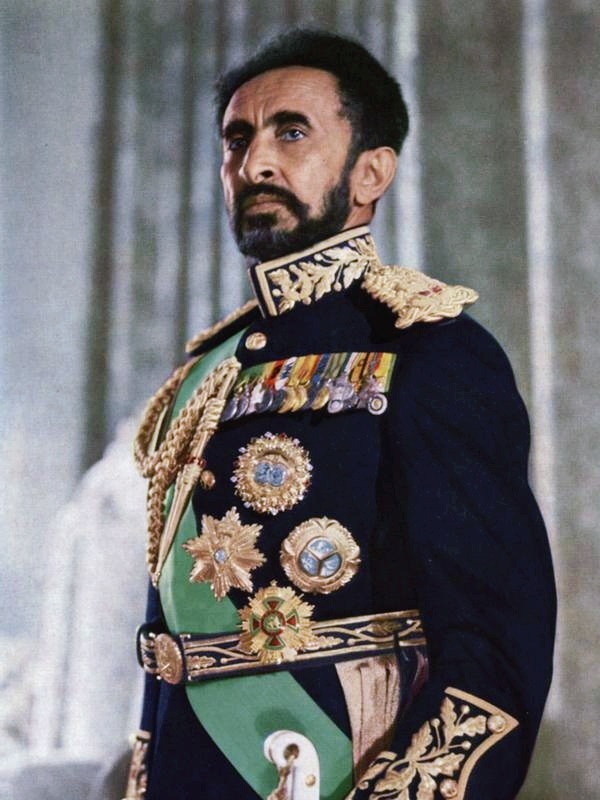
Few figures of the twentieth century carried as many meanings to as many different people as Haile Selassie. To Ethiopians he was the Conquering Lion of the Tribe of Judah, the heir to a royal line that claimed descent from King Solomon, and the emperor who tried to drag a feudal nation into the modern world. To the wider continent he was a founding father of Pan-Africanism, the elder statesman who gave Africa its first permanent home for unity in Addis Ababa. To the world beyond, he was the dignified figure who stood before the League of Nations in 1936 and warned that the appeasement of fascism would doom them all. And to the followers of a faith that grew up thousands of miles away in Jamaica, he was something more astonishing still: a living messiah. The story of how one man came to embody so much is one of the most remarkable in modern history.
Quick Facts
- Birth name
- Tafari Makonnen
- Born
- 23 July 1892, Ejersa Goro, Ethiopia
- Died
- 27 August 1975, Addis Ababa, Ethiopia (aged 83)
- Known for
- Emperor of Ethiopia 1930 to 1974; champion of African unity
- Revered as
- A messianic figure by the Rastafari movement
Early Life and Rise
He was born Tafari Makonnen on 23 July 1892 in the village of Ejersa Goro, in the Harar region of eastern Ethiopia. His father, Ras Makonnen, was a trusted general and adviser to Emperor Menelik II, the ruler who had famously defeated an Italian invading army at the Battle of Adwa in 1896 and preserved Ethiopia’s independence at a time when nearly all of Africa was falling under European colonial control. Young Tafari grew up close to the centre of power, and he displayed from an early age a sharp intelligence and a seriousness that set him apart.
He received an education that combined traditional Ethiopian learning with instruction from European tutors, and he developed a lifelong conviction that Ethiopia’s survival depended on modernisation. Appointed to govern provinces while still a young man, he earned a reputation as a capable and reform-minded administrator. In the complicated succession struggles that followed the death of Menelik II, Tafari emerged as a central figure, and in 1916 he was made regent and heir to the throne, taking the title Ras Tafari, by which much of the world would first come to know him.
As regent he pushed for cautious but real reforms. He worked to curb the power of the provincial nobility, to open Ethiopia to the outside world, and to begin building the institutions of a modern state. In 1923 he achieved a significant diplomatic victory by securing Ethiopia’s admission to the League of Nations, a recognition of the country’s sovereignty that he would later call upon in his hour of greatest need.
Becoming Emperor
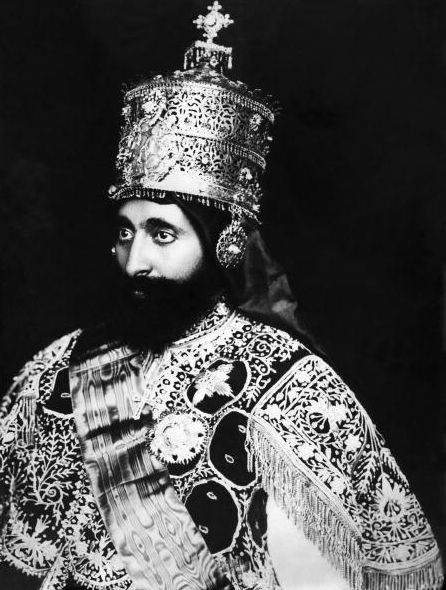
In 1930, following the death of Empress Zewditu, Ras Tafari was crowned Emperor Haile Selassie I. The name he took was rich with meaning: Haile Selassie translates as Power of the Trinity, and his full imperial style invoked the ancient lineage of Solomon and the Queen of Sheba and the title Conquering Lion of the Tribe of Judah. The coronation was a lavish affair attended by representatives from around the world, and it announced the arrival of a ruler determined to be taken seriously on the global stage.
“Throughout history, it has been the inaction of those who could have acted, the indifference of those who should have known better, that has made it possible for evil to triumph.”
The following year, in 1931, he granted Ethiopia its first written constitution. It was a modest document by later standards, preserving enormous power for the emperor while establishing a parliament with limited authority, but it represented a genuine step toward a modern system of government in a country that had been governed for centuries by feudal custom. Haile Selassie saw himself as a moderniser, building schools, expanding the bureaucracy, and working to centralise a fragmented realm.
Modernising an Ancient Empire
Haile Selassie inherited a country that, for all its proud independence, remained in many respects medieval in its structures. Power was dispersed among regional nobles, the church held vast lands and influence, and the institutions of a centralised modern state barely existed. Throughout his reign he pursued a steady, if cautious, programme of modernisation aimed at binding this fragmented realm into a unified nation under the crown.
He expanded education, founding schools and sending promising young Ethiopians abroad to study, in the belief that a modern nation required a modern educated class. He built roads, established a national bank and a national currency, created a professional army and police force, and developed the machinery of a central government. He abolished slavery, which had persisted in parts of the country, as part of his effort to bring Ethiopia into line with international expectations. He encouraged the growth of Addis Ababa into a true national capital and a centre of diplomacy.
These reforms were real, but they were also limited by his determination to preserve the absolute authority of the monarchy. He centralised power as much to strengthen his own position as to build a modern state, and the benefits of development flowed unevenly, concentrated in the capital and among the elite while much of the rural population remained desperately poor. The tension between modernisation and autocracy ran through his entire reign, and it would ultimately prove his undoing. He wanted a modern Ethiopia, but he wanted it to remain an empire with himself at its undisputed head, and in the end the forces of change he had helped to unleash outgrew the system he was willing to allow.
The Italian Invasion and Exile
The defining crisis of his reign arrived in 1935, when Fascist Italy under Benito Mussolini invaded Ethiopia, seeking to avenge the humiliation of Adwa and to build an Italian empire in East Africa. The Italians attacked with aircraft, tanks and poison gas against an Ethiopian army that fought bravely but was hopelessly outmatched in equipment. Despite fierce resistance, the capital Addis Ababa fell in 1936, and Haile Selassie was forced into exile.
It was in exile that he delivered the speech that would echo through history. Appearing before the League of Nations in Geneva in June 1936, he appealed to the assembled nations to honour their commitment to collective security and to come to the aid of a member state that had been the victim of unprovoked aggression. He warned, with chilling foresight, that if the international community allowed Ethiopia to be devoured, the same fate would eventually befall others, and that the world was being tested. The League did little, and within a few years his prophecy was fulfilled as fascist aggression engulfed Europe in the Second World War. The speech made Haile Selassie a global symbol of the struggle against fascism and of the dignity of a small nation standing against a great power.
He spent his years of exile in Bath, England, living quietly and refusing to abandon his claim to the throne. He used his time to keep the cause of Ethiopia before the conscience of the world, a living reminder of the price of appeasement. The occupation of his country was brutal, marked by reprisals and atrocities against those who resisted, but Ethiopian patriots never fully submitted, waging a continuous guerrilla resistance in the countryside throughout the years of Italian rule.
When Italy entered the Second World War on the side of Germany in 1940, Ethiopia’s cause suddenly became part of the wider Allied struggle against fascism. British and Commonwealth forces, fighting alongside Ethiopian patriot fighters, launched a campaign to liberate the country. In 1941, almost exactly five years after he had been driven from his capital, Haile Selassie returned in triumph to Addis Ababa, the first of the leaders displaced by Axis aggression to be restored to his throne. His vindication was complete, and his international stature, already high after his stand at Geneva, was now greater than ever. He set about rebuilding his shattered country and resuming the work of modernisation that the invasion had interrupted.
Champion of African Unity
In the decades after the war, as the nations of Africa began to throw off colonial rule, Haile Selassie became one of the continent’s most respected elder statesmen. Ethiopia held a unique symbolic place in the African imagination as a nation that had never been colonised, an ancient state with its own church, script and royal tradition, and a beacon to those struggling for independence elsewhere. Haile Selassie embraced this role, presenting himself and his country as a bridge between Africa’s past and its future.
His crowning achievement in this sphere came in 1963, when he hosted the founding meeting of the Organisation of African Unity in Addis Ababa, which was chosen as the permanent headquarters of the new body. The OAU, the forerunner of today’s African Union, brought together the leaders of newly independent African states to coordinate their efforts and to support the liberation of those territories still under colonial or white-minority rule. Haile Selassie played the role of respected mediator, helping to smooth tensions between rival blocs of African leaders, and Ethiopia became, in a real sense, the diplomatic capital of the continent.
A Statesman on the World Stage
Beyond Africa, Haile Selassie cultivated Ethiopia’s standing as a respected member of the international community. He was a familiar figure at global summits, a head of state who had ruled longer than almost any of his contemporaries, and he used Ethiopia’s unique history to punch above the country’s economic weight in world affairs. Ethiopian troops served under the banner of the United Nations in Korea and in the Congo, demonstrating his commitment to the principle of collective security that he had championed so memorably in 1936.
He travelled widely and was received with honour in capitals around the world, and he positioned Ethiopia as a bridge between Africa, the Middle East and the wider world. He maintained a careful balance during the Cold War, accepting support from the United States while keeping lines open elsewhere, and he sought to ensure that his country, surrounded by the rivalries of larger powers, retained its sovereignty and its room for manoeuvre. His personal dignity and the antiquity of his throne lent him a moral authority that few leaders of small nations could command, and he became, in the eyes of much of the world, the embodiment of Ethiopia itself.
This international prestige, however, increasingly masked the growing problems at home. The image of the venerable emperor moving among the leaders of the world stood in stark contrast to the poverty and frustration building within his own borders, and the gap between Ethiopia’s symbolic stature and its internal condition would eventually become impossible to sustain.
Rastafari and Global Symbolism
Perhaps the most extraordinary chapter of Haile Selassie’s legacy unfolded far from Ethiopia, in Jamaica. In the 1930s, a religious movement had emerged there that drew on the Pan-African teachings associated with Marcus Garvey and on readings of the Bible that seemed to point to the crowning of a Black king in Africa as a moment of profound spiritual significance. When Ras Tafari was crowned emperor in 1930, the followers of this movement took his coronation as the fulfilment of prophecy and came to regard him as a divine or messianic figure. They took their name, Rastafari, from his princely title.
Haile Selassie himself was a devout member of the Ethiopian Orthodox Church and never claimed to be divine. When he made a historic visit to Jamaica in 1966, he was met by enormous and rapturous crowds, an event of such intensity that it became a foundational moment in the history of the faith. The relationship between the emperor and the movement that venerated him was complex, and he is said to have gently encouraged its followers to attend to the liberation of Ethiopia and Africa. Yet the devotion endured, and through reggae music and the global spread of Rastafari culture, the image of Haile Selassie became known to millions who knew little of Ethiopian history.
The Man and His Court
Behind the public image of the dignified emperor lay a private man of considerable complexity. He was famously reserved, speaking softly and choosing his words with great care, and he projected an aura of calm authority that those who met him rarely forgot. He surrounded himself with the elaborate ceremony of an ancient court, complete with traditional titles, formal protocols and a hierarchy that reinforced his unique position at the summit of Ethiopian society. He kept a famous menagerie that included lions, a living symbol of his title as the Conquering Lion of the Tribe of Judah.
He was a devout Christian who took the spiritual dimension of his office seriously, regarding himself as the anointed protector of the Ethiopian Orthodox Church and of a sacred royal tradition. He could be generous and attentive to those who served him loyally, and he had a long memory for both kindness and betrayal. Yet his style of rule was deeply personal and centralised, and he allowed little genuine independence to the institutions around him, preferring to keep the threads of power in his own hands and to play subordinates against one another.
This personal style served him well for decades, allowing him to balance the competing factions of a complicated realm. But it also meant that the system depended entirely on him, and as he aged it became increasingly rigid and unable to adapt. The very qualities that had made him a master of survival in his prime, his caution, his secrecy and his reluctance to share power, left the Ethiopian state brittle and unprepared for the storms that gathered in his final years.
Decline and Overthrow
For all his international prestige, Haile Selassie’s rule at home grew increasingly out of step with the times. Ethiopia remained a deeply unequal society, with land concentrated in the hands of the church and the nobility, and the pace of reform frustrated a younger generation of educated Ethiopians who wanted faster change. The emperor, now elderly, seemed unable or unwilling to address the mounting discontent.
The crisis came to a head with a devastating famine in the early 1970s, particularly in the northern provinces, which killed many thousands of people. The government’s failure to respond adequately, and reports that the scale of the suffering had been concealed, fatally undermined the emperor’s authority. In 1974 a group of junior military officers, who organised themselves into a committee known as the Derg, gradually stripped him of power. In September of that year he was formally deposed and placed under arrest. The ancient Solomonic monarchy, which traced its claimed lineage back nearly three thousand years, came to an end.
Haile Selassie died in August 1975 while in the custody of the military government, in circumstances that remain disputed and that many believe involved foul play. His body was reportedly hidden, and it was only years later, after the fall of the Marxist regime that had overthrown him, that his remains were located and eventually given an imperial funeral.
Legacy
The legacy of Haile Selassie is genuinely complicated, and honest assessments must hold several truths together. He was a moderniser who dragged Ethiopia toward the twentieth century, yet also an autocrat who concentrated power in his own hands and was slow to share it. He was a champion of African freedom abroad while presiding over deep inequalities at home. He was a symbol of resistance to fascism and a founding architect of African unity, and he was a ruler whose reign ended in famine and revolution.
Yet his stature in the long history of Africa is secure. He preserved Ethiopian independence through the gravest threat it faced in modern times, he gave Africa a powerful symbol of dignity and continuity, and he helped to build the institutions of continental cooperation that endure today. And through the Rastafari movement and the global reach of reggae, his name became one of the most widely recognised of any African leader, a spiritual symbol of liberation and redemption for people far beyond the borders of the empire he once ruled.
For Africans in particular, his life carried a special meaning. In an age when most of the continent was held under colonial rule, Ethiopia under Haile Selassie stood as living proof that an African nation could govern itself, command respect on the world stage, and preserve a civilisation thousands of years old. That symbolism inspired generations of African nationalists who looked to Ethiopia as a beacon of what independence could mean. The Conquering Lion of Judah remains one of the towering and most fascinating figures of the modern African story, a man whose life touched the worlds of empire and revolution, of ancient faith and modern politics, and of Africa and the wider world.
Key Facts
- Haile Selassie was born Tafari Makonnen in 1892 and ruled Ethiopia first as regent (Ras Tafari) from 1916 and then as emperor from 1930 to 1974.
- His 1936 speech to the League of Nations, after Fascist Italy invaded Ethiopia, became a famous warning about the dangers of appeasing aggression.
- He returned to his throne in 1941 after Ethiopian and British forces drove the Italians out, and his international prestige soared.
- In 1963 he hosted the founding of the Organisation of African Unity in Addis Ababa, which became the diplomatic heart of the continent.
- The Rastafari movement in Jamaica reveres him as a messianic figure, and his princely title Ras Tafari gave the faith its name.