In the winter of 1994, a tall, soft-spoken man from Lagos stood at the centre of American basketball, holding a championship trophy above his head inside The Summit in Houston, Texas. Hakeem Olajuwon had just led the Houston Rockets to the first NBA title in the history of the franchise. He had not been born into the game. He had not grown up dribbling on driveways in suburban America the way most of his rivals had. He had arrived in the United States at seventeen, barely able to play, and within a decade he had become the best player on the planet. For Nigerians watching from Lagos, Ibadan, Kano, and every corner of the country, the moment carried a meaning that went far beyond sport. One of their own had reached the very top, and he had done it while never forgetting where he came from.
Quick Facts
- Full name
- Hakeem Abdul Olajuwon
- Born
- 21 January 1963, Lagos, Nigeria
- Sport
- Basketball (centre)
- Known for
- 2-time NBA champion with the Houston Rockets; 1994 NBA MVP
- Nickname
- "The Dream"
The story of Hakeem Olajuwon is, in many ways, the story of what is possible when raw talent meets discipline, humility, and an unshakeable sense of identity. He became a symbol of Nigerian excellence, a reminder that a child from Lagos could compete with and defeat the finest athletes the world had to offer. This is how it happened.
Early Life in Lagos
Hakeem Abdul Olajuwon was born on 21 January 1963 in Lagos, Nigeria, the most populous and energetic city in the country. He grew up in a working family. His parents, Salim and Abike Olajuwon, ran a cement business, and the household valued faith, hard work, and education above all else. Hakeem was one of six children, raised in a Muslim home where prayer and discipline were part of the daily rhythm of life. The values instilled in him during those Lagos years, modesty, honesty, and respect, would stay with him long after he became famous.
As a boy, Hakeem did not dream of basketball. The sport was barely visible in Nigeria at the time. Like millions of children across the country, his first love was football, the game that ruled the streets and the schoolyards. He was tall and athletic, and he often played in goal. Being a goalkeeper demanded quick reflexes, sharp timing, sure hands, and constant footwork, skills he would later carry onto the basketball court in ways that would astonish American audiences. He also played team handball, a sport that rewarded agility, leaping, and coordination in tight spaces. These early experiences shaped an athlete who moved like a much smaller man despite his enormous frame.
Hakeem did not even begin playing basketball seriously until he was around fifteen years old. He attended the Muslim Teachers College in Lagos, and it was there that his height and athleticism drew the attention of those who knew the game. He was introduced to basketball almost by accident, and at first the unfamiliar movements felt awkward to him. Yet his development was astonishingly rapid. Within a short time he was representing his school and then his state, and eventually he played for the Nigerian national team in an All-African tournament. What might have taken others years to learn, Hakeem absorbed in months, his football instincts and handball footwork giving him a foundation few beginners ever possess.
By his late teens, word of the gifted young Nigerian had begun to travel. He was not yet a polished player, but anyone who watched him could see the rare combination of size, speed, and balance. The boy who had spent his childhood as a goalkeeper in Lagos was about to take the most important journey of his life.
It is worth pausing on just how unusual his path was. Most of the players he would one day compete against had been playing organised basketball since early childhood, refining their shooting and ball-handling for a decade or more before they reached the professional ranks. Hakeem had only a few short years of experience when American scouts first took notice of him. Everything he became, he built late and built fast. That late start is part of what made his rise so improbable, and it is also why those early Lagos sports, football and handball, mattered so much. They had quietly trained his body for years before he ever touched a basketball, so that when he finally did, the athleticism was already there waiting to be unlocked.
Coming to America
In 1980, at the age of seventeen, Hakeem Olajuwon boarded a flight that would change everything. He had been recommended to coaches in the United States, and he travelled alone to enrol at the University of Houston in Texas. The transition was enormous. He arrived in an unfamiliar country, in a cold winter, with very little money and almost no experience of organised American basketball. He was raw, sometimes clumsy, and far from the finished product. But he was determined, and he had landed in the right place under the right coach.
At Houston, Hakeem joined a program led by coach Guy Lewis, and he became part of one of the most exciting college teams of the era. The Houston Cougars of the early 1980s were nicknamed “Phi Slama Jama,” a playful fraternity name that captured their explosive, high-flying style of play. The team threw down thunderous dunks, ran the floor with breathtaking speed, and electrified crowds across the country. Alongside future professional players such as Clyde Drexler, Hakeem grew from an unpolished newcomer into a dominant force in the centre of the floor.
His college years were defined by extraordinary improvement and by some of the most memorable battles in the history of college basketball. Houston reached the Final Four of the NCAA tournament in three consecutive years. In 1983, the Cougars marched all the way to the national championship game, where they suffered a stunning upset loss to North Carolina State. The following year, in 1984, Houston returned to the title game and faced Georgetown, anchored by a young centre named Patrick Ewing. The duel between Olajuwon and Ewing became one of the defining matchups of the decade, a preview of rivalries that would continue for years in the professional ranks. Although Houston fell short again, Hakeem’s brilliance was undeniable. He was named the Most Outstanding Player of the 1983 tournament even in defeat, a rare honour that confirmed his status as the best big man in college basketball.
By the time he left Houston, Hakeem Olajuwon had transformed himself from a teenager who barely understood the game into the most coveted prospect in the country. The boy from Lagos was ready for the professional stage.
NBA Draft and Early Years
The 1984 NBA Draft is remembered as one of the most legendary in the history of the sport, and at the very top of it stood Hakeem Olajuwon. The Houston Rockets, holding the number one overall pick, selected him first. It is a fact that still amazes basketball fans decades later: in that same draft, the Chicago Bulls selected Michael Jordan with the third overall pick. Olajuwon went ahead of the man who would become perhaps the most famous athlete on earth. That detail is not a knock on Jordan but a measure of just how extraordinary Hakeem was considered to be. Few number one picks in any era have justified the honour as completely as he did.
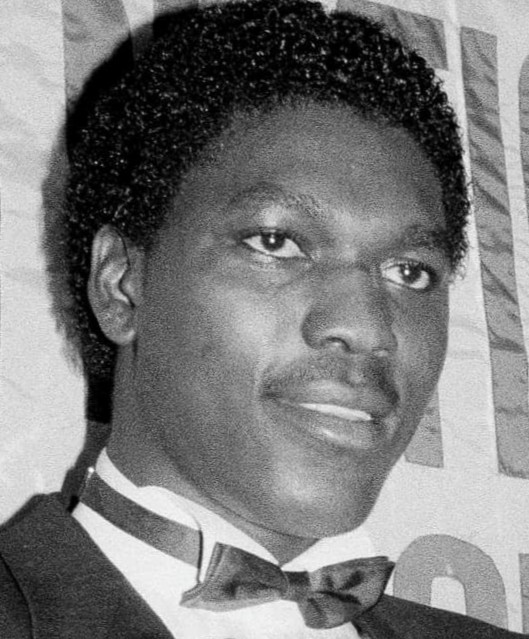
Hakeem stayed in Houston, the city where he had played his college basketball, and he made an immediate impact. The Rockets paired him with another towering centre, Ralph Sampson, and the two became known as the “Twin Towers.” Together they formed one of the most physically imposing frontcourts the league had ever seen. With Olajuwon’s agility and Sampson’s length, the Rockets surged up the standings. In just his second professional season, Hakeem helped lead Houston all the way to the 1986 NBA Finals, where the Rockets faced the powerful Boston Celtics. Although Houston lost that series to one of the greatest teams in NBA history, the young Nigerian had already announced himself as a championship-calibre player.
In those early years, Hakeem averaged big numbers across the board, scoring, rebounding, and blocking shots at an elite level. He was still refining the offensive moves that would later make him unstoppable, but his athleticism and instincts were already overwhelming. American commentators marvelled that a player who had only started the game at fifteen could move with such grace and read the floor so intelligently. The footwork he had developed as a goalkeeper in Lagos translated into a fluidity that bigger, slower centres simply could not match.
The Dream Shake and Dominance
As his career matured, Hakeem Olajuwon developed into the most skilful big man the game had ever produced, and the centrepiece of his greatness was a move that became famous around the world: the “Dream Shake.” It was named after his nickname, “The Dream,” which had followed him since his college days. The move was a dazzling sequence of fakes, pivots, and spins in the low post that left defenders frozen and grasping at air. He would catch the ball with his back to the basket, sway one way, shift his weight another, and finish with a soft jump shot or a powerful finish at the rim before the defender could recover. It was the footwork of a dancer combined with the power of a heavyweight, and it was rooted directly in the agility he had built playing football and handball as a boy.
What separated Olajuwon from other dominant centres was that he excelled at every aspect of the game. Most big men were known for one or two skills. Hakeem could score in the post, hit a mid-range jump shot, rebound at both ends, pass out of double teams, and defend like no other player of his size. He was light on his feet, with the lateral quickness of a guard, which allowed him to guard players far from the basket as well as protect the rim.
His defensive brilliance was historic. Hakeem retired as the all-time leader in career blocked shots in NBA history, a record that stands as a monument to his timing and instincts. He was a relentless shot-blocker and a constant menace to anyone who attacked the basket. He combined that with quick hands that produced steals at a rate almost unheard of for a centre. In fact, Hakeem became one of only a handful of players to record a quadruple-double, a rare statistical feat involving double figures in four categories in a single game, when he posted double digits in points, rebounds, blocks, and steals. His all-around statistical dominance placed him in a category occupied by almost no other big man in the history of the sport.
Through the late 1980s and into the 1990s, Hakeem was a perennial all-star and one of the most feared players in the league. Yet the ultimate prize, a championship, still eluded him. That was about to change.
Back-to-Back Championships
The 1993 to 1994 season was the year Hakeem Olajuwon ascended to the absolute summit of basketball. He delivered one of the most complete individual seasons in the history of the league. He led the Houston Rockets to the best of their abilities, carrying the team night after night, and the results were historic. In a single season, Hakeem won the NBA Most Valuable Player award, the NBA Defensive Player of the Year award, and the NBA Finals Most Valuable Player award. No player had ever swept all three of those honours in one year, and the achievement remains one of the rarest in the sport. It was the perfect statistical and competitive summary of a player who dominated at both ends of the floor.
In the 1994 NBA Finals, the Rockets faced the New York Knicks, anchored by Hakeem’s old college rival Patrick Ewing. The series was a fierce, grinding battle between two of the greatest centres of the generation, a renewal of the duel that had begun in the 1984 college championship game a decade earlier. Hakeem outplayed Ewing in the decisive moments, and Houston won the championship in seven hard-fought games. For the city of Houston, it was the first title in franchise history. For Nigeria, it was a moment of overwhelming national pride.
The following season, in 1994 to 1995, Hakeem proved the first title was no fluke. The Rockets, despite a difficult regular season, caught fire in the playoffs and defeated a series of strong opponents. Along the way, Hakeem engaged in a celebrated duel with David Robinson, the San Antonio Spurs centre who had won the MVP award that year. Many felt Robinson should have been recognised over Olajuwon, and Hakeem responded by thoroughly outplaying him in their playoff series, delivering a performance that is still studied as a masterclass in post play. In the 1995 NBA Finals, Houston swept the young Orlando Magic, led by Shaquille O’Neal, to win a second consecutive championship. Hakeem was once again named Finals MVP. Back-to-back titles cemented his place among the greatest players the game had ever known.
Faith and Character
Beyond the statistics and the trophies, what made Hakeem Olajuwon truly remarkable was the kind of man he was. He was a devout Muslim, and his faith was the foundation of his life. He prayed regularly, lived modestly, and conducted himself with a quiet dignity that earned the respect of teammates, opponents, and fans alike. Even at the height of his fame, he avoided the flash and excess that surrounded many star athletes.
One of the most striking expressions of his devotion came during the holy month of Ramadan, when Muslims fast from dawn until sunset. Hakeem observed the fast faithfully, even during the NBA season, going without food or water during daylight hours while continuing to play at the highest level of professional sport. Remarkably, during one Ramadan stretch in February 1995, he played some of the finest basketball of his career while fasting, and he was named the league’s player of the month. It was a testament to both his physical conditioning and his spiritual commitment, and it inspired Muslims and non-Muslims around the world.
“I’m just a basketball player who happens to be Muslim. My faith comes first.”
Hakeem was known throughout the league for his sportsmanship and humility. He treated officials, opponents, and young players with courtesy. He never sought to humiliate those he defeated, and he carried himself with the same modesty in victory that he showed in defeat. Through it all, he remained proud of his Nigerian roots and never hid where he came from. He spoke often of Lagos, of his family, and of the values that had shaped him.
In 1993, Hakeem became a citizen of the United States, while remaining deeply connected to Nigeria. After gaining citizenship, he was eligible to represent the United States in international competition, and in 1996 he was selected for the American Olympic basketball team that competed at the Atlanta Games. That team, a successor to the original “Dream Team,” won the gold medal, adding an Olympic championship to Hakeem’s already glittering résumé. Even as he wore the colours of his adopted country, Nigerians continued to claim him proudly as their own, and he never gave them reason to feel otherwise.
Legacy
Hakeem Olajuwon retired from professional basketball in 2002 after eighteen seasons, the vast majority of them spent with the Houston Rockets. His career numbers placed him among the most productive players in history, and his combination of scoring, rebounding, shot-blocking, and all-around skill set a standard for centres that has rarely been matched. In 2008, he was inducted into the Naismith Memorial Basketball Hall of Fame, the highest individual honour the sport can bestow. The boy who had picked up a basketball at fifteen in Lagos had become an immortal of the game.
His influence did not end with his playing days. In retirement, Hakeem became a respected mentor and teacher, sharing the secrets of his legendary footwork with a new generation of stars. Some of the greatest big men of the modern era have travelled to train with him, seeking to learn the post moves and the balance that made him so unstoppable. His “Dream Shake” lives on in the games of players who studied at his feet, ensuring that his style continues to shape basketball long after his final game.
For Nigeria, Hakeem Olajuwon remains the country’s greatest basketball export and one of its most beloved global icons. He proved that talent and discipline from Lagos could conquer the most competitive league in the world. He opened doors for the many Nigerian and African players who followed him into professional basketball, and he stands as living proof that the path from a Lagos schoolyard to the summit of world sport, however unlikely, is possible. Among the greatest centres ever to play the game, his name is spoken with reverence, and among Nigerians, it is spoken with pride.
He carried his country’s name onto the biggest stage in sport, and he carried it with grace. That, perhaps, is the truest measure of “The Dream.”
For young Nigerians today, the lesson of Hakeem Olajuwon is as relevant as ever. He did not have early advantages, perfect coaching, or a head start. What he had was discipline, humility, an open mind willing to learn a brand new game from scratch, and the courage to leave home and pursue an uncertain opportunity in a foreign land. He combined the physical gifts shaped on Lagos football pitches with relentless practice and an unwavering work ethic. The result was a career that changed the way the world thought about big men in basketball and about athletes from Africa. Whenever a Nigerian child first picks up a basketball, somewhere in the background is the memory of a tall, gentle goalkeeper from Lagos who learned the game late and still became one of the greatest of all time.
Key Facts
- Hakeem Abdul Olajuwon was born on 21 January 1963 in Lagos, Nigeria, and did not begin playing basketball seriously until he was around fifteen years old.
- He was the number one overall pick in the 1984 NBA Draft, selected ahead of Michael Jordan, who went third.
- He led the Houston Rockets to back-to-back NBA championships in 1994 and 1995, winning Finals MVP both times.
- In the 1993 to 1994 season he became the only player ever to win NBA MVP, Defensive Player of the Year, and Finals MVP in the same season.
- He retired as the NBA’s all-time leader in career blocked shots and was inducted into the Basketball Hall of Fame in 2008.