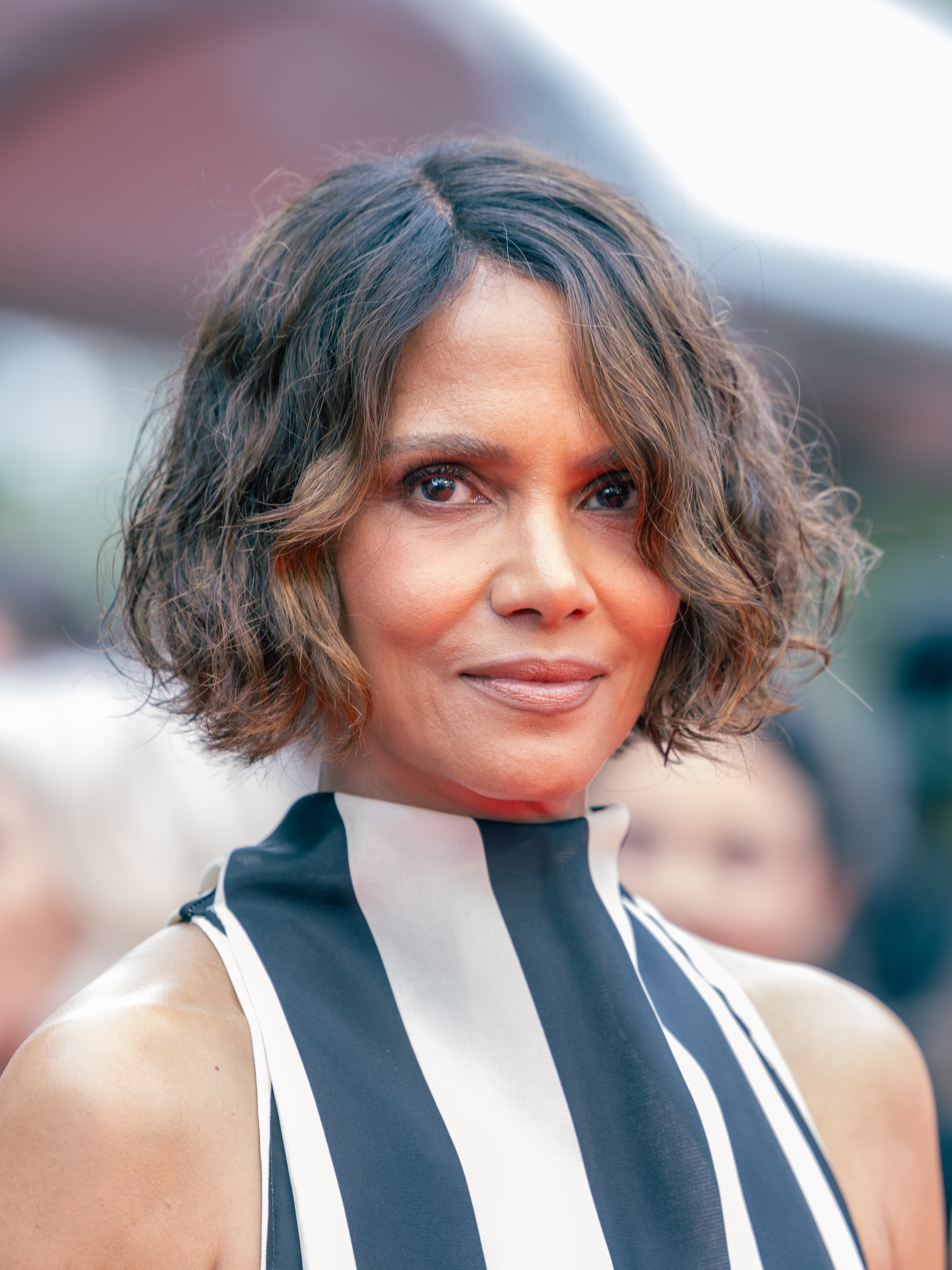
On the night of 24 March 2002, at the 74th Academy Awards ceremony held at the Kodak Theatre in Hollywood, Halle Berry heard her name announced as the winner of the Academy Award for Best Actress for her performance in Marc Forster’s “Monster’s Ball.” She stood from her seat and made her way to the stage, and the speech she delivered has been quoted and discussed ever since, because it contained something that the moment required: an acknowledgment that she was standing there not only for herself but as the culmination of a very long wait. “This moment is so much bigger than me,” she said, speaking of the women who had come before her, of Dorothy Dandridge and Lena Horne and Diahann Carroll and all the Black women who had performed brilliantly and been passed over and had never received this particular recognition. She was 35 years old, and she was the first.
Quick Facts
- Full name
- Maria Halle Berry
- Born
- 14 August 1966, Cleveland, Ohio, USA
- Nationality
- American
- Known for
- "Jungle Fever" (1991), "Boomerang" (1992), "Monster's Ball" (2001), the X-Men franchise, "Die Another Day" (2002)
- Awards
- Academy Award for Best Actress (2002), Emmy Award, Golden Globe Award, Screen Actors Guild Award
Cleveland, Ohio and a Childhood Defined by Difficulty
Maria Halle Berry was born on 14 August 1966 in Cleveland, Ohio, to Jerome Jesse Berry, a hospital attendant, and Judith Ann Hawkins, a psychiatric nurse. Her father was Black and her mother was white, and growing up biracial in the United States of the late 1960s and 1970s meant navigating a set of social complexities that a child should not have to manage but frequently does. Her family settled in the predominantly white suburban community of Oakwood, where Halle was one of very few Black or mixed-race children in her school.
Her father was an alcoholic whose violence eventually made the family’s situation untenable. Her parents divorced when she was four years old, and Jerome Berry largely exited his daughters’ lives after the separation. Judith Berry raised Halle and her older sister, Heidi, alone in Ohio, working as a psychiatric nurse and maintaining the family through a combination of professional commitment and personal determination. Halle’s relationship with her father was painful, and she has spoken in interviews about the way his abandonment affected her relationships with men throughout her adult life, a pattern she spent years recognising and working to change.
At Oakwood High School, she was a notably successful student and an active participant in school life: she was a cheerleader, the editor of the school newspaper, and the class president. She was also, by her junior year, dealing with the particular experience of being a beautiful biracial girl in a predominantly white community, which meant both social attention and social exclusion in forms that alternated unpredictably. A controversy arose over her homecoming queen election when she won the vote and some white students and their parents challenged the result. The school principal eventually declared a co-queen result to manage the conflict. It was an early lesson in the specific obstacles placed in the path of someone who looked like her.
She attended Cuyahoga Community College briefly, and then began entering beauty pageants, partly for the scholarship money they offered. She was first runner-up in the Miss USA pageant in 1986 and finished in the top five in the Miss World pageant the same year. The pageant circuit was not her goal but it gave her visibility and confidence and, practically, helped fund the move she was preparing for.
Chicago and the Decision to Act
In her late teens, she moved to Chicago to pursue modelling and acting, arriving with almost no money and eventually experiencing a period of homelessness, staying in a shelter while working whatever modelling work she could find. The story of a strikingly beautiful young woman living in a homeless shelter is not the kind of story that fits the standard Hollywood narrative of effortless ascent, and Berry has told it deliberately and specifically in interviews precisely because it disrupts that narrative. She was not discovered. She worked, and she struggled, and she kept going.
She began getting television commercial work and small acting roles in Chicago, and then made the move to New York, where she found an agent and began the process of building a professional profile. In 1989, she appeared in the short-lived television series “Living Dolls” as a regular cast member. In 1991, she appeared in the Fox Television series “Strictly Business.” These were not starmaking roles, but they were the accumulation of experience and professional credibility that eventually made starmaking roles possible.
Her film career began in earnest in 1991. Spike Lee cast her as a crack-addicted woman in “Jungle Fever,” his film about interracial relationships and neighbourhood tensions in New York. The role was brief and difficult and Berry prepared for it by reportedly not bathing for weeks to inhabit the character’s circumstances physically. Lee’s casting demonstrated that someone in the industry was paying serious attention to what she could do. The film starred Wesley Snipes and Annabella Sciorra and was one of the most discussed American films of that year.
Also in 1992, she appeared opposite Eddie Murphy in “Boomerang,” directed by Reginald Hudlin, a romantic comedy in which Murphy played a successful advertising executive brought low by encountering a woman as shallow and self-interested as himself. Berry played Angela Lewis, the good woman who ultimately wins Murphy’s reformed character, and the role was warm and funny and allowed her to demonstrate comic timing alongside the intensity Lee had deployed. “Boomerang” grossed over $131 million worldwide and established her as a commercially viable leading actress.
X-Men, Catwoman, and the Question of Franchise
Throughout the 1990s she built her career steadily with a combination of prestige films and mainstream entertainments. She appeared in “The Flintstones” (1994), the live-action adaptation of the animated series, in a role as Sharon Stone, the villain’s secretary (the naming was a joke at the expense of a different Sharon Stone). She appeared in Warren Beatty’s “Bulworth” (1998), playing a woman from a South Central Los Angeles community who becomes entangled with a senator undergoing a mental breakdown. She appeared in the television film “Introducing Dorothy Dandridge” (1999) as the pioneering Black actress and singer, a role that required enormous physical and emotional investment and that won her an Emmy Award and a Golden Globe. The Dandridge film was a labour of love that Berry had championed and partly produced, and it demonstrated the depth of her commitment to telling stories about Black women’s experience in America.
In 2000, she appeared as Storm in Bryan Singer’s “X-Men,” the film that launched one of the most commercially successful franchises in cinema history. Storm was the weather-controlling mutant and one of the team’s most powerful members, and Berry played her with authority if limited depth, given the constraints of an ensemble superhero film where screen time is divided among many characters. She would return to the role across multiple X-Men films including “X2” (2003), “X-Men: The Last Stand” (2006), and “X-Men: Days of Future Past” (2014). The franchise gave her global commercial recognition on a scale that her serious dramatic work alone would not have generated.
In 2004, after the Oscar win and the Bond film, she played Catwoman in the standalone film of the same name, directed by Pitof. The film was a critical disaster and a commercial disappointment, grossing only $82 million worldwide against a production budget of $100 million. Berry collected her Razzie Award for Worst Actress in person, attending the ceremony and delivering a speech that parodied her Oscar acceptance speech in a gesture of self-deprecating good humour that won her considerable public affection. The Catwoman experience was painful but her willingness to own it publicly was entirely in character.
“I believe in taking risks, in going out on a limb. You have to. Otherwise you have no business calling yourself an actor.”
Monster’s Ball and the Historic Win
The performance that changed everything was not in a franchise film or a prestige production with a large budget and high visibility. “Monster’s Ball” (2001), directed by Marc Forster, was a low-budget independent film made for approximately $4 million. It told the story of Leticia Musgrove, a Black woman in rural Georgia whose husband (Sean Combs) is executed on death row, and who eventually enters a painful and complicated relationship with Hank Grotowski (Billy Bob Thornton), the corrections officer who supervised the execution without Leticia’s knowledge. The relationship is drawn together by grief, loneliness, and physical need, and the film examined race and sexuality and the possibility of connection across profound historical and personal enmity with unflinching honesty.
The role required Berry to be completely vulnerable on screen in a way that went beyond conventional dramatic courage. There is an explicit sex scene between Leticia and Hank that generated significant commentary when the film was released, but the scene itself is less remarkable than the totality of the performance Berry built around it: the specific exhaustion of a woman who has lost almost everything, the warmth that persists despite everything, the grief that has no clean resolution. She inhabited Leticia’s poverty and her Southern speech and her particular kind of survival without anything that felt calculated or performed.
“Monster’s Ball” was not a wide release. It opened limited and expanded slowly, driven by critical response and word of mouth. Berry’s performance was the primary subject of that response. She received the Academy Award for Best Actress at the 74th ceremony, and the historical weight of the moment was as she described it: extraordinary and shared with every Black actress who had worked before her and not received this recognition. The film grossed approximately $31 million worldwide, far exceeding expectations for a production of its scale.
James Bond and the Action Star Turn
Two weeks after collecting her Oscar, Berry appeared in the opening sequence of “Die Another Day” (2002), the 20th James Bond film directed by Lee Tamahori, emerging from the ocean in a coral bikini that immediately became one of the most referenced images in Bond history. The homage to Ursula Andress’s iconic “Dr. No” entrance was deliberate and knowing. Berry played NSA agent Jinx Johnson, a Bond girl who was capable, dangerous, and central to the plot rather than decorative, in a film that grossed over $431 million worldwide.
The Bond appearance was commercially enormous and stylistically interesting. It demonstrated that the Oscar winner intended to be a full-spectrum film presence, not confined to the serious dramatic territory that the Oscar might have suggested was her permanent home. She was the first Black woman to play a major Bond role in a leading capacity, adding another historical note to a career already accumulating them.
Later Career: Directorial Debut and Continued Work
In the 2010s and 2020s, Berry continued to work in a wide range of material and to use her public platform in ways that mattered. She appeared in “Cloud Atlas” (2012), the Wachowskis’ ambitious and unwieldy science fiction film in which she played multiple characters across multiple time periods and civilisations, one of the more formally demanding exercises in her career. The film grossed over $130 million worldwide and generated significant critical debate about its ambition and its execution. She appeared in “The Call” (2013), a thriller directed by Brad Anderson in which she played Jordan Turner, a 911 operator whose past failure to act appropriately comes back to haunt her when a similar call arrives. The film was a commercial success, grossing over $68 million worldwide against a budget of approximately $13 million, and demonstrated that she could carry a mainstream genre film with complete conviction.
She appeared in “Kingsman: The Secret Service” director Matthew Vaughn’s earlier “X-Men: Days of Future Past” (2014), reprising her Storm role in a franchise entry that reset the series’ timeline and was one of the better-reviewed films in that long-running franchise. She appeared in the action film “Kidnap” (2017), directed by Luis Prieto, as a mother pursuing the men who have taken her son, a role that was stripped-down and physically demanding and that she carried with the determination of someone who had spent 25 years proving she could do exactly this kind of work.
John Wick creator Derek Kolstad wrote a film for her, and the result was “John Wick: Chapter 3 - Parabellum” (2019), directed by Chad Stahelski, in which she appeared as Sofia, a Continental Hotel manager and former associate of John Wick who fights alongside him in a breathtaking sequence set in Morocco. The action choreography required her to work alongside trained Belgian Malinois dogs as combat partners, and she trained for the role with the same thoroughness she had brought to every physical challenge. The film grossed over $326 million worldwide and generated immediate critical discussion of her action sequences as among the film’s highlights.
In 2021, she made her directorial debut with “Bruised,” a mixed martial arts drama in which she also starred as Jackie Justice, a disgraced former UFC fighter attempting to rebuild her career and her relationship with the son who has re-entered her life. She had trained for 18 months in jiu-jitsu and boxing and Muay Thai to prepare for the physical demands of the role, an echo of her earlier commitment to inhabiting characters through physical transformation. She broke ribs during the training and filming and continued. The production itself was handled with a directorial confidence that impressed critics who might have been sceptical of an actor’s first film. “Bruised” premiered at the Toronto International Film Festival and was acquired by Netflix, which gave it a wide release. The directorial debut showed that her ambitions behind the camera were as serious as those she had pursued in front of it, and that the analytical intelligence she had always brought to performance extended to a comprehensive understanding of how films are made.
Her personal life was, by her own admission in various interviews, often difficult, shaped by the pattern of relationships with men that she had begun to understand as connected to her father’s abandonment. She was married to baseball player David Justice from 1992 to 1997, to singer Eric Benet from 2001 to 2005, and to French actor Olivier Martinez from 2013 to 2016. She has a daughter, Nahla Ariela Aubry, born in 2008 with Canadian model Gabriel Aubry, and a son, Maceo Robert Martinez, born in 2013 with Olivier Martinez. She has spoken publicly and with considerable honesty about therapy, about the work of understanding her own patterns, and about the particular challenge of maintaining a private emotional life inside a very public career.
Advocacy, Diabetes, and the Body as Instrument
Berry was diagnosed with Type 1 diabetes in 1989, during the filming of “Living Dolls,” when she fell into a diabetic coma on set and was hospitalised for seven days. At the time, she was 22 years old and had no prior diagnosis. The revelation was frightening, but she has spoken about it as a moment that reshaped her relationship with her body and with discipline, that made her understand that the body was an instrument she had to maintain and understand rather than simply inhabit. She manages her condition through diet, exercise, and medication, and has been open about it in interviews as part of a broader commitment to honest self-disclosure that characterises her public persona.
She became an advocate for diabetes awareness, working with various organisations and speaking publicly about the specific challenges of managing the condition while working at the physical pace her career demanded. The advocacy was personal rather than performative, rooted in her own experience rather than in any institutional commitment. She has argued that speaking about chronic illness is part of the same project as speaking about homelessness and domestic violence: a refusal to maintain the fiction that successful people exist outside the difficulties that other people face.
Her commitment to physical training, which extended across the career from her early modelling work through the martial arts preparation for “Bruised,” was shaped partly by this understanding. She has spoken about fitness as a form of self-care that her diabetes management required and that she would not have developed as rigorously otherwise. The discipline is visible in her performances across thirty years of screen work, in a physical presence that conveys both fragility and power depending on what the role requires.
Legacy
Halle Berry’s legacy is built on several intersecting foundations. The Oscar win is the most visible of them, the historical first that was genuinely historic and that carried real meaning beyond the personal. But the legacy extends beyond that single night. She has spent over three decades navigating a film industry that was not designed with her in mind, that offered limited roles to Black women regardless of their talent, that categorised and constrained with the same efficient reflexes that categorise and constrain all those who don’t fit the default template. She found ways around those constraints, took risks when the stakes were high, and produced across that long period a body of work that includes multiple genuinely excellent performances.
She opened doors by walking through them. The first Black Bond girl of genuine significance, the first Black Best Actress Oscar winner, the first Black woman to direct and star in a major mixed martial arts film: each of these firsts was not just a personal achievement but a demonstration that the category was available, that the precedent existed, that other women could follow. She has been explicit, consistently, about the responsibility that comes with firsts, about the understanding that the achievement is only meaningful if it makes the path easier for those who come after.
Key Facts
- Halle Berry’s 2002 Academy Award for Best Actress in “Monster’s Ball” made her the first and, as of 2026, still the only Black woman to win that award in a competitive category.
- She experienced a period of homelessness in Chicago before her career took hold, a fact she has discussed publicly to challenge narratives of effortless success.
- She was runner-up in the 1986 Miss USA pageant and placed in the top five in the Miss World competition the same year.
- For her directorial debut “Bruised” (2021), she trained in jiu-jitsu, boxing, and Muay Thai for 18 months and broke ribs during production, continuing to film despite the injury.
- She collected her Razzie Award for Worst Actress for “Catwoman” (2004) in person, delivering a self-deprecating speech that parodied her Oscar acceptance and won widespread public admiration for its good humour.