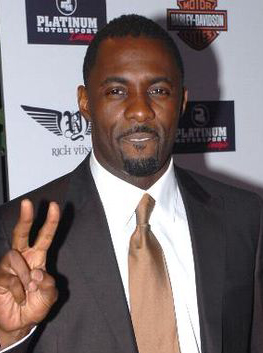
In the early 2000s, American television was producing a drama set in the drug corners of West Baltimore that would eventually be recognised as one of the greatest works in the history of the medium. “The Wire,” created by David Simon, required an actor to play Russell “Stringer” Bell, a drug dealer with the intelligence and ambition of a legitimate businessman, who was simultaneously running a street empire and studying economics at Baltimore Community College, who spoke in a specific mid-Atlantic American accent, and who projected a particular kind of self-possession, cool, and menace that made him one of the most compelling figures in an ensemble of compelling figures. David Simon cast an English actor from Hackney. Idris Elba delivered such a completely convincing performance, accent, physicality, psychology, and all, that American audiences and critics had no idea for years that they were watching someone who had grown up watching EastEnders. When the information eventually circulated, it changed nothing about how the performance was received. It had already been received as perfect.
Quick Facts
- Full name
- Idrissa Akuna Elba
- Born
- 6 September 1972, Hackney, London, England
- Nationality
- British
- Known for
- "The Wire" (2002 to 2004), "Luther" (2010 to 2019), "Beasts of No Nation" (2015), the Thor franchise, "Molly's Game" (2017)
- Awards
- Two Golden Globe Awards, Screen Actors Guild Award, BAFTA Award, OBE (2016)
Hackney and a West African Upbringing in London
Idrissa Akuna Elba was born on 6 September 1972 in Hackney, east London, to West African parents. His father, Winston Elba, came from Sierra Leone and worked at the Ford motor manufacturing plant in Dagenham, Essex. His mother, Eve, came from Ghana. The family settled in Hackney, a London borough that in the 1970s was economically pressured and ethnically diverse, a place where the children of West African immigrants, Caribbean immigrants, and working-class white British families grew up alongside each other in a mixture that was sometimes difficult and always alive.
His parents were working people who had come to Britain in the generation of West African and Caribbean immigrants who arrived from the late 1950s through the 1970s, building lives in a country that was not always welcoming and that had not always prepared itself for their arrival. Winston Elba worked the Ford factory line. Eve Elba worked in various roles. They were, by all accounts, a stable and warm household that gave their son a secure foundation from which to venture out into the complicated world of east London in the 1980s.
Idris was a social child, interested in music and in people, and he grew up inside the specific culture of Black British east London in a way that later gave him the particular quality of cool that became part of his public identity. He attended Canning Town’s Kingsford Community School, where his interest in drama became apparent. He joined the National Youth Music Theatre, a respected organisation that gave young people professional-standard training in musical theatre, and he showed a talent for performance that extended to music as well as acting. He had a part-time job as a DJ to supplement his income while pursuing performing work, and he maintained music as a parallel practice throughout his career, eventually releasing albums and performing at festivals under the name DJ Big Driis.
He trained at the National Youth Theatre, one of Britain’s most respected organisations for developing young acting talent, which had produced a remarkable number of significant British actors including Derek Jacobi, Ben Kingsley, and Helen Mirren. The training gave him discipline, classical text experience, and professional habits. He appeared in various stage productions and began getting small television roles in British programming.
Early British Television and the Decision to Go to America
His early British television work included appearances in longrunning series including “The Bill,” the British police procedural, and “Bramwell,” a period medical drama. He appeared in “Ultraviolet” (1998), a six-episode British supernatural thriller, and in “The Ruth Rendell Mysteries.” These were solid professional credits that were building his presence in British television without yet producing the breakthrough role that his talent indicated was available.
In 1999, he made a significant decision. He applied for and received an $800 grant from the Actors’ Equity Association in the United States, packed his life, and moved to New York City. The decision was not obviously rational. He had stable British television work and a growing profile in Britain. America was unknown territory with a very different industry structure, different accent requirements, different networks, and no particular reason to be interested in a British actor of modest profile. He was 26 years old.
He spent several years in New York and then relocated to Los Angeles, taking whatever work he could find. He appeared in small roles in American television and film. He drove a truck to supplement his income. He auditioned constantly. The period was difficult in ways that he has discussed candidly, including a period of financial precarity that would have caused a less determined person to return home. He did not return home.
In 2002, David Simon was casting “The Wire,” his HBO series about drug trafficking and the institutions designed to combat it in Baltimore. The role of Stringer Bell required an actor who could be simultaneously plausible as a street-level drug dealer and as a man studying economics textbooks and running criminal operations with corporate logic. Simon wanted someone with genuine weight, genuine intelligence, and the ability to project both the violence and the restraint of a man who had decided that violence was a tool to be used strategically rather than an end in itself. Elba auditioned with a Stringer Bell accent he had developed specifically for the role.
The Wire and the Defining Role
“The Wire” premiered on HBO in June 2002 and ran for five seasons, concluding in 2008. Elba was a primary cast member in the first three seasons, from 2002 to 2004, and returned briefly in the fifth season for a single scene. His Stringer Bell was, from the first episode, recognisable as something exceptional: a character who combined the menace of a man who had grown up in and around violence with the discipline of someone who had decided that intelligence was a more reliable instrument of survival and advancement than brute force.
The performance required complete physical and linguistic transformation. The Baltimore accent is specific and demanding, and Elba had no connection to it. He worked with a dialect coach and immersed himself in the sound until he owned it. He built Stringer’s physicality from the ground up, the specific way a man carries himself when he is both a street figure and someone who considers himself above street thinking. He researched the economics textbooks that Stringer is shown reading, understanding the actual content rather than simply the prop value, so that the character’s application of economic theory to drug dealing was specific and credible rather than merely decorative.
He appeared in the show alongside Dominic West as Detective Jimmy McNulty, Andre Royo as Bubbles, Wood Harris as Avon Barksdale, and an ensemble that was, across five seasons, one of the finest ever assembled for an American television drama. The show grossed no significant commercial ratings in its original run but accumulated a critical reputation that placed it among the greatest dramas ever made. Elba’s Stringer Bell, in particular, became one of the most discussed characters on American television and one of the most carefully studied performances by acting teachers and students interested in accented work.
The extraordinary fact, confirmed by David Simon and various cast members in interviews over the years, is that significant numbers of American viewers watched multiple seasons of “The Wire” without knowing that Elba was British. The performance was so complete that the information seemed impossible. When it became widely known, it generated a wave of retrospective admiration for the technical achievement involved.
“I grew up wanting to be cool. Acting, for me, was always about finding the cool in a character, the thing that makes them feel like they know something nobody else does.”
Luther and the British Triumph
While building his profile in American film following “The Wire,” Elba was also working in British television and theatre. In 2010, BBC One premiered “Luther,” created by Neil Cross, in which Elba played DCI John Luther, a detective in the Metropolitan Police’s Serious and Serial unit who is brilliant, obsessive, psychologically damaged, and operating always at the edge of what the law and his own stability will permit. The show ran for five series across ten years and generated an international audience, with Netflix eventually streaming it globally.
Luther was a different kind of character from Stringer Bell but required similar qualities: the ability to project intelligence alongside menace, to suggest interior complexity through surface control, to make the audience believe in a man whose relationship with his own violence was dangerously close. Elba played Luther with a quality of barely contained intensity that the show’s scripts made available to him and that he inhabited completely. The character became one of the most popular detective protagonists in British television history, and the comparison to Sherlock Holmes (another brilliant detective with a broken personal life) was inevitable.
For “Luther,” Elba won a Golden Globe Award for Best Actor in a Television Series Drama at the 2012 Golden Globe Awards, becoming the first Black actor to win that prize in that category. He also received BAFTA nominations and Screen Actors Guild nominations for the role. The recognition was, in the British context particularly, a statement about the availability of complex, authoritative dramatic lead roles to Black British actors, a category that had historically been underserved by the industry.
He appeared in Benh Zeitlin’s “Beasts of the Southern Wild” (2012) as a producer and followed this with a role in Ridley Scott’s “Prometheus” (2012) as Janek, the captain of the exploration vessel, a supporting role in a large commercial production that grossed over $403 million worldwide.
In 2013, he appeared in the Nelson Mandela biographical film “Mandela: Long Walk to Freedom,” directed by Justin Chadwick, playing Mandela himself. The role required extensive preparation and considerable physical transformation and received positive reviews. The film grossed over $28 million worldwide.
Beasts of No Nation and the Streaming Era
In 2015, Cary Joji Fukunaga directed “Beasts of No Nation,” an adaptation of Uzodinma Iweala’s novel about a child soldier in an unnamed West African country, for Netflix. The film was one of the first major prestige productions made directly for streaming, and it starred Abraham Attah as the child soldier Agu and Elba as the commandant who recruits and radicalises him. It was the role that demonstrated most fully what Elba could do when given serious dramatic material and a director working at the highest level.
His Commandant was charismatic, terrifying, seductive, and pathetic in roughly equal proportions, a man who had constructed an entirely self-serving ideology of military purpose around his own thirst for power and his contempt for human life. The performance required him to be convincing as a leader, as a manipulator, and as a monster, while keeping all three qualities simultaneously visible. He received a Screen Actors Guild Award nomination and a Golden Globe nomination for Best Supporting Actor, but was controversially not nominated for the Academy Award, a decision that generated significant commentary about the Academy’s relationship with streaming productions and with African-set stories.
The “Beasts of No Nation” performance stands as one of the most complete pieces of work in his career, and its relative critical undercelebration at the awards level has not diminished its standing among serious students of screen acting.
Marvel, Film Stardom, and Continued Range
Elba joined the Marvel Cinematic Universe as Heimdall, the all-seeing guardian of the Bifrost bridge in Asgard, appearing in “Thor” (2011), “Thor: The Dark World” (2013), “Avengers: Age of Ultron” (2015), “Thor: Ragnarok” (2017), and “Avengers: Infinity War” (2018). The role was not large but it was present across one of the most commercially successful film franchises in history, which collectively grossed billions of dollars worldwide. Heimdall was an ancient and dignified figure, and Elba brought to even the smaller appearances in the series the quality of weight and authority that made the character feel genuinely mythological rather than merely functional. He also appeared in the DC Extended Universe as the Thinker in James Gunn’s anarchic action film “The Suicide Squad” (2021), a role in which his intelligence and his capacity for dry humour found an unusual and entirely satisfying vehicle.
In Ridley Scott’s science fiction epic “Prometheus” (2012), he played Janek, the pragmatic captain of the expedition vessel, a role that required him to project competence and calm in a film that was otherwise dominated by hysteria and cosmic horror. The film grossed over $403 million worldwide. He appeared in Scott’s “All Is Lost” follow-up productions and in Craig Brewer’s “Hustle and Flow” and other American productions that demonstrated his versatility across genre.
In Aaron Sorkin’s “Molly’s Game” (2017), he played Charles Jaffey, the lawyer defending Jessica Chastain’s Molly Bloom, a real-life figure who ran the world’s most exclusive underground poker game and was eventually prosecuted by federal authorities. The role required him to match Chastain’s verbal precision and emotional range in lengthy dialogue scenes, and he did so with a controlled intelligence that served the film’s demands exactly. “Molly’s Game” grossed over $59 million worldwide and received strong critical notices for both leads. He appeared in Guy Ritchie’s “Fast and Furious” franchise spinoff “Hobbs and Shaw” (2019) as the villain Brixton, a role he played with enormous enjoyment and considerable physical preparation, opposite Dwayne Johnson and Jason Statham in a film that grossed over $759 million worldwide. He appeared in “Cats” (2019), Tom Hooper’s ill-fated musical adaptation, as Macavity the Mystery Cat, a role that was not enhanced by the film’s reception but that demonstrated his willingness to commit completely to challenging formal contexts.
He directed and starred in the thriller “Concrete Cowboy” (2020), based on Greg Neri’s novel “Ghetto Cowboy,” in which he played a man who teaches his estranged teenage son about the tradition of urban horse riding in North Philadelphia. The film was a passion project and a statement about the stories he wanted to tell, stories that sat outside the mainstream of what was commercially expected of him. It premiered at the Toronto International Film Festival and received warmly positive notices. He also directed his own BBC documentary about knife crime in London, a subject connected to the world he had grown up in and to his sense of responsibility about using his visibility to address things that were actually happening.
He also developed a career as a serious music artist, releasing the mixtape “Idris Elba: King Among Kings” in 2013 and subsequent musical work under the name DJ Big Driis, DJing at major festivals including Coachella and releasing his debut album “mi Mandela” in 2014. The music was not a celebrity sideline but a genuine practice with its own logic and audience. He has spoken about music and acting as connected creative pursuits rather than separate ones, arguing that the improvisational quality of DJing and the attentive listening it requires have informed how he approaches character and performance.
In 2016, he was appointed an Officer of the Order of the British Empire (OBE) for services to drama. The appointment recognised a career that had by that point spanned three decades and two continents and had produced an extraordinary range of significant work. He returned to “Luther” in 2023 for the Netflix film “Luther: The Fallen Sun,” a feature-length continuation of the series that was designed to introduce the character to a global streaming audience that might not have seen the original BBC run. The film grossed considerable viewing figures on the platform and generated renewed critical discussion about John Luther as a character and about Elba’s sustained capacity to inhabit him across more than a decade.
The James Bond Conversation
For over a decade, Elba’s name was the most frequently mentioned when speculation arose about who might succeed Daniel Craig as James Bond. The conversation had a cultural dimension that went beyond casting: the question of whether Bond could or should be played by a Black actor carried significant weight in discussions about British national identity, representation in iconic franchises, and the specific image of Bond that the character’s history had fixed. Elba engaged with the speculation with good humour and occasional directness, at various points suggesting he was not certain the role was right for him while at other points leaving the possibility open.
As of 2026, the casting has not been resolved in any direction, but the fact that Elba’s name dominated the conversation for so long is itself a statement about the quality of the case for him. He has the physicality, the accent, the authority, and the ease in physical action sequences that the role requires. Whether or not he plays the role, his positioning as the person most obviously capable of it represents a kind of cultural recognition that would not have been available to a Black British actor of his generation twenty years earlier.
Legacy
Idris Elba’s career represents a specific and important version of the Black British success story in global entertainment. He came from a working-class West African immigrant household in east London, he trained in the British youth theatre system, he made a dramatic bet on America that paid off in one of the finest television performances of the century, and he built a dual career in British and American entertainment that has few parallels for its range, quality, and sustained momentum.
He has never been defined by a single role or a single register. From drug dealer to detective to warlord to Norse guardian to DCI to villain in a superhero franchise, from dramatic lead to musical performer to DJ to producer, the range is genuine rather than performed. The coolness that his audience perceives is real, in the sense that it derives from a genuine self-possession, a person who knows what he is capable of and does not feel the need to announce it.
He has changed what is visible in British cinema and television, both by doing the work and by the model his career provides for the generation of British-African and British-Caribbean actors who came after him and who could look at what he had built and understand that the path existed.
Key Facts
- Idris Elba played Stringer Bell in “The Wire” (2002 to 2004) with such complete linguistic and physical transformation that large numbers of American viewers were unaware for years that he was British and had never lived in Baltimore.
- He won the Golden Globe Award for Best Actor in a Television Series Drama in 2012 for “Luther,” becoming the first Black actor to win that prize in that category.
- His performance as the Commandant in “Beasts of No Nation” (2015) was cited by numerous critics as one of the finest performances of that year but was not nominated for the Academy Award, a decision that provoked significant public debate about the Academy’s relationship with streaming and African storytelling.
- He has pursued music as a serious parallel career under the name DJ Big Driis, performing at major international festivals including Coachella and releasing several albums.
- He was appointed an OBE in 2016 for services to drama, a recognition that arrived at the midpoint of a career that was already one of the most distinguished in British performing arts.