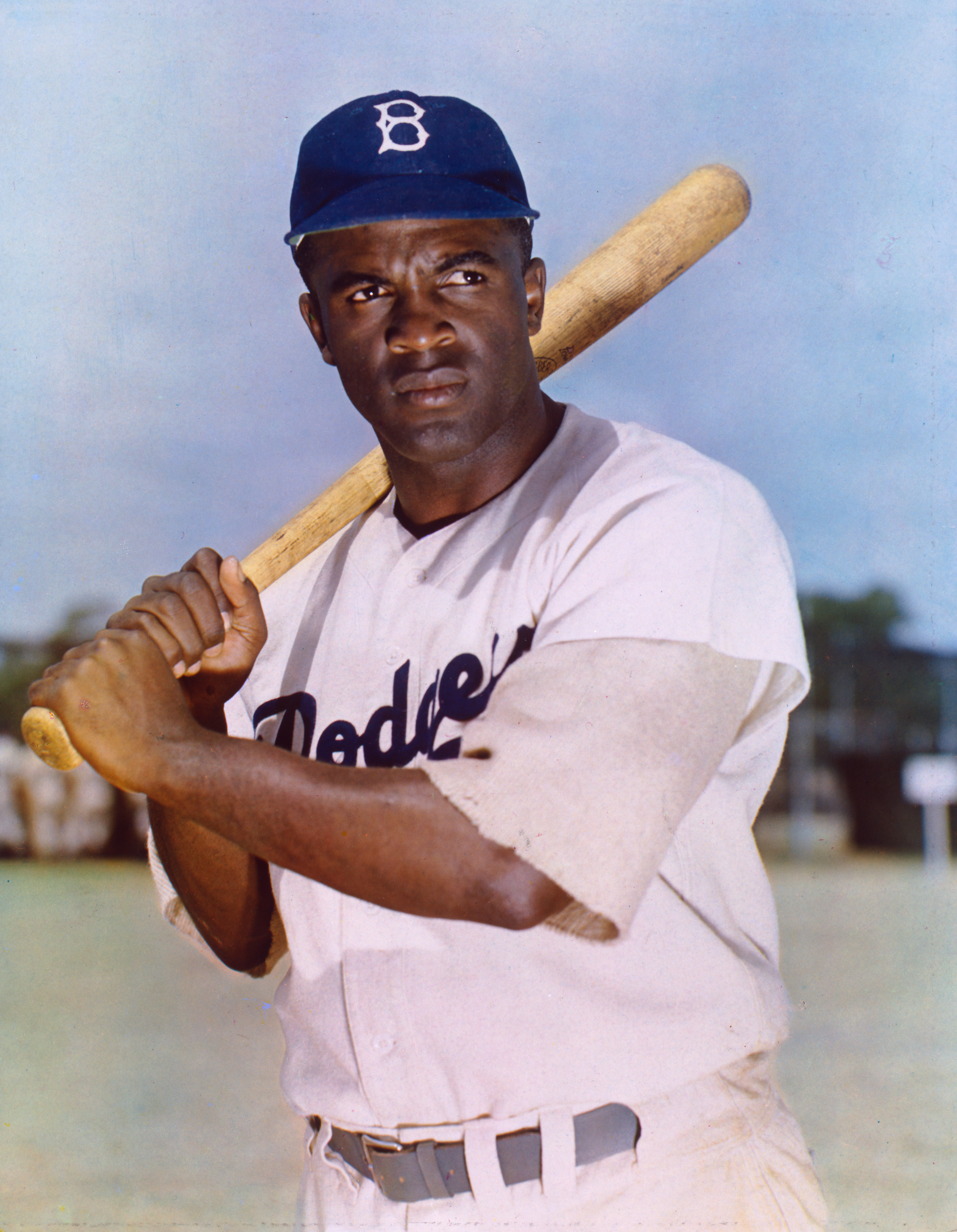
On the afternoon of 15 April 1947, a twenty-eight-year-old infielder trotted onto the grass at Ebbets Field in Brooklyn wearing the number 42 on his back. The crowd that day did not fully grasp what it was watching. Some did. For the first time in the modern history of Major League Baseball, a Black man was taking the field alongside white players in a regular-season game. The sport that called itself America’s national pastime had been segregated for more than half a century, governed not by any written rule but by an unspoken agreement among owners that no person of color would wear a big-league uniform. Jack Roosevelt Robinson, a son of Georgia sharecroppers and a star athlete from California, walked through that wall of silence and prejudice almost entirely alone.
What made Robinson extraordinary was not only his talent, though he had plenty of it. It was the burden he agreed to carry. He had promised a Brooklyn Dodgers executive that for three years he would not answer the insults, the spikes aimed at his legs, the death threats, or the pitches thrown at his head. He would absorb all of it and let his play speak. That promise, kept by a man with a famously fierce temper, may have been the hardest thing any athlete in American history ever did. This is the story of how he did it, and of the life that surrounded that single revolutionary act.
Quick Facts
- Full name
- Jack Roosevelt Robinson
- Born
- 31 January 1919, Cairo, Georgia, USA
- Died
- 24 October 1972, Stamford, Connecticut (aged 53)
- Sport
- Baseball (second base)
- Known for
- First Black player in modern Major League Baseball (1947)
Early Life
Jack Roosevelt Robinson was born on 31 January 1919 in Cairo, Georgia, a small town in the southwestern corner of the state. He was the youngest of five children born to Mallie and Jerry Robinson, a family of sharecroppers who worked land they did not own under an arrangement that kept Black farmers in a state of perpetual debt and dependence. His middle name honored President Theodore Roosevelt, who had died only weeks before Jackie’s birth. The family’s circumstances were harsh, and they grew harsher when Jerry Robinson abandoned the household in 1920, leaving Mallie to raise five young children on her own.
Mallie Robinson made a decision that would shape the rest of her son’s life. In 1920, when Jackie was barely more than a year old, she moved the family across the country to Pasadena, California, in search of a better future and some distance from the rigid segregation of the rural South. She found work as a domestic servant, cleaning and cooking in the homes of well-off white families, and through years of relentless saving she eventually bought a house on Pepper Street. It was a quiet, mostly white neighborhood, and the arrival of a Black family was not welcomed. Neighbors circulated a petition to force them out, and the children faced taunts and exclusion. Mallie held firm, and the family stayed.
Pasadena was not the promised land Mallie may have hoped for. California in the 1920s and 1930s practiced its own forms of racial separation. The public swimming pool admitted Black residents only on the day before it was drained and cleaned. Restaurants and shops made their hostility plain. Jackie grew up acutely aware of where he was not wanted, and he developed early the proud, combative streak that would define him. He ran briefly with a neighborhood group called the Pepper Street Gang, getting into minor trouble, until a mechanic named Carl Anderson and a young minister named Karl Downs steered him toward a more disciplined path.
What rescued Robinson, more than anything, was sport. He was a gifted natural athlete from a young age, and his older brother Mack provided a powerful example. Mack Robinson was a world-class sprinter who finished second to Jesse Owens in the 200 meters at the 1936 Berlin Olympics, taking the silver medal behind one of the most celebrated performances in track history. The contrast in how the two brothers were treated stayed with Jackie. Mack returned from the Olympics a hero abroad but found himself sweeping streets in Pasadena, a reminder of how little athletic glory protected a Black man from the everyday indignities of American life.
College Star and Soldier
Jackie Robinson’s athletic ability was simply too large to ignore. After excelling at Muir Technical High School and then Pasadena Junior College, he enrolled at the University of California, Los Angeles, in 1939. At UCLA he became the first student in the history of the school to earn varsity letters in four sports in a single year: baseball, basketball, football, and track. The achievement remains one of the most remarkable in the history of American college athletics.
Curiously, baseball was probably his weakest of the four sports at UCLA. He was a brilliant football halfback known for breakaway runs, a leading scorer in basketball, and a champion long jumper who won the 1940 NCAA title in the event, matching the discipline in which his brother Mack had medaled. On the football field and the basketball court he was electric. The sport in which he would later change history was, in college, almost an afterthought.
It was also at UCLA that he met Rachel Isum, a nursing student who would become his wife, his closest counselor, and his steadfast partner through every trial that followed. Their relationship became one of the great partnerships in American public life, though it would be several years before they married. Robinson left UCLA in 1941 before completing his degree, partly out of financial necessity and partly because he doubted that a college diploma would open many doors for a Black man in that era. He took a job with the National Youth Administration and briefly played semi-professional football.
Then came the Second World War. Robinson was drafted into the United States Army in 1942 and assigned to a segregated cavalry unit at Fort Riley, Kansas. Despite scoring well on the qualifying tests, he and other Black soldiers were initially barred from officer candidate school, an injustice that began to change only after the heavyweight boxing champion Joe Louis, stationed at the same base, used his influence to press the issue. Robinson was eventually commissioned as a second lieutenant in 1943.
The defining episode of his military service came in July 1944 at Fort Hood, Texas. Robinson boarded an Army bus and sat next to a fellow officer’s wife, a light-skinned Black woman whom the driver may have mistaken for white. The driver ordered Robinson to move to the back of the bus. He refused. Army regulations had in fact banned racial segregation on military buses, and Robinson knew it. The confrontation escalated, and he was arrested and charged with multiple offenses, including insubordination, in what became a court-martial. At his trial in August 1944, Robinson was acquitted of all charges. The incident foreshadowed everything to come: a Black man, sure of his rights, refusing to yield his seat, more than a decade before Rosa Parks made the same refusal famous in Montgomery. Robinson received an honorable discharge in November 1944.
The Negro Leagues and Branch Rickey
With his military service behind him and big-league baseball closed to Black players, Robinson signed in early 1945 with the Kansas City Monarchs of the Negro American League, one of the premier teams in Black baseball. He earned roughly four hundred dollars a month playing shortstop. The Negro Leagues were a vibrant and highly competitive world, home to legends such as Satchel Paige and Josh Gibson, but the life was grueling. Players traveled enormous distances by bus, were often refused service at restaurants and hotels, and played a punishing schedule of league games and exhibitions. Robinson, with his disciplined temperament and his discomfort at the loose, barnstorming culture of the circuit, was not entirely happy there. But he hit well and ran the bases with the daring that would later define him.
Meanwhile, in Brooklyn, a baseball executive was quietly planning to do something no one in the white major leagues had dared to attempt. Branch Rickey, the president and general manager of the Brooklyn Dodgers, had built a reputation as one of the sharpest minds in the sport, the inventor of the modern farm system. Rickey had decided, for reasons that mixed moral conviction, a competitive desire to win, and shrewd business sense, that the time had come to integrate Major League Baseball. He set his scouts to work under the cover story that he was forming a new Negro League team called the Brooklyn Brown Dodgers. In reality, they were hunting for the one player who could break the color line.
Rickey did not simply want the best player available. He wanted a man who could withstand the storm that would follow, someone with enough talent to belong but more importantly enough strength of character to endure years of abuse without retaliating. Robinson’s combination of athletic brilliance, college education, military background, and clear intelligence made him the choice. On 28 August 1945, the two men met in Rickey’s Brooklyn office for a conversation that has become legend.
Rickey spent nearly three hours testing Robinson, acting out the slurs and provocations the young man would face, playing the role of a racist hotel clerk, a hostile waiter, an enraged opponent throwing a punch. At one point Robinson, bewildered, asked whether Rickey wanted a player who was afraid to fight back. Rickey’s reply has echoed through history. He told Robinson that he needed a player with the guts not to fight back, that the experiment would fail if Robinson answered hatred with hatred and gave his enemies the excuse they wanted. Robinson agreed to the bargain. He would turn the other cheek, for three years, no matter what was done to him. He signed first with the Dodgers’ top minor-league affiliate, the Montreal Royals, and in 1946 he led the International League in batting average with a mark of .349, dominating the competition and proving he was ready.
Breaking the Barrier
On 15 April 1947, Robinson made his Major League debut for the Brooklyn Dodgers against the Boston Braves at Ebbets Field. He played first base that day, going hitless but reaching base and scoring a run as the Dodgers won. The simple fact of his presence shattered a barrier that had stood since the 1880s. He was the first Black player in the modern major leagues, and the weight of an entire people’s hopes traveled with him onto the field.
“A life is not important except in the impact it has on other lives.”
What followed was an ordeal that tested every ounce of the restraint Robinson had promised Rickey. Pitchers threw at his head. Base runners came into him with their spikes high, aiming to cut him. Fans hurled vile abuse from the stands, and Robinson received letters threatening his life and the lives of his wife and infant son. Some opponents were openly hostile. The Philadelphia Phillies, led by their manager Ben Chapman, subjected him to a torrent of racial slurs so ugly that it eventually generated sympathy for Robinson even among those who had been indifferent. Most painfully of all, the resistance came partly from within his own clubhouse. A group of Dodgers players reportedly circulated a petition saying they would refuse to play alongside him, until the team’s manager, Leo Durocher, told them in blunt terms that he would trade any man who would not take the field with Robinson.
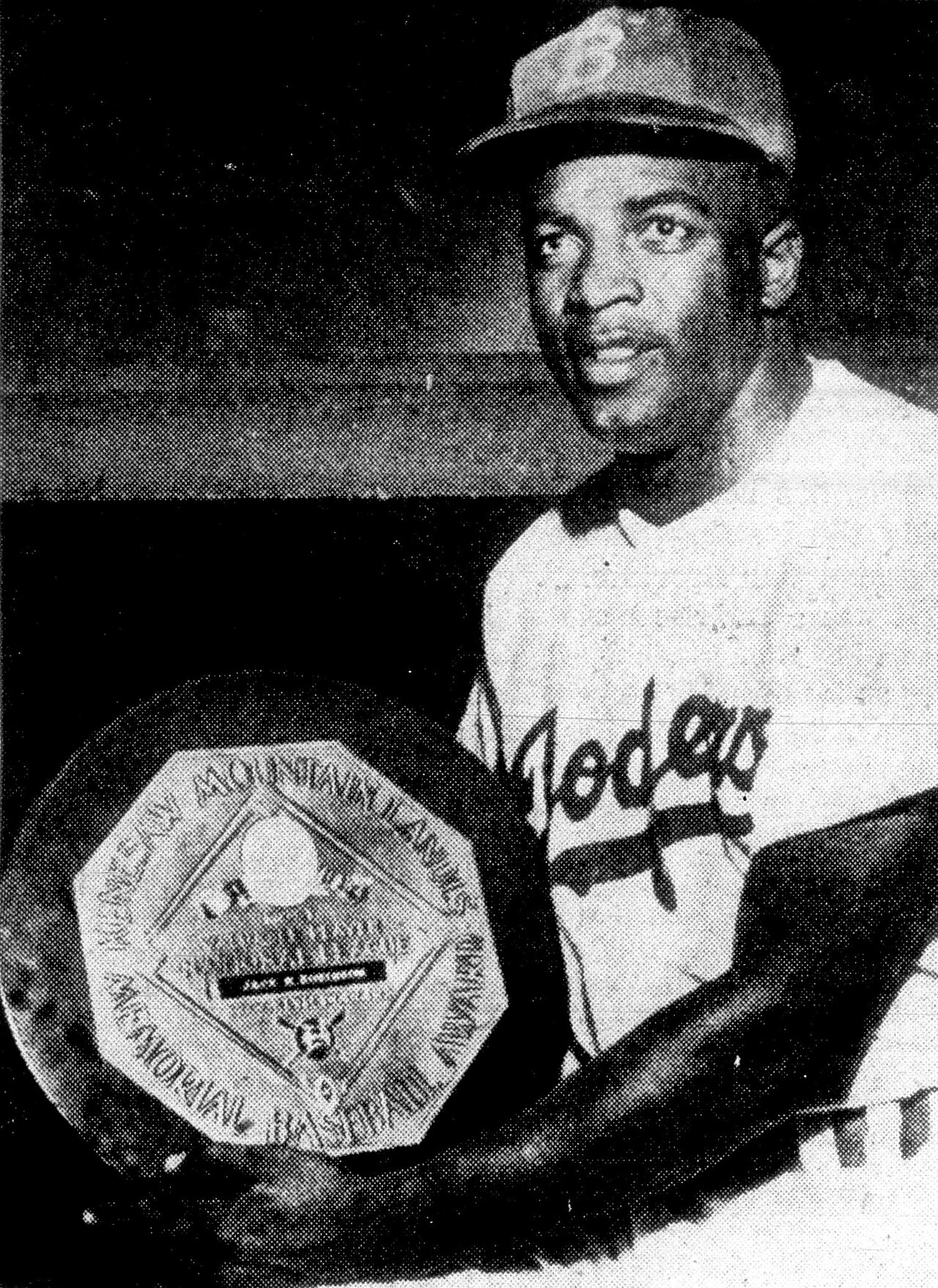
Through all of it, Robinson kept his promise. He did not retaliate. He channeled his fury into his play, and his play was magnificent. He stole bases with reckless brilliance, unsettling pitchers and exciting crowds in a way the cautious, slow game of the era had rarely seen. One famous and possibly embellished moment came when his teammate, the Kentucky-born shortstop Pee Wee Reese, is said to have walked over and put his arm around Robinson’s shoulder during a road game while hostile fans jeered, a silent gesture of solidarity that told the crowd Robinson was one of them. Whether the story happened exactly as legend tells it, the friendship between the two men was real and meaningful, and Reese’s quiet acceptance helped turn a divided clubhouse into a team.
The results spoke for themselves. In that 1947 season Robinson batted .297, led the National League in stolen bases, and helped lead Brooklyn to the National League pennant. At the end of the year he was named the recipient of the inaugural Rookie of the Year award, an honor that would later be renamed the Jackie Robinson Award in his memory. He had not only survived the experiment. He had triumphed within it.
A Hall of Fame Career
Once the three years of enforced silence ended, Robinson was free to be himself, and the version of Jackie Robinson that emerged was even more formidable. He argued with umpires, challenged opponents, and played with a ferocious, openly competitive edge. He had agreed to absorb abuse to win acceptance, and having won it, he refused to be passive ever again.
His finest season came in 1949. Robinson led the entire National League in batting with an average of .342 and in stolen bases with 37, drove in 124 runs, and was named the National League’s Most Valuable Player. He was, by then, not merely a symbol but one of the very best players in the sport, a perennial contender for every offensive title. Primarily a second baseman after his rookie year, he combined a sharp batting eye, surprising power, and a genius for disruption on the basepaths. His ability to steal home plate, one of the most thrilling and difficult plays in baseball, became a signature. Over his career he stole home 19 times, including a celebrated steal in the 1955 World Series against the New York Yankees.
Robinson was selected to the National League All-Star team six times, from 1949 through 1954. He anchored a Brooklyn Dodgers team that became one of the great franchises of the era, reaching the World Series repeatedly, only to fall short against their crosstown rivals the Yankees again and again. The heartbreak finally ended in 1955, when the Dodgers defeated the Yankees in seven games to win the only World Series championship the team would ever capture in Brooklyn. For the long-suffering fans of the borough, it was a deliverance, and Robinson was at the heart of it.
His career numbers, compressed into ten seasons because he began so late, were outstanding: a lifetime batting average of .311, nearly 1,520 hits, 137 home runs, and 197 stolen bases. In 1962, the first year he was eligible, Jackie Robinson was elected to the National Baseball Hall of Fame in Cooperstown, becoming the first Black player to be enshrined there. He had asked that voters judge him strictly on his record as a ballplayer rather than on his historical significance, and even by that narrow standard he belonged among the immortals.
Activism and Later Life
Robinson retired from baseball after the 1956 season rather than accept a trade to the New York Giants, the Dodgers’ bitter rivals. He was thirty-seven and had given everything to the game. He stepped immediately into a second life as a businessman and an activist, refusing to fade quietly into retirement.
He became a vice president at Chock full o’Nuts, a New York coffee and restaurant company, one of the first Black Americans to hold a senior executive role at a major corporation. He later helped found the Freedom National Bank in Harlem, a Black-owned institution intended to bring capital and lending into a community long denied both. He wrote a regular newspaper column and was never shy about expressing his opinions on the great issues of the day.
Above all, Robinson threw himself into the civil rights movement that was gathering force across America. He served on the board of the NAACP and raised significant funds for the organization. He marched, spoke, and lent his enormous fame to the cause of equality. He corresponded with and at times publicly challenged presidents and political leaders of both parties, holding them to account on questions of race. He was an independent and sometimes controversial figure, willing to break with allies when he believed they were wrong, but his commitment to the dignity and advancement of Black Americans never wavered. He understood his own life as part of something larger, a single contribution to a struggle that would outlast him.
The physical and emotional toll of his life, however, began to show. Robinson developed diabetes, a disease that was poorly managed by the medical standards of the time. It damaged his heart and his eyesight, and by his early fifties he had aged dramatically, his hair gone white, his vision failing. He had also endured deep personal grief: his eldest son, Jackie Robinson Junior, struggled with addiction after serving in the Vietnam War, recovered, and then died in a car accident in 1971, a loss that devastated the family.
Death and Legacy
On 24 October 1972, Jackie Robinson died of a heart attack at his home in Stamford, Connecticut. He was fifty-three years old. Only nine days earlier, frail and nearly blind, he had appeared before a national television audience at the World Series to be honored, and he had used the moment to call for the hiring of a Black manager in the major leagues, pressing for progress to the very end. His funeral in New York drew enormous crowds, and the eulogy was delivered by a young minister named Jesse Jackson.
In the decades after his death, Robinson’s stature only grew. On 15 April 1997, the fiftieth anniversary of his debut, Major League Baseball did something it had never done for any player before or since: it retired his number 42 across every team in the sport, permanently. No new player on any club would ever again wear that number. The few players already wearing it were allowed to keep it until they retired, the last being the great Yankees relief pitcher Mariano Rivera, who wore 42 until 2013.
Beginning in 2004, Major League Baseball established Jackie Robinson Day, observed every 15 April. On that day every player, coach, and manager on every team wears the number 42, a sea of identical jerseys honoring the man who made the integrated game possible. The gesture transforms his single number into a shared inheritance, worn for one day by everyone in the sport he opened.
Robinson’s importance reaches far beyond baseball statistics. By succeeding, by enduring, by proving on the most public stage in America that a Black man could compete and excel and be embraced, he struck an early and powerful blow against the entire architecture of segregation. His debut came in 1947, seven years before the Supreme Court struck down school segregation in Brown versus Board of Education and eight years before the Montgomery bus boycott. He helped prepare the ground for the movement that followed. The historian and the casual fan alike recognize that what he did mattered to the country as a whole, not only to a game.
Key Facts
- Jackie Robinson broke Major League Baseball’s color barrier on 15 April 1947 when he debuted for the Brooklyn Dodgers, ending more than half a century of segregation in the sport.
- At UCLA he became the first athlete in the school’s history to earn varsity letters in four sports (baseball, basketball, football, and track) in the same year.
- He won the inaugural Rookie of the Year award in 1947 and the National League Most Valuable Player award in 1949, when he led the league in both batting average (.342) and stolen bases (37).
- In 1962 he became the first Black player elected to the National Baseball Hall of Fame, and in 1997 his number 42 was retired across all of Major League Baseball.
- Beyond baseball he was a corporate executive, a co-founder of the Freedom National Bank in Harlem, and a prominent civil rights activist who served on the board of the NAACP.