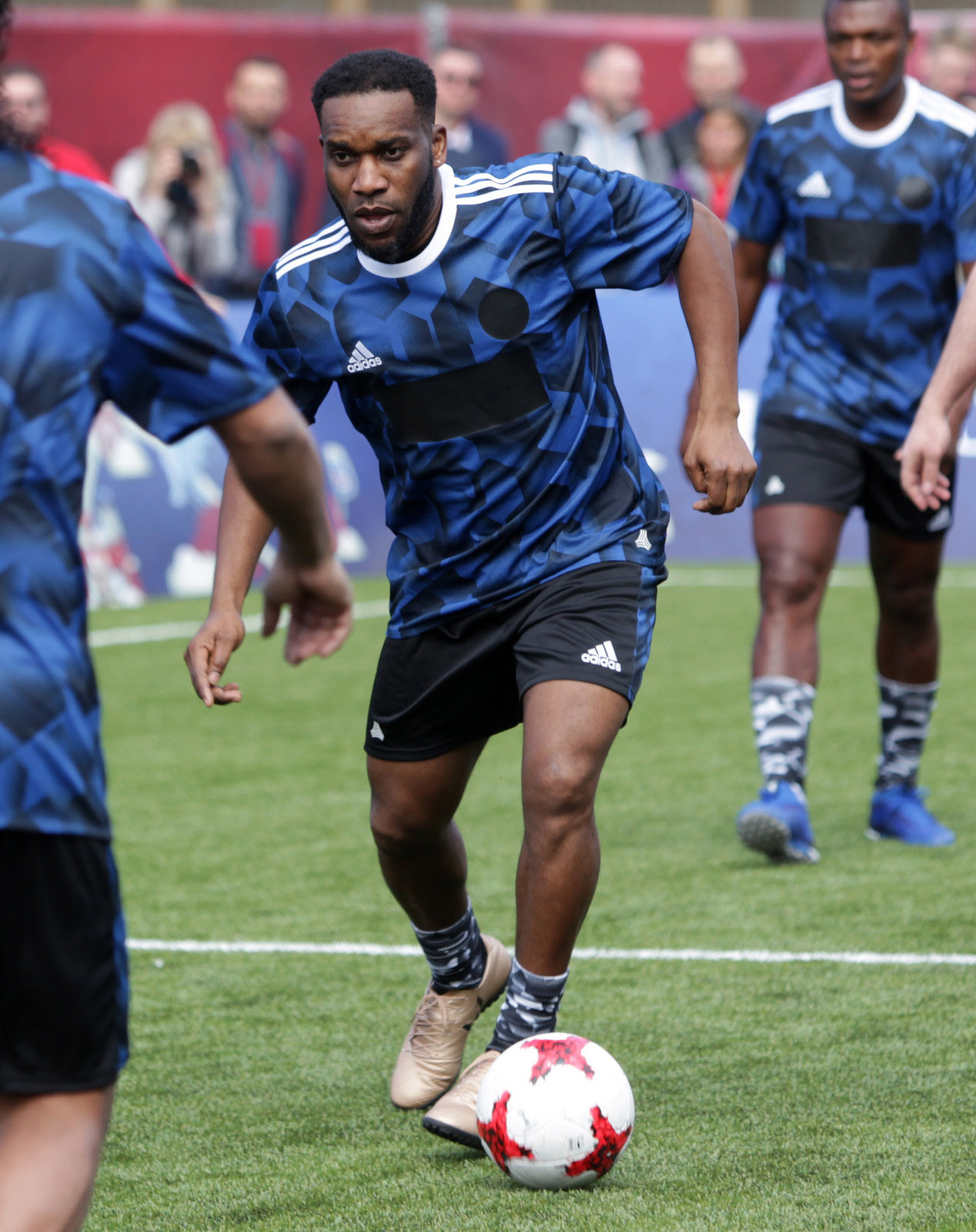
There are footballers who win games, and there are footballers who make people fall in love with the game itself. Augustine Azuka Okocha, known the world over as Jay-Jay, belonged firmly to the second group. For more than fifteen years, across pitches in Germany, Turkey, France and England, he turned the simple act of running with a ball into something close to theatre. Defenders did not just try to stop him. They tried to guess what he might do next, and most of the time they guessed wrong. He shimmied, he danced, he flicked the ball over heads and through legs, and he did it all with a grin that suggested he was enjoying himself just as much as the crowd. To a generation of Nigerians, and to football lovers far beyond Nigeria, Jay-Jay Okocha was not simply a great player. He was a feeling, a Saturday afternoon promise that anything could happen.
Quick Facts
- Full name
- Augustine Azuka "Jay-Jay" Okocha
- Born
- 14 August 1973, Enugu, Nigeria
- Sport
- Football (attacking midfielder)
- Known for
- Nigerian playmaker famed for his dribbling and flair
- Major honour
- 1994 African Cup of Nations winner; 1996 Olympic gold
Early Life
Augustine Azuka Okocha was born on 14 August 1973 in Enugu, in the eastern part of Nigeria. Enugu was a city built on coal, energy and a deep, almost stubborn love of football, and the young Okocha absorbed all three. Like so many gifted Nigerian players of his era, his first stadium had no floodlights, no stands and no manicured grass. It was the street. The compounds, the dusty open spaces and the narrow lanes of his neighbourhood were where he learned to control a ball, often a worn rubber one rather than anything official, and where he first understood that football could be a way to express yourself rather than just a way to score.
Street football in Nigeria has always demanded a particular kind of skill. The surfaces are uneven, the games are crowded, the tackles are fierce, and there are no referees to protect you. A boy who wants to keep the ball in that environment has to be quick of foot and even quicker of mind. He has to develop the sudden change of direction, the close control and the willingness to take a risk, because the alternative is losing possession and losing face among his friends. This was the school that shaped Okocha. The famous stepovers, the drag-backs and the outrageous flicks that would later leave Premier League defenders dizzy were not invented in some academy. They were forged in the streets of Enugu, repeated thousands of times until they became instinct.
There was also, from the very beginning, a sense of fun about the way he played. Many children learn football as a serious business, a route out of poverty or a path to local glory. Okocha certainly understood those stakes, but he never lost the playful joy that drew him to the game in the first place. He liked the moment of beating an opponent more than almost anything else, the small theatre of selling a dummy and watching a bigger boy slide past while the ball stayed glued to his feet. That instinct, the urge to entertain even in the most ordinary kickabout, never left him. It would one day make him famous, but in those early days it was simply who he was, a boy who could not resist trying the difficult thing.
Football ran in the family. His older brother Emmanuel was also a footballer, and it was on a visit to watch family in Germany, while still a teenager, that the course of Okocha’s life changed. What began as a trip turned into an opportunity, the kind of lucky break that talent sometimes earns. The boy who had honed his tricks on Nigerian sand was about to test them on the cold, organised pitches of Europe. It would prove to be the beginning of one of the most beloved careers African football has ever produced.
The Move to Europe
Okocha’s European story began modestly. In 1990 he joined Borussia Neunkirchen, a club in the lower divisions of German football. For a young man far from home, suddenly surrounded by a new language, new weather and a far more physical style of play, it was a demanding apprenticeship. But the talent was undeniable, and it did not stay hidden in the lower leagues for long. His performances earned him a move to Eintracht Frankfurt, one of the established names of the German Bundesliga, in 1992.
It was in Frankfurt that the wider football world first got a proper look at what Okocha could do. He arrived at a club that already had attacking flair, but he brought something different, an unpredictability that could turn a tight match in a single moment. And then came the goal that announced him to everyone.
In August 1993, Eintracht Frankfurt faced Karlsruher SC, and in goal for Karlsruhe was Oliver Kahn, a young keeper who would go on to become one of the greatest goalkeepers in the history of the game and a World Cup Golden Ball winner. Okocha picked up the ball near the edge of the penalty area and proceeded to humiliate the Karlsruhe defence. He beat one player, then beat him again, dragging the ball back and shimmying past challenges as defenders lunged and missed. Then he faced Kahn himself, sold the goalkeeper a dummy, slipped the ball around him and rolled it into the empty net. It was the kind of goal that looked rehearsed and yet could never truly be planned, a piece of individual brilliance that turned a routine fixture into a highlight reel that would be replayed for decades. For a player to do that to a defence was impressive. To do it to Oliver Kahn was the stuff of legend.
That goal did more than win a match. It defined the kind of footballer Okocha intended to be. He was not interested in playing it safe. He wanted to entertain, to attempt the difficult thing, to give the crowd a reason to remember the afternoon. Across his years in Germany he built a reputation as one of the most exciting players in the Bundesliga, and bigger clubs around the world began to take serious notice of the slender Nigerian with the magic in his boots.
His spell at Frankfurt was not without its frustrations. German football of that period prized discipline and structure, and there were coaches and observers who wished he would simplify his game, hold his position and pass the ball more quickly. Okocha listened, learned and adapted where he could, but he never allowed the coaching to drain the daring out of him. That tension, between the demands of organised European football and the freewheeling instincts of a player raised on the streets, would follow him throughout his career. The remarkable thing is that he managed to satisfy both. He could do the disciplined work when a match required it, and then, in a single instant, produce a moment of invention that no system could have predicted. It was this combination that made him so valuable, and so difficult for any opponent to plan against.
International Stardom with Nigeria
For all his club exploits, it was in the green and white of Nigeria that Okocha truly became an icon. The Super Eagles of the 1990s were one of the most thrilling national teams on the planet, blessed with a golden generation of talent, and Okocha was at the heart of it.
He made his senior international debut in 1993, and the timing could not have been better. In 1994, Nigeria travelled to Tunisia for the African Cup of Nations and produced a campaign that announced them as a continental superpower. Driven by a squad that included Rashidi Yekini, Daniel Amokachi, Sunday Oliseh, Finidi George and the young Okocha, the Super Eagles swept to the title, beating Zambia in the final. For a country mad about football, it was a moment of pure national joy, and Okocha had played his part in delivering Nigeria’s first major continental crown in nearly two decades.
That same year, Nigeria qualified for the FIFA World Cup for the first time, and the 1994 tournament in the United States gave the world a proper introduction to the Super Eagles. They topped a tough group that contained Argentina, Bulgaria and Greece, playing with a freedom and joy that won admirers everywhere. Okocha, still only twenty, brought his signature flair to the biggest stage of all. Nigeria pushed eventual finalists Italy to the very edge in the round of sixteen, leading until the closing minutes before a late Roberto Baggio goal and an extra-time penalty broke Nigerian hearts. The team went home, but they went home as one of the stories of the tournament, and Okocha’s reputation as an entertainer had now reached a global audience.
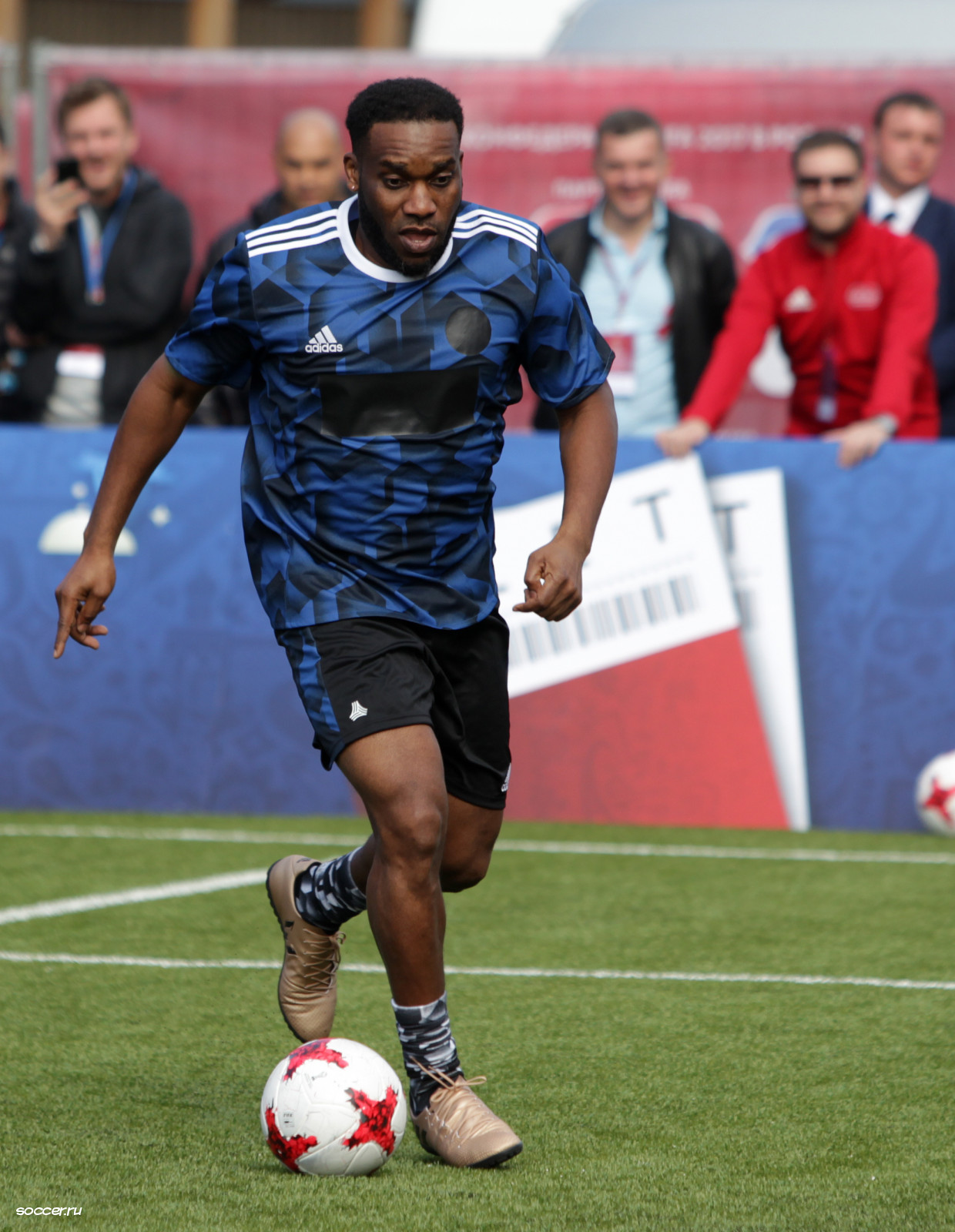
Two years later came perhaps the most cherished achievement of that golden generation. At the 1996 Atlanta Olympic Games, the Nigerian football team did something no African nation had ever done at that level. With Okocha pulling strings in midfield alongside the likes of Nwankwo Kanu, Celestine Babayaro and Sunday Oliseh, the Dream Team, as they were affectionately known, stunned the world. They came from behind to beat a Brazil side featuring Ronaldo, Roberto Carlos and Bebeto in a famous semi-final, then overcame Argentina in a dramatic final to win the gold medal. It was a result that sent shockwaves through global football and announced that African teams could compete with and beat anyone. For Nigeria, that gold medal remains one of the proudest sporting moments in the nation’s history.
Okocha went on to represent Nigeria at the 1998 World Cup in France, where the Super Eagles again reached the round of sixteen, and at the 2002 World Cup in Japan and South Korea. By then he was the captain, the leader and the creative soul of the team, the man defenders feared and teammates looked to in difficult moments. He also featured prominently in multiple African Cup of Nations tournaments, finishing as one of the standout players of the competition on more than one occasion. Across well over seventy caps for his country, he became the embodiment of Nigerian football’s flair and ambition, a player who wore the armband with pride and carried the hopes of millions every time he stepped onto the pitch.
Fenerbahce and PSG
While his international career soared, Okocha’s club journey took him to new and bigger stages. In 1996 he moved to Turkey to join Fenerbahce, one of the giants of Turkish football. The Istanbul club and its passionate supporters quickly fell for him. In the cauldron of Turkish stadiums, where the noise can be overwhelming and the pressure relentless, Okocha thrived. His skill, his goals and his ability to produce magic in big matches made him a hero in Istanbul, and to this day Fenerbahce fans speak of his time there with great affection.
His three seasons at Fenerbahce were among the most productive of his career in front of goal. He scored regularly, delivered in the matches that mattered most to the Istanbul faithful, and gave a club starved of sustained success some genuine star quality. Turkish football fans are famously demanding, and they do not give their affection lightly, yet Okocha won them over completely. The relationship between the player and the club’s supporters became one of mutual devotion, and it laid the foundation for the even bigger move that was to come.
His form in Turkey did not go unnoticed. In 1998, French giants Paris Saint-Germain came calling, and Okocha made a move that turned heads across Europe. The transfer fee made him, at that moment, the most expensive African footballer in the history of the game. It was a statement of how highly his gifts were valued, and a reflection of the entertainment he guaranteed.
At PSG he played in front of demanding Parisian crowds and shared a dressing room with another young talent who would go on to become one of the greatest players of all time. A teenage Ronaldinho arrived at the club during Okocha’s time there, and the young Brazilian later spoke warmly of how much he learned from watching the Nigerian. Two of football’s great showmen, both addicted to the joy of the dribble and the trick, briefly shared the same stage. For supporters who loved skill for its own sake, watching Okocha in Paris was a treat, even if the club’s results did not always match the brilliance of his individual moments. He gave the French league some of its most memorable flashes of invention during his years there.
The Bolton Years
In the summer of 2002, Okocha made the move that would arguably make him most beloved of all. He signed for Bolton Wanderers, a club in the English Premier League that did not have the glamour of the giants but did have a manager, Sam Allardyce, with a knack for getting the best out of experienced talent. On paper it might have looked like an unlikely fit, a flamboyant Nigerian artist at a hard-working northern English club. In reality it became one of the great love stories of the Premier League era.
Bolton supporters adored him from the start, and it was at Bolton that the phrase forever attached to his name took hold among English fans. “So good they named him twice,” they sang, a playful nod to the Jay-Jay nickname, and it captured perfectly the affection he inspired. He gave a club that often battled near the bottom of the table moments of genuine wonder. There were spectacular free kicks, including memorable strikes against the biggest sides in the league, and there was the close control and trickery that made Premier League defenders look ordinary. One particular piece of skill against West Ham United, where he toyed with several defenders in the corner of the pitch, became an enduring symbol of his cheeky genius.
He was soon made captain, and he led Bolton with the same blend of flair and generosity that defined his whole career. Under his influence and Allardyce’s guidance, Bolton became a difficult, surprising team that punched well above its weight, finishing in the upper half of the table and even pushing towards European qualification. For a club of Bolton’s size, those were golden years, and Okocha was the smiling face of them. He helped lead the team to the 2004 League Cup final, another sign of how far the unfashionable club had travelled with the Nigerian at its heart. When he eventually left in 2006, he did so as a true Bolton legend, a player whose name still brings a smile to supporters at the Reebok Stadium and beyond.
“I just love to entertain. When the fans are happy, I am happy. That is what football is all about for me.”
Style and Legacy
To understand why Okocha is remembered so fondly, you have to understand the way he played. In an era when football was becoming increasingly tactical and risk-averse, he was unapologetically a showman. His game was built on dribbling, on the willingness to take on an opponent one against one and to do it with style. The stepover, executed at speed and in both directions, was a trademark. So were the drag-backs, the rabonas, the body feints and the moments of improvisation that no coach could ever teach. He treated the ball as something to be enjoyed rather than simply moved from A to B.
What set him apart was that the trickery was never empty. It served a purpose, creating space, beating a man, opening up a defence or simply lifting a crowd at a moment when his team needed energy. He scored important goals, delivered telling passes and produced free kicks of real quality. He combined the entertainer’s instinct with the competitor’s edge, and that balance is why serious football people respected him as much as casual fans loved him.
His influence stretches well beyond his own playing days. A whole generation of skilful players, in Nigeria and across Africa, grew up imitating his moves in the street, dreaming of one day pulling off an Okocha shimmy in a real match. His own family carries the torch forward. His nephew, Alex Iwobi, went on to play for Arsenal, Everton and Fulham in the Premier League and to represent Nigeria, following the path his famous uncle had walked decades earlier. The bloodline of Nigerian footballing flair runs strong.
After retiring as a player, Okocha remained a hugely respected figure in the game. He took on ambassadorial and leadership roles within African football, including involvement in football administration in Nigeria, and he became a familiar and welcome presence as a pundit and ambassador at major tournaments around the world. He is regularly named among the greatest African players of all time, and he was recognised among the standout figures in the history of the African Cup of Nations. Wherever he goes, he is greeted with the warmth reserved for those rare athletes who gave people pure joy.
Jay-Jay Okocha’s legacy is not measured only in trophies, though the African Cup of Nations title and the Olympic gold medal are glittering achievements that any player would treasure. It is measured in the memories he created, in the gasps of crowds, in the smiles of children copying his tricks, in the affection of fans from Enugu to Istanbul to Paris to Bolton. He proved that you could reach the top of world football while staying true to the joyful, expressive spirit of the streets where you learned the game. That is a rare and precious thing, and it is why, long after his playing days ended, he remains one of the most beloved figures African football has ever produced.
Key Facts
- Augustine “Jay-Jay” Okocha was born on 14 August 1973 in Enugu, Nigeria, and learned his trademark skills playing street football as a child.
- He announced his talent in Germany with a stunning solo goal against Oliver Kahn’s Karlsruhe while playing for Eintracht Frankfurt in 1993.
- With the Super Eagles he won the 1994 African Cup of Nations and helped Nigeria win the football gold medal at the 1996 Atlanta Olympics, later captaining the national team at the 2002 World Cup.
- His 1998 transfer from Fenerbahce to Paris Saint-Germain made him, at the time, the most expensive African footballer in the world, and at PSG he played alongside a young Ronaldinho.
- He became a beloved captain and fan favourite at Bolton Wanderers from 2002, inspiring the famous chant “so good they named him twice,” and his nephew Alex Iwobi continues the family football legacy.