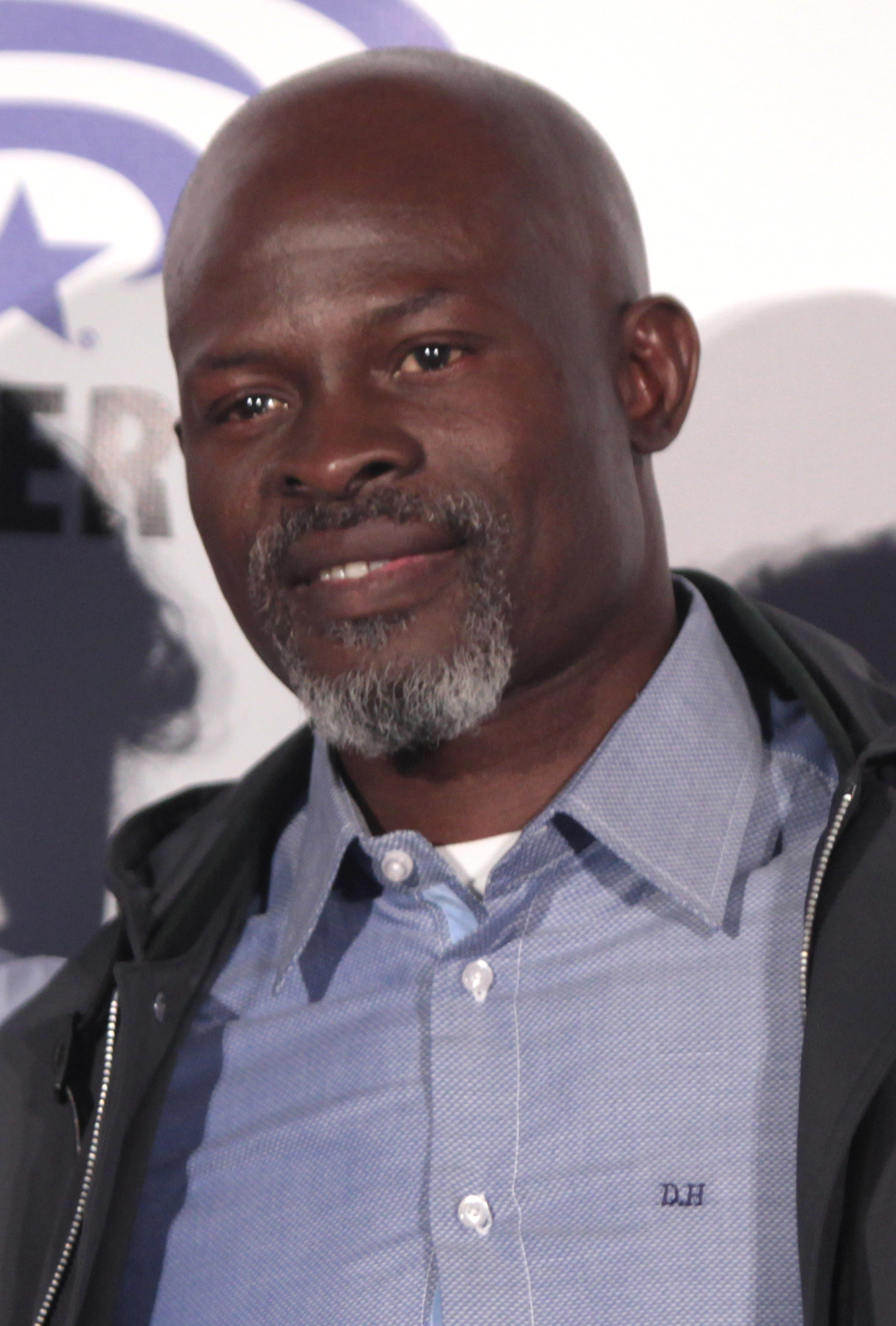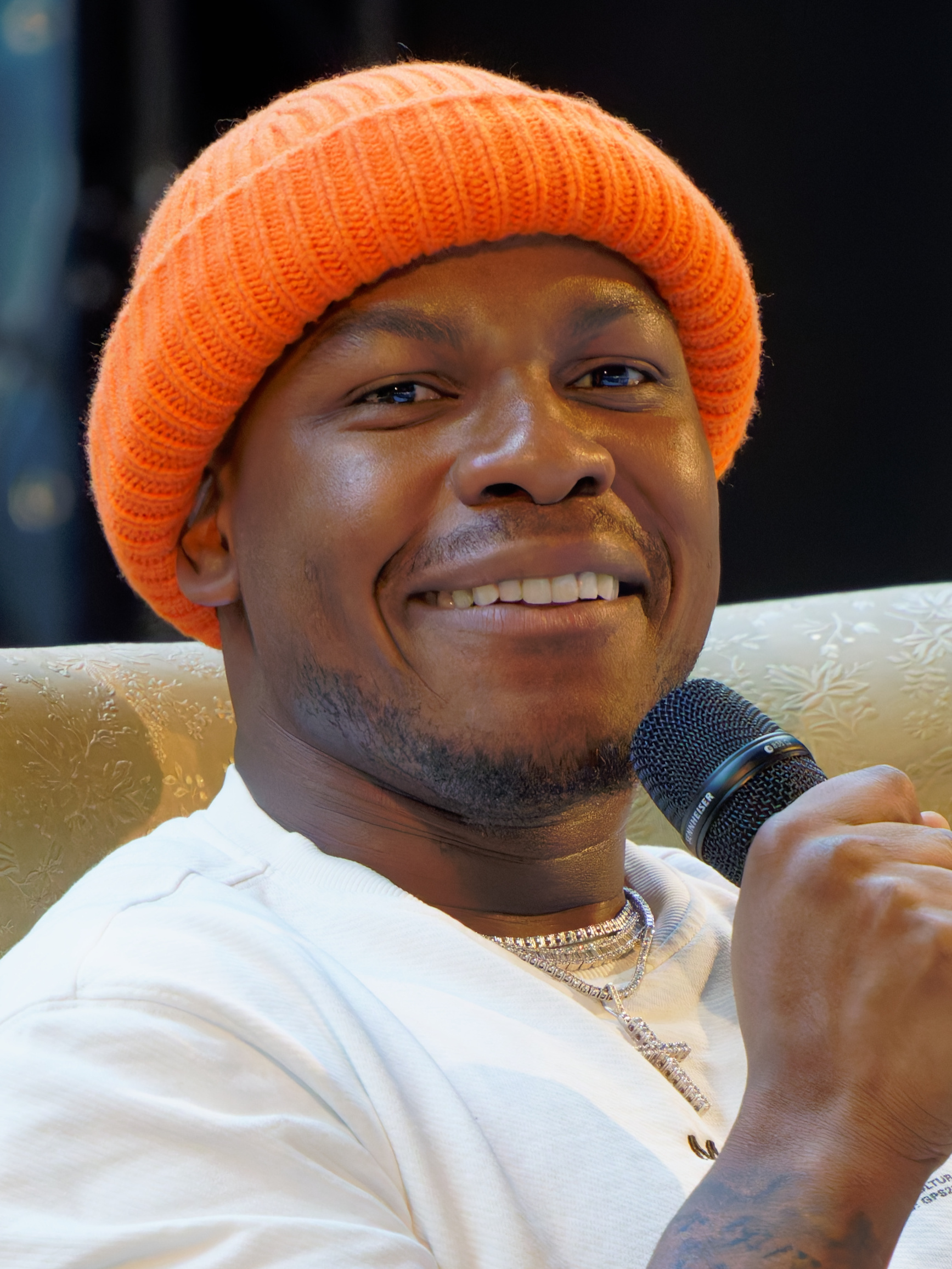
When the first full-length trailer for “Star Wars: The Force Awakens” arrived in late 2014, it opened on a young Black man in a stormtrooper’s white armour, panicked and sweating, gasping for air on a desert planet. That face belonged to John Boyega, a then-largely-unknown actor from Peckham in South London. Within seconds, a section of the internet erupted, some in delight, some in ugly hostility at the sight of a Black lead in the most famous film franchise on earth. Boyega, a young man raised in a Nigerian Pentecostal household on a council estate, had walked straight into the centre of a cultural storm. He would not flinch. Over the next decade he would prove himself far more than a franchise face: a serious dramatic actor, a producer with ambitions to tell African and diaspora stories, and one of the most fearless public voices of his generation.
Quick Facts
- Full name
- John Adedayo Bamidele Adegboyega
- Born
- 17 March 1992, London, England
- Heritage
- British-Nigerian (Yoruba)
- Known for
- Star Wars sequel trilogy (Finn); Attack the Block; Small Axe
- Award
- BAFTA Rising Star Award (2016)
Early Life
John Adedayo Bamidele Adegboyega was born on 17 March 1992 in London, England, to Nigerian parents of Yoruba heritage. The family name, Adegboyega, is a Yoruba name, and it was later shortened to Boyega for his professional life. His full name carries the weight of that heritage: Adedayo and Bamidele are Yoruba names, a direct thread to the culture his parents carried with them from Nigeria to Britain.
He grew up in Peckham, a working-class district of South London, and spent his childhood on a council estate. His father, Samson Adegboyega, was a Pentecostal preacher, and the family’s life revolved around faith and church. His mother, Abigail, worked caring for disabled people. It was a household of discipline, religion, and modest means, the kind of upbringing that many British-Nigerian families in South London would recognise. Boyega has spoken warmly and often about Peckham, refusing to treat it as a place to escape from and instead claiming it with pride as the ground that shaped him.
His father hoped the young John might one day follow him into the ministry. The boy had other ideas. From a young age he was drawn to performance. He has recalled acting out scenes and characters as a child, and his talent was noticed early. At Oliver Goldsmith Primary School he played the lead in a production, and a teacher, recognising something in him, encouraged his parents to nurture the gift. That encouragement led him to Theatre Peckham, a local youth theatre where many young South London performers found their footing. There, and later through drama, he began the serious work of learning the craft.
Boyega attended Westminster City School and then studied for a while at South Thames College, before enrolling to study film studies and media at the University of Greenwich. He did not stay to finish the degree. Acting had already begun to call more loudly than the classroom. He trained and performed on stage, appearing in theatre productions in London, and it was this grounding in live performance, rather than a glossy showbiz shortcut, that prepared him for what came next. The combination shaped him: a Peckham boy, a preacher’s son, a Yoruba name, and a hunger to act that no one in his family had walked before him.
The Nigerian dimension of his upbringing was never incidental. Boyega has spoken about growing up surrounded by Yoruba language, food, and church culture, the specific texture of a British-Nigerian childhood in South London. It gave him a sense of belonging to two worlds at once, British and Nigerian, London and Lagos, and that double identity would later inform both the roles he chose and the stories he wanted to help create. Where some children of immigrants are pushed to shed the accents and habits of home, Boyega leaned into his, treating his heritage not as a burden to hide but as a source of strength and material. It is telling that, at the height of his fame, he continued to speak openly about his roots and to insist that his success belonged to Peckham and to Nigeria as much as to Hollywood.
Those early years were not without struggle. Money was tight, and the estate he grew up on was the kind of place too often written off in the national conversation. Boyega has been candid that acting was, for a young Black man from his background, an improbable dream, one with few obvious role models and little in the way of a clear path. What he had instead was persistence, a supportive if initially uncertain family, and a handful of teachers and mentors who saw his gift and refused to let it go to waste. That early belief, offered by people who had no reason to expect a return, is a thread that runs through his whole story.
Breakthrough in Attack the Block
Boyega’s true breakthrough came in 2011 with a low-budget British science-fiction film that has since become a cult classic: “Attack the Block.” Directed by Joe Cornish in his feature debut, the film follows a gang of teenagers on a South London council estate who find themselves defending their block against an invasion of vicious alien creatures on Bonfire Night. It was a film rooted in exactly the world Boyega had grown up in, the estates, the slang, the swagger, and the overlooked young people of inner-city London.
Boyega played Moses, the quiet, hardened leader of the gang. It was a demanding lead role for a young actor with little screen experience, and he carried it with a magnetic, brooding authority that surprised critics. Moses begins as an intimidating figure, a mugger the audience is not sure it should root for, and over the course of the film transforms into a genuine hero. Boyega found the humanity beneath the tough exterior, and reviewers took immediate notice. The performance was praised on both sides of the Atlantic, and the film drew attention at festivals and among genre fans in the United States.
What made the role resonate was its refusal of easy stereotype. Moses could have been a cartoon of the “hoodie” figure so often demonised in British tabloids, but Boyega and Cornish insisted on his full humanity. The film asked its audience to look again at the young men it was conditioned to fear, and Boyega’s performance was the engine of that argument. He was only around eighteen when the film was shot, yet he held the screen with the composure of someone far more experienced, and critics repeatedly singled him out as the standout of a strong young ensemble.
“Attack the Block” did not make him a household name overnight, but it did something more important: it announced a real talent. The film demonstrated that Boyega could anchor a story, hold the camera, and make an audience care. It marked him as one of the most promising young British actors around, and it put him on the radar of casting directors far beyond London. In the years that followed, the film’s reputation only grew, and it is now regarded as a landmark of modern British genre cinema, with Boyega’s Moses at its centre. Among those who took note of him were the people assembling the cast for the revival of a certain space saga. Without the estate, the aliens, and Moses, there would have been no Finn.
Star Wars and Global Fame
In 2014, it was confirmed that Boyega had been cast in “Star Wars: The Force Awakens,” the first film in a new sequel trilogy directed by J.J. Abrams and produced under the Lucasfilm and Disney banner. He would play Finn, a stormtrooper who abandons the villainous First Order and joins the Resistance. When the film was released in December 2015, it became one of the highest-grossing films in history, and John Boyega, the preacher’s son from Peckham, was suddenly a global star.
The significance of the casting was impossible to miss. Here was a Black British actor of Nigerian, Yoruba descent placed at the very heart of “Star Wars,” a franchise that had for decades featured few leading roles for people of colour. Finn was not a sidekick or a background figure; he was front and centre in the marketing, the first face in the teaser trailer, a hero of the story. For countless young Black viewers, and for Nigerian and diaspora audiences in particular, seeing Boyega with a lightsaber carried a real charge of pride and possibility.
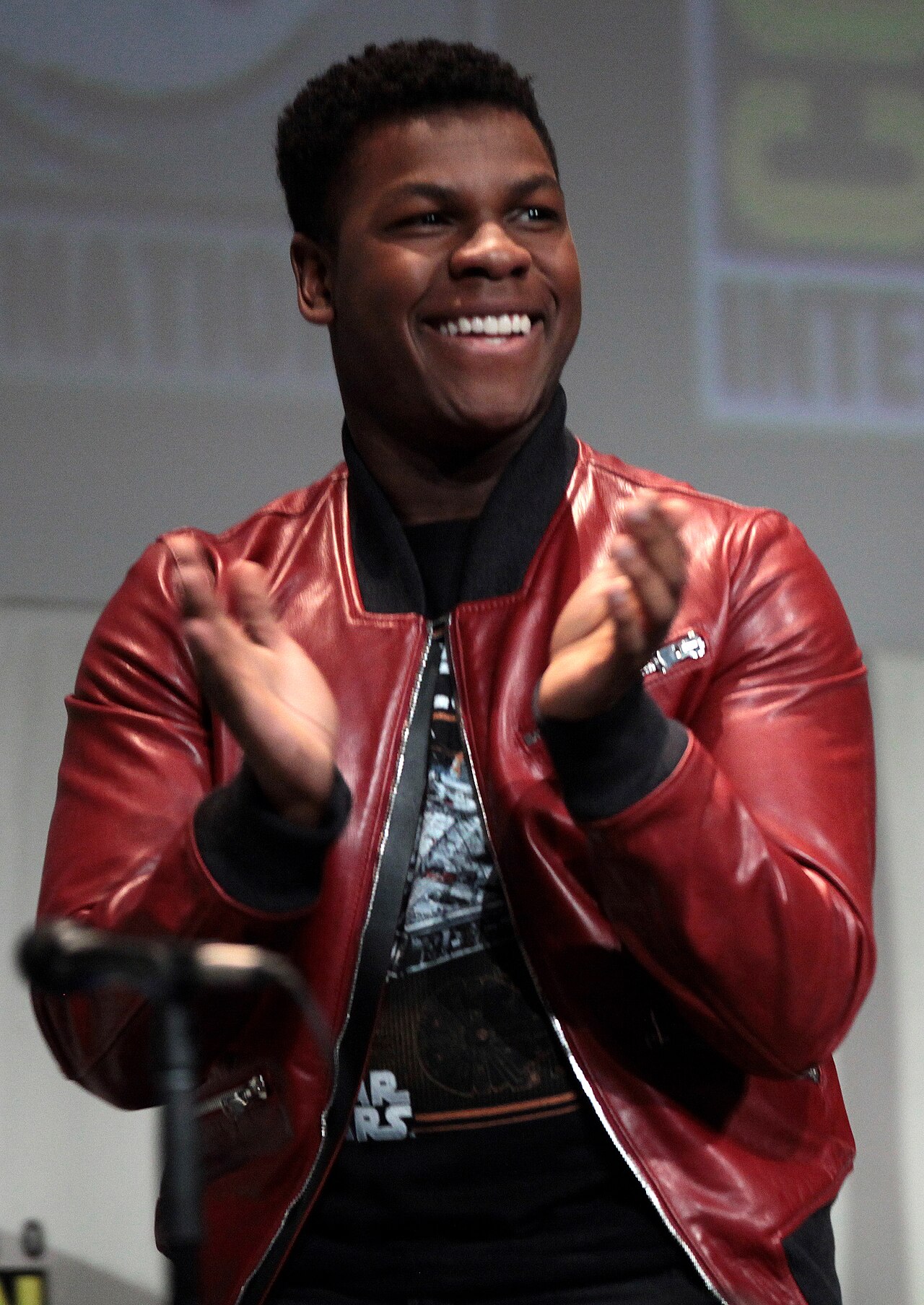
That prominence also drew out an ugly response. When the teaser first showed a Black stormtrooper, a corner of the internet reacted with racist abuse, some going so far as to call for a boycott. Boyega’s response became something of a template for grace under fire. He refused to be cowed, telling detractors plainly to get used to it, and pointing out that he was in the film whether they liked it or not. His confidence and good humour won him widespread admiration and made him, in the eyes of many fans, exactly the kind of hero the franchise needed both on and off screen.
Boyega reprised the role of Finn in “Star Wars: The Last Jedi” (2017), directed by Rian Johnson, and “Star Wars: The Rise of Skywalker” (2019), which returned J.J. Abrams to the director’s chair. Across the trilogy, Finn’s journey from frightened deserter to committed member of the Resistance mirrored, in some ways, Boyega’s own path from unknown to leading man. He shared much of that journey on screen with Daisy Ridley, who played Rey, and Oscar Isaac, who played the pilot Poe Dameron, and the three young leads became the public faces of a new “Star Wars” generation. The films made him famous around the world, opened doors to work he might never have reached otherwise, and gave him a platform he would soon use in ways few could have predicted.
For Nigerian and wider African audiences, the sight of a Yoruba man carrying a blaster and a lightsaber in the biggest franchise on earth was more than entertainment. It was a marker that the barriers around such roles, long assumed to be closed to actors who looked like him, could be broken. Boyega understood this responsibility and rarely shied from it, using interviews and public appearances to speak about the young people who saw themselves in Finn. He turned a role that some had tried to reject into a genuine symbol of possibility, and he did so while managing, in real time, the pressures of sudden global celebrity.
Speaking Out
By 2020, John Boyega was no longer just a rising actor. He had become one of the most compelling public voices of his generation, and the reasons for that had as much to do with courage as with fame.
In June 2020, in the wake of the killing of George Floyd in the United States and the global wave of Black Lives Matter protests that followed, Boyega stood before a crowd in Hyde Park in London and delivered an impassioned, emotional speech. Megaphone in hand, visibly moved, he spoke about racism, about the value of Black lives, and about the need for change. He acknowledged that speaking out so forcefully might cost him his career, and said he did not care, that this mattered more. The moment was broadcast around the world and cemented his reputation as an actor willing to put principle above self-interest.
“I need you to understand how painful this is. I need you to understand how painful it is to be reminded every day that your race means nothing.”
Boyega had also been publicly candid about his frustrations within “Star Wars” itself. In interviews around the same period, he spoke openly about feeling that his character had been sidelined in the sequel trilogy, and criticised the way the studio had handled a prominent Black character, arguing that Finn had been given great importance in the first film and then pushed to the margins. His willingness to name these problems, while still working at the highest levels of the industry, was rare and widely discussed. Rather than damaging him, his honesty deepened respect for him, and Lucasfilm’s president publicly acknowledged his comments. He became a leading advocate for genuine representation in film, not as a marketing slogan but as a matter of stories, screen time, and respect.
Range and Later Work
For all the noise around “Star Wars,” Boyega had always insisted he was an actor first, and his later work bore that out. In 2017 he starred in “Detroit,” directed by Kathryn Bigelow, a searing drama about the 1967 Detroit riots and the racially motivated violence at the Algiers Motel. His restrained, watchful performance showed a very different register from the blockbuster energy of Finn, and it reminded audiences of the dramatic depth he had first shown in “Attack the Block.”
His most acclaimed work of this period came in 2020 with “Red, White and Blue,” a film in Steve McQueen’s celebrated “Small Axe” anthology for the BBC and Amazon. The anthology told stories of London’s West Indian community across several decades, and Boyega played Leroy Logan, a real-life Black officer who joined the Metropolitan Police in the hope of reforming it from within, only to confront entrenched racism. The performance was widely praised as some of the finest work of his career and brought him significant awards recognition, including a Golden Globe for Best Actor in a Limited Series or Television Film.
Boyega has also taken his career into his own hands as a producer. Through his production company, he has expressed a clear ambition to tell African and diaspora stories, to create opportunities for Black talent, and to bring narratives rooted in his heritage to global screens. He returned to genre filmmaking in projects such as “Naked Singularity” and the science-fiction feature “They Cloned Tyrone” (2023), a Netflix film in which he starred alongside Jamie Foxx and Teyonah Parris, further showcasing his range and his instinct for material with something to say. His stated commitment to Africa is not abstract: he has spoken about wanting to build bridges between Hollywood, Britain, and Nigeria, using his platform to open doors for others who share his roots.
Career Timeline
- 2011: Stars as Moses in Joe Cornish’s British science-fiction film “Attack the Block,” his breakthrough lead role.
- 2015: Debuts as Finn in “Star Wars: The Force Awakens,” directed by J.J. Abrams, becoming a global star.
- 2016: Wins the BAFTA Rising Star Award, voted by the public.
- 2017: Stars in Kathryn Bigelow’s drama “Detroit” and reprises Finn in “Star Wars: The Last Jedi.”
- 2019: Completes the sequel trilogy in “Star Wars: The Rise of Skywalker.”
- 2020: Delivers a powerful speech at a Black Lives Matter protest in Hyde Park, London, in June.
- 2020: Stars as Leroy Logan in “Red, White and Blue,” part of Steve McQueen’s “Small Axe” anthology.
- 2021: Wins the Golden Globe for Best Actor in a Limited Series or Television Film for “Small Axe.”
- 2023: Stars alongside Jamie Foxx in the Netflix science-fiction comedy “They Cloned Tyrone.”
Lesser-Known Facts
- His full name is John Adedayo Bamidele Adegboyega, a Yoruba name, and “Boyega” is a shortened form of the family surname Adegboyega.
- He grew up on a council estate in Peckham, South London, and has spoken with pride about his working-class roots rather than treating them as something to escape.
- His father, Samson, is a Pentecostal preacher who had once hoped his son might follow him into the ministry.
- He found his early footing at Theatre Peckham, a local youth theatre, before training and performing on stage in London.
- In 2016 he won the BAFTA Rising Star Award, one of the few BAFTA prizes decided by a public vote.
- His performance in “Small Axe: Red, White and Blue” earned him a Golden Globe for Best Actor in a Limited Series or Television Film.
Frequently Asked Questions
Is John Boyega Nigerian? John Boyega is British-Nigerian. He was born in London on 17 March 1992 to Nigerian parents of Yoruba heritage, and his full name, John Adedayo Bamidele Adegboyega, reflects that ancestry. He has often spoken about his Nigerian roots and his ambition to tell African and diaspora stories.
Who did John Boyega play in Star Wars? He played Finn, a stormtrooper who defects from the villainous First Order and joins the Resistance, across the sequel trilogy: “The Force Awakens” (2015), “The Last Jedi” (2017), and “The Rise of Skywalker” (2019).
What was Attack the Block? “Attack the Block” is a 2011 British science-fiction film directed by Joe Cornish. Boyega played Moses, the leader of a South London teenage gang who defend their council estate from an alien invasion. The role was his breakthrough and made him a cult favourite.
What did John Boyega say at the Black Lives Matter protest? At a protest in Hyde Park, London, in June 2020, Boyega delivered an emotional speech condemning racism and affirming the value of Black lives. He acknowledged that speaking out so forcefully might harm his career, and said that the cause mattered more to him than that risk.
Has John Boyega won any awards? Yes. He won the BAFTA Rising Star Award in 2016 and a Golden Globe for Best Actor in a Limited Series or Television Film in 2021 for his role in Steve McQueen’s “Small Axe: Red, White and Blue.”
Legacy
John Boyega’s story is, at its heart, a British-Nigerian story. It begins in a Pentecostal household in Peckham, with a Yoruba name and a preacher father, and it travels to the most famous film franchise on the planet without ever losing sight of where it started. He turned a stormtrooper’s helmet into a symbol of possibility for young Black viewers, then used the platform it gave him to speak plainly about racism and representation, even when doing so carried real professional risk.
His significance lies in that dual achievement. As an actor, he has range that reaches from cult science fiction to some of the most respected dramatic work of his generation, from Moses to Finn to Leroy Logan. As a public figure, he has modelled a kind of courage that is rare in an industry built on caution, refusing to stay quiet about the things that matter to him. And in his ambitions as a producer, he points toward a future in which stories from Africa and its diaspora take a larger place on the world’s screens.
For Nigerian audiences especially, Boyega stands as proof that a Yoruba name and a South London estate can be the beginning of a genuinely global career, and that success need not mean forgetting your roots. He carried Peckham and Nigeria with him into a galaxy far, far away, and he made sure the world knew it. That is the measure of his legacy: not only the barriers he broke, but the pride and the honesty with which he broke them.