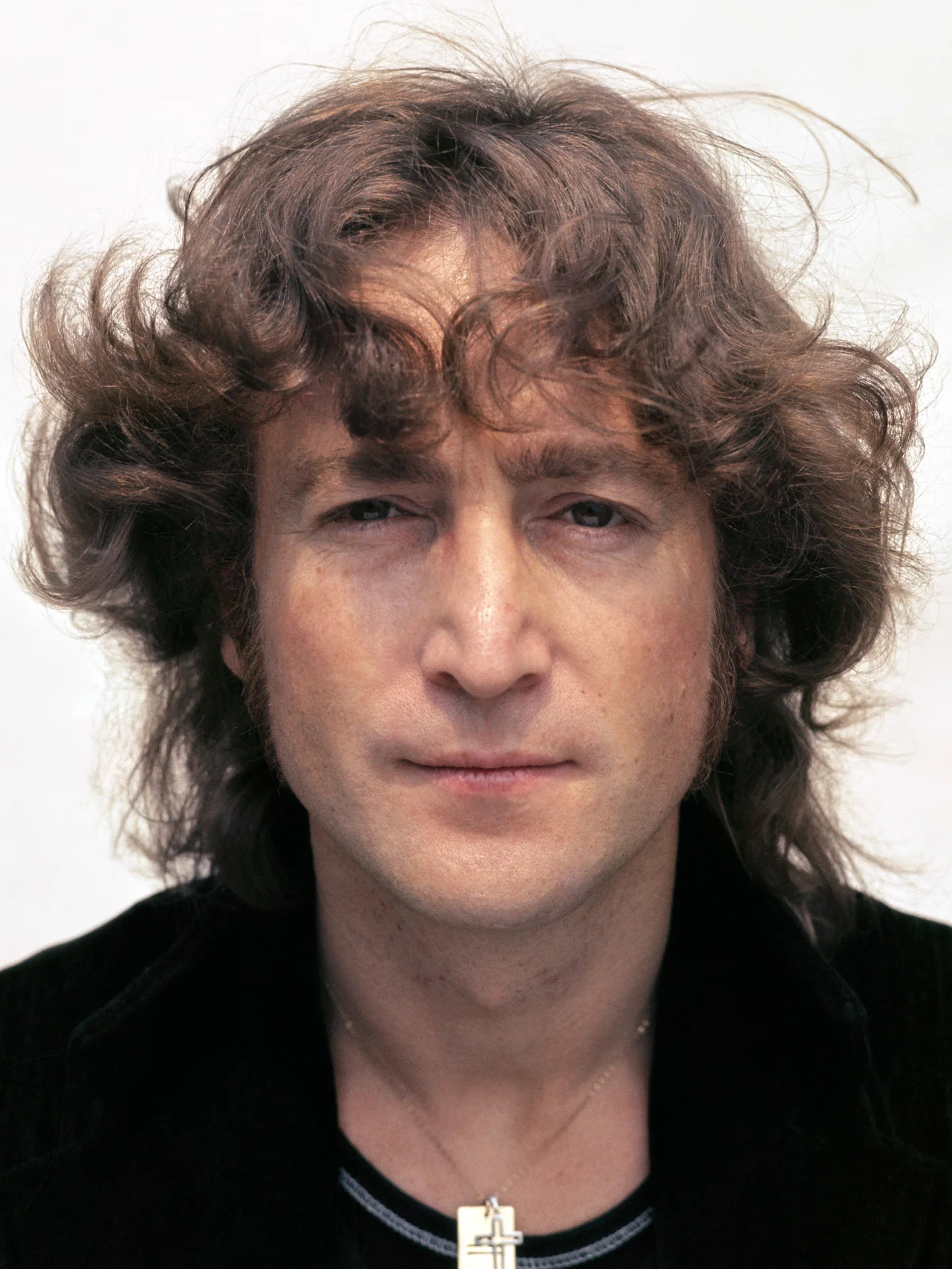
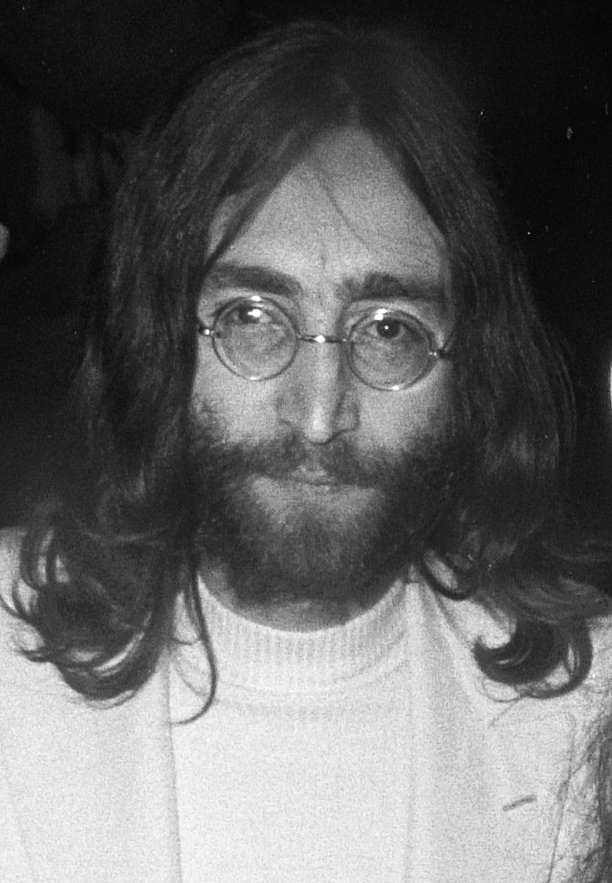
There are very few people who can be said to have changed the shape of popular music, and fewer still who managed to change the way an entire generation thought about itself. John Lennon did both. As one of the two principal songwriters of the Beatles, the most successful and influential band in the history of recorded sound, he helped pull pop music out of its early innocence and push it toward art, experimentation and open social comment. As a solo artist and activist, he turned his fame into a megaphone for peace at a time when the world seemed desperate for one. He was funny and cruel, generous and difficult, idealistic and deeply wounded, and all of those contradictions found their way into his songs. When his life ended abruptly in December 1980, the grief was not confined to one country or one age group. It was global, because somehow this sharp-tongued working-class boy from Liverpool had become a figure that millions of strangers felt they personally knew.
Quick Facts
- Full name
- John Winston Ono Lennon
- Born
- 9 October 1940, Liverpool, England
- Died
- 8 December 1980, New York City, USA (aged 40)
- Genre
- Rock, pop
- Known for
- Co-founder of the Beatles; solo artist and peace activist
Early Life
John Winston Lennon was born on 9 October 1940 at Liverpool Maternity Hospital, in the middle of the Second World War. Liverpool was a major port and therefore a target, and the story passed down within the family is that German bombs were falling on the city during an air raid around the time of his birth. He was given the middle name Winston in honour of Britain’s wartime prime minister, Winston Churchill. The world he entered was one of rationing, blackouts and uncertainty, and his own family situation mirrored that instability in its own way.
His father, Alfred Lennon, was a merchant seaman who was frequently away and eventually drifted out of the picture entirely. His mother, Julia, was lively, musical and warm, but she was not in a position to raise the boy steadily. When John was around five years old he went to live with Julia’s sister, Mary Smith, whom everyone called Mimi, and her husband George, at their house called Mendips on Menlove Avenue in the suburb of Woolton. Aunt Mimi became the central authority figure of his childhood. She was strict, proper and protective, and she gave him the secure home that his parents could not, even as she disapproved of much of what he loved, including rock and roll music.
The absence of his father and the partial absence of his mother left a mark that Lennon carried throughout his life and returned to repeatedly in his writing. Julia lived nearby and remained part of his life as he grew into a teenager. She was the one who first showed him how to play a few chords, encouraged his love of music and bought him his first instruments. Their relationship was just beginning to deepen into something like friendship when tragedy struck. In July 1958, when John was seventeen, Julia was hit by a car and killed while walking home after visiting Mimi. The loss was devastating. Having been separated from his mother as a child and then losing her again permanently just as they were growing close left a wound that fed directly into songs he would write years later, including “Julia” and “Mother.”
As a schoolboy at Quarry Bank High School, Lennon was clever but rebellious, more interested in cartooning, wordplay and causing trouble than in following rules. His verbal wit and his talent for nonsense writing were obvious early, although his formal grades were poor. He scraped into Liverpool College of Art, where he was again a disruptive and uneven student, but the art school environment exposed him to a wider world of ideas, characters and styles. It was also during these years that the music coming across the Atlantic from America, the records of Elvis Presley, Chuck Berry, Little Richard and Buddy Holly, took hold of him completely. Rock and roll gave the restless, grieving, sharp-witted teenager something to pour himself into.
Forming the Beatles
In 1956 Lennon formed a skiffle group called the Quarrymen, named after his school. Skiffle was a do-it-yourself British craze that used cheap or improvised instruments, and it was the perfect entry point for working-class teenagers with more enthusiasm than money. On 6 July 1957, the Quarrymen played at a garden fete at St Peter’s Church in Woolton, and after the performance a mutual friend introduced Lennon to a younger boy named Paul McCartney. McCartney impressed Lennon by being able to tune a guitar and by knowing the words and chords to several rock and roll songs. Lennon, sensing both a threat and an opportunity, invited him to join the group. That meeting is one of the most consequential introductions in music history.
McCartney soon brought in his friend George Harrison, a gifted young guitarist whom Lennon initially thought was too young, but whose skill won him a place. Over the next few years the lineup and the name kept shifting, passing through versions such as Johnny and the Moondogs and the Silver Beetles before settling on the Beatles, a play on the word “beat” and a nod to Buddy Holly’s Crickets. The drummer at this early stage was Pete Best, and Lennon’s art school friend Stuart Sutcliffe played bass for a time before leaving the band and dying young of a brain haemorrhage in 1962.
The crucial proving ground was Hamburg, Germany. Between 1960 and 1962 the Beatles played long, gruelling residencies in the clubs of Hamburg’s red-light Reeperbahn district, sometimes performing for many hours a night to rowdy crowds. The conditions were harsh, but the experience forged them into a tight, hard-edged live band. They learned how to hold an audience, how to play with stamina and how to project the rough, energetic showmanship that would later electrify their fans. Back home in Liverpool, they became the resident attraction at a cellar venue called the Cavern Club, where their lunchtime and evening sets built a devoted local following.
The man who would transform that local success into worldwide fame was Brian Epstein, a Liverpool record-shop manager who saw the band at the Cavern in late 1961 and became their manager. Epstein cleaned up their image, putting them in matching suits and encouraging a more professional presentation, and he tirelessly pursued a recording contract. After several rejections, the Beatles signed with producer George Martin at the Parlophone label, part of EMI. Martin replaced Pete Best with Ringo Starr on drums, completing the classic lineup of Lennon, McCartney, Harrison and Starr. Their early singles, including “Love Me Do” in 1962 and “Please Please Me” in early 1963, climbed the British charts, and by the end of 1963 the hysteria known as Beatlemania had gripped Britain. Within months it would sweep across the world.
The Beatles Era
At the heart of the Beatles’ creative engine was the songwriting partnership of John Lennon and Paul McCartney. By agreement, songs written by either or both of them carried the joint credit “Lennon-McCartney,” regardless of who actually did the bulk of the work. In the early years they often wrote together, finishing each other’s ideas, but as time went on they increasingly composed separately and then helped polish one another’s material. Their styles became a study in contrast and balance. Lennon tended toward the acerbic, the introspective and the experimental, while McCartney leaned toward melody, craft and optimism. The friction and the friendship between them produced an extraordinary run of music.
In February 1964 the Beatles arrived in the United States and appeared on The Ed Sullivan Show, watched by a record-breaking television audience. The reaction was explosive. Their records dominated the American charts to an unprecedented degree, and the so-called British Invasion of American popular culture had begun. For two or three years the Beatles existed inside a whirlwind of screaming crowds, sold-out tours, two feature films directed by Richard Lester (“A Hard Day’s Night” in 1964 and “Help!” in 1965), and a relentless schedule that left little room to breathe.
What lifts the Beatles above other successful pop acts of the era is what happened next. Rather than coast, they evolved at a furious pace, and Lennon was central to that evolution. The 1965 album Rubber Soul showed a new maturity and a willingness to bring in folk, soul and unusual instrumentation. The 1966 album Revolver pushed further into the studio as a creative tool, layering tape loops, backward sounds and unconventional arrangements. Then in 1967 came Sgt Pepper’s Lonely Hearts Club Band, a richly produced concept-style album that was hailed as a landmark and helped establish the idea that a pop record could be a serious, unified artistic statement. The Beatles had stopped touring by 1966, exhausted by the noise and the danger, and poured their energy into the recording studio instead, with George Martin acting as a vital collaborator in realising their increasingly ambitious ideas.
Fame on this scale brought controversy. In 1966 a remark Lennon had made in a London newspaper interview, observing that the Beatles had become “more popular than Jesus” to many young people and musing about the decline of conventional religion, was reprinted out of context in the United States. It sparked outrage in parts of America, with public burnings of Beatles records and protests by religious groups. Lennon, shaken by the backlash, offered a careful clarification at a press conference, explaining that he had not been boasting or attacking faith but commenting on a social trend. The episode showed how closely his words were now scrutinised and previewed his later willingness to use his platform to say uncomfortable things.
As the decade wore on, Lennon’s songwriting turned increasingly toward experimentation and personal expression. He explored studio effects, surreal imagery and the influence of psychedelic experiences, contributing pieces such as “Strawberry Fields Forever,” “A Day in the Life” (a collaboration with McCartney), “I Am the Walrus” and “Across the Universe.” He grew restless within the band’s framework, and as his interests broadened toward art, politics and a new relationship that would change his life, the cohesion that had held the four of them together began to loosen.
Meeting Yoko Ono and Going Solo
In November 1966 Lennon visited an art exhibition in London by a Japanese avant-garde artist named Yoko Ono. The conceptual, playful nature of her work intrigued him, and the two began a relationship that became the defining partnership of his adult life. Ono was an established figure in the experimental art world, connected to movements that valued ideas, performance and audience participation over conventional craft, and her influence pulled Lennon further toward art that blurred the line between music, statement and happening. Their bond was intense and very public, and it provoked hostility from many Beatles fans and from the press, some of it tinged with racism and sexism that Lennon found infuriating.
The relationship also coincided with growing tensions inside the Beatles. The death of Brian Epstein in 1967 left the band without the manager who had guided them, and disputes over business affairs, leadership and creative direction multiplied. The recording of the sprawling 1968 double album, usually known as the White Album, was marked by friction, and the sessions that eventually became the Let It Be project were unhappy. By the time the album Abbey Road was released in 1969, a fitting and beautifully crafted high point, the group was effectively splitting apart. Lennon had privately told the others he wanted out. In April 1970, McCartney publicly announced he was leaving, and the legal and emotional dissolution of the Beatles became official, a wrenching end that disappointed millions around the world.
Even before the breakup was complete, Lennon and Ono had begun making music together under the banner of the Plastic Ono Band, releasing the single “Give Peace a Chance” in 1969 and the raw, hard-driving “Cold Turkey.” Lennon’s first major post-Beatles statement was the 1970 album John Lennon/Plastic Ono Band, a stark, emotionally naked record influenced by primal therapy that stripped away studio gloss and confronted his childhood pain, his feelings about fame, religion and his parents. It was unlike anything the Beatles had released and announced a new, more exposed artistic identity.
The following year, in 1971, Lennon released Imagine, the album that would become his most celebrated solo work. Its title track, with its gentle melody and its vision of a world without the divisions of nation, possession and conflict, became an enduring anthem of hope and one of the most recognised songs ever written. The album balanced softer, accessible material with sharper, more pointed pieces, and it cemented Lennon’s status as a major solo artist in his own right rather than simply an ex-Beatle.
Lennon and Ono also fused their art with activism in headline-grabbing ways. In 1969, during their honeymoon period, they staged their famous Bed-Ins for Peace, first in Amsterdam and then in Montreal, inviting the world’s press into their hotel rooms to talk about peace while they remained in bed for days as a non-violent demonstration against war. The events were part protest, part performance art and part media spectacle, and they turned the couple into symbols of the peace movement during the height of the Vietnam War.
New York and Activism
In 1971 Lennon and Ono moved to New York City, a place Lennon came to love deeply and would call home for the rest of his life. The city’s energy, its art scene and its sense of possibility suited him, and he and Ono eventually settled in the Dakota, a famous and imposing apartment building on the Upper West Side overlooking Central Park. New York became the backdrop for the most politically engaged and the most personally turbulent chapters of his story.
Lennon threw himself into radical politics and protest causes, associating with activists and writing songs with overt political content. His 1972 album Some Time in New York City, made with Ono, addressed issues such as women’s rights, racial injustice, the conflict in Northern Ireland and the case of imprisoned activists, and its directness divided critics. His outspokenness, combined with his enormous influence over young people, alarmed the administration of President Richard Nixon. The United States government began a years-long effort to deport him, using an old drug conviction from Britain as a pretext, in what many believed was a political attempt to silence a powerful dissenting voice. Lennon fought the deportation order through the courts in a long, draining legal battle, and he eventually won the right to remain, finally receiving permanent residency in 1976.
The mid-1970s were also a period of personal upheaval. Lennon and Ono separated for a time, and he spent roughly eighteen months living in Los Angeles and New York in a wild, drink-fuelled stretch he later referred to as his “lost weekend,” during which he still produced music, including the 1974 album Walls and Bridges. He and Ono reconciled, and in October 1975 their son Sean was born, on Lennon’s own birthday.
The birth of Sean prompted one of the most striking decisions of Lennon’s life. He stepped away from the music industry almost entirely and devoted himself to raising his son, embracing the role of what he called a house-husband while Ono handled much of the couple’s business affairs. For roughly five years he largely withdrew from public life, baking bread, caring for Sean and living quietly inside the Dakota. It was an unusual choice for a global superstar, and it reflected his determination to be present for this child in a way that his own father had never been for him, and in a way he felt he had failed to be for his first son, Julian, from his earlier marriage to Cynthia Lennon.
Comeback and Murder
By 1980 Lennon felt ready to return. Re-energised and at peace with domestic life, he and Ono went back into the studio and recorded Double Fantasy, an album conceived as a kind of musical conversation between husband and wife, alternating his songs with hers. Released in November 1980, it presented a warmer, more contented Lennon, reflecting on love, fatherhood and starting over, with songs such as “(Just Like) Starting Over,” “Woman” and “Watching the Wheels.” After half a decade of silence, his fans welcomed the comeback, and there was a sense that a new and happier creative chapter was opening.
It was cut short with shocking suddenness. On the evening of 8 December 1980, Lennon and Ono returned to the Dakota after a recording session. A man named Mark David Chapman, who had earlier that day obtained Lennon’s autograph outside the same building, was waiting near the entrance. As Lennon walked toward the archway of the Dakota, Chapman shot him. Lennon was rushed to Roosevelt Hospital but could not be saved, and he was pronounced dead at the age of forty. Chapman, who had a long and disturbed fixation on the star, remained at the scene and was arrested; he later pleaded guilty to murder and was sentenced to a long prison term.
The news flashed around the world within hours, and the response was an outpouring of collective grief on a scale rarely seen for a private individual. Stunned crowds gathered outside the Dakota and in Central Park. Vigils were held in cities across many countries. Radio stations played his music continuously, and fans wept openly in the streets. Ono asked the world to mark his death not with anger but with ten minutes of silent prayer, and on 14 December 1980 millions of people around the globe paused at the same time to honour him. The senseless killing of a man who had become a symbol of peace, struck down by gun violence outside his own home, left a sorrow that lingered for decades.
“If everyone demanded peace instead of another television set, then there’d be peace.”
Legacy
John Lennon’s legacy rests on several interlocking foundations. As a Beatle, he was co-author of a body of work that permanently changed what popular music could be and do, helping to lift it from disposable entertainment toward a respected art form capable of innovation, emotion and ideas. The Beatles remain among the best-selling and most influential musical acts ever, and countless artists across every genre trace their inspiration back to them. As a solo artist, Lennon produced enduring records, above all Imagine, whose title song has become a near-universal hymn for hope and reconciliation, performed at memorials, ceremonies and gatherings of every kind around the world.
Beyond the music, Lennon helped redefine what a famous person could stand for. He used his celebrity deliberately and provocatively in the service of peace and political causes, accepting ridicule and surveillance in the process, and he modelled the idea of the artist as an active conscience rather than a passive entertainer. His blunt honesty, his willingness to expose his own pain and his refusal to be tidied into a comfortable image made him both maddening and beloved.
Honours and tributes have continued to accumulate in the years since his death. He was inducted into the Rock and Roll Hall of Fame both as a member of the Beatles and as a solo artist. In Central Park, near the Dakota, a memorial area called Strawberry Fields, named for one of his songs and centred on a mosaic bearing the single word “Imagine,” draws visitors from all over the world. Yoko Ono, Julian Lennon and Sean Lennon have each helped keep his memory and his ideals alive through music and through humanitarian and artistic work. More than forty years after his death, his songs remain in constant circulation, his image is instantly recognisable on every continent, and his central message, that a more peaceful world is at least imaginable, continues to resonate with new generations who were not yet born when he died.
Key Facts
- John Lennon was born in Liverpool on 9 October 1940 and was raised mainly by his Aunt Mimi after his father left and before the death of his mother Julia in 1958.
- He met Paul McCartney in 1957, and together with George Harrison and Ringo Starr they became the Beatles, the most influential band in popular music history.
- His relationship with avant-garde artist Yoko Ono shaped his later life and art, including the 1969 Bed-Ins for Peace protests against the Vietnam War.
- His solo career produced acclaimed albums including John Lennon/Plastic Ono Band in 1970 and Imagine in 1971, whose title track became a global anthem for peace.
- He was murdered by Mark David Chapman outside the Dakota building in New York City on 8 December 1980, at the age of forty, prompting worldwide mourning.