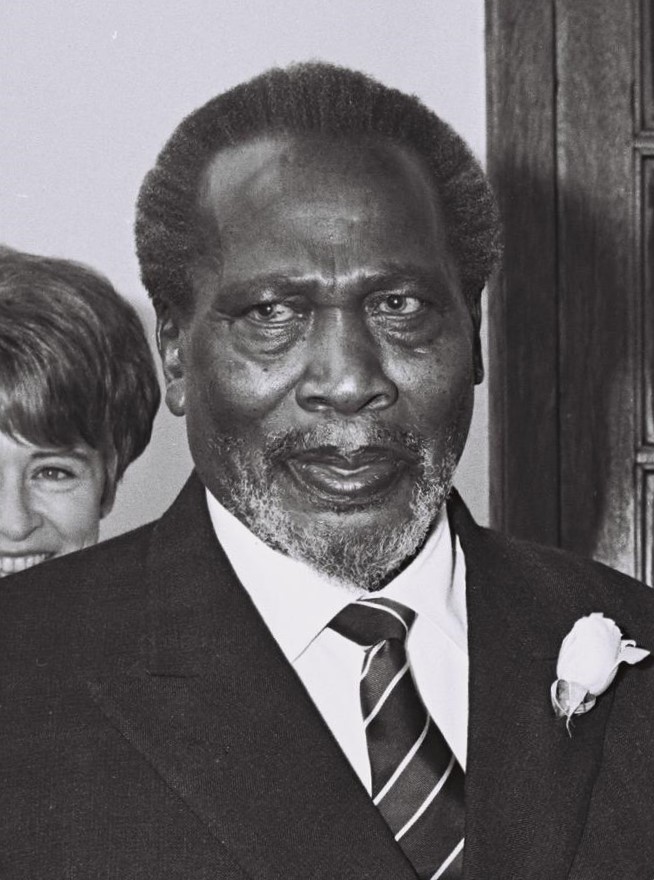
For the people of Kenya, no name is more closely bound to the birth of their nation than that of Jomo Kenyatta. He was the figure around whom the long struggle against British colonial rule crystallised, the man the colonial authorities imprisoned as the supposed mastermind of a rebellion, and the leader who walked out of detention to guide his country to independence and to serve as its first head of state. Revered by millions as Mzee, a term of respect for a wise elder, and as the Father of the Nation, he remains a towering and complex figure whose life spanned the entire arc of Kenya’s journey from colony to republic. This is the story of how a herdsman’s son became the founding father of a nation.
Quick Facts
- Full name
- Jomo Kenyatta (born Kamau wa Ngengi)
- Born
- c. 1897, Gatundu, British East Africa (now Kenya)
- Died
- 22 August 1978, Mombasa, Kenya
- Known for
- First Prime Minister and President of independent Kenya
- Nickname
- "Mzee"; "Father of the Nation"
Early Life and Background
He was born Kamau wa Ngengi around 1897, in the Kikuyu highlands of central Kenya near Gatundu. The exact date of his birth was never recorded, a common circumstance for Africans of his generation born before the colonial administration kept such records. He spent his earliest years in the traditional world of the Kikuyu people, herding his family’s goats and sheep and absorbing the customs, the land and the spiritual traditions of his community, an upbringing that would later inform his most famous book.
As a boy he encountered the Church of Scotland mission, where he received a Western education, learned to read and write, and was baptised. He took on various jobs in the growing colonial economy, working as a clerk, a store assistant and eventually in the water department of the city of Nairobi. During these years he adopted the name by which the world would know him, Kenyatta, derived from a beaded belt he was known for wearing, and later the first name Jomo. The transformation of Kamau wa Ngengi into Jomo Kenyatta mirrored the larger journey of his generation, caught between the traditional world of their birth and the colonial order imposed upon it.
Political Awakening
The Kenya of Kenyatta’s youth was a settler colony, in which fertile land in the highlands had been taken for the exclusive use of white farmers, and the African majority was subjected to taxes, pass laws and severe restrictions on its rights. This injustice, and above all the theft of African land, became the central grievance that drove Kenyatta into politics. In the 1920s he became involved with the Kikuyu Central Association, an early political organisation that campaigned for African land rights and for a voice in the government of the colony.
His abilities as a communicator and an organiser quickly made him prominent, and he became the editor of the association’s newspaper. In 1929 the organisation sent him to London to present African grievances to the British government, the beginning of a connection with Britain that would last, on and off, for the better part of two decades.
Years in Britain
Kenyatta spent much of the period from the late 1920s to 1946 in Britain and Europe, and these years shaped him profoundly. He moved in radical and Pan-African circles, encountering activists and intellectuals from across the African diaspora who were beginning to imagine a continent free of colonial rule. He studied social anthropology at the London School of Economics under the renowned scholar Bronislaw Malinowski.
Out of his studies came his celebrated book, Facing Mount Kenya, published in 1938, a study of the customs and social organisation of the Kikuyu people. The work was notable for its passionate defence of African traditions and its argument that the Kikuyu had possessed a coherent and dignified way of life that colonialism was destroying, particularly through the seizure of land. It established Kenyatta as a serious intellectual voice and a powerful advocate for his people.
His time abroad also deepened his Pan-African convictions. In 1945 he was among the organisers of the Fifth Pan-African Congress in Manchester, a landmark gathering that brought together future leaders of African independence movements, including Kwame Nkrumah of Ghana. The congress marked a decisive turn toward demanding not merely reform but full independence, and Kenyatta returned to Kenya in 1946 as a figure of national and continental standing.
The London years were not easy ones. Kenyatta supported himself through a variety of means, lecturing, writing, and at one point working on a farm in the English countryside during the Second World War. He married an Englishwoman and moved among a circle of African and Caribbean intellectuals and activists who were laying the intellectual foundations of the independence movements that would transform the continent in the following decades. He absorbed a wide range of influences, from anthropology to socialism to Pan-Africanism, and he honed the skills of argument, organisation and self-presentation that would serve him so well on his return. By the time he came home, he was no longer simply a Kikuyu activist but a figure of international experience and sophistication, equipped to lead a national movement.
The Man Behind the Title
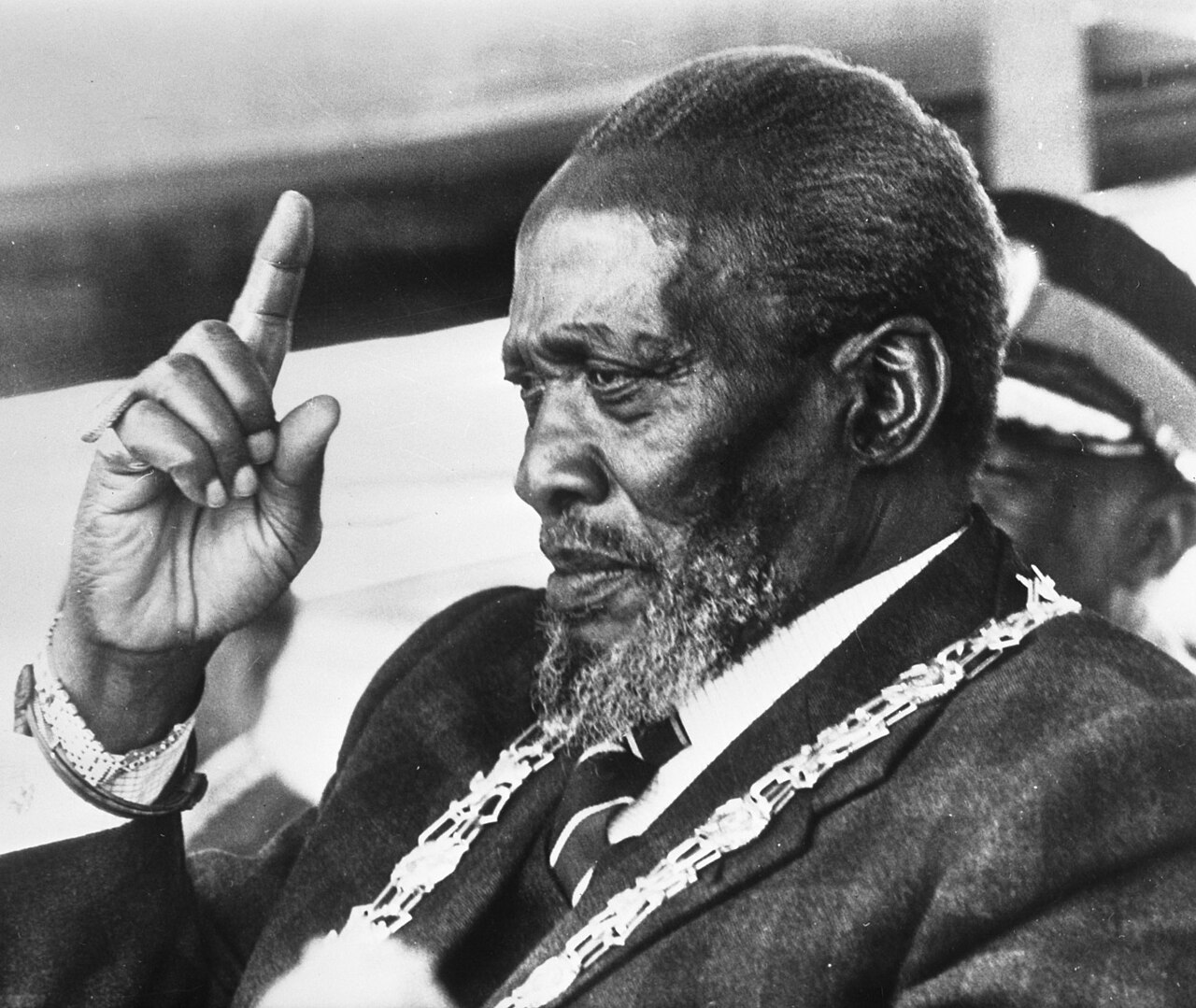
Those who encountered Kenyatta described a figure of immense personal presence. Tall, bearded, often carrying a fly whisk that became one of his trademarks, he had a commanding stage presence and a gift for connecting with ordinary people in their own languages and idioms. He could be warm, humorous and disarming, and he could also be shrewd, calculating and, when he judged it necessary, ruthless. He understood the symbolic dimension of leadership as well as any politician of his era, and he cultivated his image as the wise elder, the Mzee, who stood above the squabbles of lesser men.
He was a complex and in some ways contradictory figure: a radical in his youth who became a conservative in power, a Pan-Africanist who governed as a cautious nationalist, a champion of the dispossessed who presided over the rise of a new privileged class. Yet through all these contradictions ran a consistent thread, a deep identification with Kenya and a conviction that he, more than anyone, embodied its journey to nationhood. For better and for worse, he made himself the father figure of the nation, and the country he led bore the deep imprint of his personality long after he was gone.
Return and the Mau Mau Era
Back in Kenya, Kenyatta took the leadership of the Kenya African Union, the main vehicle for African political aspirations, and travelled the country addressing huge crowds and building a mass following. His call for the return of African land and for political rights resonated deeply, and he became the most recognisable face of the independence struggle.
In the early 1950s, frustration with the slow pace of change and the continued domination of the settlers erupted into the armed rebellion that the colonial authorities called the Mau Mau uprising. The colonial government responded with a brutal state of emergency, mass detentions and harsh military measures. They arrested Kenyatta and put him on trial, accusing him of managing and directing the Mau Mau movement. Kenyatta denied the charges, and the evidence against him was widely regarded, then and since, as deeply flawed. Nonetheless he was convicted and sentenced to years of imprisonment and detention in a remote part of the country.
The attempt to remove him from public life backfired completely. Far from discrediting him, his imprisonment turned Kenyatta into a living martyr and the undisputed symbol of the independence cause. The demand for his release became inseparable from the demand for freedom itself, and the slogan calling for his liberation echoed across the colony.
The Meaning of the Mau Mau Years
The period of the emergency was one of immense suffering for the Kikuyu people and for Kenya as a whole. The colonial authorities detained tens of thousands of people in camps, imposed collective punishments, and waged a harsh campaign against the rebellion in the forests. The fighters of the uprising, for their part, swore oaths of loyalty to the cause of land and freedom and carried on a guerrilla struggle against overwhelming odds. The conflict left deep scars and bitter divisions, including among the Kikuyu themselves, between those who supported the rebellion and those who sided with the colonial government.
Kenyatta’s exact relationship to the uprising has long been debated by historians. He was a constitutional nationalist who had generally favoured political pressure over armed struggle, and there is little firm evidence that he directed the rebellion as the prosecution claimed. Yet the colonial government needed a figurehead to blame, and Kenyatta, as the most prominent African leader, was the obvious target. Whatever the precise truth, the trial and imprisonment fused his personal fate with the cause of the uprising in the public mind, and when independence finally came, he was uniquely placed to embody the reconciliation of a divided nation. His later emphasis on forgiveness and unity drew directly on his understanding of how deeply the emergency had wounded his people.
Leading Kenya to Freedom
By the late 1950s the tide of African independence was sweeping the continent, and the British position in Kenya had become untenable. Kenyatta was released from detention in 1961, and he immediately assumed the leadership of the Kenya African National Union, the party that would lead the country to freedom. He proved a skilful and pragmatic negotiator, working with the departing colonial power to manage a peaceful transition.
On 12 December 1963, Kenya achieved its independence, with Jomo Kenyatta as its first prime minister. A year later, when the country became a republic, he became its first president. At the moment of his greatest triumph he chose the language of unity and reconciliation, adopting the rallying cry of Harambee, a Swahili word meaning “let us all pull together,” which became the motto of the new nation and a call for collective effort in building the country.
“Our children may learn about the heroes of the past. Our task is to make ourselves the architects of the future.”
President and Nation-Builder
The achievement of independence under his leadership was the culmination of decades of struggle, sacrifice and patience, and it placed Kenya among the wave of African nations that won their freedom in the early 1960s. For Kenyans who had lived their whole lives under colonial domination, the lowering of the British flag and the raising of the new Kenyan flag was a moment of profound emotion, and Kenyatta stood at the centre of it as the living embodiment of the freedom they had fought to win.
As president, Kenyatta surprised many with his moderation. Rather than driving out the white settlers whose land seizures had fuelled the independence struggle, he urged reconciliation and reassured them that there was a place for them in the new Kenya, famously telling Kenyans to forgive but build the future together. He pursued a pro-Western, capitalist economic path, and under his leadership Kenya enjoyed relative stability and economic growth that made it one of the more prosperous nations in the region.
Yet his rule was not without serious criticism. The promise to return land to the landless was only partially fulfilled, and a good deal of the best land ended up in the hands of a new African elite, including members of his own circle and community, rather than being distributed to the poor. Power became increasingly concentrated, political opposition was curtailed, and the assassination of prominent critics cast shadows over his government. The tensions between different ethnic communities, and the dominance of his own Kikuyu group in the new order, sowed seeds of division that would trouble Kenya for decades.
The Economy and Development
Under Kenyatta, Kenya pursued a development strategy built on private enterprise, foreign investment and close ties to the West, an approach his government set out in an official policy paper on African socialism that in practice leaned heavily toward market economics. Agriculture, and above all the cultivation of cash crops such as coffee and tea, formed the backbone of the economy, and Kenyatta encouraged the growth of an African farming and business class to take the place once occupied exclusively by Europeans and Asians.
The results were genuinely impressive by the standards of the region. Kenya enjoyed years of solid economic growth, Nairobi developed into a major commercial and diplomatic hub for East Africa, and a tourism industry built around the country’s spectacular wildlife and landscapes flourished. For a time Kenya was held up as one of Africa’s success stories, a stable and growing nation in a turbulent continent.
Yet the prosperity was unevenly shared. The transfer of the formerly white-owned highlands often benefited the well-connected rather than the landless poor in whose name the independence struggle had been fought, and a wealthy elite emerged alongside continuing rural poverty. Critics argued that the revolution in land ownership that many had expected never fully arrived, and that the grievances over land that had driven the freedom struggle were left to fester for future generations.
Foreign Policy and Pan-Africanism
In foreign affairs, Kenyatta steered a pragmatic and moderate course. Although he had been a committed Pan-Africanist in his younger years, helping to organise the historic 1945 Manchester congress, as president he prioritised stability and Kenyan national interests over revolutionary continental projects. He kept Kenya firmly in the Western camp during the Cold War, wary of communist influence, while still supporting the cause of African liberation and the work of the Organisation of African Unity.
He generally sought good relations with Kenya’s neighbours, though regional tensions were never far away, and he positioned Kenya as a force for moderation in East African affairs. His instinct was always for caution and consolidation rather than bold gestures, reflecting his conviction that the young nation’s first task was to survive and grow strong. This careful, conservative approach won him respect abroad as a stabilising elder statesman, even as more radical African leaders pursued grander visions of continental transformation.
Legacy
Jomo Kenyatta died in office on 22 August 1978, having led Kenya for fifteen years. He was succeeded by his vice-president, Daniel arap Moi, in a peaceful and orderly transition of power that was itself a sign of the stability he had established and a rarity in the Africa of his time, when many newly independent states were convulsed by coups and upheaval. The nation he had founded mourned the passing of its Mzee, the father figure who had guided it from colony to independent state.
His legacy, like that of many founding fathers, is the subject of genuine debate. He is celebrated as the architect of Kenyan independence, the unifying symbol of the freedom struggle, and the leader who gave the young nation stability and a sense of itself. He is also criticised for the inequalities that hardened under his rule, for the concentration of power, and for the ethnic tensions that his government did not resolve. His own family remained central to Kenyan life long after his death, and decades later his son Uhuru Kenyatta would himself become president of the country, an extraordinary continuation of the family’s place at the heart of the nation.
The capital’s main thoroughfares, the international airport, hospitals, schools and countless institutions across Kenya bear his name, and his image appears on the nation’s currency. More than four decades after his death, his presence still looms over Kenyan public life, a reference point in every debate about what the nation was meant to become and how far it has lived up to the promise of independence. Those who admire him point to the stability and growth he delivered and to his role as the indispensable symbol of the freedom struggle. Those more critical of his record point to the land question left unresolved, the concentration of power, and the ethnic divisions that hardened under his rule and that later generations have struggled to overcome.
Whatever the complexities of his record, Jomo Kenyatta’s place in history is assured. He gave Kenya its independence, its founding ethos of pulling together, and its first sense of nationhood. He took a collection of peoples divided by colonial boundaries and the wounds of the emergency and forged from them, however imperfectly, a single nation with a sense of itself. For that, he remains, in the eyes of his countrymen and of Africa, one of the great founding fathers of the continent’s age of freedom, the Mzee who led his people out of colonial rule and into the uncertain, hopeful dawn of independence.
Key Facts
- Jomo Kenyatta was born Kamau wa Ngengi around 1897 and rose from a rural Kikuyu upbringing to lead Kenya’s independence movement.
- He studied anthropology in London and wrote the influential book Facing Mount Kenya in 1938, defending Kikuyu traditions and land rights.
- He was imprisoned by the colonial authorities in the 1950s on charges of leading the Mau Mau uprising, which he denied, becoming a symbol of the freedom struggle.
- He led Kenya to independence on 12 December 1963 and became its first president, championing the unifying national motto of Harambee.
- His son Uhuru Kenyatta later served as president of Kenya, continuing the family’s central place in the nation’s history.