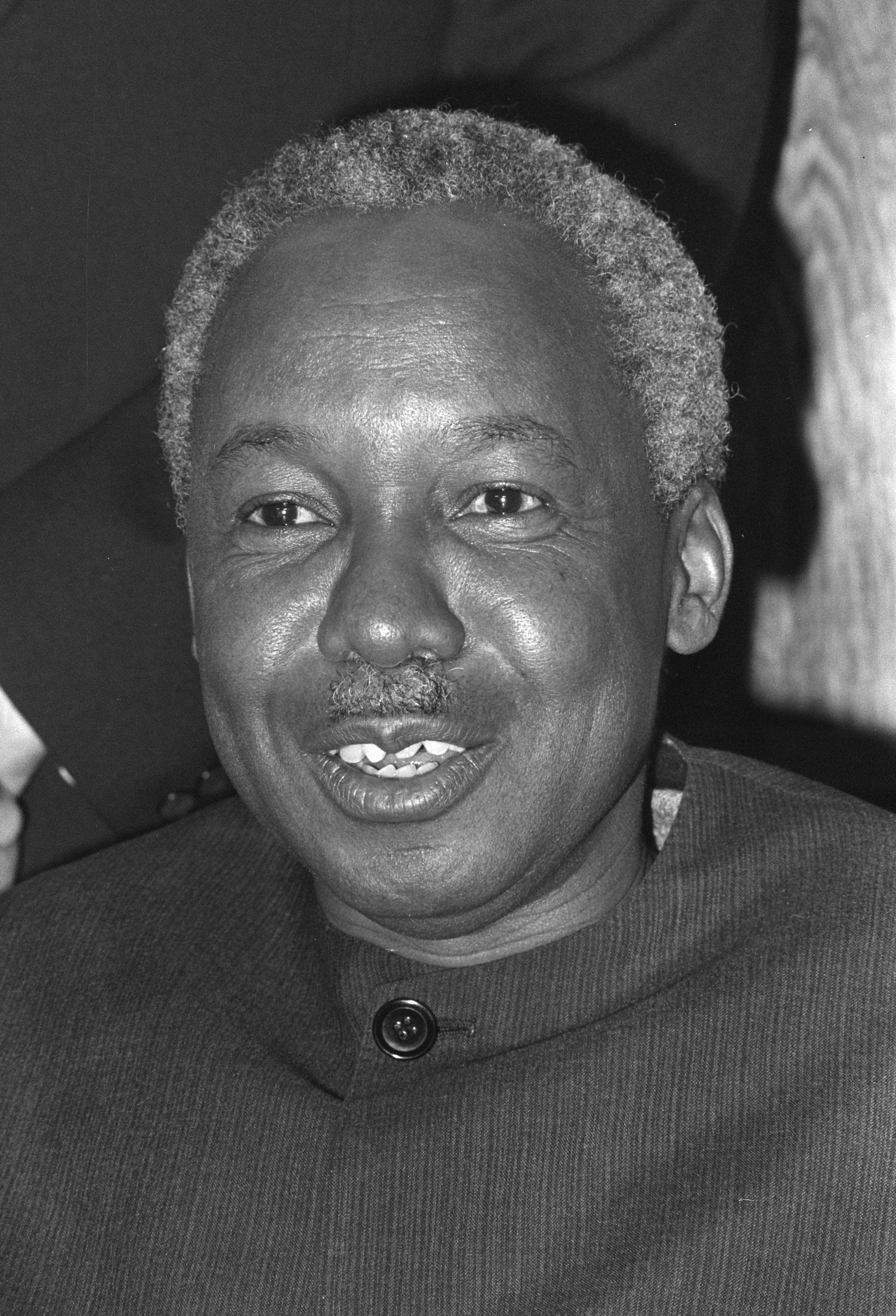
On a warm afternoon in December 1961, Julius Kambarage Nyerere stood before a crowd of tens of thousands at Dar es Salaam’s Uhuru Stadium as the Union Jack was lowered for the last time and the green, gold, and black flag of Tanganyika rose in its place. He was thirty-nine years old, the son of a minor chief from the shores of Lake Victoria, a teacher who had turned himself into a politician, and now the first prime minister of his country’s independent government. He had achieved independence without a single shot fired, by organising, arguing, persuading, and insisting, in halls and courtrooms and international forums, that colonialism was morally indefensible and that his people were ready to govern themselves. What he would do with that independence over the following quarter-century would divide opinion but command the respect even of those who disagreed with him, because Julius Nyerere was never anything less than serious, and he was never in politics for anything other than the people he served.
Quick Facts
- Full name
- Julius Kambarage Nyerere
- Born
- 13 April 1922, Butiama, Tanganyika (now Tanzania)
- Died
- 14 October 1999, London, England (aged 77)
- Known for
- First President of Tanzania; father of the Ujamaa philosophy of African socialism; pan-African leader and statesman
- Key achievement
- Led Tanganyika to independence in 1961 and later unified it with Zanzibar to form Tanzania; championed African unity and anti-apartheid struggle across the continent
Butiama and the World of the Zanaki
Julius Nyerere was born on 13 April 1922 in Butiama, a small village near the eastern shore of Lake Victoria in what was then the British-administered territory of Tanganyika, originally a German colony that had passed to Britain as a League of Nations mandate after the First World War. His father, Burito Nyerere, was the chief of the Zanaki people, a small ethnic group of perhaps 30,000 members, and his mother, Mgaya Wangu, was one of Burito’s several wives, the fifth in the traditional arrangement.
The Zanaki lived by agriculture and cattle herding on the rolling hills and grasslands west of Lake Victoria. They were not among the more prominent or numerous peoples of Tanganyika, and their territory had no particular strategic or economic importance to the colonial administration. Julius’s childhood was shaped by the rhythms of village life: cattle, crops, seasonal rains, communal work, and the ceremonies and obligations of a society organised around extended family relationships rather than individual accumulation.
He was not the chief’s eldest son, and in the normal run of things his destiny might have remained within the orbit of Zanaki traditional life. But he was sent to school at the age of twelve, unusually late by the standards of mission-educated African families, to a school operated by the Catholic White Fathers at Musoma. He was immediately and obviously exceptional. He moved quickly through the Catholic mission school system, and in 1937, at fifteen, he enrolled at Tabora Government School, the most prestigious secondary school in Tanganyika, which had been established by the British colonial administration to train the sons of chiefs and educated Africans for lower-level colonial service.
At Tabora he encountered teachers and classmates from across Tanganyika, belonging to many different ethnic groups, and the experience shaped a conviction that would become the cornerstone of his political philosophy: that tribalism, the organisation of loyalty along ethnic lines, was the most dangerous obstacle to African unity and African development. He saw that the British colonial system had deliberately reinforced ethnic divisions, using them as a tool of administrative control, and he made the conscious intellectual choice to resist that framing and to think of himself as Tanzanian first and Zanaki second. The commitment to what he later called national unity over tribal identity was, for Nyerere, not merely a political tactic but a moral conviction.
He was baptised a Catholic in 1943, taking the name Julius, and his Catholicism remained a genuine and important part of his inner life throughout his political career, coexisting with his socialist politics in a way that was perhaps less contradictory than it appeared to outside observers. The Catholic social teaching on human dignity, on the obligations of the community to its poorest members, and on the moral priority of the common good over individual accumulation aligned, in Nyerere’s reading, with the values of African communal life and with the socialist commitment to collective ownership.
Edinburgh and the Education of a Nationalist
In 1949, Nyerere was one of only two Tanganyikans given government scholarships to study in Britain. He went to the University of Edinburgh, where he read history and economics and earned a Master of Arts degree in 1952. Edinburgh was his second education, as important in its way as his Tanzanian schooling, because it gave him the intellectual tools and the international perspective he would need for the political career he was already planning.
He engaged deeply with the political philosophy of his era: John Stuart Mill’s liberalism, the Fabian socialism of the British Labour tradition, the African nationalist ideas circulating in the networks of African students and intellectuals in postwar Britain. He was not a doctrinaire Marxist, though he took Marx’s analysis of capitalism seriously. He was more attracted to the ethical socialism of men like R.H. Tawney, whose book “The Acquisitive Society” argued that a good society was one that organised itself around service and community rather than the pursuit of individual wealth.
He also encountered, for the first time in sustained and systematic form, the intellectual tradition of African nationalism. Kwame Nkrumah’s Gold Coast independence movement was gaining momentum. The African National Congress in South Africa was building its resistance to apartheid. Pan-Africanism, the idea that the peoples of the African continent shared a common heritage and common interests that required political expression, was moving from intellectual discussion into practical politics. Nyerere absorbed all of this and began to develop the synthesis that would distinguish his contribution: a distinctively African socialism rooted in the communal values of traditional African life, not imported from Europe but grown from the soil of Africa itself.
He returned to Tanganyika in 1952 and took a position teaching history and biology at St Francis’ College at Pugu, a Catholic school near Dar es Salaam. He was an inspiring teacher, remembered by his students for his ability to make complex ideas clear, his evident passion for the subjects he taught, and his refusal to talk down to young Africans who were accustomed to being told they were not ready for serious thinking. The title “Mwalimu,” the Swahili word for teacher, which he would carry for the rest of his life, was not a ceremonial honorific. It described something real about how he understood his vocation, in politics as in the classroom: his job was to explain, to persuade, to educate, not to command.
Building TANU and the Path to Independence
In 1954, Nyerere founded the Tanganyika African National Union, TANU, transforming an existing African association into a mass political movement that sought independence from British colonial rule through peaceful, constitutional means. The choice of peaceful methods was strategic but also sincere. Nyerere was not a pacifist by philosophical conviction in the way that Gandhi was, but he understood that Tanganyika lacked the resources for an armed independence struggle, that Britain would be more likely to transfer power voluntarily if the transfer was framed as an orderly constitutional process rather than a defeat, and that the violence of revolution typically destroyed much of what it sought to liberate.
He also had, from the beginning, an unusually clear head about what independence was for. It was not an end in itself but a precondition: the removal of colonial rule so that Tanganyikans could build the social and economic institutions that the colonial system had prevented them from building. The work of development, the construction of schools, hospitals, roads, and a productive economy capable of meeting the needs of the population, was going to be harder and longer than the independence campaign. He said so publicly and repeatedly, which made him unusual among independence leaders, who generally allowed the euphoria of liberation to defer the harder conversation about what would come after.
TANU grew with remarkable speed because Nyerere had understood something about Tanganyikan society that the colonial administration had not: the ethnic diversity of the territory, which the British had often treated as an obstacle to coherent politics, could be turned into an asset if the national movement could successfully frame itself as representing all Tanganyikans rather than any particular ethnic group. Nyerere insisted on recruiting from every region and ethnic community, insisted that TANU’s language would be Swahili (a lingua franca spoken across most of the territory) rather than any single ethnic tongue, and built a genuinely national organisation in a country where British policy had consistently emphasised ethnic and regional difference.
He argued Tanganyika’s case before the United Nations Trusteeship Council in 1955 and 1956, presenting to an international audience the moral and practical arguments for decolonisation with a clarity and fluency that made him an immediately recognised figure in the nascent world of postcolonial politics. The British colonial administration was not pleased. But the direction of history was against them, and Nyerere, who understood this, was content to be patient.
Tanganyika became self-governing in 1960 and independent on 9 December 1961, with Nyerere as prime minister. Within weeks, he had resigned from the office to return to the work of building TANU as an organisation, handing the prime ministership to Rashidi Kawawa. It was an astonishing act for a man who had just achieved the central goal of his political career, and it spoke to his genuine conviction that the party structure was more important than personal office. He returned to the presidency in 1962 when Tanganyika became a republic.
Ujamaa: The Vision and the Experiment
The intellectual contribution for which Nyerere is most debated, and which shaped the entirety of his economic policy as president, was the philosophy he called Ujamaa, a Swahili word that translates roughly as “familyhood” or “extended family relationship.” He elaborated the concept in a series of essays, most importantly in “Ujamaa: The Basis of African Socialism,” published in 1962, and in the Arusha Declaration of 1967, which became the foundational policy document of his government.
The core argument was this: traditional African society had been organised around the principle of communal obligation, in which no one accumulated wealth beyond the needs of the community, in which the old and the young and the sick were cared for by the group, and in which the land belonged to everyone who worked it. Colonialism had disrupted this system, importing European concepts of private property and individual accumulation that were alien to African values and destructive of African community. Ujamaa socialism proposed to build on these African communal values rather than importing European or Soviet models that were not rooted in African experience.
“In traditional African society everybody was a worker. There was no other way of living for anybody. It was taken for granted that every member of society who was physically able would contribute his fair share of effort toward the production of its wealth.”
This vision produced, in practice, a policy of Ujamaa village formation that became the most ambitious and the most controversial of all Nyerere’s initiatives. Beginning in the late 1960s and accelerating dramatically after the 1973 to 1974 drought, the government encouraged and then compelled Tanzanian farmers to leave their scattered homesteads and consolidate into planned villages where services (schools, health clinics, water points) could be delivered more efficiently and where cooperative farming could replace individual small-holding.
The villagisation programme reached its most coercive phase between 1974 and 1976, when millions of Tanzanians were relocated, sometimes forcibly, into new villages whose location had been chosen by government planners rather than by the farmers themselves. The disruption to agricultural production was severe. Farmers who had spent generations learning the particular characteristics of their own land found themselves on unfamiliar ground. The cooperative farming arrangements often worked poorly. Food production fell. Tanzania, which had been broadly self-sufficient in food, was importing food by the late 1970s.
Nyerere acknowledged in his later years that the villagisation policy had failed in important respects and that the coercive methods used in some areas were wrong. What he did not acknowledge, and what his defenders maintain, is that the broader Ujamaa vision produced real achievements in other areas. Tanzania’s literacy rate rose from approximately 10 percent at independence to roughly 85 percent by the early 1980s. Primary school enrolment became nearly universal. Life expectancy increased. A national identity that transcended ethnic divisions, a genuinely rare achievement in post-colonial Africa, was built and sustained.
Tanzania and the Union with Zanzibar
In January 1964, a revolution on the island of Zanzibar, then a separate sultanate under British protection, overthrew the Arab-dominated government and installed a radical African government led by the Afro-Shirazi Party. The revolution was violent and the new government ideologically unpredictable. Nyerere, who had watched the instability that followed the Congolese independence and several other African transitions, moved quickly to bring Zanzibar into a formal union with Tanganyika.
The resulting United Republic of Tanzania, formed on 26 April 1964, combined the mainland territory of Tanganyika with the Zanzibar archipelago in an arrangement that gave Zanzibar substantial internal autonomy while placing foreign affairs, defence, and certain economic matters under the authority of the union government in Dar es Salaam. The union was, and remains, imperfect and sometimes contentious: Zanzibaris have periodically resented the dominance of the mainland, and the exact balance of autonomous and shared authority has been a source of recurring political tension. But the union survived, and the name Tanzania, a combination of Tanganyika and Zanzibar, became one of the more stable political entities in post-colonial Africa.
Pan-Africanism and the Liberation of the Continent
Nyerere’s vision was never confined to Tanzania. From the beginning of his political career he was a convinced pan-Africanist who believed that the independence of individual African states was only the first stage of a larger project: the political and economic integration of the African continent into a unified force capable of determining its own destiny and resisting the neo-colonial pressures of the Cold War superpowers and the former colonial powers.
He was a founding member of the Organisation of African Unity, established in Addis Ababa in 1963, and a consistent advocate within it for more robust collective action on behalf of the liberation movements still fighting in the remaining colonial and white-minority territories of the continent. Tanzania hosted the liberation movements of several African countries, providing offices, training camps, and political support to the ANC of South Africa, FRELIMO in Mozambique, ZANU and ZAPU in Rhodesia/Zimbabwe, SWAPO in Namibia, and the MPLA in Angola.
This commitment was not costless. Nyerere’s support for the Mozambican liberation movement in particular brought retaliatory military attacks from the Portuguese colonial government, and the subsequent support for the post-independence FRELIMO government brought Tanzanian forces into conflict with Rhodesian security forces conducting cross-border raids. His decision in 1978 to 1979 to support the Ugandan exiles who invaded Uganda to overthrow Idi Amin, an operation that succeeded in removing one of Africa’s most brutal dictators, was condemned by some African leaders as a violation of the OAU’s non-interference principle but was privately welcomed by most.
Retirement and Reflection
Nyerere stepped down as President of Tanzania in November 1985, the first African head of state to voluntarily relinquish power when it was not required of him by electoral defeat or constitutional term limit. He handed power to Ali Hassan Mwinyi, remained chairman of the ruling party Chama Cha Mapinduzi until 1990, and then stepped fully back from politics.
His retirement was not silent. He remained a figure of enormous moral authority across Africa and in the international development community, sought out by journalists, scholars, and political leaders who wanted to understand what he had learned from his decades of attempting to build a just society in conditions of poverty and external pressure. He was candid about the failures of Ujamaa villagisation. He was not conceding the underlying vision, only acknowledging that the methods had been wrong and the implementation had caused real harm to real people.
He spent much of his final years engaged with the Arusha-based African conflict resolution work of the Julius Nyerere Foundation and with efforts to mediate peace in Burundi, where ethnic conflict between Hutu and Tutsi had produced decades of violence. He was in the middle of those mediation efforts when he died of leukaemia in London on 14 October 1999. Nelson Mandela, who had been one of the many liberation leaders to benefit from Nyerere’s Tanzania, said: “We have lost one of Africa’s finest sons.”
Legacy
The assessment of Julius Nyerere is, in important ways, still being written. The failure of the villagisation programme and the economic stagnation of Tanzania’s later Nyerere years (the economy declined significantly during the 1970s and 1980s) are well documented and acknowledged. But the social transformations he achieved, the near-universal literacy, the relatively cohesive national identity across more than 120 ethnic groups, the commitment to peaceful transfer of power that has made Tanzania one of Africa’s more stable democracies, represent a genuine and lasting contribution.
His broader pan-African legacy is equally real. The liberation movements he supported in Mozambique, Zimbabwe, Namibia, and South Africa were not marginal undertakings but decisive contributions to the dismantling of colonialism and apartheid in southern Africa. Across the continent, he is remembered as one of the founding generation of African leaders who took seriously the obligation to think carefully about what African independence meant and what kind of society it was intended to build.
The title Mwalimu suits him, in the end, not merely because he was once a schoolteacher but because his central conviction throughout his life was that human beings could be educated out of their worst impulses and toward their better ones: out of tribalism and into national solidarity, out of inequality and into shared responsibility, out of subservience and into the dignity of self-governance.
Key Facts
- Nyerere was the first head of state in sub-Saharan Africa to voluntarily and peacefully transfer power to an elected successor, stepping down from the Tanzanian presidency in November 1985 after twenty-three years in office.
- Tanzania’s literacy rate rose from approximately 10 percent at independence in 1961 to over 85 percent by the early 1980s, one of the most dramatic educational transformations in post-colonial Africa.
- He translated Shakespeare’s “Julius Caesar” and “The Merchant of Venice” into Swahili while serving as head of state, a testament to his lifelong commitment to the educational and cultural life of his country.
- The Arusha Declaration of 1967, the founding document of Tanzania’s Ujamaa socialist programme, included a leadership code that prohibited government ministers and party officials from owning shares, rental properties, or employing others for profit.
- Nyerere hosted and supported the liberation movements of at least six African countries from Tanzanian soil, providing safe haven, training, and political support to the ANC, FRELIMO, ZANU, ZAPU, SWAPO, and the MPLA throughout the 1960s and 1970s.