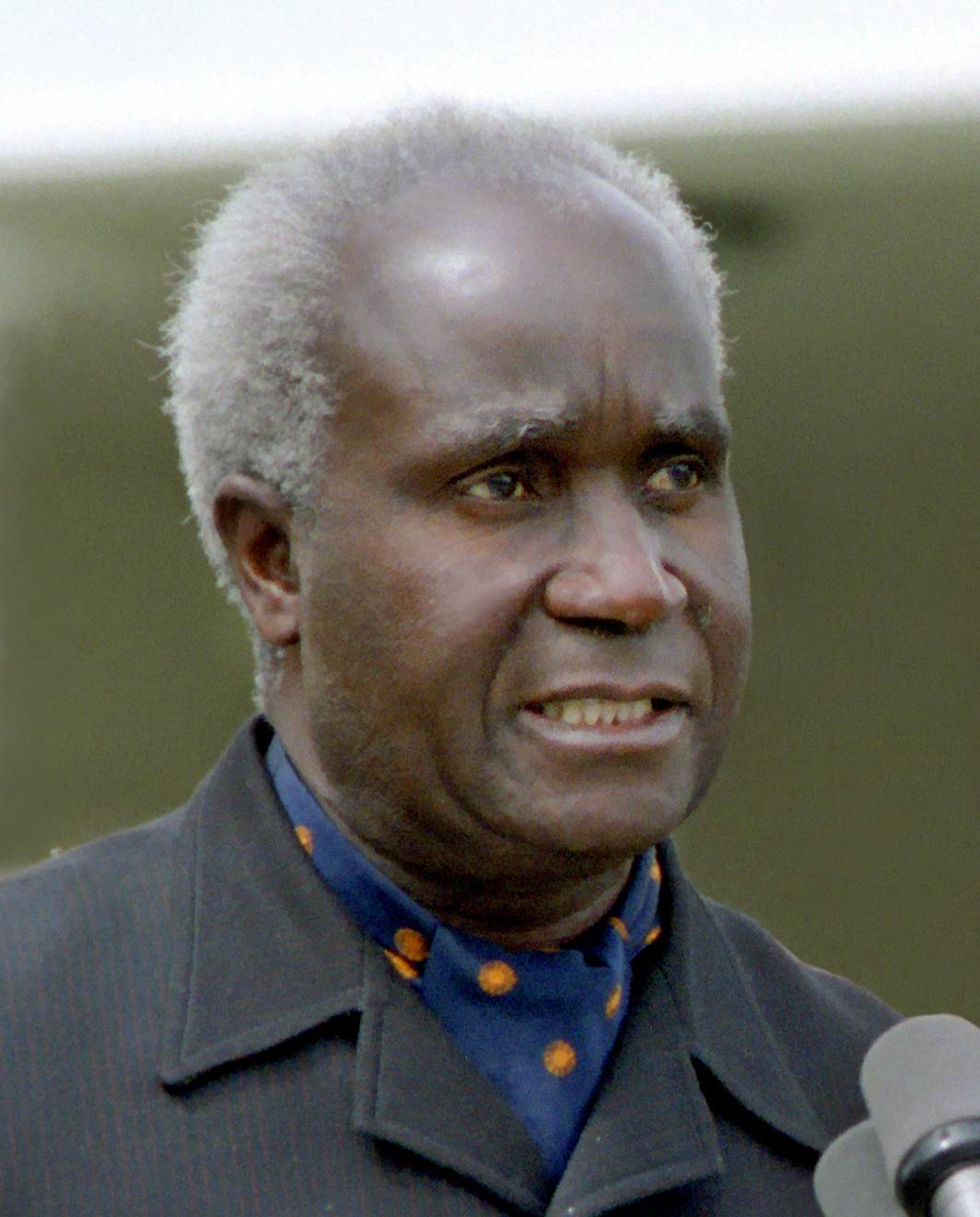
On the night of 24 October 1964, a schoolteacher’s son from the northern bush of Northern Rhodesia stood before a crowd at the Independence Stadium in Lusaka and watched the Union Jack come down. In its place rose a new flag of green, red, black and orange, and a new nation took its name from the great river that runs through it. The man at the centre of that moment was Kenneth David Kaunda, and for the next 27 years his voice, his tears, and the white handkerchief that never left his hand would become inseparable from the idea of Zambia itself. He was a teacher who became a prisoner, a prisoner who became a president, and a president who, almost alone among the strongmen of his generation, walked away from power when the voters told him to go.
Quick Facts
- Full name
- Kenneth David Kaunda
- Born
- 28 April 1924, Chinsali, Northern Rhodesia (now Zambia)
- Died
- 17 June 2021, Lusaka, Zambia (aged 97)
- Known for
- First President of Zambia (1964 to 1991)
- Nickname
- "KK"
Early Life
Kenneth Kaunda was born on 28 April 1924 at Lubwa Mission near Chinsali, in the Northern Province of what was then Northern Rhodesia, a British colonial territory in south-central Africa. He was the youngest of eight children. His father, David Kaunda, was an ordained Church of Scotland missionary and teacher who had travelled south from Nyasaland (now Malawi) to spread Christianity and education among the Bemba people. His mother, Helen Kaunda, was among the first African women to teach in the colonial school system. Growing up inside a mission compound, the young Kaunda was steeped from birth in two of the forces that would define his life: the discipline of the classroom and the moral vocabulary of the church.
His father died when Kenneth was only eight, and the family relied heavily on the mission community and on his mother’s teaching income. The boy proved a capable student. He attended school at Lubwa and then went on to Munali Secondary School in Lusaka, one of the very few institutions that offered secondary education to Africans in the colony at that time. Munali was a training ground for a generation of Zambian leaders, and it gave Kaunda both an education and a wider view of the country beyond his home district. The mission world in which he was raised gave him more than literacy. It gave him a lasting sense that leadership was a form of service and that education was the surest road out of subjection, convictions he would carry into politics and never abandon.
In 1946 Kaunda married Betty Banda, a fellow teacher who would become his lifelong partner and, after independence, the First Lady of Zambia. Theirs was a marriage that endured through prison, exile, high office and defeat, and Betty Kaunda became a widely respected figure in her own right until her death in 2012. The couple would go on to have a large family, and their household became one of the most public in the nation, a symbol of the disciplined, church-shaped domestic life that Kaunda held up as an ideal.
Following the path laid down by his parents, Kaunda trained as a teacher and returned to Lubwa to teach. He worked for a time as a boarding master and headmaster, and he also tried his hand at farming and small trade. In the late 1940s he moved briefly to the mining regions and to Southern Rhodesia and Tanganyika in search of work, experiences that exposed him directly to the racial hierarchy of colonial life: the pass laws, the low wages paid to African workers, and the everyday humiliations of a system built to keep power in white hands. These years turned a thoughtful young teacher into a man convinced that the classroom alone could not fix what was wrong with his country.
Into Politics
Kaunda entered organised politics in the early 1950s, at a moment of rising African discontent. In 1953 the British government pushed the colonies of Northern Rhodesia, Southern Rhodesia and Nyasaland together into the Central African Federation. To the white settler minority the Federation promised economic strength; to most Africans it looked like a scheme to entrench white domination and to lock Northern Rhodesia’s copper wealth into settler control. Opposition to the Federation became the fuel of the nationalist movement, and Kaunda was drawn into its heart.
He joined the African National Congress of Northern Rhodesia and rose quickly, becoming its Secretary General under the veteran leader Harry Nkumbula. But as the 1950s went on, Kaunda and other younger militants grew frustrated with what they saw as Nkumbula’s caution and readiness to compromise. In 1958 and 1959 the movement split. Kaunda broke away to help form the Zambia African National Congress, a more radical body demanding full and immediate self-government. The colonial authorities banned the new party and, in 1959, jailed Kaunda for several months. Imprisonment did not break him; it confirmed his standing as a leader willing to pay a personal price.
On his release in 1960, Kaunda took the helm of a reorganised movement, the United National Independence Party (UNIP), which he built into the dominant political force in the territory. Under his leadership UNIP ran a campaign of mass mobilisation, civil disobedience and, at times, direct confrontation with colonial power, a period of unrest known as the “Cha-cha-cha” campaign. Yet Kaunda, deeply influenced by his Christian upbringing and by the example of Mahatma Gandhi, consistently pressed for non-violent methods where he could. The pressure worked. By 1962 UNIP had won a share of power, and in the crucial elections of January 1964 the party swept to a decisive victory. In January 1964 Kaunda became Prime Minister of self-governing Northern Rhodesia, with full independence now only months away.
Independence and Presidency
At midnight on 24 October 1964, Northern Rhodesia became the independent Republic of Zambia, named after the Zambezi River, and Kenneth Kaunda was sworn in as its first President. He was 40 years old. The new nation he inherited was rich and fragile at the same time. Zambia sat on some of the largest copper deposits in the world, and copper accounted for the overwhelming share of its export earnings. Yet at independence the country had only a handful of university graduates and very few trained professionals, a legacy of decades of colonial neglect that had denied Africans higher education.
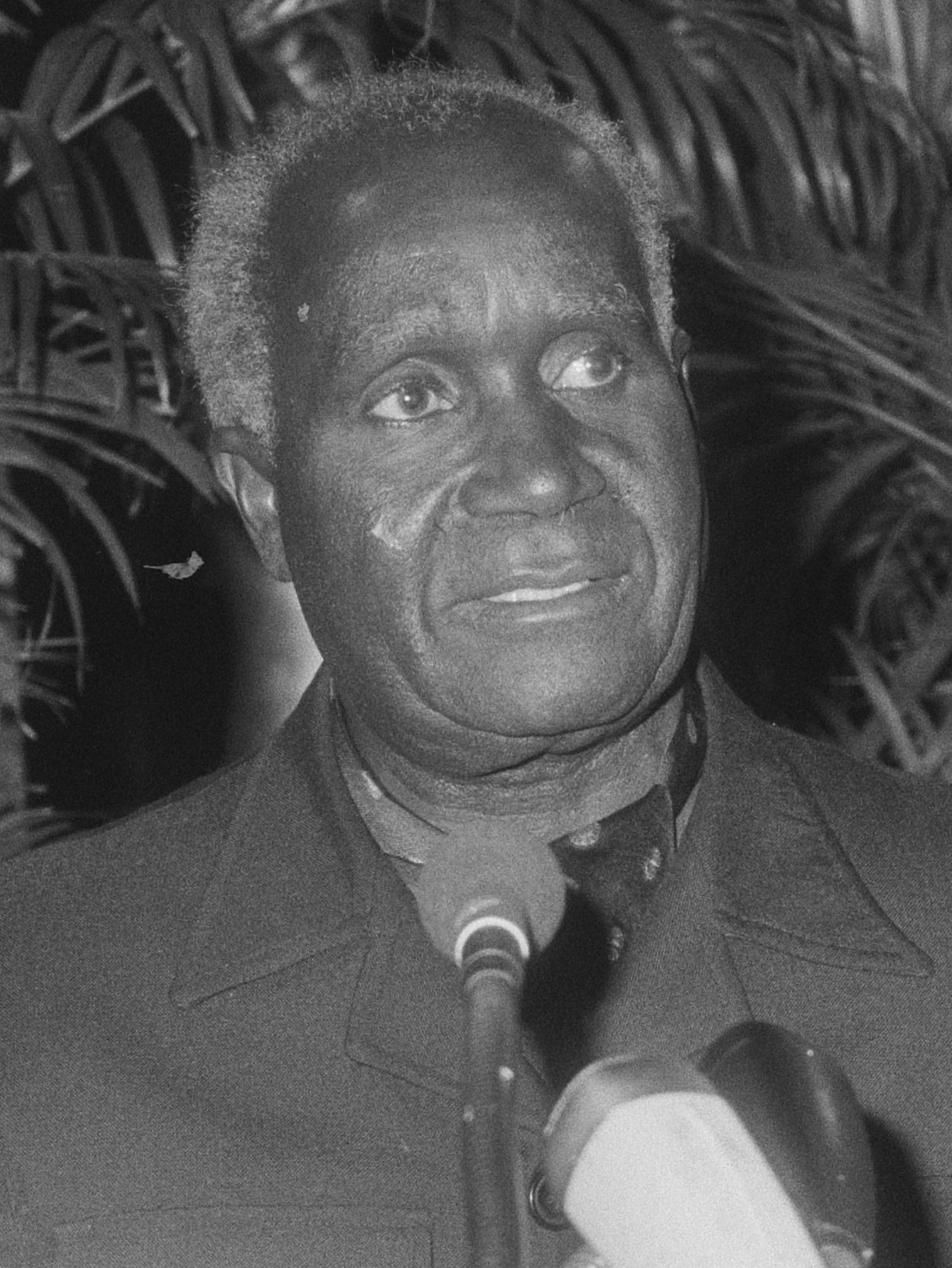
Kaunda’s early years in office were marked by ambitious nation-building. His government expanded schools, built the University of Zambia, extended health care, and invested heavily in infrastructure. To lessen dependence on the hostile white-ruled regimes to the south, Zambia partnered with China and Tanzania to build the TAZARA Railway, a vast line linking the Zambian Copperbelt to the port of Dar es Salaam, giving landlocked Zambia an export route that did not run through Rhodesia or apartheid South Africa. At the same time, Kaunda moved to bring the mining industry under greater state control, nationalising large parts of the copper sector in the late 1960s and early 1970s so that its wealth would serve the nation rather than foreign shareholders.
But the economy that funded all this rested on a single, volatile commodity. When world copper prices were high, Zambia prospered. When they fell, as they did sharply in the mid-1970s, the whole edifice trembled. This dependence on copper would haunt Kaunda for the rest of his presidency and would eventually help bring it to an end.
Frontline State and African Liberation
If Kaunda has a claim to a place in continental history that goes beyond Zambia’s borders, it rests on his role as a champion of African liberation. Zambia gained its freedom while much of southern Africa remained under colonial or white-minority rule: Rhodesia under Ian Smith, apartheid South Africa, Portuguese-ruled Angola and Mozambique, South West Africa (now Namibia). Kaunda made Zambia a “frontline state”, a base and a rear guard for the liberation movements fighting those regimes.
Lusaka became a haven for exiled fighters and political leaders. The African National Congress of South Africa established a major presence there, and for years the ANC’s headquarters in exile operated from Zambian soil. Kaunda also gave sanctuary and support to Zimbabwe’s nationalists, to SWAPO of Namibia, and to movements in Angola and Mozambique. He used his standing to press for negotiated solutions, hosting talks and lending his personal diplomacy to the long effort to end white rule across the region.
“The independence of Zambia will be meaningless unless it is related to the total liberation of Africa.”
Zambia paid a heavy price for this stance. Rhodesian and South African forces launched cross-border raids into Zambia, striking at refugee camps and guerrilla bases and killing civilians. Kaunda’s decision to honour international sanctions against Rhodesia by closing the border in the 1970s cut off traditional trade routes and inflicted serious economic damage on his own country. Fuel shortages, disrupted copper exports and the constant threat of attack became facts of Zambian life. Zambia bled economically and sometimes in blood so that its neighbours might one day be free.
Kaunda’s diplomacy was not confined to sheltering fighters. He worked tirelessly as a mediator, helping to broker the talks that led to Zimbabwe’s independence in 1980 and lending his voice to the wider effort to isolate apartheid. He served terms as chairman of the Organisation of African Unity and of the Non-Aligned Movement, using those platforms to keep the liberation of southern Africa at the top of the international agenda. When apartheid finally fell and Nelson Mandela walked free in 1990, the older statesmen of the liberation struggle remembered who had sheltered them, and Kaunda was honoured across the continent as one of the fathers of southern African freedom.
Humanism and One-Party Rule
Kaunda was not content to be merely a practical politician; he wanted a guiding philosophy for his nation, and he found it in what he called Zambian Humanism. Drawing on African communal traditions, on Christian ethics, and on socialist ideas, Humanism placed the human person at the centre of society and stressed community, mutual aid, dignity and self-reliance over the pursuit of private wealth. Kaunda wrote and spoke about it extensively, and it became the official ideology of the state. At its best it expressed a genuine moral vision. At its worst it served as the justification for concentrating power and controlling dissent.
In 1972 Kaunda declared Zambia a one-party state, making UNIP the sole legal party. He argued that in a young nation divided along tribal and regional lines, a single party was needed to hold the country together and prevent ethnic conflict from tearing it apart. Critics saw a leader entrenching himself in power. Opposition figures were detained, and Kaunda’s government invoked emergency powers, which remained in force for much of his rule. He was re-elected repeatedly in contests where he was effectively the only candidate.
Through the late 1970s and the 1980s the economic ground gave way beneath him. Copper prices stayed low, oil prices soared, debt mounted, and the standard of living for ordinary Zambians declined. Attempts to follow International Monetary Fund advice and cut food subsidies triggered riots, most seriously in 1986 and again in 1990, when the removal of subsidies on maize meal, the national staple, sent people into the streets. A generation that had cheered independence now queued for basic goods. The gap between the moral promise of Humanism and the daily reality of scarcity became impossible to ignore, and pressure for change grew year by year.
The Peaceful Transition
By the end of the 1980s the winds of change that were sweeping through eastern Europe and much of Africa reached Zambia. A broad protest movement crystallised around trade unions, churches, businesspeople and students, and it found a leader in Frederick Chiluba, the head of the country’s mineworkers’ union. The Movement for Multi-Party Democracy (MMD) demanded an end to one-party rule.
Faced with mounting unrest and a genuine popular movement, Kaunda made the decision that would secure much of his later reputation. Rather than cling to power by force, he agreed to constitutional reform, legalised opposition parties, and called multi-party elections. Those elections were held on 31 October 1991. Kaunda and UNIP were defeated decisively; Chiluba and the MMD won a landslide. Kaunda accepted the result, congratulated his rival, and handed over power peacefully.
At a time when many African leaders treated their offices as lifelong possessions, and when few of Kaunda’s generation had ever surrendered power at the ballot box, his willingness to accept defeat and step down was extraordinary. It spared Zambia the bloodshed that engulfed other states in transition and set a democratic precedent that Zambians would draw on for decades. Whatever the failures of his long rule, this moment stands as one of the finest acts of his career.
Later Years
Kaunda’s retirement did not stay quiet for long. The new government viewed him with suspicion, and in the 1990s he faced harassment, a period of house arrest, and a controversial attempt to strip him of citizenship on the grounds that his parents had been born outside the country, a claim widely seen as a political manoeuvre. He briefly returned to active politics before finally withdrawing from the party arena.
In his elder years Kaunda reinvented himself as one of Africa’s most respected statesmen and moral voices. He devoted enormous energy to the fight against HIV and AIDS, a cause that touched him personally after one of his sons died of the disease. At a time when the epidemic was surrounded by silence, stigma and shame across much of Africa, Kaunda spoke openly about his family’s loss and travelled the world urging awareness, testing and compassion. He founded a charitable organisation to carry on the work and lent his still-famous name to the campaign.
He remained a beloved figure at home, addressed as the father of the nation, and he continued to sing, to counsel younger leaders, and to appear at moments of national importance. Kenneth Kaunda died on 17 June 2021 at a military hospital in Lusaka, at the age of 97, after being treated for pneumonia. Zambia declared a period of national mourning, and tributes poured in from across the continent and the world. He was buried with full honours, mourned as the last of the founding generation of African independence leaders.
Career Timeline
- 1924: Born on 28 April at Lubwa Mission near Chinsali, Northern Rhodesia.
- 1943 onward: Trains and works as a teacher and headmaster at Lubwa Mission.
- 1959: Breaks with the African National Congress, helps form the Zambia African National Congress, and is imprisoned by colonial authorities.
- 1960: Becomes president of the newly formed United National Independence Party (UNIP).
- January 1964: Becomes Prime Minister of self-governing Northern Rhodesia after UNIP’s election victory.
- 24 October 1964: Sworn in as the first President of the independent Republic of Zambia.
- 1972: Declares Zambia a one-party state under UNIP.
- 31 October 1991: Loses the multi-party election to Frederick Chiluba and peacefully hands over power.
- 17 June 2021: Dies in Lusaka at the age of 97.
Lesser-Known Facts
- The white handkerchief: Kaunda was almost never seen in public without a folded white handkerchief in his left hand. It became his personal trademark and a recognised symbol of the man, so much so that it appeared in cartoons and portraits of him.
- Zambian Humanism: He was a genuine political philosopher who authored the doctrine of Zambian Humanism, blending African communal values, Christian ethics and socialist ideas into an official national ideology.
- Music and the guitar: Kaunda was a keen musician who played the guitar and loved to sing. He often broke into song at rallies and gatherings, and he composed and performed his own tunes, a personal touch that endeared him to ordinary Zambians.
- A weeping statesman: He was known for showing emotion openly in public, frequently wiping away tears with his handkerchief during speeches on matters that moved him, a rare display of vulnerability among heads of state.
- HIV and AIDS advocacy: After losing a son to AIDS, Kaunda became one of the earliest and most prominent African leaders to break the silence around the epidemic, founding a foundation and campaigning globally for awareness and compassion.
- A vegetarian and teetotaller: Deeply shaped by his faith and by the example of Gandhi, Kaunda was a lifelong non-drinker and for much of his life a vegetarian, personal disciplines he tied to his moral outlook.
Frequently Asked Questions
Who was Kenneth Kaunda? Kenneth David Kaunda was a Zambian teacher turned nationalist leader who became the first President of Zambia in 1964. He led the country to independence from British colonial rule, governed for 27 years, and was a leading champion of African liberation movements across southern Africa.
When did Zambia gain independence? Zambia gained its independence on 24 October 1964, when the British territory of Northern Rhodesia became the independent Republic of Zambia, with Kenneth Kaunda as its first head of state.
How long was Kaunda president? Kaunda served as President of Zambia for 27 years, from independence in 1964 until 1991, when he was defeated in a multi-party election and peacefully handed over power.
What was Zambian Humanism? Zambian Humanism was the political and moral philosophy Kaunda developed and made the official ideology of Zambia. It combined African communal traditions, Christian ethics and socialist ideas, placing human dignity, community and self-reliance at the centre of national life.
How did Kaunda leave power? Kaunda left power peacefully after losing the multi-party presidential election of 31 October 1991 to Frederick Chiluba. Rather than resist, he accepted the result and handed over the presidency, a rare and celebrated example of a democratic transition in Africa at that time.
Legacy
Kenneth Kaunda’s legacy is layered and, like the man, impossible to reduce to a single verdict. He was the founding father of a nation, the architect of Zambia’s independence, and a builder of schools, universities and hospitals in a country that colonial rule had starved of education. On the continental stage he was a giant of the liberation era, a frontline leader who gave shelter, at real cost to his own people, to the movements that eventually ended white-minority rule in Zimbabwe, Namibia and South Africa. To Nelson Mandela’s generation he was a comrade and a protector.
Yet his record also carries the marks of a long era of one-party rule, detentions, and an economy left dangerously dependent on copper and mired in debt by the time he left office. The Zambia he handed over in 1991 was poorer in many ways than the hopeful nation he had inherited in 1964. History remembers both the moral clarity of Zambian Humanism and the hardships of the years when its promise went unmet.
But it is his final act that most defines him in the eyes of many Africans: the decision to accept defeat and walk away. In a generation where power was too often held until death, Kenneth Kaunda showed that a founding leader could bow to the will of the people. That example, along with his lifelong campaign against AIDS and his tireless work for African freedom, secured his standing as an elder of the continent. When he died in 2021, Africa mourned not just a former president, but the closing of an entire chapter of its history.