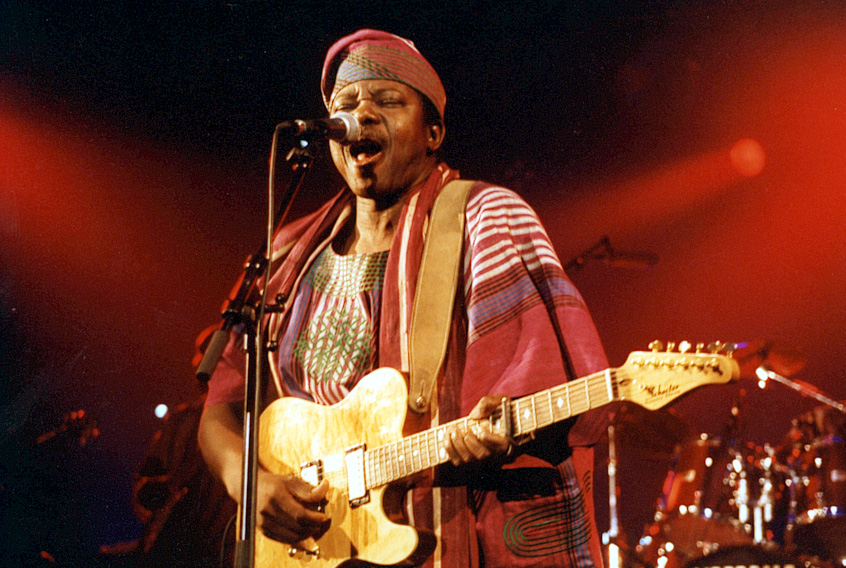
When the lights come up on a King Sunny Ade concert, the stage looks less like a band setup and more like a small village in motion. There are guitars stacked in layers, a battery of talking drums, shekeres rattling, a row of singers swaying in matching agbada, and at the centre of it all a slim, smiling man who can keep a crowd dancing from dusk until the first birds of morning. For more than six decades, that man has been the heartbeat of Nigerian juju music. To his followers he is simply KSA, “The Chairman,” and most affectionately of all, the “Minister of Enjoyment.” His full name is Sunday Adeniyi Adegeye, and the story of how a boy from Ondo grew into one of Africa’s most celebrated bandleaders is also the story of how a deeply Yoruba sound travelled the world without ever losing its soul.
Quick Facts
- Full name
- Sunday Adeniyi Adegeye (King Sunny Ade)
- Born
- 22 September 1946, Ondo, Nigeria
- Genre
- Juju music
- Known for
- Pioneering the global spread of Nigerian juju music
- Nickname
- "KSA"; "The Chairman"; "Minister of Enjoyment"
Early Life
Sunday Adeniyi Adegeye was born on 22 September 1946 in Ondo, a town in the western part of Nigeria that sits in the heart of Yorubaland. He came into a family that carried royal lineage, with roots tied to the ruling houses of the Ondo and Akure areas. In a culture where the line between music and ceremony is thin, the young Sunday grew up surrounded by sound. Talking drums announced the comings and goings of chiefs. Praise singers stretched the names of important families into long, melodic chains of proverb. Festivals, naming ceremonies and royal occasions filled his childhood with rhythm, and he listened to all of it with the kind of attention that would later define his career.
Music, however, was not the path his family had in mind for him. Like many parents of that generation, his elders saw education as the surest road to dignity and security. A boy of royal background was expected to study hard, take a respectable profession, and bring honour to the family name through scholarship rather than through the guitar. The expectation was reasonable for its time. Nigeria in the late 1950s and early 1960s was on the verge of independence, and the country needed teachers, clerks, civil servants and professionals to build the new nation. A musician’s life, by contrast, looked uncertain, even unserious, to those who valued formal achievement.
Sunday felt the pull of music too strongly to ignore it. He was drawn to the guitar and to the layered textures of the popular bands he heard on the radio and at local gatherings. The more his family pressed him toward the classroom, the more his heart leaned toward the bandstand. This quiet tension between duty and desire shaped his early years. He was not a rebellious boy by nature, but he had found the one thing that made sense to him, and he could not turn away from it.
As a young man, he made a decision that would change his life and, eventually, the course of Nigerian music. He left Ondo for Lagos, the noisy, ambitious commercial capital where dreams went to be tested. For a son of a respected family to slip away to chase a career in music was no small step. It meant leaving behind the comfort of the expected and stepping into a world with no guarantees. Lagos in the early 1960s was a city alive with highlife bands, juju groups, palm-wine guitarists and dance halls that never seemed to close. For a young musician hungry to learn, it was the right place to be, even if it was a frightening one.
Building a Career
Lagos did not hand King Sunny Ade his crown. He earned it slowly, in the way most great musicians do, by playing in other people’s bands and absorbing everything he could. Through the early and mid 1960s he worked his way through the city’s club circuit, taking jobs as a sideman and learning the discipline of performing night after night for demanding audiences. He played alongside established outfits, picking up the subtleties of arrangement, the showmanship of the stage, and the unwritten rules of how to keep a dance floor full until the early hours.
These years were his true apprenticeship. He sharpened his guitar technique, studied how bandleaders held a group together, and developed an ear for the interplay between drums, voices and strings that would later become his signature. Lagos was a competitive arena. There were many talented players, and audiences were quick to abandon a band that grew dull. Surviving that environment taught the young Adeniyi to be both inventive and dependable, qualities that would carry him for decades.
By the middle of the 1960s, he was ready to step out on his own. Around 1966 he formed his own group, known as the Green Spots. The name itself was a sly bit of branding, nodding to the dominant juju star of the era while signalling that a fresh, green talent had arrived. Leading his own band changed everything. Now the arrangements were his to shape, the repertoire his to choose, and the direction his to set. He could experiment freely, building songs around the textures he loved and testing new ideas in front of live audiences who told him, with their feet, what was working.
The Green Spots gave King Sunny Ade his first real platform. He began recording and releasing music that found favour with Lagos audiences, and his reputation grew steadily. He cultivated a warm, generous stage presence and a sound that felt both rooted and modern. Where some bandleaders ruled their groups with cold authority, he led with a smile, drawing the best out of his musicians by making them feel like partners in something joyful. That spirit of communal enjoyment became central to his brand, and in time it would earn him the title that fans still use with affection, the Minister of Enjoyment.
The Rise of His Juju Sound
To understand the importance of King Sunny Ade, one has to understand juju music itself. Juju is a Yoruba popular style that grew out of palm-wine guitar music and traditional drumming in the first half of the twentieth century. By the time KSA came to prominence, it had already become one of the defining sounds of western Nigeria, built on interlocking guitars, a foundation of percussion, and call-and-response vocals in which a lead singer trades lines with a chorus. The talking drum, that hourglass-shaped instrument whose pitch bends to imitate the tones of Yoruba speech, sits at the centre of the style, carrying messages, praises and proverbs across the rhythm.
What King Sunny Ade did was take this inheritance and expand it. He layered more guitars than his predecessors had dared, weaving bright, looping lines around one another until the music shimmered. He brought the talking drums forward, letting them converse with the guitars and the singers as full members of the conversation rather than mere timekeepers. His arrangements stretched out, allowing songs to breathe and grow over long passages, the way a good party builds its own momentum. The result was a juju sound that felt richer, more intricate and more hypnotic than what had come before, while remaining unmistakably Yoruba in its language, its proverbs and its values.
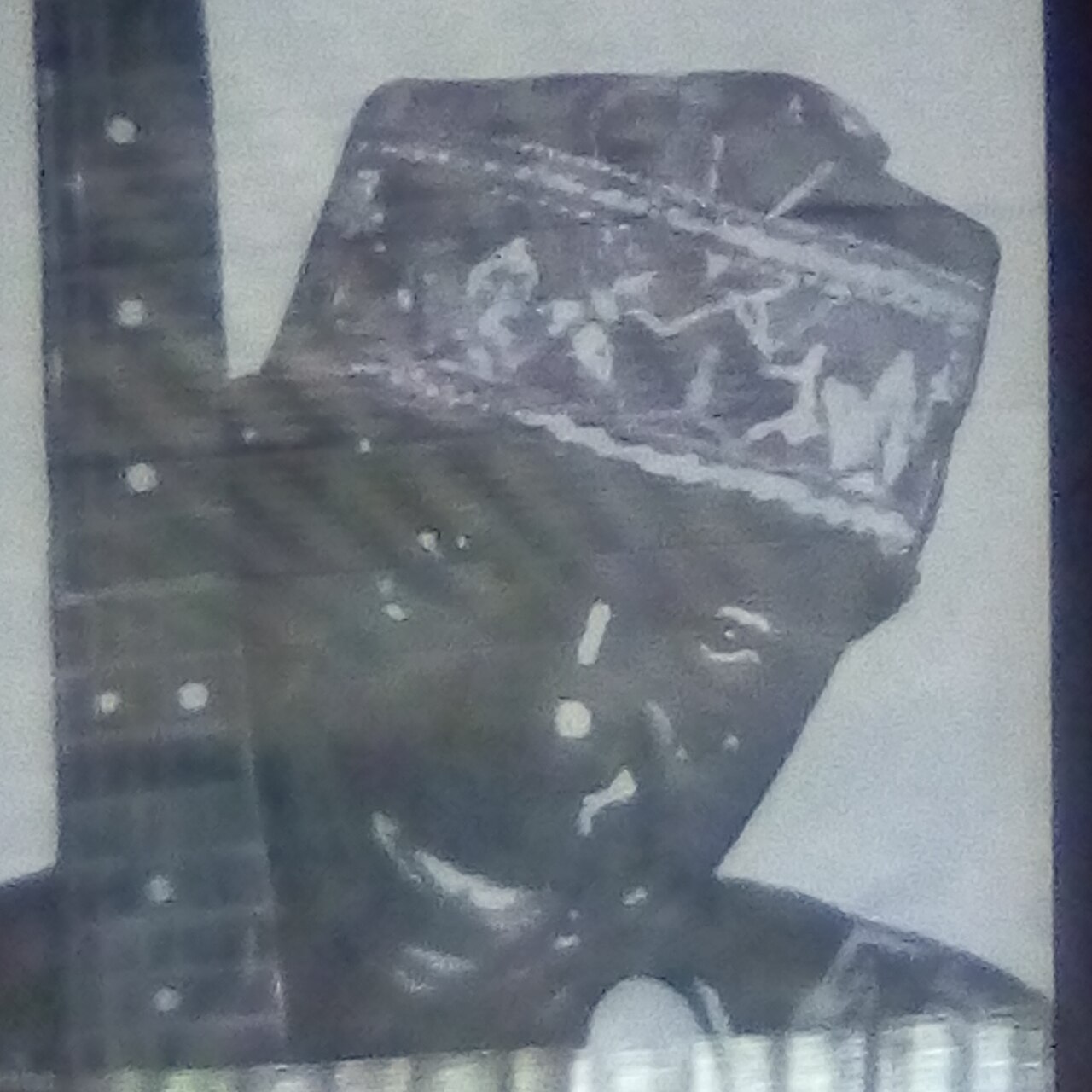
He was also a tireless recording artist. Recognising early that owning his work mattered, he established his own record label, Sunny Alade Records, which gave him control over his prolific output. Through the 1970s he released album after album, flooding the Nigerian market with music and keeping his name constantly in front of listeners. In 1974 he renamed his band the African Beats, a title that reflected both his growing ambition and the broader pan-African horizon he was beginning to imagine. The renamed group became one of the largest and most polished ensembles in the country, sometimes numbering more than a dozen musicians on stage at once.
This was the decade in which KSA established his dominance. Juju music had a fierce rival in the towering figure of Chief Ebenezer Obey, and the friendly competition between the two giants pushed both to greater heights. Fans debated their merits in barbershops and beer parlours, and the rivalry only deepened the public’s love of the genre. King Sunny Ade answered the challenge with sheer creativity and relentless productivity, releasing hit records and packing venues across Lagos and the wider south west. By the close of the 1970s he stood as one of the most important figures in Nigerian popular music, a bandleader whose every release was an event.
Going Global
The story might have ended there, as a brilliant national career, had circumstances not aligned to carry King Sunny Ade to the world. In the early 1980s, Western audiences were beginning to develop an appetite for music from beyond Europe and North America, the broad category that record companies would soon market as “world music.” Producers and label executives were searching for an African artist who could reach listeners outside the continent. The death of the Jamaican icon Bob Marley in 1981 had left a vacancy in the public imagination for a charismatic figure from the global south, and some in the industry wondered whether an African star might step into that space.
Around 1982, King Sunny Ade signed with Island Records, the influential label that had helped bring reggae to the world. The partnership produced a landmark album, simply titled Juju Music, released in 1982. Working with the French producer Martin Meissonnier, KSA presented his sound to international audiences in a form that kept its essential character while sharpening its appeal for new ears. The album was widely praised by Western critics, many of whom had never heard anything like the cascading guitars and conversational talking drums of Nigerian juju. For countless listeners abroad, Juju Music was their first encounter with the genre, and it opened a door that had long been shut.
The success of Juju Music turned King Sunny Ade into an international touring artist. He took his large band across Europe and to the United States, performing in concert halls and at festivals where audiences who could not understand a word of Yoruba nonetheless rose to dance. He followed the breakthrough with further internationally released albums, including Synchro System in 1983 and Aura in 1984, the latter featuring a guest appearance by the global star Stevie Wonder on harmonica. For a time, the music press openly discussed whether KSA might become the great African crossover star, the figure to follow Marley into worldwide stardom.
The crossover did not unfold exactly as the industry had imagined. The challenges of marketing music sung in a Nigerian language to mass Western audiences proved real, and the relationship with Island Records eventually wound down. Yet the significance of what King Sunny Ade had achieved cannot be measured by record-company expectations alone. He had carried juju music, in its full integrity, onto the world stage. He had shown that a sound born in the dance halls of Lagos could move audiences in Paris, London and New York. And he had done it without diluting his identity, a point of pride that mattered deeply to him and to the Nigerian fans who followed his journey with enormous affection.
A Prolific Icon
Few artists anywhere can match King Sunny Ade for sheer volume of work. Across his career he has released dozens upon dozens of albums, a catalogue so large that even devoted collectors struggle to track every title. This prolific output reflects both his creative energy and his early grasp of the music business. By controlling his own label, he could record and release as the spirit moved him, responding to the appetite of his audience without waiting on the permission of others.
He was also a genuine innovator within juju. Always curious about new sounds, he introduced instruments that had rarely or never appeared in the genre before. He brought the pedal steel guitar into his arrangements, its sliding, weeping tones adding a fresh colour that became one of his trademarks. He embraced synthesizers and other electronic textures as they became available, folding them into the traditional fabric of guitars and drums without overwhelming it. In his hands, juju proved itself a living, flexible form, capable of absorbing new technology while keeping its ancestral heart.
His international standing brought formal recognition as well. King Sunny Ade earned Grammy nominations for his work, becoming one of the first Nigerian musicians to be acknowledged by that body, a milestone that registered with pride across the continent. These nominations confirmed what his fans already knew, that his music belonged in any serious conversation about the great popular artists of his era.
Beyond the bandstand, KSA built himself into a businessman and an institution. He invested in ventures that extended his influence, including interests connected to nightlife, recording and the broader entertainment economy of Lagos. Just as importantly, he became a mentor and a doorway for younger Nigerian musicians. Many performers passed through his orbit, learning the discipline of professional music-making from a master who took the craft seriously. His band functioned almost as a school, and the players who came up under him carried his standards into their own careers. In this way his influence spread far beyond his own recordings.
Honours and Later Years
As the decades passed, King Sunny Ade moved from being a star to being an elder statesman of Nigerian and African music. Honours accumulated. He received national recognition in Nigeria, including a national honour that placed him among the country’s most distinguished citizens, and he was celebrated repeatedly within the entertainment industry with lifetime achievement awards and tributes. Universities and cultural institutions acknowledged his contribution to the arts, and his name became a byword for excellence and longevity in Nigerian music.
He also turned increasingly toward giving back. Through the King Sunny Ade Foundation, he channelled support into causes connected to the welfare of musicians and to the development of the arts in Nigeria. Having seen how precarious the lives of performers could be, he used his standing to advocate for the dignity and protection of those who make music for a living. His philanthropy reflected the communal spirit that had always run through his work, the sense that enjoyment is something shared rather than hoarded.
Through it all, he never stopped performing. While many artists of his generation faded from the stage, King Sunny Ade continued to lead his band before live audiences, delivering the marathon shows for which he had always been famous. Crowds of every generation still gather to watch the Chairman work, and the sight of him, decades into his career, coaxing a room into joyful motion remains one of the enduring pleasures of Nigerian cultural life. His endurance is itself a kind of statement, a reminder that the music he champions is built for celebration and for the long haul.
“I’m an entertainer. As long as I’m on the stage, I want everybody to be happy, to forget their problems and enjoy themselves.”
That philosophy, expressed plainly in his own words, has guided King Sunny Ade for his entire life. He has never seen himself as above his audience, only as their servant in joy, the minister whose portfolio is enjoyment itself.
Legacy
The legacy of King Sunny Ade rests on more than his hit records, vast as that catalogue is. He took a deeply local Yoruba art form and proved that it could stand proudly on the world stage without bending itself out of shape. In doing so, he expanded the imagination of an entire generation of African musicians, showing them that the path to international recognition did not require abandoning their roots. The Afrobeats stars who now fill arenas around the globe stand, in part, on a road that pioneers like KSA helped to build.
Within Nigeria, his influence is woven into the fabric of the music itself. The intricate guitar arrangements, the conversational talking drums, the long, hypnotic grooves that define modern juju all bear his fingerprints. He raised the technical and artistic standards of the genre and inspired countless players to take it seriously as a craft. His rivalry with Ebenezer Obey gave the music a golden age, and his solo achievements gave it a global ambassador.
Perhaps his greatest legacy, though, is the spirit he embodied. The Minister of Enjoyment understood that music, at its best, is a gift of happiness offered to a community. He carried that conviction from the courts and festivals of Ondo to the great concert halls of the world, and he has never let go of it. For the Nigerian audiences who have danced to his music across the decades, King Sunny Ade is not only a legend to be admired but a friend who has filled their nights with light. That is a legacy no chart position could ever measure.
Key Facts
- King Sunny Ade was born Sunday Adeniyi Adegeye on 22 September 1946 in Ondo, into a family of Yoruba royal lineage.
- He formed his first band, the Green Spots, around 1966 in Lagos, later renaming it the African Beats in 1974 and founding his own label, Sunny Alade Records.
- His 1982 album Juju Music, released on Island Records and produced by Martin Meissonnier, introduced Nigerian juju to international audiences as world music was emerging.
- He pioneered the use of the pedal steel guitar and synthesizers within juju and earned Grammy nominations, among the first for a Nigerian artist.
- Known as KSA, “The Chairman” and the “Minister of Enjoyment,” he became an elder statesman of African music, a philanthropist through the King Sunny Ade Foundation, and a mentor to generations of Nigerian musicians.