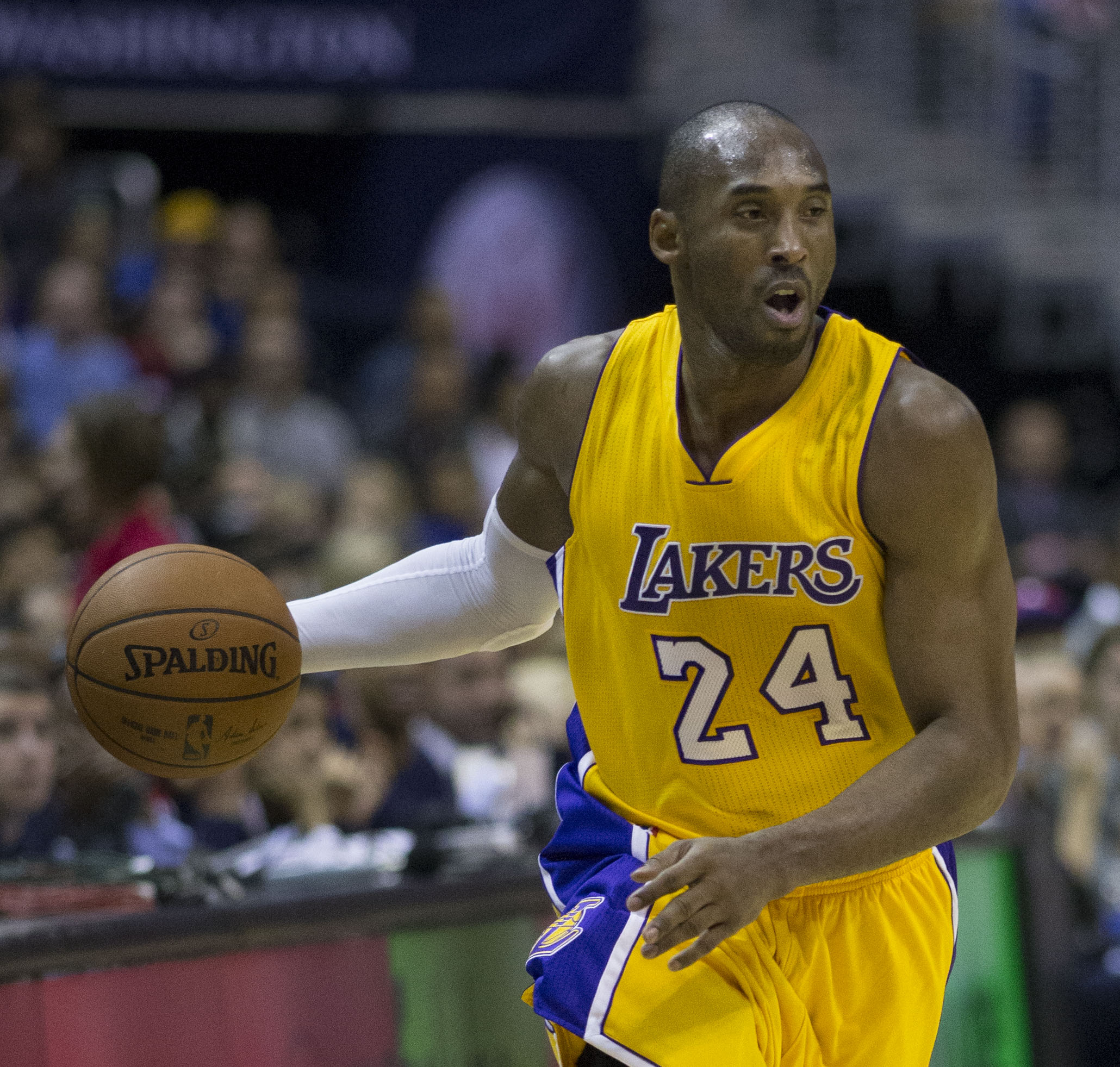
There is a particular kind of greatness that does not arrive by accident. It is built in empty gyms before sunrise, refined through thousands of repetitions nobody sees, and forged by a refusal to accept anything less than mastery. Kobe Bryant embodied that kind of greatness more completely than almost any athlete of his generation. For twenty seasons he wore the purple and gold of the Los Angeles Lakers, and across those two decades he chased perfection with an intensity that frightened opponents, inspired teammates, and eventually reshaped how an entire generation of athletes thought about work. He was a five-time champion, a scoring phenomenon, and the architect of a personal philosophy he called the Mamba Mentality. When he died in January 2020 at the age of 41, the world mourned not only a basketball player but an idea: that obsession, properly channeled, could become a form of art.
Quick Facts
- Full name
- Kobe Bean Bryant
- Born
- 23 August 1978, Philadelphia, Pennsylvania, USA
- Died
- 26 January 2020, Calabasas, California (aged 41)
- Sport
- Basketball
- Known for
- 5-time NBA champion; 18-time All-Star; the Mamba Mentality
Early Life and Background
Kobe Bean Bryant was born on 23 August 1978 in Philadelphia, Pennsylvania, into a household where basketball was not a hobby but a livelihood. His father, Joe Bryant, was a professional player whose nickname, “Jellybean,” captured a smooth, free-flowing style that the league of the 1970s did not always know what to do with. Joe spent eight seasons in the NBA with the Philadelphia 76ers, the San Diego Clippers, and the Houston Rockets before taking his career overseas. Kobe’s mother, Pam, came from an athletic family as well; her brother, John Cox, had also played professional basketball. The name Kobe itself came from a type of beef his parents had spotted on a restaurant menu, a small detail that would later become part of his legend.
When Kobe was six years old, the family relocated to Italy, where Joe extended his playing career in the Italian professional leagues. From 1984 to 1991 the Bryants lived in cities including Rieti, Reggio Calabria, Pistoia, and Reggio Emilia. For young Kobe, those years were formative in ways that went far beyond basketball. He became fluent in Italian, absorbed the culture of a country obsessed with football (the soccer kind), and developed a lifelong love of the game and of AC Milan. He grew up watching his father play professionally, studying the rhythms of the sport from the stands and on the practice floor. While other American children learned the game on neighborhood courts, Kobe learned it inside professional gymnasiums, surrounded by grown men who made their living from the ball.
The family returned to the United States in 1991, settling back in the Philadelphia area. Kobe enrolled at Lower Merion High School in suburban Ardmore, and it was there that the wider world first began to understand what he was. He was not merely a good high school player; he was a generational talent who treated practice with professional seriousness. Over his varsity career he became the all-time leading scorer in the history of Southeastern Pennsylvania, surpassing legends including Wilt Chamberlain. As a senior he led Lower Merion to a state championship, was named Naismith High School Player of the Year, and earned recognition as the Gatorade National Player of the Year. He also famously took the singer Brandy to his senior prom, a moment that signaled how quickly his fame was outgrowing the boundaries of his school. By then he had made a decision that would have seemed reckless from anyone with less self-belief: he would skip college entirely and enter the NBA directly from high school.
Leap to the NBA
In the 1996 NBA Draft, the Charlotte Hornets selected Kobe Bryant with the thirteenth overall pick. He never played a minute for Charlotte. In a move orchestrated in part by Lakers executive Jerry West, who had seen something extraordinary in the teenager during a pre-draft workout, Bryant was traded to the Los Angeles Lakers in exchange for center Vlade Divac. West was so convinced of Bryant’s potential that he reportedly compared the young guard’s workout to the best he had ever witnessed. The deal sent a 17-year-old to Hollywood, into a franchise with a storied history and enormous expectations.
When the 1996 to 1997 season began, Kobe Bryant became, at the time, the youngest player to appear in an NBA game. His early career was not a coronation. He came off the bench, learning the professional game in real time, occasionally dazzling and occasionally faltering. One of the most cited moments of his rookie season came in the playoffs against the Utah Jazz, when a young and fearless Bryant launched several air balls in the closing moments of a crucial game. Many teenagers would have been crushed. Bryant treated it as fuel. He went back to the gym and resolved that he would never again be unprepared for a moment that large.
He shared the floor and the spotlight with Shaquille O’Neal, the dominant center the Lakers had signed as a free agent that same summer. The pairing of the most physically overpowering big man in the league with the most relentlessly ambitious young guard in the league would, in time, become one of the most successful and most combustible duos the sport had ever seen. In those first seasons, though, Bryant was still learning. He won the Slam Dunk Contest in 1997, made his first All-Star appearance in 1998, and steadily expanded his role until he was no longer a prodigy waiting his turn but a star demanding the ball in the biggest moments.
The Shaq and Kobe Dynasty
Everything changed when Phil Jackson arrived as head coach in 1999. Jackson, who had guided Michael Jordan and the Chicago Bulls to six championships, brought with him the triangle offense, a system that rewarded spacing, ball movement, and reading the defense rather than rigid set plays. Under Jackson’s guidance, the immense talents of O’Neal and Bryant were finally organized into a coherent, dominant whole.
The result was one of the great runs in modern NBA history. The Lakers won three consecutive championships, in 2000, 2001, and 2002. O’Neal was the unstoppable interior force, a player so large and skilled that defenses had no answer, while Bryant grew into a perimeter scorer and closer of extraordinary range and creativity. The 2001 postseason was particularly devastating: the Lakers tore through the playoffs with a near-perfect record, looking less like a basketball team than a force of nature. In 2002 they completed the three-peat, cementing their place among the dynasties of the sport.
Yet beneath the trophies ran a current of tension. Bryant and O’Neal were temperamental opposites. O’Neal’s genius came easily and was paired with a relaxed approach to conditioning and preparation. Bryant’s came from obsessive, joyless-seeming labor, and he believed the team’s ceiling was being lowered by his teammate’s habits. Their relationship soured into open friction, fueled by competing egos, disputes over who was the true leader of the team, and a clash of two men who each wanted to be the defining figure of the franchise. The partnership that had won three titles was, by the middle of the decade, no longer sustainable. Something had to give.
The Solo Era and 81 Points
In the summer of 2004, the Lakers made their choice. Shaquille O’Neal was traded to the Miami Heat, and the franchise committed its future to Kobe Bryant, who signed a new long-term contract to stay in Los Angeles. For the first time, the team was unambiguously his. The early results were difficult. The roster around him was thin, and the Lakers struggled to recapture their championship form. Critics questioned whether Bryant could carry a team alone, whether his competitiveness curdled into selfishness, and whether the franchise had bet on the wrong superstar.
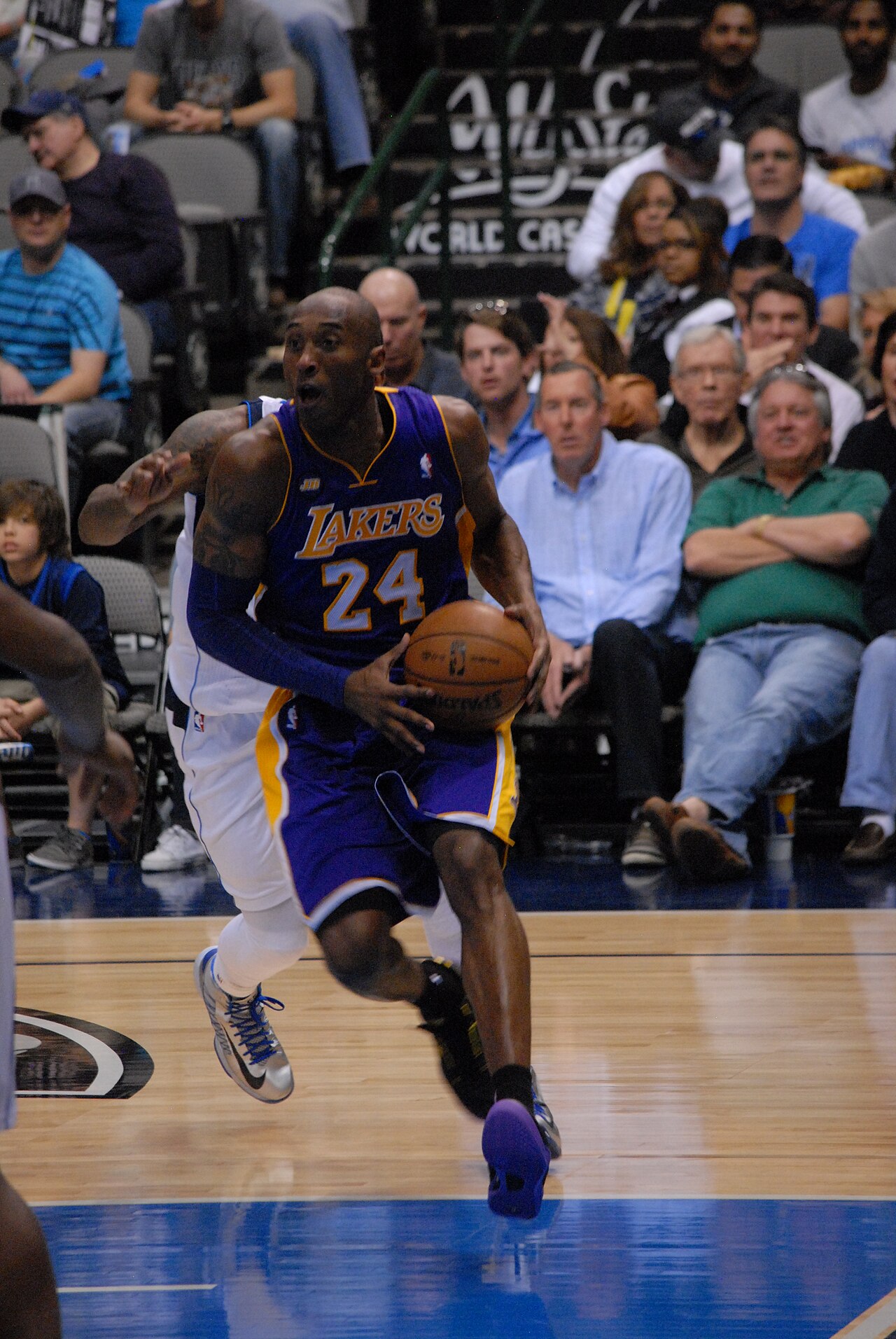
Bryant answered with one of the most astonishing individual performances the sport has ever produced. On 22 January 2006, against the Toronto Raptors at the Staples Center, he scored 81 points in a single game. The Lakers had trailed by as many as 18 points, and Bryant simply refused to let his team lose, pouring in basket after basket from every angle and distance. The total stands as the second-highest single-game point total in NBA history, behind only Wilt Chamberlain’s 100-point game in 1962. It was not just the volume but the inevitability of it, the sense that on that night no defense on earth could have stopped him.
The 81-point game was the centerpiece of a stretch of pure scoring brilliance. Bryant won the NBA scoring title in both 2006 and 2007, leading the league in points per game in consecutive seasons. He averaged more than 35 points per game across the 2005 to 2006 campaign. These were the years that defined Bryant the scorer, the era in which he most resembled an artist working alone, producing nightly displays of skill that left even his rivals shaking their heads. The team success had not yet returned, but the individual greatness was undeniable, and it set the stage for the redemption that followed.
Redemption and Back-to-Back Titles
The narrative of the solo years was that Bryant could score but could not win. He set out to demolish that narrative completely. The Lakers rebuilt around him, most significantly through the acquisition of skilled big man Pau Gasol in early 2008, a move that gave Bryant the championship-caliber partner he needed. That season, Bryant was named the NBA Most Valuable Player for the only time in his career, a recognition that his individual excellence had finally been married to team success. The Lakers reached the Finals in 2008 but fell to the Boston Celtics, a defeat that stung deeply and that Bryant carried with him as motivation.
That summer brought another defining chapter. Bryant joined the United States national team for the 2008 Beijing Olympics, a squad assembled to restore American dominance after disappointing international results earlier in the decade. The team, nicknamed the “Redeem Team,” delivered exactly what its name promised, winning the gold medal with Bryant taking on a leadership and defensive role that quieted any doubts about his commitment to the collective. He would win a second Olympic gold medal four years later at the 2012 London Games.
Then came the titles that completed his legacy. In 2009 the Lakers won the NBA championship, defeating the Orlando Magic in the Finals, and Bryant was named Finals MVP. In 2010 they won again, this time in a grueling seven-game series against the same Boston Celtics who had beaten them two years earlier. Bryant struggled with his shot in the deciding game but willed his team to victory through sheer determination and by dominating the offensive glass, and he was again named Finals MVP. It was his fifth championship and the second back-to-back run of his career. He had proven, beyond any argument, that he could lead a team to the summit as its unquestioned centerpiece.
The Mamba Mentality
Somewhere along the way, Kobe Bryant gave himself a nickname. Inspired by the deadly black mamba snake, known for its speed and precision, he began calling himself the “Black Mamba,” and he used the alter ego as a way to separate the relentless competitor on the court from the person off it. From that nickname grew a philosophy, one that Bryant would spend the rest of his life articulating and that countless athletes would adopt as their own: the Mamba Mentality.
“The most important thing is to try and inspire people so that they can be great in whatever they want to do.”
At its core, the Mamba Mentality was about a singular, total commitment to improvement. It meant being obsessed with the smallest details of the craft. It meant treating practice as more important than games. Bryant was famous for his pre-dawn workouts, arriving at the gym at four in the morning to put up shots while the rest of the world slept. He studied film obsessively, learned from older legends, and dissected the moves of every great scorer who had come before him. He once explained that his early starts gave him a cumulative advantage, that the gap between himself and his competitors would widen with every passing year because he simply outworked them.
This relentlessness was not always comfortable to be around. Teammates spoke of his ferocious standards, his willingness to challenge anyone who he felt was not giving everything. But it also made him a magnet for younger players who wanted to learn how greatness was actually built. He mentored a generation, from NBA stars to athletes in entirely different sports, all of whom absorbed the lesson that talent without obsessive work was a wasted gift. The Mamba Mentality outgrew basketball and became a kind of cultural shorthand for elite dedication, a phrase invoked by entrepreneurs, artists, and competitors of every kind.
Final Years and Retirement
The later chapters of Bryant’s playing career were marked by injury and by the slow, painful negotiation between an aging body and an undimmed will. In April 2013, late in the season, he ruptured the Achilles tendon in his left leg. In a moment that became legendary, the badly injured Bryant calmly walked back to the free throw line and sank both free throws before leaving the court. The injury required surgery and a long recovery, and it robbed him of much of his explosiveness. Further injuries to his knee and shoulder in the following seasons limited him to a fraction of the player he had once been.
Rather than fade quietly, Bryant chose to control his own farewell. He announced that the 2015 to 2016 season would be his last, and the league turned the year into an extended tribute, with opposing arenas honoring him at every stop. The Lakers were not a good team that season, and Bryant’s body could no longer answer his demands on most nights, but the final game produced one last act of magic. On 13 April 2016, against the Utah Jazz at the Staples Center, Bryant scored 60 points in the closing performance of his career, taking 50 shots and rallying the Lakers to a comeback win. At 37 years old, in the last game he would ever play, he had summoned one more night of pure Mamba scoring. He retired having played all twenty of his NBA seasons with a single franchise, the Los Angeles Lakers, a rare and remarkable kind of loyalty in the modern era.
Life After Basketball
If many great athletes drift after retirement, struggling to find a purpose to match the intensity of their playing years, Bryant did the opposite. He applied the same Mamba Mentality to an entirely new set of pursuits and excelled at them with startling speed. He had written a poem, “Dear Basketball,” as a love letter to the game he was leaving, and he turned it into an animated short film. In 2018 that film won the Academy Award for Best Animated Short Film, making Bryant an Oscar winner, an achievement no other major basketball star had matched. He also won a Sports Emmy for the project. He embraced storytelling and creative production through his company, Granity Studios, producing books and content aimed at young athletes.
He founded the Mamba Sports Academy, a training facility designed to develop young athletes and to pass on the philosophy that had defined his career. Most meaningfully, he poured himself into coaching the youth basketball team of his second daughter, Gianna, known as Gigi, who shared his love of the game and his competitive fire. Bryant spoke often and proudly of Gianna’s ambition to play in the WNBA and of his joy in teaching her the nuances of the sport he had mastered. He became a familiar and beloved presence at games, courtside with Gianna, breaking down plays with the same analytical mind that had made him a champion.
Off the court he built a serious business career as well, including venture investments through a fund he co-founded, alongside other entrepreneurial ventures. At the center of his life was his family. He had married Vanessa Laine in 2001, and together they raised four daughters: Natalia, Gianna, Bianka, and Capri. In his post-basketball years he often described himself first and foremost as a “girl dad,” a phrase that would take on enormous emotional weight in the months to come. For the first time, the man who had spent his life in relentless pursuit of basketball perfection seemed to have found a fuller kind of contentment.
The Tragedy and Legacy
On the morning of 26 January 2020, Kobe Bryant, his daughter Gianna, and seven other people boarded a helicopter in Southern California, bound for a youth basketball tournament at the Mamba Sports Academy. In heavy fog over the hills of Calabasas, the helicopter crashed, killing all nine people aboard. Among the dead were Gianna, who was 13, and several members of the basketball community traveling to the same game. Bryant was 41 years old.
The news stopped the world in its tracks. Tributes poured in from across sports, entertainment, and politics, from heads of state to schoolchildren. Murals appeared on walls in cities around the globe. NBA games were played through tears, with teams taking deliberate eight-second and twenty-four-second violations to honor the two jersey numbers Bryant had worn. Vigils gathered outside the Staples Center, the building where so much of his career had unfolded, transforming the plaza into a sea of flowers, candles, and jerseys. The grief was so widespread and so intense precisely because Bryant had meant different things to so many people: a hometown hero, a global ambassador for the sport, a symbol of relentless effort, and, in his final years, a devoted father.
His honors continued to accumulate after his death. In 2020 he was elected to the Naismith Memorial Basketball Hall of Fame, with Vanessa delivering a moving speech on his behalf at the enshrinement. The Lakers had already retired both of his jersey numbers, 8 and 24, an extraordinary distinction reflecting the two distinct eras of his career: the explosive young player who wore number 8 and the more complete, cerebral champion who wore number 24. He remains the only player in franchise history to have two numbers retired in his honor. A statue of Bryant was later erected outside the arena, ensuring that visitors for generations would encounter the Black Mamba in bronze.
The Mamba legacy endures most powerfully not in statues or records but in the way people work. The phrase Mamba Mentality lives on in locker rooms, in classrooms, in gyms, and in the private resolutions of people who never met him but absorbed his core belief: that greatness is not given, it is earned through obsessive, unglamorous, daily effort. Through the Mamba and Mambacita Sports Foundation, established in honor of Kobe and Gianna, his family has carried forward his commitment to young athletes, especially girls in sport. Kobe Bryant built a life around the idea that there is no shortcut to excellence, and in his absence that idea has only grown louder.
Key Facts
- He scored 33,643 career points, ranking among the highest scoring totals in NBA history at the time of his retirement.
- He won five NBA championships with the Los Angeles Lakers (2000, 2001, 2002, 2009, and 2010), earning Finals MVP honors in both 2009 and 2010.
- His 81-point game against the Toronto Raptors on 22 January 2006 is the second-highest single-game scoring total in NBA history.
- He was an 18-time NBA All-Star and the 2008 league Most Valuable Player, and he won Olympic gold medals in 2008 and 2012.
- He is the only Lakers player to have two jersey numbers retired, both 8 and 24, and he was elected to the Naismith Memorial Basketball Hall of Fame in 2020.