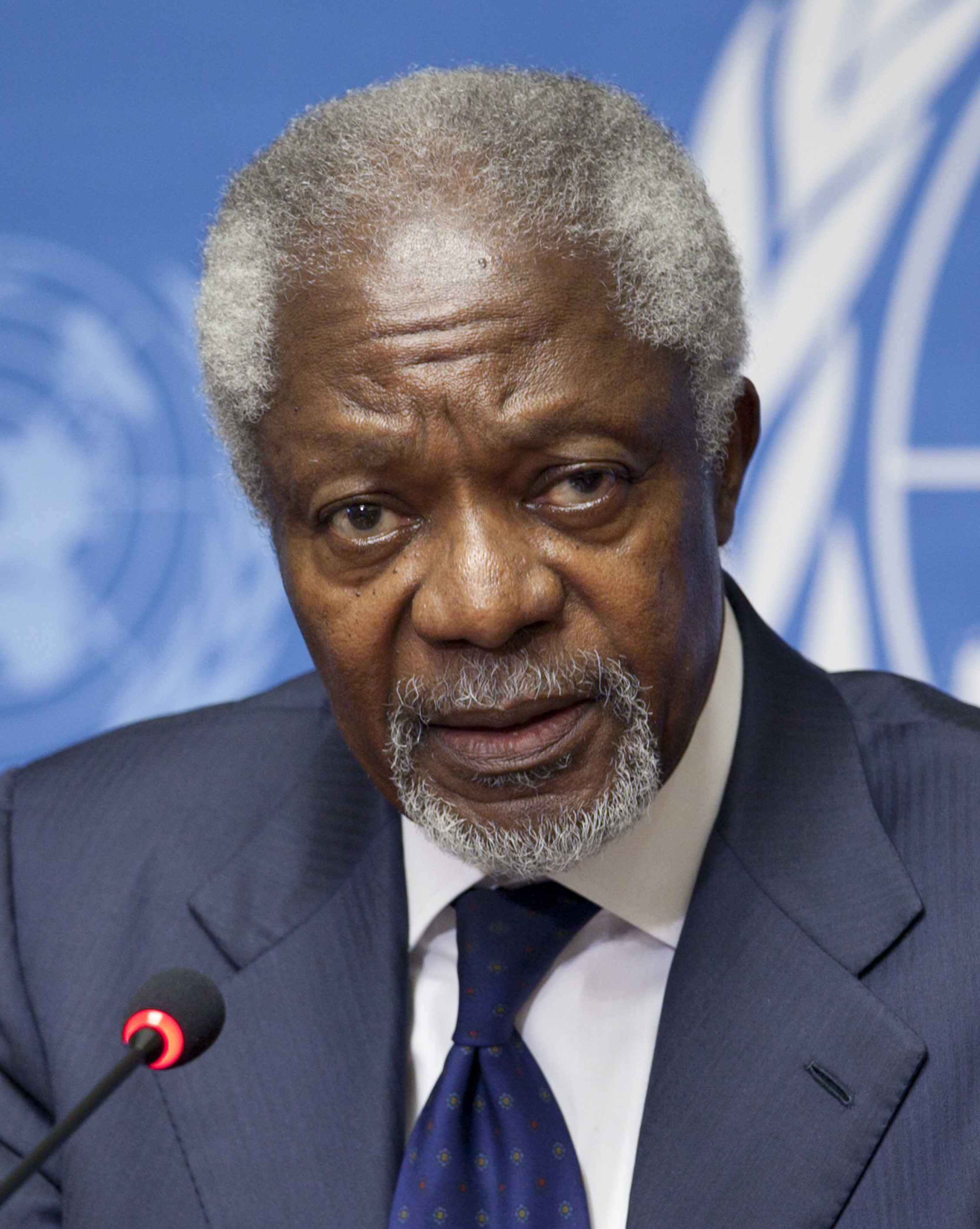
In September 2000, the largest gathering of heads of state in human history assembled at the United Nations headquarters in New York for the Millennium Summit. One hundred and forty-seven world leaders sat in the General Assembly hall, debating how to address the challenges of a new century: poverty, disease, conflict, and the governance of a globalised world that had moved far beyond the capacities of any single nation to manage alone. The convener of this gathering, the person who had persuaded nearly every government on earth to send its senior leadership to a single meeting, was a soft-spoken Ghanaian diplomat who had spent his entire career within the UN system and had risen to lead it by a combination of exceptional ability, personal grace, and a talent for finding common ground that his admirers described as near-miraculous and his critics occasionally found infuriating in its insistence on consensus. His name was Kofi Atta Annan, and the Millennium Summit produced the Millennium Development Goals, a set of specific, measurable targets for reducing poverty, disease, and inequality by 2015 that became the most ambitious collective commitment to human welfare that the international community had ever made.
Quick Facts
- Full name
- Kofi Atta Annan
- Born
- 8 April 1938, Kumasi, Gold Coast (now Ghana)
- Died
- 18 August 2018, Bern, Switzerland (aged 80)
- Known for
- Seventh Secretary-General of the United Nations (1997 to 2006); Nobel Peace Prize laureate (2001)
- Key achievement
- Led the United Nations through some of its most consequential and contested years, establishing the doctrine of the Responsibility to Protect, launching the Millennium Development Goals, and building a new framework for international engagement with HIV/AIDS
Kumasi and the Gold Coast: A Colonial Childhood Between Two Worlds
Kofi Atta Annan was born on 8 April 1938 in Kumasi, the second city of the Gold Coast, the British colonial territory that would become Ghana in 1957. The name Atta means “twin” in the Akan language; Kofi was born a twin, with a sister, Efua Atta, who would remain one of the closest people in his life until her death. The twin relationship in Akan culture carries particular spiritual and social significance, and the name given at birth was an indication of the community’s understanding of who this child was within a framework of meaning that preceded and survived the colonial education system.
His family was distinguished. His father, Henry Reginald Annan, came from an aristocratic Fante family and served as governor of the Asante region under British colonial administration; his maternal grandfather, Atta Ofori Atta, and a paternal uncle were both paramount chiefs. The family occupied a specific position in Gold Coast colonial society: educated, respected, operating within the colonial system while maintaining deep roots in Akan cultural and social life. This in-between position, neither fully part of the colonial world nor standing entirely outside it, would prove a formative apprenticeship for a man who would spend his career navigating between the demands of different worlds, different powers, and different definitions of legitimacy.
He was educated at Mfantsipim School in Cape Coast, one of the Gold Coast’s most prestigious secondary schools, founded in 1876 by Wesleyan missionaries and long regarded as one of the finest educational institutions in West Africa. Mfantsipim educated a generation of Ghanaian leaders, and its particular culture of intellectual rigour, civic responsibility, and competitive excellence shaped its students in ways that they carried through their lives. Annan was a studious and serious student, but also remembered as warm and well-liked, with a gift for bringing people together rather than dividing them.
The Gold Coast of his childhood was living through the most consequential period of its modern history. Kwame Nkrumah had returned from his studies in the United States and Britain in 1947 and was building the mass political movement that would achieve independence in March 1957. Annan was nineteen when the Union Jack came down in Accra and Ghana became the first sub-Saharan African nation to achieve independence from colonial rule. The moment was electrifying for the entire continent, and for the generation of educated young Africans who experienced it: a proof of possibility, a demonstration that African people could govern their own affairs, and a challenge to build something worthy of the sacrifice that independence had required.
Geneva, Massachusetts, and the Education of an Internationalist
In 1958, Annan won a Ford Foundation scholarship and enrolled at the Macalester College in St Paul, Minnesota, to study economics. He completed his degree in 1961 and then took a position with the World Health Organisation in Geneva, his first job within the UN system and the beginning of a career path that he would follow for thirty-five years before reaching its pinnacle.
He returned to graduate school in the mid-1960s, completing a Master of Science degree in management at the Massachusetts Institute of Technology’s Sloan School of Management in 1972, a qualification that gave him an analytical toolkit for the administrative challenges of large organisations that complemented the diplomatic and political skills he was developing in his UN work. The combination of practical management training with deep experience of multilateral institutions would later prove distinctive in a leadership role that required both the political instincts of a diplomat and the organisational discipline of a senior executive.
His graduate work at MIT overlapped with a period of ferment in American society: the civil rights movement was at its height, the anti-Vietnam War movement was building, and the institutions of American liberalism were under pressure from multiple directions simultaneously. Annan observed all of this with the attentiveness of an outsider who was trying to understand the world’s most powerful country and who had his own experiences of racial hierarchy from the colonial Gold Coast to inform his reading of American racial politics.
He returned to the United Nations after MIT and worked in a series of increasingly senior administrative positions: with the UN Economic Commission for Africa in Addis Ababa, with the United Nations Emergency Force in Ismailia during the early 1970s Arab-Israeli tensions, with the Office of Personnel Services in Geneva, and eventually in New York as the head of the UN’s personnel department and then as the chief financial officer overseeing the organisation’s budget. These were not glamorous postings. They were the unglamorous work of keeping a large and complicated bureaucratic organisation functional, and Annan did them with exceptional competence and with the personal quality that his colleagues consistently remarked on throughout his career: he listened genuinely, he remembered what people had told him, and he created in every interaction the sense that the person speaking to him was being taken seriously.
The Peacekeeping Crisis and the Road to Secretary-General
In 1990, Annan was appointed head of the UN’s Department of Peacekeeping Operations, a position he would hold through the most difficult years in the history of UN peacekeeping. The end of the Cold War had created a demand for UN peacekeeping operations that the institution was entirely unprepared to meet: by 1995, the UN had more troops deployed in peacekeeping operations than at any previous point in its history, and it was failing catastrophically in two of the most important of them.
In Somalia, the UN operation that followed the US-led intervention had descended into conflict with one of the country’s dominant militias, culminating in the battle of Mogadishu in October 1993 in which eighteen American soldiers and hundreds of Somalis were killed, and the subsequent American withdrawal that left the UN operation in Somalia without its most capable military component.
In Bosnia, the UN Protection Force was deployed under rules of engagement that allowed it to protect civilian populations but not to use force to stop the forces that were attacking them, a fundamental contradiction that produced a series of humiliations, including the failure to prevent the shelling of Sarajevo’s markets, and then the catastrophe of Srebrenica in July 1995, where more than 8,000 Bosnian Muslim men and boys were executed by Bosnian Serb forces while Dutch UN peacekeepers watched without intervening.
In Rwanda, the UN mission under the Canadian General Romeo Dallaire was present as the genocide against the Tutsi began in April 1994. Dallaire sent urgent messages to UN headquarters in New York warning that mass killings were imminent and requesting authorisation to take action to prevent them. Those messages arrived in Annan’s department. The authorisation was not given. In the hundred days that followed, between 500,000 and 800,000 people were killed, the fastest mass murder in modern history.
These failures are part of Annan’s record, and he acknowledged them directly and without evasion in his memoir “Interventions,” published in 2012. The Rwanda genocide in particular haunted him throughout the rest of his career; he returned to it repeatedly in speeches and interviews, and the doctrine of the Responsibility to Protect, which he championed as Secretary-General and which was adopted by the UN General Assembly in 2005, was in important measure his attempt to ensure that the international community would never again be able to claim that the principle of national sovereignty prevented it from acting to stop mass atrocities.
He was not personally responsible for the decisions that led to the Rwanda failure; those decisions were made at levels above him and reflected the unwillingness of the Security Council’s permanent members, particularly the United States after Somalia, to authorise the kind of robust intervention that might have made a difference. But he was in the chain of command, and he understood that the structural failures of the UN’s response to these crises were also his responsibility to address if he reached a position from which he could do so.
He was appointed the UN’s seventh Secretary-General in December 1996, taking office on 1 January 1997. He was the first Secretary-General to be chosen from within the UN’s professional staff, the first sub-Saharan African to hold the position, and the first to bring to it a full career of UN experience from the working level up.
Secretary-General: The Reformer and the Diplomat
Annan’s two terms as Secretary-General, from January 1997 to December 2006, were a period of remarkable ambition and significant achievement alongside painful failures. He came to the position with a clear agenda: to reform the UN’s bureaucratic culture, to make it more responsive and accountable, to expand its commitment to human rights and humanitarian intervention, and to engage the private sector and civil society in the work that governments alone were unable to do.
The Millennium Summit and the Millennium Development Goals represented the high point of his ability to mobilise global political will around a common agenda. The MDGs, eight specific goals with measurable targets to be achieved by 2015, covering poverty, education, child mortality, maternal health, disease, environmental sustainability, and international development partnership, gave governments, international organisations, and civil society groups a common framework for action that proved genuinely influential in shaping both policy and resource allocation over the following fifteen years.
He also launched the Global Compact in 2000, an initiative that invited corporations to commit to a set of principles on human rights, labour standards, environmental responsibility, and anti-corruption, in exchange for the legitimacy and goodwill that UN association provided. The Global Compact was criticised by some as giving corporations a positive image without requiring binding commitments, a criticism with genuine substance, but it also represented a realistic engagement with the reality that multinational corporations were among the most powerful actors in the global economy and could not be excluded from the conversation about sustainable development.
His response to the HIV/AIDS pandemic was one of his most consequential contributions. In 2001, he made HIV/AIDS the subject of a special session of the UN General Assembly (the first such session devoted to a health issue in the organisation’s history), helped establish the Global Fund to Fight AIDS, Tuberculosis and Malaria, and consistently framed the pandemic as a development and security crisis, not merely a public health problem, thereby mobilising political attention and financial resources at a scale that a purely medical framing would not have achieved.
“More than ever before in human history, we share a common destiny. We can master it only if we face it together.”
The remark, from his Nobel Peace Prize lecture delivered on 10 December 2001 in Oslo, encapsulated the conviction that had guided his career: that the challenges facing humanity in the twenty-first century, whether poverty, disease, climate change, or mass atrocity, could not be addressed by individual nations acting alone, and that the institutions of multilateral cooperation, however imperfect, were the only framework available for the collective action that the scale of these challenges required.
The Iraq War and Its Aftermath
The most painful chapter of Annan’s tenure as Secretary-General was the American-led invasion of Iraq in March 2003. He had spent the preceding months working to prevent the invasion through a combination of vigorous UN weapons inspection under Hans Blix and a political effort to build sufficient consensus in the Security Council to constrain American action. He failed. The United States and the United Kingdom invaded Iraq without Security Council authorisation, declaring themselves authorised by earlier resolutions and by the claims of their intelligence services about Iraqi weapons of mass destruction.
Annan stated publicly in September 2004, in an interview with the BBC, that the invasion of Iraq was illegal under international law. It was an unusually direct statement from a diplomat who generally preferred patient dialogue to public confrontation, and it reflected the depth of his conviction that the UN’s authority and the framework of international law that it embodied were not abstract niceties but the essential infrastructure of a world in which the use of force was governed by something other than the unilateral decisions of the most powerful states.
The Oil-for-Food scandal, which emerged in 2004 and 2005, involved allegations that the UN humanitarian programme in Iraq had been corrupted by kickbacks paid to a number of officials and individuals, including the organisation’s own procurement officials. The scandal was investigated by an independent inquiry led by Paul Volcker, and Annan was personally embarrassed by the finding that his son Kojo had benefited from contracts with a company doing business with the programme, though the inquiry found no evidence that Annan himself had acted improperly. The scandal damaged the UN’s reputation and provided ammunition to those in the United States Congress and elsewhere who had long sought to undermine the organisation’s authority and credibility.
After the UN: Elder Statesman and Last Efforts
Annan left the Secretary-Generalship at the end of 2006 and did not retreat into comfortable retirement. He took on a series of roles that reflected his genuine commitment to the issues he had worked on throughout his career: as head of the Alliance for a Green Revolution in Africa, working to improve African agricultural productivity; as chair of the Elders, the group of retired global leaders founded by Nelson Mandela; and most dramatically, as the joint UN-Arab League special envoy to Syria in 2012, attempting to broker a ceasefire in the Syrian civil war.
The Syria mission was the most publicly visible of his post-UN engagements and the most painful. He developed a six-point peace plan that all the parties nominally accepted and none genuinely implemented, and he resigned from the mediation in August 2012, stating publicly that he could not succeed without the unified support of the international community, which the divisions in the Security Council between Russia and China on one side and the Western powers on the other made impossible to achieve. It was a dignified exit from an impossible position.
He continued to write, speak, and engage with the major policy debates of his time. He was working on a memoir and continuing his public engagement when he became ill in August 2018. He died in Bern, Switzerland, on 18 August 2018. He was eighty years old. The tributes came from across the world, from leaders of every political tradition and every region, and they shared a quality that is not common in assessments of powerful figures: they described a person who was not only accomplished but genuinely good.
Legacy
Kofi Annan’s legacy must be assessed across several dimensions that do not all point in the same direction. As an institution-builder and a diplomat, he was among the finest of his generation. The Millennium Development Goals, the Responsibility to Protect doctrine, the Global Fund for AIDS, the Global Compact, and the reform of UN peacekeeping doctrine (even if that reform came too late for the civilians of Somalia, Rwanda, and Srebrenica) all represent lasting contributions to the architecture of international cooperation.
As a manager of crisis, his record is more mixed. The failures in Rwanda and Bosnia, whatever their structural causes, occurred on his watch. His inability to prevent the Iraq War, though it reflected not his personal failure but the intractability of the forces arrayed against multilateralism, nonetheless ended the most consequential single threat to the international legal order in his era without the UN being able to prevent it.
As a person and as a public figure, he was, by the consensus of those who worked with him and the leaders who encountered him across fifty years of public life, something genuinely rare: a man of power who was not corrupted by it, who maintained his humanity and his decency through decades of proximity to the world’s hardest problems, and who never stopped believing that those problems could be solved if enough people were willing to work together to solve them.
He was the first African to lead the United Nations, and in that role he carried more than his own biography. He carried the experience and the aspirations of a continent that had been treated as a subject rather than an actor in international affairs for centuries, and he insisted, with patience and elegance but also with absolute consistency, that Africa’s voices and Africa’s perspectives were not a contribution to be tolerated but a necessity, because a world order that excluded the lived experience of the majority of the world’s people was not a world order at all.
Key Facts
- Annan was born a twin, with his sister Efua Atta, and the name Atta given at birth means “twin” in the Akan language; the twin relationship holds special significance in Akan culture.
- He spent his entire professional career within the United Nations system, beginning with the World Health Organisation in Geneva in 1962 and serving in seven different departments and roles before becoming Secretary-General in 1997, the only person to have held that position who rose through the UN’s own staff ranks.
- The Millennium Development Goals, which Annan championed at the 2000 Millennium Summit, committed the world’s governments to halving extreme poverty, achieving universal primary education, and reducing child and maternal mortality by 2015; by 2015, the goal of halving extreme poverty had been met five years ahead of schedule.
- He and the United Nations jointly received the Nobel Peace Prize in 2001, specifically recognising his work on HIV/AIDS, conflict prevention, and the bridge he built between the UN and civil society and the private sector.
- The Responsibility to Protect doctrine, adopted by the UN General Assembly in 2005 and championed throughout by Annan, established that sovereignty does not protect a government that commits mass atrocities against its own citizens, representing the most significant shift in international norms on humanitarian intervention since the UN Charter was signed in 1945.