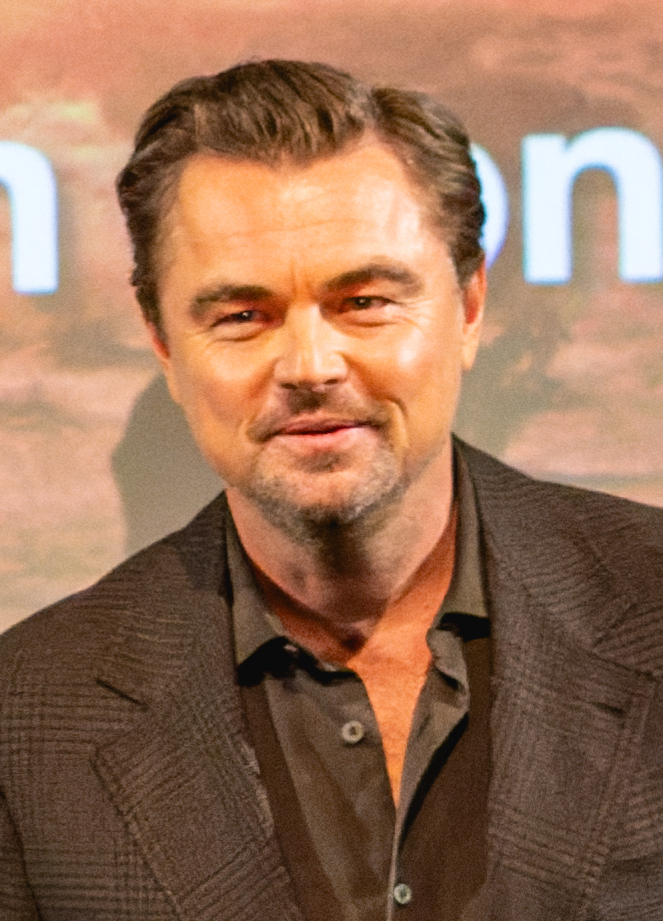
Leonardo DiCaprio once said that he never intended to become famous. What he intended was to act. The distinction matters, because DiCaprio arrived in the film industry at a moment when fame and acting were being blurred together more aggressively than at almost any other point in Hollywood history, and his career became, in large part, a sustained argument that the two things are different, that fame is what happens to you while acting is what you do. He made that argument not in interviews or speeches but in one of the most rigorously chosen, physically demanding and consistently excellent bodies of film work in contemporary cinema, a filmography that includes collaborations with some of the greatest directors of the modern era and performances that pushed the edges of what movie audiences expect from a leading man.
Quick Facts
- Full name
- Leonardo Wilhelm DiCaprio
- Born
- 11 November 1974, Los Angeles, California, USA
- Nationality
- American
- Known for
- "Titanic," "The Departed," "The Wolf of Wall Street," "The Revenant"
- Awards
- Academy Award for Best Actor (2016), Golden Globe Awards, Screen Actors Guild Award, BAFTA Award
Los Angeles Beginnings: A Bohemian Childhood
Leonardo Wilhelm DiCaprio was born on 11 November 1974 in Los Angeles, California, to George DiCaprio, a comic book artist, distributor and underground comix writer, and Irmelin Indenbirken, a legal secretary originally from Germany. His parents met as students and divorced when Leonardo was one year old. He was raised primarily by his mother in the Eastside neighbourhoods of Los Angeles, including Echo Park, which was in those years a working-class community far removed from the glamour of the industry that surrounded it.
His father remained a significant presence in his life and shaped his aesthetic sensibilities in unusual ways. George DiCaprio was deeply embedded in the underground art world and exposed his son to avant-garde comics, challenging literature and the kinds of unconventional thinking that rarely reach children growing up in the mainstream. The experience gave DiCaprio a framework for understanding art as something that could unsettle and provoke, not just entertain, a framework that would later inform his choices as a film actor with unusual consistency.
His parents named him Leonardo because his mother, while pregnant, was standing in front of a Leonardo da Vinci painting in an Italian museum when he first kicked in the womb. The story has the quality of a myth but is, by all accounts, accurate, and it carries an appropriate weight: DiCaprio was born into a world that took art seriously before he had any say in the matter. The neighbourhood he grew up in was rough by the standards of the wealthier parts of Los Angeles, and his mother worked hard to provide stability in a complex environment. She also, crucially, supported his desire to perform from the earliest age, taking him to auditions and managing the early logistics of a career that would eventually require the entire apparatus of the Hollywood talent industry.
Early Television Work and the Discovery of a Gift
DiCaprio’s professional career began in early childhood with television commercials, a path taken by many aspiring young actors but followed through with considerably more success by him than by most. He appeared in commercials for toy companies and food products, learning in front of cameras from the age of around five. The experience demystified the technical apparatus of professional filming at an age when that demystification is permanent.
His first significant acting work came in small television roles in the late 1980s, including a recurring part on the educational series “Romper Room” and various guest appearances on television dramas. He auditioned prolifically and was rejected with the frequency that is simply a statistical feature of the industry, but the rejections did not deflate him. He had a quality, even as a child, of taking the work seriously while declining to take the rejections personally, which suggested an emotional and psychological relationship to performance that was already unusually healthy.
In 1991 he joined the cast of the long-running ABC sitcom “Growing Pains” as Luke Brower, a homeless teenager who becomes part of the Seaver family. The role ran for one season and introduced him to a national audience. His character was added to an established ensemble, which is one of the harder challenges a young actor faces: you are joining a show that already has its rhythms and dynamics, and you must find your place without disrupting what works while also justifying your presence. DiCaprio managed it with enough skill to begin attracting attention from film directors.
The Leap to Film: “Critters 3” and “This Boy’s Life”
His first film role came in “Critters 3” (1991), a low-budget horror sequel that he has since characterised with the kind of affectionate self-mockery that suggests he always knew what it was. But the serious film work began almost immediately afterward. In 1993 he was cast in “This Boy’s Life,” directed by Michael Caton-Jones and based on Tobias Wolff’s memoir about a turbulent childhood in the 1950s American Northwest. The film starred Robert De Niro as an abusive stepfather and DiCaprio as the teenage Toby, the narrator of the story and the primary target of the older man’s violence and control.
Working opposite De Niro at seventeen was a test that very few young actors would have passed. De Niro was, and remains, one of the most intensely committed and technically demanding actors in American film history. DiCaprio not only held his own but gave a performance that critics described as startling in its rawness and psychological precision. He understood, intuitively or by method, that the way to play a boy being crushed by a more powerful man is not to perform victimhood but to play the resistance, the life force that keeps reasserting itself, and that understanding made his Toby a genuinely moving figure rather than a passive object of the audience’s pity.
The same year brought “What’s Eating Gilbert Grape,” directed by Lasse Hallstrom and starring Johnny Depp. DiCaprio played Arnie Grape, the younger brother of Depp’s character, a boy with an intellectual disability who is simultaneously a source of joy and an enormous weight on his family. The performance required DiCaprio to inhabit a fundamentally different way of experiencing the world, to abandon the conventional physical and vocal language of film acting and find a new set of behaviours that felt entirely specific and entirely true. He received his first Academy Award nomination, for Best Supporting Actor, at nineteen years of age. He did not win, but the nomination signalled that something genuinely unusual had entered American film.
The Period of Exploration: “Romeo + Juliet,” “Marvin’s Room,” and “The Basketball Diaries”
The years following “What’s Eating Gilbert Grape” saw DiCaprio making a series of choices that revealed both his ambition and his understanding of what the film industry might try to do to him. He was young, attractive, gifted and newly famous, and the industry’s default response to such a combination is to slot the person into romantic comedies and action vehicles that generate maximum returns with minimum creative risk. DiCaprio consistently refused to be slotted.
In “The Basketball Diaries” (1995) he played Jim Carroll, the New York poet and punk musician whose memoir of teenage heroin addiction became a counterculture classic. The role required physical transformation, unsparing honesty about addiction and degradation, and a willingness to be seen as genuinely unattractive, which is a more complicated demand than it sounds when the person in question is a nineteen-year-old actor whose physical beauty had just made him famous. He met the demand fully.
In Baz Luhrmann’s “Romeo + Juliet” (1996) he played Shakespeare’s hero in a radical modernisation that set the play in a Miami-inspired city populated by rival gangs. Luhrmann’s visual approach was kaleidoscopic and intensely stylised, and DiCaprio navigated it with a quality of emotional directness that cut through the visual noise and made the love story feel immediate and real. The film was a significant commercial and critical success, and it made DiCaprio a genuine global star in a way that his earlier work, however excellent, had not quite managed.
”Titanic” and the Impossible Weight of Superstardom
In 1997 James Cameron’s “Titanic” arrived and did something to DiCaprio’s career that he spent the better part of the following decade managing. The film, which Cameron had directed with an obsessive, physically punishing intensity, starred DiCaprio as Jack Dawson, a penniless artist who falls in love with a wealthy passenger (played by Kate Winslet) during the ship’s doomed voyage. It became the highest-grossing film in history at the time of its release, winning eleven Academy Awards including Best Picture and Best Director, and generating a cultural phenomenon centred not on the sinking of the Titanic but on the romantic pairing of DiCaprio and Winslet.
DiCaprio was twenty-two when “Titanic” was released. The scale of the film’s success was something no young actor could have been prepared for. His face appeared on the cover of every magazine, his name was attached to a level of teenage devotion that had not been seen since the early days of pop music, and the pressure to follow “Titanic” with something commercially equivalent was immense and immediate. He dealt with it by refusing to appear in anything for three years.
The gap was not laziness or fear. It was a calculated withdrawal from a marketplace that had momentarily consumed him, a decision to wait until a project presented itself that was worth doing regardless of commercial expectation. When he returned, it was with Woody Allen’s “Celebrity” (1998) and then, more significantly, with the kind of work that demonstrated he had not lost himself in the tsunami of “Titanic” fame.
“I’ve never been Romeo who meets a girl and falls for her immediately. I’ve always been more of a casual dater.”
Martin Scorsese and the Partnership That Defined an Era
The defining creative relationship of DiCaprio’s adult career began with “Gangs of New York” in 2002, when Martin Scorsese cast him as Amsterdam Vallon, a young man seeking revenge against the gang leader (played by Daniel Day-Lewis) who killed his father in the violent underworld of nineteenth-century Manhattan. The film was ambitious, operatic and chaotic in ways that both reflected and strained the enormous challenges of its production. But the collaboration established something that both men would build on with extraordinary results over the following years.
“The Aviator” (2004) gave DiCaprio the role of Howard Hughes, the eccentric billionaire aviation pioneer and film producer whose genius and obsessive-compulsive disorder were inseparable. The performance required DiCaprio to age across several decades of Hughes’s life, to portray both the magnetic charisma of his public persona and the terrifying private deterioration of his mental health. It was the most technically demanding work DiCaprio had attempted to that point, and the Academy Award nomination he received for it was widely regarded as recognition of a performance that demonstrated full maturity as an actor.
“The Departed” (2006) was a different kind of challenge: a tightly wound crime thriller in which DiCaprio played a police officer who has gone undercover in the Irish mob, while simultaneously an actual mob member (played by Matt Damon) has infiltrated the police force. The film also starred Jack Nicholson, Martin Sheen and Mark Wahlberg in a cast of exceptional quality. Scorsese won the Academy Award for Best Director for the film, and DiCaprio’s performance, coiled and increasingly desperate as the undercover work corrodes his sense of identity, was the emotional engine of a film that many critics consider Scorsese’s best since “Goodfellas.”
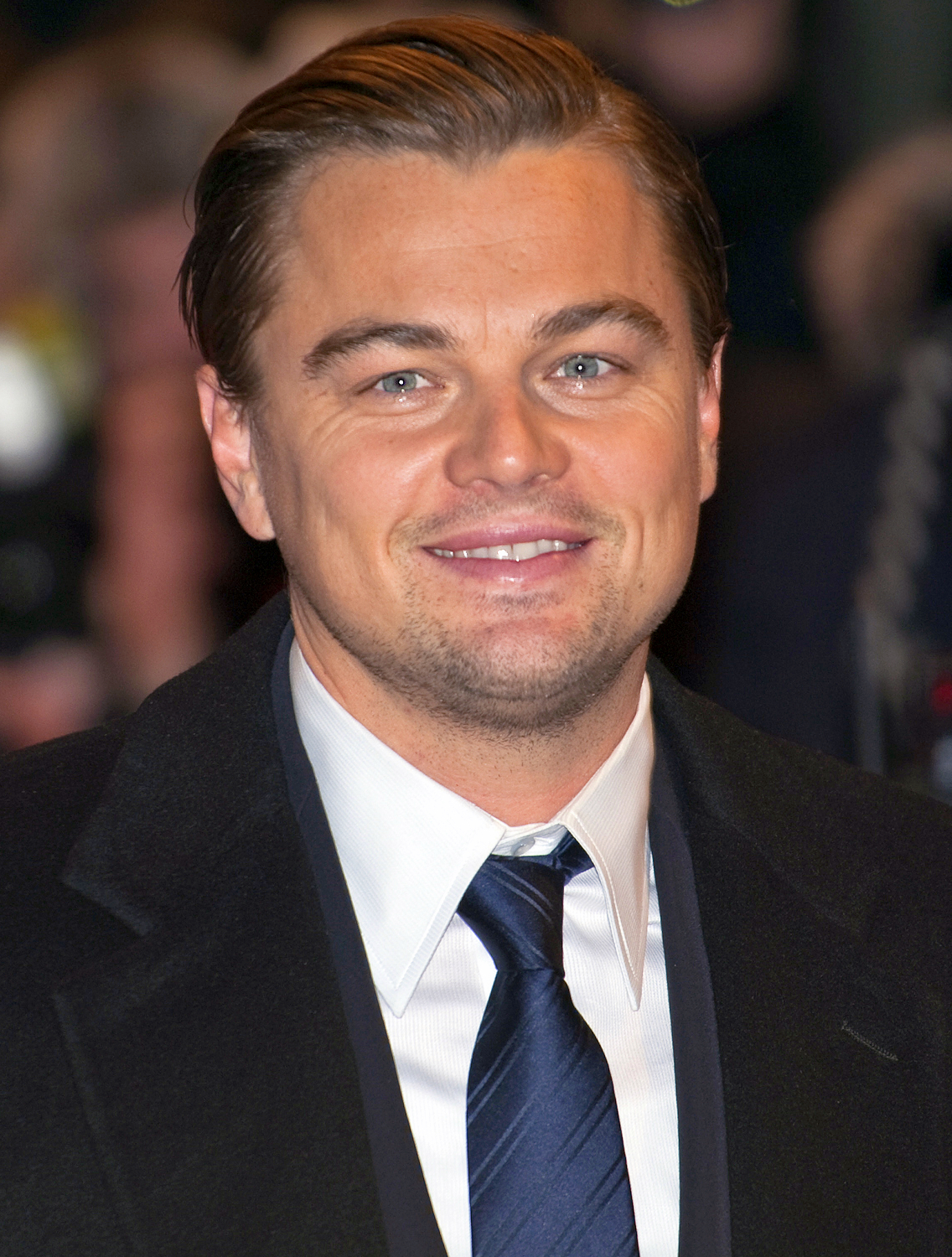
“Inception,” “Django Unchained,” and Range Demonstrated
Christopher Nolan’s “Inception” (2010) cast DiCaprio as Dom Cobb, a specialist in entering people’s dreams to steal corporate secrets, in a film that combined the intellectual ambition of hard science fiction with the visual language of an action blockbuster. The film was a massive commercial success and a genuine critical achievement, and DiCaprio carried its emotional core, a grief-stricken father separated from his children by a crime in his past, with a restraint and a depth that prevented the film’s conceptual complexity from becoming emotionally cold.
Quentin Tarantino’s “Django Unchained” (2012) offered DiCaprio the chance to play a villain for the first time in a major film, and he took it with evident relish. As Calvin Candie, a Louisiana plantation owner who uses enslaved people as fighters, he constructed a character of smooth charm and coiled sadism, performing the casual evil of someone who has never had to examine the moral structure of his world. The role was uncomfortable and was intended to be, and DiCaprio brought to it the fearlessness that distinguished his entire career: a willingness to be seen as genuinely terrible if the story required it.
“The Wolf of Wall Street” (2013), his fifth collaboration with Scorsese, cast him as Jordan Belfort, the real-life stockbroker whose memoir detailed a decade of fraud, drug abuse and extraordinary excess. The film was three hours long, furiously paced, frequently hilarious and deeply troubling, a portrait of a man of immense personal charisma putting that charisma to entirely destructive ends. DiCaprio threw himself into the role with a physical commitment that observers found almost disturbing: the energy required to sustain that performance across that runtime, at that pitch, is not what most people mean when they talk about acting.
”The Revenant” and the Long-Awaited Oscar
The Academy Award for Best Actor that DiCaprio received in 2016 for Alejandro G. Inarritu’s “The Revenant” had an unusual quality about it. By the time it arrived, after six previous nominations without a win, it had acquired the character of an acknowledgement not just of the specific performance but of the full body of work behind it. The Hollywood awards community, which is sometimes accused of focusing too narrowly on single performances rather than career trajectories, was in this instance doing both simultaneously.
The performance itself was extraordinary by any measure. DiCaprio played Hugh Glass, a real-life frontiersman who, after being mauled by a bear and left for dead by his companions in the 1820s American wilderness, crawled hundreds of miles through brutal winter conditions to seek justice. Inarritu shot the film in natural light, in genuinely frigid outdoor conditions, over the course of many months in locations in Canada and Argentina. DiCaprio endured physical hardships that the director himself described as extraordinary. He ate raw bison liver, slept inside animal carcasses, submerged himself repeatedly in near-freezing rivers and spent months in conditions that would have ended most productions early.
The result was a performance of primal, almost wordless intensity. Glass speaks relatively little throughout the film. His experience is communicated through endurance, through the body’s will to survive, through the eyes of a man who has lost everything and is sustained by a single, terrible purpose. The Academy Award was, for once, received by a room that felt collectively, genuinely glad.
Environmental Advocacy: The Other Life
Running alongside DiCaprio’s acting career with equal seriousness has been his commitment to environmental advocacy, a commitment that predates his fame and has deepened with it. He established the Leonardo DiCaprio Foundation in 1998, the year after “Titanic,” and has used his platform since then to fund environmental projects, support climate science communication and advocate for systemic change on a scale that most celebrity environmental advocates do not approach.
He addressed the United Nations as a UN Messenger of Peace in 2014, making the case for immediate climate action with the specificity and urgency of someone who had spent years studying the science. He has produced environmental documentaries including “The 11th Hour” (2007), which he co-wrote and co-produced, and “Before the Flood” (2016), a documentary about climate change that reached an enormous global audience after National Geographic made it available for free streaming. He has used his Academy Award platform to speak about climate change on one of the largest stages in entertainment.
The commitment is not performative in the way that celebrity activism sometimes is. It reflects a set of values formed early in his Los Angeles childhood, in a household where art and unconventional thinking were encouraged, and it has been expressed through years of consistent action at significant personal cost. He has declined commercial opportunities because of their environmental implications and has funded work in conservation, renewable energy and indigenous land rights with the seriousness of someone who understands these as moral obligations rather than publicity opportunities.
Later Work: “Once Upon a Time in Hollywood” and Continued Excellence
Quentin Tarantino’s “Once Upon a Time in Hollywood” (2019) gave DiCaprio what may be his most purely pleasurable screen performance. As Rick Dalton, a fading 1960s television actor navigating the moment when his genre is going out of fashion and his confidence is going with it, DiCaprio delivered a performance of extraordinary comic texture and unexpected emotional depth. Rick Dalton is a smaller man than most of the characters DiCaprio has played, limited by his own anxieties and his inability to understand the world changing around him, and DiCaprio played his smallness with complete conviction and considerable warmth.
The film also starred Brad Pitt, whose performance as Rick’s stunt double won the Academy Award for Best Supporting Actor, and the two actors created one of the most enjoyable screen partnerships of recent years, a relationship built on mutual need and mutual affection that felt genuinely earned.
DiCaprio’s ability to sustain a career of this quality over more than three decades reflects more than talent. It reflects a clarity of purpose about what he is doing and why, a willingness to subordinate commercial considerations to creative ones, and a standard of preparation and commitment that directors who work with him describe as raising the bar for everyone around him.
Legacy: The Sum of Deliberate Choices
What Leonardo DiCaprio’s career demonstrates, when you stand back and look at its full arc, is that the choices an actor makes about what to do and what to refuse are at least as important as the talent they bring to what they accept. He has refused easy films. He has refused franchises that would have made him richer but diminished him creatively. He has sought out directors of genuine ambition and submitted himself to their visions with a totality of commitment that is not common at his level of the industry.
The result is a filmography that reads, almost uniquely among actors who achieved his early level of fame, as the record of an artist. The critical conversation about the best films of the modern era cannot be conducted without including “Gangs of New York,” “The Aviator,” “The Departed,” “Inception,” “The Wolf of Wall Street” and “The Revenant.” DiCaprio is not the whole of any of those films. But he is the consistent element, the presence that each director cast because they needed someone willing to go wherever the work required, and who never let them down.
Key Facts
- Leonardo DiCaprio was born on 11 November 1974 in Los Angeles and began his professional career in television commercials as a young child.
- He received his first Academy Award nomination at nineteen years of age for “What’s Eating Gilbert Grape” (1993), playing a character with an intellectual disability opposite Johnny Depp.
- He has collaborated with director Martin Scorsese on six films: “Gangs of New York,” “The Aviator,” “The Departed,” “Shutter Island,” “The Wolf of Wall Street,” and “Killers of the Flower Moon.”
- He won the Academy Award for Best Actor in 2016 for “The Revenant,” a film shot in natural light in genuinely extreme outdoor conditions that required months of physically gruelling work.
- He established the Leonardo DiCaprio Foundation in 1998 and has spent more than two decades funding environmental conservation projects and climate change advocacy globally.