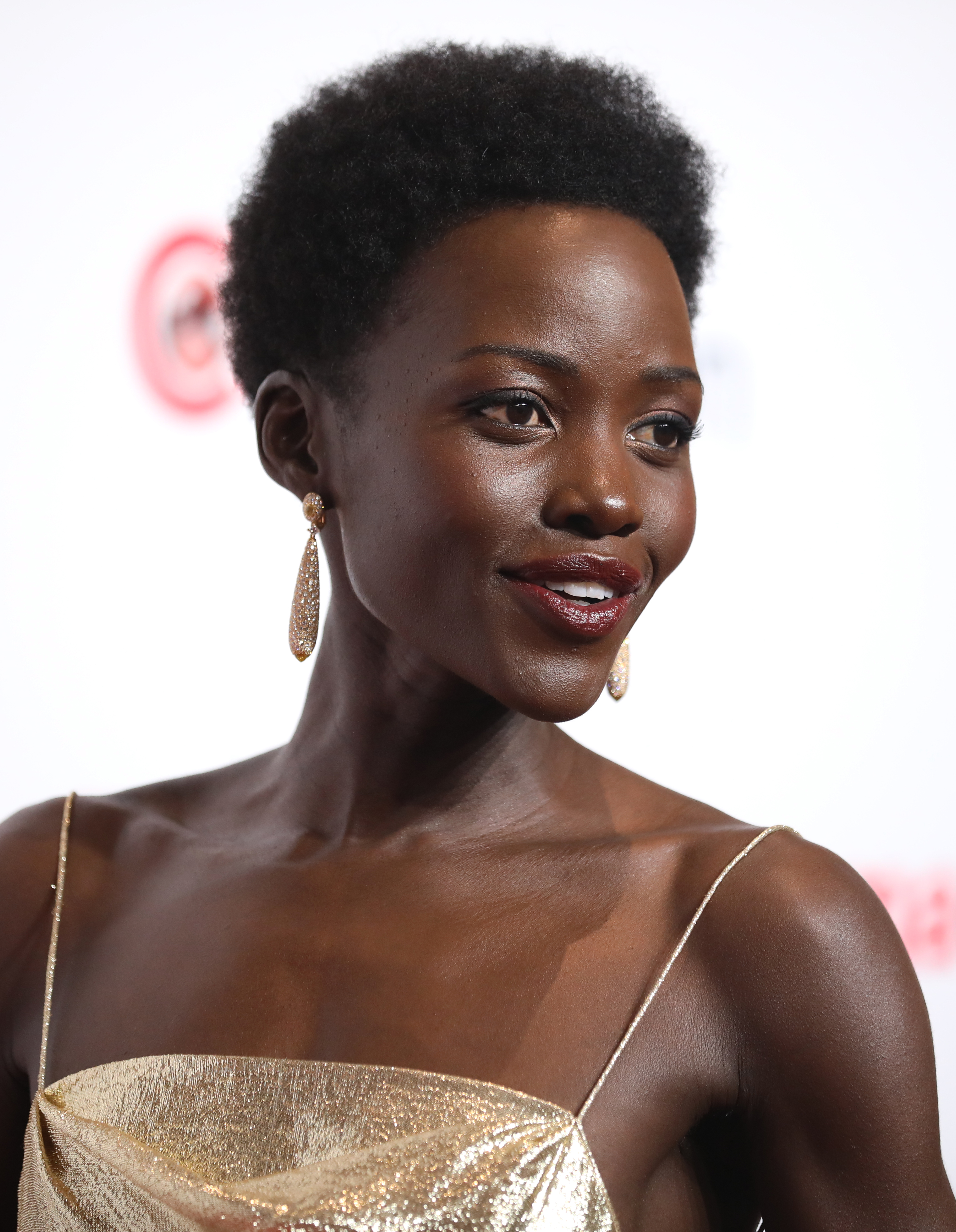
The speed of Lupita Nyong’o’s rise from unknown student to Academy Award winner is one of those stories that Hollywood occasionally produces and always uses to reassure itself that the meritocracy it describes is the meritocracy it operates. In her case, the story has the added dimension of a journey that crosses continents and cultures and that culminates in a performance about the most brutal chapter in American history, delivered by a Kenyan woman who had lived in three countries before she was twenty. The talent was extraordinary. The timing was precise. The willingness to take on material that would break a less prepared performer was absolute. But to understand what Lupita Nyong’o actually did, and what it meant, requires starting not in Hollywood but in Mexico City and then in Nairobi, in the specific world that produced a person capable of doing what she did.
Quick Facts
- Full name
- Lupita Amondi Nyong'o
- Born
- 1 March 1983, Mexico City, Mexico
- Nationality
- Kenyan
- Known for
- "12 Years a Slave" (2013), "Star Wars: The Force Awakens" (2015), "Black Panther" (2018), "Us" (2019)
- Awards
- Academy Award for Best Supporting Actress (2014), Screen Actors Guild Award, numerous critics' circle awards
Mexico City, Nairobi, and the Formation of a Global Identity
Lupita Amondi Nyong’o was born on 1 March 1983 in Mexico City, Mexico, to Kenyan parents: Peter Anyang’ Nyong’o, a professor of political science who was later to become a senator and then Governor of Kisumu County in Kenya, and Dorothy Olivia Gondi. Her father was in Mexico City for academic reasons at the time of her birth, but the family returned to Kenya when Lupita was a small child and she grew up primarily in Nairobi, in an educated, politically engaged family where reading, ideas, and public service were the default framework.
She is the second of six children. Her father’s political work, which eventually took him to the Kenyan Senate and then to the governorship of Kisumu, meant that the family existed at the intersection of academic life and public life, a combination that produced in Lupita a person who was comfortable with ideas and with the responsibility that public roles carry. Kenya in the 1980s and 1990s was a country emerging from the authoritarianism of Daniel arap Moi’s presidency, and the political atmosphere of her childhood was, by the accounts of her father and others, charged with the tensions of a society in uncertain transition.
She attended the prestigious Rusinga School in Nairobi and later the Lenana School, a boys’ school that admitted girls to its sixth form. She had been interested in performance from childhood, in part through watching films (she has cited Whoopi Goldberg in “The Color Purple” and the performance’s impact on her ten-year-old self in multiple interviews), and she participated in drama at school with growing commitment. She also spent a year studying abroad in the United States, attending Hampshire College in Massachusetts for a year while still a teenager, an experience that introduced her to American academic and cultural life and that confirmed her sense that performance was where she was headed.
She returned to Kenya after her year in Massachusetts and took a position as a production assistant on a Kenyan television series, learning the practical mechanics of filmmaking from the production side before she had any screen experience as an actor. She then enrolled in a small theatre company in Nairobi, beginning the practical training in stage performance that she would later supplement with formal conservatory work. This combination of production knowledge and stage experience gave her, when she arrived in more formal training, a professional context for what she was learning that most drama students did not have.
Yale School of Drama and the Student Film
In 2008, Nyong’o enrolled in the MFA Acting programme at the Yale School of Drama, one of the most rigorous and prestigious conservatory programmes in the United States. The three-year programme accepted only a handful of students each year from an international pool of applicants, and the work it required was total: physical training, voice work, classical text, contemporary plays, ensemble performance, and the sustained discipline of developing a professional practice under the mentorship of experienced working artists.
At Yale, she was part of a cohort that included actors who would go on to significant careers, and she developed the technical foundation and the professional habits that would later allow her to step onto a film set directed by Steve McQueen and hold her own alongside Chiwetel Ejiofor, Michael Fassbender, Brad Pitt, and Benedict Cumberbatch with no apparent effort.
During her time at Yale, she made a short student film, “East River,” which was her sole professional film credit when she was cast in “12 Years a Slave.” The student film had allowed her to explore the work in a format that could be seen, and it was seen by the right people. She graduated from Yale in 2012. She received her first and only major film credit within months of graduating.
12 Years a Slave and the Oscar at the First Attempt
Steve McQueen’s “12 Years a Slave” was in many respects the defining film of 2013, a film about American slavery that was at once historically specific and broadly human, that refused to look away from what the institution actually required of everyone involved, and that demanded from its cast performances of complete and unprotected truthfulness. McQueen was assembling an ensemble of experienced actors. He chose, for the role of Patsey, one of the most demanding roles in the film, a brand-new Yale graduate with one student film to her name.
Patsey is the enslaved woman owned by Edwin Epps (Michael Fassbender) whose exceptional productivity in the cotton fields makes her at once his most valued property and the target of his wife’s jealousy and his own tortured desire. The film requires Patsey to embody the specific horror of a person who has been reduced to property while her humanity persists and insists on being seen. The role culminates in a sequence of extreme violence and violation that McQueen filmed with an unsparing directness, and that Nyong’o inhabited with a courage that professional actors twice her age and with ten times her experience would have found formidable.
She prepared for the role with total commitment, researching the specific history of enslaved women in Louisiana cotton plantations, working with McQueen on the character’s psychology, and building the physical reality of Patsey’s existence through the kind of detailed preparation that marks a serious actor. On set, she was, by accounts of her co-stars and the director, completely present in each take in a way that raised the quality of every scene she was in.
The film premiered at the Toronto International Film Festival in September 2013, where it won the People’s Choice Award and generated the critical response that would carry it through awards season to Best Picture at the Academy Awards. Nyong’o was nominated for Best Supporting Actress. She won, on her first nomination, for her first professional film, having graduated from drama school eighteen months earlier.
The speech she gave at the Academy Awards was personal and specific, acknowledging the significance of the recognition to a woman who had grown up in Kenya and who had not seen herself reflected in the films she consumed as a child, and acknowledging by name the real Patsey, whose experience the film had drawn on. She was 30 years old. The win generated a response in Kenya, in East Africa, and in the broader African diaspora that went beyond the usual reaction to a celebrity achievement. It was understood as something more: proof, at the level of one of the world’s most visible cultural institutions, that a talent from Africa could operate at the absolute highest level on the world stage.
“I had to fight to be seen, first as a human being and then as an actor. But I realised that the fight itself was part of the preparation.”
People Magazine and the Conversation About Beauty
Shortly after the Oscar win, People magazine named Nyong’o the Most Beautiful Woman in the World for 2014. The designation sparked an enormous conversation that went well beyond celebrity gossip, because Nyong’o was the first dark-skinned Black woman to receive that recognition from that particular mainstream American publication. She used the moment to say something that has been widely quoted since: that she had grown up believing, because of the images she consumed in media, that the beauty she wanted to have looked nothing like her, and that the recognition was meaningful not for her own validation but for what it might mean to young girls who looked like her and were being told by the same images that their faces were not the right faces.
The conversation she provoked was not about the award itself but about the mechanisms by which beauty is defined and distributed, about the specific costs of those mechanisms to Black girls and women, and about the difference that representation makes when it finally arrives. She became, in this conversation, not simply a successful actor but a figure in a broader cultural argument, and she engaged with that role thoughtfully and with the intellectual preparation that her upbringing and her education had given her.
Star Wars, Black Panther, and the Franchise Work
In 2015, she appeared in J.J. Abrams’s “Star Wars: The Force Awakens” as Maz Kanata, a small alien played entirely through motion capture performance. The role required her to act without her own body, entirely through her voice and her facial expressions captured by the motion capture system and then translated into a digital character. It was a technically demanding form of acting that required a different set of skills from the live-action work she had done previously, and she brought to it the same discipline she brought to everything else. “Star Wars: The Force Awakens” grossed over $2 billion worldwide, making it one of the highest-grossing films in history.
In 2018, she appeared as Nakia in Ryan Coogler’s “Black Panther,” the first Black superhero film from Marvel Studios and one of the most culturally significant films of the decade. Nakia was a Wakandan spy and former love interest of T’Challa (Chadwick Boseman), and the role allowed Nyong’o to play a character whose Africanness was specific and celebrated rather than generic, in a film designed from the ground up to offer an affirmative vision of African identity and capability. “Black Panther” grossed over $1.3 billion worldwide and was nominated for the Academy Award for Best Picture. She reprised the role in “Black Panther: Wakanda Forever” (2022), which dealt with the loss of Chadwick Boseman, who had died of cancer in 2020, and which grossed over $859 million worldwide.
Her performance in Jordan Peele’s “Us” (2019) demonstrated what she could do when given the full weight of a horror film to carry. She played Adelaide Wilson, a woman whose family encounters a terrifying set of doppelgangers while on holiday, and she played both versions of the character: the frightened mother protecting her family and the disturbing double whose motivations are only revealed at the film’s end. The dual performance required technical precision and physical distinctness and the ability to hold the audience in two different kinds of tension simultaneously. “Us” grossed over $255 million worldwide against a budget of approximately $20 million and generated extensive critical discussion about its horror mechanics and its political allegory.
Writing, Advocacy, and the Use of Platform
Beyond acting, Nyong’o has pursued a writing career that reflects the intellectual range of her education and her upbringing. She has written a children’s book, “Sulwe” (2019), illustrated by Vashti Harrison, about a dark-skinned girl who feels invisible beside her lighter-skinned sister and who learns, through a night journey, that her own colour is beautiful. The book was a New York Times bestseller and addressed, for a young readership, the same questions about colourism and self-image that Nyong’o had raised when she discussed the People magazine cover. It sold over 200,000 copies in its first year and was shortlisted for the Kirkus Prize. The book was motivated by personal experience, by the specific way she had felt as a child in Kenya surrounded by images that defined beauty as lighter-skinned or European, and by the understanding that the children who needed this kind of story were out there and had been waiting for someone to write it.
She has been an active advocate against sexual harassment in the entertainment industry, writing publicly about experiences with Harvey Weinstein in a piece for the New York Times in 2017 that was among the most read and discussed contributions to the conversation that became the #MeToo movement. Her willingness to speak publicly, with the specific details and the lack of equivocation that the moment required, was consistent with a pattern of using her platform for things that matter rather than things that are simply professionally convenient. Her account was detailed and specific, describing a pattern of behaviour over multiple encounters that she had not spoken about publicly before, and her decision to speak contributed directly to the cultural reckoning that followed.
She has worked with the global health initiative Nothing But Nets, which distributes malaria-preventing bed nets in sub-Saharan Africa, and has spoken at the United Nations General Assembly in support of that cause. The range of her advocacy, from children’s literature to sexual harassment to global health, reflects a person who takes public engagement seriously as an obligation that comes with visibility rather than as a marketing opportunity.
She has maintained deep connections to Kenya, to her family’s political world, and to the broader project of African storytelling. She has spoken at various African cultural events about the importance of African stories being told by African voices, not filtered through Western perspectives or reduced to Western assumptions about what Africa is. Her father’s continued public role as Governor of Kisumu County in Kenya keeps her connected to the practical reality of the continent rather than to its image as perceived from the outside. She has been filmed speaking in Dholuo, the Luo language of her family’s ethnic community in western Kenya, and has been explicit about the importance of African languages as living cultural inheritances rather than relics of the past.
Her engagement with Afrofuturism, which she developed partly through her work on “Black Panther” and which she has discussed in interviews and in writing, represents another dimension of her intellectual engagement. She has argued that Afrofuturism, the imagining of African and African-descended futures untethered from colonialism’s definition of what Africa can be, is one of the more important cultural projects available to storytellers working today, and she has brought that argument to bear on her choices about what projects to attach herself to. The discipline is not simply philosophical but practical: she is using her position as one of the most visible African actors in the world to shape which stories get made and how they are told.
Legacy
Lupita Nyong’o’s career is still in its relative early stages, and the trajectory it has followed in its first fifteen years is extraordinary. She arrived with no professional credits and won an Oscar. She used the resulting platform to say things that mattered about beauty, about representation, about the specific experience of women who look like her navigating systems designed around other assumptions. She has made commercially enormous films and small, personal ones. She has written for children and for adults. She has used her public voice with intelligence and care.
What she represents for African cinema, for the broader diaspora, and for the women who grew up without seeing themselves in the images that defined beauty and success in global culture, is not diminished by the success itself. The achievement is real. The historical moment it arrived in is real. And the work she has done since, with the discipline and the seriousness that her training and her upbringing instilled, suggests that the best of what she will produce is still ahead.
Key Facts
- Lupita Nyong’o is one of only a small number of actors to win the Academy Award for Best Supporting Actress on their first professional film credit, having graduated from the Yale School of Drama eighteen months before filming “12 Years a Slave.”
- She has Kenyan nationality and was born in Mexico City, making her a citizen of Kenya who has nonetheless spent formative years in Mexico, the United States, and the United Kingdom, a genuinely transnational identity that she has discussed as central to her understanding of herself.
- Her children’s book “Sulwe” (2019), which addresses colourism and self-image, became a New York Times bestseller and sold over 200,000 copies in its first year of publication.
- Her dual performance in Jordan Peele’s “Us” (2019), playing both a terrified mother and a frightening double, required her to play two physically and psychologically distinct versions of the same character and is widely cited by critics as one of the most technically demanding horror performances of that decade.
- She was named the Most Beautiful Woman in the World by People magazine in 2014, becoming the first dark-skinned Black woman to receive the recognition and using the platform to speak about the importance of expanded representation in mainstream media’s definitions of beauty.