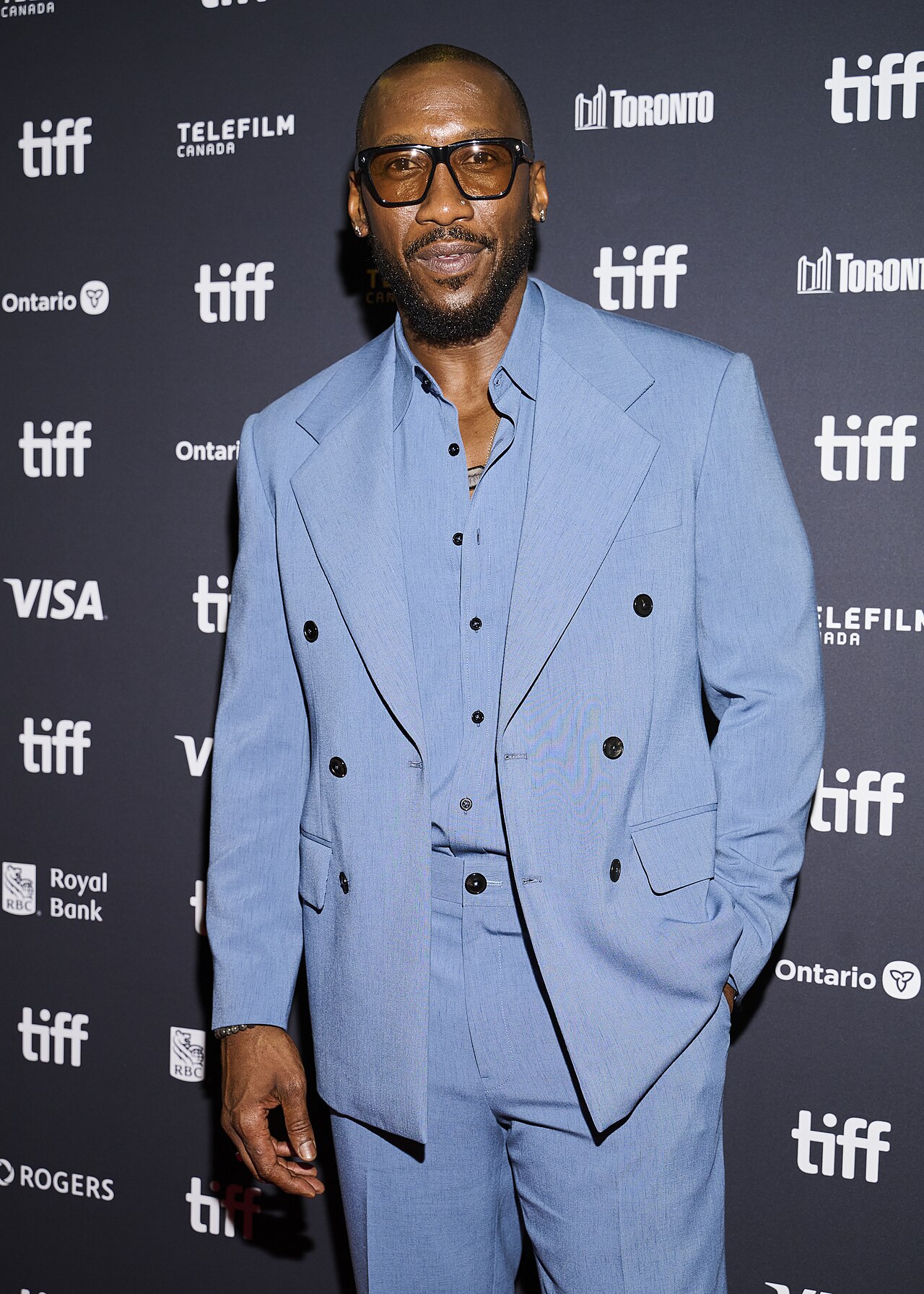
On the night of February 26, 2017, inside the Dolby Theatre in Los Angeles, Mahershala Ali walked to the stage to accept the Academy Award for Best Supporting Actor. He had played Juan, a Miami drug dealer with an unexpected tenderness, in Barry Jenkins’s “Moonlight,” and in doing so he had become the first actor of the Muslim faith to win an acting Oscar. He was visibly moved, and his speech was measured, grateful and generous toward his teachers and his collaborators. What made the moment resonate so widely was not only the historic nature of the achievement, but the figure delivering it: a calm, deliberate, deeply thoughtful performer who had spent close to two decades building a body of work on stage and in supporting roles before the wider public truly understood what he could do. Two years later he would stand on that same stage and do it again. This is the story of how a basketball player from Oakland, California, named at birth with a rare biblical name, became one of the most respected and admired actors of his generation.
Quick Facts
- Full name
- Mahershalalhashbaz Gilmore (Mahershala Ali)
- Born
- 16 February 1974, Oakland, California, USA
- Nationality
- American
- Known for
- Moonlight, Green Book, True Detective, House of Cards
- Awards
- Two Academy Awards for Best Supporting Actor (2017, 2019)
Early Life
Mahershala Ali was born Mahershalalhashbaz Gilmore on February 16, 1974, in Oakland, California, and raised in nearby Hayward in the San Francisco Bay Area. His striking first name is drawn from the Book of Isaiah in the Hebrew Bible, where it appears as “Maher-shalal-hash-baz,” one of the longest names in scripture, carried by a symbolic child in the prophet’s writings. The phrase is often rendered as a reference to swift plunder and hastening spoil. For a child growing up in California in the 1970s and 1980s, it was an unusual name to carry, and he would in time shorten it to Mahershala for everyday use.
His background was shaped by faith and performance from the start. His mother, Willicia, was an ordained Christian minister, and the household was grounded in the church. His father, also named Mahershalalhashbaz Gilmore, had a very different path: he left the family to pursue a career as a performer, working as a dancer and appearing on Broadway and in theatrical productions in New York. The young Mahershala therefore inherited a sense of the stage even as he grew up primarily in his mother’s world of ministry and community.
Before acting ever entered the picture, sport did. Ali was a tall, athletic young man, and basketball became his first serious ambition. He earned a scholarship to Saint Mary’s College of California in Moraga, where he played on the men’s basketball team and studied toward a degree in mass communications, which he completed in 1996. He has spoken candidly in interviews about how his experience of the business side of college athletics left him disillusioned, and how that disillusionment opened a door. Encouraged in part by acting workshops and a growing pull toward performance, he decided that the stage, not the court, was where he wanted to spend his life.
That decision led him across the country to one of the most demanding training grounds in American theatre. Ali enrolled in the graduate acting program at New York University’s Tisch School of the Arts, earning a Master of Fine Arts in 2000. The rigor of that conservatory training, with its emphasis on craft, text and discipline, would become a defining feature of his approach for the rest of his career. He was not a performer who stumbled into fame young; he was a trained actor who built his instrument deliberately, year by year.
Early Career
After graduating from NYU, Ali began the long apprenticeship that most working actors know well: regional theatre, guest spots and supporting roles. One of his most important early opportunities came in television. He joined the cast of the science fiction series “Crossing Jordan,” but it was the drama series “The 4400,” which ran from 2004 to 2007, that gave him a sustained platform to develop on screen. Playing Richard Tyler, a character caught up in the show’s supernatural mystery, he spent several seasons learning the rhythms of episodic television and building the patience and consistency that long-form work requires.
It was during these formative years that he also made a profound personal change. Ali converted to Islam in 1999, joining the Ahmadiyya Muslim Community, and in keeping with that change he adopted the name by which the world now knows him. He dropped the surname Gilmore and began working professionally as Mahershala Ali. He has spoken about how his faith grounds him, and he has addressed with grace the questions and assumptions that come with being a prominent Muslim figure in American public life. His conversion also, at times, created distance within his family, given his mother’s standing as a Christian minister, though he has described their relationship as loving and respectful across their differing beliefs.
Through the late 2000s and into the 2010s, Ali accumulated the kind of credits that mark a steadily rising character actor. He appeared in films including “The Curious Case of Benjamin Button” (2008), directed by David Fincher, and “Predators” (2010). His profile grew significantly when he was cast as Remy Danton, a slick and ambitious lobbyist, in the Netflix political drama “House of Cards,” which premiered in 2013. The series, starring Kevin Spacey and Robin Wright, was one of the shows that helped define the streaming era of prestige television, and Ali’s recurring role put him in front of a large and attentive audience.
Around the same time, he reached one of the biggest commercial franchises in the world. Ali was cast as Boggs, a rebel leader from the underground district of the Capitol’s enemies, in “The Hunger Games: Mockingjay, Part 1” (2014) and “The Hunger Games: Mockingjay, Part 2” (2015), sharing the screen with Jennifer Lawrence. By the mid-2010s, then, Ali had become a familiar and reliable presence: a tall, commanding actor with a gift for playing intelligent, controlled men. What he had not yet done was deliver the role that would make the world see him as a leading artistic force. That was about to change.
Breakthrough and First Oscar
In 2016, a modestly budgeted film from a young director named Barry Jenkins arrived and altered the trajectory of several careers, Ali’s foremost among them. “Moonlight,” adapted from a story by Tarell Alvin McCraney, told the life of a Black gay man named Chiron across three chapters of his life, from childhood to adulthood, in a Miami neighborhood shaped by poverty and addiction. Ali played Juan, a Cuban American drug dealer who, against every expectation the audience might bring, becomes a gentle mentor and father figure to the young Chiron.
The role occupies only a portion of the film’s running time, yet it anchors the entire story. In one of the film’s most celebrated sequences, Juan teaches the boy to swim in the ocean, cradling him in the water in a scene of extraordinary tenderness. In another, he answers the child’s painful questions about his own life and identity with a directness that refuses easy comfort. Ali’s performance was built on restraint and warmth, on the sense of a hard man who has chosen, in these moments, to be soft. Critics responded with near-unanimous admiration, and the role swept through the awards season.
“Moonlight” went on to win the Academy Award for Best Picture at the 89th Academy Awards in February 2017, in a ceremony remembered for a famous envelope mix-up that briefly saw the wrong film announced. For Ali, the night belonged to him regardless of that confusion. He won the Academy Award for Best Supporting Actor, becoming the first Muslim actor to win an acting Oscar, a landmark that was reported around the world. He also collected the Screen Actors Guild Award and numerous critics’ prizes along the way. After nearly two decades of patient, disciplined work, Mahershala Ali had arrived at the summit of his profession, and he had done so in a role defined not by spectacle but by quiet humanity.
“Peace, peace, peace. What I’ve learned from working on ‘Moonlight’ is we see what happens when you persecute people. They fold into themselves,” Ali said during one of his acceptance speeches that season, reflecting on the film’s themes of identity and dignity.
A Second Oscar and Acclaim
Most actors would treat a competitive Oscar as the achievement of a lifetime. Ali, remarkably, won a second one only two years later. In the 2018 film “Green Book,” directed by Peter Farrelly, he played Dr. Don Shirley, a gifted and refined concert pianist embarking on a 1962 tour through the American South. The film followed Shirley and his driver and bodyguard, Tony Lip, played by Viggo Mortensen, as the two very different men navigated the segregated landscape of the Jim Crow era and formed an unlikely friendship.
Ali’s Don Shirley was a portrait of elegance, loneliness and quiet courage, a man of immense cultivation forced to endure daily humiliations because of the color of his skin. The performance earned Ali the Academy Award for Best Supporting Actor at the 91st Academy Awards in February 2019. “Green Book” also won Best Picture that night, though it drew significant debate, including public criticism from members of Don Shirley’s family regarding the film’s depiction of the pianist’s life and relationships. Ali himself handled the controversy with characteristic thoughtfulness, expressing respect for Shirley’s memory and acknowledging the limits of any single film’s account.
With two Academy Awards in hand, Ali joined a small and distinguished group of performers to have won multiple acting Oscars. His range was now beyond question. In the same period he took the lead in the third season of the HBO anthology series “True Detective,” which aired in 2019, playing Detective Wayne Hays across three decades of a haunting Ozarks murder case. The role demanded that he age across a long timeline and carry the weight of memory and loss, and it earned him a Primetime Emmy nomination, underscoring that his gifts translated as powerfully to the long canvas of television as to the concentrated form of film.
Prestige and Persona
What sets Mahershala Ali apart is not only the hardware on his shelf but the reputation he has built as a person and as a craftsman. Colleagues and critics describe him consistently in the same terms: thoughtful, generous, dignified, serious about the work. In an industry that often rewards noise, he has become a byword for a quieter kind of excellence, an actor whose presence on screen communicates intelligence and restraint rather than showmanship.
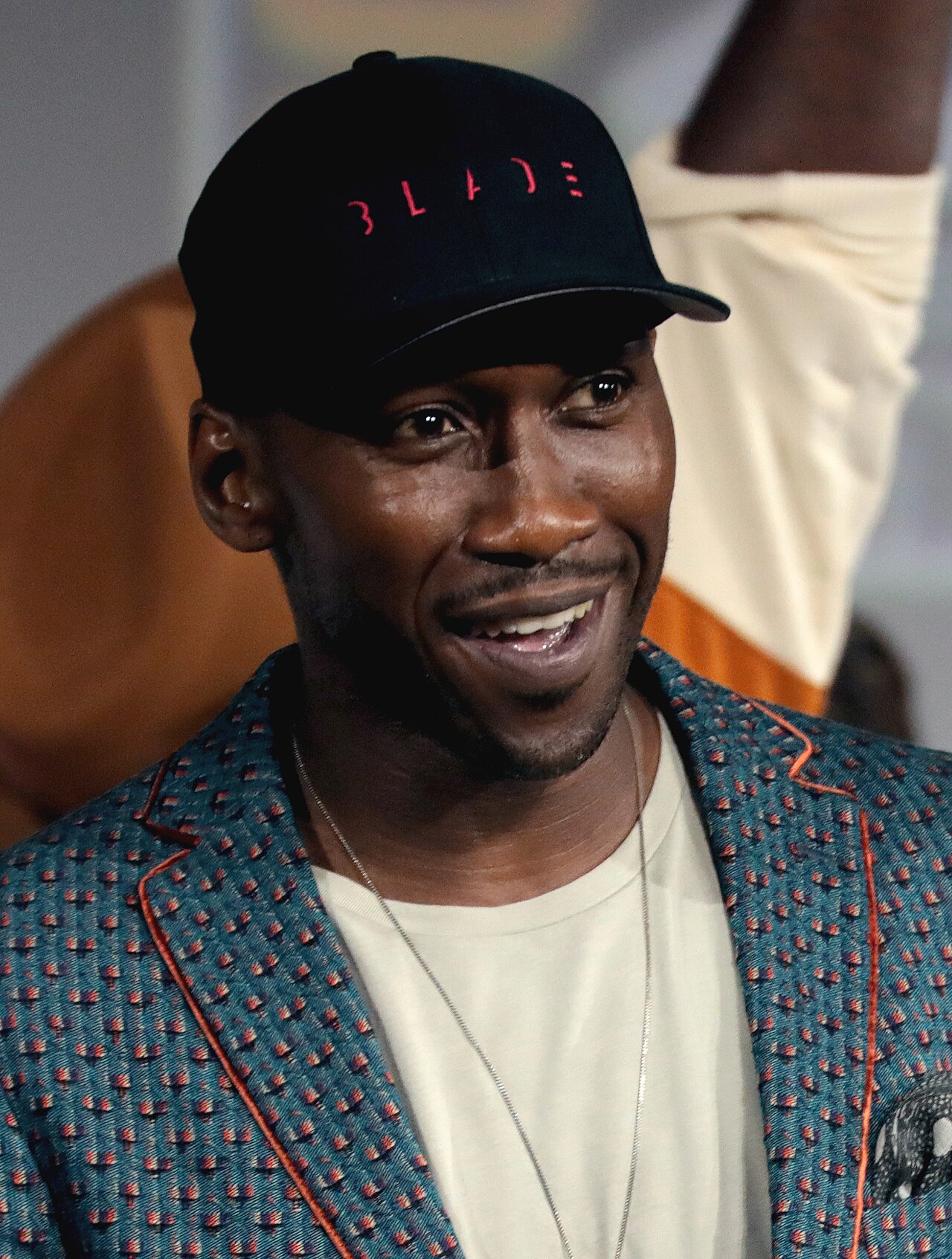
That standing has brought him to one of the most prominent assignments in modern cinema. In 2019, Marvel Studios announced that Ali would play Blade, the vampire-hunting hero, in the Marvel Cinematic Universe, a casting the actor himself reportedly initiated by approaching the studio. The project has faced a long and well-documented development process, but the choice of Ali to carry such an iconic character spoke volumes about how the industry regards him: as a performer with the gravity to lead a franchise and the craft to deepen it.
His other work in this period has continued to show breadth. He voiced roles in animated features, lent his talents to the science fiction drama “Swan Song” (2021) in a demanding dual performance, and appeared in the Netflix thriller “Leave the World Behind” (2023), directed by Sam Esmail and based on the novel by Rumaan Alam. Through all of it, Ali has maintained a reputation for selecting projects with care and bringing the same disciplined preparation to each one, whether the part is large or small, leading or supporting.
Those who have directed him often describe a performer who prepares exhaustively and then arrives on set quiet, ready and fully inhabiting the part. Barry Jenkins spoke in interviews during the “Moonlight” awards run about Ali’s generosity as a scene partner and the emotional precision he brought to a role that occupied only a fraction of the film yet defined its heart. That combination of preparation and presence is the hallmark of the trained stage actor, and it explains why filmmakers across genres, from intimate independent drama to large studio spectacle, have sought him out. Away from the camera, Ali has guarded his private life while speaking openly about the things that matter to him: his faith, his family and the responsibility he feels toward the characters and communities he portrays. He married the artist and academic Amatus Sami-Karim, and the couple welcomed a daughter in 2017, the same week he won his first Academy Award, a convergence of personal and professional milestones he has described as overwhelming.
Career Timeline
- 1974: Born Mahershalalhashbaz Gilmore on February 16 in Oakland, California, and raised in Hayward.
- 1996: Graduates from Saint Mary’s College of California, where he played on a basketball scholarship.
- 1999 to 2000: Converts to Islam, adopts the name Ali, and earns his Master of Fine Arts from New York University’s Tisch School of the Arts.
- 2004 to 2007: Builds his screen craft as Richard Tyler on the television series “The 4400.”
- 2013: Joins the cast of Netflix’s “House of Cards” as lobbyist Remy Danton.
- 2014 to 2015: Appears as Boggs in “The Hunger Games: Mockingjay” films opposite Jennifer Lawrence.
- 2017: Wins the Academy Award for Best Supporting Actor for “Moonlight,” the first Muslim actor to win an acting Oscar.
- 2019: Wins a second Academy Award for Best Supporting Actor for “Green Book,” and stars in the third season of “True Detective.”
- 2019 onward: Cast as Blade in the Marvel Cinematic Universe.
Lesser-Known Facts
- His full given name, Mahershalalhashbaz, comes from the Book of Isaiah and is among the longest names in the Hebrew Bible, often associated with the idea of hastening to plunder.
- Before acting, he attended Saint Mary’s College of California on a basketball scholarship and played on the men’s team, studying mass communications.
- He converted to Islam in 1999, joining the Ahmadiyya Muslim Community, and changed his professional name from Gilmore to Ali to reflect his new faith.
- He is one of only a small number of performers to win two competitive acting Academy Awards, taking Best Supporting Actor in both 2017 and 2019.
- With his 2017 win for “Moonlight,” he became the first actor of the Muslim faith to win an Academy Award for acting.
- His father, also named Mahershalalhashbaz Gilmore, was a performer who appeared on Broadway, giving the family a connection to the stage.
Frequently Asked Questions
Who is Mahershala Ali? Mahershala Ali is an American actor, born in 1974 in Oakland, California, who is widely regarded as one of the finest performers of his generation. He is a two-time Academy Award winner known for films such as “Moonlight” and “Green Book” and for television roles in “House of Cards” and “True Detective.”
How many Oscars has he won? He has won two Academy Awards, both for Best Supporting Actor: the first in 2017 for “Moonlight” and the second in 2019 for “Green Book.” This places him among a select group of actors with multiple competitive acting Oscars.
What was his breakout role? His breakthrough came as Juan, a drug dealer who becomes a tender mentor to a young boy, in Barry Jenkins’s 2016 film “Moonlight.” The performance earned him his first Academy Award and transformed him from a respected supporting actor into a leading artistic figure.
Is Mahershala Ali Muslim? Yes. He converted to Islam in 1999, joining the Ahmadiyya Muslim Community, and adopted the name Ali at that time. When he won his first Oscar in 2017, he became the first Muslim actor to win an acting Academy Award.
What does his name mean? His birth name, Mahershalalhashbaz, is taken from the Book of Isaiah in the Hebrew Bible. The phrase is commonly understood to carry the meaning of swift plunder or hastening to the spoil, and it is one of the longest names found in scripture.
Legacy
Mahershala Ali’s career stands as a quiet rebuttal to the idea that recognition must come early or arrive with noise. He spent close to two decades training, learning and working in supporting roles before the broader public understood the depth of his talent, and when that understanding arrived, it arrived with two Academy Awards in the span of three years. His path, from a basketball court in Moraga to the conservatory halls of New York University to the stage of the Dolby Theatre, is a model of patience, discipline and faith in the craft.
His significance also runs beyond awards. As the first Muslim actor to win an acting Oscar, he carries a historic distinction at a moment when representation in American culture has become a subject of urgent conversation. He has borne that role with grace, speaking about his faith and his identity thoughtfully and without rancor, and letting the dignity of his work make its own argument. For younger actors, especially those who do not fit the industry’s old templates, his career offers a powerful example: that seriousness, preparation and humanity can carry a performer to the very top, and keep them there.
There is also a lesson in the shape of his ascent that speaks to the wider craft of acting. Ali did not chase the spotlight or reinvent himself to court attention. He trusted the slow accumulation of skill, took roles that interested him, and allowed the work to speak when the right role finally arrived. In doing so he restored a certain dignity to the idea of the supporting performer, the actor whose contribution is measured not by screen time but by the depth of a single scene. Both of his Academy Awards came in the supporting category, and both were for roles that gave their films their moral center. That is a particular kind of greatness, and Ali has made it look both effortless and essential.
As he continues to take on new and demanding projects, from prestige dramas to the long-anticipated role of Blade, Mahershala Ali remains what he has always been, a character actor in the truest and highest sense of the term. He disappears into his roles, honors the people he portrays, and brings to every part the same calm conviction that first set him apart. In an era of fleeting fame, he has built something durable, and the respect he commands among audiences and peers alike suggests that his finest contributions to the art of acting may still lie ahead.