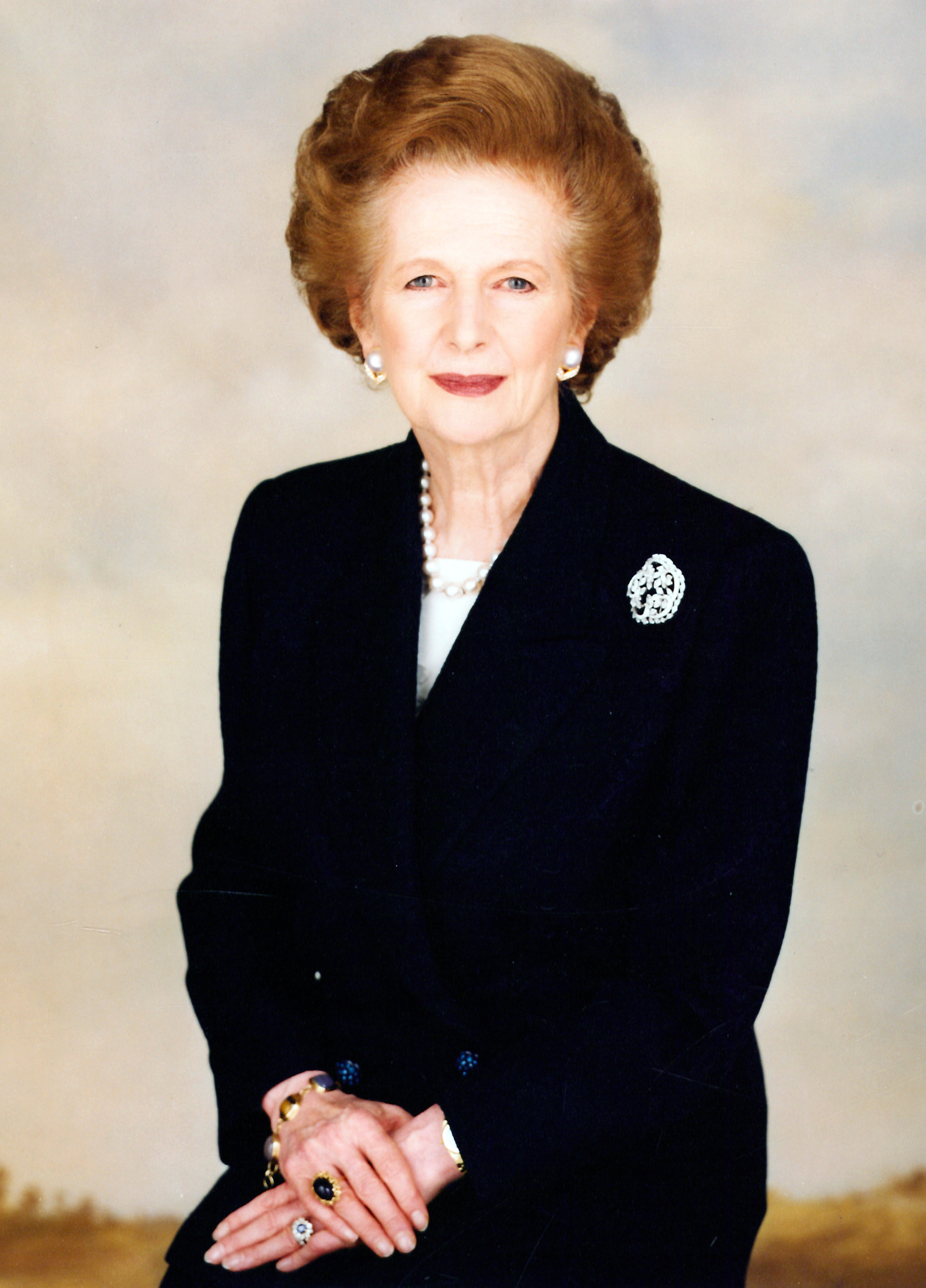
When Margaret Thatcher became Prime Minister of the United Kingdom on 4 May 1979, she stood on the steps of 10 Downing Street and quoted the prayer attributed to Saint Francis of Assisi: where there is discord, may we bring harmony; where there is error, may we bring truth; where there is doubt, may we bring faith; where there is despair, may we bring hope. It was a moment of apparent softness from a woman whose political career to that point had been defined by hardness, by the refusal of sentiment, the willingness to say unpopular things, the capacity to cut through the comfortable fictions that had accumulated around British economic and social policy since the Second World War. Those who knew her well smiled at the Franciscan invocation. The years that followed were not characterised by harmony.
She governed Britain for eleven years and seven months, longer than any Prime Minister since the early nineteenth century. In that time she privatised state-owned industries, broke the power of the trade unions, fought and won a war in the South Atlantic, negotiated a budget rebate from the European Community, withstood an IRA assassination attempt, developed a crucial relationship with Ronald Reagan that helped accelerate the end of the Cold War, and transformed not only the economic structure of Britain but the ideological vocabulary in which its politics was conducted. When Tony Blair led the Labour Party to power in 1997, he did so by accepting the broad framework she had constructed. Even her opponents were, in an important sense, Thatcherites.
Quick Facts
- Full name
- Margaret Hilda Thatcher, Baroness Thatcher (born Roberts)
- Born
- 13 October 1925, Grantham, Lincolnshire, England
- Died
- 8 April 2013, London, England (aged 87)
- Known for
- Prime Minister of the United Kingdom (1979 to 1990); first woman to hold the office
- Notable achievement
- Longest-serving British Prime Minister of the twentieth century; pioneered free-market economic reforms that influenced governments worldwide
Grantham: The Formation
Margaret Hilda Roberts was born on 13 October 1925 above the family’s grocery shop at 11 North Parade, Grantham, a market town in Lincolnshire. The setting mattered to her, and she made sure it mattered to others. “We didn’t waste things,” she said of her childhood, and the statement was as much political as biographical: a world of careful accounting, of things earned rather than inherited, of self-reliance as a virtue rather than a necessity. The shop was the physical embodiment of the values she carried into politics, and she returned to it throughout her career as the source of her essential convictions about how economies worked and how individuals should be expected to take responsibility for their own circumstances.
Her father, Alfred Roberts, was the dominant figure of her formation. He was a grocer and an alderman, a man whose intellectual life was conducted through serious reading, local politics, and lay Methodist preaching. He had not been formally educated beyond the basics, but he read widely, thought carefully, and held strong opinions about public affairs and public morality. He served as mayor of Grantham in 1945 to 1946. His daughter’s political education was largely conducted at his side: attending council meetings, listening to his discussions of public affairs, absorbing the conviction that what you believed was less important than that you believed it clearly and were prepared to defend it.
Her mother, Beatrice, played a smaller role in the Thatcher mythology, which is partly a reflection of their more distant relationship. Thatcher said late in her life that she had taken after her father in all the ways that mattered. Beatrice was hardworking and practical but lacked her husband’s intellectual ambition. The family was comfortable but not wealthy; holidays were rare, the shop required constant attention, and the children (Margaret and her older sister Muriel) were expected to contribute from an early age.
She was a serious student, diligent and competitive, at Kesteven and Grantham Girls’ School, where she won prizes for poetry recitation, played hockey, and developed the habit of thorough preparation that distinguished her throughout her political career. Her headmistress reportedly told her, when she was preparing to apply to Oxford, that she was not Somerville material. She applied anyway and was accepted.
Oxford and the Beginning of Politics
She arrived at Somerville College, Oxford, in October 1943 to study chemistry under the Nobel laureate Dorothy Hodgkin, who later recalled her as a good student, diligent and tenacious. But chemistry was always a means to an end rather than a calling. The calling was politics, and Oxford provided the arena.
She threw herself into the Oxford University Conservative Association, eventually becoming its president in 1946, only the third woman to hold the position. The OUCA was, in the mid-1940s, a genuinely intellectually serious organisation, and Thatcher engaged with the ideas that were reshaping Conservative thinking in the post-war era. She read Friedrich Hayek’s “The Road to Serfdom,” published in 1944, which argued that central planning was not only inefficient but was the first step on a path toward totalitarianism. The book’s argument, that free markets were the necessary foundation of free societies, became a cornerstone of her political philosophy. She also encountered the emerging consensus around Keynesian economics and began forming the sceptical views about it that she would later carry into government.
She graduated in 1947 and took a job as a research chemist at a plastics company in Colchester, then in Dartford, Kent. Dartford had a Conservative constituency association that needed a candidate for the 1950 general election, and at twenty-four she put herself forward. She was selected, making her the youngest female Conservative candidate in the country. She lost in 1950 and again in 1951, in a solidly Labour constituency, but made a strong showing and demonstrated the qualities that would define her campaign style: meticulous preparation, combative delivery, and a physical and intellectual stamina that outlasted more comfortable opponents.
At a party function during the Dartford campaigns she met Denis Thatcher, a successful businessman ten years her senior who was going through a divorce. They married in December 1951 and had twins, Mark and Carol, in August 1953. Denis proved to be the ideal partner for an ambitious political career: supportive, financially self-sufficient, personally uninterested in the limelight, and possessed of a loyalty that never wavered through three decades of very public life.
The Long Climb to the Top
Between the Dartford campaigns and her entry into the Cabinet, Thatcher combined family life, law, and the persistent pursuit of a parliamentary seat. She retrained as a barrister while raising the twins and was called to the bar in 1954, specialising in tax law. In 1959 she won the safe Conservative seat of Finchley in north London and entered Parliament at thirty-three.
Her parliamentary career was not always the smooth ascent that retrospect can make it appear. In 1960, as a backbencher, she introduced a Private Member’s Bill requiring local councils to admit the press to their meetings, demonstrating the willingness to pursue what she considered a matter of democratic principle against the wishes of local government interests. Harold Macmillan’s government made her a Parliamentary Secretary in the Ministry of Pensions and National Insurance in 1961, her first taste of office.
In the years of opposition that followed the Conservatives’ defeat in 1964, she rose steadily, becoming shadow housing minister and then shadow Treasury spokesperson. She supported Edward Heath’s successful campaign for the Conservative leadership in 1965 and was rewarded with shadow Cabinet positions. When Heath won the 1970 election and became Prime Minister, she was appointed Secretary of State for Education and Science.
Her time at Education was marked by a policy decision that attached to her for the rest of her career: the withdrawal of free school milk for children over seven, a cost-cutting measure that earned her the tabloid nickname “Thatcher the milk snatcher.” It was her first experience of the ferocity of popular opposition and of the Labour Party’s capacity to deploy simple emotional arguments against Conservative policies. The experience did not soften her. It made her more careful about political communication and more determined not to make policy decisions primarily on the basis of what could be easily caricatured.
When Heath’s government fell in February 1974, in the wake of the miners’ strike and the three-day working week, Thatcher was among the shadow Cabinet figures who began privately questioning whether Heath’s leadership could be salvaged. After the second electoral defeat of 1974, she was persuaded to challenge him for the leadership. Her candidacy was initially treated as a stalking horse by most of the parliamentary party, a way of forcing Heath to face a contest so that a more serious candidate could then emerge. But when the first ballot results showed Thatcher in the lead and a string of more senior colleagues declined to enter the second round, the calculation changed. She won the second ballot in February 1975 and became leader of the Conservative Party.
I am not a consensus politician or a pragmatic politician: I am a conviction politician.
Leader of the Opposition: Building the Case
The four years from 1975 to 1979 were the period during which Thatcher and her small circle of intellectual allies, particularly the economist Keith Joseph and the think tank director Alfred Sherman, developed the policy framework that would define her government. The framework drew on Hayek’s ideas, on the monetarist economics of Milton Friedman, on a critique of the post-war consensus that held that the government’s role was to manage demand and maintain full employment through public spending. They argued that this consensus had produced stagflation (simultaneous high inflation and high unemployment), excessive state intervention in the economy, and the progressive erosion of individual responsibility.
A Soviet army newspaper gave her the nickname “the Iron Lady” in January 1976, in an article criticising a speech in which she had called the Soviet Union a threat to Western civilisation. She adopted the name with visible pleasure. The nickname suited her self-presentation: unbending, metallic, impervious to sentimentality. Her aides worked to sharpen the contrast between her certainty and the perceived dithering of James Callaghan’s Labour government, which was governing through a period of severe economic difficulty, rising inflation, and increasing trade union militancy.
The winter of 1978 to 1979 provided the decisive contrast. A wave of strikes by lorry drivers, refuse collectors, gravediggers and hospital workers paralysed large parts of Britain, generating images of uncollected rubbish in public squares and (according to some accounts, disputed in others) unburied bodies. The period became known as the Winter of Discontent, after the opening line of Shakespeare’s “Richard III.” The strikes were in fact the consequence of the breakdown of the Labour government’s pay policy rather than of union bloody-mindedness alone, but the political damage was fatal. In the election of 3 May 1979, Thatcher led the Conservatives to a majority of 43 seats.
The First Term: Recession, Riots and Resolution
The first two years of the Thatcher government were economically brutal. Committed to reducing inflation through tight monetary policy and public spending cuts, the government watched the economy contract sharply. Unemployment rose from 1.5 million in 1979 to more than 3 million by 1983. Manufacturing industry, particularly in the north of England, Scotland and Wales, was devastated. In 1981, when 364 economists wrote a letter to The Times arguing that the government’s economic strategy was without theoretical justification and risked permanent damage to the fabric of British society, Thatcher ignored them.
Urban riots in Brixton in London, in Toxteth in Liverpool, and in other cities in the summer of 1981 reflected the social consequences of unemployment and a policing culture that had generated deep mistrust in Black and minority communities. Lord Scarman’s official inquiry into the Brixton riots identified socioeconomic disadvantage as a root cause. Thatcher’s response focused on law and order rather than on the structural questions Scarman had raised.
Within her own Cabinet, a group of ministers known as the “wets,” men who represented the traditional paternalistic conservatism of the post-war era and who believed the government’s economic medicine was too harsh, pressed for a change of course. At the Conservative Party conference in October 1980, Thatcher dismissed their arguments in a line that has become among the most quoted in post-war British political history. Paraphrasing Rudyard Kipling, she said that she knew the question some were asking, the one that began “and so the cry is turning round, turn if you like, but the lady’s not for turning.”
The Falklands War of 1982 transformed her political position. Argentina’s military junta invaded the Falkland Islands, a British overseas territory in the South Atlantic, on 2 April 1982. Thatcher’s decision to send a naval task force to retake the islands against the advice of the Foreign Office, which favoured a negotiated settlement, and against the expectations of the United States, which initially attempted to mediate, was a genuine gamble. The campaign lasted ten weeks. British forces retook the islands on 14 June 1982. The victory was complete and was accompanied by a surge of popular support that reshaped British politics. The 1983 general election, fought in the afterglow of the Falklands and against a Labour Party that had moved sharply to the left under Michael Foot, produced a Conservative majority of 144 seats.
The Second Term: The Miners and the Markets
The defining domestic confrontation of Thatcher’s second term was the miners’ strike of 1984 to 1985. The National Coal Board, under its chairman Ian MacGregor, announced plans in March 1984 to close 20 pits and make 20,000 miners redundant. Arthur Scargill, the president of the National Union of Mineworkers, called a strike. But Scargill did so without a national ballot of the membership, a decision that divided the union movement and allowed the government to portray the strike as illegitimate.
Thatcher had prepared for this confrontation. Coal stocks had been built up, contingency plans for power supply had been made, and the police were prepared for a level of industrial confrontation that Britain had not seen since the 1920s. The strike lasted almost exactly a year, from March 1984 to March 1985. The images of mass pickets and police charges at Orgreave Coking Works in June 1984 were among the most violent scenes of industrial conflict in post-war British history. The miners ultimately returned to work without winning any concessions.
The strike’s defeat was a watershed in British industrial relations. Trade union membership, which had peaked at more than 13 million in 1979, began a long decline. The series of industrial relations laws that the government introduced during the 1980s, requiring secret ballots before strikes, limiting secondary action and picketing, and removing the legal immunities that unions had enjoyed since the early twentieth century, remade the balance of power between employers and workers.
The government’s privatisation programme proceeded through the same years. British Telecom was privatised in 1984, British Gas in 1986, British Airways in 1987, British Steel in 1988, and the water and electricity industries in 1989 and 1990. The “Big Bang” deregulation of the financial markets in October 1986 transformed the City of London from a gentlemanly club into one of the most competitive financial centres in the world. The programme of selling council houses to their tenants under the Right to Buy scheme created a generation of home-owning voters with a direct financial stake in the continuation of Thatcher’s policies.
The Anglo-American Alliance and the Cold War
Few international relationships have been as consequential or as personally genuine as the one between Margaret Thatcher and Ronald Reagan. They met in 1975, when Reagan visited London as a former governor of California, and found an immediate ideological sympathy: both believed in free markets, strong defence, and the existential struggle against Soviet communism, and both were regarded by the foreign policy establishments of their respective countries as dangerously ideological.
When Reagan became president in January 1981, the relationship became the central axis of Western policy toward the Soviet Union. Thatcher supported the deployment of American cruise and Pershing II missiles in Europe over massive domestic opposition, including a sustained campaign by the Campaign for Nuclear Disarmament. She supported Reagan’s Strategic Defense Initiative, the missile defence programme that the Soviet Union found deeply threatening. She shared Reagan’s conviction that dealing with the Soviet system from a position of strength was more likely to produce change than accommodation.
Her relationship with Mikhail Gorbachev, who became Soviet General Secretary in March 1985, added a crucial dimension. After meeting Gorbachev at Chequers in December 1984, before his elevation, she told Reagan, “I like Mr. Gorbachev. We can do business together.” The line became famous. Her willingness to engage with Gorbachev while maintaining the pressure of Western military and economic competition is seen by historians as a significant contribution to the conditions that led to the end of the Cold War.
The Third Term and the Fall
Thatcher won a third general election in June 1987, with a majority of 102 seats. But the third term was bumpier than the first two. The introduction of the community charge, universally known as the poll tax, a flat-rate local government tax that replaced the previous rates system based on property values, produced a popular revolt of a scale she had not experienced. The tax was genuinely regressive, charging a duke and a dustman the same flat rate, and was widely perceived as unfair even by voters who had supported Thatcher’s economic policies. Riots in London in March 1990 were the most violent in the capital since the 1981 disturbances.
Within her Cabinet and the parliamentary party, anxieties were also accumulating about her management style, which had grown more autocratic as her tenure lengthened, and about her increasingly Euro-sceptic position. Her October 1990 speech in the House of Commons, in which she responded to a report on a European Community summit with a three-times repeated “No, no, no,” prompted her Deputy Prime Minister Geoffrey Howe to resign and deliver a devastating resignation speech in Parliament describing the experience of working under her as like being sent to bat at cricket with a broken blade.
Michael Heseltine, who had resigned from her Cabinet in 1986 over the Westland affair, challenged her for the leadership in November 1990. Thatcher won the first ballot but not by a large enough margin to avoid a second round. After consulting her Cabinet ministers individually and finding insufficient support to continue, she announced on 22 November 1990 that she would not contest the second round and would resign as Prime Minister.
Life After Downing Street and Legacy
She remained in Parliament until the 1992 election, then took a life peerage as Baroness Thatcher of Kesteven. She advised several foreign governments and established the Thatcher Foundation to promote the ideas of free markets and liberal democracy. In her later years she suffered a series of small strokes that progressively reduced her public activities. She died on 8 April 2013 at the Ritz Hotel in London, where she had been staying after a hip operation. She received a ceremonial funeral at St. Paul’s Cathedral attended by Queen Elizabeth II, the first time the Queen had attended the funeral of a former Prime Minister since Winston Churchill’s in 1965.
The assessment of Thatcher’s legacy is one of the most fiercely contested debates in recent British history. The case for her rests on several substantial achievements. She stabilised an economy that had been losing competitiveness for a generation. She broke the informal veto that trade union leaders had exercised over economic policy. She gave millions of working-class people the opportunity to own their own homes. She played a meaningful role in the events that ended the Cold War. And she broke, simply by existing and succeeding, the assumption that the highest offices in British public life were not available to women.
The case against is equally substantial. The destruction of manufacturing communities in the north, Wales and Scotland produced levels of unemployment and social disintegration from which many areas have never fully recovered. The financialisation of the British economy, which her deregulation of the City accelerated, created enormous wealth at the top and increasing precariousness further down the income scale, and built structural vulnerabilities that contributed to the financial crisis of 2008. The poll tax was a genuine failure of political judgment. Her position on apartheid South Africa, where she opposed sanctions and described the ANC as a terrorist organisation as late as 1987, was on the wrong side of history.
What is undeniable is the scale of her impact. She set the terms of British political debate for a generation. The phrase “Thatcherism” entered every major language as a term for a recognisable set of economic and political ideas. Governments in New Zealand, Australia, Canada and the United States adopted versions of her programme. The grocer’s daughter from Grantham reshaped the political landscape of the late twentieth century more thoroughly than almost any other peacetime leader in British history.
Key Facts
- Thatcher was the first woman to lead a major Western democracy and served as Prime Minister from 1979 to 1990, the longest tenure of any British Prime Minister in the twentieth century.
- She trained as a research chemist before retraining as a barrister, making her one of the most academically qualified politicians ever to hold the office.
- The Soviet army newspaper Krasnaya Zvezda gave her the nickname “the Iron Lady” in 1976 in a hostile article, which she immediately adopted as a badge of honour.
- The Falklands War of 1982, in which British forces retook the South Atlantic islands from Argentine occupation in ten weeks, transformed her political standing and led directly to the Conservative landslide of 1983.
- She was removed from office not by the electorate but by her own parliamentary party in November 1990, prompted by internal divisions over Europe and the deeply unpopular poll tax, making her fall as dramatic as any other episode in her extraordinary career.