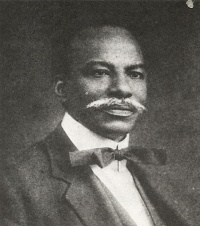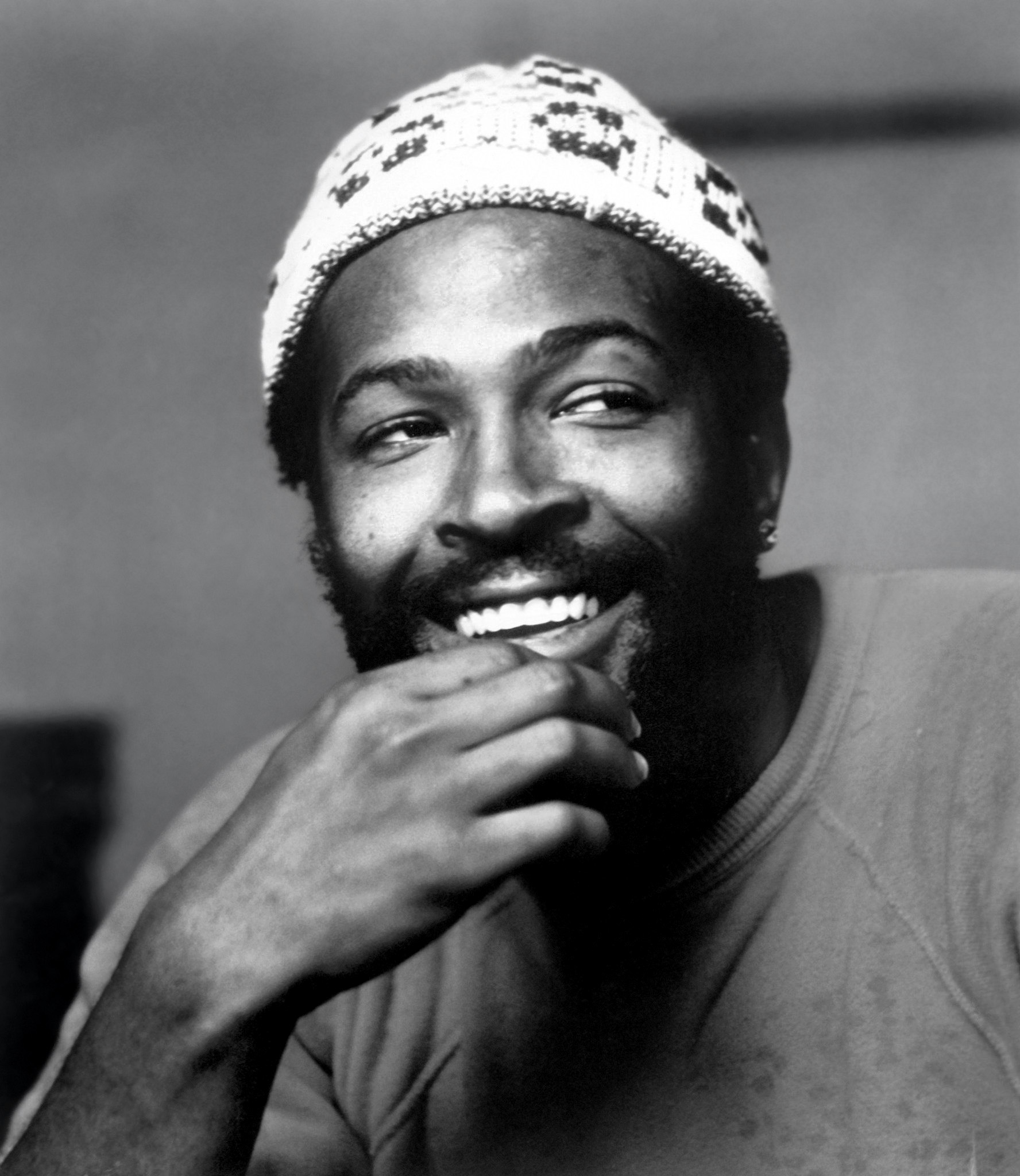
On the morning of 1 April 1984, in a quiet house on Gramercy Place in Los Angeles, the most beautiful voice in American soul music fell silent. Marvin Gaye, the man who had taught a generation how to feel, was dead at the hands of his own father, one day before he would have turned forty five. The cruel symmetry of it stunned the world. Here was an artist who had spent his life translating private suffering into public grace, who had sung about peace while waging an exhausting war within himself, struck down in the very home where his troubles began. The tragedy did not diminish the music. If anything, it deepened it. For Marvin Gaye had already given the world a body of work that no early death could erase, a catalogue that moved seamlessly from sweet pop ballads to a searing meditation on the state of a broken nation and then to the most frankly sensual records of their era. He was, by any reasonable measure, one of the greatest singers who ever lived. He was also one of the most haunted.
Quick Facts
- Full name
- Marvin Pentz Gay Jr.
- Born
- 2 April 1939, Washington, D.C., USA
- Died
- 1 April 1984, Los Angeles, California (aged 44)
- Genre
- Soul, R&B, funk
- Label
- Motown
Early Life
Marvin Pentz Gay Jr. was born on 2 April 1939 in Washington, D.C., the second of four children in a household ruled by faith and fear in roughly equal measure. His father, Marvin Gay Sr., was a minister in the House of God, a small and strict Pentecostal denomination that drew on Hebrew Pentecostal traditions and demanded austerity from its followers. The family lived in a poor section of the capital, and from his earliest years the boy understood that his home was governed by rules that could turn, without warning, into punishment.
The relationship between father and son was the defining wound of Marvin’s life. Marvin Gay Sr. was a complicated and frequently cruel man, given to harsh discipline and to beatings that left lasting marks on his son’s body and on his spirit. The father was also a figure of contradiction, a preacher who wore his wife’s clothing in private, a man whose own unresolved conflicts seemed to find their outlet in the domination of his children. Young Marvin grew up craving the approval that never came, absorbing a sense that affection had to be earned and could be revoked at any moment. Decades later, when he spoke about the violence of his upbringing, the pain in his voice had not faded.
Yet the same church that housed so much fear also gave Marvin his first stage. He began singing in his father’s congregation as a small child, his voice rising clear and true above the hand claps and the organ. The Pentecostal tradition prized feeling above polish, and it taught him to sing as if his life depended on it. He learned piano and drums, and he discovered that when he performed, the bullying and the loneliness fell away. Music became both refuge and rebellion, the one arena where the son could outshine the father.
As a teenager Marvin sang with doo wop groups around Washington, including a formation called the Marquees, who recorded for the small Okeh label and later came under the wing of the rhythm and blues star Harvey Fuqua. To escape his father’s house and to put structure around his restlessness, the young man enlisted in the United States Air Force. The discipline of military life did not suit him. He chafed under orders and was eventually discharged. The experience confirmed something he already suspected about himself: he would never thrive under another man’s command. He returned to music, joined a reconstituted version of Fuqua’s group the Moonglows, and added an “e” to his surname, becoming Marvin Gaye, partly to distance the name from the taunts of his childhood and partly to mark a new beginning.
Motown Beginnings
When Harvey Fuqua moved to Detroit and connected with a rising young entrepreneur named Berry Gordy, Marvin Gaye followed. Gordy had founded Motown Records in 1959 with a small loan and an enormous ambition: to build a Black owned label that could sell to all of America. The company operated out of a modest house on West Grand Boulevard that Gordy christened Hitsville U.S.A., and inside its cramped studio a new sound was being assembled with assembly line precision. Gaye arrived first as a session drummer and pianist, playing on records by other artists before Gordy let him step to the microphone himself.
Gaye’s ambitions, at the start, did not match Motown’s machine. He dreamed of being a crooner in the mold of Frank Sinatra and Nat King Cole, of singing standards in a tuxedo. His first solo album leaned in that direction and went nowhere. Gordy steered him back toward rhythm and blues, and the results were transformative. In the early 1960s Gaye scored a run of buoyant, danceable hits that established him as one of Motown’s marquee voices. “Hitch Hike” in 1962 gave him a signature dance and an early taste of the charts. “Pride and Joy” followed. “Can I Get a Witness” showcased the gospel fire he had carried out of his father’s church. By the middle of the decade he was a genuine star, and “How Sweet It Is (To Be Loved by You)” in 1964 and “I’ll Be Doggone” and “Ain’t That Peculiar” cemented his commercial standing.
His personal life became entangled with the Motown dynasty in 1963 when he married Anna Gordy, Berry Gordy’s older sister. Anna was seventeen years his senior, a sophisticated and strong willed woman, and the marriage placed Gaye at the center of the family that controlled his career. It was a union of passion and friction, and over time it would supply the raw material for some of his most personal work. For now it knitted him ever more tightly to the company, even as his artistic appetites began to strain against its formulas.
It was in duet that Gaye found one of his purest expressions. Motown paired him with a series of female singers, and the most magical of these partnerships was with Tammi Terrell, a gifted and luminous young vocalist from Philadelphia. Together they recorded a string of joyful, perfectly matched hits written largely by Nickolas Ashford and Valerie Simpson, including “Ain’t No Mountain High Enough,” “Your Precious Love,” “Ain’t Nothing Like the Real Thing” and “You’re All I Need to Get By.” Their voices entwined with an intimacy that listeners assumed was romance, though the bond was that of devoted friends. The partnership ended in heartbreak. In 1967 Terrell collapsed in Gaye’s arms during a performance, the first sign of the brain tumor that would take her life in 1970 at the age of twenty four. Her long illness and death devastated Gaye. He withdrew from live performance for a time, plunged into grief, and began to question the meaning of the bright, commercial music he had been making. The loss helped push him toward a reckoning that would change everything.
Artistic Independence and What’s Going On
By the dawn of the 1970s, Marvin Gaye was a changed man. The death of Tammi Terrell, the social upheaval of the decade, the war in Vietnam and the letters his brother Frankie sent home from the front, the riots that had torn through American cities, all of it pressed on him. He no longer wanted to sing only of romance. He wanted to make a record that spoke to the suffering and the searching he saw around him. The problem was that Berry Gordy, the man who signed his checks, did not want him to.
Motown had built its empire on a careful, apolitical formula. Gordy believed that protest songs would alienate the broad audience the label had worked so hard to win, and that a concept album about war, poverty and injustice was commercial suicide. When Gaye brought him the song that would become the centerpiece of the new work, Gordy reportedly called it the worst thing he had ever heard and refused to release it. Gaye held firm. He went on strike, telling the company that he would record nothing else until they put out his record. It was an act of extraordinary defiance from an artist who had spent a decade as a cog in the Motown machine, and it forced the issue.
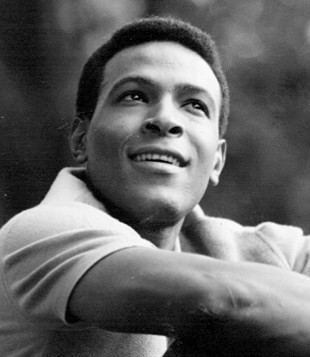
The single slipped out in early 1971 and became a hit, vindicating Gaye and clearing the way for the full album. Released in May 1971, “What’s Going On” was unlike anything Motown had ever issued. Gaye conceived it as a song cycle narrated by a Vietnam veteran returning home to find his country in turmoil, and the tracks flowed into one another in a continuous suite. He addressed police brutality, ecological ruin, drug addiction, poverty and the spiritual exhaustion of a nation, all carried on lush, jazz inflected arrangements and Gaye’s own layered, overdubbed vocals, a technique he refined into a signature. Songs such as “Mercy Mercy Me (The Ecology)” and “Inner City Blues (Make Me Wanna Holler)” became touchstones. The album did not preach. It mourned and it pleaded, wrapping its grief in some of the most gorgeous music ever recorded.
Its triumph was total. The record sold strongly, restored Gaye’s commercial fortunes and elevated him from hitmaker to visionary. Over the decades that followed, “What’s Going On” climbed the ranks of critical esteem until it sat routinely near the top of lists of the greatest albums ever made. It proved that soul music could carry the weight of conscience, that a Black artist on a pop label could make a statement of moral seriousness and reach millions. It also won Gaye what he had wanted most, a measure of creative control. He had bet his career on his own judgment and won, and the victory gave him the freedom to follow his instincts wherever they led next.
Let’s Get It On and Stardom
Where they led was an entirely different kind of intimacy. If “What’s Going On” was an album of the spirit and the conscience, the record that followed in 1973 was an album of the body. “Let’s Get It On” turned Gaye’s attention from the suffering of nations to the pleasures and complications of desire. The title track, with its slow simmer and its unmistakable invitation, became one of the most famous seduction songs in popular music and a massive hit. The album as a whole was frank in a way that few mainstream records had dared to be, treating sexuality not as something furtive but as a subject worthy of an artist’s full attention.
The contrast with the work that preceded it captured the central tension of Gaye’s nature. He was a preacher’s son who had grown up in a world that drew sharp lines between the sacred and the carnal, and he spent his career erasing those lines, finding the spiritual in the sensual and the sensual in the spiritual. “Let’s Get It On” made him a sex symbol, and he embraced the role even as it sat uneasily with the religious conscience his father’s church had stamped into him. Audiences responded with adoration. His concerts became events charged with longing, and his image as a soul superstar was complete.
“I sing what I feel. If you really felt happy and were having a good time, that’s the way it would come out. And if you were depressed, then that’s the way it would come out too.”
Beneath the success, the demons that had always shadowed him grew stronger. Gaye struggled with cocaine, with deepening insecurity and with the weight of expectations he placed on himself. He could be paralyzed by perfectionism, agonizing over recordings, and he carried a lifelong ambivalence about fame that warred with his hunger for it. His marriage to Anna Gordy was disintegrating, and even at the height of his stardom he was a man in private turmoil. The albums he made in the middle of the decade, including the 1976 funk excursion “I Want You,” extended his run of acclaim, but the personal ground beneath him was beginning to crack.
Decline, Exile and Comeback
The collapse of his first marriage produced one of the strangest and most remarkable records in his catalogue. As part of the divorce settlement with Anna Gordy, Gaye agreed to surrender a portion of the royalties from his next album to her. The result was “Here, My Dear,” released in 1978, a sprawling, openly autobiographical reckoning with the marriage and its end. Listeners and critics were baffled at the time by an album that aired so much private grievance, though later generations came to admire its raw honesty. Whatever its artistic merits, it did little to repair his finances.
Money, in fact, was becoming a crisis. Gaye owed enormous sums in back taxes, and his second marriage, to Janis Hunter, who was many years younger than he was and with whom he had two children, was unraveling under the strain of his drug use, jealousy and erratic behavior. By the early 1980s the pressure had grown unbearable. He fled the United States, living first in Hawaii and then in Europe, settling for a time in London and later in the Belgian city of Ostend. The European exile was a period of retreat and recovery. Away from the chaos of Los Angeles, Gaye tried to dry out, to rebuild his health and to find his way back to music.
The comeback, when it came, was triumphant. Gaye signed with Columbia Records, ending his long association with Motown, and in 1982 he released “Midnight Love.” Its lead single, “Sexual Healing,” became the biggest hit of his career, a sleek, hypnotic record that fused his classic sensuality with the textures of the early 1980s. It topped the rhythm and blues charts, climbed high on the pop charts, and at the Grammy Awards in 1983 it won him two trophies, for Best Rhythm and Blues Vocal Performance and Best Rhythm and Blues Instrumental Performance. They were, astonishingly, the first competitive Grammy Awards of his entire career, a belated recognition for an artist who had reshaped the music. That same year he delivered a celebrated rendition of the national anthem before the National Basketball Association All Star Game in Los Angeles, transforming the familiar tune into something soulful and entirely his own. For a moment, Marvin Gaye stood once more at the summit, restored and acclaimed.
Death and Legacy
The restoration did not hold. After the “Midnight Love” tour, Gaye sank back into cocaine, paranoia and depression. He moved into the Los Angeles home he had bought for his parents, and the old, poisonous dynamic with his father reasserted itself in the most volatile possible setting. Marvin Gay Sr. and his famous son lived under one roof, both unstable, the ancient resentments of childhood now amplified by the father’s resentment of the son’s success and the son’s fragile mental state.
On 1 April 1984, an argument between the two men escalated. Accounts describe a violent quarrel that turned physical. Marvin Gay Sr. retrieved a pistol, a gun his son had given him, and shot Marvin Gaye twice. The singer died at the hospital. It was one day before his forty fifth birthday. The man who had survived his father’s beatings as a child was killed by his father as a grown and celebrated artist, a horror so complete that it seemed scripted by the darkest imagination. Marvin Gay Sr. pleaded guilty to voluntary manslaughter and received a suspended sentence and probation.
The world responded with profound grief. Mourners gathered for his funeral in Los Angeles, and tributes poured in from across the music industry and beyond. The sense of waste was overwhelming, the loss of a singer still in his prime and of a man who had never escaped the suffering that had shadowed him from his earliest days.
What he left behind only grew in stature. Marvin Gaye’s influence on rhythm and blues, soul and the popular music that followed is almost impossible to overstate. The intimate, multi tracked vocal style he pioneered became a foundation of modern soul and an obvious ancestor of the quiet storm radio format and of generations of singers who studied his phrasing. “What’s Going On” stands as a model of the socially engaged concept album, cited by countless artists as a North Star. “Sexual Healing” and “Let’s Get It On” remain touchstones of romantic music. In 1987 he was inducted into the Rock and Roll Hall of Fame, and his recordings have continued to sell, to soundtrack films and to find new listeners with each passing decade. The voice that rose first in a Pentecostal church in Washington never stopped speaking to the human heart.
Key Facts
- Marvin Pentz Gay Jr. was born on 2 April 1939 in Washington, D.C., the son of a strict Pentecostal minister whose abuse shaped his entire life.
- He rose to fame at Motown in the 1960s with hits such as “Hitch Hike” and “How Sweet It Is (To Be Loved by You)” and with a celebrated series of duets with Tammi Terrell, including “Ain’t No Mountain High Enough,” before her death in 1970.
- His 1971 concept album “What’s Going On,” made over Berry Gordy’s objections, addressed war, poverty and the environment and is now regarded as one of the greatest albums ever recorded.
- After a 1973 sensual landmark, “Let’s Get It On,” and years of personal struggle and tax exile in Europe, he staged a triumphant comeback with 1982’s “Sexual Healing” and the album “Midnight Love,” winning his first two Grammy Awards.
- He was shot and killed by his own father on 1 April 1984, one day before his forty fifth birthday, and was inducted into the Rock and Roll Hall of Fame in 1987.