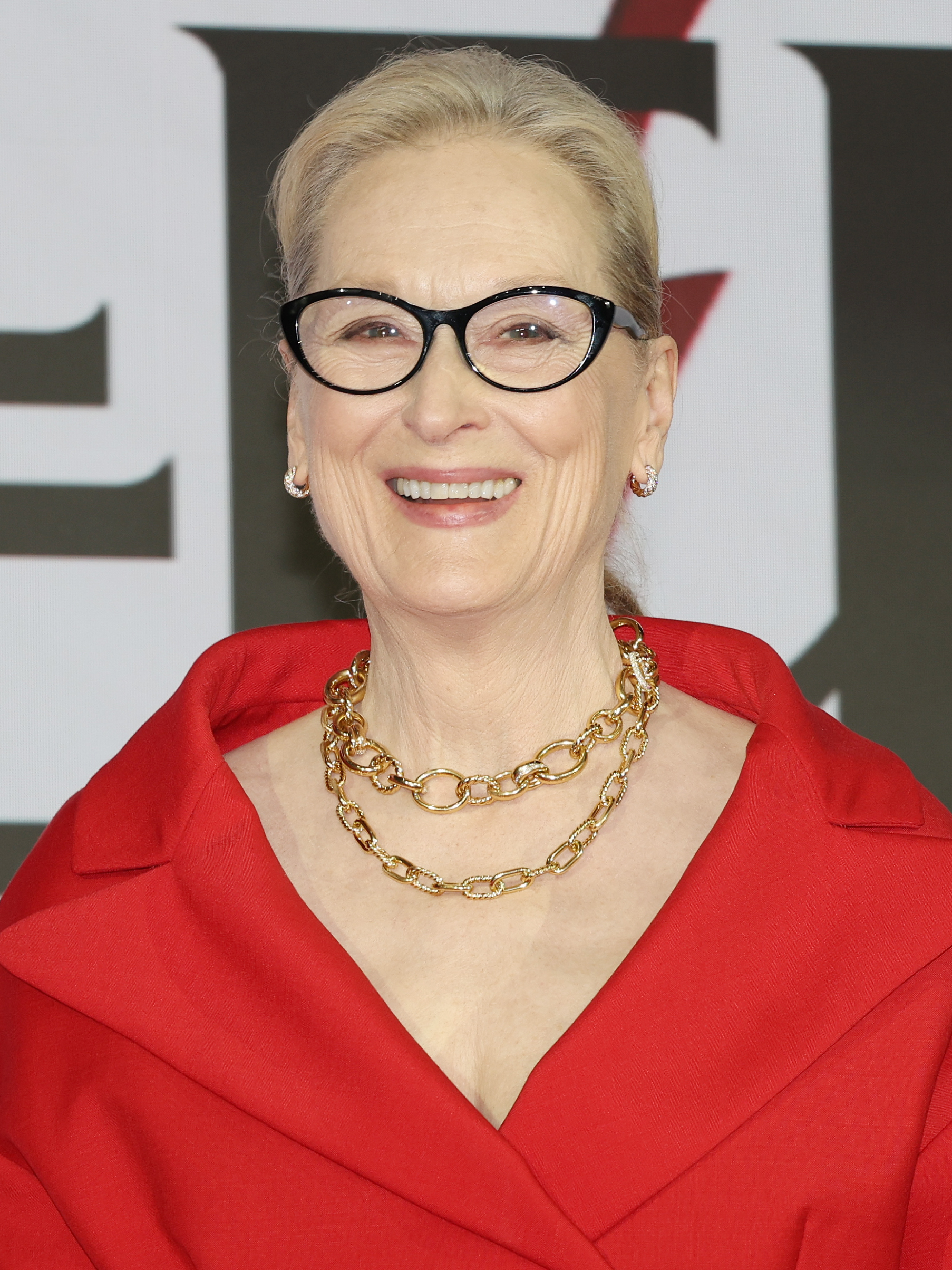
There is a specific kind of awe that settles over an audience watching Meryl Streep disappear. Not the disappearance of a performer hiding behind prosthetics or a costume, though she has worn both, but the deeper disappearance of a gifted intelligence so thoroughly inhabiting another life that the seam between actor and character becomes invisible. She has played a Polish Holocaust survivor in New York, a Danish baroness in colonial Africa, a Massachusetts fisherwoman, a merciless fashion magazine editor, a British prime minister, a mezzo-soprano opera singer and dozens of characters in between. Each time, audiences believe. Each time, critics marvel. Each time, the industry acknowledges, with nominations and wins at a rate no other actor in the history of the Academy Awards has approached, that something exceptional is happening onscreen. Understanding how Meryl Streep became Meryl Streep requires going back to a quiet suburb of New Jersey, a childhood shaped by music and performance, and a young woman who burned with an unusual kind of ambition.
Quick Facts
- Full name
- Mary Louise Streep
- Born
- 22 June 1949, Summit, New Jersey, USA
- Nationality
- American
- Known for
- Record 21 Academy Award nominations; 3 wins; transformative character work
- Awards
- 3 Academy Awards, 8 Golden Globes, 2 BAFTAs, Presidential Medal of Freedom
Early Life in Summit, New Jersey
Mary Louise Streep was born on 22 June 1949 in Summit, New Jersey, a prosperous and quiet community in the state’s Union County. Her father, Harry William Streep Jr., worked as a pharmaceutical executive, and her mother, Mary Wilkinson Streep, was a commercial artist. The household was comfortable, stable and culturally engaged. Music filled the home from her earliest years, and Streep took voice lessons as a child, studying classical singing with such seriousness that she at one point considered a professional singing career. That early immersion in disciplined musical training left a permanent imprint on her abilities: her ear for accent, pitch, rhythm and the music of language can be traced directly to those childhood lessons.
She grew up in Bernardsville, New Jersey, where her childhood presented a picture that seemed, from the outside, entirely unremarkable. She was a cheerleader in high school, popular and socially fluent, the kind of teenager who did not obviously stand apart. But beneath that surface she was already fascinated by performance. She appeared in school productions and discovered, well before the concept fully formed in her mind, that she could put on other people’s lives as easily as other people put on coats. She has described the experience of early performing as a kind of freedom, a space in which social anxieties dissolved and something more alive took over.
After completing high school, she enrolled at Vassar College, where she immersed herself in theatre with growing seriousness. Vassar’s drama programme nurtured her developing skills, and she began to find the intellectual and aesthetic vocabulary to articulate what she was doing when she performed. She spent a year studying drama at Dartmouth College during a period when Dartmouth was first admitting women, and the stimulation of new environments and ideas sharpened her ambitions considerably.
Training at Yale Drama School
The single most formative experience of Streep’s professional preparation came when she was accepted into the graduate programme at the Yale School of Drama, one of the most rigorous and prestigious acting programmes in the world. She arrived in New Haven in the early 1970s with a passion for the work and a capacity for focused effort that would become legendary among her classmates and teachers. The Yale programme demanded an extraordinary range: students trained in movement, voice, text analysis, mask work, period style and the full sweep of dramatic literature from ancient Greece through the modern avant-garde.
At Yale she met fellow students who would become lifelong colleagues, including John Lithgow, who later appeared with her in film. She also met the actor John Cazale, with whom she fell deeply in love. Their relationship, which lasted until Cazale’s death from cancer in 1978, was a formative experience that marked her in ways she has spoken about with extraordinary candour in the years since. She stayed by Cazale’s side through his illness, and the emotional depth that audiences first sensed in her earliest film work was in part shaped by that private grief.
At Yale she received her Master of Fine Arts degree in 1975, graduating with a reputation that preceded her into the professional world. Directors and casting agents who heard about her from Yale faculty described a performer of unusual intelligence, fearless physical commitment and technical precision. She moved to New York, and the city absorbed her almost immediately.
First Steps in New York Theatre
Streep’s professional career effectively launched in New York theatre, and she made an immediate impression. She appeared in a string of productions at the Public Theater under the direction of Joseph Papp, who had a gift for identifying exceptional talent and a commitment to developing American acting at the highest level. Among her most celebrated early stage roles was a production of “The Cherry Orchard” and a memorably ambitious staging of “Henry V” in which she played multiple roles, demonstrating the shapeshifting capacity that would define her screen work.
She also appeared on Broadway in “27 Wagons Full of Cotton” and “Happy End,” earning a Tony Award nomination that signalled to the wider theatre world that a major talent had arrived. Critics who saw her in these early productions described someone who seemed already fully formed, an actor who had bypassed the tentative quality that marks most early careers and arrived at a mastery that usually takes decades to acquire. What they were observing was the product of natural gift combined with the ferocious discipline instilled by years of vocal training, academic study and the unsparing demands of the Yale programme.
The Transition to Film: “Julia” and “The Deer Hunter”
Streep’s move to film was swift. Her screen debut came in a small role in “Julia” in 1977, where she appeared briefly alongside Jane Fonda and Vanessa Redgrave, two of the most respected actresses of that era. She made an immediate impression even in limited screen time. The following year brought a role that announced her to a global audience: in Michael Cimino’s “The Deer Hunter,” one of the defining American films of the 1970s, she played Linda, the young woman at the emotional centre of a story about working-class friends devastated by the Vietnam War. The film starred Robert De Niro and Christopher Walken, and it was nominated for nine Academy Awards, winning five including Best Picture. Streep appeared in her first Academy Award race, nominated for Supporting Actress.
The nomination was the beginning of a relationship between Streep and the Academy of Motion Picture Arts and Sciences unlike any other in the history of the institution. But more significant than the statistics was the quality of what she was doing onscreen. In “The Deer Hunter,” against a backdrop of extraordinary male performances, she held her own with a naturalness and emotional honesty that seemed to operate by different, more truthful rules than conventional movie acting.
”Kramer vs. Kramer”: The First Oscar
In 1979 Streep appeared in Robert Benton’s “Kramer vs. Kramer,” a divorce drama starring Dustin Hoffman that became one of the highest-grossing and most critically acclaimed films of the year. She played Joanna Kramer, a woman who abandons her husband and young son and then returns to seek custody after finding herself, a role that required her to generate sympathy and complexity for a character that the film’s narrative initially framed as a deserter. She won the Academy Award for Best Supporting Actress for the performance, and the victory was notable not only as a professional milestone but for the speech she gave when accepting it, a confident, warm and intelligent piece of public oratory that introduced her to millions of viewers as a full human presence, not merely a screen image.
What few observers knew was that the making of “Kramer vs. Kramer” had been fraught. The film’s director and her co-star Dustin Hoffman used unconventional methods that Streep found at times professionally disrespectful, including surprising her before takes with provocations designed to generate emotional reactions. She later spoke about these experiences with characteristic directness, noting that the approach had worked on one level but that it was not one she endorsed or would willingly repeat. Her account offered a rare window into the mechanics of screen performance and the complicated politics of film sets, and her willingness to speak about it honestly established her early on as someone who would not paper over the realities of her industry.
”Sophie’s Choice”: An Iconic Performance
If the first Oscar established Streep as a major talent, her second confirmed her as a phenomenon. In 1982 she starred in Alan J. Pakula’s adaptation of William Styron’s novel “Sophie’s Choice,” playing Sophie Zawistowski, a Polish Catholic survivor of Auschwitz living in postwar Brooklyn. The role required her to learn Polish and to speak English with a Polish accent with absolute conviction, to carry the physical and psychological weight of a character defined by an act of impossible choice, and to sustain a performance of shattering emotional complexity across a long and demanding film. She also learned a significant amount of German for scenes set in the concentration camp.
The performance is widely regarded as one of the greatest in screen history. It earned Streep the Academy Award for Best Actress and consolidated a critical consensus that she was operating in a category of her own. The film’s central revelation, the choice of the title, lands with the force it does partly because Streep has spent the entire preceding film making Sophie entirely, specifically, heartbreakingly real. When the secret arrives, we feel it as a blow to someone we know, not to a character we have watched.
“I have a very low threshold of boredom. I get so interested in new things. Acting has kept me from being bored.”
The Range of the 1980s
The decade following “Sophie’s Choice” demonstrated the exceptional range that would become Streep’s defining characteristic. In Karel Reisz’s “The French Lieutenant’s Woman” (1981) she played a dual role, a Victorian outcast and the modern actress playing her, in a structurally inventive film that required two entirely different registers of performance. In “Silkwood” (1983) she played Karen Silkwood, a real-life nuclear plant worker and union activist who died under disputed circumstances, giving a performance of gritty, unglamorous naturalism under the direction of Mike Nichols. The film earned her another Oscar nomination and began one of the defining creative partnerships of her career: she and Nichols would work together multiple times, sharing a mutual respect that each spoke about warmly.
“Out of Africa” (1985) brought her the role of Danish writer Karen Blixen in Sydney Pollack’s epic portrait of colonial Kenya, opposite Robert Redford. She learned Danish, acquired a Danish accent and inhabited a woman of unusual intelligence, stoicism and sensibility. The film won the Academy Award for Best Picture and Streep received another nomination. In “Ironweed” (1987) she played a street woman surviving in Depression-era Albany, opposite Jack Nicholson, stripping away any trace of glamour to inhabit a life lived at the margins of everything. The film was not a commercial success, but the performance added another dimension to a body of work already richer than most careers manage in a lifetime.
Comedy, Darkness, and the 1990s
The 1990s found Streep expanding her range in directions that surprised audiences who had come to think of her primarily as a tragedian. In “Postcards from the Edge” (1990), again directed by Mike Nichols, she played a version of Carrie Fisher’s thinly fictionalised memoir, a drug-recovering actress navigating a complicated relationship with her showbiz mother, played by Shirley MacLaine. The film revealed a gift for sharp comedy and self-deprecating wit that delight audiences and critics equally, while also showcasing her singing voice in scenes that felt effortlessly natural.
“The Bridges of Madison County” (1995) cast her opposite Clint Eastwood as an Italian immigrant farmwife whose life is temporarily transformed by a brief, passionate encounter with a National Geographic photographer. The film required Streep to carry an Italian accent through a very American story and to make the audience believe in a character whose romantic fantasy they might otherwise have found difficult to credit. She earned yet another Oscar nomination for a performance of tenderness and restrained longing that many observers consider among her finest. In “One True Thing” (1998) she played a suburban mother dying of cancer, and the performance moved audiences and critics to describe what she was doing as a kind of acting that other people simply do not have access to.
“The Devil Wears Prada” and a Cultural Landmark
If one performance crystallised Streep’s status as a pop-cultural force beyond the boundaries of critical praise and industry awards, it was her portrayal of Miranda Priestly in “The Devil Wears Prada” in 2006. Based on Lauren Weisberger’s novel and directed by David Frankel, the film cast Streep as the terrifying editor of a high-fashion magazine, a character whose real-world model was widely understood to be Vogue editor Anna Wintour. It was a role that could easily have descended into pantomime villainy, and Streep made something altogether more unsettling and more interesting out of it.
She played Miranda not as a screaming tyrant but as a woman of absolute certainty, speaking in a near-whisper, never raising her voice, relying on stillness and the implication of consequences to reduce everyone around her to anxiety. The performance was deeply, brilliantly funny, and it connected with audiences in a way that made the film a genuine cultural phenomenon. It grossed more than 300 million dollars worldwide on a modest budget and introduced Streep to a generation of younger audiences who had grown up after the era of “Sophie’s Choice” and “Kramer vs. Kramer.” The Oscar nomination it generated was her fourteenth.
”Doubt,” “Julie and Julia,” and “The Iron Lady”
The years following “The Devil Wears Prada” produced a succession of performances, each in a different key. In “Doubt” (2008), John Patrick Shanley’s adaptation of his own stage play, she played a formidable Catholic school principal who becomes convinced that a priest has abused a child, despite the absence of direct evidence. The film is structured as a duel between her character and Philip Seymour Hoffman’s accused priest, and the two actors circle each other with extraordinary precision. Streep earned another nomination; the film was widely discussed as the best American film of its year.
In “Julie and Julia” (2009) she played Julia Child, the legendary American cooking teacher and television personality, in the portion of Nora Ephron’s film devoted to Child’s years in postwar Paris. The performance was received with near-universal delight: Streep captured Child’s physical exuberance, her particular vocal music, her warmth and her enormous appetite for living without ever tipping into impersonation. She seemed to love Julia Child, and the love came through onscreen.
“The Iron Lady” (2011) brought her the most overtly political transformation of her career. As Margaret Thatcher, the former British prime minister, she navigated the physical demands of ageing makeup and prosthetics alongside the political complexity of portraying a deeply divisive historical figure. The performance was technically staggering, and it earned her a third Academy Award for Best Actress, making her only the second actor in history to win three competitive Oscars. She was sixty-two years old when she collected the award, a fact that spoke to a career built not on youth but on the continuous growth of mastery.
Later Career: “Florence Foster Jenkins,” “The Post,” and Beyond
In the years following “The Iron Lady,” Streep continued to take roles that demonstrated her restless curiosity and her immunity to the comfortable and predictable. In “August: Osage County” (2013), adapted from Tracy Letts’s Pulitzer Prize-winning play, she played Violet Weston, a pill-addicted Oklahoma matriarch whose dark wit and deeper darkness drive a devastating family reckoning. The ensemble included Julia Roberts, Benedict Cumberbatch, Ewan McGregor and Juliette Lewis, and Streep commanded the film with a performance of savage comedy and frightening intensity.
“Florence Foster Jenkins” (2016) cast her as a real American socialite who became famous in the 1940s for her passionate belief in her own singing talent, which was, by objective measure, catastrophically poor. Jenkins performed publicly and recorded an album, apparently convinced she was a great soprano, and the story required Streep to play a woman singing badly while communicating the sincerity, vulnerability and dignity of someone who believed entirely in what she was doing. The comedy was exquisite, and the pathos that undercut it gave the performance a quality that surprised audiences who expected something lighter.
In “The Post” (2017), directed by Steven Spielberg, she appeared alongside Tom Hanks as Katharine Graham, the Washington Post publisher who authorised publication of the Pentagon Papers. In Steven Soderbergh’s “Let Them All Talk” (2020) she co-starred with Candice Bergen and Dianne Wiest in a film shot largely aboard the Queen Mary 2 with a largely improvised script, demonstrating yet again her capacity to work comfortably in any register and under any conditions.
Theatre and Her Relationship with the Stage
Throughout a film career of extraordinary scope, Streep has returned periodically to the stage, understanding the live theatre as a form of renewal and a reminder of what acting is fundamentally about. Her stage work has been less visible to the general public than her films, partly because theatrical productions are by nature less widely distributed, but among those who have seen her perform live, the experiences have been described as revelatory. Her work in the New York Shakespeare Festival productions of the 1970s established her reputation, and occasional returns to live performance have confirmed that the stage remains, for her, the home of acting’s essential truth.
Her relationship to her craft has been articulated, over decades of interviews, with an intelligence and a humility that set her apart from many performers who speak about their work. She is consistently specific about technique, consistently deflecting the mystification that often surrounds star actors, consistently interested in the practical question of how a performance is made rather than the mythological question of where genius comes from. She speaks about research, preparation, accent work, the specific physical choices that unlock a character, and the collaborative intelligence of good directors.
Awards, Records, and Cultural Impact
The statistics of Meryl Streep’s awards career are without precedent in the history of film acting. Twenty-one Academy Award nominations across five decades represent a record that is unlikely to be approached, let alone equalled, by any performer working today. Three wins place her in a category occupied by only one other actor, Katharine Hepburn, who also won three competitive acting Oscars. Eight Golden Globe Awards, two BAFTAs, and a Presidential Medal of Freedom presented to her by President Barack Obama in 2014 complete a picture of sustained excellence recognised across every dimension of the entertainment and cultural establishment.
But the statistics, however striking, tell only part of the story. Streep’s cultural impact extends well beyond the awards she has collected. She has been a visible and outspoken presence in public conversations about gender equality in the film industry, about the roles available to women and particularly to older women, about the responsibilities that come with a public platform and about the relationship between art and politics. Her speech at the 2017 Golden Globes, in which she addressed the political climate of that moment with characteristic directness and specificity, generated the most-watched moment in the ceremony’s history and demonstrated that her voice carries weight far beyond the boundaries of the film world.
Legacy: What Makes Her Extraordinary
Critics, directors and fellow actors who attempt to explain what makes Meryl Streep special typically arrive at some version of the same answer: she makes choices that other actors either cannot see or cannot execute. Her instinct for the specific, for the telling physical detail or the precise vocal inflection that makes a character suddenly, fully real, is described as something that operates in a dimension of sensitivity and intelligence that is genuinely unusual. Director Mike Nichols, who worked with her repeatedly, once said that she arrives at a first reading with a performance already so complete that you wonder why you’d bother with rehearsals, and then the rehearsals reveal depths beneath depths.
What that account describes is not just talent in the narrow sense of natural aptitude, but the product of decades of application, intellectual curiosity, the willingness to be uncomfortable and the discipline, rooted all the way back in those New Jersey voice lessons and the Yale programme, to treat every role as a problem to be solved with full attention and complete commitment. She has made it look easy because she has worked, consistently and invisibly, to make the hard things look that way. That combination, of gift, intelligence and unrelenting discipline, is what has produced a career without precedent in screen history.
Key Facts
- Meryl Streep was born on 22 June 1949 in Summit, New Jersey, and trained at Vassar College and the Yale School of Drama, receiving her MFA in 1975.
- She holds the record for the most Academy Award nominations of any actor in history, with twenty-one nominations and three wins for “Kramer vs. Kramer” (1979), “Sophie’s Choice” (1982) and “The Iron Lady” (2011).
- Her preparation for roles routinely involves intensive language and accent study: for “Sophie’s Choice” she learned Polish; for “The Iron Lady” she studied Thatcher’s vocal and physical mannerisms for months.
- She received the Presidential Medal of Freedom from President Barack Obama in 2014, one of the United States’ highest civilian honours.
- In 2017 she received an Honorary Golden Globe, the Cecil B. DeMille Award, and her acceptance speech became one of the most widely viewed moments in the ceremony’s history.