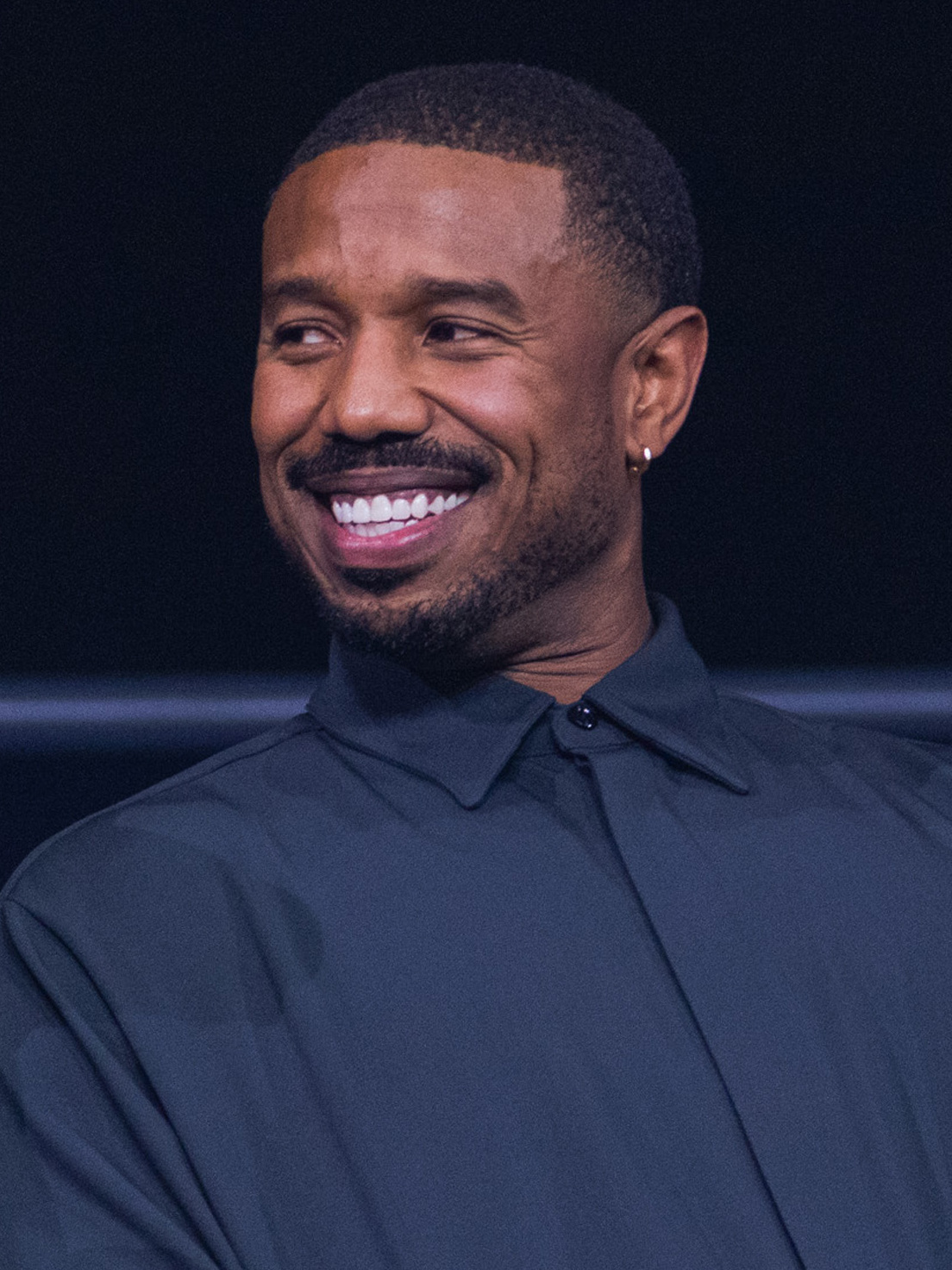
When Michael B. Jordan appeared on screen in a Baltimore stairwell in the first season of “The Wire,” few viewers could have guessed they were watching the early work of a man who would one day headline global blockbusters, share the screen with Sylvester Stallone, play one of the most discussed villains in the Marvel Cinematic Universe, and step behind the camera to direct a franchise film. He was a teenager then, playing a low-level drug dealer named Wallace whose fate became one of the most quietly devastating moments in prestige television. The performance was small in screen time but enormous in impact, and it announced a young actor capable of conveying vulnerability and fear without a single showy gesture.
The years that followed were not an overnight climb. Jordan worked steadily through soap operas and network dramas, building craft in the trenches of episodic television before a single independent film changed the trajectory of his life. That film, “Fruitvale Station,” introduced audiences to both a leading man and to a director, Ryan Coogler, whose creative partnership with Jordan would go on to define a decade of American cinema. From there came Adonis Creed, then Erik Killmonger, then a producer’s chair, and finally a director’s credit of his own. This is the story of how a boy raised in Newark, New Jersey, became one of the most compelling figures in modern Hollywood, and how he decided that stardom alone was never going to be enough.
Quick Facts
- Full name
- Michael Bakari Jordan
- Born
- 9 February 1987, Santa Ana, California, USA
- Nationality
- American
- Known for
- The Wire, Fruitvale Station, Creed, Black Panther
- Also
- Director and producer (Outlier Society)
Early Life
Michael Bakari Jordan was born on 9 February 1987 in Santa Ana, California. His time on the West Coast was brief. When he was two years old, the family relocated across the country to Newark, New Jersey, the city that Jordan has always claimed as his true home. He was the middle of three children, raised by his mother, Donna, a high school guidance counselor and artist, and his father, Michael A. Jordan, who ran a catering business. Both parents remained deeply involved in his life and career, and Jordan has often spoken about how their steadiness gave him a foundation that many young performers never have.
Newark shaped him. He grew up in a working class environment, attended Newark Arts High School (the same institution where his mother worked), and absorbed the culture, the humor, and the resilience of a city that has produced generations of artists and athletes. That sense of place would later inform much of his work, from the streetwise authenticity he brought to early roles to the philanthropic instincts that eventually drew him back to his community.
His entry into entertainment came early and almost by accident. As a young child he began modeling, appearing in print advertisements and campaigns for brands aimed at children, including work for major retailers. Modeling led naturally to auditions for commercials, and commercials led to small acting parts. By the time he reached his teens, Jordan had already accumulated the kind of on-set experience that most aspiring actors spend years chasing. What set him apart, even then, was not just his looks but a quiet intensity, an ability to hold the camera’s attention without straining for it.
Growing up, Jordan was also a serious athlete, and for a time he imagined a future on the basketball court rather than a soundstage. That competitive drive never left him, and it later reappeared in the discipline he brought to physically demanding roles. The transition from childhood modeling to acting was gradual, but by his early teens he was booking guest spots on television, appearing in episodes of series such as “Cosby” and “The Sopranos,” the kind of small credits that teach a young performer how a professional set operates. Those early jobs, taken while he was still a student, gave him a practical education that no acting class could fully replicate, and they instilled the work ethic that colleagues would later describe as one of his most defining traits.
Early Roles
The role that first revealed Jordan’s talent to a discerning audience was Wallace in HBO’s “The Wire.” In the show’s landmark first season, which aired in 2002, Jordan played a sweet-natured teenage boy pulled into Baltimore’s drug trade. Wallace was not a hardened criminal but a child, one who cared for younger kids in his building and who ultimately paid a terrible price for his conscience. Creator David Simon and the show’s writers used the character to illustrate how institutions grind up the vulnerable, and Jordan, still a teenager himself, delivered the emotional weight the part demanded. Decades later, viewers who discover “The Wire” still cite Wallace’s story as one of the series’ most heartbreaking arcs.
“The Wire” did not immediately make Jordan a household name, and he did the work that most young actors must do to survive. He took a recurring role on the long-running ABC soap opera “All My Children,” playing Reggie Montgomery, a troubled teenager taken in by an established family. Daytime television is a demanding boot camp, requiring actors to memorize enormous amounts of dialogue quickly and perform it with minimal rehearsal, and Jordan credited the grind with sharpening his professionalism.
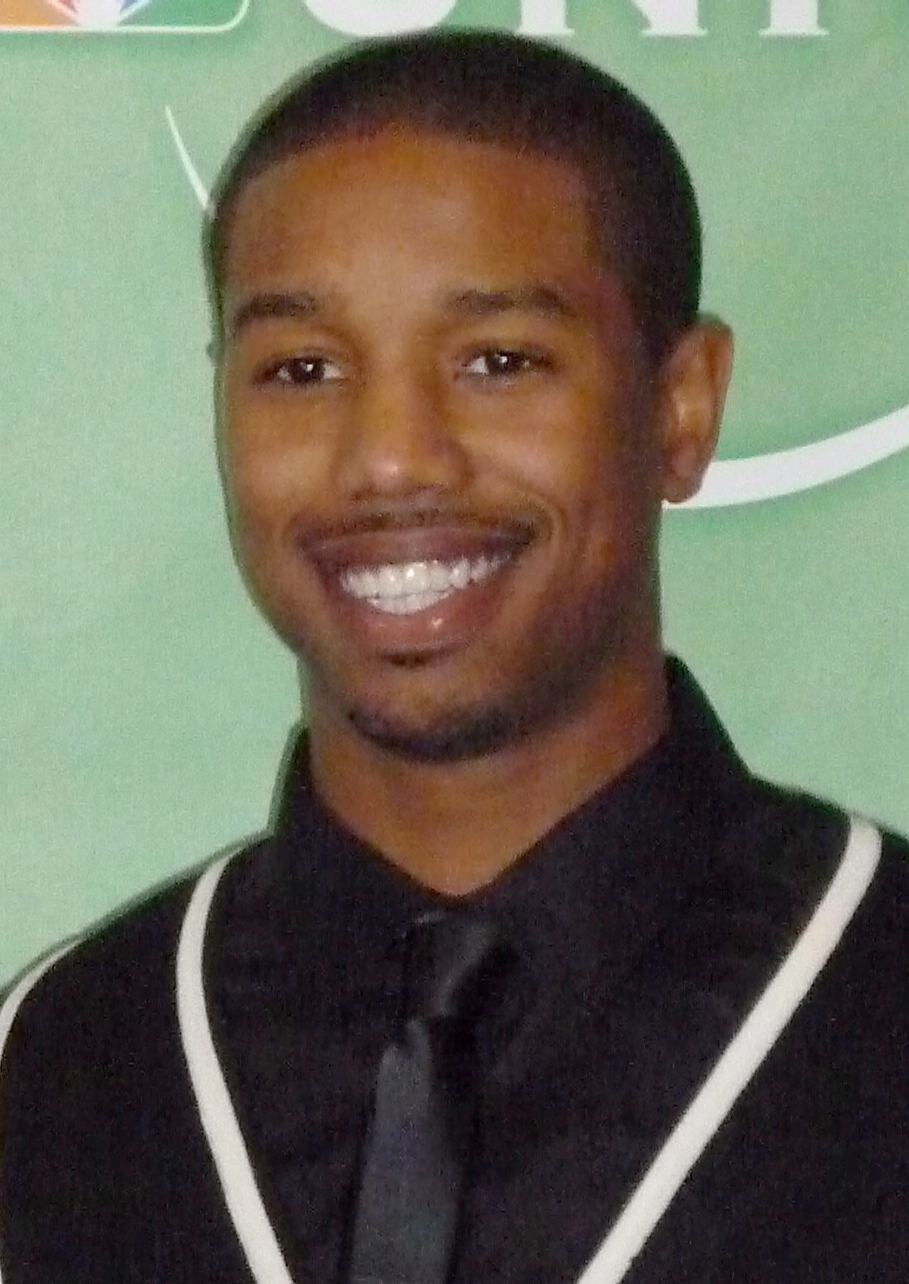
His next significant break came on NBC’s acclaimed drama “Friday Night Lights,” where he joined the cast for its fourth and fifth seasons as Vince Howard, a gifted but troubled young quarterback navigating poverty, family instability, and the pressures of small-town Texas football. The role gave Jordan a substantial arc and let him carry major storylines rather than exist on the margins. Critics singled out his performance, and the part demonstrated that he could anchor a network drama as a lead rather than a supporting player. By the time “Friday Night Lights” ended, Jordan had also appeared in comedy, guesting on shows and taking a role on “Parenthood,” proving a range that many pigeonholed dramatic actors never get to show.
This stretch of Jordan’s career is easy to overlook in hindsight, but it was formative. He was building the fundamentals of a working actor: reliability, versatility, and the ability to make writers’ words feel spontaneous. Each of these three signature television roles, Wallace in “The Wire,” Reggie in “All My Children,” and Vince in “Friday Night Lights,” asked him to play young men living under pressure, and in each case he found the humanity beneath the circumstances. Casting directors and producers took note of a performer who could be trusted with emotionally complicated material, and that reputation quietly opened the doors that would soon lead to feature films. He also studied the actors around him, absorbing lessons from seasoned veterans on how to prepare, how to listen, and how to hold a scene without dominating it.
Breakthrough Films
Everything changed in 2013 with “Fruitvale Station.” The film dramatized the final day in the life of Oscar Grant, a young man who was fatally shot by a transit police officer at a station in Oakland, California, on New Year’s Day in 2009. It was the feature directorial debut of Ryan Coogler, then a young filmmaker fresh out of film school, and it was Jordan’s first true leading role in a movie. The performance was a revelation. Jordan played Grant not as a symbol or a saint but as a flawed, loving, frustrated, hopeful human being, a father and a son trying to do better. The restraint and warmth he brought to the role made the film’s inevitable tragedy land with devastating force.
“Fruitvale Station” premiered at the Sundance Film Festival, where it won both the Grand Jury Prize and the Audience Award for U.S. dramatic film. It went on to earn accolades at the Cannes Film Festival and became a critical sensation. For Jordan, the film established him as a serious dramatic actor capable of carrying a movie. Just as importantly, it forged the creative partnership with Ryan Coogler that would become one of the most productive director-actor collaborations of the era. The two men, close in age and united by a shared sense of purpose, developed a shorthand and a trust that would define their subsequent work.
“There’s levels to the game. You know, you always want to be a working actor, but then it’s like, all right, I want to be a movie star. Then it’s like, I want to be a great actor. And then I want to make great things.”
Not every project in this period landed. Jordan took the lead as Johnny Storm, the Human Torch, in the 2015 reboot of “Fantastic Four,” a film that was widely criticized and became a difficult experience for many involved. Jordan handled the disappointment with grace and used it as a lesson about the kinds of projects and collaborators he wanted to prioritize. The setback proved temporary, because the same year brought one of the defining roles of his career.
Creed and Black Panther
In 2015, Jordan reunited with Ryan Coogler for “Creed,” a bold reinvention of the “Rocky” saga. Jordan played Adonis Creed, the son of Apollo Creed, Rocky Balboa’s former rival and friend from the original films. Rather than a straightforward sequel, “Creed” was a soulful drama about legacy, self-worth, and mentorship, with Sylvester Stallone returning as an aging Rocky who becomes Adonis’s trainer. Jordan trained intensely to transform his physique and to make the boxing sequences credible, and the film was a critical and commercial triumph. Stallone earned an Academy Award nomination for his supporting performance, and Jordan cemented his standing as a bankable, magnetic leading man. He returned to the role in “Creed II” in 2018.
Then came Wakanda. In 2018, Coogler directed “Black Panther” for Marvel Studios, and he cast Jordan as the antagonist, Erik Killmonger. The character was no ordinary comic book villain. Killmonger was a man shaped by abandonment and injustice, a warrior whose rage carried a painful moral logic that many audiences found sympathetic even as they recoiled from his methods. To prepare, Jordan reportedly immersed himself so completely in the character’s isolation that he described the emotional aftermath as difficult to shake, and that commitment showed in every scene. His confrontation with the film’s hero, T’Challa, played by Chadwick Boseman, gave the movie its moral engine, and the character’s final line before his death became one of the most quoted moments of the year.
Jordan’s portrayal became one of the most discussed performances in the entire Marvel Cinematic Universe, praised for its depth and its refusal to reduce a villain to a cartoon. “Black Panther” was a cultural phenomenon, breaking box office records, drawing near-universal acclaim, and later earning multiple Academy Award nominations including Best Picture, the first superhero film to receive that honor. For Jordan, it confirmed that he could bring nuance to even the most commercial of frameworks, and it deepened his bond with Coogler and the broader creative community around the film. The success also elevated him from a respected actor into a genuine international star, expanding his audience far beyond the arthouse admirers who had discovered him through “Fruitvale Station.”
Becoming a Filmmaker
Jordan’s ambitions were never limited to acting. In 2016 he founded a production company, Outlier Society, through which he began developing projects as a producer. The company reflected his values as much as his commercial instincts. In 2018, Outlier Society announced that it would adopt an inclusion rider for all of its projects, a contractual commitment to ensuring diverse representation among cast and crew. The move followed public advocacy on the subject, and Jordan became one of the first prominent figures in Hollywood to formalize the practice, using his platform to push the industry toward more equitable hiring.
As a producer, Jordan helped shepherd a range of projects across film and television, but his most significant creative leap came in 2023 when he made his directorial debut with “Creed III.” Stepping behind the camera for the third installment of the franchise he had helped revitalize, Jordan also starred, taking on the dual challenge of leading and directing a major studio film. He drew on his lifelong love of anime and Japanese cinema to inform the film’s visual style and its emotionally heightened fight sequences. The film was a box office success and earned respectful reviews for a first-time director, and it demonstrated that Jordan’s interest in filmmaking was not a vanity project but a genuine second act. His work with Outlier Society and his directing continued to expand his influence far beyond his own on-screen roles.
Persona and Advocacy
Over the course of the 2010s, Jordan became one of the most recognizable leading men in American film, admired equally for his talent and for the deliberate way he used his visibility. He has spoken candidly about mental health, revealing that the poor reception of “Fantastic Four” and the pressures of fame led him to seek therapy, a disclosure that resonated with many fans and helped normalize conversations about mental wellbeing among men.
His advocacy for representation has been consistent and public. Beyond the inclusion rider at Outlier Society, he has used interviews, awards platforms, and business decisions to argue for more opportunities for people of color both in front of and behind the camera. His commercial appeal has been matched by cultural cachet, and in 2020 People magazine named him its Sexiest Man Alive, a lighthearted honor that nonetheless underscored his standing as a mainstream icon. He has also become a significant figure in the world of endorsements and business, launching ventures and partnerships that extend his brand while frequently tying them back to community investment, including efforts in his home city of Newark.
Colleagues and directors have frequently described Jordan as unusually generous on set, a leading man who lifts the performers around him rather than guarding the spotlight. That reputation for collaboration is not incidental to his success; it is central to how he has built a body of work anchored in trust, most visibly in his long partnership with Ryan Coogler but also in the loyalty of the crews and cast members who return to work with him again and again. He has spoken about wanting his generation of actors to change the terms of the industry, not simply to succeed within its existing structures, and much of his off-screen energy has been directed toward that goal. Whether through his production company, his mentorship of younger performers, or his willingness to speak openly about difficult subjects, he has consistently framed his fame as a resource to be shared rather than hoarded.
Career Timeline
- 2002: Breaks through as Wallace in the first season of HBO’s “The Wire,” delivering one of the show’s most memorable arcs.
- 2003 to 2006: Plays Reggie Montgomery on the ABC daytime drama “All My Children,” honing his craft in television.
- 2009 to 2011: Stars as Vince Howard on NBC’s “Friday Night Lights,” carrying major storylines across two seasons.
- 2013: Leads “Fruitvale Station,” Ryan Coogler’s debut feature, which wins top honors at Sundance and launches Jordan as a film star.
- 2015: Stars as Adonis Creed in “Creed,” reuniting with Coogler and reviving the “Rocky” saga to great acclaim.
- 2016: Founds his production company, Outlier Society.
- 2018: Plays Erik Killmonger in “Black Panther,” returns in “Creed II,” and adopts an inclusion rider at Outlier Society.
- 2020: Named People magazine’s Sexiest Man Alive.
- 2023: Makes his feature directorial debut with “Creed III,” in which he also stars.
Lesser-Known Facts
- His name is not a tribute to the basketball star. A common assumption is that he was named after basketball legend Michael Jordan, but he was not. His full name is Michael Bakari Jordan, and the “B” stands for Bakari, a Swahili name. The middle initial is part of his professional name partly to distinguish him from the athlete.
- He is proudly a Newark native. Although born in Santa Ana, California, Jordan was raised in Newark, New Jersey, and consistently identifies with the city, later channeling resources and attention toward his home community.
- He is a devoted anime fan. Jordan has spoken openly about his love of Japanese anime and manga, and he drew on that influence when directing the stylized fight sequences in “Creed III.”
- He pioneered the inclusion rider in practice. In 2018, his company Outlier Society became one of the first to formally commit to an inclusion rider, a contractual standard for diverse hiring.
- He turned early setbacks into fuel. The critical failure of “Fantastic Four” in 2015 was a low point, but Jordan has credited that experience, and the therapy he sought afterward, with making him more intentional about his choices.
- His parents were part of his career. He attended the Newark arts high school where his mother worked, and his family remained closely involved as his fame grew.
Frequently Asked Questions
Is Michael B. Jordan related to the basketball player?
No. Michael B. Jordan the actor is not related to Michael Jordan the basketball legend, and he was not named after him. His middle name is Bakari, and the shared surname is a coincidence.
What was Michael B. Jordan’s breakout role?
His first widely praised role was Wallace in the first season of “The Wire” in 2002. His breakout as a film leading man came with “Fruitvale Station” in 2013, directed by Ryan Coogler.
Who did he play in Black Panther?
Jordan played Erik Killmonger, the film’s antagonist, in the 2018 Marvel film “Black Panther,” directed by Ryan Coogler. The performance was widely praised as one of the most complex villains in the Marvel Cinematic Universe.
Has Michael B. Jordan directed a film?
Yes. He made his feature directorial debut with “Creed III” in 2023, in which he also starred as Adonis Creed. He has also worked extensively as a producer through his company Outlier Society.
Where is he from?
He was born in Santa Ana, California, but was raised in Newark, New Jersey, which he regards as his hometown.
Legacy
Michael B. Jordan’s career offers a rare combination of artistic credibility, commercial power, and social conscience. He arrived as a teenager in one of television’s greatest dramas, survived the long apprenticeship of soap operas and network shows, and then, through his partnership with Ryan Coogler, helped shape some of the defining films of his generation. Adonis Creed and Erik Killmonger are already characters that will be studied and revisited for years, one a heroic underdog and the other a villain whose grievances forced audiences to confront uncomfortable truths.
Yet his most lasting influence may lie in the choices he made once he had the power to make them. By founding Outlier Society, championing the inclusion rider, and stepping into directing, Jordan positioned himself not merely as a star but as a builder, someone determined to widen the door he had walked through. He carried the lessons of Newark and the memory of his early struggles into a Hollywood that he intends to leave more open than he found it. Whatever comes next, his legacy is already that of an artist who understood that talent is only the beginning, and that real influence is measured by how many others you help rise alongside you.