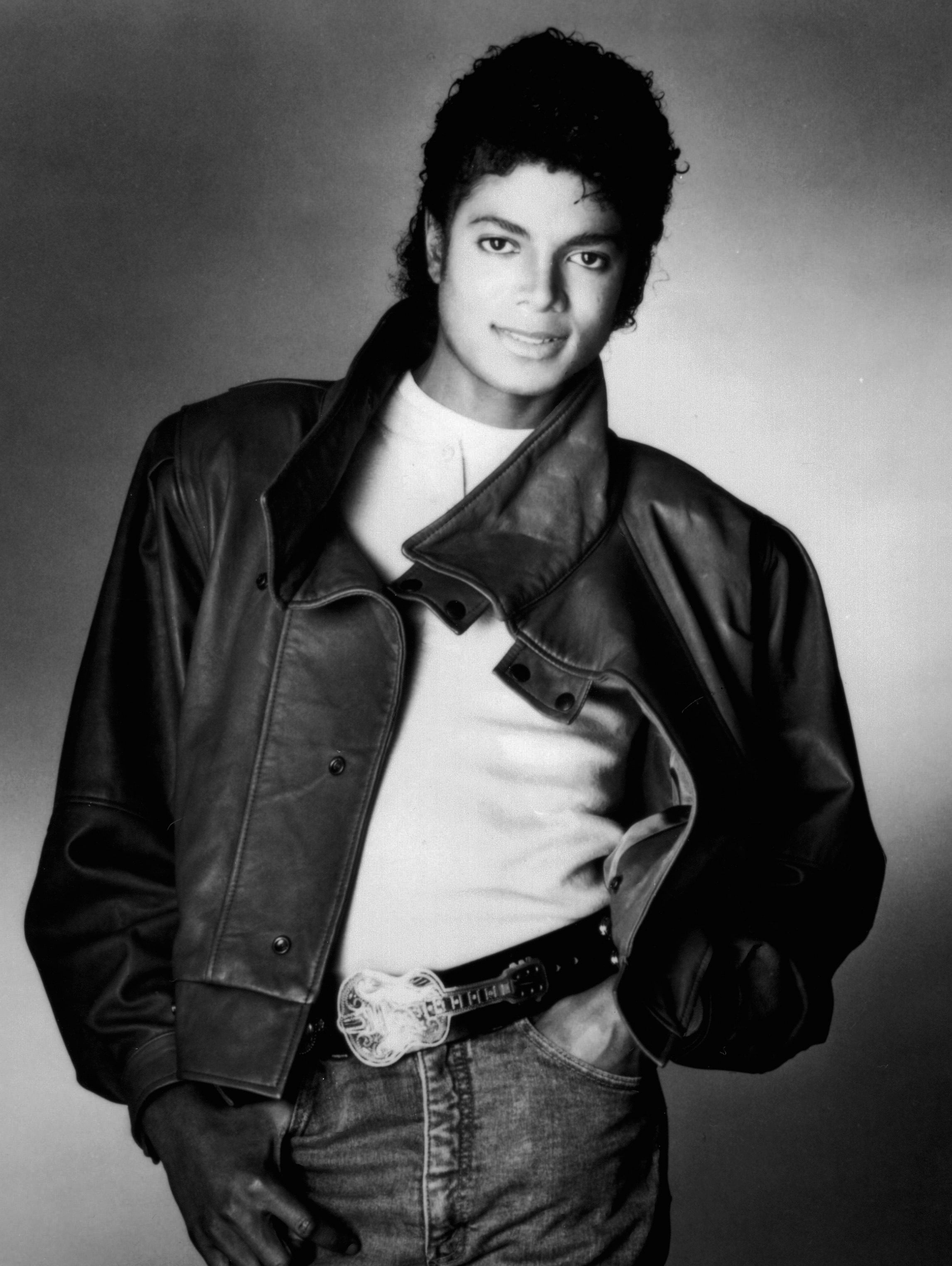
There are artists who sell records, artists who fill arenas, and artists who alter the very shape of popular culture. Michael Jackson belonged to the third category, and he belonged to it at a scale that has never quite been matched. From the moment he first appeared on television as a child in the late 1960s to the elaborate stadium spectacles of his final touring years, he occupied a space in the public imagination that went far beyond ordinary celebrity. He was a dancer whose combinations influenced everyone who came after him, a vocalist of extraordinary range and expressiveness, a songwriter and record producer of genuine inventive power, and a visual storyteller who transformed the promotional music video from an afterthought into an art form. He was also, by any measure, one of the most scrutinised and conflicted public figures of the twentieth century, a man whose private life became a source of as much fascination and controversy as his music. To understand Michael Jackson fully, it is necessary to understand both halves of that story.
Quick Facts
- Full name
- Michael Joseph Jackson
- Born
- 29 August 1958, Gary, Indiana, USA
- Died
- 25 June 2009, Los Angeles, California, USA (aged 50)
- Genre
- Pop, R&B, soul, funk, disco, rock
- Known for
- Record-breaking album sales, the moonwalk, groundbreaking music videos
A Childhood Without Ordinary Childhood
Michael Joseph Jackson was born on 29 August 1958 in Gary, Indiana, an industrial city on the southern shore of Lake Michigan whose steel mills gave it a grim, hard-working character not easily reconciled with the glittering career that would unfold from it. He was the seventh of nine children born to Katherine Scruse, a devout Jehovah’s Witness with a love of music, and Joseph Walter Jackson, a steelworker who also led a local rhythm-and-blues band called the Falcons. It was Joseph who first recognised the musical gifts of his children and who pushed them, sometimes with an intensity that Michael would later describe as deeply damaging, toward a professional career.
The Jackson household on 2300 Jackson Street was tiny: a two-bedroom, one-bathroom home that accommodated the large family in conditions of considerable crowding. Music was everywhere. Katherine played clarinet and piano; the older brothers sang and played instruments in their spare time. From an early age Michael displayed an uncanny ear and a physical responsiveness to rhythm that set him apart even among his talented siblings. He could reproduce adult vocal inflections before he understood what the words meant, and he watched the movements of performers on television with a concentration that bordered on obsession. The family later recounted that he could mimic, almost perfectly, gestures and dance steps he had seen only once.
Joseph Jackson organised his sons into a group he called the Jackson Brothers, which eventually became the Jackson 5. Tito, Jackie, Jermaine, Marlon and Michael rehearsed relentlessly, performing at local venues and talent contests while still in primary school. Michael, despite being the youngest of the performing lineup, quickly became the focal point: his voice was simply purer than the others, his stage presence more magnetic. He was also working at an age when most children were still absorbed in play, and that early compression of experience, the constant travel, the professional demands placed on a small child, shaped both his extraordinary discipline and the profound longing for a normal childhood that would colour his adult life.
The Jackson 5 and the Motown Years
In 1969 the Jackson 5 signed with Motown Records, the Detroit label that had almost single-handedly created the sound of Black popular music during the 1960s. Motown’s founder Berry Gordy had built his empire on a formula of polished production, tightly controlled image management and carefully crafted pop songs designed to reach the widest possible audience, and he applied the same approach to the Jackson 5. The result was a series of singles that became instant hits. Their debut release went to number one, as did the next three singles released in rapid succession, a feat unprecedented for a debut act. The Jackson 5 were a genuine phenomenon, and at the centre of it all was eleven-year-old Michael.
The Motown period taught Jackson a great deal about the mechanics of the music industry: how records were made, how artists were marketed, how the relationship between image and sound was managed. He absorbed these lessons while simultaneously performing at the highest level. But the Motown machine also imposed limits, particularly on the creative and financial independence that the Jackson family increasingly wanted. By the mid-1970s the group had shifted to Epic Records, a move that gave them more control over their material and their direction.
Michael had been making solo records for Motown while still part of the group, releasing a series of albums that demonstrated his range as a vocalist even in adolescence. The transition to a deeper voice in his teenage years was negotiated with a skill unusual in young male singers. He was already, by his late teens, one of the most accomplished and charismatic performers alive. But the work that would truly establish his stature as a solo artist was still to come, and it would require a collaboration that changed the sound of popular music.
Off the Wall and the Arrival of a New Sound
In 1979 Michael Jackson released “Off the Wall”, a solo album produced in partnership with Quincy Jones, an arrangement that proved to be one of the most consequential collaborations in music history. Jones was a veteran of jazz, film scoring and pop production with a rare ability to synthesise disparate influences into something coherent and commercially powerful. Jackson brought his vocal agility, his understanding of rhythm and groove, and an appetite for creative risk that matched Jones’s own. Together they created an album that moved effortlessly between post-disco dance tracks, sweeping ballads and funk-inflected mid-tempo pieces, all of them unified by the warmth and expressiveness of Jackson’s voice.
“Off the Wall” sold nine million copies and produced four top-ten singles, results that were remarkable by any standard. But Jackson reportedly wept when it failed to win the Grammy for Album of the Year, convinced that critics and industry insiders were not yet taking him seriously as an artist on the level he believed himself to occupy. That disappointment fuelled what came next, and what came next was the most commercially successful album in the history of recorded music.
Thriller: A Cultural Earthquake
Released in late 1982, “Thriller” was the product of the same partnership between Jackson and Quincy Jones, but with an ambition and a perfectionism that pushed both men to their limits. The sessions were long, the standards punishing, and the result was an album of nine tracks, every one of them a potential hit. The record drew on rock, pop, R&B, funk and disco without settling comfortably into any of them, and it was held together by the thread of Jackson’s voice, by turns playful, yearning, joyful and threatening.
“Thriller” sold more than 66 million copies during Jackson’s lifetime, a figure that later estimates put considerably higher when subsequent pressings are included, and it has retained its status as the best-selling album ever recorded. It produced seven top-ten singles on the Billboard Hot 100, another record at the time. But the cultural impact of the album went far beyond sales figures. The music videos that accompanied the singles, in particular the fourteen-minute short film made for the title track, transformed what a promotional video could be. Directed by John Landis and shot with the production values and ambition of a Hollywood film, the “Thriller” video drew on horror-movie conventions, incorporated elaborate choreography involving dozens of zombie dancers, and featured Jackson as both a character and a narrator in a story with an actual arc. MTV broadcast it repeatedly, and audiences who had never thought of a music video as something worth seeking out suddenly began to do exactly that.
“I was a veteran before I was a teenager.”
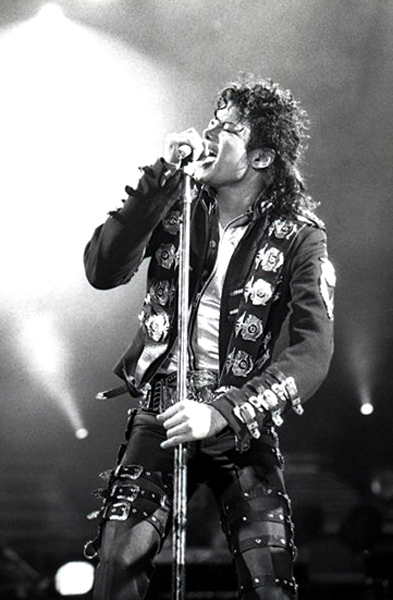
The moonwalk, a gliding backwards step that creates the illusion of walking forward while moving in reverse, became the defining image of the “Thriller” era after Jackson debuted it publicly on the television special “Motown 25: Yesterday, Today and Forever” in May 1983. He had been refining the move for years, studying the techniques of mime artists and street dancers, and the moment he performed it in front of fifty million television viewers, he secured his place in popular culture in a way that transcended any individual song or album. The images of that performance have been reproduced so many times, in so many contexts, that they have become a kind of universal shorthand for a particular moment in the twentieth century.
Building an Empire and Breaking Records
The years following “Thriller” saw Jackson build what became one of the most valuable brands in entertainment. He signed what was at the time the largest endorsement deal in history with Pepsi, a partnership that ended traumatically when a pyrotechnics accident during the filming of a commercial left him with severe burns to his scalp, an injury that is now understood to have contributed to the painkiller dependency that marked his later life. He purchased the Northern Songs catalogue, which included the publishing rights to much of the Beatles’ work, a business decision that made him one of the most powerful figures in the music industry and created a lasting tension with his former friend Paul McCartney.
He also built Neverland Ranch, a 2,700-acre estate in the Santa Ynez Valley north of Los Angeles that he transformed into a private amusement park, complete with rides, a zoo and a cinema. Neverland became both an expression of the childhood he felt he had never had and a source of intense controversy. To Jackson it was a place of refuge; to much of the public it became something harder to categorise.
Bad and the Pressure of Success
The album “Bad”, released in 1987, was the follow-up to “Thriller” and the third collaboration with Quincy Jones. Viewed in isolation, it was an extraordinary record: five of its singles reached number one on the Billboard Hot 100, a feat that has never been equalled. The title track announced a new, edgier image, darker and more aggressive than the “Thriller” persona, and the album’s range from propulsive dance tracks through romantic ballads to social commentary was genuinely impressive.
But “Bad” could not match the sales of “Thriller”, and by the impossible standard that album had set, it was treated by some commentators as a disappointment. This was a trap that would define the rest of Jackson’s commercial career: any record that did not shatter the previous record would be measured against “Thriller” and found wanting, a situation no artist could sustainably win. The “Bad” World Tour, which ran from 1987 to 1989, sold out consistently across Europe, North America, Asia and Australia, setting new attendance records. It demonstrated that whatever the critics might say, Jackson’s audience remained global and devoted.
Dangerous and the 1990s
“Dangerous”, released in 1991 and produced primarily by Teddy Riley rather than Quincy Jones, marked a deliberate shift in Jackson’s musical direction. The new jack swing production style that Riley brought gave much of the album a harder, more contemporary edge, and the record demonstrated Jackson’s willingness to update his sound rather than simply replicate past successes. It sold more than thirty million copies worldwide and produced a string of hits, including the extended short film “Black or White”, which mixed rock guitars with hip-hop elements in a way that still sounds adventurous.
The early 1990s also brought the first serious public allegations against Jackson, when a thirteen-year-old boy and his family claimed that Jackson had molested the child during a series of visits to Neverland. Jackson denied the allegations categorically. The case was settled out of court for an amount reported in the range of twenty million dollars, though Jackson maintained that the payment was made on the advice of his lawyers and represented no admission of guilt. A criminal investigation was opened but produced no charges. The episode, and the media coverage surrounding it, changed the public perception of Jackson in ways that proved irreversible.
HIStory and the Late Career
The two-disc compilation and new-material set “HIStory: Past, Present and Future, Book 1”, released in 1995, was part greatest-hits collection and part statement of artistic intent. The new songs included some of his most politically charged writing, tracks that addressed his perception of being persecuted by the press and by people he felt had betrayed him. The album went platinum in every major market and the accompanying “HIStory” World Tour became the highest-grossing concert tour of 1996 and 1997. Yet Jackson seemed increasingly embattled: his marriage to Lisa Marie Presley, announced in 1994 with a kiss on television that much of the public received with bewilderment, ended in divorce in 1996, and a second marriage, to Debbie Rowe, produced two children before it too ended in divorce.
He released “Invincible” in 2001, a long-awaited studio album that demonstrated he remained a formidable craftsman and a distinctive vocal presence. The album sold eight million copies worldwide, a number that would be considered exceptional for almost any other artist but that, against the backdrop of his earlier achievements and against the growing dominance of digital distribution, was framed as underperformance. His public disputes with his record label, Sony Music, and with its head Tommy Mottola became a defining story of that period, with Jackson making claims of racial bias in the way the company marketed him that sparked significant debate.
The Final Act
In 2009, Jackson announced a series of fifty concerts at the O2 Arena in London that he titled “This Is It”, framed explicitly as a farewell to live performance. Tickets sold with extraordinary speed. Rehearsals were underway in Los Angeles when, on 25 June 2009, Jackson died at his rented estate in the Holmby Hills district of Los Angeles. He was fifty years old. The cause of death was acute propofol and benzodiazepine intoxication: his personal physician, Conrad Murray, had been administering the powerful anaesthetic propofol as a sleep aid, a practice that is both medically dangerous and profoundly unorthodox. Murray was later convicted of involuntary manslaughter and served two years in prison.
The response to Jackson’s death was unlike anything the world had seen for a musician. The news spread online at a speed that reportedly caused temporary failures of major internet services. The Los Angeles Memorial Sports Arena hosted a public memorial that was broadcast globally and watched by hundreds of millions of people. The demand for his music in the days following his death was so intense that it overwhelmed digital retailers. His posthumous career, managed by his estate, has been almost as commercially significant as the later years of his life, with reissues, documentary films and the continuation of his publishing rights generating revenues in the hundreds of millions.
The Enduring Controversy
No account of Michael Jackson can avoid the question of his personal conduct, particularly regarding children. In 2019, the documentary “Leaving Neverland” presented detailed allegations from two men, Wade Robson and James Safechuck, who claimed that Jackson had sexually abused them as children. The documentary provoked intense debate. Some who had previously defended Jackson revised their views; others contested the allegations vigorously, noting inconsistencies and pointing to prior legal outcomes. His estate challenged the documentary in court and maintained his innocence. The question remains deeply contested, and the tension between his artistic legacy and the allegations against him is one that his audience, his family, the music industry and cultural commentators continue to navigate.
What is beyond dispute is the scale of his influence on popular music. The techniques he pioneered in music video production established a template that remained standard for decades. His choreography, synthesising street dance, classical technique and theatrical staging, has been incorporated into the training of dancers worldwide. His approach to studio production, his insistence on the highest possible sonic standards and his willingness to invest enormous resources in the pursuit of a particular sound, raised the bar for what a major pop album could aspire to be.
Legacy
Michael Jackson was not simply a successful musician. He was an event, a presence in the culture so large and so multifaceted that it is still difficult to see him whole. He demonstrated that popular music made by a Black American artist could reach the largest possible global audience, breaking down barriers that the music industry had maintained with some persistence. He raised the commercial expectations attached to a successful album and tour to a level that transformed the economics of the entertainment business. He made visual presentation as important as the music itself, in the process creating a form of artist identity that virtually every pop star since has had to reckon with.
For fans, particularly in Africa, where his music reached through radio, bootleg cassettes and eventually television with an immediacy and an emotional directness that few Western artists matched, Jackson occupied a special place. He was proof that Black artistry, rooted in the American gospel and soul tradition, could speak a language understood everywhere. Nigerian audiences in particular embraced him, and his influence can be heard in the work of subsequent generations of Afrobeats and Afropop artists who grew up with his records as a reference point.
The contradictions in his story, the abused child who became an abuser in the eyes of many, the Black artist who altered his appearance in ways that troubled many in the Black community, the man who built a children’s wonderland and then saw it become the subject of criminal investigation, do not resolve into a simple narrative. But the music endures in its own right, and it endures because it is extraordinary: technically accomplished, emotionally direct, rhythmically inventive, and performed with a commitment that communicated itself across every barrier of language, nationality and generation.
Key Facts
- Michael Jackson’s “Thriller” remains the best-selling album in history, with estimated worldwide sales exceeding 70 million copies.
- He won 13 Grammy Awards during his career, including a record-tying eight in a single night in 1984.
- The “Bad” World Tour (1987 to 1989) was the first to sell out Wembley Stadium seven times, a record at the time.
- He was inducted into the Rock and Roll Hall of Fame twice: as a member of the Jackson 5 in 1997 and as a solo artist in 2001.
- His estate has earned more than two billion dollars since his death in 2009, making him consistently the highest-earning deceased celebrity.